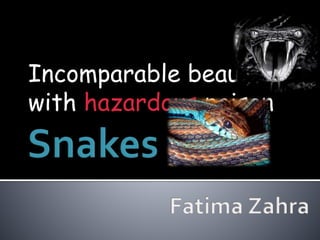


Incomparable beauty
with hazardous poison
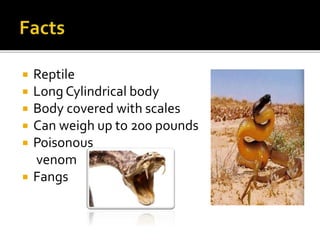
 Reptile
 Long Cylindrical body
 Body covered with scales
 Can weigh up to 200 pounds
 Poisonous
venom
 Fangs
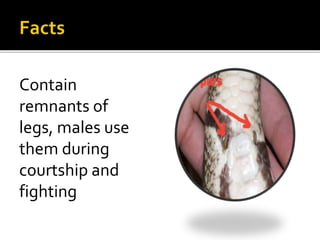
Contain
remnants of
legs, males use
them during
courtship and
fighting
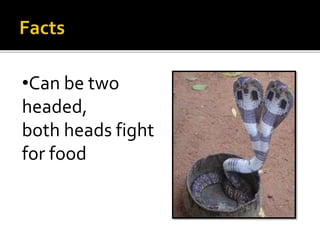
•Can be two
headed,
both heads fight
for food
 Can barely see
 No eyelids, sleep with eyes open
 No stingers
 Make burrows
 Some can fly
 Can grow from 10cm-70m
 3,400 sp, 600 are venomous, only 200 cause
serious hazard
 Can survive in any environment
 Infrared sensory receptors
 Only 90,000 die because of snake venom
while millions are killed by mosquitoes
 One functional lung
 Can bite after death
 Venom used as punishment in medieval
Europe
 Always cornivorous
 Can survivve without food for months and
sometimes upto two years
 After limits are reached they start digesting
their own heart
 They can grow without food
 Eat too much, when too full methane builds
up, can explode
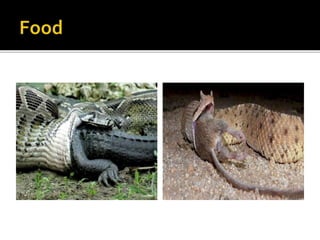
 Mobile jaws help them swallow prey as whole
 Cosmopolitan
 Not found in Antarctica
 Found in driest deserts
 Can infest homes
 Found in Himalayas _ at the height of 49m
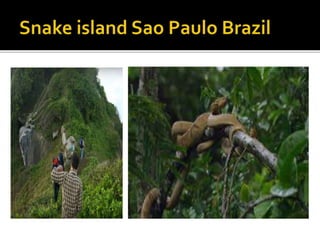
 Brazil
 Sao Paulo
 Government is unable to build a single light
house
 1 snake at every 1 square meter
 Venom is 3-5 times more poisons then
ordinary snakes
 .
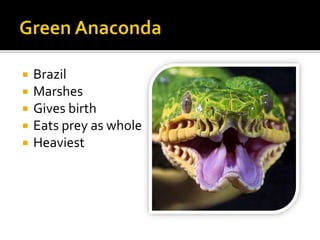
 Brazil
 Marshes
 Gives birth
 Eats prey as whole
 Heaviest
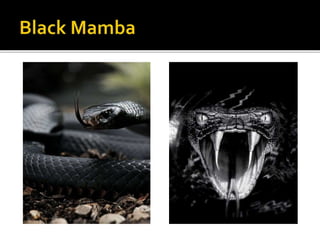
 14 feet
 3.5 pounds
 Lethal
 25,000 humans die every year, India 15,000,
Indonesia 10,000
 Causes death in 20 minutes
 no anti venom
 Fastest land snake
 Injects 100-120 mg venom in each bite
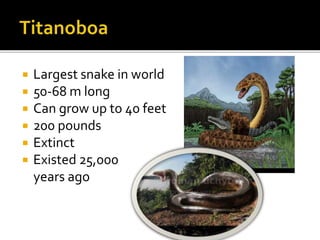
 Largest snake in world
 50-68 m long
 Can grow up to 40 feet
 200 pounds
 Extinct
 Existed 25,000
years ago
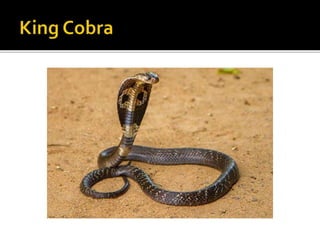
 India, China
 Longest snake
 Looks at 6 feet human in the eyes
 Venom used for medication too
 Snake charmers use them a lot
 Venom is 20 times more poisonous hen
normal snake
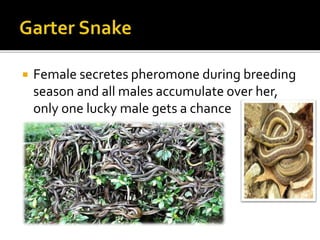
 Female secretes pheromone during breeding
season and all males accumulate over her,
only one lucky male gets a chance
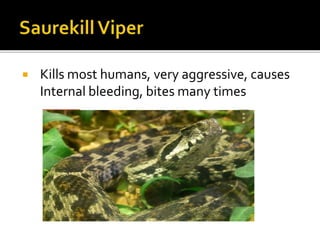
 Kills most humans, very aggressive, causes
Internal bleeding, bites many times
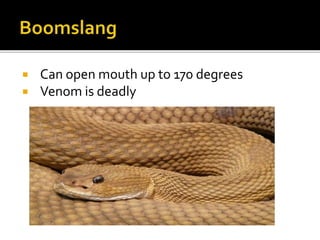
 Can open mouth up to 170 degrees
 Venom is deadly
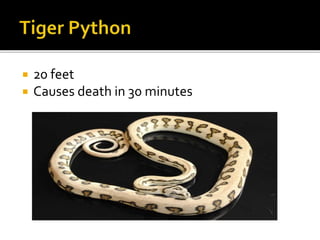
 20 feet
 Causes death in 30 minutes
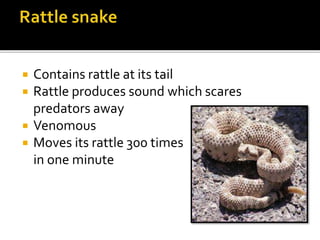
 Contains rattle at its tail
 Rattle produces sound which scares
predators away
 Venomous
 Moves its rattle 300 times
in one minute
.
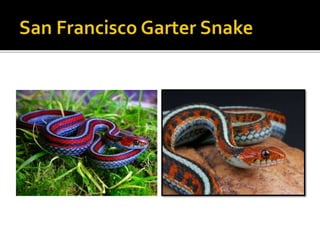
 Most beautiful
 Exceedingly layered
 Endangered 1000-2000 are remaining
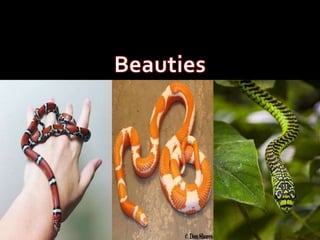
 These photos are unable to explain how
beautiful they are.
 Its difficult to do the snake’s coloration
justice in a photo.
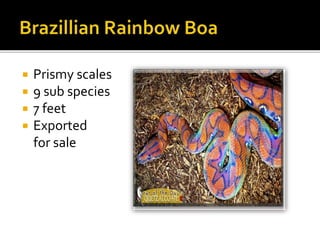
 Prismy scales
 9 sub species
 7 feet
 Exported
for sale
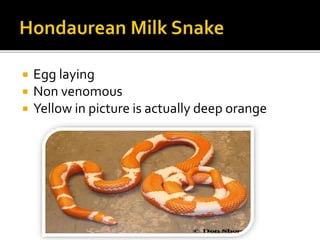
 Egg laying
 Non venomous
 Yellow in picture is actually deep orange
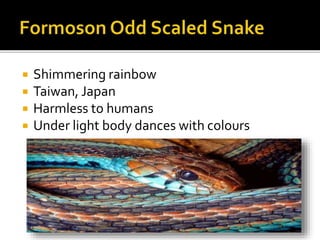
 Shimmering rainbow
 Taiwan, Japan
 Harmless to humans
 Under light body dances with colours
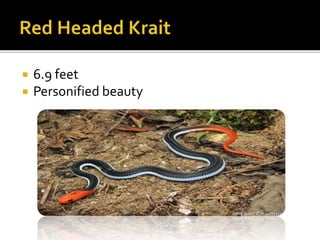
 6.9 feet
 Personified beauty
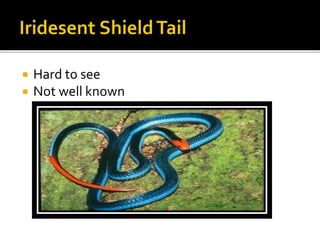
 Hard to see
 Not well known
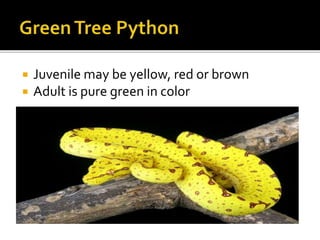
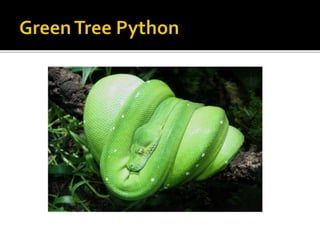
 Juvenile may be yellow, red or brown
 Adult is pure green in color
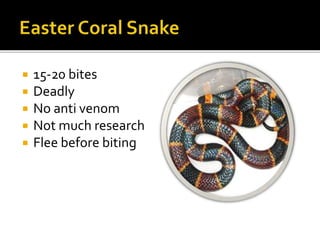
 15-20 bites
 Deadly
 No anti venom
 Not much research
 Flee before biting
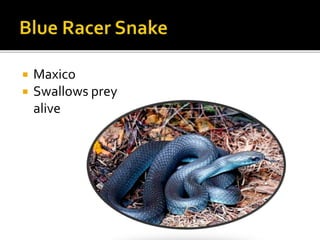
 Maxico
 Swallows prey
alive
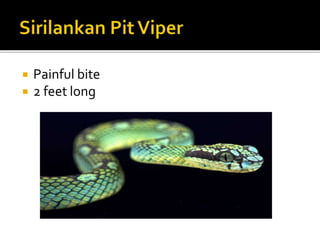
 Painful bite
 2 feet long
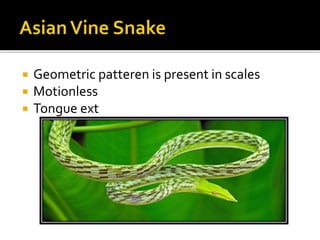
 Geometric patteren is present in scales
 Motionless
 Tongue ext
 France, Italy, Nigeria
 Snakes maintain eco system being top
predators saidChris Reading of the U.K
CENTER FOR ECOLOGY AND HYDROLOGY
 Snakes play an important role in pest control
in areas such as sugar cane plantations
 They are being wiped out like dinosaurs 65
million years ago
 According to I.U.C.N 28% of reptile species
are threatened among them 12% are snakes
 They play important role in maintaining
balance in food web
 They were worshipped in history still are
killed barbarically
 Lack of knowledge makes people kill non
venomous snakes too for example water
snake has a very bad habit of biting but it is
totally unhazardous
 Increase in human population is a threat for
all wildlife but conflict with snakes is
increasing every passing day
 Population decline is because of habitat
destruction, over harvesting, disease,
invasive species and even climate change
 Climate change is not natural too its because
of human activities
 Underfunded species
 Need saving
 Closer to the brink of extinction
 Poorly understood by
researchers
 Little attention from society
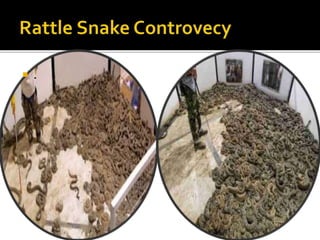
 Every year thousands of rattle snakes are rounded up
for being killed
 Gasoline is dumped inside their burrows and they are
forced to leave
 They have strong family bonds
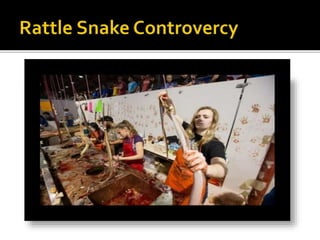
 After capturing them they are forced to be starved
 Even their mouths are sewed
 Usually decapitated it doesn’t kill them so they suffer
for hours
 In the end humans make hand marks at walls with
snake blood, the spectators of this painful event
 .
 .
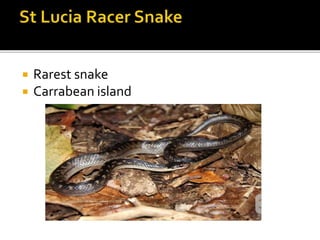
 Rarest snake
 Carrabean island
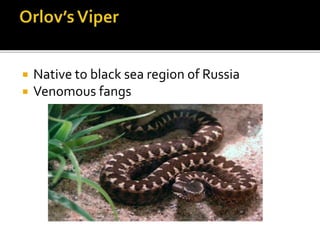
 Native to black sea region of Russia
 Venomous fangs
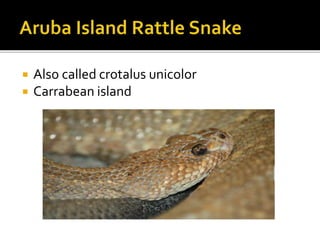
 Also called crotalus unicolor
 Carrabean island
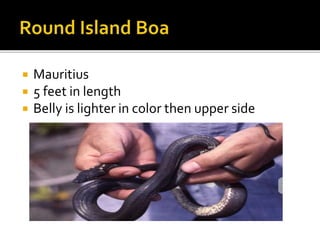
 Mauritius
 5 feet in length
 Belly is lighter in color then upper side
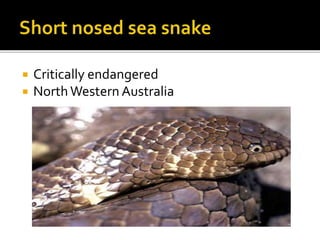
 Critically endangered
 NorthWestern Australia
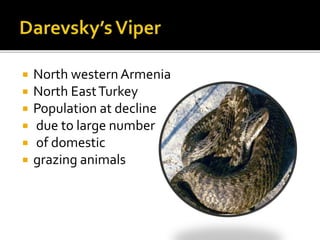
 North western Armenia
 North EastTurkey
 Population at decline
 due to large number
 of domestic
 grazing animals
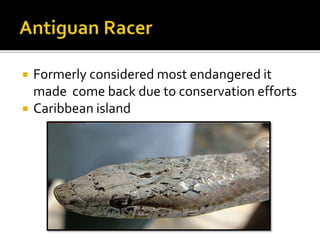
 Formerly considered most endangered it
made come back due to conservation efforts
 Caribbean island
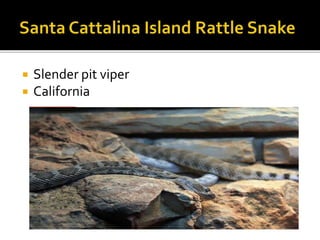
 Slender pit viper
 California
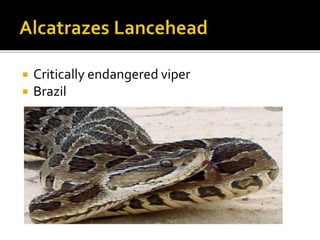
 Critically endangered viper
 Brazil
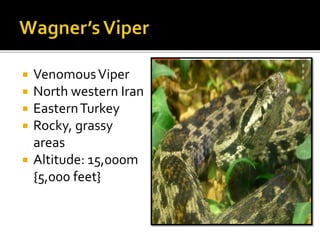
 VenomousViper
 North western Iran
 EasternTurkey
 Rocky, grassy
areas
 Altitude: 15,000m
{5,000 feet}
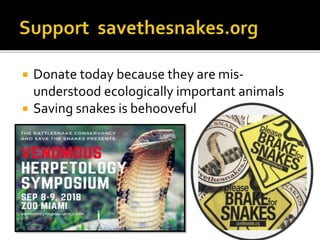
 Donate today because they are mis-
understood ecologically important animals
 Saving snakes is behooveful
Gracious

Snakes (Zoology)

  • 1.
  • 2.
     Reptile  LongCylindrical body  Body covered with scales  Can weigh up to 200 pounds  Poisonous venom  Fangs
  • 3.
    Contain remnants of legs, malesuse them during courtship and fighting
  • 4.
    •Can be two headed, bothheads fight for food
  • 5.
     Can barelysee  No eyelids, sleep with eyes open  No stingers  Make burrows  Some can fly  Can grow from 10cm-70m  3,400 sp, 600 are venomous, only 200 cause serious hazard
  • 6.
     Can survivein any environment  Infrared sensory receptors  Only 90,000 die because of snake venom while millions are killed by mosquitoes  One functional lung  Can bite after death  Venom used as punishment in medieval Europe
  • 7.
     Always cornivorous Can survivve without food for months and sometimes upto two years  After limits are reached they start digesting their own heart  They can grow without food  Eat too much, when too full methane builds up, can explode  Mobile jaws help them swallow prey as whole
  • 9.
     Cosmopolitan  Notfound in Antarctica  Found in driest deserts  Can infest homes  Found in Himalayas _ at the height of 49m
  • 10.
     Brazil  SaoPaulo  Government is unable to build a single light house  1 snake at every 1 square meter  Venom is 3-5 times more poisons then ordinary snakes
  • 12.
  • 13.
     Brazil  Marshes Gives birth  Eats prey as whole  Heaviest
  • 14.
     14 feet 3.5 pounds  Lethal  25,000 humans die every year, India 15,000, Indonesia 10,000  Causes death in 20 minutes  no anti venom  Fastest land snake  Injects 100-120 mg venom in each bite
  • 16.
     Largest snakein world  50-68 m long  Can grow up to 40 feet  200 pounds  Extinct  Existed 25,000 years ago
  • 17.
     India, China Longest snake  Looks at 6 feet human in the eyes  Venom used for medication too  Snake charmers use them a lot  Venom is 20 times more poisonous hen normal snake
  • 19.
     Female secretespheromone during breeding season and all males accumulate over her, only one lucky male gets a chance
  • 20.
     Kills mosthumans, very aggressive, causes Internal bleeding, bites many times
  • 21.
     Can openmouth up to 170 degrees  Venom is deadly
  • 22.
     20 feet Causes death in 30 minutes
  • 23.
     Contains rattleat its tail  Rattle produces sound which scares predators away  Venomous  Moves its rattle 300 times in one minute
  • 24.
  • 25.
     Most beautiful Exceedingly layered  Endangered 1000-2000 are remaining  These photos are unable to explain how beautiful they are.  Its difficult to do the snake’s coloration justice in a photo.
  • 27.
     Prismy scales 9 sub species  7 feet  Exported for sale
  • 28.
     Egg laying Non venomous  Yellow in picture is actually deep orange
  • 29.
     Shimmering rainbow Taiwan, Japan  Harmless to humans  Under light body dances with colours
  • 30.
     6.9 feet Personified beauty
  • 31.
     Hard tosee  Not well known
  • 32.
     Juvenile maybe yellow, red or brown  Adult is pure green in color
  • 34.
     15-20 bites Deadly  No anti venom  Not much research  Flee before biting
  • 35.
  • 36.
  • 37.
     Geometric patterenis present in scales  Motionless  Tongue ext
  • 39.
     France, Italy,Nigeria  Snakes maintain eco system being top predators saidChris Reading of the U.K CENTER FOR ECOLOGY AND HYDROLOGY  Snakes play an important role in pest control in areas such as sugar cane plantations  They are being wiped out like dinosaurs 65 million years ago
  • 40.
     According toI.U.C.N 28% of reptile species are threatened among them 12% are snakes  They play important role in maintaining balance in food web  They were worshipped in history still are killed barbarically  Lack of knowledge makes people kill non venomous snakes too for example water snake has a very bad habit of biting but it is totally unhazardous
  • 41.
     Increase inhuman population is a threat for all wildlife but conflict with snakes is increasing every passing day  Population decline is because of habitat destruction, over harvesting, disease, invasive species and even climate change  Climate change is not natural too its because of human activities
  • 42.
     Underfunded species Need saving  Closer to the brink of extinction  Poorly understood by researchers  Little attention from society
  • 43.
     Every yearthousands of rattle snakes are rounded up for being killed  Gasoline is dumped inside their burrows and they are forced to leave  They have strong family bonds  After capturing them they are forced to be starved  Even their mouths are sewed  Usually decapitated it doesn’t kill them so they suffer for hours  In the end humans make hand marks at walls with snake blood, the spectators of this painful event
  • 44.
  • 46.
  • 47.
     Rarest snake Carrabean island
  • 48.
     Native toblack sea region of Russia  Venomous fangs
  • 49.
     Also calledcrotalus unicolor  Carrabean island
  • 50.
     Mauritius  5feet in length  Belly is lighter in color then upper side
  • 51.
     Critically endangered NorthWestern Australia
  • 52.
     North westernArmenia  North EastTurkey  Population at decline  due to large number  of domestic  grazing animals
  • 53.
     Formerly consideredmost endangered it made come back due to conservation efforts  Caribbean island
  • 54.
     Slender pitviper  California
  • 55.
     Critically endangeredviper  Brazil
  • 56.
     VenomousViper  Northwestern Iran  EasternTurkey  Rocky, grassy areas  Altitude: 15,000m {5,000 feet}
  • 57.
     Donate todaybecause they are mis- understood ecologically important animals  Saving snakes is behooveful
  • 58.