Sustainable Livelihoods Framework A Tool of Analysis for Poverty Reduction through Health
Concept Tool to organize issues surrounding situations of poverty Focuses on livelihoods instead of absolute income levels Planning incorporates an understanding of vulnerability factors (climate change, natural disasters, economic crises)
Context Health in Malawi: Limited trained health staff – Critical shortage as classified by WHO Volatile agricultural market due to impact of climate change Increased vulnerability to poverty as world market fluctuates Malaria, HIV/AIDS, TB, and other poverty-related diseases still on the rise
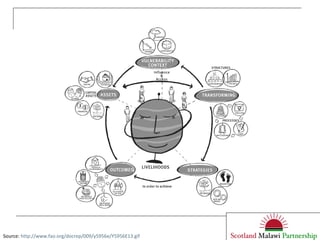
Definitions Livelihood – “The capabilities, assets (including both material and social resources) and activities required for a means of living” (Carney 1998, pp. 4) Individuals in poverty use five assets to meet basic needs and to help protect from shocks
Source:  http://www.fao.org/docrep/009/y5956e/Y5956E13.gif
Principles Understanding/People first  – Start by understanding local community priorities  Respond  – Act in response to expressed priorities of the community Multi-level   Engagement  – Working between large and small scale actors Partnership  – Public, private and civil-level engagement Sustainability  – Assess environmental, economic, institutional, and social impact
Principles for Conference Health partners encouraged to gain deeper insights into challenges/resources of Malawians and the vulnerability context Partnership and capacity building encouraged to increase effectiveness and sustainability of health activities despite shocks (climate change, economic challenges, etc)
Sources http://practicalaction.org/?id=t4sl_shelterapproach http://www.fao.org/docrep/009/y5956e/Y5956E13.gif

SMP - Maeghan Ray

  • 1.
    Sustainable Livelihoods FrameworkA Tool of Analysis for Poverty Reduction through Health
  • 2.
    Concept Tool toorganize issues surrounding situations of poverty Focuses on livelihoods instead of absolute income levels Planning incorporates an understanding of vulnerability factors (climate change, natural disasters, economic crises)
  • 3.
    Context Health inMalawi: Limited trained health staff – Critical shortage as classified by WHO Volatile agricultural market due to impact of climate change Increased vulnerability to poverty as world market fluctuates Malaria, HIV/AIDS, TB, and other poverty-related diseases still on the rise
  • 4.
    Definitions Livelihood –“The capabilities, assets (including both material and social resources) and activities required for a means of living” (Carney 1998, pp. 4) Individuals in poverty use five assets to meet basic needs and to help protect from shocks
  • 5.
  • 6.
    Principles Understanding/People first – Start by understanding local community priorities Respond – Act in response to expressed priorities of the community Multi-level Engagement – Working between large and small scale actors Partnership – Public, private and civil-level engagement Sustainability – Assess environmental, economic, institutional, and social impact
  • 7.
    Principles for ConferenceHealth partners encouraged to gain deeper insights into challenges/resources of Malawians and the vulnerability context Partnership and capacity building encouraged to increase effectiveness and sustainability of health activities despite shocks (climate change, economic challenges, etc)
  • 8.