Jeremy, Megan, Patryk,
Shawn, & Ela
03/11/2014
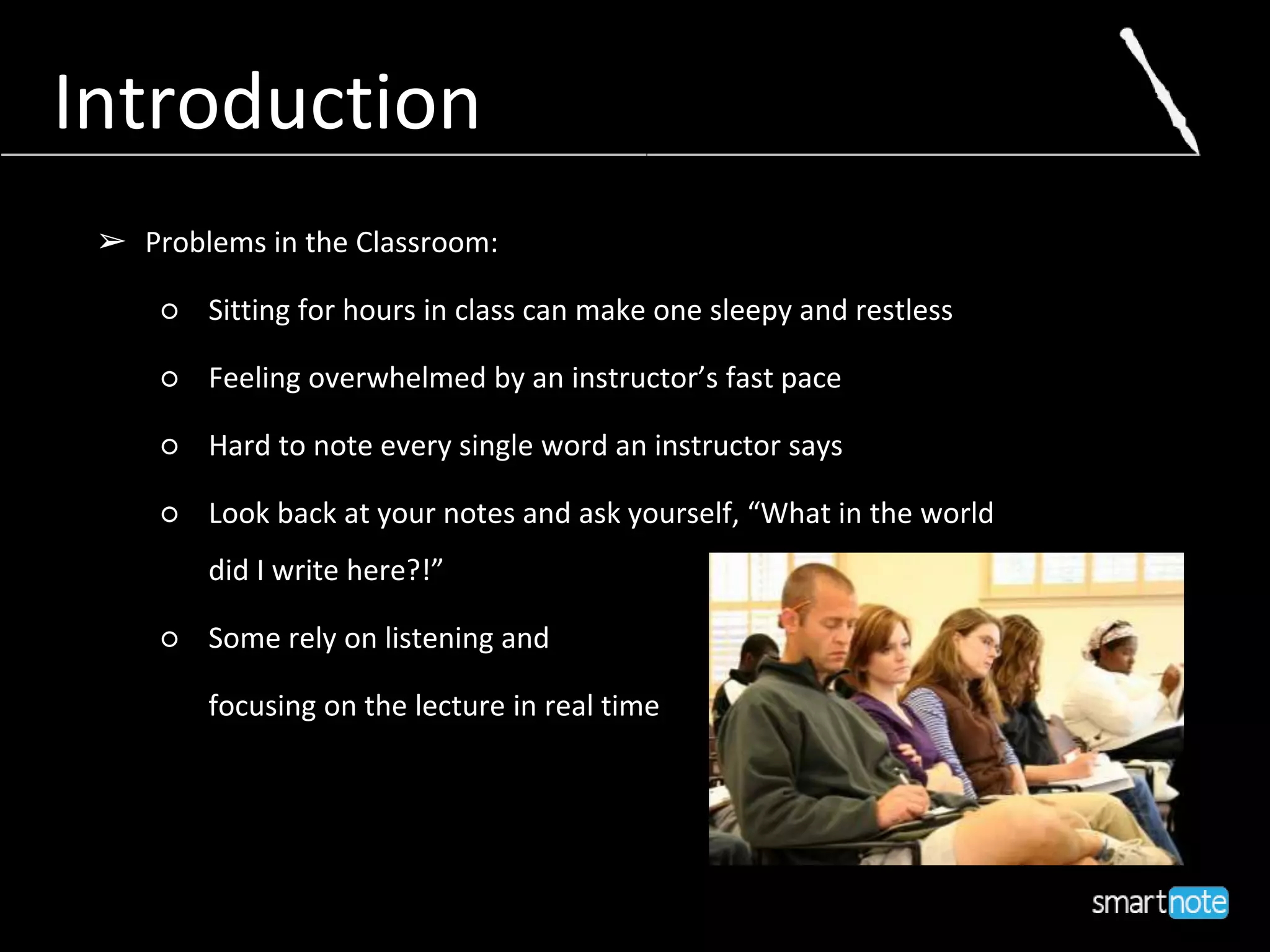
➢ Problems in the Classroom:
â—‹ Sitting for hours in class can make one sleepy and restless
○ Feeling overwhelmed by an instructor’s fast pace
â—‹ Hard to note every single word an instructor says
○ Look back at your notes and ask yourself, “What in the world
did I write here?!”
â—‹ Some rely on listening and
focusing on the lecture in real time
Introduction
Introduction
SmartNote is a brand new app which will record and transcribe a lecture. This will free the
student to pay attention to the instructor.
➢ Technology up to this point leaves limited options:
â—‹ Taking notes in real time
â—‹ Recording the lecture and playing it back in real time
â—‹ Hoping the classroom has a video lecture capabilities
➢ SmartNote technology offers:
â—‹ Record up to several hours of audio and convert it into organized text on Microsoft
Word, OpenOffice, or WordPad
â—‹ Allows for use in several languages such as English, Spanish, and Mandarin
â—‹ Automatic upload to the cloud
○ Leave the file on user’s phone, playback the audio recording, or email the file
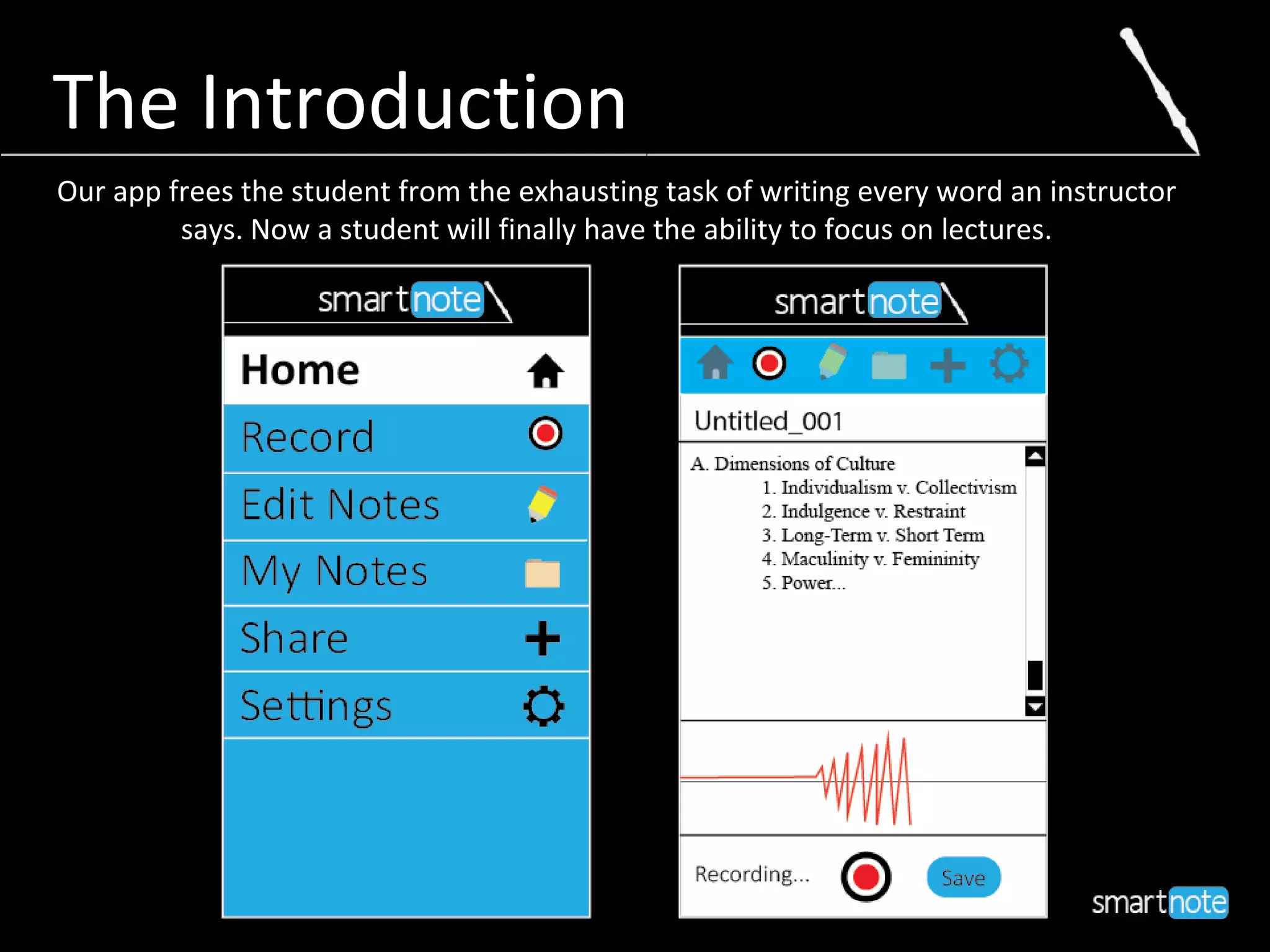
Our app frees the student from the exhausting task of writing every word an instructor
says. Now a student will finally have the ability to focus on lectures.
The Introduction
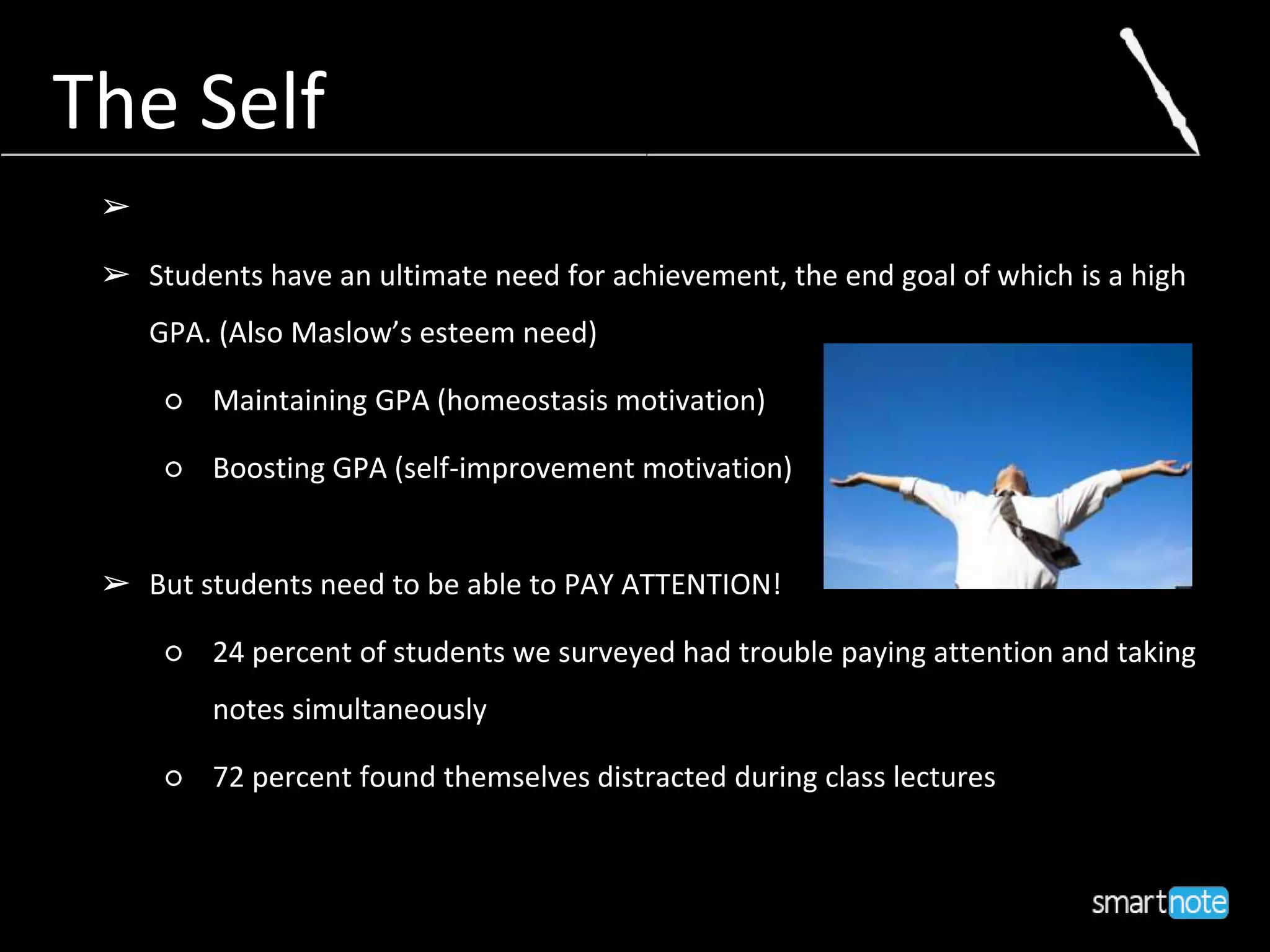
The Self
➢
➢ Students have an ultimate need for achievement, the end goal of which is a high
GPA. (Also Maslow’s esteem need)
â—‹ Maintaining GPA (homeostasis motivation)
â—‹ Boosting GPA (self-improvement motivation)
➢ But students need to be able to PAY ATTENTION!
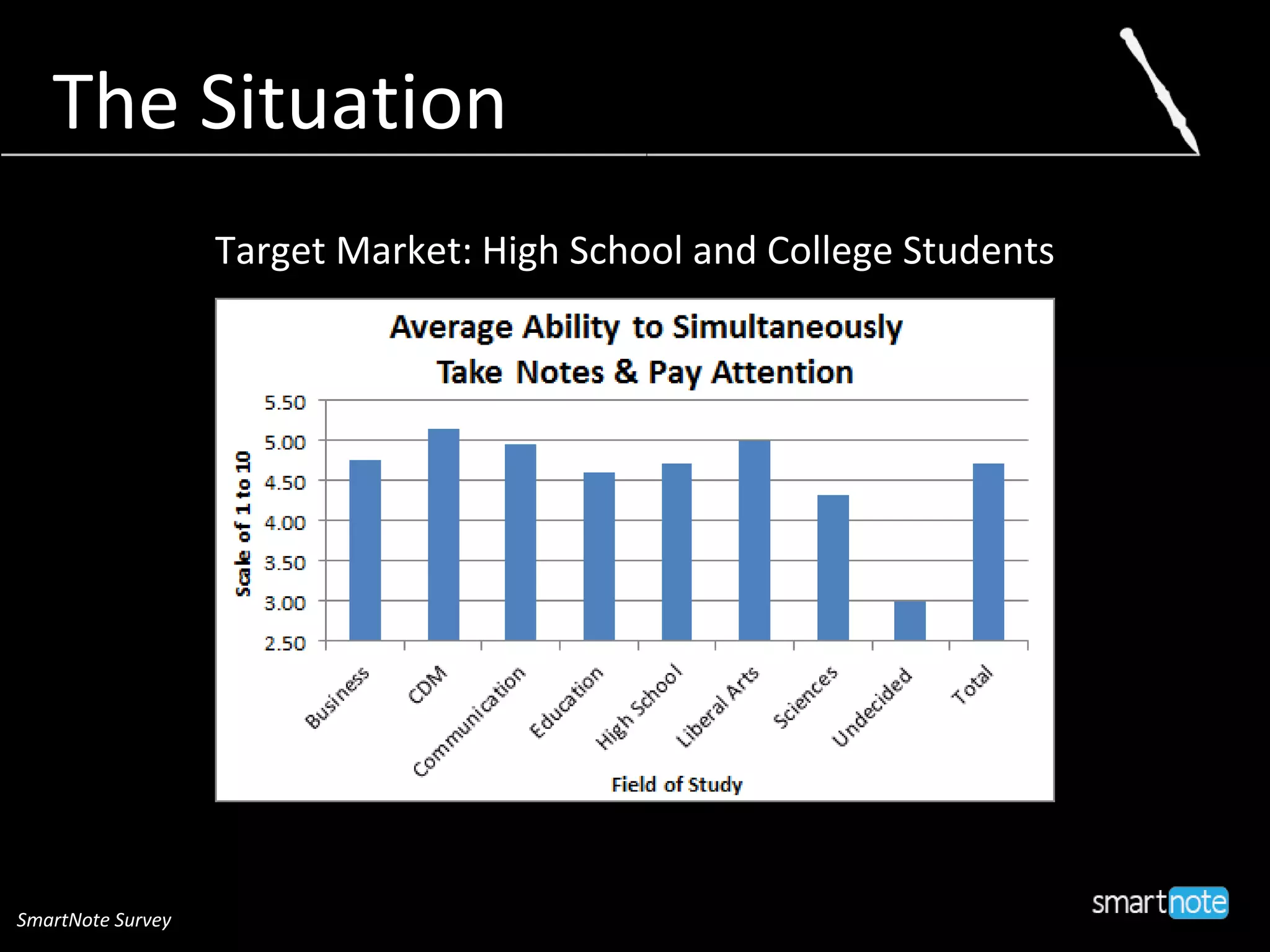
â—‹ 24 percent of students we surveyed had trouble paying attention and taking
notes simultaneously
â—‹ 72 percent found themselves distracted during class lectures
The SelfThe Self
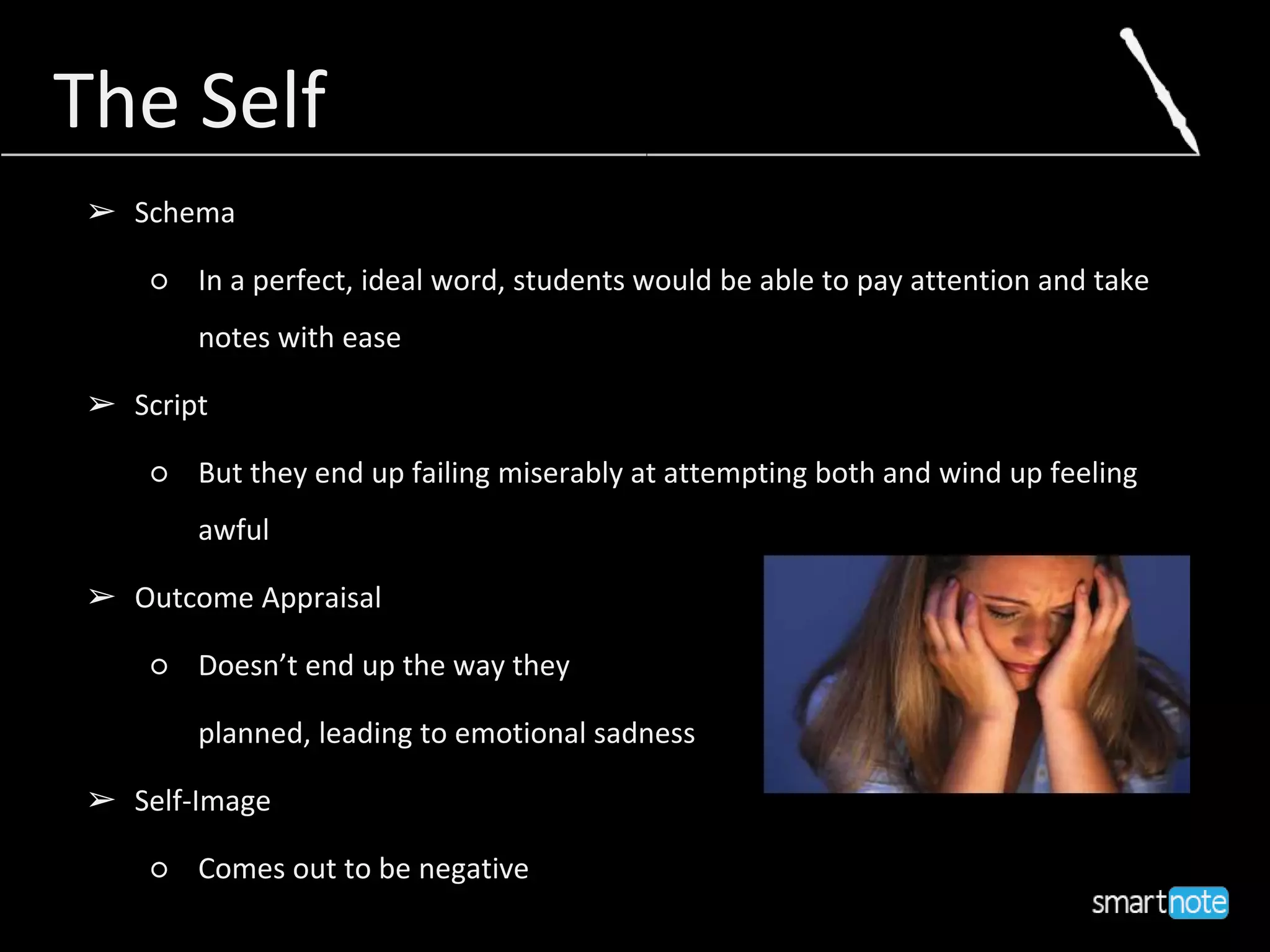
➢ Schema
â—‹ In a perfect, ideal word, students would be able to pay attention and take
notes with ease
➢ Script
â—‹ But they end up failing miserably at attempting both and wind up feeling
awful
➢ Outcome Appraisal
○ Doesn’t end up the way they
planned, leading to emotional sadness
➢ Self-Image
â—‹ Comes out to be negative
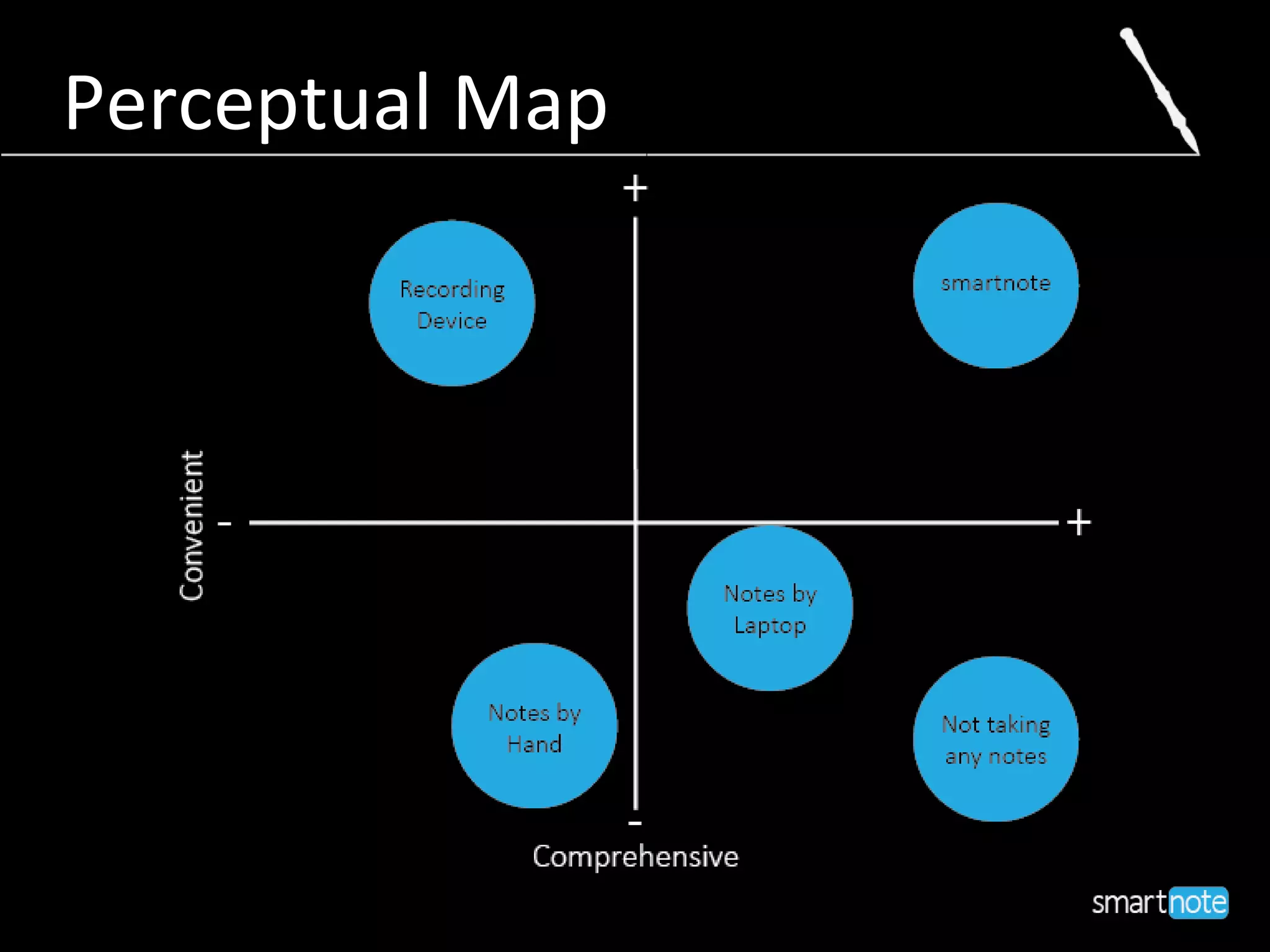
Perceptual Map
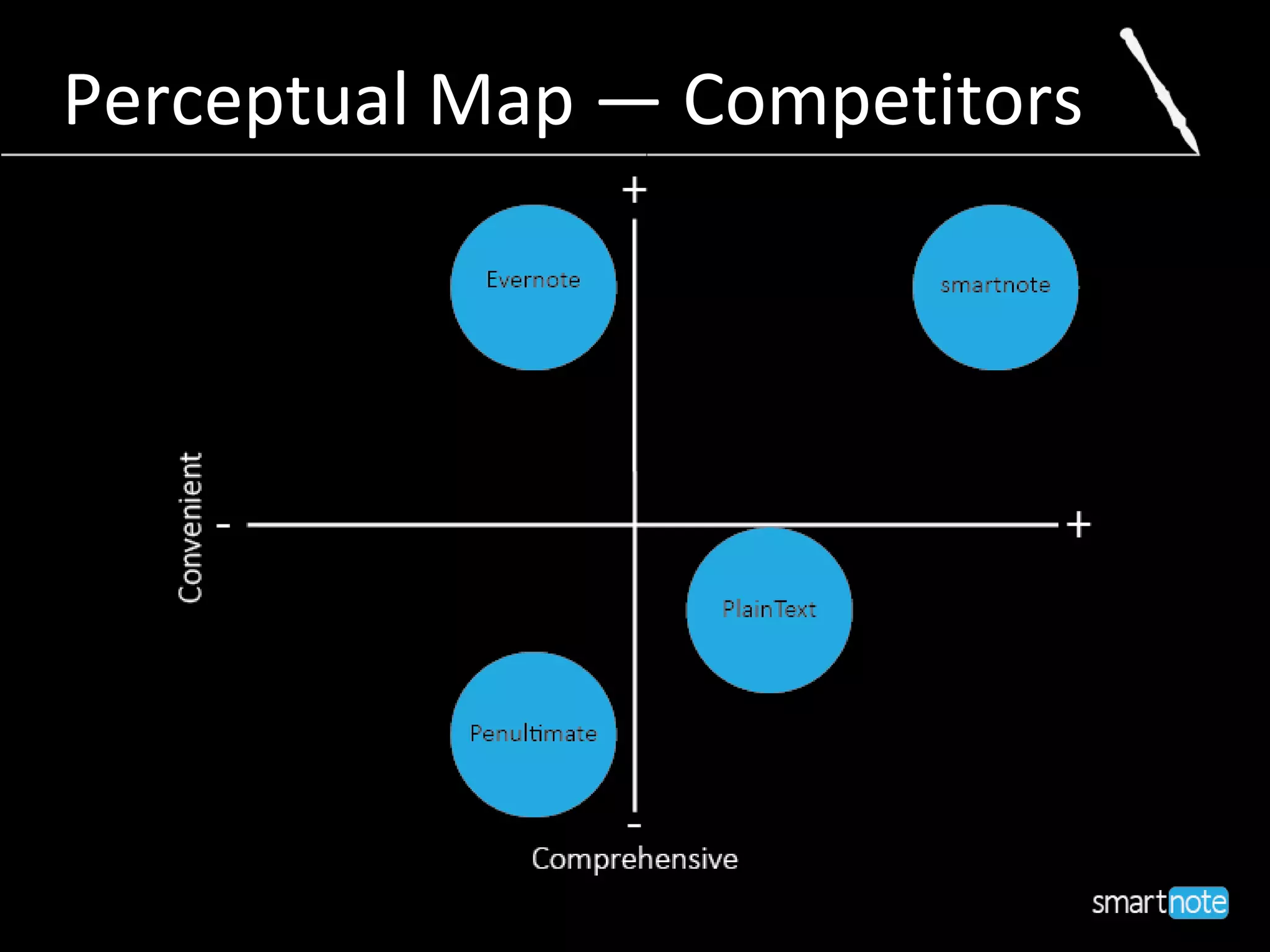
Perceptual Map — Competitors
The Situation
➢ Traditional Classroom Setting
â—‹ Notes by hand
â—‹ Notes on Laptop
â—‹ Use of Recording Device
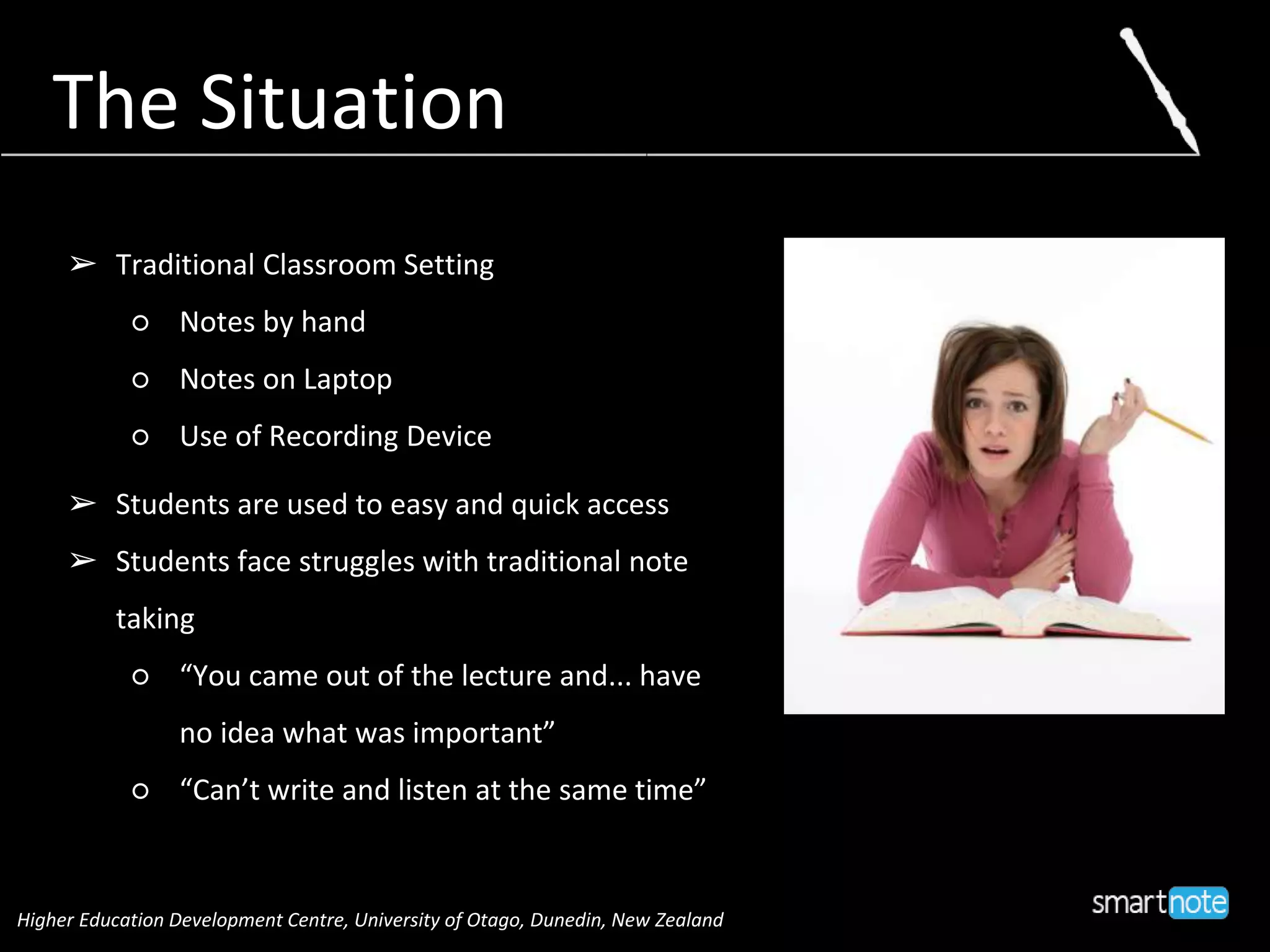
➢ Students are used to easy and quick access
➢ Students face struggles with traditional note
taking
○ “You came out of the lecture and... have
no idea what was important”
○ “Can’t write and listen at the same time”
Higher Education Development Centre, University of Otago, Dunedin, New Zealand
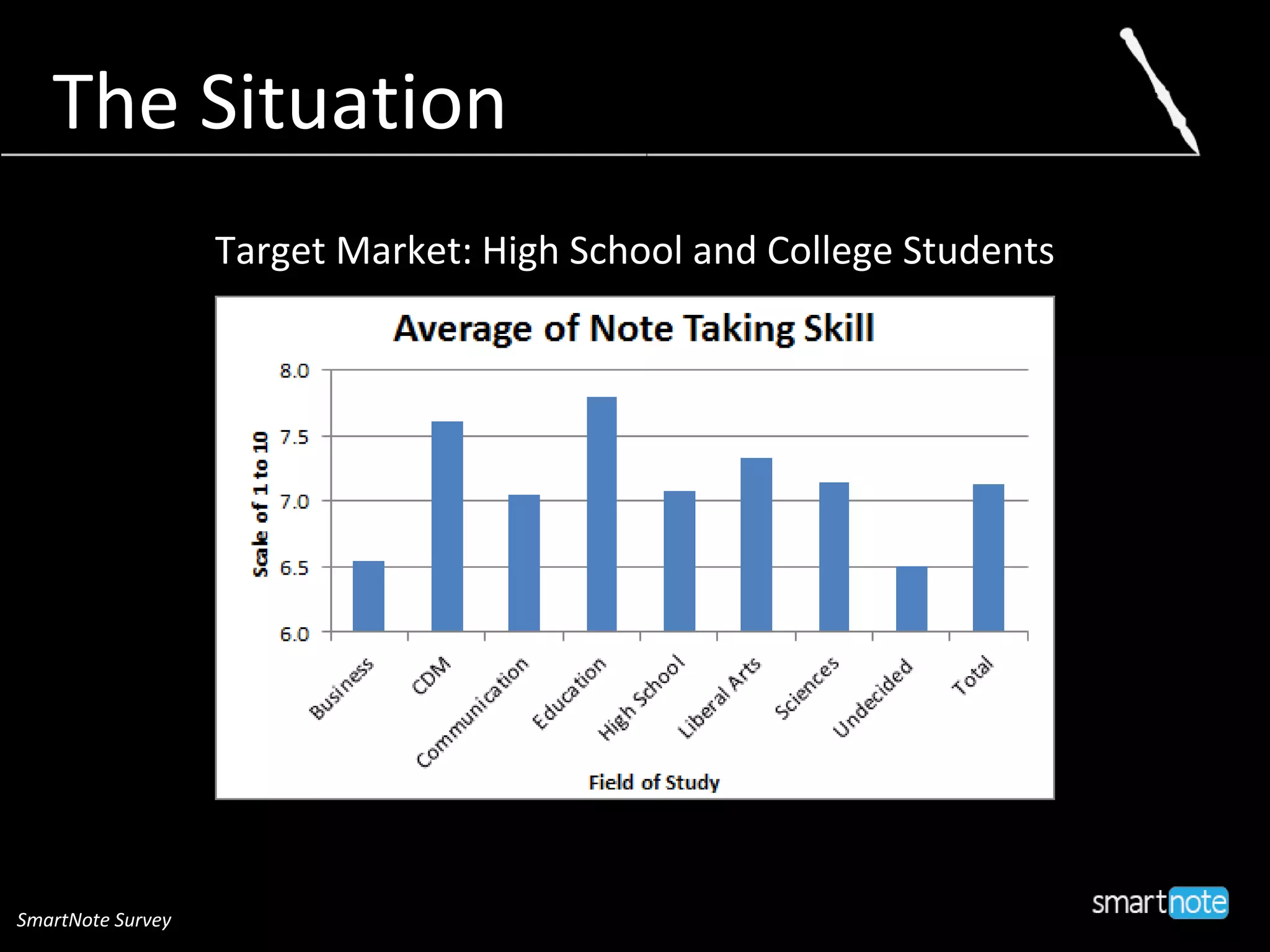
The Situation
Target Market: High School and College Students
SmartNote Survey
The Situation
Target Market: High School and College Students
SmartNote Survey
The Situation
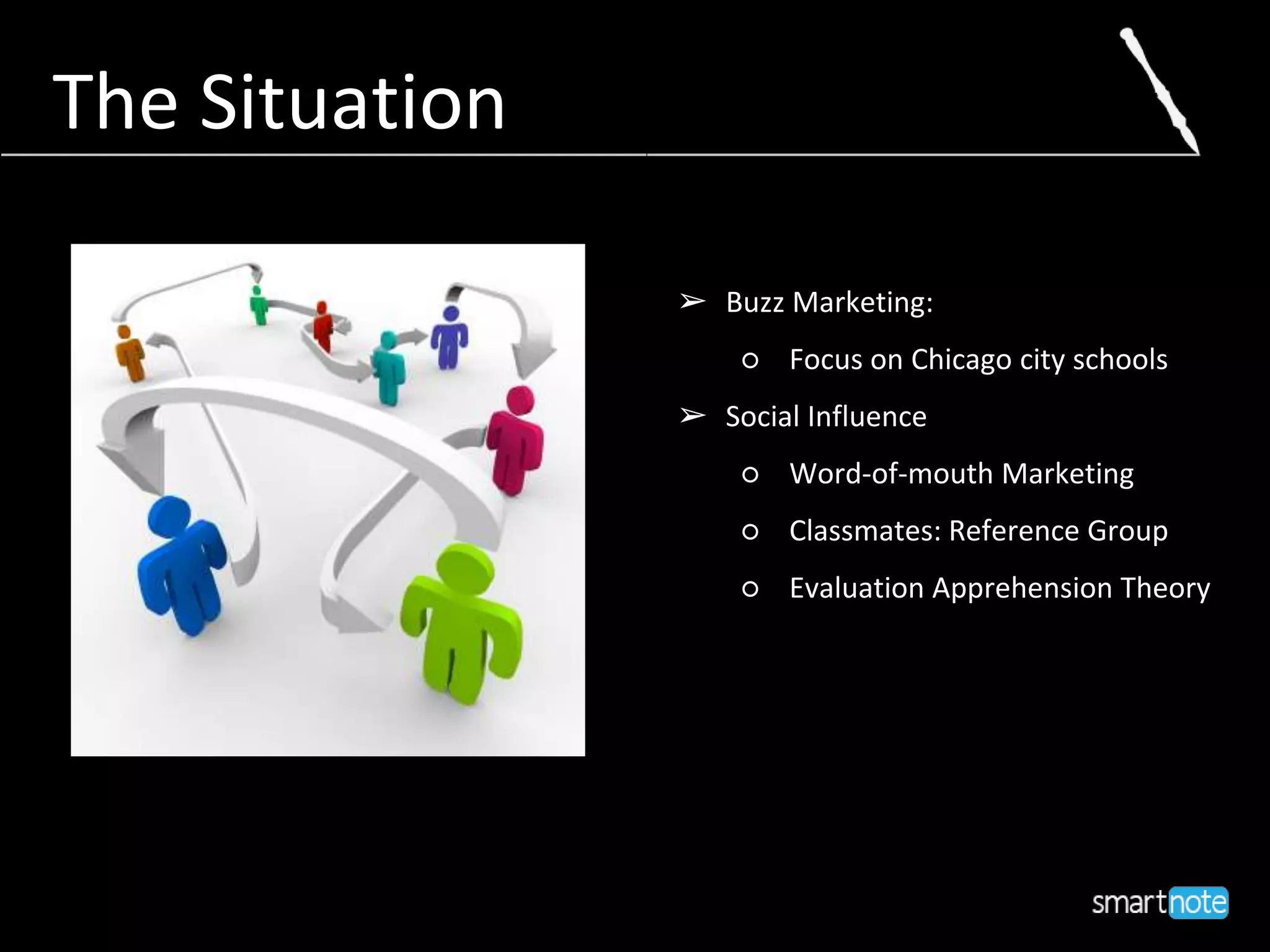
➢ Buzz Marketing:
â—‹ Focus on Chicago city schools
➢ Social Influence
â—‹ Word-of-mouth Marketing
â—‹ Classmates: Reference Group
â—‹ Evaluation Apprehension Theory
The Solution
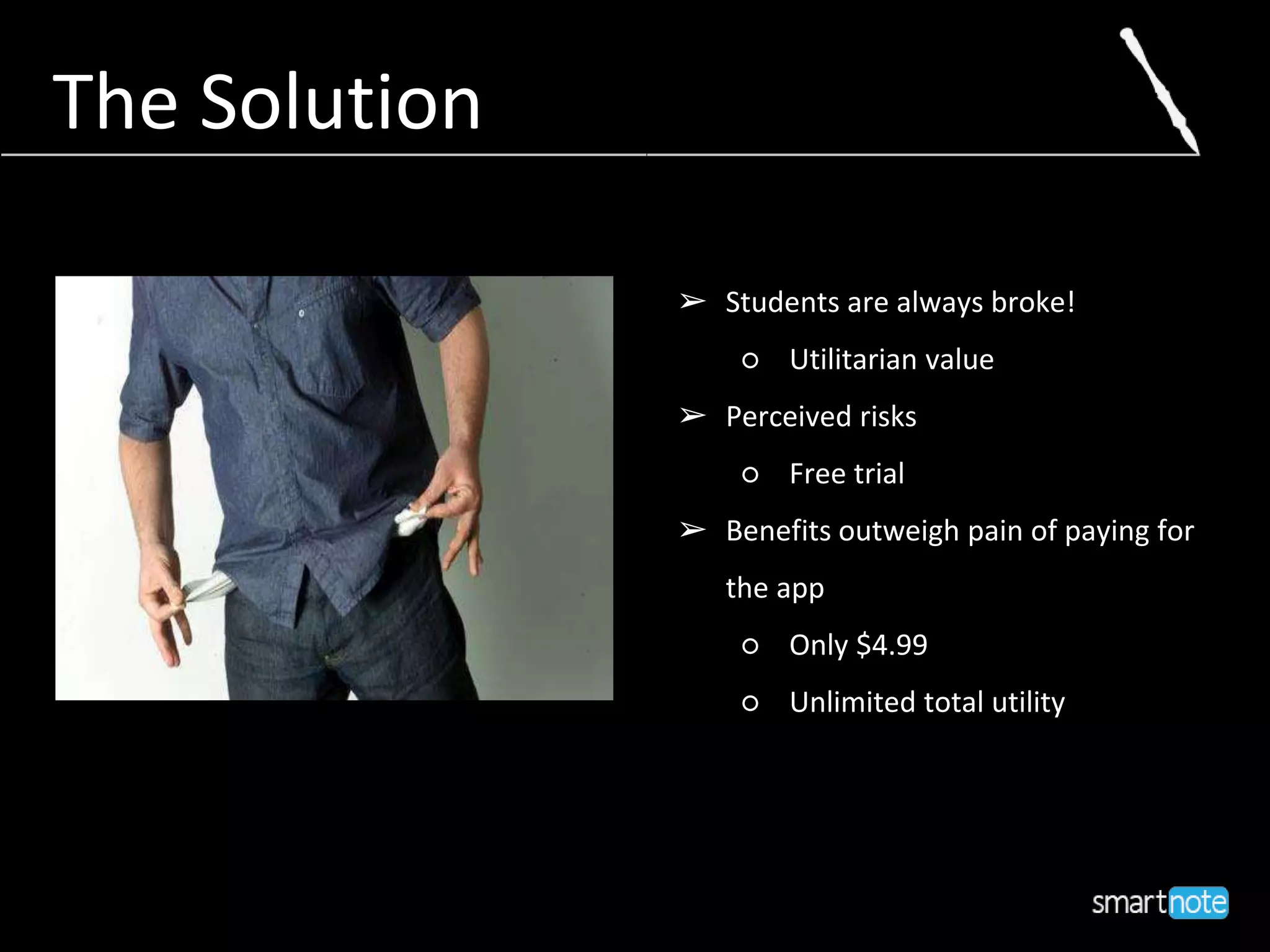
➢ Students are always broke!
â—‹ Utilitarian value
➢ Perceived risks
â—‹ Free trial
➢ Benefits outweigh pain of paying for
the app
â—‹ Only $4.99
â—‹ Unlimited total utility
The Solution
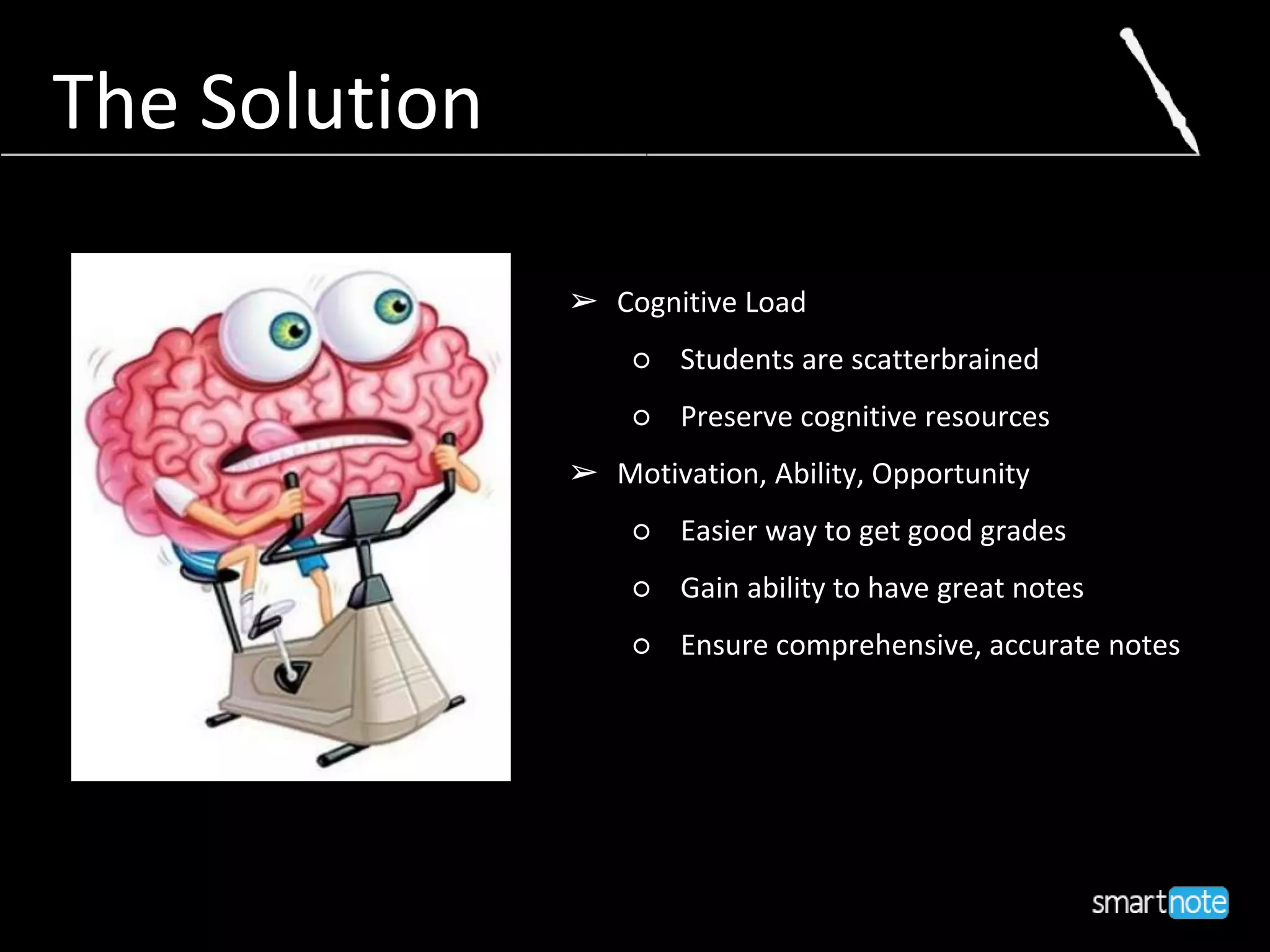
➢ Cognitive Load
â—‹ Students are scatterbrained
â—‹ Preserve cognitive resources
➢ Motivation, Ability, Opportunity
â—‹ Easier way to get good grades
â—‹ Gain ability to have great notes
â—‹ Ensure comprehensive, accurate notes
The Proposal
Target: Students—primarily college students
Positioning: Quick and convenient access to lecture notes
4 P’s:
Price: $4.99
Product: Smartphone application
Placement: Google Play & Apple’s App Store
Promotion: “Ain’t Nobody Got Time fo’ Dat”
The Proposal
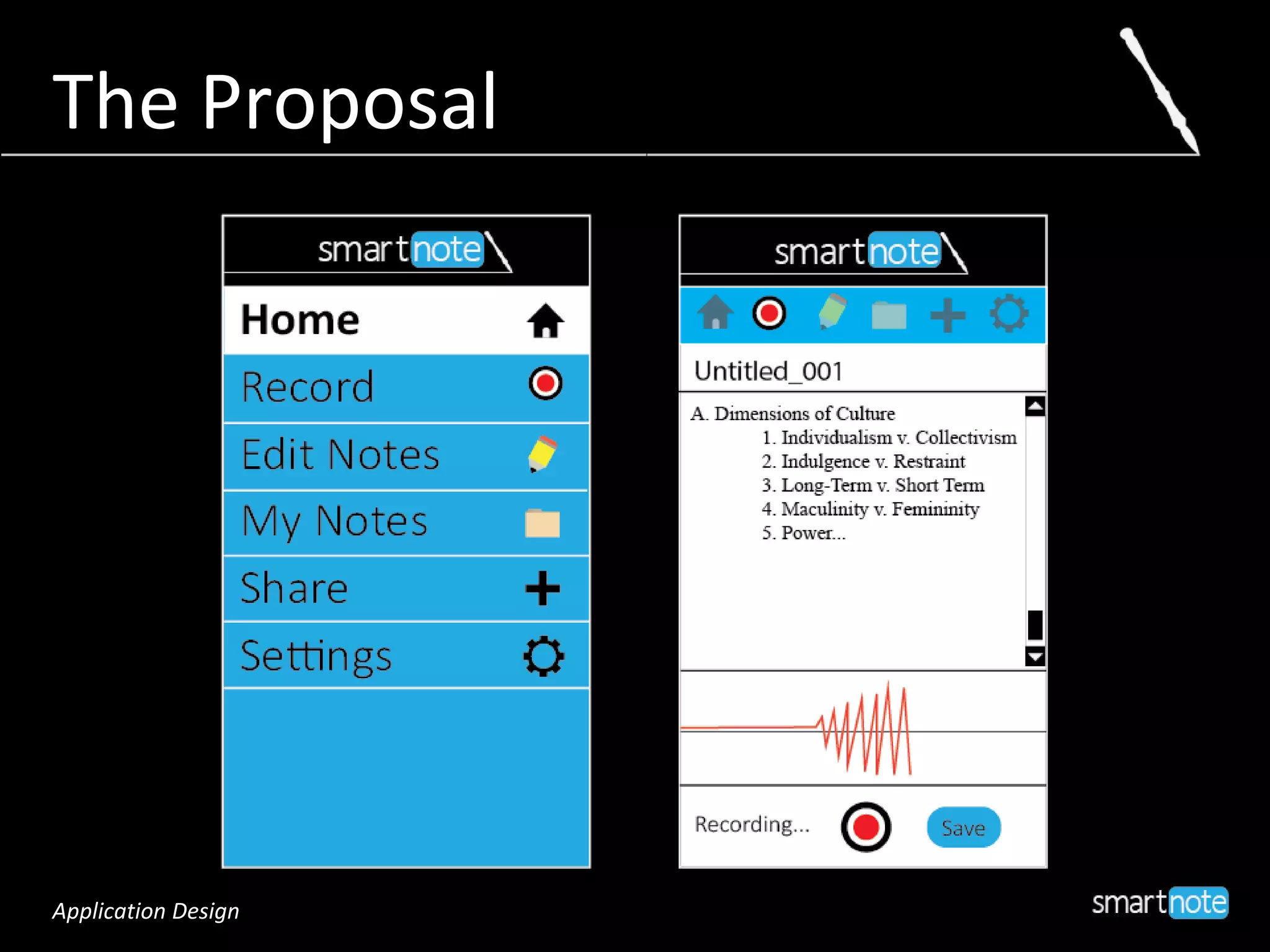
Application Design
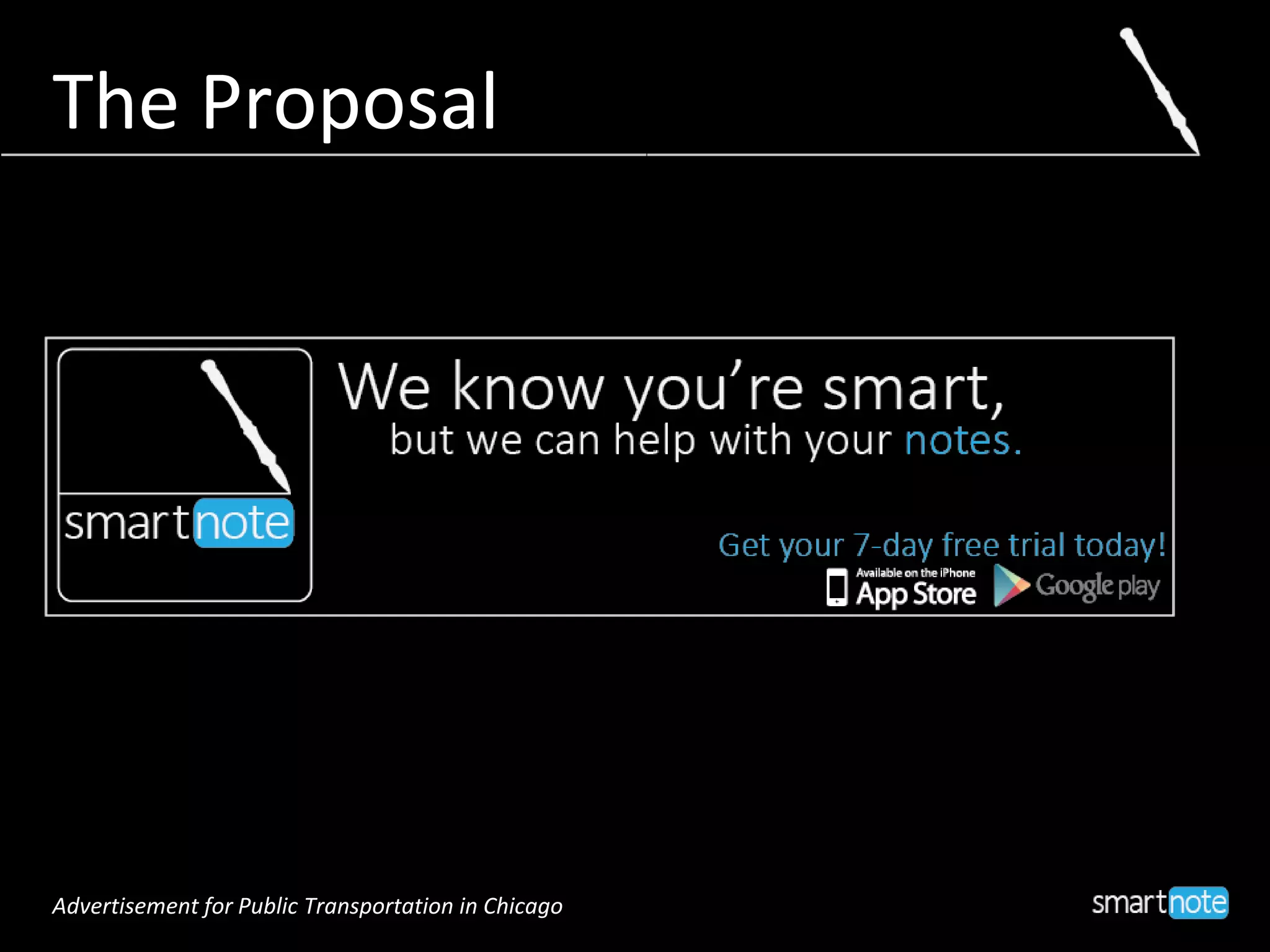
Advertisement for Public Transportation in Chicago
The Proposal
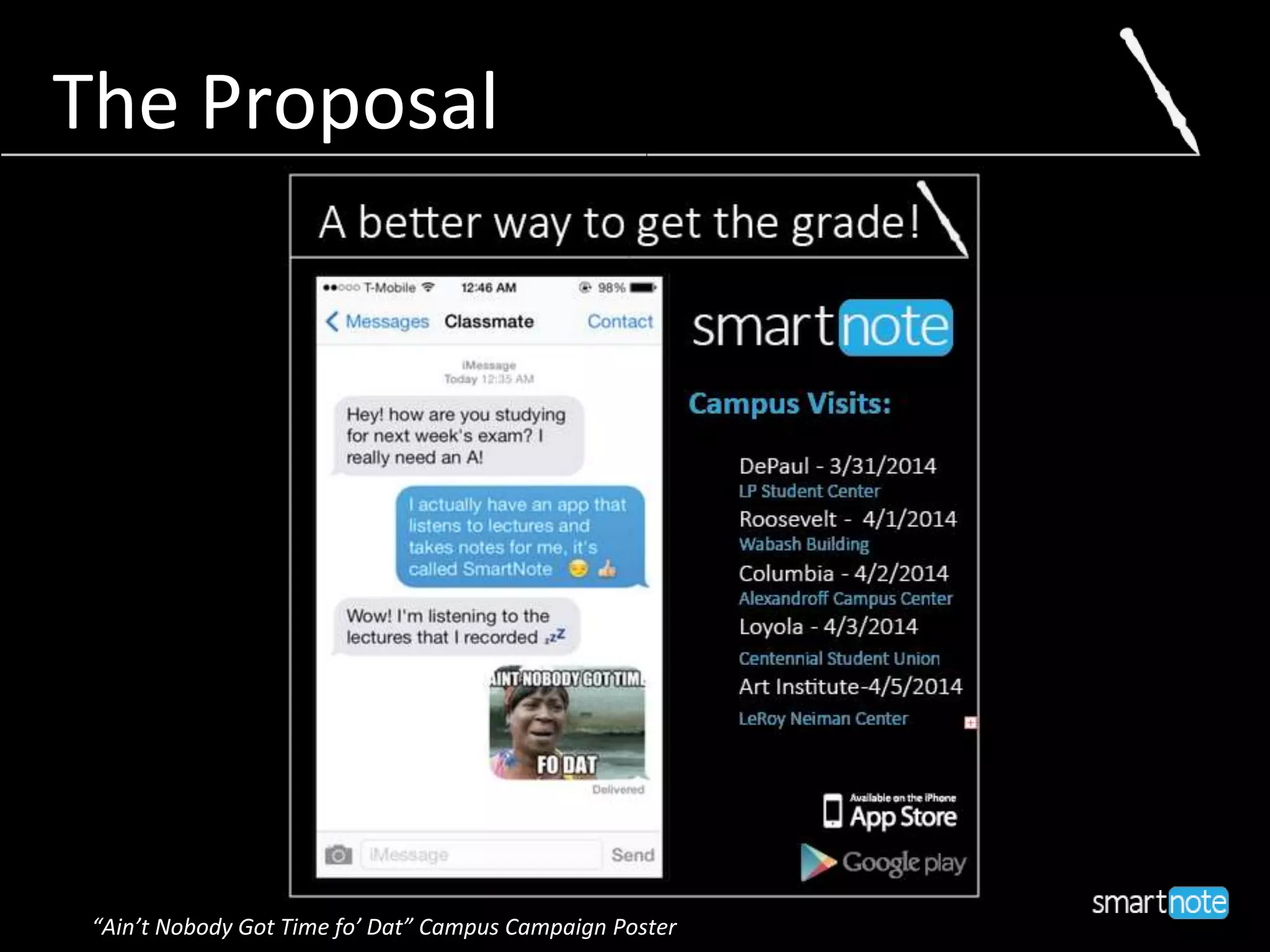
“Ain’t Nobody Got Time fo’ Dat” Campus Campaign Poster
The Proposal
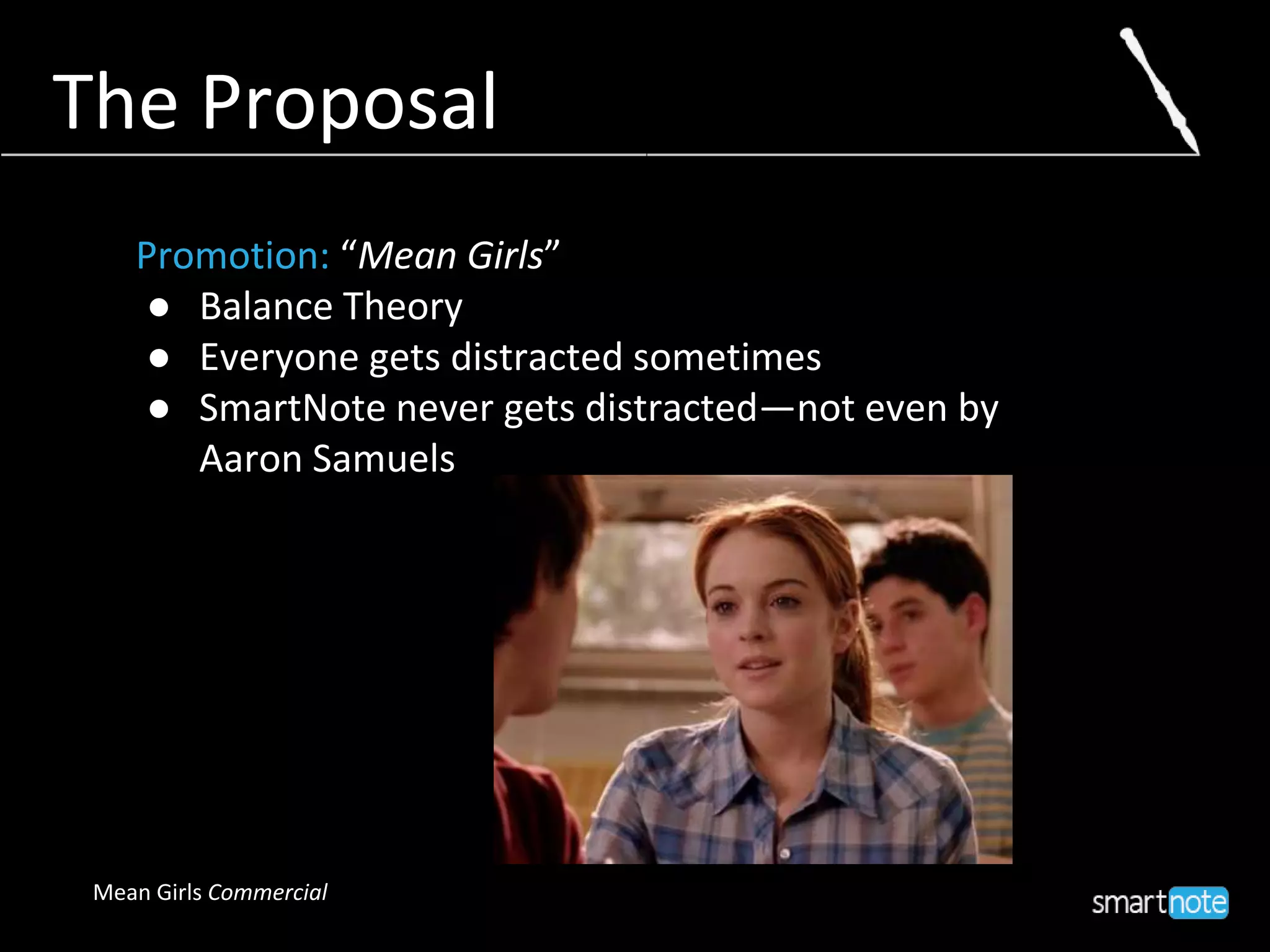
Mean Girls Commercial
The Proposal
Promotion: “Mean Girls”
â—Ź Balance Theory
â—Ź Everyone gets distracted sometimes
● SmartNote never gets distracted—not even by
Aaron Samuels
Conclusion
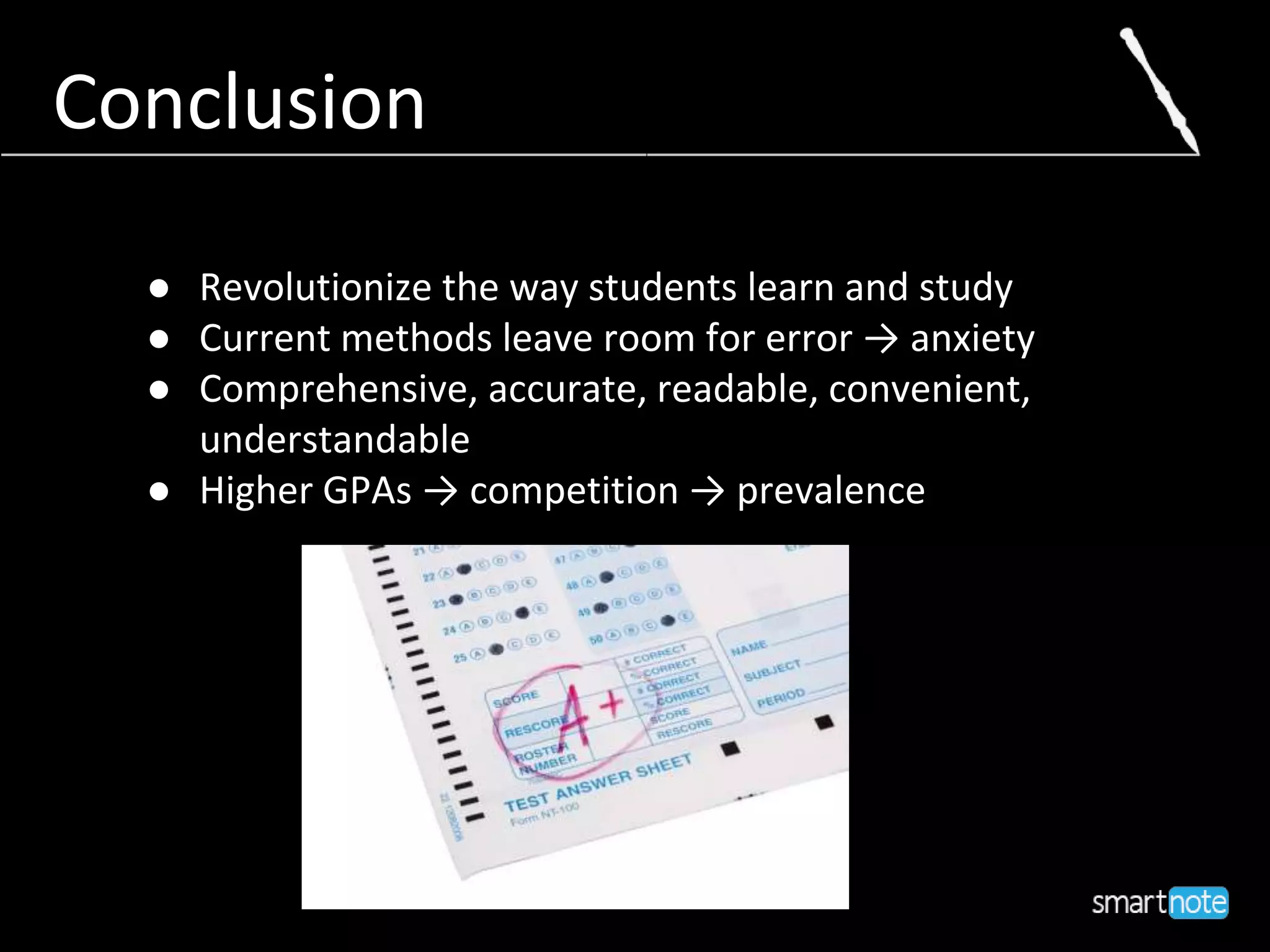
â—Ź Revolutionize the way students learn and study
● Current methods leave room for error → anxiety
â—Ź Comprehensive, accurate, readable, convenient,
understandable
● Higher GPAs → competition → prevalence
Questions?

SmartNote Presentation

  • 1.
  • 2.
    ➢ Problems inthe Classroom: ○ Sitting for hours in class can make one sleepy and restless ○ Feeling overwhelmed by an instructor’s fast pace ○ Hard to note every single word an instructor says ○ Look back at your notes and ask yourself, “What in the world did I write here?!” ○ Some rely on listening and focusing on the lecture in real time Introduction
  • 3.
    Introduction SmartNote is abrand new app which will record and transcribe a lecture. This will free the student to pay attention to the instructor. ➢ Technology up to this point leaves limited options: ○ Taking notes in real time ○ Recording the lecture and playing it back in real time ○ Hoping the classroom has a video lecture capabilities ➢ SmartNote technology offers: ○ Record up to several hours of audio and convert it into organized text on Microsoft Word, OpenOffice, or WordPad ○ Allows for use in several languages such as English, Spanish, and Mandarin ○ Automatic upload to the cloud ○ Leave the file on user’s phone, playback the audio recording, or email the file
  • 4.
    Our app freesthe student from the exhausting task of writing every word an instructor says. Now a student will finally have the ability to focus on lectures. The Introduction
  • 5.
    The Self ➢ ➢ Studentshave an ultimate need for achievement, the end goal of which is a high GPA. (Also Maslow’s esteem need) ○ Maintaining GPA (homeostasis motivation) ○ Boosting GPA (self-improvement motivation) ➢ But students need to be able to PAY ATTENTION! ○ 24 percent of students we surveyed had trouble paying attention and taking notes simultaneously ○ 72 percent found themselves distracted during class lectures
  • 6.
    The SelfThe Self ➢Schema ○ In a perfect, ideal word, students would be able to pay attention and take notes with ease ➢ Script ○ But they end up failing miserably at attempting both and wind up feeling awful ➢ Outcome Appraisal ○ Doesn’t end up the way they planned, leading to emotional sadness ➢ Self-Image ○ Comes out to be negative
  • 7.
  • 8.
  • 9.
    The Situation ➢ TraditionalClassroom Setting ○ Notes by hand ○ Notes on Laptop ○ Use of Recording Device ➢ Students are used to easy and quick access ➢ Students face struggles with traditional note taking ○ “You came out of the lecture and... have no idea what was important” ○ “Can’t write and listen at the same time” Higher Education Development Centre, University of Otago, Dunedin, New Zealand
  • 10.
    The Situation Target Market:High School and College Students SmartNote Survey
  • 11.
    The Situation Target Market:High School and College Students SmartNote Survey
  • 12.
    The Situation ➢ BuzzMarketing: ○ Focus on Chicago city schools ➢ Social Influence ○ Word-of-mouth Marketing ○ Classmates: Reference Group ○ Evaluation Apprehension Theory
  • 13.
    The Solution ➢ Studentsare always broke! ○ Utilitarian value ➢ Perceived risks ○ Free trial ➢ Benefits outweigh pain of paying for the app ○ Only $4.99 ○ Unlimited total utility
  • 14.
    The Solution ➢ CognitiveLoad ○ Students are scatterbrained ○ Preserve cognitive resources ➢ Motivation, Ability, Opportunity ○ Easier way to get good grades ○ Gain ability to have great notes ○ Ensure comprehensive, accurate notes
  • 15.
    The Proposal Target: Students—primarilycollege students Positioning: Quick and convenient access to lecture notes 4 P’s: Price: $4.99 Product: Smartphone application Placement: Google Play & Apple’s App Store Promotion: “Ain’t Nobody Got Time fo’ Dat”
  • 16.
  • 17.
    Advertisement for PublicTransportation in Chicago The Proposal
  • 18.
    “Ain’t Nobody GotTime fo’ Dat” Campus Campaign Poster The Proposal
  • 19.
    Mean Girls Commercial TheProposal Promotion: “Mean Girls” ● Balance Theory ● Everyone gets distracted sometimes ● SmartNote never gets distracted—not even by Aaron Samuels
  • 20.
    Conclusion ● Revolutionize theway students learn and study ● Current methods leave room for error → anxiety ● Comprehensive, accurate, readable, convenient, understandable ● Higher GPAs → competition → prevalence
  • 21.