International Research Journal of Engineering and Technology (IRJET) e-ISSN: 2395-0056
Volume: 10 Issue: 10 | Oct 2023 www.irjet.net p-ISSN: 2395-0072
© 2023, IRJET | Impact Factor value: 8.226 | ISO 9001:2008 Certified Journal | Page 720
SLOPE STABILITY ANALYSIS USING GeoStudio AND PLAXIS 2D
SOFTWARE: A COMPARATIVE STUDY
Pardhan Remesh1, Radhe Sha2, Saran Mohan3, Shabinas Karthik S4
And Merin Mariya Paul5
1B. Tech Student, Department of Civil Engineering, MACE, Kothamangalam, Kerala, India
2B. Tech Student, Department of Civil Engineering, MACE, Kothamangalam, Kerala, India
3B. Tech Student, Department of Civil Engineering, MACE, Kothamangalam, Kerala, India
4B. Tech Student, Department of Civil Engineering, MACE, Kothamangalam, Kerala, India
5Project Guide Assistant Professor, Department of Civil Engineering, MACE, Kothamangalam, Kerala, India
---------------------------------------------------------------------***---------------------------------------------------------------------
Abstract - All the civil engineering structures are supported on or below the surface of the earth. The project aims to conduct
a comparative study of stability analysis of slopes of roads using 2 software - GeoStudio and PLAXIS. Slope stability is a critical
factor in the design and construction of any civil engineering structure. Although individual slope failures generally are not so
spectacular or as costly as certain other natural catastrophes like earthquakes, major floods, and tornadoes; they are more
widespread and the total financial loss due to slope failures probably is greater than that for any other single geologic hazard
to mankind. The objective of this project is to evaluate and compare the stability of slopes using different analytical and
numerical methods. The landslide during the monsoon season in Kerala widely affects the livelihood of people. Natural or
landscaped slopes may lose their stability by detachment and sliding of a soil volume along a failure surface, because of
exceeding its shear strength. This collapse may be developed due to excavation activities and rainfall infiltration. In this study,
we present a slope stability analysis using numerical modelling. The slope stability analysis consists of determining the soil's
mechanical properties, shape, and position of the possible failure surface. The sample collected was tested in the geotechnical
lab. Once these characteristics have been extracted, the stability of an existing slope in Thodupuzha - Cheruthoni Road is
examined, which has collapsed due to floods during the rainfall season. The study will involve analysing seepage patterns and
evaluating the potential for slope failure using both software programs. The results will be compared to identify any
differences in accuracy and efficiency between the two methods. The findings of this study will be useful in determining the
most appropriate software program for seepage analysis on road slopes. The results of the study will provide valuable insights
into the most effective methods for analysing, designing, and maintaining stable slopes for roads.
Key Words: GeoStudio, PLAXIS, Seepage, Slope Stability, Landslides, Geotechnical Engineering
1. INTRODUCTION
1.1 General
The stability of roads in slopes is a critical concern in geotechnical engineering, as it directly affects the safety of drivers
and passengers. Slopes are prone to instability due to factors such as soil erosion, landslides, and water infiltration. Slope
stability analysis involves the evaluation of various factors such as the slope angle, soil properties, water content, and
vegetation cover to determine the potential for slope failure. Geotechnical investigations involve the testing of soil and
rock properties to determine the strength and stability of the slope. To prevent these issues, it is important to analyse and
understand the seepage behaviour of the soil. In this report, we will conduct a comparative study of stability analysis using
two popular software programs in the field of geotechnical engineering: GeoStudio and PLAXIS.
The stability of roads on slopes is crucial for ensuring the safety of drivers and passengers. Through careful evaluation,
analysis, and mitigation measures, the stability of roads on slopes can be improved and maintained for safe and reliable
transportation. The stability of slopes near roadways is influenced by various factors such as soil type, slope angle, rainfall,
vegetation cover, and other geological and environmental factors. Therefore, it is essential to analyse and understand
these factors.
Several methods can be used to analyse the stability of slopes near roadways, such as the limit equilibrium method, the
finite element method, and the numerical modelling method. Different seepage analysis methods, such as steady-state and
transient analysis, can be used to evaluate the seepage conditions of roadway slopes. Each method has its advantages and
limitations, and the selection of a suitable method depends on various factors such as the complexity of the slope, rainfall
pattern and the available resources. The stability analysis of slopes on roads is a complex process that requires a thorough
International Research Journal of Engineering and Technology (IRJET) e-ISSN: 2395-0056
Volume: 10 Issue: 10 | Oct 2023 www.irjet.net p-ISSN: 2395-0072
© 2023, IRJET | Impact Factor value: 8.226 | ISO 9001:2008 Certified Journal | Page 721
understanding of various geological and environmental factors. The selection of a suitable analysis method and proper
maintenance and monitoring of slopes are crucial to ensure the safety of slopes. The seepage analysis results can be used
to determine the appropriate drainage measures for road slopes. For example, the use of drainage blankets, sub-drains, or
retaining walls can help control the seepage and improve the stability of slopes.
1.2 Slope Stability
A slope is an inclined ground surface which can be either natural or human made. Slope stability refers to the condition
that an inclined slope can withstand its own weight and external forces without experiencing displacement. Slope stability
uses principles of soil/rock mechanics, geotechnical engineering, and engineering geology. When the stability conditions
are not met, the soil or the rock mass of the slope may experience downward movement which could be either slow or
devastatingly rapid. This phenomenon is known as slope failure or landslides. Slope failures systematically harm human
infrastructure and cause numerous fatalities every year.
Assessing a slope’s stability is a challenging yet important aspect of civil engineering. If the forces that resist the
movement are greater than those driving the movement, the slope is considered stable. A factor of safety (FOS) is
calculated by dividing the resistance by the driving forces. A factor of safety greater than 1.00 suggests that the slope is
stable. Slope stability analysis is implemented in numerous applications of civil engineering projects such as dams,
embankments, excavated slopes, and natural slopes.
1.3 Scope of The Project
Kerala is highly vulnerable to natural disasters due to changing climatic dynamics, its location along the seacoast and a
steep gradient along the slopes of the Western Ghats. Kerala is one of the most densely populated Indian states (860
persons per sq. km), making it more vulnerable to damages and losses on account of disasters. Floods are the most
common natural hazard in the state. Kerala experienced the worst-ever floods between the 1st of June and to 18th of
August 2018. The highest rainfall of 771mm was experienced between the 1st to 20th of August. The torrential rains
triggered several landslides, a total of 341 landslides in 10 districts. Out of that, 143 landslides were reported in the Idukki
district. Many houses were affected by flood and landslides and there were numerous casualties. Landslides were seen in
slopes above 22°.
The main scope of this study is the comparison of analysis of slope stability using the limit equilibrium and finite element
methods. GeoStudio and PLAXIS software are used for this purpose. Two-dimensional models are prepared for analysis.
The study aims at analyzing the factor of safety due to different entry-exit conditions. The results obtained from both
software are compared and conclusions obtained. Mitigation measures are suggested to counteract the failures if any.
1.4 Objectives
1. To determine the strength parameters (C, ϕ) of the study location.
2. To evaluate the strength & stability of an existing slope
3. To compare the results from analysis using GeoStudio and PLAXIS 2D software.
4. To carry out a parametric study on:
i) Analysis of the slope in Thodupuzha - Cheruthoni road
ii) Analysis using different slope angles
iii) Analysis of two-layer heterogeneous strata
iv) Analysis of three-layer heterogeneous strata
v) Effect of cohesion and angle of internal friction on slope stability
1.5 Organisation of The Project
All the procedures and steps adopted to complete the project are explained in this report. The report is organised into
eight chapters.
Chapter 1 introduces the topic of the project, its objectives, scope, and significance.
Chapter 2 deals with the literature relevant to this study.
Chapter 3 gives the details and results of laboratory investigations conducted.
Chapter 4 provides the proposed methodology for the work and software details.
International Research Journal of Engineering and Technology (IRJET) e-ISSN: 2395-0056
Volume: 10 Issue: 10 | Oct 2023 www.irjet.net p-ISSN: 2395-0072
© 2023, IRJET | Impact Factor value: 8.226 | ISO 9001:2008 Certified Journal | Page 722
Chapter 5 deals with the validation of numerical modelling.
Chapter 6 deals with numerical modelling and analysis of parametric study.
Chapter 7 deals with the comparison of results obtained from the analysis.
Chapter 8 provides the conclusion of the project.
2. LITERATURE REVIEW
In the paper by Heidarnejad, M (2017) he studies the effect of seepage on earthen dams using GeoStudio software
through which SEEP/W was used to analyse seepage and flow net. All the properties of the Jereh earthen dam under
construction such as the height of the foundation, embankment height, crest width and the material properties used in the
construction of the dam which includes elastic modulus, Poisson's ratio, saturated unit weight, wet weight, volume weight
water, angle of internal friction, coefficient of cohesion, and other properties were taken from the consulting company who
were responsible for designing and constructing the project. Through the seepage analysis, it was found that seepage is a
problematic issue in earth dams, and they proposed some suggestions. It is recommended that other studies should be
carried out to investigate other earthen dams with the given software. It is suggested that other researchers apply
different kinds of software as well as other numerical models to compare them with the GeoStudio software and other
research should be done to investigate the effect of earthquakes and slope stability on the Jereh Dam.
The study conducted by Tharindu Abeykoon and Shiran Jayakody (2022) showed that rainfall-induced slope instability
is governed by a complex interaction of topographical, hydrological, and geological conditions of the slopes. In this study,
two critical slopes were identified based on high rates of erosion, sediment run-off, and elevated risk in Eden Road and
Newsham in Lake Baroon Catchment, North Maleny, Queensland, Australia. The movement of water flow was analysed in
SEEP/W and fed into slope stability analyses to 3 determine the FS of the slopes. The magnitude and the rate of FS
reduction are proportional to the applied rainfall intensity for a particular slope angle. Therefore, the higher the applied
rainfall intensity is, the higher the rate of FS reduction. However, the initial FS of the slope decreased with increasing the
slope angle. The entire parametric study is consistent with the actual slope failures in Eden Road and Newsham sites.
In the paper by Monal Raj & Aniruddha Sengupta (2014), there is a significant reduction in the factor of safety of the
railway embankment with the increase in the intensity and duration of rainfall. Standard laboratory tests are performed to
determine the properties and classification of the soil.
The results obtained from the numerical analyses of seepage and stability of the actual embankment at Malda are utilised
to help understand the water table fluctuation within the embankment during the rainy season. The limit equilibrium
analyses of the existing embankment slope indicate that in dry conditions, the slope has an adequate factor of safety.
During and after prolonged rainfall events, as the pore water pressure starts to rise, the effective stresses within these
materials start to drop and the embankment fails suddenly. The rate of decrease in factor of safety is faster for a soil with
higher infiltration rate. The possible remedial measures should include protection of existing embankment toes, protection
of banks of the existing ponds, preventing pore-water pressure build-up within embankments and safe passage of water.
The study done by Amanuel Zewdu Belew, Solomon Kegne Belay, Mekete Dessie Wosenie & Neway Asrat Alemie
(2022) presents an evaluation 4 and comparative study on the seepage and slope stability analysis of the Gomit earth dam
found in the Amhara Region, South Gondar Zone, Estie woreda. Seepage analysis such as seepage magnitude, pore water
pressure distribution, and location of the phreatic line has been determined using SEEP/W and PLAXIS models. The factor
of safety results of SLOPE/W at the end of construction, steady-state, and rapid draw-down conditions were 1.045, 1.473,
and 1.012 and the corresponding results of the Plaxis model were 0.818, 1.402, and 0.945, respectively. The stability
analysis results for the designed conditions show that the slopes are unstable under all loading conditions. The actual site
investigations of the dam, in line with the model results, indicated that the downstream slope is facing a stability problem.
For the slope stability analysis of embankment dams, where there is high uncertainty in the soil data of dam construction,
the Plaxis model may be better since it gives conservative factors of safety results based on this study.
Kim & Borden (2013) conducted a series of numerical simulations including seepage analyses and stress deformation
analyses to predict the behaviour of a mechanically stabilized earth wall subjected to surface-water infiltration. The effects
of low compacted water content and a low-quality compaction zone behind the wall face on the wall behaviour were
investigated. During the surface water infiltration, the results showed large increases in lateral wall face, vertical soil
deformation and reinforcement tensions and this was caused by shear strength decrease and settlement behind the wall
face.
International Research Journal of Engineering and Technology (IRJET) e-ISSN: 2395-0056
Volume: 10 Issue: 10 | Oct 2023 www.irjet.net p-ISSN: 2395-0072
© 2023, IRJET | Impact Factor value: 8.226 | ISO 9001:2008 Certified Journal | Page 723
The study conducted by Jiji Krishnan, Sam Nelson, and Aiswarya Anil shows that the factor of safety for all nine
landslide slopes is less than 1.05 a factor of safety less than 1.4 is uncertain for hills and a FOS less than 1 is unstable. The
calculated FOS states that nearly all slopes are supposed to fail, and some are more likely to fail. Heavy rainfall may make
slopes with more than 1 FOS fail. Due to a lack of clay matter in the slopes, the FOS is the minimum. Hence due to the
absence of a cohesion parameter, significant shear strength is provided only from the friction angle. Several studies have
suggested that hills with slope angles greater than the internal angle of friction tend to collapse. In the current research,
the ϕ of the prevailing slopes is less than the slope angle contributing to the slope’s instability. PLAXIS 2D delivers more
accurate results than GeoStudio. The FOS increases with an increase in “c” and ϕ values.
3. GEOTECHNICAL INVESTIGATIONS
3.1 Study Location
The location of the study is in the Thodupuzha Cheruthoni road in the Idukki district of Kerala. The Thodupuzha
Cheruthoni Road is a major road that connects the towns of Thodupuzha and Cheruthoni in the Idukki district. Like many
roads in the region, it is prone to landslides during heavy rainfall. In the past, there have been several landslides along the
Thodupuzha Cheruthoni Road, leading to road closures and disruptions in transportation.
It is important to note that landslides can be dangerous and unpredictable, and it is recommended to stay informed of local
weather conditions and follow any safety guidelines or evacuation orders from authorities in the event of a landslide. The
slope is of 60-degree inclinations and is prone to frequent landslides during the monsoon season. The coordinates of the
location are 9.8229270, 76.9024990.
3.2 Sample Collection
Samples were collected for the laboratory investigations. PVC pipes were driven into the levelled surface of the soil with
the help of a rammer and carefully took out the pipes containing soil. Excess soil present on the ends of the pipes was
trimmed off. The ends were sealed with molten wax and were again wrapped using polythene covers. This is to ensure that
the sample is air-tight and moisture content is intact. The sample was tested for moisture content test, sieve analysis,
direct shear test, unconfined compression test etc.
Fig 1: Slope in Thodupuzha - Cheruthoni Road
International Research Journal of Engineering and Technology (IRJET) e-ISSN: 2395-0056
Volume: 10 Issue: 10 | Oct 2023 www.irjet.net p-ISSN: 2395-0072
© 2023, IRJET | Impact Factor value: 8.226 | ISO 9001:2008 Certified Journal | Page 724
Fig2, 3: Sample Collection
3.3 Laboratory Tests
3.3.1 Determination of moisture Content
A container with a lid is weighed initially(W1). The sample is taken in the container and weighed again(W2). The sample
with the container is kept in the oven for 24hrs and the weight of the dry sample with lid(W3) is taken.
Moisture Content, w
3.3.2 Sieve Analysis
A weighed amount (1 kg) of oven-dried soil is taken and sieved through the standard set of sieves by the sieve shaker,
starting from sieve no 4.75mm to 75μ in the decreasing order of sizes. The weight of the residue retained in each of the
sieves is noted. A graph is plotted with grain size distribution on the X-axis and %finer on the Y-axis, and D60 values are
noted.
Effective Size = D10
Uniformity Coefficient, Cu
Coefficient of Curvature, Cc
3.3.3 Determination of Field Density
The undisturbed sample was collected from the site and weighed. The volume of the container was calculated by
measuring the diameter(0.9cm) and height(30cm) of the pipe, and density was found out.
Field Density, ɣ =
3.3.4 Direct Shear Test
Assembled the two halves of the shear box using the connecting pins and placed one of the friction plates in the bottom of
the box, perpendicular to the direction of shear.
Put a weighed amount of sand and place the other friction plate parallel to the bottom one. By keeping the loading pad
over the plate, the shear box is transferred to the shear test apparatus and the normal load is applied by putting a load in
the loading pan. One of the dial gauges is fixed horizontally touching the shear box to measure shear deformation and
another dial gauge vertically touching the top of the loading pad to measure normal displacement. The proving ring was
attached to the spindle which passes through a guide hole and touches the shear box while another end of the proving ring
International Research Journal of Engineering and Technology (IRJET) e-ISSN: 2395-0056
Volume: 10 Issue: 10 | Oct 2023 www.irjet.net p-ISSN: 2395-0072
© 2023, IRJET | Impact Factor value: 8.226 | ISO 9001:2008 Certified Journal | Page 725
is connected to the gearing device. The gear handle is rotated and the readings on the proving ring and dial gauge are
noted. The sample was sheared till failure. A graph is drawn with normal stress on the X-axis and shear stress on the Y-
axis. The Y-intercept of the graph provided the cohesion, and the slope of the graph gave the angle of internal friction.
Tf = c + σtan ϕ
3.4 Test Results
Table 1: Test results
Experiment Test Results
Moisture Content 10.57 %
Field Density 1.2 g/cm3
Sieve Analysis
Effective Grain size = 0.33
Uniformity Coefficient, Cu = 4.55
Coefficient of Curvature, Cc = 0.54
Direct Shear Test Angle of Internal Friction, ϕ = 63.430
Cohesion, c = 0 kN/m2
4. METHODOLOGY
The methodology adopted to evaluate the stability of the slope is depicted as shown in Fig 4
Fig 4: Flowchart of Methodology
1. Detailed geotechnical investigations are carried out.
2. The disturbed soil samples are taken to identify the failure zones and determine their shear strength parameters.
3. Laboratory tests are conducted on disturbed soil samples, such as grain size distribution, direct shear test, and
determination of moisture content.
4. Experimental results are used to obtain input soil parameters for numerical modelling.
5. Numerical modelling of the slopes using Plaxis 2D software is carried out.
International Research Journal of Engineering and Technology (IRJET) e-ISSN: 2395-0056
Volume: 10 Issue: 10 | Oct 2023 www.irjet.net p-ISSN: 2395-0072
© 2023, IRJET | Impact Factor value: 8.226 | ISO 9001:2008 Certified Journal | Page 726
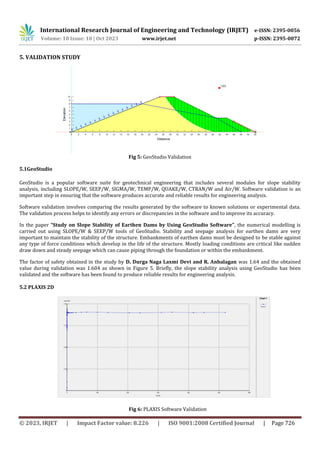
5. VALIDATION STUDY
Fig 5: GeoStudio Validation
5.1GeoStudio
GeoStudio is a popular software suite for geotechnical engineering that includes several modules for slope stability
analysis, including SLOPE/W, SEEP/W, SIGMA/W, TEMP/W, QUAKE/W, CTRAN/W and Air/W. Software validation is an
important step in ensuring that the software produces accurate and reliable results for engineering analysis.
Software validation involves comparing the results generated by the software to known solutions or experimental data.
The validation process helps to identify any errors or discrepancies in the software and to improve its accuracy.
In the paper “Study on Slope Stability of Earthen Dams by Using GeoStudio Software”, the numerical modelling is
carried out using SLOPE/W & SEEP/W tools of GeoStudio. Stability and seepage analysis for earthen dams are very
important to maintain the stability of the structure. Embankments of earthen dams must be designed to be stable against
any type of force conditions which develop in the life of the structure. Mostly loading conditions are critical like sudden
draw down and steady seepage which can cause piping through the foundation or within the embankment.
The factor of safety obtained in the study by D. Durga Naga Laxmi Devi and R. Anbalagan was 1.64 and the obtained
value during validation was 1.604 as shown in Figure 5. Briefly, the slope stability analysis using GeoStudio has been
validated and the software has been found to produce reliable results for engineering analysis.
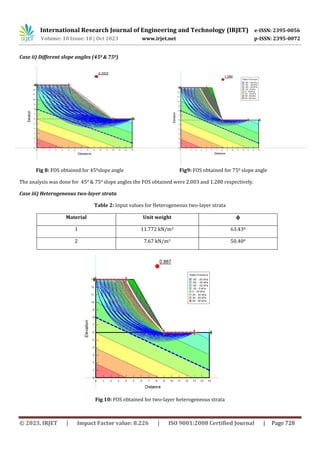
5.2 PLAXIS 2D
Fig 6: PLAXIS Software Validation
International Research Journal of Engineering and Technology (IRJET) e-ISSN: 2395-0056
Volume: 10 Issue: 10 | Oct 2023 www.irjet.net p-ISSN: 2395-0072
© 2023, IRJET | Impact Factor value: 8.226 | ISO 9001:2008 Certified Journal | Page 727
PLAXIS is a widely used software for geotechnical analysis that includes modules for slope stability, foundation design,
tunnelling, and other geotechnical applications. Software validation is an important step in ensuring that the software
produces accurate and reliable results for engineering analysis.
Several studies have been conducted to validate the capabilities of PLAXIS for slope stability analysis. For example, a study
by Bidisha Chakrabarti and Dr P. Shivananda (2017) titled ‘Two-Dimensional Slope Stability Analysis with Varying
Slope Angle and Slope Height By PLAXIS-2D’ found the FOS in PLAXIS 2D as 1.3 and the obtained value during the
software validation is 1.14. Thus, the software was able to accurately predict the failure mode and the critical slip surface
location for the tested slopes.
6. NUMERICAL MODELLING
6.1 Modelling in GeoStudio
GeoStudio is a powerful software suite that includes several modules for geotechnical engineering analysis and numerical
modelling. Some of the key modules in GeoStudio for numerical modelling include:
SLOPE/W: This module is used for analysing the stability of slopes, embankments, earth dams, and natural slopes. It can
perform both limit equilibrium and finite element analyses.
SEEP/W: This module is used for analysing seepage through porous media, such as soil and rock. It can simulate steady-
state and transient seepage conditions and can perform both saturated and unsaturated flow analyses.
Case i): The original slope of Thodupuzha - Cheruthoni road
Fig 7: FOS obtained for slope angle 600
The GeoStudio analysis of the slope in Thodupuzha - Cheruthoni road produced an FOS of 1.705 which is stable under
normal conditions.
International Research Journal of Engineering and Technology (IRJET) e-ISSN: 2395-0056
Volume: 10 Issue: 10 | Oct 2023 www.irjet.net p-ISSN: 2395-0072
© 2023, IRJET | Impact Factor value: 8.226 | ISO 9001:2008 Certified Journal | Page 728
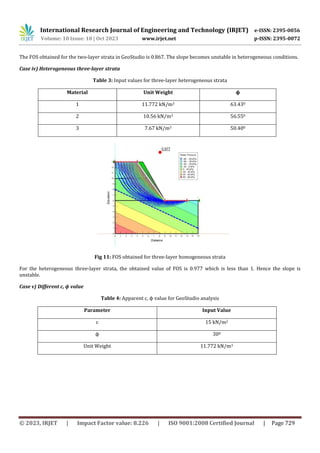
Case ii) Different slope angles (450 & 750)
Fig 8: FOS obtained for 450slope angle Fig9: FOS obtained for 750 slope angle
The analysis was done for 450 & 750 slope angles the FOS obtained were 2.003 and 1.280 respectively.
Case iii) Heterogeneous two-layer strata
Table 2: Input values for Heterogeneous two-layer strata
Material Unit weight ϕ
1 11.772 kN/m3 63.430
2 7.67 kN/m3 50.400
Fig 10: FOS obtained for two-layer heterogeneous strata
International Research Journal of Engineering and Technology (IRJET) e-ISSN: 2395-0056
Volume: 10 Issue: 10 | Oct 2023 www.irjet.net p-ISSN: 2395-0072
© 2023, IRJET | Impact Factor value: 8.226 | ISO 9001:2008 Certified Journal | Page 729
The FOS obtained for the two-layer strata in GeoStudio is 0.867. The slope becomes unstable in heterogeneous conditions.
Case iv) Heterogeneous three-layer strata
Table 3: Input values for three-layer heterogeneous strata
Material Unit Weight ϕ
1 11.772 kN/m3 63.430
2 10.56 kN/m3 56.550
3 7.67 kN/m3 50.400
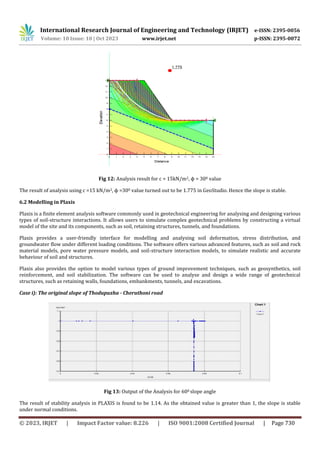
Fig 11: FOS obtained for three-layer homogeneous strata
For the heterogeneous three-layer strata, the obtained value of FOS is 0.977 which is less than 1. Hence the slope is
unstable.
Case v) Different c, ϕ value
Table 4: Apparent c, ϕ value for GeoStudio analysis
Parameter Input Value
c 15 kN/m2
ϕ 300
Unit Weight 11.772 kN/m3
International Research Journal of Engineering and Technology (IRJET) e-ISSN: 2395-0056
Volume: 10 Issue: 10 | Oct 2023 www.irjet.net p-ISSN: 2395-0072
© 2023, IRJET | Impact Factor value: 8.226 | ISO 9001:2008 Certified Journal | Page 730
Fig 12: Analysis result for c = 15kN/m2, ϕ = 300 value
The result of analysis using c =15 kN/m2, ϕ =300 value turned out to be 1.775 in GeoStudio. Hence the slope is stable.
6.2 Modelling in Plaxis
Plaxis is a finite element analysis software commonly used in geotechnical engineering for analysing and designing various
types of soil-structure interactions. It allows users to simulate complex geotechnical problems by constructing a virtual
model of the site and its components, such as soil, retaining structures, tunnels, and foundations.
Plaxis provides a user-friendly interface for modelling and analysing soil deformation, stress distribution, and
groundwater flow under different loading conditions. The software offers various advanced features, such as soil and rock
material models, pore water pressure models, and soil-structure interaction models, to simulate realistic and accurate
behaviour of soil and structures.
Plaxis also provides the option to model various types of ground improvement techniques, such as geosynthetics, soil
reinforcement, and soil stabilization. The software can be used to analyse and design a wide range of geotechnical
structures, such as retaining walls, foundations, embankments, tunnels, and excavations.
Case i): The original slope of Thodupuzha - Cheruthoni road
Fig 13: Output of the Analysis for 600 slope angle
The result of stability analysis in PLAXIS is found to be 1.14. As the obtained value is greater than 1, the slope is stable
under normal conditions.
International Research Journal of Engineering and Technology (IRJET) e-ISSN: 2395-0056
Volume: 10 Issue: 10 | Oct 2023 www.irjet.net p-ISSN: 2395-0072
© 2023, IRJET | Impact Factor value: 8.226 | ISO 9001:2008 Certified Journal | Page 731
Case ii) Different slope angles (450 & 750)
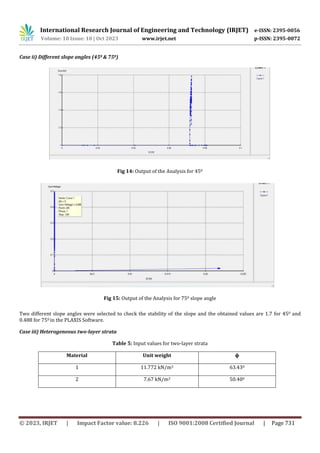
Fig 14: Output of the Analysis for 450
Fig 15: Output of the Analysis for 750 slope angle
Two different slope angles were selected to check the stability of the slope and the obtained values are 1.7 for 450 and
0.488 for 750 in the PLAXIS Software.
Case iii) Heterogeneous two-layer strata
Table 5: Input values for two-layer strata
Material Unit weight ϕ
1 11.772 kN/m3 63.430
2 7.67 kN/m3 50.400
International Research Journal of Engineering and Technology (IRJET) e-ISSN: 2395-0056
Volume: 10 Issue: 10 | Oct 2023 www.irjet.net p-ISSN: 2395-0072
© 2023, IRJET | Impact Factor value: 8.226 | ISO 9001:2008 Certified Journal | Page 732
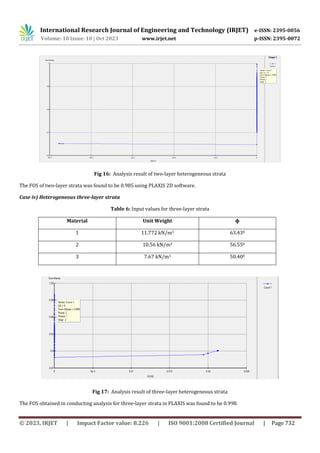
Fig 16: Analysis result of two-layer heterogeneous strata
The FOS of two-layer strata was found to be 0.985 using PLAXIS 2D software.
Case iv) Heterogeneous three-layer strata
Table 6: Input values for three-layer strata
Material Unit Weight ϕ
1 11.772 kN/m3 63.430
2 10.56 kN/m3 56.550
3 7.67 kN/m3 50.400
Fig 17: Analysis result of three-layer heterogeneous strata
The FOS obtained in conducting analysis for three-layer strata in PLAXIS was found to be 0.998.
International Research Journal of Engineering and Technology (IRJET) e-ISSN: 2395-0056
Volume: 10 Issue: 10 | Oct 2023 www.irjet.net p-ISSN: 2395-0072
© 2023, IRJET | Impact Factor value: 8.226 | ISO 9001:2008 Certified Journal | Page 733
Case v) Different c, ϕ value
Table 7: Apparent c, ϕ values for PLAXIS analysis
Fig 18: Analysis results for an apparent c, ϕ value
The FOS value obtained for the analysis using c = 15 kN/m2 and ϕ = 300 is 1.
7. COMPARISON OF SOFTWARE ANALYSIS
The phenomenon of landslides has been studied geotechnically and numerically over the years. At the crest and toe of the
hill, informal settlements and unplanned hill cutting are responsible for most landslides' casualties. Numerical modelling
was conducted taking different cases for the purpose of comparison. There was a total of 5 cases in consideration for the
analysis: i) analysis of the slope in Thodupuzha - Cheruthoni road, ii) analysis using different slope angles, iii) analysis of 2-
layer heterogeneous layer, iv) analysis of 3-layer heterogeneous layer, v) different c, ϕ values.
Case i) Analysis of the slope in Thodupuzha - Cheruthoni road
The real-time case of the Thodupuzha - Cheruthoni road was taken into consideration for the analysis. The obtained value
for the 600 inclined slope was found to be 1.705 in GeoStudio and 1.14 in PLAXIS. The PLAXIS produced a value 33.13%
less than GeoStudio. On comparing the results from GeoStudio and Plaxis 2D, the FOS is greater than 1, hence the slope is
found to be stable.
Table 8: Comparison of results of Thodupuzha - Cheruthoni road
Slope Angle FOS obtained in GeoStudio FOS obtained in PLAXIS
60 1.705 1.14
Parameter Input values
c 15 kN/m2
ϕ 300
Unit Weight 11.772 kN/m3
International Research Journal of Engineering and Technology (IRJET) e-ISSN: 2395-0056
Volume: 10 Issue: 10 | Oct 2023 www.irjet.net p-ISSN: 2395-0072
© 2023, IRJET | Impact Factor value: 8.226 | ISO 9001:2008 Certified Journal | Page 734
Case ii) Analysis on Varying slope angle
Table 9: Comparison of results of different slope angle
45 2.003 1.7
60 1.705 1.14
75 1.280 0.488
The value of FOS obtained in GeoStudio is 1.705 for 600 and the obtained value of FOS in PLAXIS software a 1.14 for 600.
From the analysis, the slope is stable at present. The analysis was done for slope angles 450 and 750. The values of FOS
obtained in GeoStudio are 2.003 for 450 and 1.280 for 750. The slope is stable for both the slope angles in GeoStudio as the
FOS is greater than 1. But in PLAXIS, the values of FOS are 1.7 for 450 and 0.488 for 750. The slope will fail for a slope angle
of 750. From the analysis carried out on varying slope angles, it is observed that the FOS decreases with an increase in
slope angle.
Case iii) Heterogeneous two-layer strata
For the 2-layer heterogeneous strata, the FOS obtained in GeoStudio is found to be 0.867 and in PLAXIS is 0.985. The
values obtained are relatable. Also, the slope is unstable and will require stabilisation. The FOS shows a difference of
12.7% for both software.
Table 10: FOS of Heterogeneous two-layer strata
FOS obtained in GeoStudio 0.867
FOS obtained in PLAXIS 0.985
Case iv) Heterogeneous three-layer strata
The obtained value for the FOS in GeoStudio 0.977 was found to be and in PLAXIS was 0.998. Both the software gave a
relatable and similar value. Here, there's only a difference of 2.12%.
Table 11: FOS of Heterogeneous three-layer strata
FOS obtained in GeoStudio 0.977
FOS obtained in PLAXIS 0.998
Case v) Different c, ϕ values
The values of FOS are 1.77 and 1.00 for GeoStudio and PLAXIS respectively when the c value was changed to 15kN/m2 and
the ϕ value to 300. The percentage difference in the values of FOS obtained is 55.5%.
Table 12: FOS obtained for a different c, ϕ value
FOS obtained in GeoStudio 1.77
FOS obtained in PLAXIS 1.00
From the analysis in GeoStudio and PLAXIS 2D, it is seen that the FOS vary considerably for homogeneous strata. For
heterogeneous two-layer strata, the variation in the percentage variation in the obtained values of FOS is 12.7% and for
Slope Angle FOS obtained in GeoStudio FOS obtained in PLAXIS
International Research Journal of Engineering and Technology (IRJET) e-ISSN: 2395-0056
Volume: 10 Issue: 10 | Oct 2023 www.irjet.net p-ISSN: 2395-0072
© 2023, IRJET | Impact Factor value: 8.226 | ISO 9001:2008 Certified Journal | Page 735
heterogeneous three-layer strata, the percentage variation in the obtained FOS is 2.12%. Since the FOS for Thodupuzha -
Cheruthoni road is greater than 1, the slope is stable.
8. CONCLUSIONS
The stability of slopes is influenced by various factors such as soil type, slope angle, rainfall, vegetation cover, and other
geological and environmental factors. Slope stability analysis can be carried out by the limit equilibrium method, the finite
element method, and the numerical calculation methods. The selection of the suitable method of evaluation depends on
various factors such as the complexity of the slope, rainfall pattern and the available resources. The use of boulder nets,
soil nails with shotcrete, drainage blankets, sub-drains, or retaining walls can help control the seepage and improve the
stability of slopes.
 The FOS obtained from the slope stability analysis using GeoStudio and PLAXIS 2D is obtained as 1.705 and 1.14
respectively. The obtained values of FOS are greater than 1 hence the slope is found to be stable at the present
condition.
 The slope angle varied to 450 and 750 in GeoStudio and PLAXIS 2D. The values of FOS obtained for analysis using
GeoStudio and PLAXIS 2D for 450 are 2.003 and 1.7. For 750, the values of FOS obtained in GeoStudio and PLAXIS 2D
are 1.280 and 0.488 respectively. Hence, the change in FOS is inversely proportional to the slope angle.
 From the analysis in GeoStudio and PLAXIS 2D, it is seen that the FOS vary considerably for homogeneous strata. For
heterogeneous two-layer strata, the variation in the percentage variation in the obtained values of FOS is 12.7% and
for heterogeneous three-layer strata, the percentage variation in the obtained FOS is 2.12%.
 The FOS obtained in GeoStudio and Plaxis 2D software when c = 0kN/m2 and ϕ=63.430 is 1.705 and 1.14 respectively.
The FOS changed to 1.77 in GeoStudio and 1.00 in PLAXIS 2D when c = 15kN/m2 and ϕ = 300.
 GeoStudio uses the Limit Equilibrium Method (Morgenstern -Price approach) and the PLAXIS 2D uses the Finite
Element Method (phi - c reduction approach). The use of the Limit Equilibrium Method is simpler, requiring less effort
and saving time as compared to the Finite Element Method. The Morgenstern -Price method is more conservative than
the phi - c reduction method.
REFERENCES
1. Abeykoon, T., & Jayakody, S. (2022). Factors Controlling Rainfall-Induced Slope Instability of Natural Slopes in
North Maleny, Queensland. Geomate Journal, 23(100), 9-16.
2. Brontowiyono, W., Hammid, A. T., Jebur, Y. M., Al-Sudani, A. Q., Mutlak, D. A., & Parvan, M. (2022). Reduction of
Seepage Risks by Investigation into Different Lengths and Positions for Cut-off Wall and Horizontal Drainage (Case
Study: Sattarkhan Dam). Advances in Civil Engineering, 2022
3. Belew, A. Z., Belay, S. K., Wosenie, M. D., & Alemie, N. A. (2022). A Comparative Evaluation of Seepage and Stability
of Embankment Dams Using GeoStudio and Plaxis Models: The Case of Gomit Dam in Amhara Region, Ethiopia.
Water Conservation Science and Engineering, 1-13
4. Chakrabarti, B., & Shivananda, P. (2017). Two-Dimensional Slope Stability Analysis with Varying Slope Angle and
Slope Height by Plaxis-2D. SAFETY, 1(1.684), 1-512.
5. Esmaeili-Falak, M., & Hajialilue-Bonab, M. (2012). Numerical studying the effects of gradient degree on slope
stability analysis using limit equilibrium and finite element methods. Int J Acad Res, 4(4), 216-22.
6. Fan, S. Y., Song, Z. P., Zhang, Y. W., & Liu, N. F. (2020). Case study of the effect of rainfall infiltration on a tunnel
underlying the roadbed slope with weak inter-layer. KSCE Journal of Civil Engineering, 24, 1607-1619.
7. Hammouri, N. A., Malkawi, A. I. H., & Yamin, M. M. (2008). Stability analysis of slopes using the finite element
method and limiting equilibrium approach. Bulletin of Engineering Geology and the Environment, 67, 471-478.
International Research Journal of Engineering and Technology (IRJET) e-ISSN: 2395-0056
Volume: 10 Issue: 10 | Oct 2023 www.irjet.net p-ISSN: 2395-0072
© 2023, IRJET | Impact Factor value: 8.226 | ISO 9001:2008 Certified Journal | Page 736
8. Heidarnejad, M. (2017). Investigating the Effect of Seepage on Earth Dam Using GeoStudio (Case Study" Jereh"
Dam Reservoir). Journal of Water Science & Environment Technologies, 2(1).
9. Khabbaz, H., Fatahi, B., & Nucifora, C. (2012). Finite element methods against limit equilibrium approaches for
slope stability analysis. In Australia New Zealand Conference on Geomechanics. Geomechanical Society and New
Zealand Geotechnical Society.
10. Kim W. S. & Borden, R. H. (2013). Numerical simulation of MSE wall behaviour induced by surface water
infiltration. Journal of Geotechnical and Geo-environmental Engineering, 139(12):2110–2124.
11. Krishnan, J., Nelson, S., & Anil, A. A Comparative Study on Stability of Koottickal Slopes During 2021 Landslide By
means of GeoStudio and Plaxis 2D.
12. Yoo, C. (2013). Effect of rainfall on performance of geosynthetic reinforced soil wall using stress-pore pressure
coupled analysis. In Geo-Congress 2013: Stability and Performance of Slopes and Embankments III (pp. 566-573).

SLOPE STABILITY ANALYSIS USING GeoStudio AND PLAXIS 2D SOFTWARE: A COMPARATIVE STUDY

  • 1.
    International Research Journalof Engineering and Technology (IRJET) e-ISSN: 2395-0056 Volume: 10 Issue: 10 | Oct 2023 www.irjet.net p-ISSN: 2395-0072 © 2023, IRJET | Impact Factor value: 8.226 | ISO 9001:2008 Certified Journal | Page 720 SLOPE STABILITY ANALYSIS USING GeoStudio AND PLAXIS 2D SOFTWARE: A COMPARATIVE STUDY Pardhan Remesh1, Radhe Sha2, Saran Mohan3, Shabinas Karthik S4 And Merin Mariya Paul5 1B. Tech Student, Department of Civil Engineering, MACE, Kothamangalam, Kerala, India 2B. Tech Student, Department of Civil Engineering, MACE, Kothamangalam, Kerala, India 3B. Tech Student, Department of Civil Engineering, MACE, Kothamangalam, Kerala, India 4B. Tech Student, Department of Civil Engineering, MACE, Kothamangalam, Kerala, India 5Project Guide Assistant Professor, Department of Civil Engineering, MACE, Kothamangalam, Kerala, India ---------------------------------------------------------------------***--------------------------------------------------------------------- Abstract - All the civil engineering structures are supported on or below the surface of the earth. The project aims to conduct a comparative study of stability analysis of slopes of roads using 2 software - GeoStudio and PLAXIS. Slope stability is a critical factor in the design and construction of any civil engineering structure. Although individual slope failures generally are not so spectacular or as costly as certain other natural catastrophes like earthquakes, major floods, and tornadoes; they are more widespread and the total financial loss due to slope failures probably is greater than that for any other single geologic hazard to mankind. The objective of this project is to evaluate and compare the stability of slopes using different analytical and numerical methods. The landslide during the monsoon season in Kerala widely affects the livelihood of people. Natural or landscaped slopes may lose their stability by detachment and sliding of a soil volume along a failure surface, because of exceeding its shear strength. This collapse may be developed due to excavation activities and rainfall infiltration. In this study, we present a slope stability analysis using numerical modelling. The slope stability analysis consists of determining the soil's mechanical properties, shape, and position of the possible failure surface. The sample collected was tested in the geotechnical lab. Once these characteristics have been extracted, the stability of an existing slope in Thodupuzha - Cheruthoni Road is examined, which has collapsed due to floods during the rainfall season. The study will involve analysing seepage patterns and evaluating the potential for slope failure using both software programs. The results will be compared to identify any differences in accuracy and efficiency between the two methods. The findings of this study will be useful in determining the most appropriate software program for seepage analysis on road slopes. The results of the study will provide valuable insights into the most effective methods for analysing, designing, and maintaining stable slopes for roads. Key Words: GeoStudio, PLAXIS, Seepage, Slope Stability, Landslides, Geotechnical Engineering 1. INTRODUCTION 1.1 General The stability of roads in slopes is a critical concern in geotechnical engineering, as it directly affects the safety of drivers and passengers. Slopes are prone to instability due to factors such as soil erosion, landslides, and water infiltration. Slope stability analysis involves the evaluation of various factors such as the slope angle, soil properties, water content, and vegetation cover to determine the potential for slope failure. Geotechnical investigations involve the testing of soil and rock properties to determine the strength and stability of the slope. To prevent these issues, it is important to analyse and understand the seepage behaviour of the soil. In this report, we will conduct a comparative study of stability analysis using two popular software programs in the field of geotechnical engineering: GeoStudio and PLAXIS. The stability of roads on slopes is crucial for ensuring the safety of drivers and passengers. Through careful evaluation, analysis, and mitigation measures, the stability of roads on slopes can be improved and maintained for safe and reliable transportation. The stability of slopes near roadways is influenced by various factors such as soil type, slope angle, rainfall, vegetation cover, and other geological and environmental factors. Therefore, it is essential to analyse and understand these factors. Several methods can be used to analyse the stability of slopes near roadways, such as the limit equilibrium method, the finite element method, and the numerical modelling method. Different seepage analysis methods, such as steady-state and transient analysis, can be used to evaluate the seepage conditions of roadway slopes. Each method has its advantages and limitations, and the selection of a suitable method depends on various factors such as the complexity of the slope, rainfall pattern and the available resources. The stability analysis of slopes on roads is a complex process that requires a thorough
  • 2.
    International Research Journalof Engineering and Technology (IRJET) e-ISSN: 2395-0056 Volume: 10 Issue: 10 | Oct 2023 www.irjet.net p-ISSN: 2395-0072 © 2023, IRJET | Impact Factor value: 8.226 | ISO 9001:2008 Certified Journal | Page 721 understanding of various geological and environmental factors. The selection of a suitable analysis method and proper maintenance and monitoring of slopes are crucial to ensure the safety of slopes. The seepage analysis results can be used to determine the appropriate drainage measures for road slopes. For example, the use of drainage blankets, sub-drains, or retaining walls can help control the seepage and improve the stability of slopes. 1.2 Slope Stability A slope is an inclined ground surface which can be either natural or human made. Slope stability refers to the condition that an inclined slope can withstand its own weight and external forces without experiencing displacement. Slope stability uses principles of soil/rock mechanics, geotechnical engineering, and engineering geology. When the stability conditions are not met, the soil or the rock mass of the slope may experience downward movement which could be either slow or devastatingly rapid. This phenomenon is known as slope failure or landslides. Slope failures systematically harm human infrastructure and cause numerous fatalities every year. Assessing a slope’s stability is a challenging yet important aspect of civil engineering. If the forces that resist the movement are greater than those driving the movement, the slope is considered stable. A factor of safety (FOS) is calculated by dividing the resistance by the driving forces. A factor of safety greater than 1.00 suggests that the slope is stable. Slope stability analysis is implemented in numerous applications of civil engineering projects such as dams, embankments, excavated slopes, and natural slopes. 1.3 Scope of The Project Kerala is highly vulnerable to natural disasters due to changing climatic dynamics, its location along the seacoast and a steep gradient along the slopes of the Western Ghats. Kerala is one of the most densely populated Indian states (860 persons per sq. km), making it more vulnerable to damages and losses on account of disasters. Floods are the most common natural hazard in the state. Kerala experienced the worst-ever floods between the 1st of June and to 18th of August 2018. The highest rainfall of 771mm was experienced between the 1st to 20th of August. The torrential rains triggered several landslides, a total of 341 landslides in 10 districts. Out of that, 143 landslides were reported in the Idukki district. Many houses were affected by flood and landslides and there were numerous casualties. Landslides were seen in slopes above 22°. The main scope of this study is the comparison of analysis of slope stability using the limit equilibrium and finite element methods. GeoStudio and PLAXIS software are used for this purpose. Two-dimensional models are prepared for analysis. The study aims at analyzing the factor of safety due to different entry-exit conditions. The results obtained from both software are compared and conclusions obtained. Mitigation measures are suggested to counteract the failures if any. 1.4 Objectives 1. To determine the strength parameters (C, ϕ) of the study location. 2. To evaluate the strength & stability of an existing slope 3. To compare the results from analysis using GeoStudio and PLAXIS 2D software. 4. To carry out a parametric study on: i) Analysis of the slope in Thodupuzha - Cheruthoni road ii) Analysis using different slope angles iii) Analysis of two-layer heterogeneous strata iv) Analysis of three-layer heterogeneous strata v) Effect of cohesion and angle of internal friction on slope stability 1.5 Organisation of The Project All the procedures and steps adopted to complete the project are explained in this report. The report is organised into eight chapters. Chapter 1 introduces the topic of the project, its objectives, scope, and significance. Chapter 2 deals with the literature relevant to this study. Chapter 3 gives the details and results of laboratory investigations conducted. Chapter 4 provides the proposed methodology for the work and software details.
  • 3.
    International Research Journalof Engineering and Technology (IRJET) e-ISSN: 2395-0056 Volume: 10 Issue: 10 | Oct 2023 www.irjet.net p-ISSN: 2395-0072 © 2023, IRJET | Impact Factor value: 8.226 | ISO 9001:2008 Certified Journal | Page 722 Chapter 5 deals with the validation of numerical modelling. Chapter 6 deals with numerical modelling and analysis of parametric study. Chapter 7 deals with the comparison of results obtained from the analysis. Chapter 8 provides the conclusion of the project. 2. LITERATURE REVIEW In the paper by Heidarnejad, M (2017) he studies the effect of seepage on earthen dams using GeoStudio software through which SEEP/W was used to analyse seepage and flow net. All the properties of the Jereh earthen dam under construction such as the height of the foundation, embankment height, crest width and the material properties used in the construction of the dam which includes elastic modulus, Poisson's ratio, saturated unit weight, wet weight, volume weight water, angle of internal friction, coefficient of cohesion, and other properties were taken from the consulting company who were responsible for designing and constructing the project. Through the seepage analysis, it was found that seepage is a problematic issue in earth dams, and they proposed some suggestions. It is recommended that other studies should be carried out to investigate other earthen dams with the given software. It is suggested that other researchers apply different kinds of software as well as other numerical models to compare them with the GeoStudio software and other research should be done to investigate the effect of earthquakes and slope stability on the Jereh Dam. The study conducted by Tharindu Abeykoon and Shiran Jayakody (2022) showed that rainfall-induced slope instability is governed by a complex interaction of topographical, hydrological, and geological conditions of the slopes. In this study, two critical slopes were identified based on high rates of erosion, sediment run-off, and elevated risk in Eden Road and Newsham in Lake Baroon Catchment, North Maleny, Queensland, Australia. The movement of water flow was analysed in SEEP/W and fed into slope stability analyses to 3 determine the FS of the slopes. The magnitude and the rate of FS reduction are proportional to the applied rainfall intensity for a particular slope angle. Therefore, the higher the applied rainfall intensity is, the higher the rate of FS reduction. However, the initial FS of the slope decreased with increasing the slope angle. The entire parametric study is consistent with the actual slope failures in Eden Road and Newsham sites. In the paper by Monal Raj & Aniruddha Sengupta (2014), there is a significant reduction in the factor of safety of the railway embankment with the increase in the intensity and duration of rainfall. Standard laboratory tests are performed to determine the properties and classification of the soil. The results obtained from the numerical analyses of seepage and stability of the actual embankment at Malda are utilised to help understand the water table fluctuation within the embankment during the rainy season. The limit equilibrium analyses of the existing embankment slope indicate that in dry conditions, the slope has an adequate factor of safety. During and after prolonged rainfall events, as the pore water pressure starts to rise, the effective stresses within these materials start to drop and the embankment fails suddenly. The rate of decrease in factor of safety is faster for a soil with higher infiltration rate. The possible remedial measures should include protection of existing embankment toes, protection of banks of the existing ponds, preventing pore-water pressure build-up within embankments and safe passage of water. The study done by Amanuel Zewdu Belew, Solomon Kegne Belay, Mekete Dessie Wosenie & Neway Asrat Alemie (2022) presents an evaluation 4 and comparative study on the seepage and slope stability analysis of the Gomit earth dam found in the Amhara Region, South Gondar Zone, Estie woreda. Seepage analysis such as seepage magnitude, pore water pressure distribution, and location of the phreatic line has been determined using SEEP/W and PLAXIS models. The factor of safety results of SLOPE/W at the end of construction, steady-state, and rapid draw-down conditions were 1.045, 1.473, and 1.012 and the corresponding results of the Plaxis model were 0.818, 1.402, and 0.945, respectively. The stability analysis results for the designed conditions show that the slopes are unstable under all loading conditions. The actual site investigations of the dam, in line with the model results, indicated that the downstream slope is facing a stability problem. For the slope stability analysis of embankment dams, where there is high uncertainty in the soil data of dam construction, the Plaxis model may be better since it gives conservative factors of safety results based on this study. Kim & Borden (2013) conducted a series of numerical simulations including seepage analyses and stress deformation analyses to predict the behaviour of a mechanically stabilized earth wall subjected to surface-water infiltration. The effects of low compacted water content and a low-quality compaction zone behind the wall face on the wall behaviour were investigated. During the surface water infiltration, the results showed large increases in lateral wall face, vertical soil deformation and reinforcement tensions and this was caused by shear strength decrease and settlement behind the wall face.
  • 4.
    International Research Journalof Engineering and Technology (IRJET) e-ISSN: 2395-0056 Volume: 10 Issue: 10 | Oct 2023 www.irjet.net p-ISSN: 2395-0072 © 2023, IRJET | Impact Factor value: 8.226 | ISO 9001:2008 Certified Journal | Page 723 The study conducted by Jiji Krishnan, Sam Nelson, and Aiswarya Anil shows that the factor of safety for all nine landslide slopes is less than 1.05 a factor of safety less than 1.4 is uncertain for hills and a FOS less than 1 is unstable. The calculated FOS states that nearly all slopes are supposed to fail, and some are more likely to fail. Heavy rainfall may make slopes with more than 1 FOS fail. Due to a lack of clay matter in the slopes, the FOS is the minimum. Hence due to the absence of a cohesion parameter, significant shear strength is provided only from the friction angle. Several studies have suggested that hills with slope angles greater than the internal angle of friction tend to collapse. In the current research, the ϕ of the prevailing slopes is less than the slope angle contributing to the slope’s instability. PLAXIS 2D delivers more accurate results than GeoStudio. The FOS increases with an increase in “c” and ϕ values. 3. GEOTECHNICAL INVESTIGATIONS 3.1 Study Location The location of the study is in the Thodupuzha Cheruthoni road in the Idukki district of Kerala. The Thodupuzha Cheruthoni Road is a major road that connects the towns of Thodupuzha and Cheruthoni in the Idukki district. Like many roads in the region, it is prone to landslides during heavy rainfall. In the past, there have been several landslides along the Thodupuzha Cheruthoni Road, leading to road closures and disruptions in transportation. It is important to note that landslides can be dangerous and unpredictable, and it is recommended to stay informed of local weather conditions and follow any safety guidelines or evacuation orders from authorities in the event of a landslide. The slope is of 60-degree inclinations and is prone to frequent landslides during the monsoon season. The coordinates of the location are 9.8229270, 76.9024990. 3.2 Sample Collection Samples were collected for the laboratory investigations. PVC pipes were driven into the levelled surface of the soil with the help of a rammer and carefully took out the pipes containing soil. Excess soil present on the ends of the pipes was trimmed off. The ends were sealed with molten wax and were again wrapped using polythene covers. This is to ensure that the sample is air-tight and moisture content is intact. The sample was tested for moisture content test, sieve analysis, direct shear test, unconfined compression test etc. Fig 1: Slope in Thodupuzha - Cheruthoni Road
  • 5.
    International Research Journalof Engineering and Technology (IRJET) e-ISSN: 2395-0056 Volume: 10 Issue: 10 | Oct 2023 www.irjet.net p-ISSN: 2395-0072 © 2023, IRJET | Impact Factor value: 8.226 | ISO 9001:2008 Certified Journal | Page 724 Fig2, 3: Sample Collection 3.3 Laboratory Tests 3.3.1 Determination of moisture Content A container with a lid is weighed initially(W1). The sample is taken in the container and weighed again(W2). The sample with the container is kept in the oven for 24hrs and the weight of the dry sample with lid(W3) is taken. Moisture Content, w 3.3.2 Sieve Analysis A weighed amount (1 kg) of oven-dried soil is taken and sieved through the standard set of sieves by the sieve shaker, starting from sieve no 4.75mm to 75μ in the decreasing order of sizes. The weight of the residue retained in each of the sieves is noted. A graph is plotted with grain size distribution on the X-axis and %finer on the Y-axis, and D60 values are noted. Effective Size = D10 Uniformity Coefficient, Cu Coefficient of Curvature, Cc 3.3.3 Determination of Field Density The undisturbed sample was collected from the site and weighed. The volume of the container was calculated by measuring the diameter(0.9cm) and height(30cm) of the pipe, and density was found out. Field Density, ɣ = 3.3.4 Direct Shear Test Assembled the two halves of the shear box using the connecting pins and placed one of the friction plates in the bottom of the box, perpendicular to the direction of shear. Put a weighed amount of sand and place the other friction plate parallel to the bottom one. By keeping the loading pad over the plate, the shear box is transferred to the shear test apparatus and the normal load is applied by putting a load in the loading pan. One of the dial gauges is fixed horizontally touching the shear box to measure shear deformation and another dial gauge vertically touching the top of the loading pad to measure normal displacement. The proving ring was attached to the spindle which passes through a guide hole and touches the shear box while another end of the proving ring
  • 6.
    International Research Journalof Engineering and Technology (IRJET) e-ISSN: 2395-0056 Volume: 10 Issue: 10 | Oct 2023 www.irjet.net p-ISSN: 2395-0072 © 2023, IRJET | Impact Factor value: 8.226 | ISO 9001:2008 Certified Journal | Page 725 is connected to the gearing device. The gear handle is rotated and the readings on the proving ring and dial gauge are noted. The sample was sheared till failure. A graph is drawn with normal stress on the X-axis and shear stress on the Y- axis. The Y-intercept of the graph provided the cohesion, and the slope of the graph gave the angle of internal friction. Tf = c + σtan ϕ 3.4 Test Results Table 1: Test results Experiment Test Results Moisture Content 10.57 % Field Density 1.2 g/cm3 Sieve Analysis Effective Grain size = 0.33 Uniformity Coefficient, Cu = 4.55 Coefficient of Curvature, Cc = 0.54 Direct Shear Test Angle of Internal Friction, ϕ = 63.430 Cohesion, c = 0 kN/m2 4. METHODOLOGY The methodology adopted to evaluate the stability of the slope is depicted as shown in Fig 4 Fig 4: Flowchart of Methodology 1. Detailed geotechnical investigations are carried out. 2. The disturbed soil samples are taken to identify the failure zones and determine their shear strength parameters. 3. Laboratory tests are conducted on disturbed soil samples, such as grain size distribution, direct shear test, and determination of moisture content. 4. Experimental results are used to obtain input soil parameters for numerical modelling. 5. Numerical modelling of the slopes using Plaxis 2D software is carried out.
  • 7.
    International Research Journalof Engineering and Technology (IRJET) e-ISSN: 2395-0056 Volume: 10 Issue: 10 | Oct 2023 www.irjet.net p-ISSN: 2395-0072 © 2023, IRJET | Impact Factor value: 8.226 | ISO 9001:2008 Certified Journal | Page 726 5. VALIDATION STUDY Fig 5: GeoStudio Validation 5.1GeoStudio GeoStudio is a popular software suite for geotechnical engineering that includes several modules for slope stability analysis, including SLOPE/W, SEEP/W, SIGMA/W, TEMP/W, QUAKE/W, CTRAN/W and Air/W. Software validation is an important step in ensuring that the software produces accurate and reliable results for engineering analysis. Software validation involves comparing the results generated by the software to known solutions or experimental data. The validation process helps to identify any errors or discrepancies in the software and to improve its accuracy. In the paper “Study on Slope Stability of Earthen Dams by Using GeoStudio Software”, the numerical modelling is carried out using SLOPE/W & SEEP/W tools of GeoStudio. Stability and seepage analysis for earthen dams are very important to maintain the stability of the structure. Embankments of earthen dams must be designed to be stable against any type of force conditions which develop in the life of the structure. Mostly loading conditions are critical like sudden draw down and steady seepage which can cause piping through the foundation or within the embankment. The factor of safety obtained in the study by D. Durga Naga Laxmi Devi and R. Anbalagan was 1.64 and the obtained value during validation was 1.604 as shown in Figure 5. Briefly, the slope stability analysis using GeoStudio has been validated and the software has been found to produce reliable results for engineering analysis. 5.2 PLAXIS 2D Fig 6: PLAXIS Software Validation
  • 8.
    International Research Journalof Engineering and Technology (IRJET) e-ISSN: 2395-0056 Volume: 10 Issue: 10 | Oct 2023 www.irjet.net p-ISSN: 2395-0072 © 2023, IRJET | Impact Factor value: 8.226 | ISO 9001:2008 Certified Journal | Page 727 PLAXIS is a widely used software for geotechnical analysis that includes modules for slope stability, foundation design, tunnelling, and other geotechnical applications. Software validation is an important step in ensuring that the software produces accurate and reliable results for engineering analysis. Several studies have been conducted to validate the capabilities of PLAXIS for slope stability analysis. For example, a study by Bidisha Chakrabarti and Dr P. Shivananda (2017) titled ‘Two-Dimensional Slope Stability Analysis with Varying Slope Angle and Slope Height By PLAXIS-2D’ found the FOS in PLAXIS 2D as 1.3 and the obtained value during the software validation is 1.14. Thus, the software was able to accurately predict the failure mode and the critical slip surface location for the tested slopes. 6. NUMERICAL MODELLING 6.1 Modelling in GeoStudio GeoStudio is a powerful software suite that includes several modules for geotechnical engineering analysis and numerical modelling. Some of the key modules in GeoStudio for numerical modelling include: SLOPE/W: This module is used for analysing the stability of slopes, embankments, earth dams, and natural slopes. It can perform both limit equilibrium and finite element analyses. SEEP/W: This module is used for analysing seepage through porous media, such as soil and rock. It can simulate steady- state and transient seepage conditions and can perform both saturated and unsaturated flow analyses. Case i): The original slope of Thodupuzha - Cheruthoni road Fig 7: FOS obtained for slope angle 600 The GeoStudio analysis of the slope in Thodupuzha - Cheruthoni road produced an FOS of 1.705 which is stable under normal conditions.
  • 9.
    International Research Journalof Engineering and Technology (IRJET) e-ISSN: 2395-0056 Volume: 10 Issue: 10 | Oct 2023 www.irjet.net p-ISSN: 2395-0072 © 2023, IRJET | Impact Factor value: 8.226 | ISO 9001:2008 Certified Journal | Page 728 Case ii) Different slope angles (450 & 750) Fig 8: FOS obtained for 450slope angle Fig9: FOS obtained for 750 slope angle The analysis was done for 450 & 750 slope angles the FOS obtained were 2.003 and 1.280 respectively. Case iii) Heterogeneous two-layer strata Table 2: Input values for Heterogeneous two-layer strata Material Unit weight ϕ 1 11.772 kN/m3 63.430 2 7.67 kN/m3 50.400 Fig 10: FOS obtained for two-layer heterogeneous strata
  • 10.
    International Research Journalof Engineering and Technology (IRJET) e-ISSN: 2395-0056 Volume: 10 Issue: 10 | Oct 2023 www.irjet.net p-ISSN: 2395-0072 © 2023, IRJET | Impact Factor value: 8.226 | ISO 9001:2008 Certified Journal | Page 729 The FOS obtained for the two-layer strata in GeoStudio is 0.867. The slope becomes unstable in heterogeneous conditions. Case iv) Heterogeneous three-layer strata Table 3: Input values for three-layer heterogeneous strata Material Unit Weight ϕ 1 11.772 kN/m3 63.430 2 10.56 kN/m3 56.550 3 7.67 kN/m3 50.400 Fig 11: FOS obtained for three-layer homogeneous strata For the heterogeneous three-layer strata, the obtained value of FOS is 0.977 which is less than 1. Hence the slope is unstable. Case v) Different c, ϕ value Table 4: Apparent c, ϕ value for GeoStudio analysis Parameter Input Value c 15 kN/m2 ϕ 300 Unit Weight 11.772 kN/m3
  • 11.
    International Research Journalof Engineering and Technology (IRJET) e-ISSN: 2395-0056 Volume: 10 Issue: 10 | Oct 2023 www.irjet.net p-ISSN: 2395-0072 © 2023, IRJET | Impact Factor value: 8.226 | ISO 9001:2008 Certified Journal | Page 730 Fig 12: Analysis result for c = 15kN/m2, ϕ = 300 value The result of analysis using c =15 kN/m2, ϕ =300 value turned out to be 1.775 in GeoStudio. Hence the slope is stable. 6.2 Modelling in Plaxis Plaxis is a finite element analysis software commonly used in geotechnical engineering for analysing and designing various types of soil-structure interactions. It allows users to simulate complex geotechnical problems by constructing a virtual model of the site and its components, such as soil, retaining structures, tunnels, and foundations. Plaxis provides a user-friendly interface for modelling and analysing soil deformation, stress distribution, and groundwater flow under different loading conditions. The software offers various advanced features, such as soil and rock material models, pore water pressure models, and soil-structure interaction models, to simulate realistic and accurate behaviour of soil and structures. Plaxis also provides the option to model various types of ground improvement techniques, such as geosynthetics, soil reinforcement, and soil stabilization. The software can be used to analyse and design a wide range of geotechnical structures, such as retaining walls, foundations, embankments, tunnels, and excavations. Case i): The original slope of Thodupuzha - Cheruthoni road Fig 13: Output of the Analysis for 600 slope angle The result of stability analysis in PLAXIS is found to be 1.14. As the obtained value is greater than 1, the slope is stable under normal conditions.
  • 12.
    International Research Journalof Engineering and Technology (IRJET) e-ISSN: 2395-0056 Volume: 10 Issue: 10 | Oct 2023 www.irjet.net p-ISSN: 2395-0072 © 2023, IRJET | Impact Factor value: 8.226 | ISO 9001:2008 Certified Journal | Page 731 Case ii) Different slope angles (450 & 750) Fig 14: Output of the Analysis for 450 Fig 15: Output of the Analysis for 750 slope angle Two different slope angles were selected to check the stability of the slope and the obtained values are 1.7 for 450 and 0.488 for 750 in the PLAXIS Software. Case iii) Heterogeneous two-layer strata Table 5: Input values for two-layer strata Material Unit weight ϕ 1 11.772 kN/m3 63.430 2 7.67 kN/m3 50.400
  • 13.
    International Research Journalof Engineering and Technology (IRJET) e-ISSN: 2395-0056 Volume: 10 Issue: 10 | Oct 2023 www.irjet.net p-ISSN: 2395-0072 © 2023, IRJET | Impact Factor value: 8.226 | ISO 9001:2008 Certified Journal | Page 732 Fig 16: Analysis result of two-layer heterogeneous strata The FOS of two-layer strata was found to be 0.985 using PLAXIS 2D software. Case iv) Heterogeneous three-layer strata Table 6: Input values for three-layer strata Material Unit Weight ϕ 1 11.772 kN/m3 63.430 2 10.56 kN/m3 56.550 3 7.67 kN/m3 50.400 Fig 17: Analysis result of three-layer heterogeneous strata The FOS obtained in conducting analysis for three-layer strata in PLAXIS was found to be 0.998.
  • 14.
    International Research Journalof Engineering and Technology (IRJET) e-ISSN: 2395-0056 Volume: 10 Issue: 10 | Oct 2023 www.irjet.net p-ISSN: 2395-0072 © 2023, IRJET | Impact Factor value: 8.226 | ISO 9001:2008 Certified Journal | Page 733 Case v) Different c, ϕ value Table 7: Apparent c, ϕ values for PLAXIS analysis Fig 18: Analysis results for an apparent c, ϕ value The FOS value obtained for the analysis using c = 15 kN/m2 and ϕ = 300 is 1. 7. COMPARISON OF SOFTWARE ANALYSIS The phenomenon of landslides has been studied geotechnically and numerically over the years. At the crest and toe of the hill, informal settlements and unplanned hill cutting are responsible for most landslides' casualties. Numerical modelling was conducted taking different cases for the purpose of comparison. There was a total of 5 cases in consideration for the analysis: i) analysis of the slope in Thodupuzha - Cheruthoni road, ii) analysis using different slope angles, iii) analysis of 2- layer heterogeneous layer, iv) analysis of 3-layer heterogeneous layer, v) different c, ϕ values. Case i) Analysis of the slope in Thodupuzha - Cheruthoni road The real-time case of the Thodupuzha - Cheruthoni road was taken into consideration for the analysis. The obtained value for the 600 inclined slope was found to be 1.705 in GeoStudio and 1.14 in PLAXIS. The PLAXIS produced a value 33.13% less than GeoStudio. On comparing the results from GeoStudio and Plaxis 2D, the FOS is greater than 1, hence the slope is found to be stable. Table 8: Comparison of results of Thodupuzha - Cheruthoni road Slope Angle FOS obtained in GeoStudio FOS obtained in PLAXIS 60 1.705 1.14 Parameter Input values c 15 kN/m2 ϕ 300 Unit Weight 11.772 kN/m3
  • 15.
    International Research Journalof Engineering and Technology (IRJET) e-ISSN: 2395-0056 Volume: 10 Issue: 10 | Oct 2023 www.irjet.net p-ISSN: 2395-0072 © 2023, IRJET | Impact Factor value: 8.226 | ISO 9001:2008 Certified Journal | Page 734 Case ii) Analysis on Varying slope angle Table 9: Comparison of results of different slope angle 45 2.003 1.7 60 1.705 1.14 75 1.280 0.488 The value of FOS obtained in GeoStudio is 1.705 for 600 and the obtained value of FOS in PLAXIS software a 1.14 for 600. From the analysis, the slope is stable at present. The analysis was done for slope angles 450 and 750. The values of FOS obtained in GeoStudio are 2.003 for 450 and 1.280 for 750. The slope is stable for both the slope angles in GeoStudio as the FOS is greater than 1. But in PLAXIS, the values of FOS are 1.7 for 450 and 0.488 for 750. The slope will fail for a slope angle of 750. From the analysis carried out on varying slope angles, it is observed that the FOS decreases with an increase in slope angle. Case iii) Heterogeneous two-layer strata For the 2-layer heterogeneous strata, the FOS obtained in GeoStudio is found to be 0.867 and in PLAXIS is 0.985. The values obtained are relatable. Also, the slope is unstable and will require stabilisation. The FOS shows a difference of 12.7% for both software. Table 10: FOS of Heterogeneous two-layer strata FOS obtained in GeoStudio 0.867 FOS obtained in PLAXIS 0.985 Case iv) Heterogeneous three-layer strata The obtained value for the FOS in GeoStudio 0.977 was found to be and in PLAXIS was 0.998. Both the software gave a relatable and similar value. Here, there's only a difference of 2.12%. Table 11: FOS of Heterogeneous three-layer strata FOS obtained in GeoStudio 0.977 FOS obtained in PLAXIS 0.998 Case v) Different c, ϕ values The values of FOS are 1.77 and 1.00 for GeoStudio and PLAXIS respectively when the c value was changed to 15kN/m2 and the ϕ value to 300. The percentage difference in the values of FOS obtained is 55.5%. Table 12: FOS obtained for a different c, ϕ value FOS obtained in GeoStudio 1.77 FOS obtained in PLAXIS 1.00 From the analysis in GeoStudio and PLAXIS 2D, it is seen that the FOS vary considerably for homogeneous strata. For heterogeneous two-layer strata, the variation in the percentage variation in the obtained values of FOS is 12.7% and for Slope Angle FOS obtained in GeoStudio FOS obtained in PLAXIS
  • 16.
    International Research Journalof Engineering and Technology (IRJET) e-ISSN: 2395-0056 Volume: 10 Issue: 10 | Oct 2023 www.irjet.net p-ISSN: 2395-0072 © 2023, IRJET | Impact Factor value: 8.226 | ISO 9001:2008 Certified Journal | Page 735 heterogeneous three-layer strata, the percentage variation in the obtained FOS is 2.12%. Since the FOS for Thodupuzha - Cheruthoni road is greater than 1, the slope is stable. 8. CONCLUSIONS The stability of slopes is influenced by various factors such as soil type, slope angle, rainfall, vegetation cover, and other geological and environmental factors. Slope stability analysis can be carried out by the limit equilibrium method, the finite element method, and the numerical calculation methods. The selection of the suitable method of evaluation depends on various factors such as the complexity of the slope, rainfall pattern and the available resources. The use of boulder nets, soil nails with shotcrete, drainage blankets, sub-drains, or retaining walls can help control the seepage and improve the stability of slopes.  The FOS obtained from the slope stability analysis using GeoStudio and PLAXIS 2D is obtained as 1.705 and 1.14 respectively. The obtained values of FOS are greater than 1 hence the slope is found to be stable at the present condition.  The slope angle varied to 450 and 750 in GeoStudio and PLAXIS 2D. The values of FOS obtained for analysis using GeoStudio and PLAXIS 2D for 450 are 2.003 and 1.7. For 750, the values of FOS obtained in GeoStudio and PLAXIS 2D are 1.280 and 0.488 respectively. Hence, the change in FOS is inversely proportional to the slope angle.  From the analysis in GeoStudio and PLAXIS 2D, it is seen that the FOS vary considerably for homogeneous strata. For heterogeneous two-layer strata, the variation in the percentage variation in the obtained values of FOS is 12.7% and for heterogeneous three-layer strata, the percentage variation in the obtained FOS is 2.12%.  The FOS obtained in GeoStudio and Plaxis 2D software when c = 0kN/m2 and ϕ=63.430 is 1.705 and 1.14 respectively. The FOS changed to 1.77 in GeoStudio and 1.00 in PLAXIS 2D when c = 15kN/m2 and ϕ = 300.  GeoStudio uses the Limit Equilibrium Method (Morgenstern -Price approach) and the PLAXIS 2D uses the Finite Element Method (phi - c reduction approach). The use of the Limit Equilibrium Method is simpler, requiring less effort and saving time as compared to the Finite Element Method. The Morgenstern -Price method is more conservative than the phi - c reduction method. REFERENCES 1. Abeykoon, T., & Jayakody, S. (2022). Factors Controlling Rainfall-Induced Slope Instability of Natural Slopes in North Maleny, Queensland. Geomate Journal, 23(100), 9-16. 2. Brontowiyono, W., Hammid, A. T., Jebur, Y. M., Al-Sudani, A. Q., Mutlak, D. A., & Parvan, M. (2022). Reduction of Seepage Risks by Investigation into Different Lengths and Positions for Cut-off Wall and Horizontal Drainage (Case Study: Sattarkhan Dam). Advances in Civil Engineering, 2022 3. Belew, A. Z., Belay, S. K., Wosenie, M. D., & Alemie, N. A. (2022). A Comparative Evaluation of Seepage and Stability of Embankment Dams Using GeoStudio and Plaxis Models: The Case of Gomit Dam in Amhara Region, Ethiopia. Water Conservation Science and Engineering, 1-13 4. Chakrabarti, B., & Shivananda, P. (2017). Two-Dimensional Slope Stability Analysis with Varying Slope Angle and Slope Height by Plaxis-2D. SAFETY, 1(1.684), 1-512. 5. Esmaeili-Falak, M., & Hajialilue-Bonab, M. (2012). Numerical studying the effects of gradient degree on slope stability analysis using limit equilibrium and finite element methods. Int J Acad Res, 4(4), 216-22. 6. Fan, S. Y., Song, Z. P., Zhang, Y. W., & Liu, N. F. (2020). Case study of the effect of rainfall infiltration on a tunnel underlying the roadbed slope with weak inter-layer. KSCE Journal of Civil Engineering, 24, 1607-1619. 7. Hammouri, N. A., Malkawi, A. I. H., & Yamin, M. M. (2008). Stability analysis of slopes using the finite element method and limiting equilibrium approach. Bulletin of Engineering Geology and the Environment, 67, 471-478.
  • 17.
    International Research Journalof Engineering and Technology (IRJET) e-ISSN: 2395-0056 Volume: 10 Issue: 10 | Oct 2023 www.irjet.net p-ISSN: 2395-0072 © 2023, IRJET | Impact Factor value: 8.226 | ISO 9001:2008 Certified Journal | Page 736 8. Heidarnejad, M. (2017). Investigating the Effect of Seepage on Earth Dam Using GeoStudio (Case Study" Jereh" Dam Reservoir). Journal of Water Science & Environment Technologies, 2(1). 9. Khabbaz, H., Fatahi, B., & Nucifora, C. (2012). Finite element methods against limit equilibrium approaches for slope stability analysis. In Australia New Zealand Conference on Geomechanics. Geomechanical Society and New Zealand Geotechnical Society. 10. Kim W. S. & Borden, R. H. (2013). Numerical simulation of MSE wall behaviour induced by surface water infiltration. Journal of Geotechnical and Geo-environmental Engineering, 139(12):2110–2124. 11. Krishnan, J., Nelson, S., & Anil, A. A Comparative Study on Stability of Koottickal Slopes During 2021 Landslide By means of GeoStudio and Plaxis 2D. 12. Yoo, C. (2013). Effect of rainfall on performance of geosynthetic reinforced soil wall using stress-pore pressure coupled analysis. In Geo-Congress 2013: Stability and Performance of Slopes and Embankments III (pp. 566-573).