The Great Skills Debate Understanding skills development across the voluntary and community sector in Northern Ireland
Sector Skills Research  Why? Consortium of 9 Sector Skills Councils 500 telephone interviews Generic/Sector Skills Council specific questions  Future skills development
Headline figures 5,327 posts analysed. 78.5% full-time – 71% female. Administrators, project managers, direct support staff. 8% of organisations have 25 or more paid staff - representing 48% of all staff.
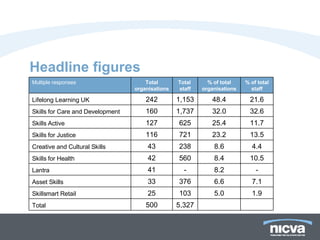
Headline figures 5,327 500 Total 1.9 5.0 103 25 Skillsmart Retail 7.1 6.6 376 33 Asset Skills - 8.2 - 41 Lantra 10.5 8.4 560 42 Skills for Health 4.4 8.6 238 43 Creative and Cultural Skills 13.5 23.2 721 116 Skills for Justice 11.7 25.4 625 127 Skills Active 32.6 32.0 1,737 160 Skills for Care and Development 21.6 48.4 1,153 242 Lifelong Learning UK % of total staff % of total organisations Total  staff Total organisations Multiple responses
Do skills gaps exist in the sector? One in ten had difficulties recruiting staff Lack of high level skills in applicants and short-term contracts Youth workers hardest vacancy to fill 88% no skills gaps (91% of all sectors stated they had no skills gaps - NI Skills Monitoring Survey 2005)
Where do skills gaps exist? Project management, Administration, Finance, Function Head Lack of funding for training and development Lack of time to attend or complete courses
What are the skills gaps? Management skills Strategic planning and forward planning Procurement/contract management Managing change Demands on managers changing
What are the skills gaps? Essential skills Team working Basic computer literacy/IT Health and safety
What are the skills gaps? Specialist skills Campaigning/marketing Human resources/personnel Fundraising
What is the significance of these skills gaps? Increased workload  Decreased ability to take on new work Increased costs Decreased ability to develop further services
How do organisations respond?  Further training and development (in-house) External training  Using volunteers instead of paid employees
Training Formal training plan – skills assessment – training and development policy (75%) 57% have a training budget Average annual training budget = £3,754 25 plus employees £200 per head per annum
What are the barriers organisations face?  Lack of funds/time/cover for training Information and relevance of training courses not an issue 23% found it difficult to find courses which met staff needs
Skills for Justice 721 paid staff Posts:   Support workers (with victims of survivors of crime) Skills gaps:   Senior managers/working with prisoners/adult resettlement workers Skills needs:   Understanding legislation, mental health awareness, managing aggressive behaviour
Skills for Care and Development 1,737 paid staff Posts:   Care/support assistant, social workers, senior care/support assistant Skills gaps:   Family centre worker, family aid, outreach worker Skills needs:   Risk assessment and risk management, communication with service users, working with people with disabilities
Skills Active 645 paid staff Posts:   Activity leader, play worker, sports development officer Skills gaps:   Sports development officer, operations/events/duty manager, sports coach Skills needs:   Activity leadership, first aid, health and safety
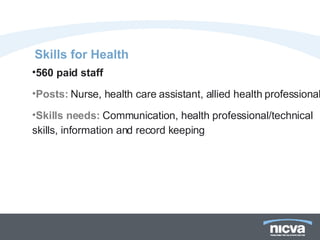
Skills for Health 560 paid staff Posts:   Nurse, health care assistant, allied health professional Skills needs:   Communication, health professional/technical skills, information and record keeping
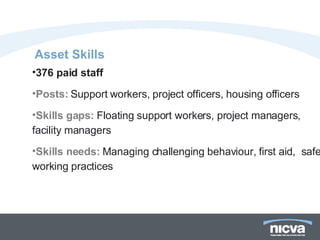
Asset Skills 376 paid staff Posts:   Support workers, project officers, housing officers Skills gaps:   Floating support workers, project managers, facility managers Skills needs:   Managing challenging behaviour, first aid,  safe working practices
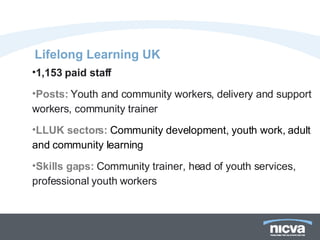
Lifelong Learning UK 1,153 paid staff Posts:   Youth and community workers, delivery and support workers, community trainer LLUK sectors:  Community development, youth work, adult and community learning Skills gaps:   Community trainer, head of youth services, professional youth workers
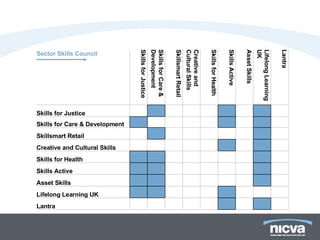
Lantra Lifelong Learning UK Asset Skills Skills Active Skills for Health Creative and Cultural Skills Skillsmart Retail Skills for Care & Development Skills for Justice Lantra Lifelong Learning UK Asset Skills Skills Active Skills for Health Creative and Cultural Skills Skillsmart Retail Skills for Care & Development Skills for Justice Sector Skills Council
Key messages  External factors very important  Challenges associated with funding  Skills gaps in support services functions Management and leadership Training is seen as important but not supported Diversity of the sector
Next Steps  Report published January 2008 Sector Skills Agreements Positive Steps – Skills Strategy Incorporate your views
 

Skills Seminar

  • 1.
  • 2.
    The Great SkillsDebate Understanding skills development across the voluntary and community sector in Northern Ireland
  • 3.
    Sector Skills Research Why? Consortium of 9 Sector Skills Councils 500 telephone interviews Generic/Sector Skills Council specific questions Future skills development
  • 4.
    Headline figures 5,327posts analysed. 78.5% full-time – 71% female. Administrators, project managers, direct support staff. 8% of organisations have 25 or more paid staff - representing 48% of all staff.
  • 5.
    Headline figures 5,327500 Total 1.9 5.0 103 25 Skillsmart Retail 7.1 6.6 376 33 Asset Skills - 8.2 - 41 Lantra 10.5 8.4 560 42 Skills for Health 4.4 8.6 238 43 Creative and Cultural Skills 13.5 23.2 721 116 Skills for Justice 11.7 25.4 625 127 Skills Active 32.6 32.0 1,737 160 Skills for Care and Development 21.6 48.4 1,153 242 Lifelong Learning UK % of total staff % of total organisations Total staff Total organisations Multiple responses
  • 6.
    Do skills gapsexist in the sector? One in ten had difficulties recruiting staff Lack of high level skills in applicants and short-term contracts Youth workers hardest vacancy to fill 88% no skills gaps (91% of all sectors stated they had no skills gaps - NI Skills Monitoring Survey 2005)
  • 7.
    Where do skillsgaps exist? Project management, Administration, Finance, Function Head Lack of funding for training and development Lack of time to attend or complete courses
  • 8.
    What are theskills gaps? Management skills Strategic planning and forward planning Procurement/contract management Managing change Demands on managers changing
  • 9.
    What are theskills gaps? Essential skills Team working Basic computer literacy/IT Health and safety
  • 10.
    What are theskills gaps? Specialist skills Campaigning/marketing Human resources/personnel Fundraising
  • 11.
    What is thesignificance of these skills gaps? Increased workload Decreased ability to take on new work Increased costs Decreased ability to develop further services
  • 12.
    How do organisationsrespond? Further training and development (in-house) External training Using volunteers instead of paid employees
  • 13.
    Training Formal trainingplan – skills assessment – training and development policy (75%) 57% have a training budget Average annual training budget = £3,754 25 plus employees £200 per head per annum
  • 14.
    What are thebarriers organisations face? Lack of funds/time/cover for training Information and relevance of training courses not an issue 23% found it difficult to find courses which met staff needs
  • 15.
    Skills for Justice721 paid staff Posts: Support workers (with victims of survivors of crime) Skills gaps: Senior managers/working with prisoners/adult resettlement workers Skills needs: Understanding legislation, mental health awareness, managing aggressive behaviour
  • 16.
    Skills for Careand Development 1,737 paid staff Posts: Care/support assistant, social workers, senior care/support assistant Skills gaps: Family centre worker, family aid, outreach worker Skills needs: Risk assessment and risk management, communication with service users, working with people with disabilities
  • 17.
    Skills Active 645paid staff Posts: Activity leader, play worker, sports development officer Skills gaps: Sports development officer, operations/events/duty manager, sports coach Skills needs: Activity leadership, first aid, health and safety
  • 18.
    Skills for Health560 paid staff Posts: Nurse, health care assistant, allied health professional Skills needs: Communication, health professional/technical skills, information and record keeping
  • 19.
    Asset Skills 376paid staff Posts: Support workers, project officers, housing officers Skills gaps: Floating support workers, project managers, facility managers Skills needs: Managing challenging behaviour, first aid, safe working practices
  • 20.
    Lifelong Learning UK1,153 paid staff Posts: Youth and community workers, delivery and support workers, community trainer LLUK sectors: Community development, youth work, adult and community learning Skills gaps: Community trainer, head of youth services, professional youth workers
  • 21.
    Lantra Lifelong LearningUK Asset Skills Skills Active Skills for Health Creative and Cultural Skills Skillsmart Retail Skills for Care & Development Skills for Justice Lantra Lifelong Learning UK Asset Skills Skills Active Skills for Health Creative and Cultural Skills Skillsmart Retail Skills for Care & Development Skills for Justice Sector Skills Council
  • 22.
    Key messages External factors very important Challenges associated with funding Skills gaps in support services functions Management and leadership Training is seen as important but not supported Diversity of the sector
  • 23.
    Next Steps Report published January 2008 Sector Skills Agreements Positive Steps – Skills Strategy Incorporate your views
  • 24.