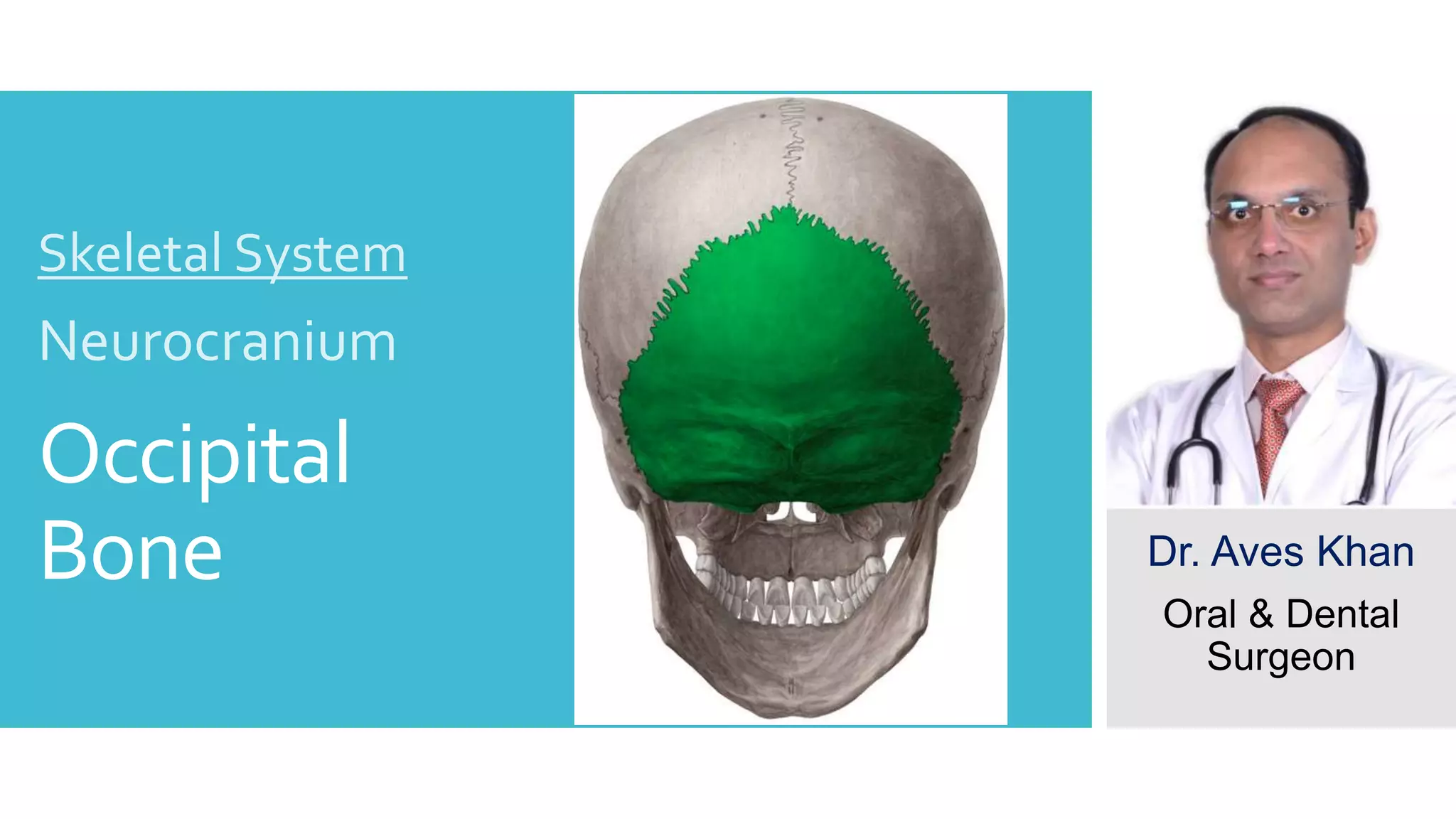

Occipital
Bone
Skeletal System
Neurocranium
Dr. Aves Khan
Oral & Dental
Surgeon
Introduction of
Occipital Bone
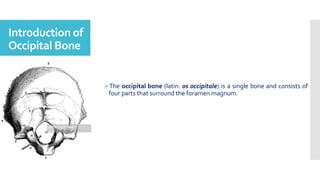
The occipital bone (latin: os occipitale) is a single bone and consists of
four parts that surround the foramen magnum.
Parts of
Occipital Bone
There four parts forming the occipital bone are as following:
 basilar part,
 lateral part (2),
 squamous part.
Basilar part of
occipital bone
The basilar part of the occipital bone (also called the basioccipital)
is the portion of the occipital bone extending anteriorly from the
foramen magnum and joining with the body of the sphenoid bone.
Surfaces of
The basilar
part of the
occipital bone
The internal surface of the basioccipital features the following
structures:
 clivus,
 groove for inferior petrosal sinus (2).
The clivus is a sloping medial surface of the basal part of
the occipital bone behind the dorsum sellae, sloping downward to
the foramen magnum. The clivus is occupied by the medulla
oblongata and pons.
The groove for inferior petrosal sinus is formed by the junction of
the petrous part of the temporal bone with the basilar part of
the occipital bone.
Surfaces of
The basilar
part of the
occipital bone
The external surface of the basioccipital features the pharyngeal
tubercle.
The pharyngeal tubercle (or pharyngeal eminence) is a
prominence on the inferior surface of the occipital bone,
specifically, on the outer surface of the basilar part of the occipital
bone, for attachment of the pharyngeal raphe.
Lateral part of
occipital bone
 Each lateral part of the occipital bone has an internal and an
external surface.
 The internal surface of the lateral part of the occipital
bone presents the groove for the sigmoid sinus.
 The groove for the sigmoid sinus is located in the posterior
cranial fossa, found on the lateral part of the occipital bone, then
curving around the jugular process on the mastoid part of the
temporal bone, finally, turning sharply on the inner surface of the
parietal bone, continuing as the transverse groove.
The external
surface of the
lateral part of
the occipital
bone
It features the following structures:
 occipital condyle,
 condylar canal,
 hypoglossal canal.
The occipital condyle is a process on the occipital bone for articulation
with the atlas.
The condylar canal is a bony passage located in the lateral part of
the occipital bone posterior to the occipital condyle transmitting a vein
from the sigmoid sinus.
The hypoglossal canal is a bony passage that originates from the
lateral part of the occipital bone anterior to the foramen magnum and
ends on the outer surface anterior to the occipital condyle. The
hypoglossal canal transmits the hypoglossal nerve (CN XII) and a venous
plexus.
Squamous
part of
occipital bone
The squamous part (also called squama of occipital bone, occipital
squama) of the occipital bone has an internal and an external surface.
The internal surface of the squama of the occipital bone features:
 internal occipital protuberance,
 internal occipital crest,
 groove for superior sagittal sinus,
 groove for transverse sinus (2).
The external surface of the squama of the occipital bone features:
 external occipital protuberance,
 external occipital crest,
 superior nuchal line,
 inferior nuchal line.
The internal
surface of the
squama of the
occipital bone
The internal occipital protuberance is a prominent midpoint of the
cruciform eminence - a cross shaped bony prominence on the internal
surface of the occipital bone.
The internal occipital crest is a thick bony ridge on the internal surface
of the occipital bone that occasionally extends from the internal
occipital protuberance to the foramen magnum.
The groove for the superior sagittal sinus is a shallow depression on
the frontal, parietal, and occipital bones forming a channel for the
sagittal superior sinus; its margins come together as it passes
downward and become continuous with the frontal crest.
The groove for the transverse sinus is located bilaterally on the
internal surface of the occipital bone extending from the internal
protuberance to the lateral angles of the occipital bone.
The external
surface of the
squama of the
occipital bone
The external occipital protuberance is a palpable bony projection in
the middle of the occipital bone.
The external occipital crest is a bony ridge on the external surface of
the occipital bone that occasionally extends from the external occipital
protuberance to the foramen magnum.
The superior nuchal line is a transverse ridge on the external surface of
the occipital bone at the level of the external occipital protuberance. It
is the attachment site for the occipital belly of the occipitofrontalis
muscle.
The inferior nuchal line is a transverse ridge on the external surface of
the occipital bone between the superior nuchal line and the foramen
magnum. The semispinalis capitis muscle attaches between the inferior
and the superior nuchal lines.
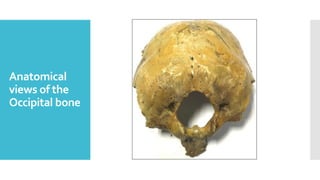
Anatomical
views of the
Occipital bone
Dr. Aves Khan
Oral & Dental
Surgeon

Skeletal System:- Neurocranium - Occipital bone

  • 1.
  • 2.
    Introduction of Occipital Bone Theoccipital bone (latin: os occipitale) is a single bone and consists of four parts that surround the foramen magnum.
  • 3.
    Parts of Occipital Bone Therefour parts forming the occipital bone are as following:  basilar part,  lateral part (2),  squamous part.
  • 4.
    Basilar part of occipitalbone The basilar part of the occipital bone (also called the basioccipital) is the portion of the occipital bone extending anteriorly from the foramen magnum and joining with the body of the sphenoid bone.
  • 5.
    Surfaces of The basilar partof the occipital bone The internal surface of the basioccipital features the following structures:  clivus,  groove for inferior petrosal sinus (2). The clivus is a sloping medial surface of the basal part of the occipital bone behind the dorsum sellae, sloping downward to the foramen magnum. The clivus is occupied by the medulla oblongata and pons. The groove for inferior petrosal sinus is formed by the junction of the petrous part of the temporal bone with the basilar part of the occipital bone.
  • 6.
    Surfaces of The basilar partof the occipital bone The external surface of the basioccipital features the pharyngeal tubercle. The pharyngeal tubercle (or pharyngeal eminence) is a prominence on the inferior surface of the occipital bone, specifically, on the outer surface of the basilar part of the occipital bone, for attachment of the pharyngeal raphe.
  • 7.
    Lateral part of occipitalbone  Each lateral part of the occipital bone has an internal and an external surface.  The internal surface of the lateral part of the occipital bone presents the groove for the sigmoid sinus.  The groove for the sigmoid sinus is located in the posterior cranial fossa, found on the lateral part of the occipital bone, then curving around the jugular process on the mastoid part of the temporal bone, finally, turning sharply on the inner surface of the parietal bone, continuing as the transverse groove.
  • 8.
    The external surface ofthe lateral part of the occipital bone It features the following structures:  occipital condyle,  condylar canal,  hypoglossal canal. The occipital condyle is a process on the occipital bone for articulation with the atlas. The condylar canal is a bony passage located in the lateral part of the occipital bone posterior to the occipital condyle transmitting a vein from the sigmoid sinus. The hypoglossal canal is a bony passage that originates from the lateral part of the occipital bone anterior to the foramen magnum and ends on the outer surface anterior to the occipital condyle. The hypoglossal canal transmits the hypoglossal nerve (CN XII) and a venous plexus.
  • 9.
    Squamous part of occipital bone Thesquamous part (also called squama of occipital bone, occipital squama) of the occipital bone has an internal and an external surface. The internal surface of the squama of the occipital bone features:  internal occipital protuberance,  internal occipital crest,  groove for superior sagittal sinus,  groove for transverse sinus (2). The external surface of the squama of the occipital bone features:  external occipital protuberance,  external occipital crest,  superior nuchal line,  inferior nuchal line.
  • 10.
    The internal surface ofthe squama of the occipital bone The internal occipital protuberance is a prominent midpoint of the cruciform eminence - a cross shaped bony prominence on the internal surface of the occipital bone. The internal occipital crest is a thick bony ridge on the internal surface of the occipital bone that occasionally extends from the internal occipital protuberance to the foramen magnum. The groove for the superior sagittal sinus is a shallow depression on the frontal, parietal, and occipital bones forming a channel for the sagittal superior sinus; its margins come together as it passes downward and become continuous with the frontal crest. The groove for the transverse sinus is located bilaterally on the internal surface of the occipital bone extending from the internal protuberance to the lateral angles of the occipital bone.
  • 11.
    The external surface ofthe squama of the occipital bone The external occipital protuberance is a palpable bony projection in the middle of the occipital bone. The external occipital crest is a bony ridge on the external surface of the occipital bone that occasionally extends from the external occipital protuberance to the foramen magnum. The superior nuchal line is a transverse ridge on the external surface of the occipital bone at the level of the external occipital protuberance. It is the attachment site for the occipital belly of the occipitofrontalis muscle. The inferior nuchal line is a transverse ridge on the external surface of the occipital bone between the superior nuchal line and the foramen magnum. The semispinalis capitis muscle attaches between the inferior and the superior nuchal lines.
  • 12.
  • 13.
    Dr. Aves Khan Oral& Dental Surgeon