BUSINESS ANALYSIS FORUM
Richard Veryard July/October 2012
Six Viewpoints of
Business
Architecture
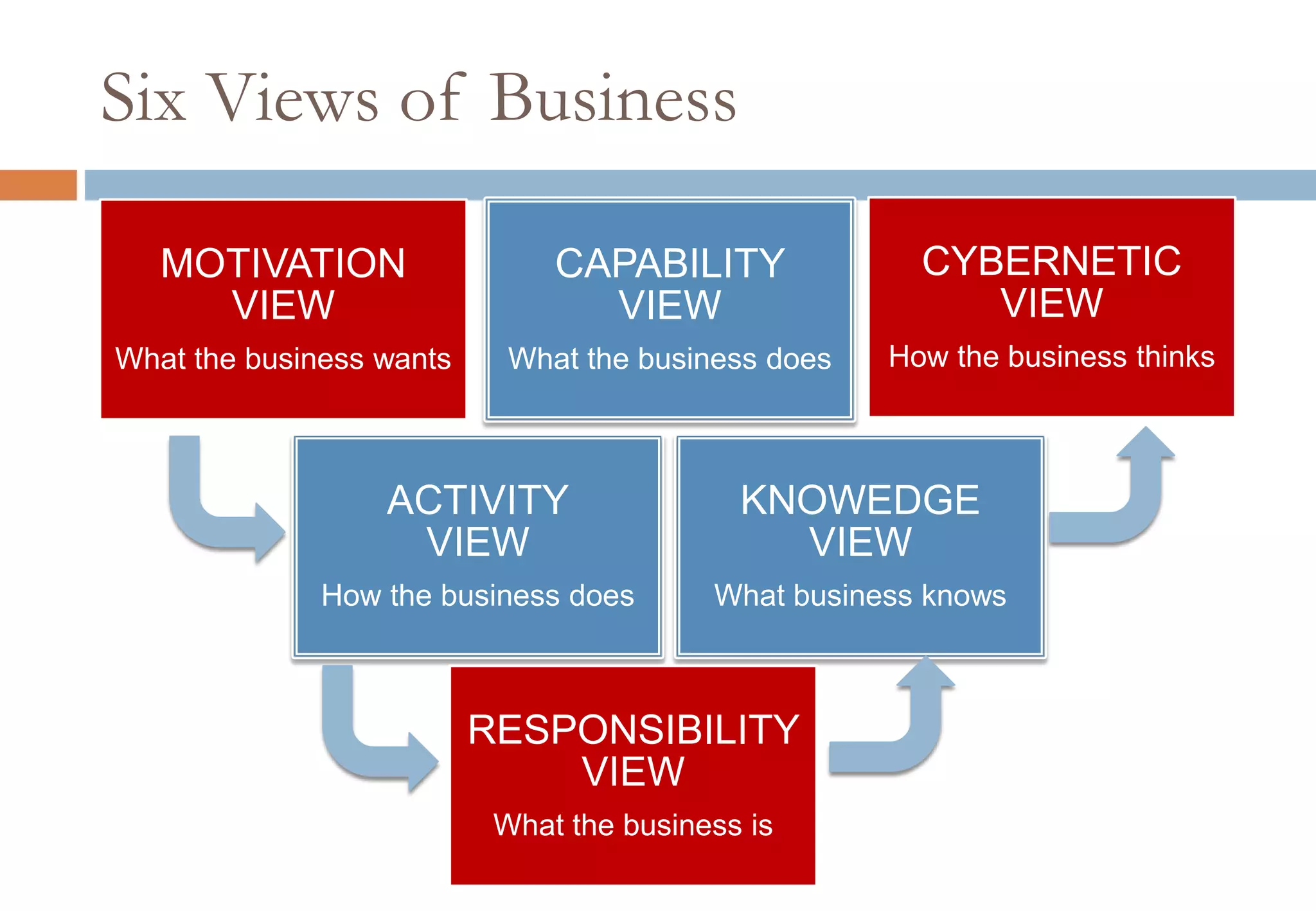
MOTIVATION
VIEW
What the business wants
CAPABILITY
VIEW
What the business does
CYBERNETIC
VIEW
How the business thinks
ACTIVITY
VIEW
How the business does
KNOWEDGE
VIEW
What business knows
RESPONSIBILITY
VIEW
What the business is
Six Views of Business
ISO 42010 calls
these Viewpoints
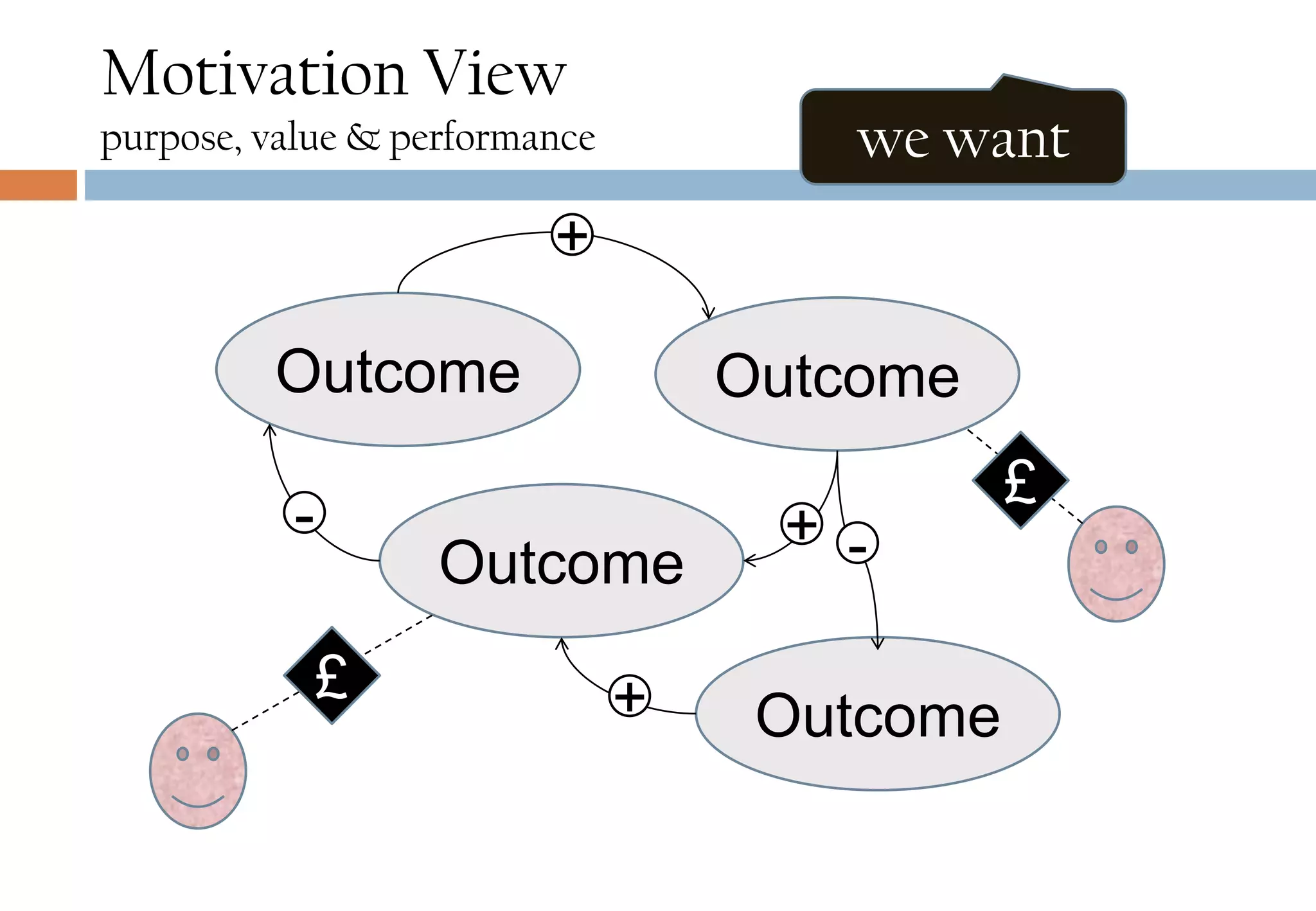
we want
Outcome Outcome
Outcome
Outcome
-+-
+
+£
£
Motivation View
purpose, value & performance
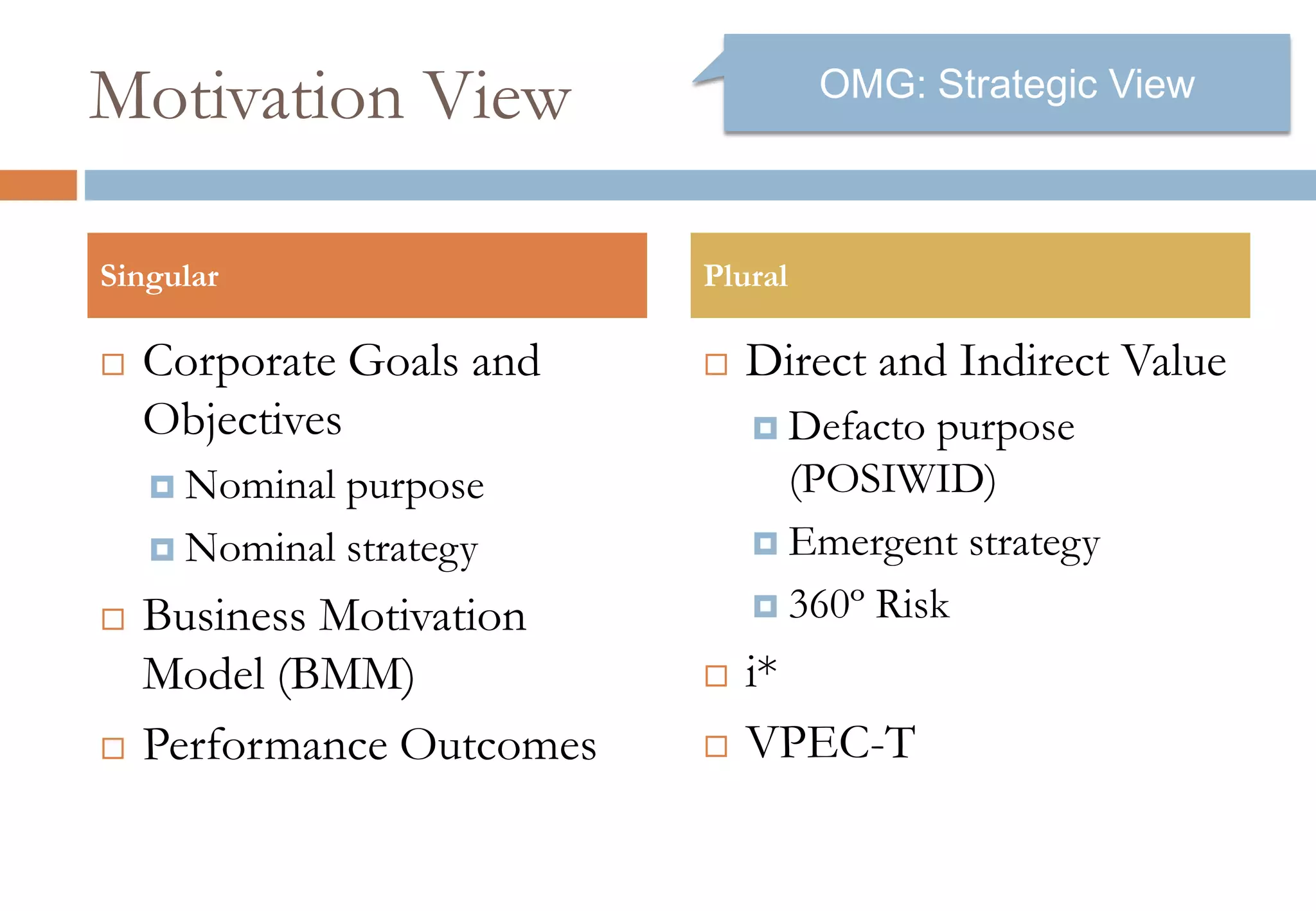
Motivation View
 Corporate Goals and
Objectives
Nominal purpose
Nominal strategy
 Business Motivation
Model (BMM)
 Performance Outcomes
 Direct and Indirect Value
Defacto purpose
(POSIWID)
Emergent strategy
360º Risk
 i*
 VPEC-T
Singular Plural
OMG: Strategic View
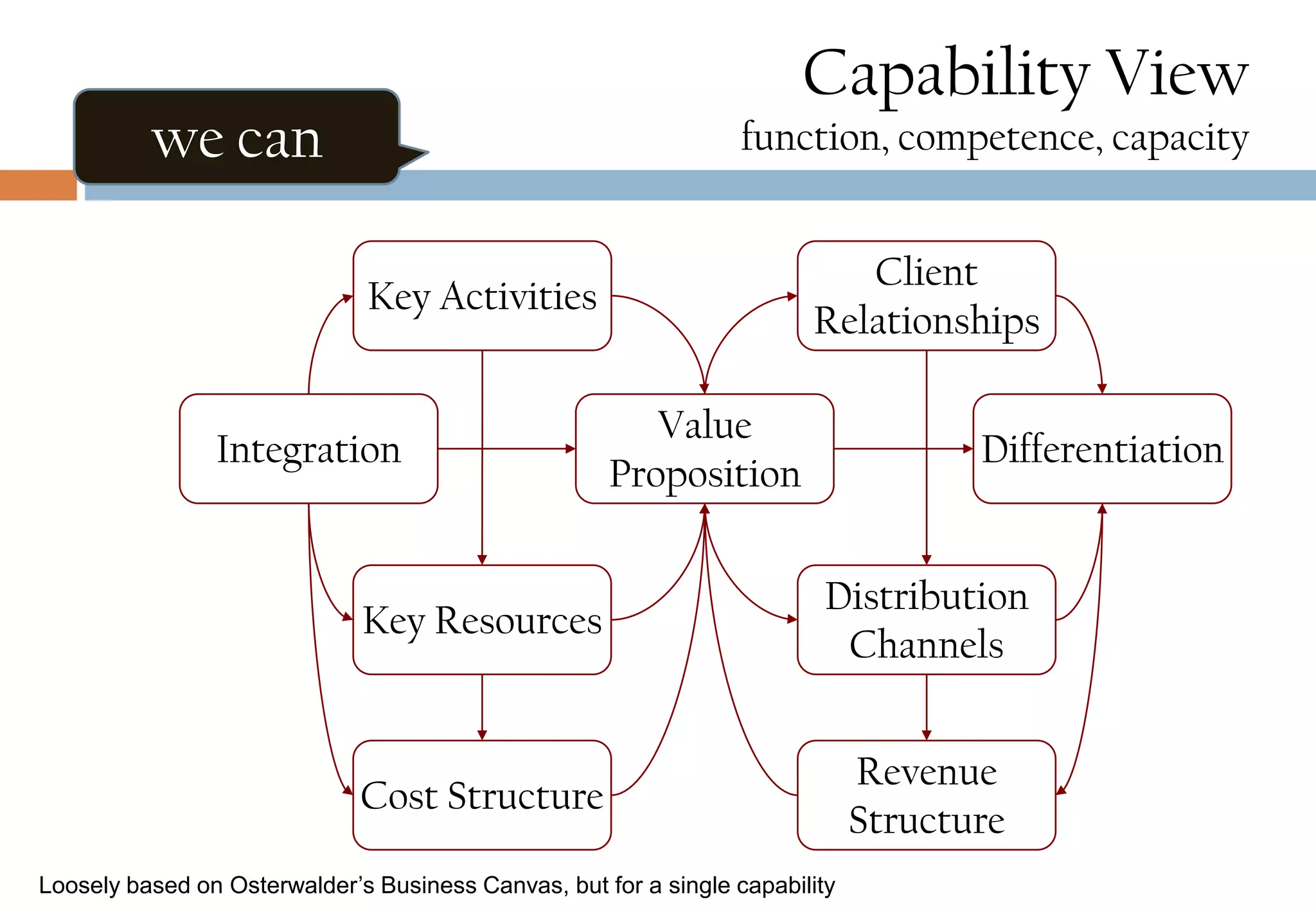
we can
Key Activities
Value
Proposition
Distribution
Channels
Client
Relationships
Revenue
Structure
DifferentiationIntegration
Key Resources
Cost Structure
Capability View
function, competence, capacity
Loosely based on Osterwalder’s Business Canvas, but for a single capability
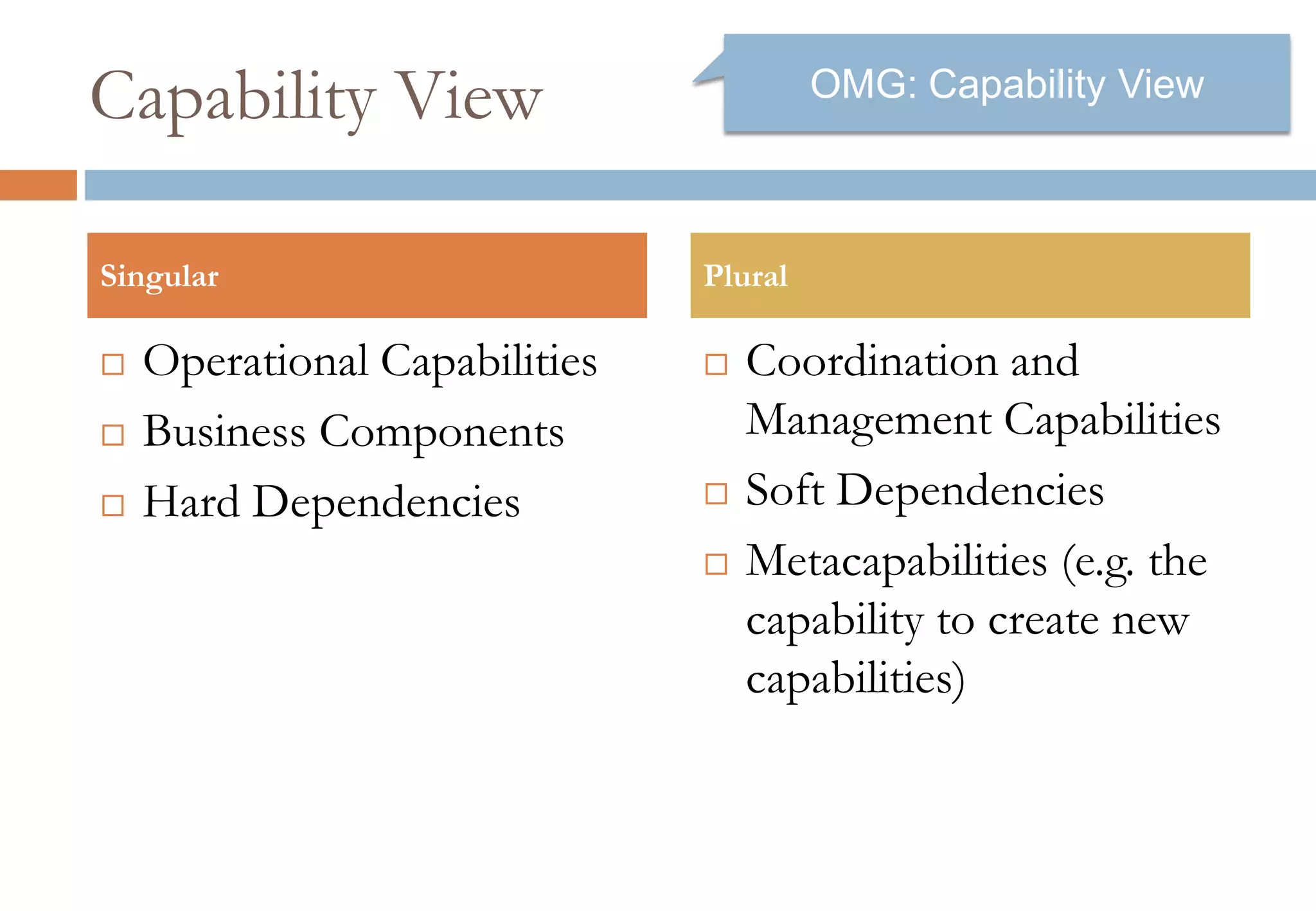
Capability View
 Operational Capabilities
 Business Components
 Hard Dependencies
 Coordination and
Management
Capabilities
 Soft Dependencies
 Metacapabilities (e.g.
the capability to create
new capabilities)
Singular Plural
= OMG Capability View
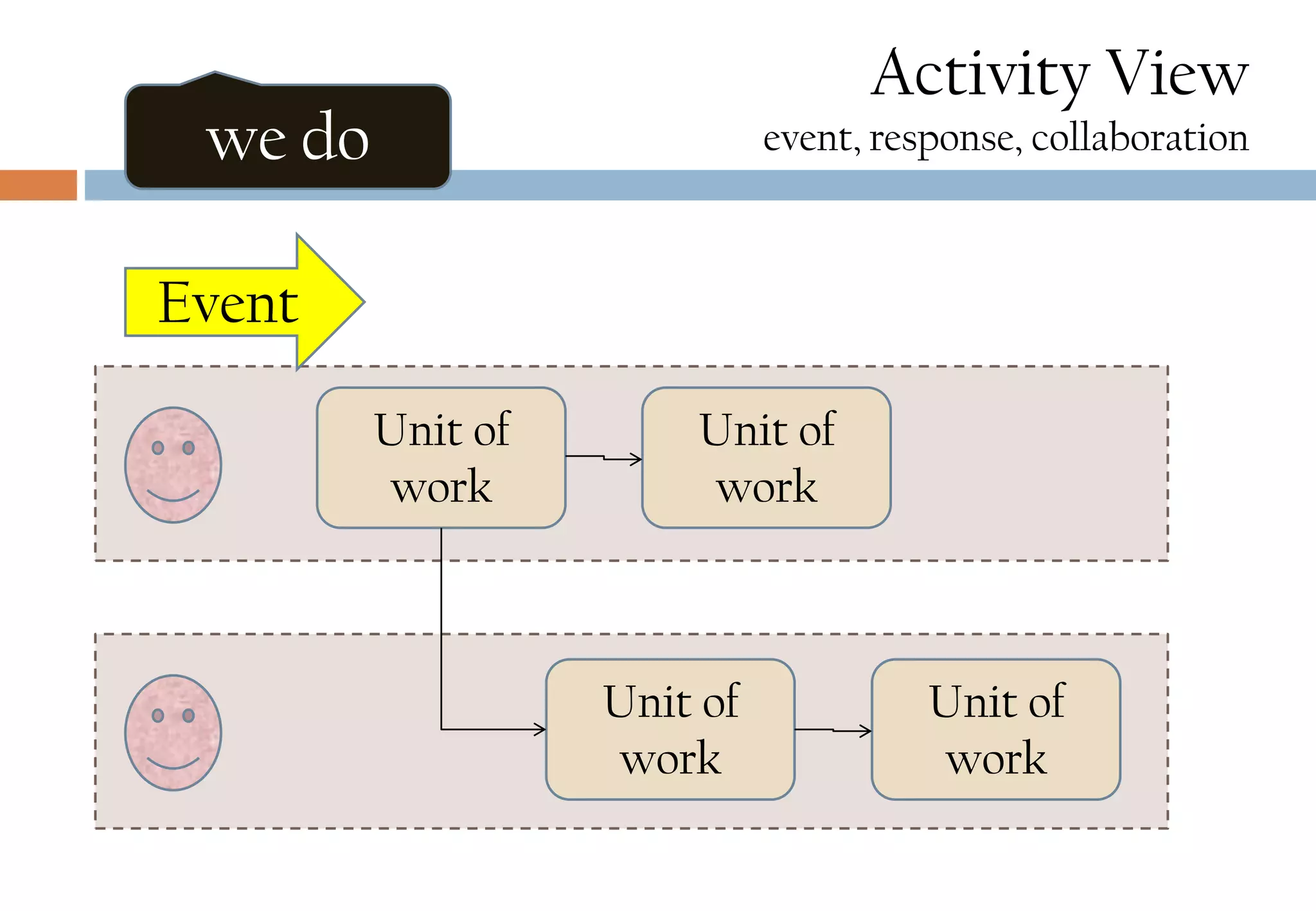
we do
Unit of
work
Unit of
work
Unit of
work
Unit of
work
Event
Activity View
event, response, collaboration
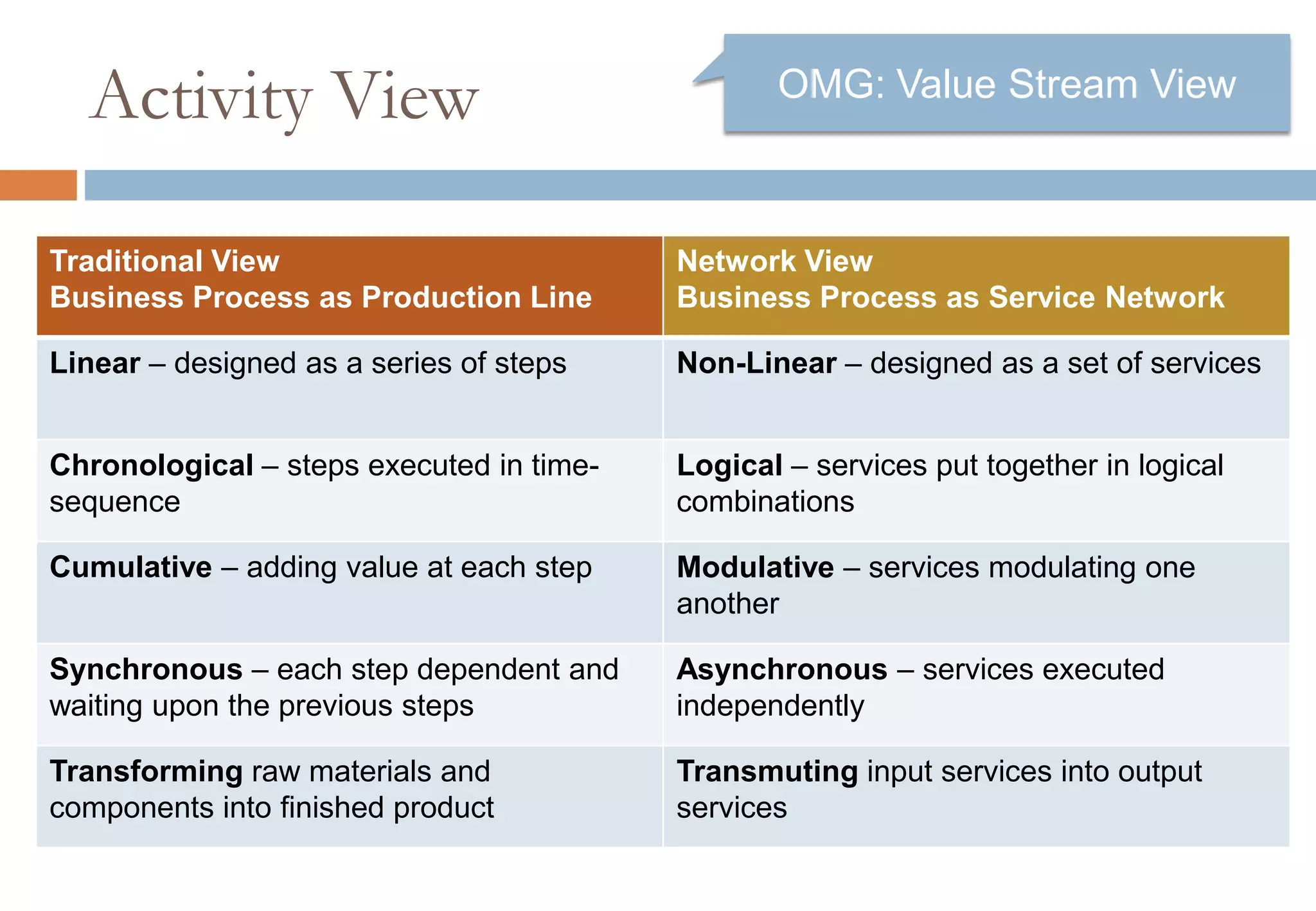
Activity View = OMG Value Stream View
Traditional View
Business Process as Production Line
Network View
Business Process as Service Network
Linear – designed as a series of steps Non-Linear – designed as a set of services
Chronological – steps executed in time-
sequence
Logical – services put together in logical
combinations
Cumulative – adding value at each step Modulative – services modulating one
another
Synchronous – each step dependent and
waiting upon the previous steps
Asynchronous – services executed
independently
Transforming raw materials and
components into finished product
Transmuting input services into output
services
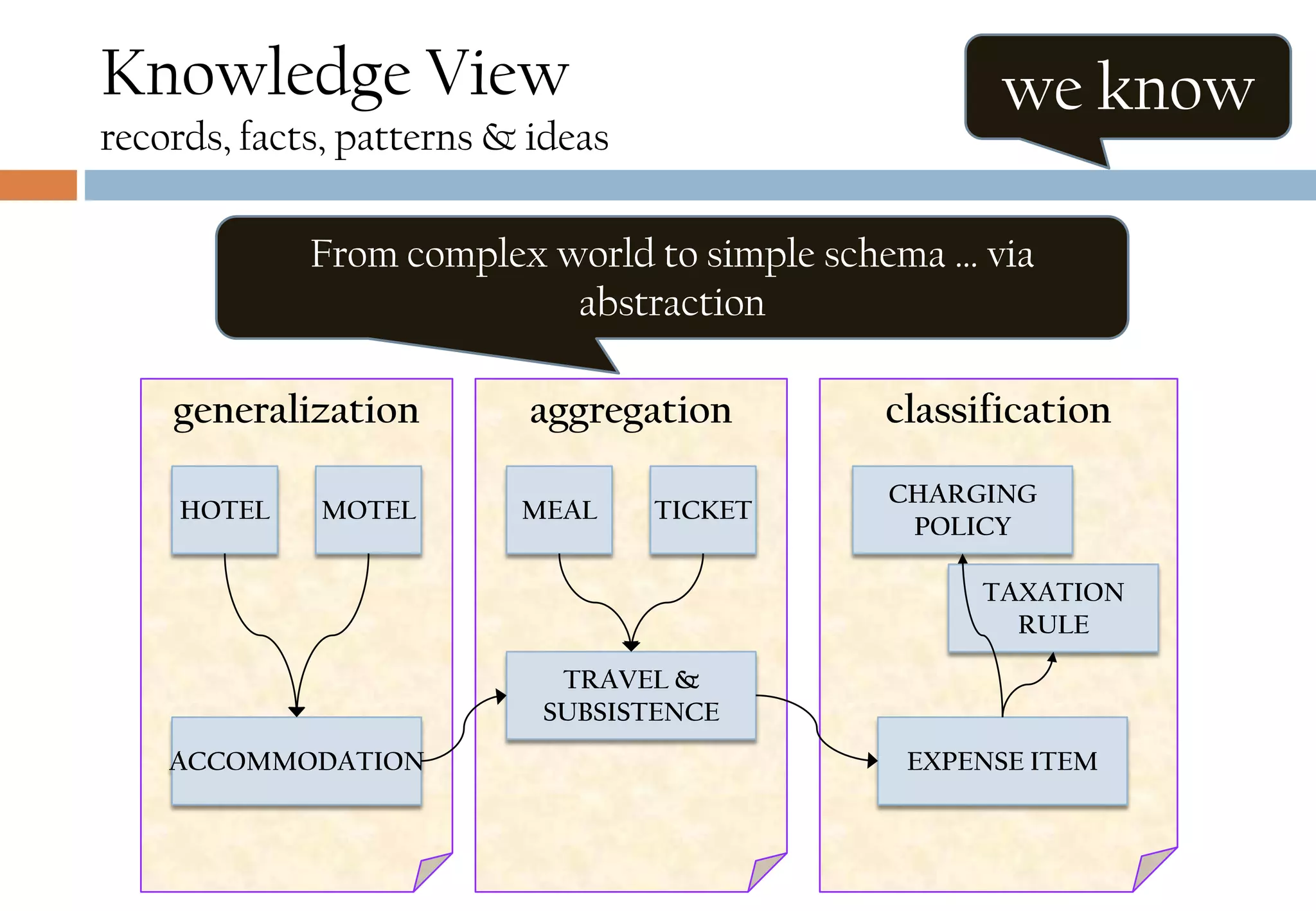
we know
generalization aggregation classification
HOTEL MOTEL
ACCOMMODATION
MEAL TICKET
TRAVEL &
SUBSISTENCE
CHARGING
POLICY
TAXATION
RULE
EXPENSE ITEM
From complex world to simple schema … via
abstraction
Knowledge View
records, facts, patterns & ideas
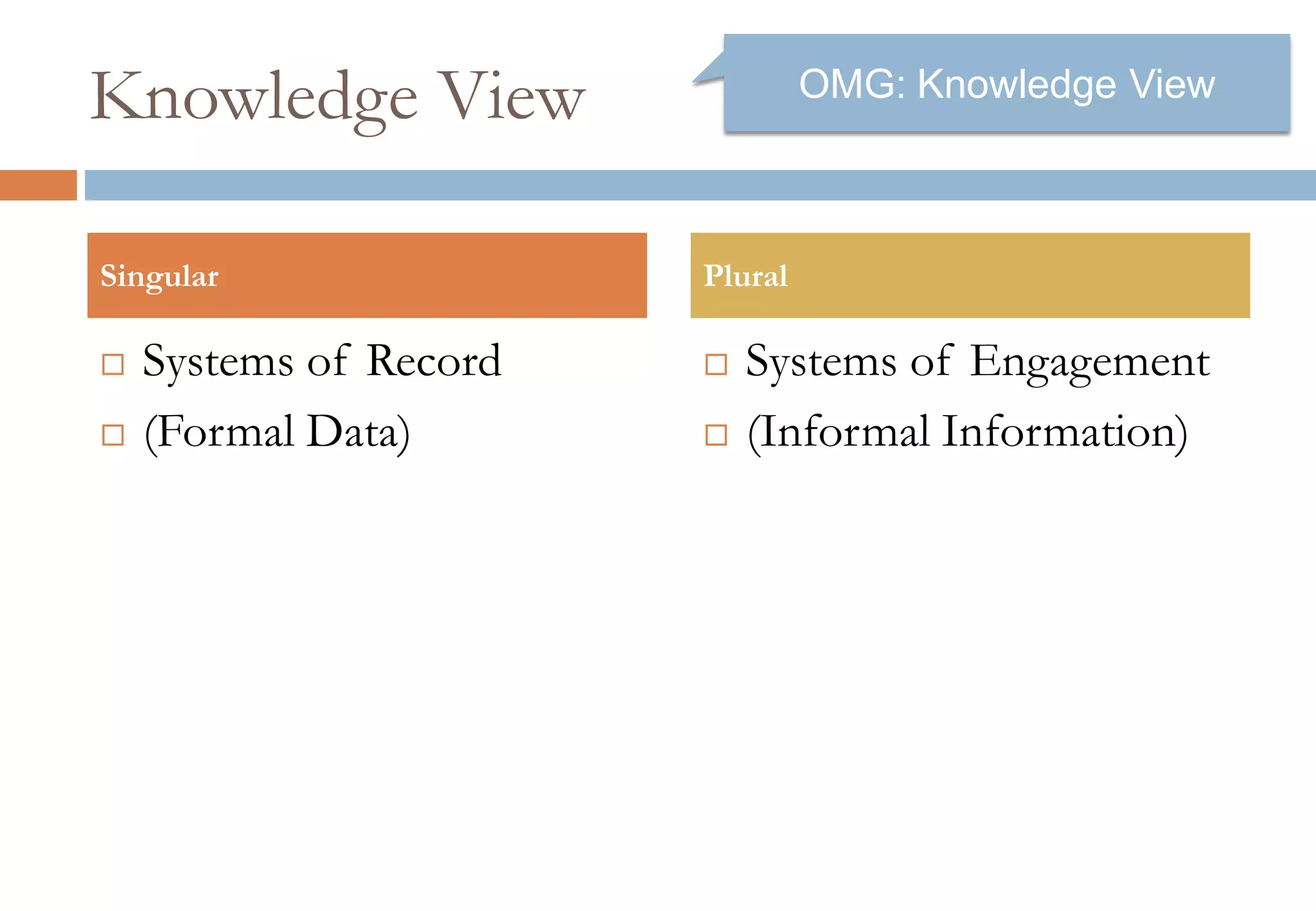
Knowledge View
 Systems of Record
 (Formal Data)
 Systems of Engagement
 (Informal Information)
Singular Plural
= OMG Knowledge View
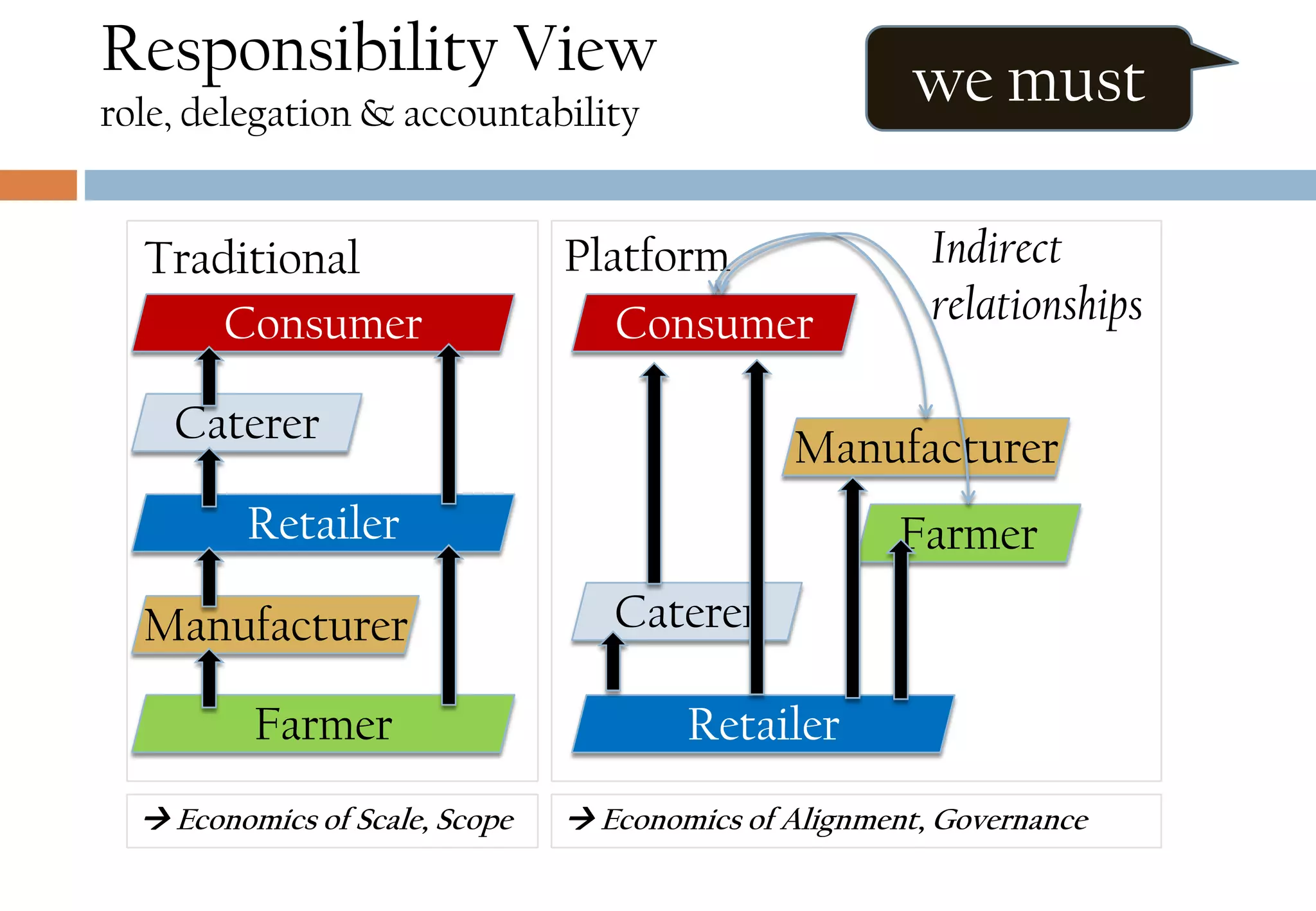
we must
Traditional Platform
Consumer
Retailer
Farmer
Manufacturer
Caterer
Consumer
Retailer
Farmer
Manufacturer
Caterer
 Economics of Scale, Scope  Economics of Alignment, Governance
Indirect
relationships
Responsibility View
role, delegation & accountability
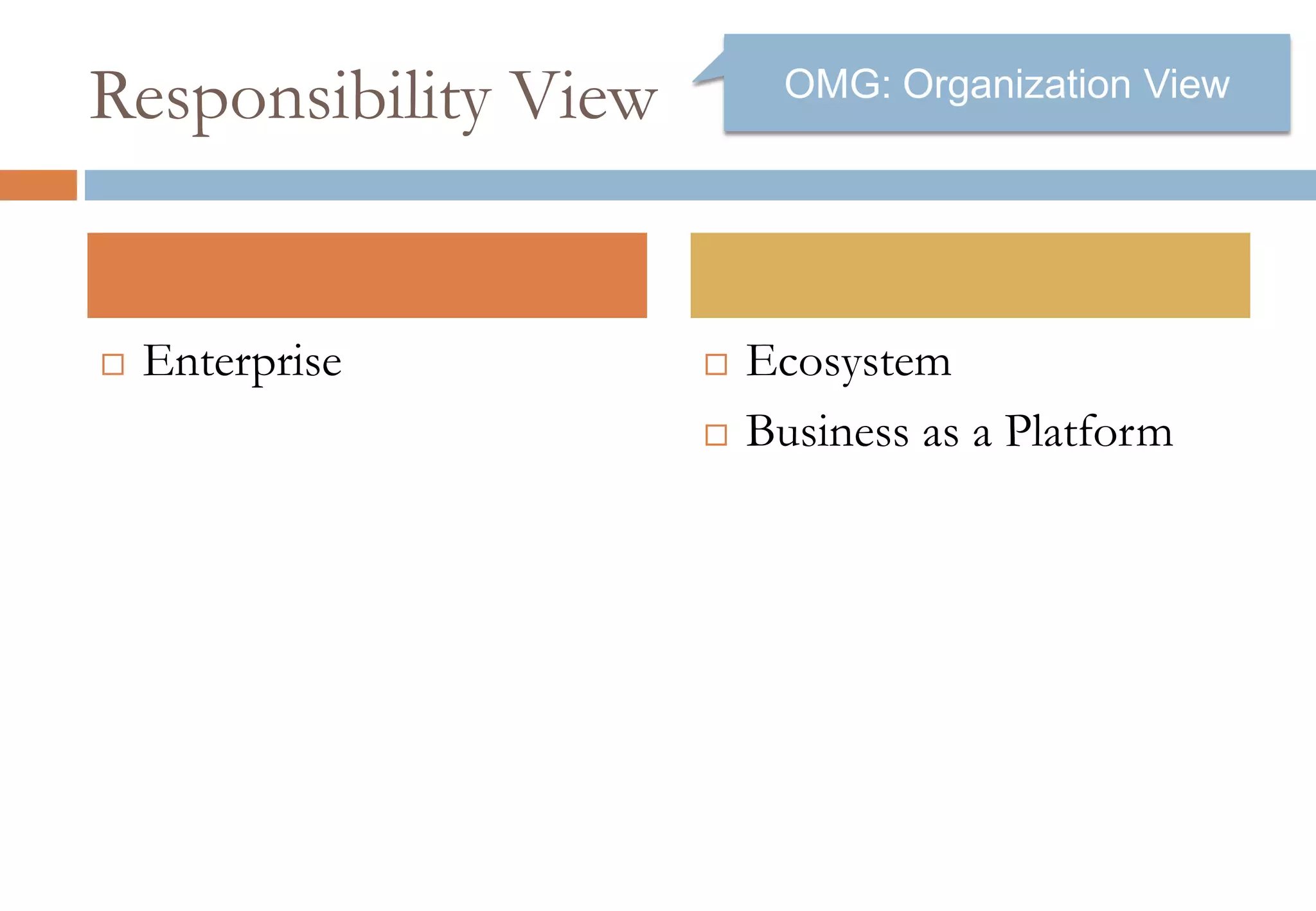
Responsibility View
 Hierarchy
 Enterprise
 Organization
 Network
 Ecosystem
 Business as a Platform
Traditional Emerging
= OMG Organization View
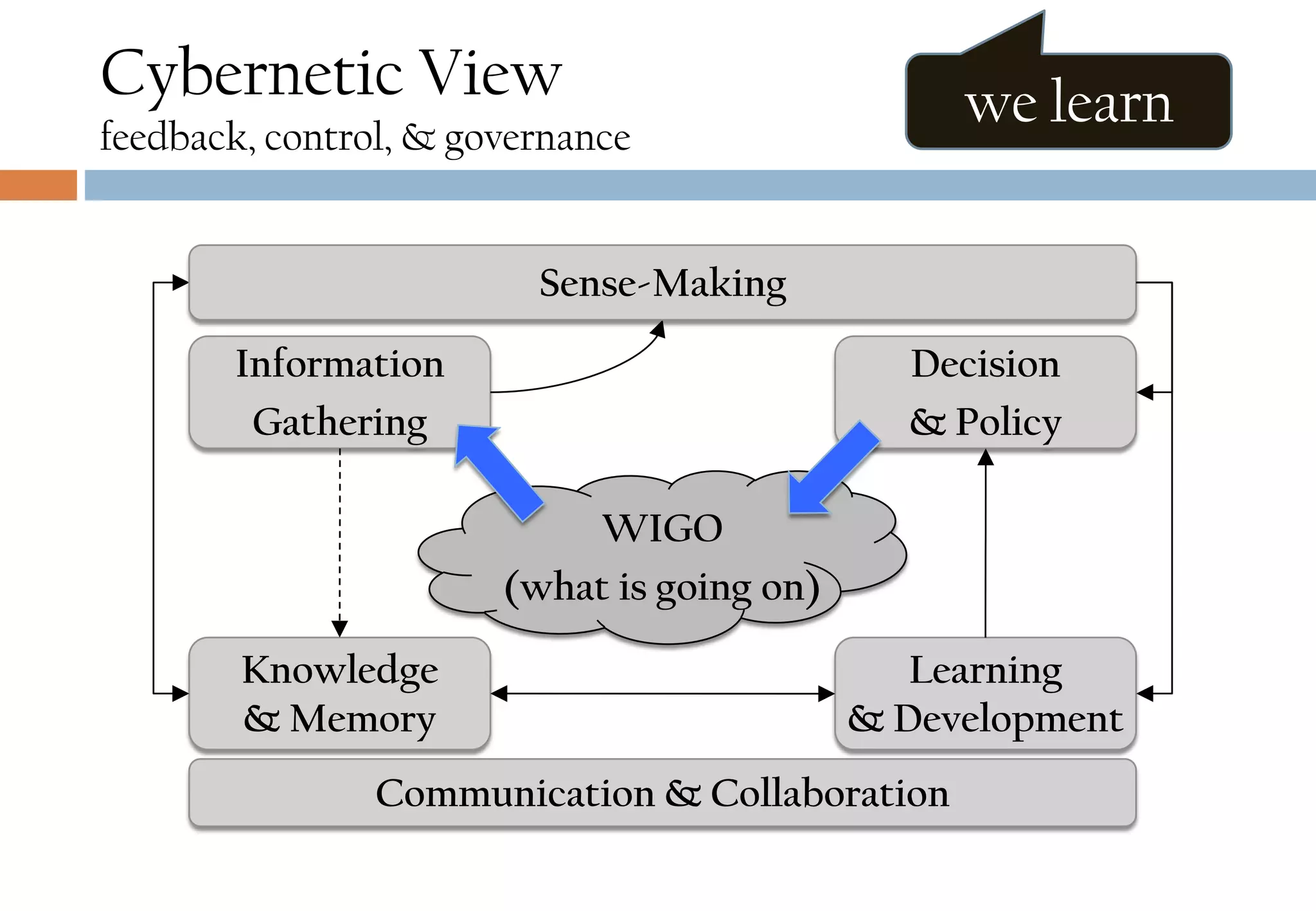
we think
feedback, control, & governance
Learning
& Development
Knowledge
& Memory
Information
Gathering
Decision
& Policy
WIGO
(what is going on)
Communication & Collaboration
Sense-Making
Cybernetic View
feedback, control, & governance
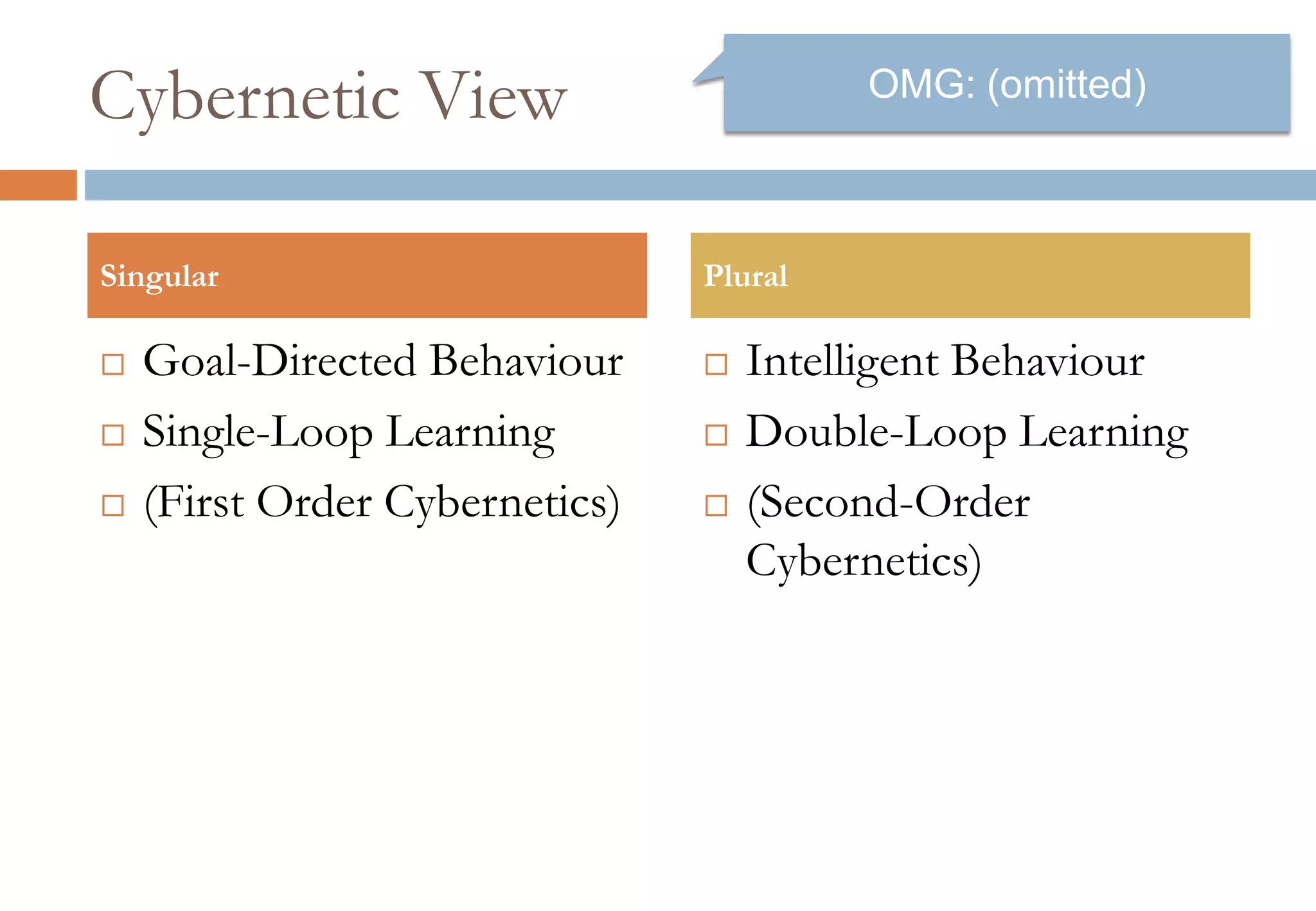
Cybernetic View
 Goal-Directed
Behaviour
 Single-Loop Learning
 (First Order
Cybernetics)
 Intelligent Behaviour
 Double-Loop Learning
 (Second-Order
Cybernetics)
Singular Plural
Not in OMG
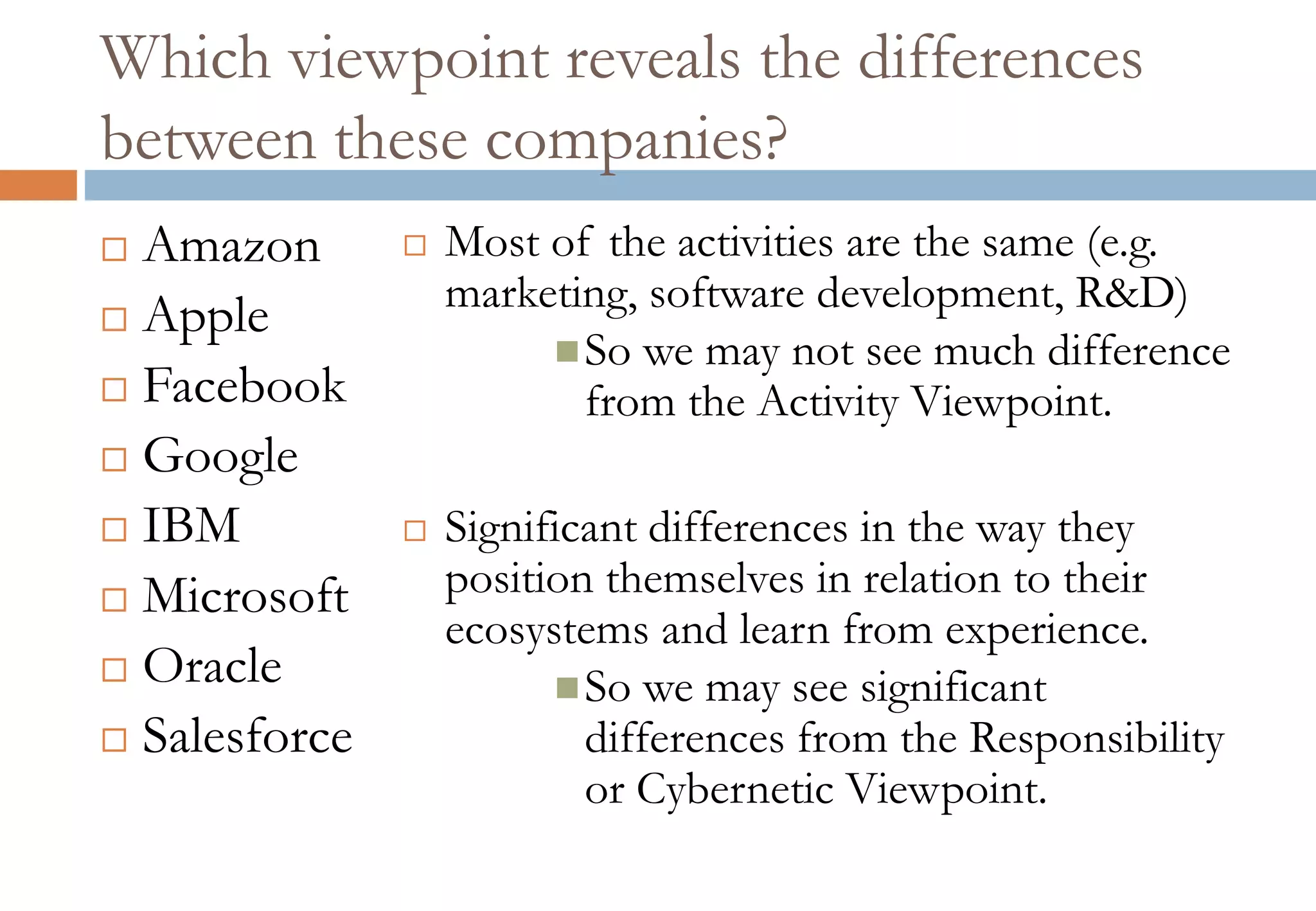
Which viewpoint reveals the differences
between these companies?
 Amazon
 Apple
 Facebook
 Google
 IBM
 Microsoft
 Oracle
 Salesforce
 Most of the activities are the same (e.g.
marketing, software development, R&D)
So we may not see much
difference from the Activity
Viewpoint.
 Significant differences in the way they
position themselves in relation to their
ecosystems and learn from experience.
So we may see significant
differences from the
Responsibility or Cybernetic
Viewpoint.
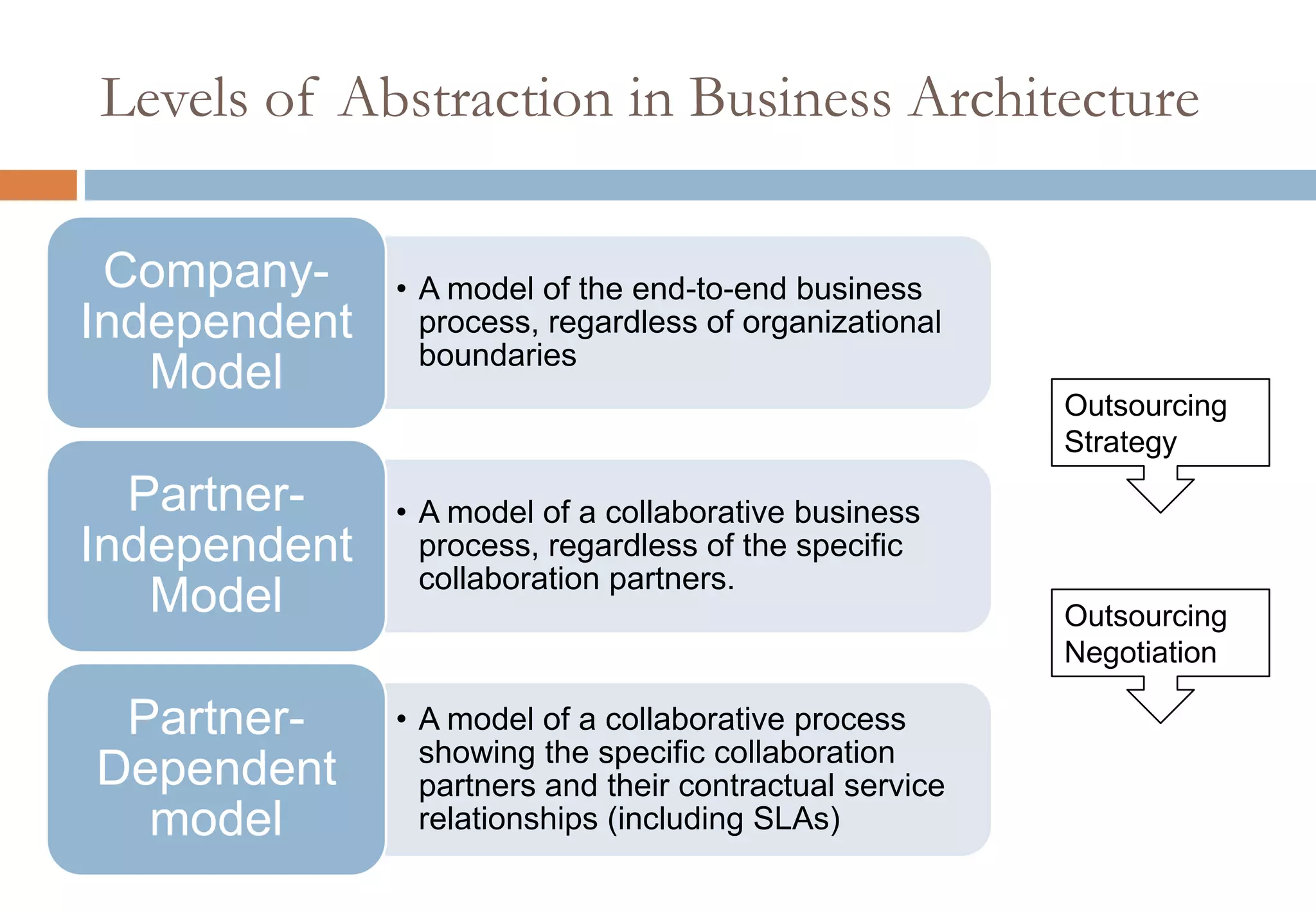
Levels of Abstraction in Business Architecture
• A model of the end-to-end business
process, regardless of organizational
boundaries
Company-
Independent
Model
• A model of a collaborative business
process, regardless of the specific
collaboration partners.
Partner-
Independent
Model
• A model of a collaborative process
showing the specific collaboration
partners and their contractual service
relationships (including SLAs)
Partner-
Dependent
model
Outsourcing
Strategy
Outsourcing
Negotiation
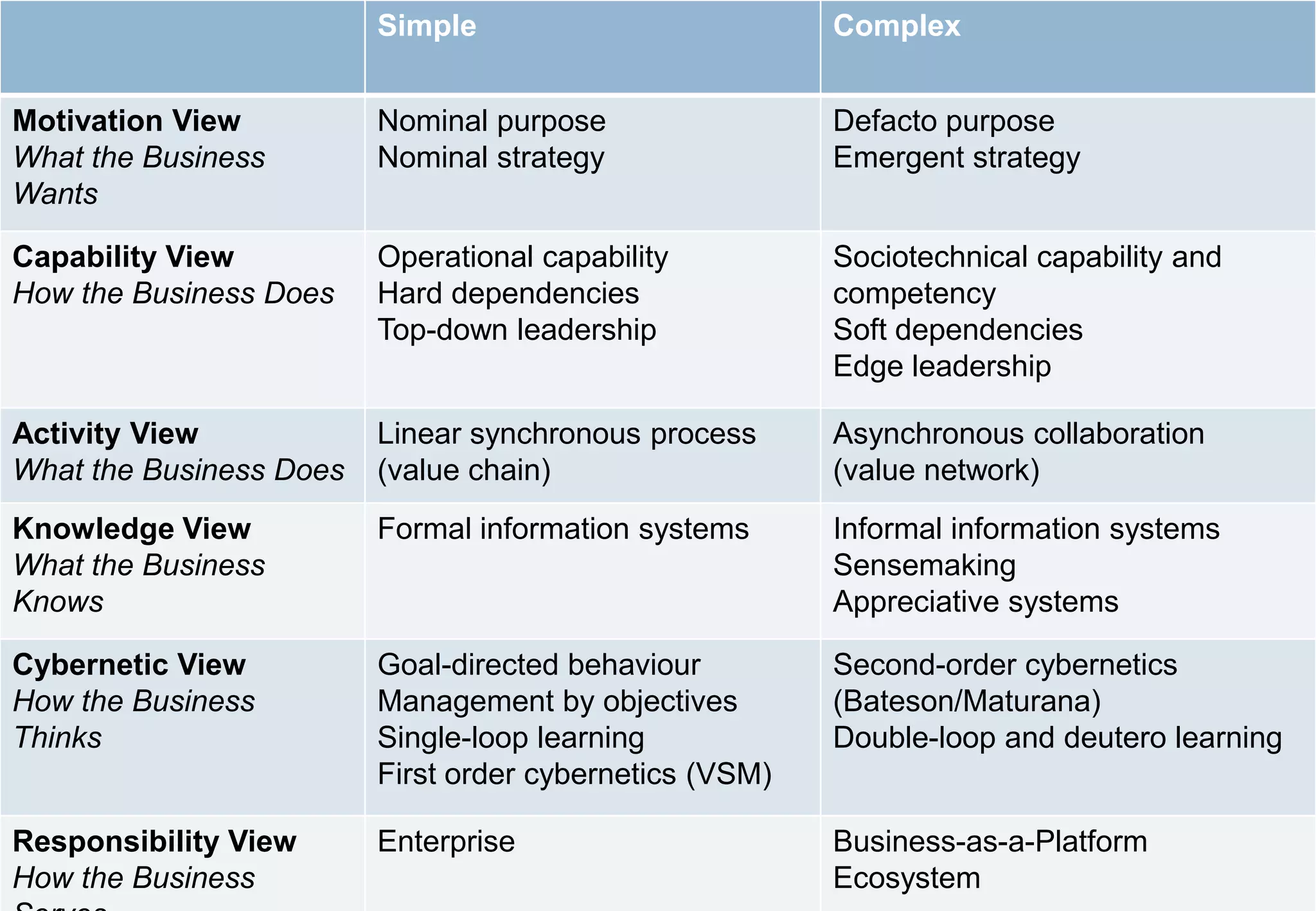
Simple Complex
Motivation View
What the Business
Wants
Nominal purpose
Nominal strategy
Defacto purpose
Emergent strategy
Capability View
How the Business Does
Operational capability
Hard dependencies
Top-down leadership
Sociotechnical capability and
competency
Soft dependencies
Edge leadership
Activity View
What the Business Does
Linear synchronous process
(value chain)
Asynchronous collaboration
(value network)
Knowledge View
What the Business
Knows
Formal information systems Informal information systems
Sensemaking
Appreciative systems
Cybernetic View
How the Business
Thinks
Goal-directed behaviour
Management by objectives
Single-loop learning
First order cybernetics (VSM)
Second-order cybernetics
(Bateson/Maturana)
Double-loop and deutero learning
Responsibility View
How the Business
Enterprise Business-as-a-Platform
Ecosystem
eBooklet Now Available
leanpub.com/
businessarchitecture-
viewpoints/

Six views of business architecture

  • 1.
    BUSINESS ANALYSIS FORUM RichardVeryard July/October 2012 Six Viewpoints of Business Architecture
  • 2.
    MOTIVATION VIEW What the businesswants CAPABILITY VIEW What the business does CYBERNETIC VIEW How the business thinks ACTIVITY VIEW How the business does KNOWEDGE VIEW What business knows RESPONSIBILITY VIEW What the business is Six Views of Business ISO 42010 calls these Viewpoints
  • 3.
  • 4.
    Motivation View  CorporateGoals and Objectives Nominal purpose Nominal strategy  Business Motivation Model (BMM)  Performance Outcomes  Direct and Indirect Value Defacto purpose (POSIWID) Emergent strategy 360º Risk  i*  VPEC-T Singular Plural OMG: Strategic View
  • 5.
    we can Key Activities Value Proposition Distribution Channels Client Relationships Revenue Structure DifferentiationIntegration KeyResources Cost Structure Capability View function, competence, capacity Loosely based on Osterwalder’s Business Canvas, but for a single capability
  • 6.
    Capability View  OperationalCapabilities  Business Components  Hard Dependencies  Coordination and Management Capabilities  Soft Dependencies  Metacapabilities (e.g. the capability to create new capabilities) Singular Plural = OMG Capability View
  • 7.
    we do Unit of work Unitof work Unit of work Unit of work Event Activity View event, response, collaboration
  • 8.
    Activity View =OMG Value Stream View Traditional View Business Process as Production Line Network View Business Process as Service Network Linear – designed as a series of steps Non-Linear – designed as a set of services Chronological – steps executed in time- sequence Logical – services put together in logical combinations Cumulative – adding value at each step Modulative – services modulating one another Synchronous – each step dependent and waiting upon the previous steps Asynchronous – services executed independently Transforming raw materials and components into finished product Transmuting input services into output services
  • 9.
    we know generalization aggregationclassification HOTEL MOTEL ACCOMMODATION MEAL TICKET TRAVEL & SUBSISTENCE CHARGING POLICY TAXATION RULE EXPENSE ITEM From complex world to simple schema … via abstraction Knowledge View records, facts, patterns & ideas
  • 10.
    Knowledge View  Systemsof Record  (Formal Data)  Systems of Engagement  (Informal Information) Singular Plural = OMG Knowledge View
  • 11.
    we must Traditional Platform Consumer Retailer Farmer Manufacturer Caterer Consumer Retailer Farmer Manufacturer Caterer Economics of Scale, Scope  Economics of Alignment, Governance Indirect relationships Responsibility View role, delegation & accountability
  • 12.
    Responsibility View  Hierarchy Enterprise  Organization  Network  Ecosystem  Business as a Platform Traditional Emerging = OMG Organization View
  • 13.
    we think feedback, control,& governance Learning & Development Knowledge & Memory Information Gathering Decision & Policy WIGO (what is going on) Communication & Collaboration Sense-Making Cybernetic View feedback, control, & governance
  • 14.
    Cybernetic View  Goal-Directed Behaviour Single-Loop Learning  (First Order Cybernetics)  Intelligent Behaviour  Double-Loop Learning  (Second-Order Cybernetics) Singular Plural Not in OMG
  • 15.
    Which viewpoint revealsthe differences between these companies?  Amazon  Apple  Facebook  Google  IBM  Microsoft  Oracle  Salesforce  Most of the activities are the same (e.g. marketing, software development, R&D) So we may not see much difference from the Activity Viewpoint.  Significant differences in the way they position themselves in relation to their ecosystems and learn from experience. So we may see significant differences from the Responsibility or Cybernetic Viewpoint.
  • 16.
    Levels of Abstractionin Business Architecture • A model of the end-to-end business process, regardless of organizational boundaries Company- Independent Model • A model of a collaborative business process, regardless of the specific collaboration partners. Partner- Independent Model • A model of a collaborative process showing the specific collaboration partners and their contractual service relationships (including SLAs) Partner- Dependent model Outsourcing Strategy Outsourcing Negotiation
  • 17.
    Simple Complex Motivation View Whatthe Business Wants Nominal purpose Nominal strategy Defacto purpose Emergent strategy Capability View How the Business Does Operational capability Hard dependencies Top-down leadership Sociotechnical capability and competency Soft dependencies Edge leadership Activity View What the Business Does Linear synchronous process (value chain) Asynchronous collaboration (value network) Knowledge View What the Business Knows Formal information systems Informal information systems Sensemaking Appreciative systems Cybernetic View How the Business Thinks Goal-directed behaviour Management by objectives Single-loop learning First order cybernetics (VSM) Second-order cybernetics (Bateson/Maturana) Double-loop and deutero learning Responsibility View How the Business Enterprise Business-as-a-Platform Ecosystem
  • 18.

Editor's Notes

  • #17 Any resemblance to the OMG MDA schema is deliberate.