1
1
The Landscape – Analytics and Data Science
2
2
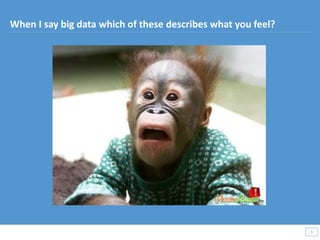
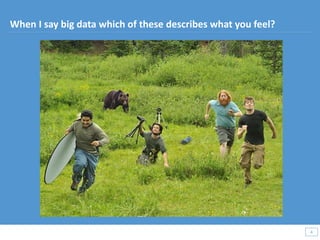
When I say big data which of these describes what you feel?
3
3
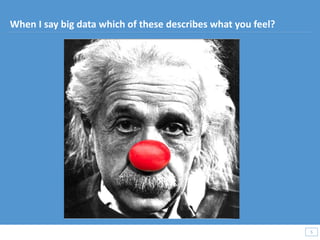
When I say big data which of these describes what you feel?
4
4
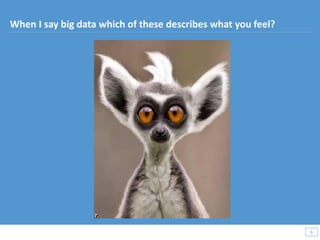
When I say big data which of these describes what you feel?
5
5
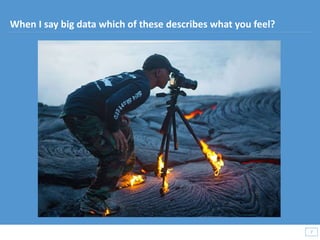
When I say big data which of these describes what you feel?
6
6
When I say big data which of these describes what you feel?
7
7
When I say big data which of these describes what you feel?
• Well, this talk is NOT about big data, but
what it can do for you
• On the way, you might just gain some clarity
of terms, and technologies
8
8
Big Data
• The quantity of data allows the five pillars of
analytics to become empirical sciences
• If used right, business and medical goals are
substantially bettered
• It is not just about knowing more, it is about
zeroing in on the truth
• We will talk about they ways people miss the
truth, even seeming to use current best
practices
9
9
Big Data
10
10
11
11
• I like to start with the business questions,
the business and medical practice needs,
what leaders of businesses and medicine
would most like to do
12
12
The Big Questions
• Who, where, what, how, and how much for
each group
13
13
Who, where, what, how, and how much
• Business is about action, doing. Just do it!
But what to do, and to whom, and with what,
and what channel?
• What are the choices that maximize results
and ROI?
14
14
Just do it, to maximize results and ROI
• Global Goal Driven Dynamic Demographics
for Proaction Optimization
(G2D3PO or just D3PO)
• What Group?
• What Actions?
• Global Goal: Profit, Customer Satisfaction,
Manufacturing Excellence, Reduced
Community Healthcare Costs, etc.
15
15
Global Goal Driven
16
16
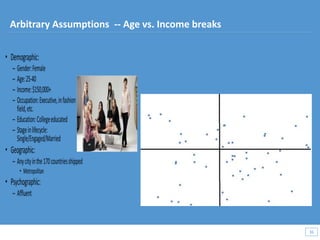
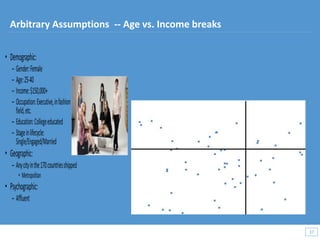
Why these arbitrary fixed groupings?
• Groupings, affiliations and interests depend
on goals and context
• Arbitrary bounds to ranges are just
assumptions that can totally change how
statistics come out and our view of the world
• Bad assumptions lead to bad decisions
• Data discovered and confirmed foundations
lead to good decisions
17
17
Global Goal Driven
18
18
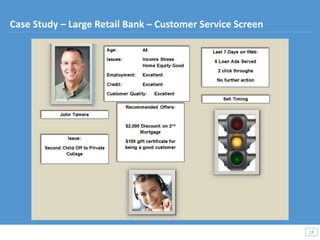
Case Study – Large Retail Bank – Customer Service Screen
19
19
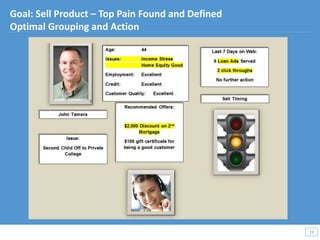
Goal: Sell Product – Top Pain Found and Defined
Optimal Grouping and Action
20
20
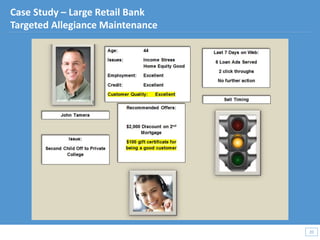
Case Study – Large Retail Bank
Targeted Allegiance Maintenance
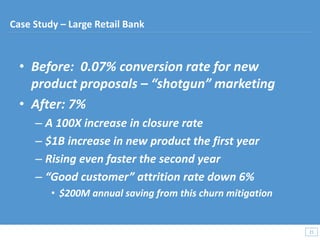
• Before: 0.07% conversion rate for new
product proposals – “shotgun” marketing
• After: 7%
– A 100X increase in closure rate
– $1B increase in new product the first year
– Rising even faster the second year
– “Good customer” attrition rate down 6%
• $200M annual saving from this churn mitigation
21
21
Case Study – Large Retail Bank
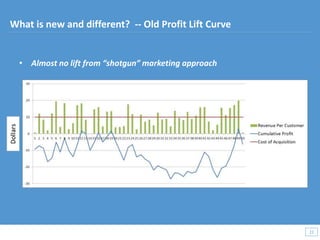
• Almost no lift from “shotgun” marketing approach
22
22
What is new and different? -- Old Profit Lift Curve
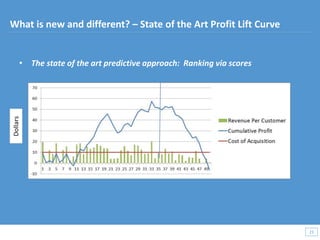
• The state of the art predictive approach: Ranking via scores
23
23
What is new and different? – State of the Art Profit Lift Curve
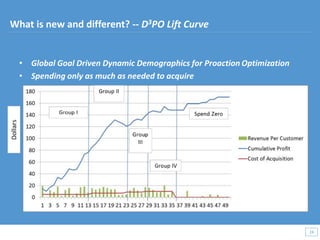
• Global Goal Driven Dynamic Demographics for Proaction Optimization
• Spending only as much as needed to acquire
24
24
What is new and different? -- D3PO Lift Curve
• Groupings are generated appropriate for the
sale of each product
• The best of multiple offer opportunities is
chosen
• The best proposal opportunities first
• Product, offering, or discount proposals based
on expected long-term value to company
• Cost of acquisition more focused
25
25
Improvements come for three reasons:
26
26
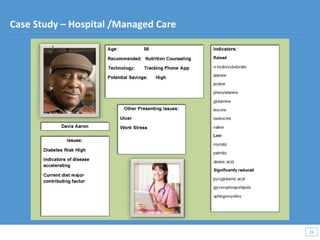
Case Study – Hospital /Managed Care
27
27
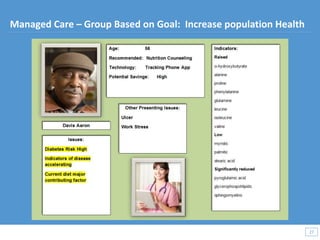
Managed Care – Group Based on Goal: Increase population Health
28
28
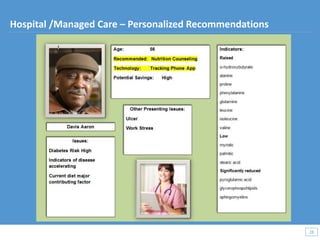
Hospital /Managed Care – Personalized Recommendations
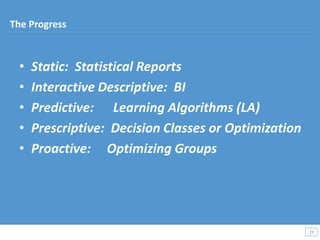
• Static: Statistical Reports
• Interactive Descriptive: BI
• Predictive: Learning Algorithms (LA)
• Prescriptive: Decision Classes or Optimization
• Proactive: Optimizing Groups
29
29
The Progress
• To the business user the technology should
just be something that happens in the
background
• At the same time, how the recommended
decisions are being made should be
transparent to the managers
30
30
The Best Thing for Business and Medical Analytics
31
31
This is a talk about:
• How Big Data can enable Data Science to be a
true science
• The large opportunities it can offer for generating
value for companies and healthcare
• How we only can know, see and forecast because
we have assumptions, assumptions that can be
wrong
• But what makes the empirical method work is the
process of testing and revising assumptions to
discover the real world
• What business and healthcare providers want
• How BI, and Advanced Analytics depends on assumptions
• How easy it is to attribute too much intelligence to artificial
intelligence
• True intelligence is bound up with the ability to recognize
and revise assumptions
• That methods of grouping are always multiple
• How the generation of action classes (or Proaction classes)
to appreciate groups of people (or resources) for a given goal
is the method to add great value to business and healthcare
32
32
We will also recognize:
33
33
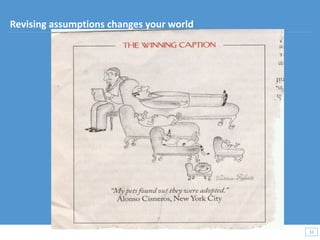
Revising assumptions changes your world
34
34
Different categorizations for different goals
35
35
Different categorizations for different goals
36
36
Arbitrary Assumptions -- Age vs. Income breaks
37
37
Arbitrary Assumptions -- Age vs. Income breaks
38
38
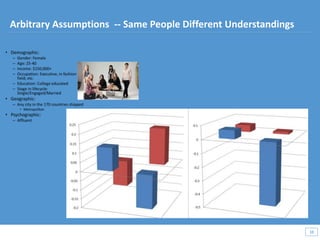
Arbitrary Assumptions -- Same People Different Understandings
39
39
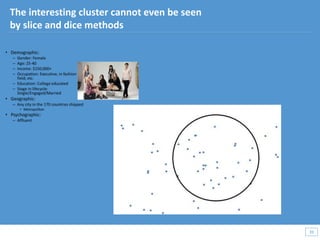
The interesting cluster cannot even be seen
by slice and dice methods
40
40
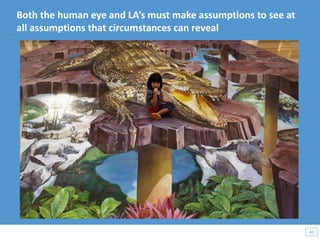
Both the human eye and LA’s must make assumptions to see at
all assumptions that circumstances can reveal
41
41
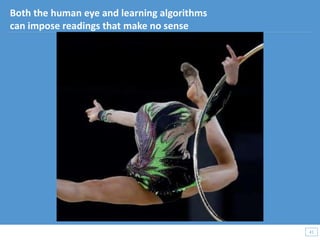
Both the human eye and learning algorithms
can impose readings that make no sense
42
42
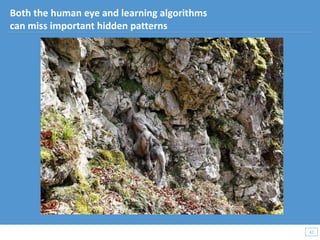
Both the human eye and learning algorithms
can miss important hidden patterns
43
43
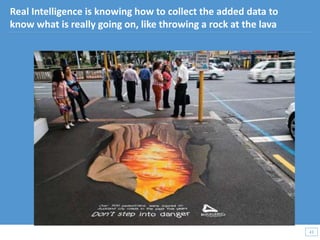
Real Intelligence is knowing how to collect the added data to
know what is really going on, like throwing a rock at the lava
• What is Data Science?
44
44
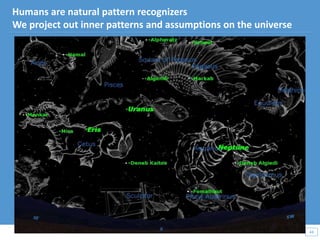
Humans are natural pattern recognizers
We project out inner patterns and assumptions on the universe
45
45
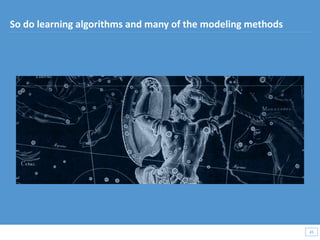
So do learning algorithms and many of the modeling methods
46
46
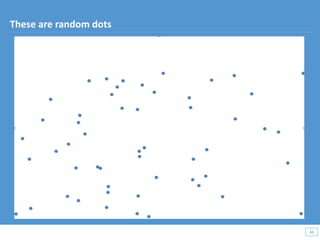
These are random dots
47
47
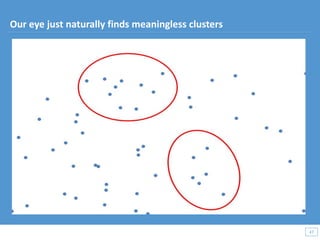
Our eye just naturally finds meaningless clusters
48
48
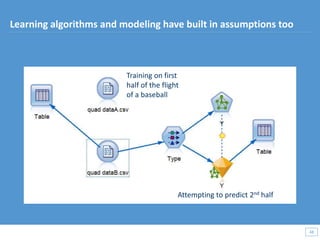
Learning algorithms and modeling have built in assumptions too
Training on first
half of the flight
of a baseball
Attempting to predict 2nd half
49
49
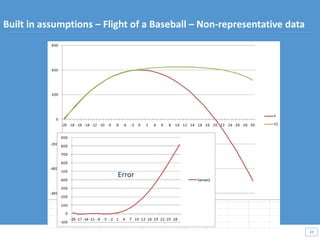
Built in assumptions – Flight of a Baseball – Non-representative data
Error
50
50
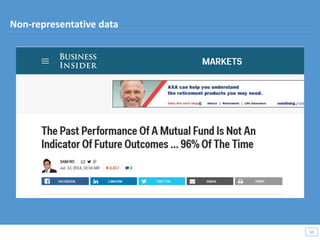
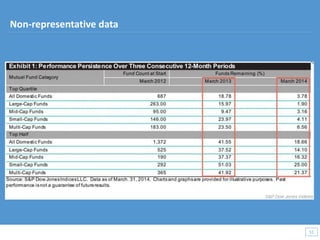
Non-representative data
51
51
Non-representative data
52
52
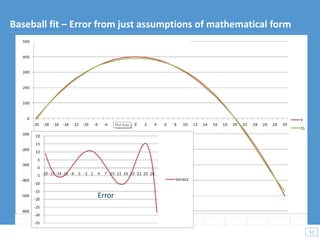
Baseball fit – Error from just assumptions of mathematical form
Error
• Data generated by people, such as in markets
or from buying behavior, has far more noise
than a physical system such as a baseball’s
flight
53
53
54
54
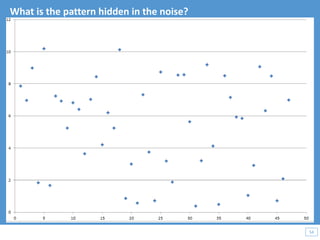
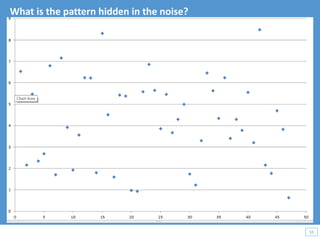
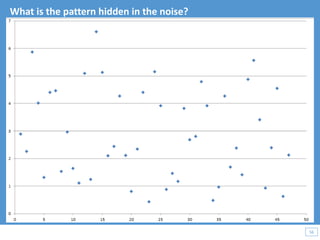
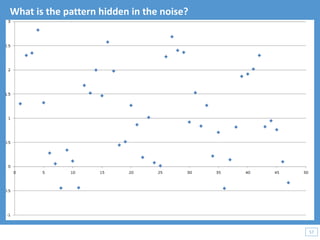
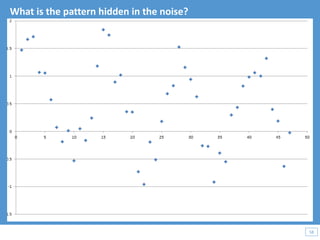
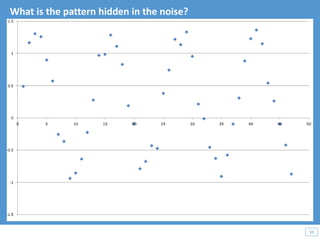
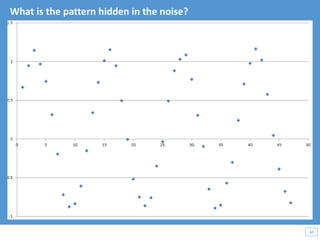
What is the pattern hidden in the noise?
55
55
What is the pattern hidden in the noise?
56
56
What is the pattern hidden in the noise?
57
57
What is the pattern hidden in the noise?
58
58
What is the pattern hidden in the noise?
59
59
What is the pattern hidden in the noise?
60
60
What is the pattern hidden in the noise?
61
61
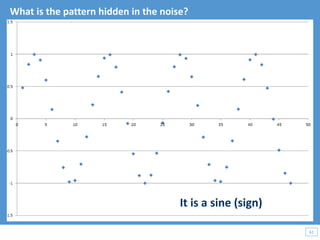
What is the pattern hidden in the noise?
It is a sine (sign)
62
62
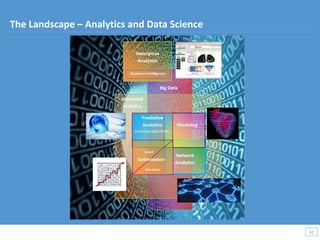
The Landscape – Analytics and Data Science
63
63
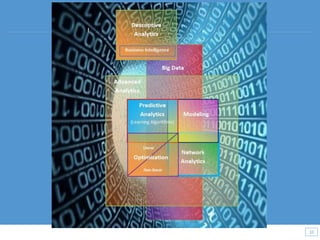
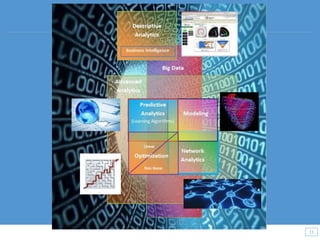
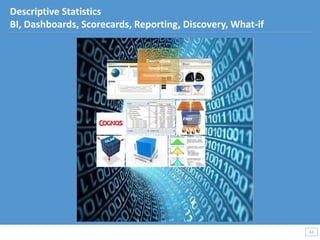
Descriptive Statistics
BI, Dashboards, Scorecards, Reporting, Discovery, What-if
64
64
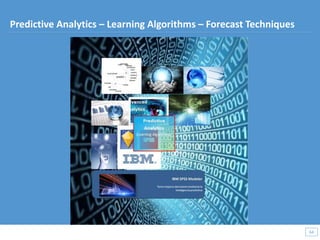
Predictive Analytics – Learning Algorithms – Forecast Techniques
• Taking historical data samples and finding
patterns using learning algorithms to project
what will happen in the future, or to new
individuals to detect opportunities,
differences, or abnormalities
65
65
Predictive Analytics
66
66
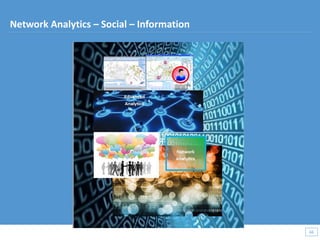
Network Analytics – Social – Information
• Measuring and creating statistics about the
processes that connect individuals or
technology in potentially a complex web of
interactions
67
67
Network Analysis
68
68
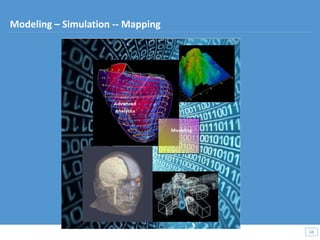
Modeling – Simulation -- Mapping
• Developing a language, potentially
mathematical, whose characteristics and
relationships have close analogies and
structure to something in the real world.
69
69
Modeling
70
70
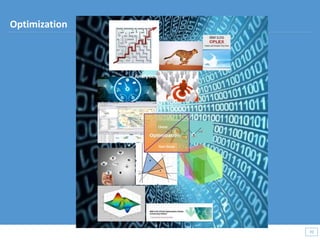
Optimization
• The process were the best or near best of
potentially an infinite number of options are
chosen or found relative to a goal
71
71
Optimization
• Network Optimization
• Predictive Modeling
• Predictive Optimization
72
72
Advance Analytics – Any of the above can be combined
73
73
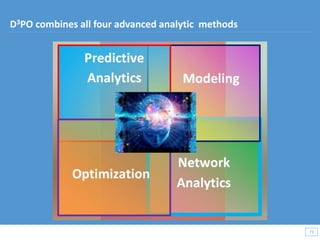
D3PO combines all four advanced analytic methods
74
74
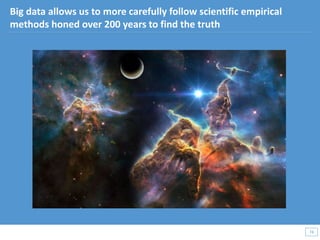
Big data allows us to more carefully follow scientific empirical
methods honed over 200 years to find the truth
75
75
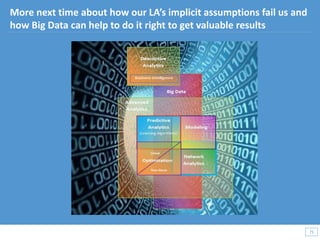
More next time about how our LA’s implicit assumptions fail us and
how Big Data can help to do it right to get valuable results

Data Science-final7

  • 1.
    1 1 The Landscape –Analytics and Data Science
  • 2.
    2 2 When I saybig data which of these describes what you feel?
  • 3.
    3 3 When I saybig data which of these describes what you feel?
  • 4.
    4 4 When I saybig data which of these describes what you feel?
  • 5.
    5 5 When I saybig data which of these describes what you feel?
  • 6.
    6 6 When I saybig data which of these describes what you feel?
  • 7.
    7 7 When I saybig data which of these describes what you feel?
  • 8.
    • Well, thistalk is NOT about big data, but what it can do for you • On the way, you might just gain some clarity of terms, and technologies 8 8 Big Data
  • 9.
    • The quantityof data allows the five pillars of analytics to become empirical sciences • If used right, business and medical goals are substantially bettered • It is not just about knowing more, it is about zeroing in on the truth • We will talk about they ways people miss the truth, even seeming to use current best practices 9 9 Big Data
  • 10.
  • 11.
  • 12.
    • I liketo start with the business questions, the business and medical practice needs, what leaders of businesses and medicine would most like to do 12 12 The Big Questions
  • 13.
    • Who, where,what, how, and how much for each group 13 13 Who, where, what, how, and how much
  • 14.
    • Business isabout action, doing. Just do it! But what to do, and to whom, and with what, and what channel? • What are the choices that maximize results and ROI? 14 14 Just do it, to maximize results and ROI
  • 15.
    • Global GoalDriven Dynamic Demographics for Proaction Optimization (G2D3PO or just D3PO) • What Group? • What Actions? • Global Goal: Profit, Customer Satisfaction, Manufacturing Excellence, Reduced Community Healthcare Costs, etc. 15 15 Global Goal Driven
  • 16.
    16 16 Why these arbitraryfixed groupings?
  • 17.
    • Groupings, affiliationsand interests depend on goals and context • Arbitrary bounds to ranges are just assumptions that can totally change how statistics come out and our view of the world • Bad assumptions lead to bad decisions • Data discovered and confirmed foundations lead to good decisions 17 17 Global Goal Driven
  • 18.
    18 18 Case Study –Large Retail Bank – Customer Service Screen
  • 19.
    19 19 Goal: Sell Product– Top Pain Found and Defined Optimal Grouping and Action
  • 20.
    20 20 Case Study –Large Retail Bank Targeted Allegiance Maintenance
  • 21.
    • Before: 0.07%conversion rate for new product proposals – “shotgun” marketing • After: 7% – A 100X increase in closure rate – $1B increase in new product the first year – Rising even faster the second year – “Good customer” attrition rate down 6% • $200M annual saving from this churn mitigation 21 21 Case Study – Large Retail Bank
  • 22.
    • Almost nolift from “shotgun” marketing approach 22 22 What is new and different? -- Old Profit Lift Curve
  • 23.
    • The stateof the art predictive approach: Ranking via scores 23 23 What is new and different? – State of the Art Profit Lift Curve
  • 24.
    • Global GoalDriven Dynamic Demographics for Proaction Optimization • Spending only as much as needed to acquire 24 24 What is new and different? -- D3PO Lift Curve
  • 25.
    • Groupings aregenerated appropriate for the sale of each product • The best of multiple offer opportunities is chosen • The best proposal opportunities first • Product, offering, or discount proposals based on expected long-term value to company • Cost of acquisition more focused 25 25 Improvements come for three reasons:
  • 26.
    26 26 Case Study –Hospital /Managed Care
  • 27.
    27 27 Managed Care –Group Based on Goal: Increase population Health
  • 28.
    28 28 Hospital /Managed Care– Personalized Recommendations
  • 29.
    • Static: StatisticalReports • Interactive Descriptive: BI • Predictive: Learning Algorithms (LA) • Prescriptive: Decision Classes or Optimization • Proactive: Optimizing Groups 29 29 The Progress
  • 30.
    • To thebusiness user the technology should just be something that happens in the background • At the same time, how the recommended decisions are being made should be transparent to the managers 30 30 The Best Thing for Business and Medical Analytics
  • 31.
    31 31 This is atalk about: • How Big Data can enable Data Science to be a true science • The large opportunities it can offer for generating value for companies and healthcare • How we only can know, see and forecast because we have assumptions, assumptions that can be wrong • But what makes the empirical method work is the process of testing and revising assumptions to discover the real world
  • 32.
    • What businessand healthcare providers want • How BI, and Advanced Analytics depends on assumptions • How easy it is to attribute too much intelligence to artificial intelligence • True intelligence is bound up with the ability to recognize and revise assumptions • That methods of grouping are always multiple • How the generation of action classes (or Proaction classes) to appreciate groups of people (or resources) for a given goal is the method to add great value to business and healthcare 32 32 We will also recognize:
  • 33.
  • 34.
  • 35.
  • 36.
    36 36 Arbitrary Assumptions --Age vs. Income breaks
  • 37.
    37 37 Arbitrary Assumptions --Age vs. Income breaks
  • 38.
    38 38 Arbitrary Assumptions --Same People Different Understandings
  • 39.
    39 39 The interesting clustercannot even be seen by slice and dice methods
  • 40.
    40 40 Both the humaneye and LA’s must make assumptions to see at all assumptions that circumstances can reveal
  • 41.
    41 41 Both the humaneye and learning algorithms can impose readings that make no sense
  • 42.
    42 42 Both the humaneye and learning algorithms can miss important hidden patterns
  • 43.
    43 43 Real Intelligence isknowing how to collect the added data to know what is really going on, like throwing a rock at the lava
  • 44.
    • What isData Science? 44 44 Humans are natural pattern recognizers We project out inner patterns and assumptions on the universe
  • 45.
    45 45 So do learningalgorithms and many of the modeling methods
  • 46.
  • 47.
    47 47 Our eye justnaturally finds meaningless clusters
  • 48.
    48 48 Learning algorithms andmodeling have built in assumptions too Training on first half of the flight of a baseball Attempting to predict 2nd half
  • 49.
    49 49 Built in assumptions– Flight of a Baseball – Non-representative data Error
  • 50.
  • 51.
  • 52.
    52 52 Baseball fit –Error from just assumptions of mathematical form Error
  • 53.
    • Data generatedby people, such as in markets or from buying behavior, has far more noise than a physical system such as a baseball’s flight 53 53
  • 54.
    54 54 What is thepattern hidden in the noise?
  • 55.
    55 55 What is thepattern hidden in the noise?
  • 56.
    56 56 What is thepattern hidden in the noise?
  • 57.
    57 57 What is thepattern hidden in the noise?
  • 58.
    58 58 What is thepattern hidden in the noise?
  • 59.
    59 59 What is thepattern hidden in the noise?
  • 60.
    60 60 What is thepattern hidden in the noise?
  • 61.
    61 61 What is thepattern hidden in the noise? It is a sine (sign)
  • 62.
    62 62 The Landscape –Analytics and Data Science
  • 63.
    63 63 Descriptive Statistics BI, Dashboards,Scorecards, Reporting, Discovery, What-if
  • 64.
    64 64 Predictive Analytics –Learning Algorithms – Forecast Techniques
  • 65.
    • Taking historicaldata samples and finding patterns using learning algorithms to project what will happen in the future, or to new individuals to detect opportunities, differences, or abnormalities 65 65 Predictive Analytics
  • 66.
    66 66 Network Analytics –Social – Information
  • 67.
    • Measuring andcreating statistics about the processes that connect individuals or technology in potentially a complex web of interactions 67 67 Network Analysis
  • 68.
  • 69.
    • Developing alanguage, potentially mathematical, whose characteristics and relationships have close analogies and structure to something in the real world. 69 69 Modeling
  • 70.
  • 71.
    • The processwere the best or near best of potentially an infinite number of options are chosen or found relative to a goal 71 71 Optimization
  • 72.
    • Network Optimization •Predictive Modeling • Predictive Optimization 72 72 Advance Analytics – Any of the above can be combined
  • 73.
    73 73 D3PO combines allfour advanced analytic methods
  • 74.
    74 74 Big data allowsus to more carefully follow scientific empirical methods honed over 200 years to find the truth
  • 75.
    75 75 More next timeabout how our LA’s implicit assumptions fail us and how Big Data can help to do it right to get valuable results