SISTEM INFORMASI DALAM
ORGANISASI
Y. Rahmat Akbar, SE, M.Si
Tipe Sistem Informasi di dalam
Organisasi
• Executive Information System (EIS)
• Management Reporting System (MRS)
• Decision Support System (DSS)
• Professional Support System (PSS)
• Office Information System (OIS)
• Knowledge Management System (KMS)
• Transaction Processing System (TPS)
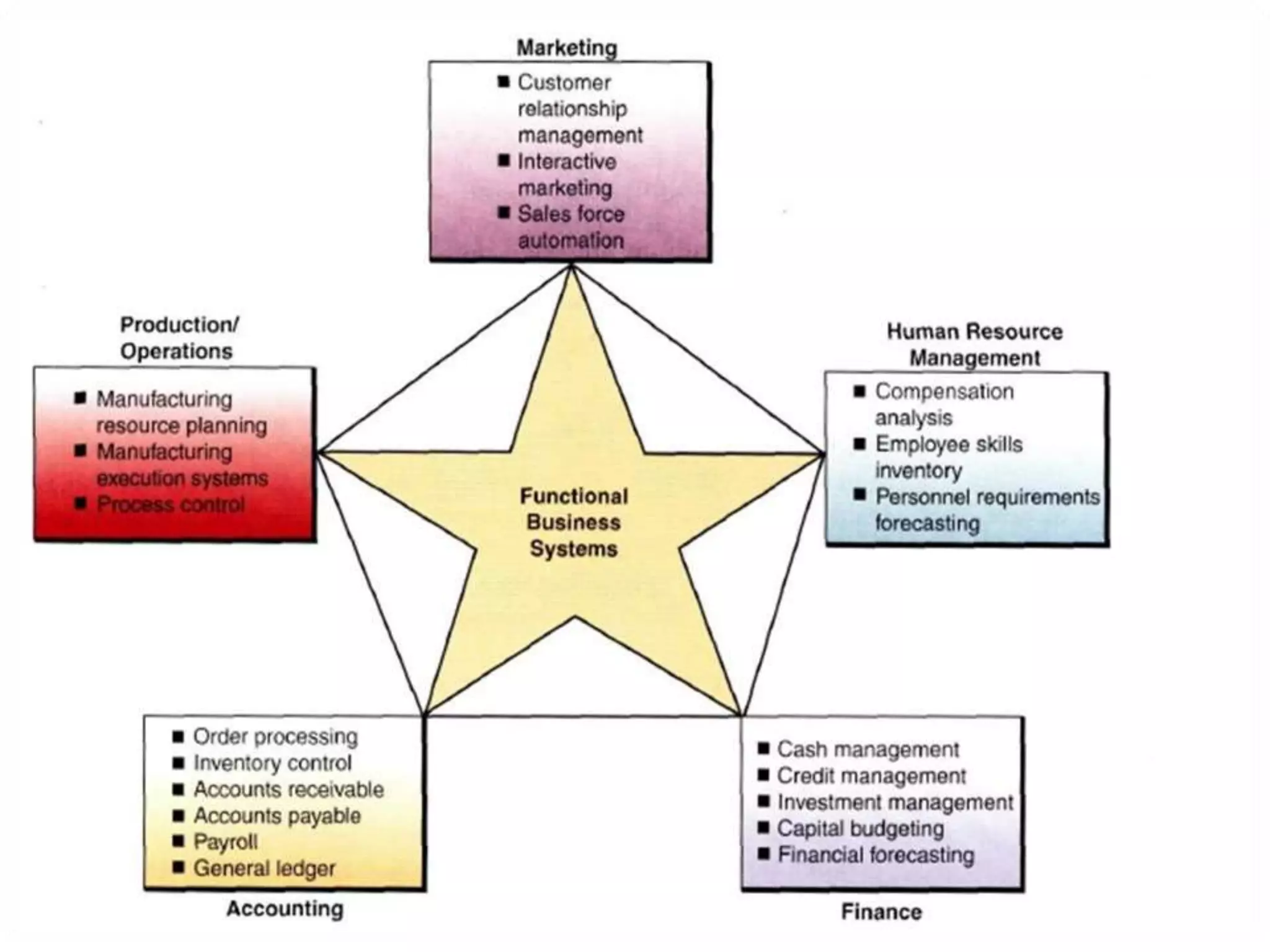
1. Sistem Informasi Akuntansi
2. Sistem Informasi Pemasaran
3. Sistem Informasi Produksi
4. Sistem Informasi SDM
5. Sistem Informasi Keuangan
Sistem Fungsional Bisnis
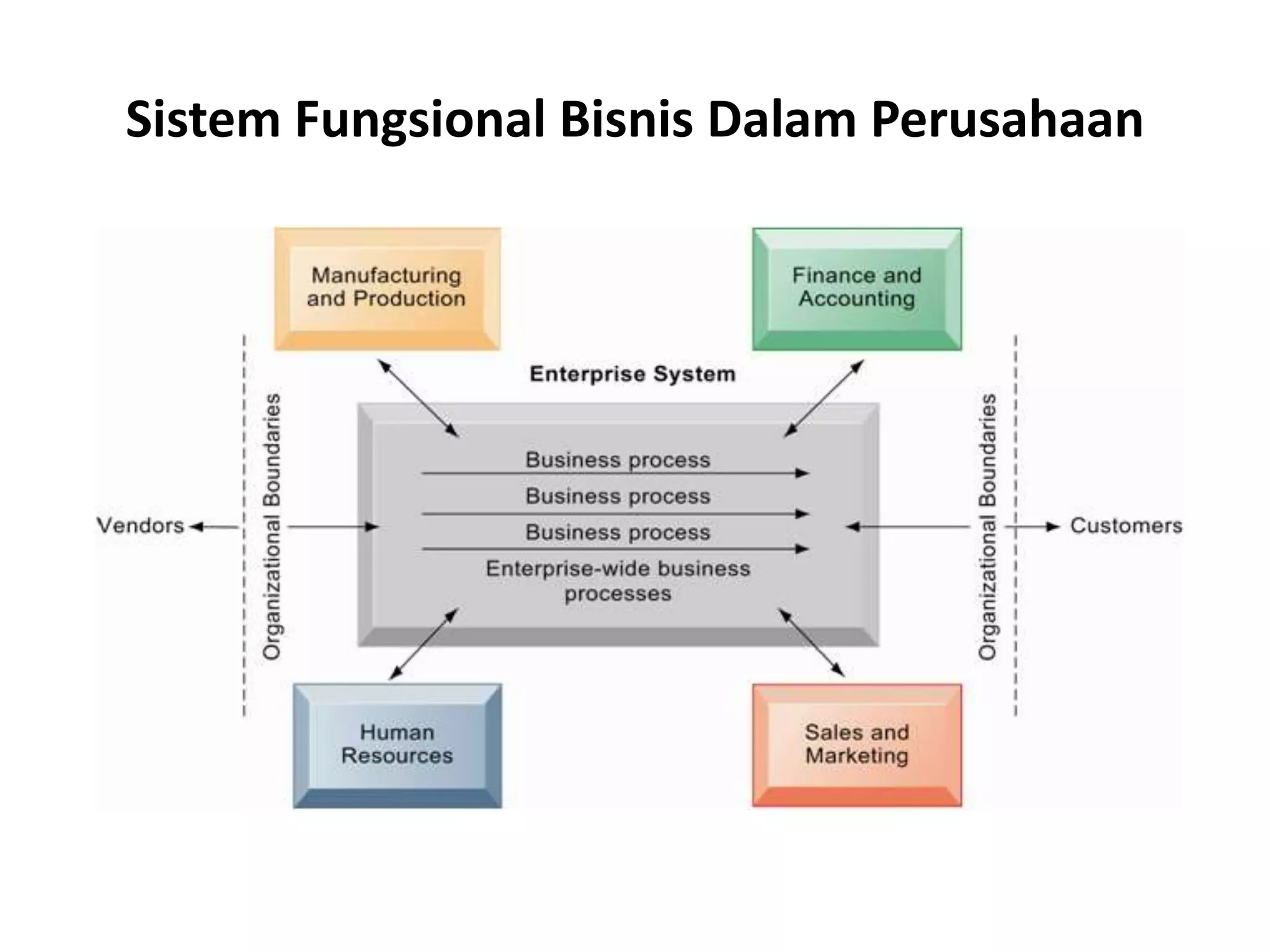
Sistem Fungsional Bisnis Dalam Perusahaan
Dimensi Sistem Informasi
Komponen Sistem Informasi
1. Dalam Lingkup Internal :
• Mendukung kontrol operasional
• Mendukung kontrol manajemen
• Mendukung perencanaan strategis
2. Dalam Lingkup Eksternal :
• Meningkatkan kualitas produk
• Meningkatkan hantaran produk
People
Data/Information
Technology
Function IT
Network IT
Enterprise IT
• Facilitates standalone tasks
• Spreadsheets, Word processors,
CAD/CAM Tools, etc. could be the
best examples of this category
• Enables unstructured interactions.
• Network technologies let people and
groups come together, share
information, and collaborate without
specifying the terms of the
collaboration.
• Network technologies fall into two
groups: channels and platforms.
• Channels like email, IM, and SMS allow
one party to send information to
another privately.
• Platforms, on the other hand, make
information visible and
permanent. bulletin boards, Usenet
groups, and blogs with comments are
all examples of NIT platforms.
• Imposes structured interactions
• ERP, SCM, CRM, etc. are few of
the best examples of this category
1. Untuk mendukung tugas/pekerjaan
2. Sebagai penggerak inovasi
3. Sebagai penghemat waktu dan tempat
Thanks..

Sistem informasi dalam organisasi

  • 1.
  • 2.
    Tipe Sistem Informasidi dalam Organisasi • Executive Information System (EIS) • Management Reporting System (MRS) • Decision Support System (DSS) • Professional Support System (PSS) • Office Information System (OIS) • Knowledge Management System (KMS) • Transaction Processing System (TPS)
  • 3.
    1. Sistem InformasiAkuntansi 2. Sistem Informasi Pemasaran 3. Sistem Informasi Produksi 4. Sistem Informasi SDM 5. Sistem Informasi Keuangan Sistem Fungsional Bisnis
  • 5.
    Sistem Fungsional BisnisDalam Perusahaan
  • 6.
  • 7.
  • 9.
    1. Dalam LingkupInternal : • Mendukung kontrol operasional • Mendukung kontrol manajemen • Mendukung perencanaan strategis 2. Dalam Lingkup Eksternal : • Meningkatkan kualitas produk • Meningkatkan hantaran produk People Data/Information Technology
  • 10.
    Function IT Network IT EnterpriseIT • Facilitates standalone tasks • Spreadsheets, Word processors, CAD/CAM Tools, etc. could be the best examples of this category • Enables unstructured interactions. • Network technologies let people and groups come together, share information, and collaborate without specifying the terms of the collaboration. • Network technologies fall into two groups: channels and platforms. • Channels like email, IM, and SMS allow one party to send information to another privately. • Platforms, on the other hand, make information visible and permanent. bulletin boards, Usenet groups, and blogs with comments are all examples of NIT platforms. • Imposes structured interactions • ERP, SCM, CRM, etc. are few of the best examples of this category
  • 11.
    1. Untuk mendukungtugas/pekerjaan
  • 12.
  • 13.
    3. Sebagai penghematwaktu dan tempat
  • 14.