SIP and DNS-sec based
TLS setup (DANE)
random thoughts by oej@edvina.net
V 2.42 - 2013-07-04
1torsdag 4 juli 13
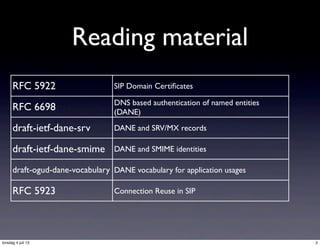
Reading material
RFC 5922 SIP Domain Certificates
RFC 6698 DNS based authentication of named entities
(DANE)
draft-ietf-dane-srv DANE and SRV/MX records
draft-ietf-dane-smime DANE and SMIME identities
draft-ogud-dane-vocabulary DANE vocabulary for application usages
RFC 5923 Connection Reuse in SIP
2torsdag 4 juli 13
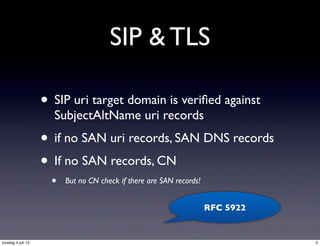
SIP & TLS
• SIP uri target domain is verified against
SubjectAltName uri records
• if no SAN uri records, SAN DNS records
• If no SAN records, CN
• But no CN check if there are SAN records!
RFC 5922
3torsdag 4 juli 13
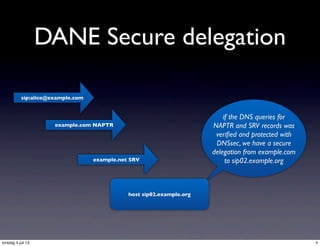
DANE Secure delegation
sip:alice@example.com
example.com NAPTR
example.net SRV
if the DNS queries for
NAPTR and SRV records was
verified and protected with
DNSsec, we have a secure
delegation from example.com
to sip02.example.org
host sip02.example.org
4torsdag 4 juli 13
Not fully secure is
insecure
• If the NAPTR was DNSsec protected but
not the SRV, we have no secure delegation.
• If there’s no DNSsec in either NAPTR nor
SRV we’re insecure too.
•The SIP Uri to TLS certificate
matching in RFC 5922 applies in
this case
5torsdag 4 juli 13
If we have a secure
delegation
• Check for TLSA record for the srv host name
and port
• _5068._udp.sip02.example.org
• If no TLSA record is found, then DANE doesn’t
apply - proceed according to RFC 5922
• If TLSA record exists, continue to the next slide
6torsdag 4 juli 13
TLSA records
• Usage 0: CA constraint. Certificate or public key of CA
• Usage 1: Certificate constraint. Certificate or public key
of cert signed by CA.
• Usage 2. Certificate or public key of cert serving as trust
anchor for the cert given by the server (”private CA”)
• Usage 3:A certificate or public key that matches the cert
given by the server (No PKIX check)
7torsdag 4 juli 13
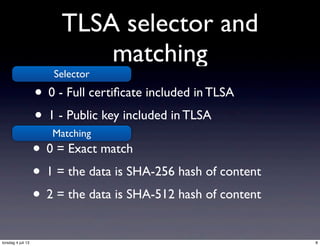
TLSA selector and
matching
• 0 - Full certificate included in TLSA
• 1 - Public key included in TLSA
• 0 = Exact match
• 1 = the data is SHA-256 hash of content
• 2 = the data is SHA-512 hash of content
Selector
Matching
8torsdag 4 juli 13
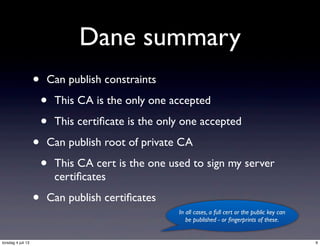
Dane summary
• Can publish constraints
• This CA is the only one accepted
• This certificate is the only one accepted
• Can publish root of private CA
• This CA cert is the one used to sign my server
certificates
• Can publish certificates
In all cases, a full cert or the public key can
be published - or fingerprints of these.
9torsdag 4 juli 13
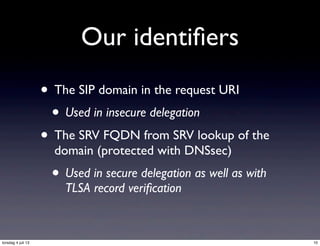
Our identifiers
• The SIP domain in the request URI
• Used in insecure delegation
• The SRV FQDN from SRV lookup of the
domain (protected with DNSsec)
• Used in secure delegation as well as with
TLSA record verification
10torsdag 4 juli 13
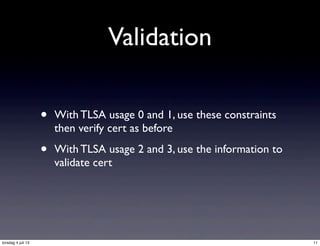
Validation
• With TLSA usage 0 and 1, use these constraints
then verify cert as before
• With TLSA usage 2 and 3, use the information to
validate cert
11torsdag 4 juli 13
DANE-SRV draft
questions to answer
• SRV Fallback logic
• Compatibility with non SRV clients
12torsdag 4 juli 13
SIP Fallback logic
• If there’s no secure delegation, use RFC
5922, if that fails go to next SRV server in
the list
• When out of SRV servers,TLS connection
has failed.
13torsdag 4 juli 13
Compatibility with non-
SRV clients
• Fallback to RFC 5922
• Since dane-srv-02 requires TLS SNI this will
be sorted out by the server.
• SRV/DANE compatible UAs will require
cert for SRV host name
• Non SRV/DANE UAs will require cert
with SIP uri target domain
14torsdag 4 juli 13
If no SNI support is
available
• Cert with
• CommonName = hostname
• SubjectAltName = SIP domain
15torsdag 4 juli 13
SIP connection reuse
• RFC 5923 use TLS cert content to add aliases to a
connection.
• With DANE, the cert will include only the hostname
• SIP/DANE will have to add aliases as they are
verified using DNSsec
• If a domain share a SRV hostname and the trust
chain is verified between domain and SRV, the
existing connection to the SRV host may be used for
this domain too (and alias added to the alias table)
16torsdag 4 juli 13
Verification of client
certificates in RFC 5923
• Connection reuse requires a SIP server
using RFC 5923 to request a client
certificate
• Which DNS name do we use to look up
TLSA records and verify the client?
17torsdag 4 juli 13
Not to worry about
now
• SIP connection reuse
• SIP identity
• SIMPLE
• SIPS: uri’s
For these use cases,
there’s no difference compared with other
TLS usage in SIP.
18torsdag 4 juli 13

DANE-based TLS verification in the SIP protocol (v 2)

  • 1.
    SIP and DNS-secbased TLS setup (DANE) random thoughts by oej@edvina.net V 2.42 - 2013-07-04 1torsdag 4 juli 13
  • 2.
    Reading material RFC 5922SIP Domain Certificates RFC 6698 DNS based authentication of named entities (DANE) draft-ietf-dane-srv DANE and SRV/MX records draft-ietf-dane-smime DANE and SMIME identities draft-ogud-dane-vocabulary DANE vocabulary for application usages RFC 5923 Connection Reuse in SIP 2torsdag 4 juli 13
  • 3.
    SIP & TLS •SIP uri target domain is verified against SubjectAltName uri records • if no SAN uri records, SAN DNS records • If no SAN records, CN • But no CN check if there are SAN records! RFC 5922 3torsdag 4 juli 13
  • 4.
    DANE Secure delegation sip:alice@example.com example.comNAPTR example.net SRV if the DNS queries for NAPTR and SRV records was verified and protected with DNSsec, we have a secure delegation from example.com to sip02.example.org host sip02.example.org 4torsdag 4 juli 13
  • 5.
    Not fully secureis insecure • If the NAPTR was DNSsec protected but not the SRV, we have no secure delegation. • If there’s no DNSsec in either NAPTR nor SRV we’re insecure too. •The SIP Uri to TLS certificate matching in RFC 5922 applies in this case 5torsdag 4 juli 13
  • 6.
    If we havea secure delegation • Check for TLSA record for the srv host name and port • _5068._udp.sip02.example.org • If no TLSA record is found, then DANE doesn’t apply - proceed according to RFC 5922 • If TLSA record exists, continue to the next slide 6torsdag 4 juli 13
  • 7.
    TLSA records • Usage0: CA constraint. Certificate or public key of CA • Usage 1: Certificate constraint. Certificate or public key of cert signed by CA. • Usage 2. Certificate or public key of cert serving as trust anchor for the cert given by the server (”private CA”) • Usage 3:A certificate or public key that matches the cert given by the server (No PKIX check) 7torsdag 4 juli 13
  • 8.
    TLSA selector and matching •0 - Full certificate included in TLSA • 1 - Public key included in TLSA • 0 = Exact match • 1 = the data is SHA-256 hash of content • 2 = the data is SHA-512 hash of content Selector Matching 8torsdag 4 juli 13
  • 9.
    Dane summary • Canpublish constraints • This CA is the only one accepted • This certificate is the only one accepted • Can publish root of private CA • This CA cert is the one used to sign my server certificates • Can publish certificates In all cases, a full cert or the public key can be published - or fingerprints of these. 9torsdag 4 juli 13
  • 10.
    Our identifiers • TheSIP domain in the request URI • Used in insecure delegation • The SRV FQDN from SRV lookup of the domain (protected with DNSsec) • Used in secure delegation as well as with TLSA record verification 10torsdag 4 juli 13
  • 11.
    Validation • With TLSAusage 0 and 1, use these constraints then verify cert as before • With TLSA usage 2 and 3, use the information to validate cert 11torsdag 4 juli 13
  • 12.
    DANE-SRV draft questions toanswer • SRV Fallback logic • Compatibility with non SRV clients 12torsdag 4 juli 13
  • 13.
    SIP Fallback logic •If there’s no secure delegation, use RFC 5922, if that fails go to next SRV server in the list • When out of SRV servers,TLS connection has failed. 13torsdag 4 juli 13
  • 14.
    Compatibility with non- SRVclients • Fallback to RFC 5922 • Since dane-srv-02 requires TLS SNI this will be sorted out by the server. • SRV/DANE compatible UAs will require cert for SRV host name • Non SRV/DANE UAs will require cert with SIP uri target domain 14torsdag 4 juli 13
  • 15.
    If no SNIsupport is available • Cert with • CommonName = hostname • SubjectAltName = SIP domain 15torsdag 4 juli 13
  • 16.
    SIP connection reuse •RFC 5923 use TLS cert content to add aliases to a connection. • With DANE, the cert will include only the hostname • SIP/DANE will have to add aliases as they are verified using DNSsec • If a domain share a SRV hostname and the trust chain is verified between domain and SRV, the existing connection to the SRV host may be used for this domain too (and alias added to the alias table) 16torsdag 4 juli 13
  • 17.
    Verification of client certificatesin RFC 5923 • Connection reuse requires a SIP server using RFC 5923 to request a client certificate • Which DNS name do we use to look up TLSA records and verify the client? 17torsdag 4 juli 13
  • 18.
    Not to worryabout now • SIP connection reuse • SIP identity • SIMPLE • SIPS: uri’s For these use cases, there’s no difference compared with other TLS usage in SIP. 18torsdag 4 juli 13