The simple present Tense
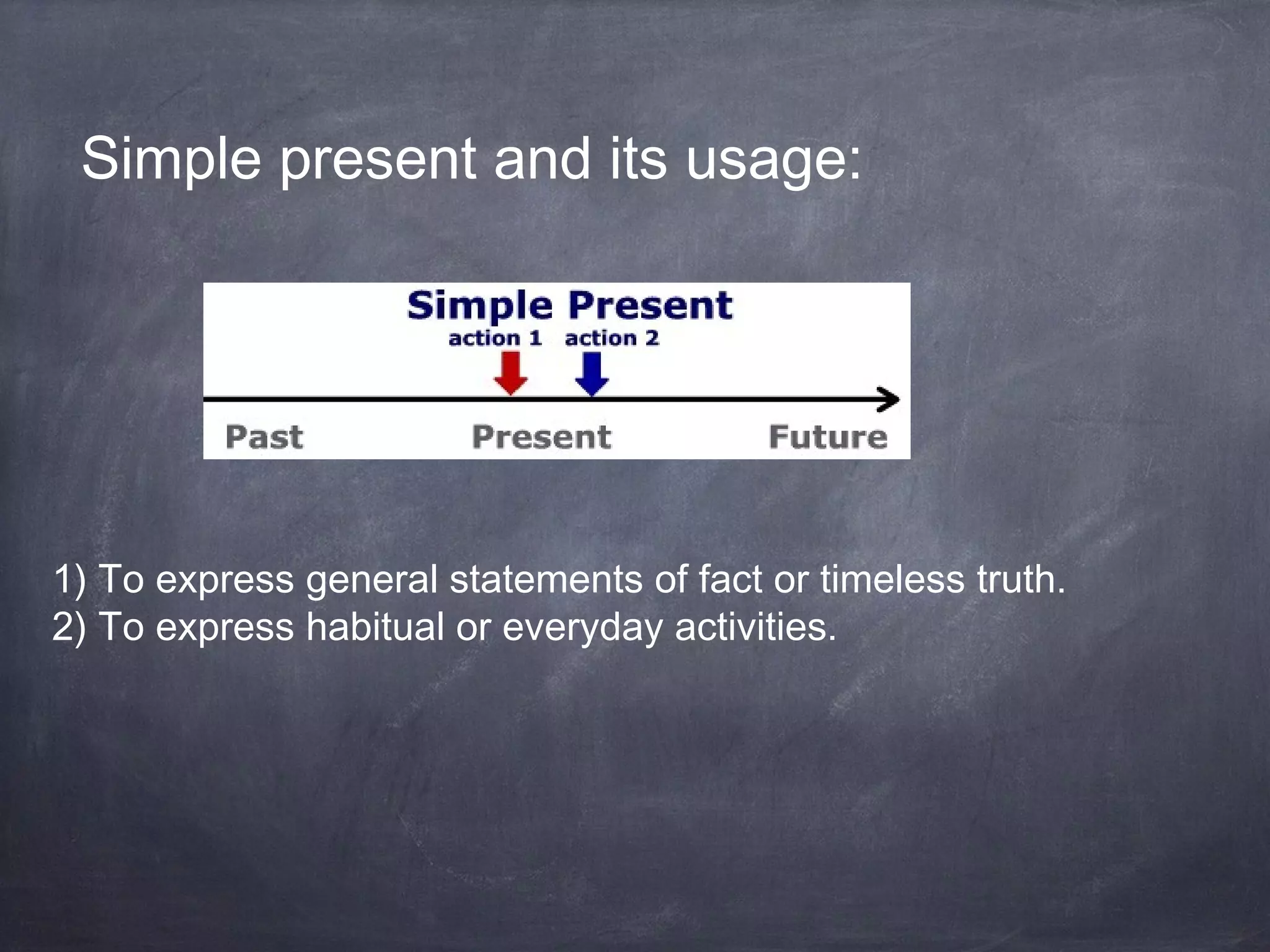
Simple present and its usage:

1) To express general statements of fact or timeless truth.
2) To express habitual or everyday activities.
Affirmative statement
To make an Affirmative simple present statement, simply
follow this pattern:
Subject+main verb in base form
Examples:
1) To express general statements of fact or
timeless truth.
•Water consists of hydrogen and oxygen.
•The world is round.
Examples:
2) To express habitual or everyday activities.

•I study for two hours every night.
•I get up at seven every morning.
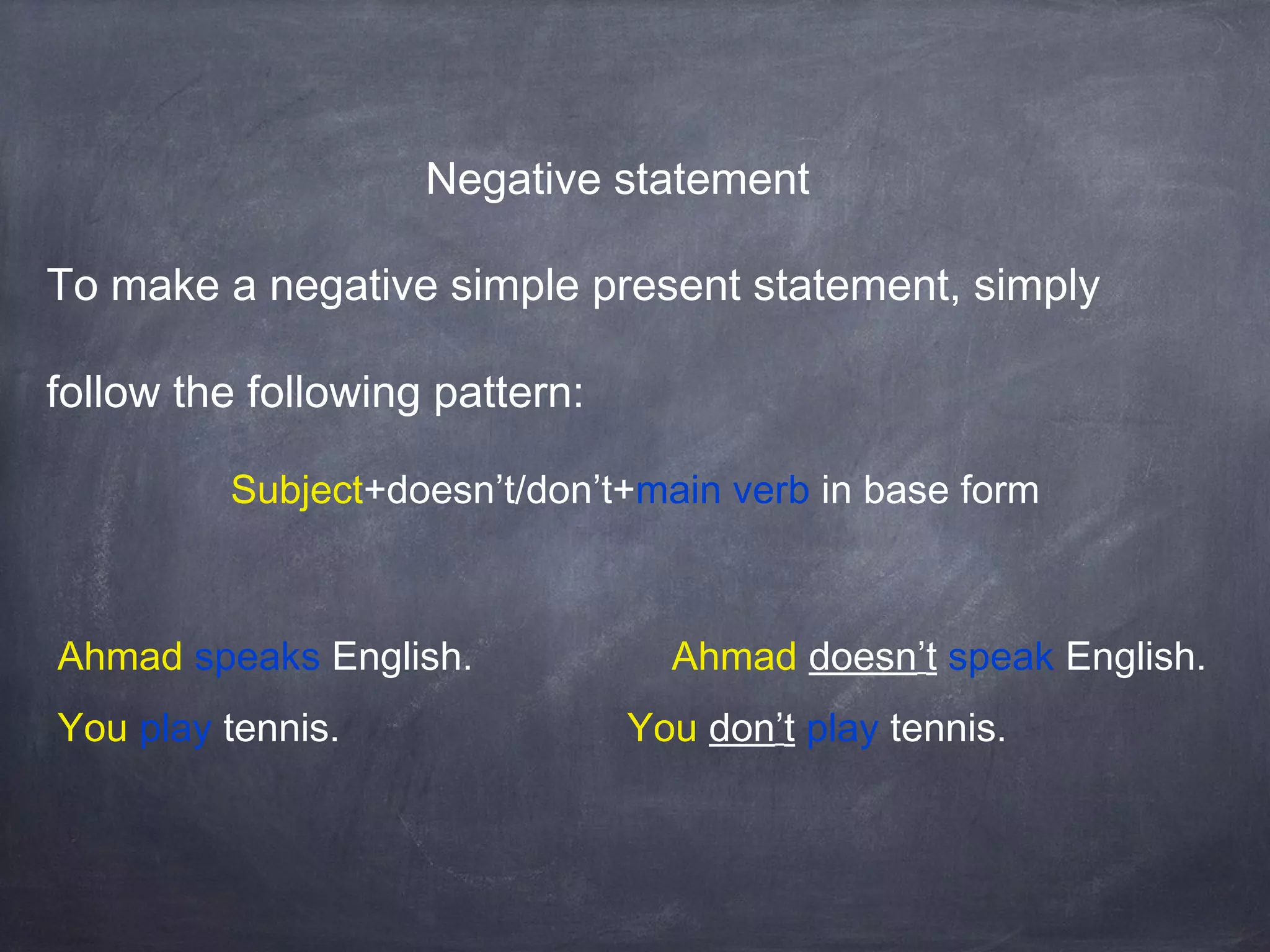
Negative statement
To make a negative simple present statement, simply
follow the following pattern:
Subject+doesn’t/don’t+main verb in base form

Ahmad speaks English.
You play tennis.

Ahmad doesn’t speak English.
You don’t play tennis.
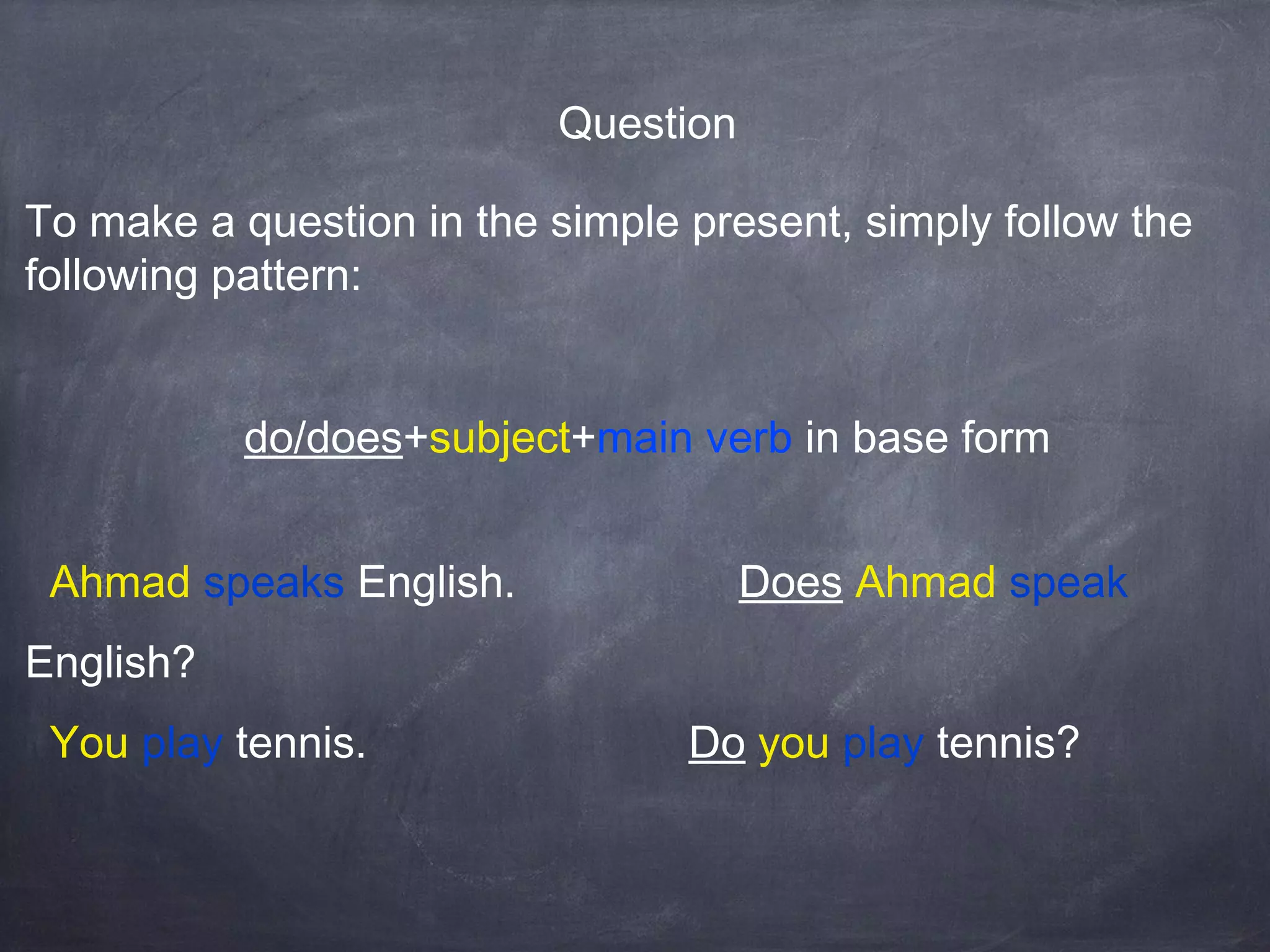
Question
To make a question in the simple present, simply follow the
following pattern:
do/does+subject+main verb in base form
Ahmad speaks English.

Does Ahmad speak

English?
You play tennis.

Do you play tennis?
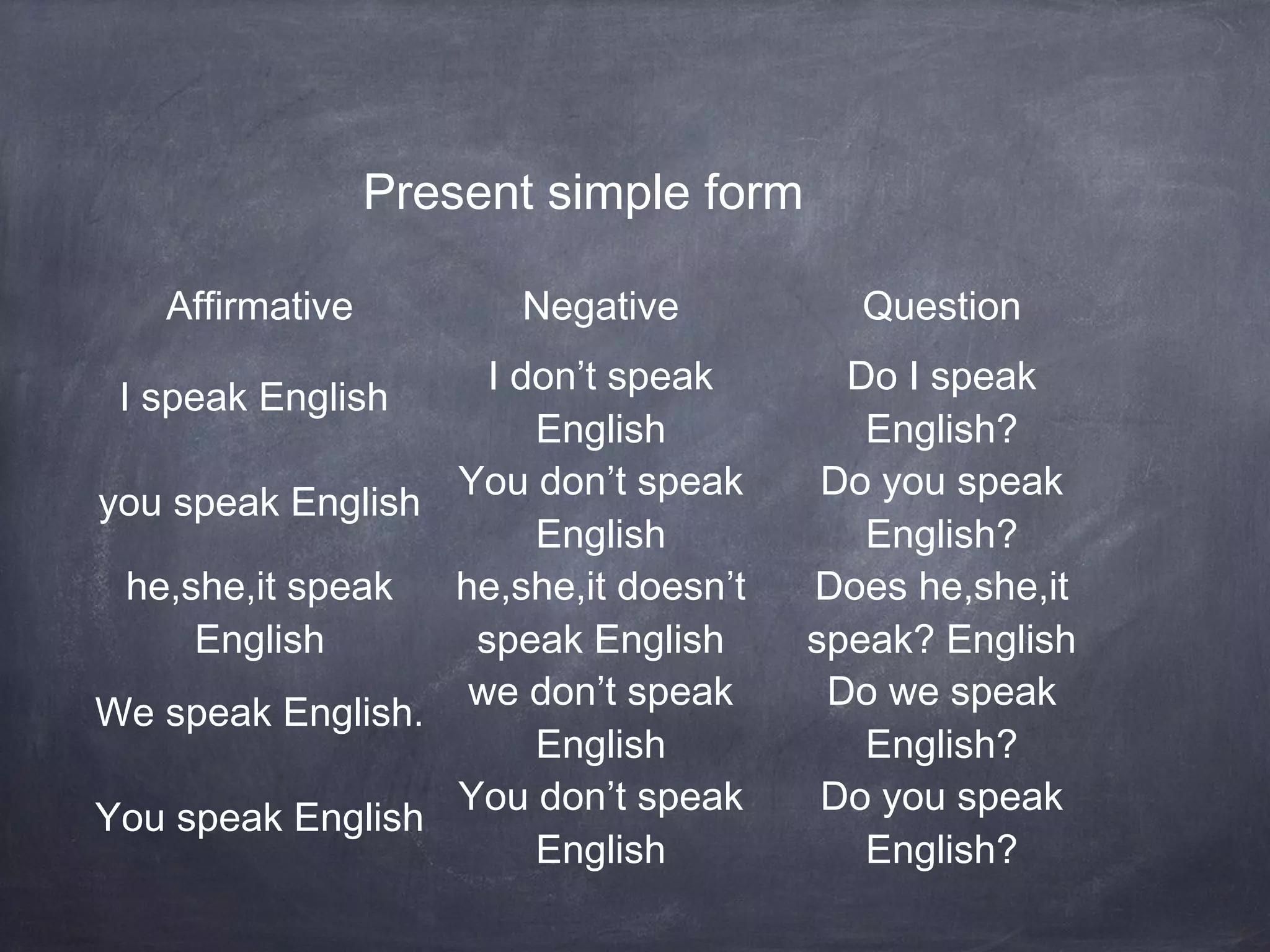
Present simple form
Affirmative

Negative

I don’t speak
I speak English
English
You don’t speak
you speak English
English
he,she,it speak
he,she,it doesn’t
English
speak English
we don’t speak
We speak English.
English
You don’t speak
You speak English
English

Question
Do I speak
English?
Do you speak
English?
Does he,she,it
speak? English
Do we speak
English?
Do you speak
English?
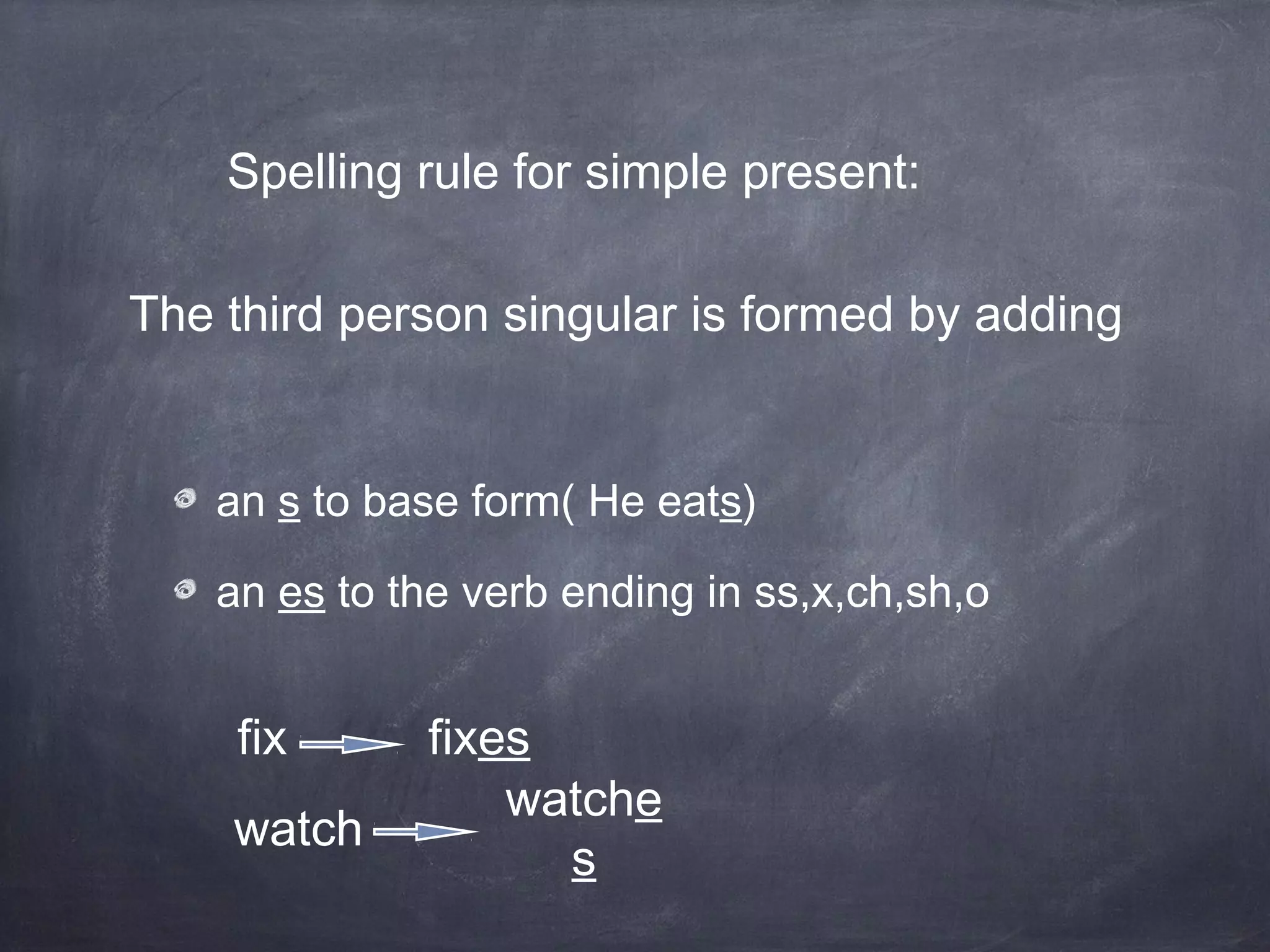
Spelling rule for simple present:
The third person singular is formed by adding

an s to base form( He eats)
an es to the verb ending in ss,x,ch,sh,o

fix
watch

fixes
watche
s
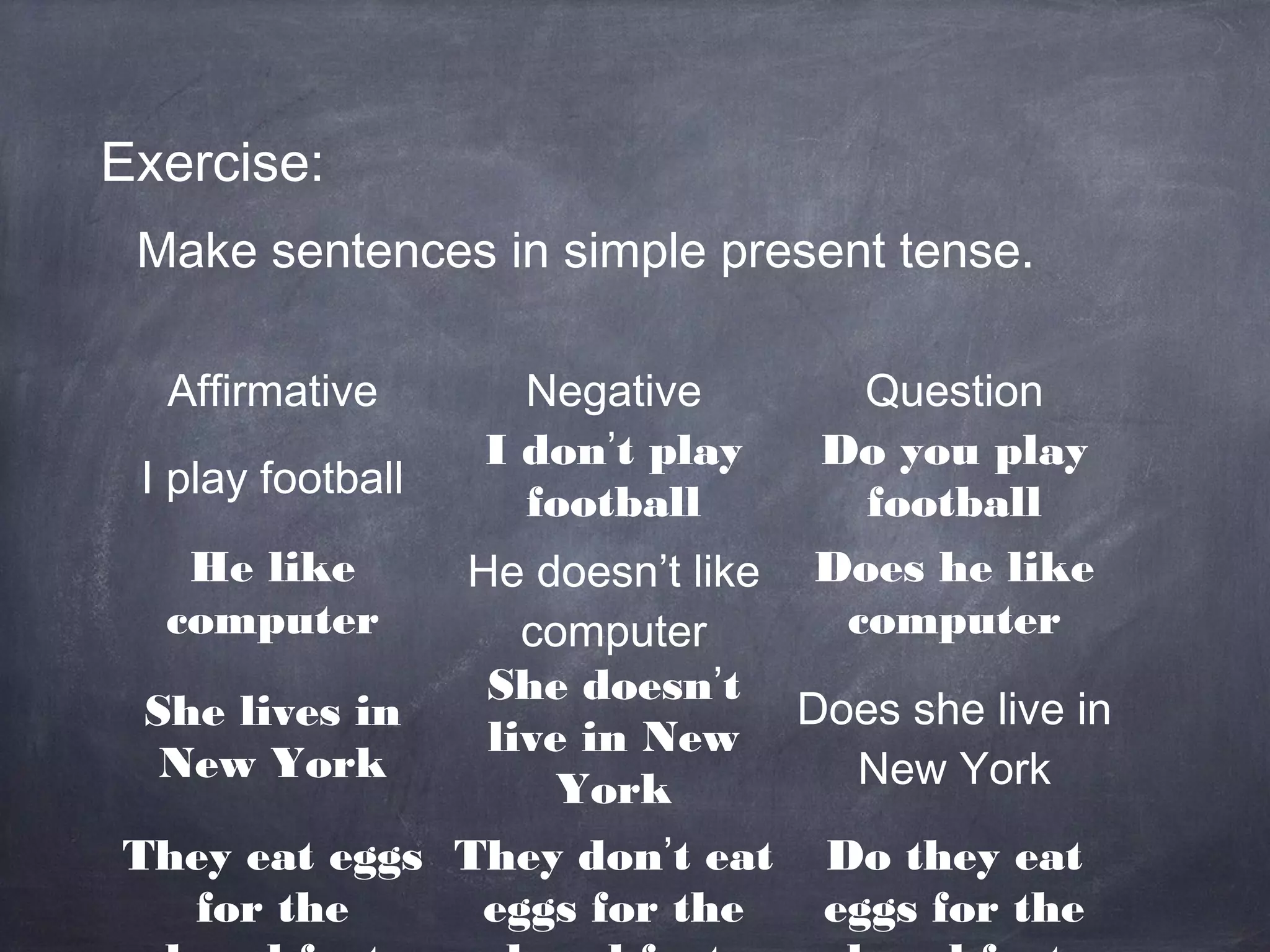
Exercise:
Make sentences in simple present tense.
Affirmative
I play football

Negative
I don’t play
football

Question
Do you play
football
Does he like
computer

He doesn’t like
computer
She doesn’t
Does she live in
She lives in
live in New
New York
New York
York
They eat eggs They don’t eat Do they eat
for the
eggs for the
eggs for the
He like
computer

Simple present tense ppt

  • 1.
  • 2.
    Simple present andits usage: 1) To express general statements of fact or timeless truth. 2) To express habitual or everyday activities.
  • 3.
    Affirmative statement To makean Affirmative simple present statement, simply follow this pattern: Subject+main verb in base form
  • 4.
    Examples: 1) To expressgeneral statements of fact or timeless truth. •Water consists of hydrogen and oxygen. •The world is round.
  • 5.
    Examples: 2) To expresshabitual or everyday activities. •I study for two hours every night. •I get up at seven every morning.
  • 6.
    Negative statement To makea negative simple present statement, simply follow the following pattern: Subject+doesn’t/don’t+main verb in base form Ahmad speaks English. You play tennis. Ahmad doesn’t speak English. You don’t play tennis.
  • 7.
    Question To make aquestion in the simple present, simply follow the following pattern: do/does+subject+main verb in base form Ahmad speaks English. Does Ahmad speak English? You play tennis. Do you play tennis?
  • 8.
    Present simple form Affirmative Negative Idon’t speak I speak English English You don’t speak you speak English English he,she,it speak he,she,it doesn’t English speak English we don’t speak We speak English. English You don’t speak You speak English English Question Do I speak English? Do you speak English? Does he,she,it speak? English Do we speak English? Do you speak English?
  • 9.
    Spelling rule forsimple present: The third person singular is formed by adding an s to base form( He eats) an es to the verb ending in ss,x,ch,sh,o fix watch fixes watche s
  • 10.
    Exercise: Make sentences insimple present tense. Affirmative I play football Negative I don’t play football Question Do you play football Does he like computer He doesn’t like computer She doesn’t Does she live in She lives in live in New New York New York York They eat eggs They don’t eat Do they eat for the eggs for the eggs for the He like computer