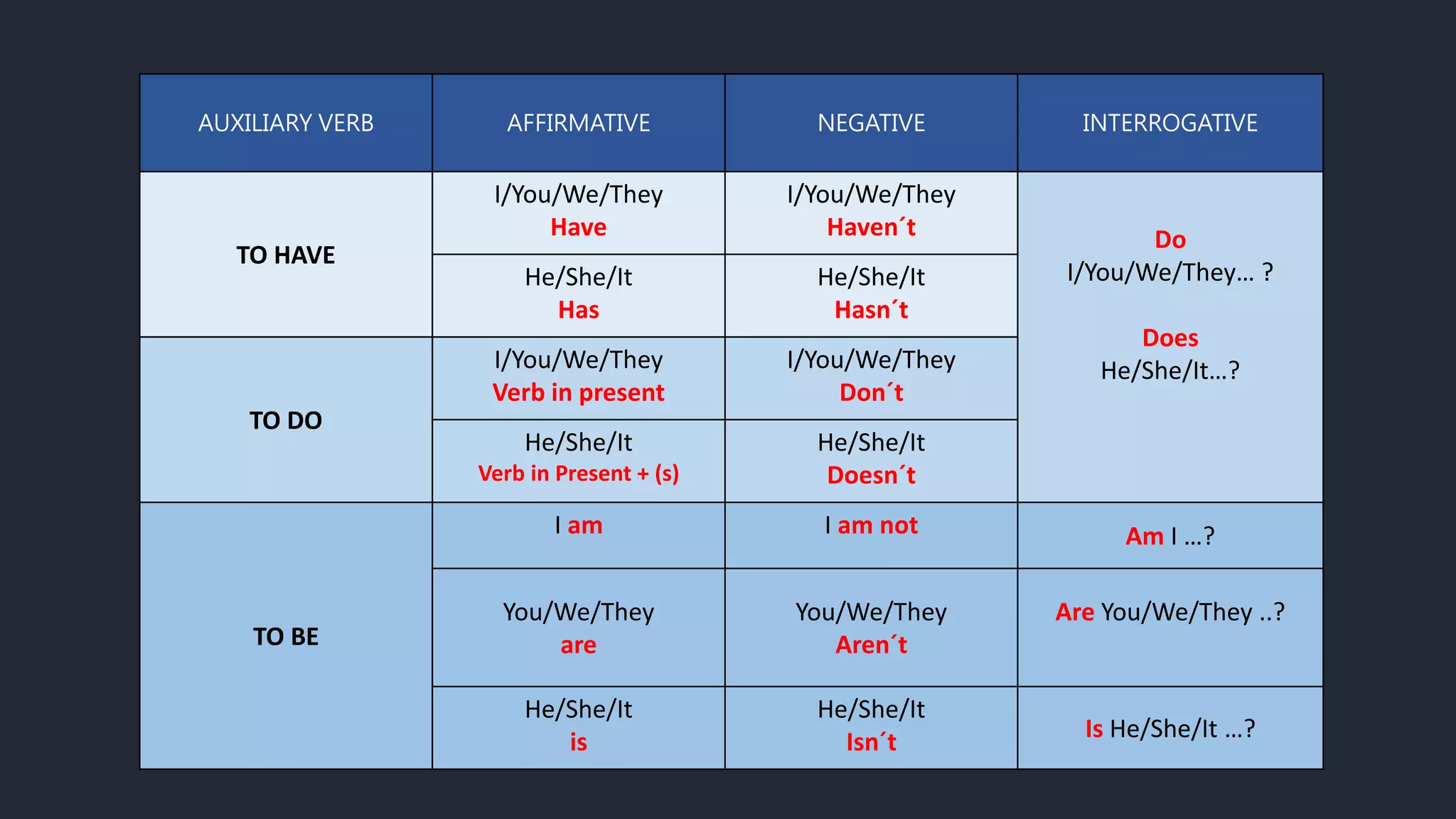
AUXILIARY VERB AFFIRMATIVE NEGATIVE INTERROGATIVE
TO HAVE
I/You/We/They
Have
I/You/We/They
Haven´t Do
I/You/We/They… ?
Does
He/She/It…?
He/She/It
Has
He/She/It
Hasn´t
TO DO
I/You/We/They
Verb in present
I/You/We/They
Don´t
He/She/It
Verb in Present + (s)
He/She/It
Doesn´t
TO BE
I am I am not Am I …?
You/We/They
are
You/We/They
Aren´t
Are You/We/They ..?
He/She/It
is
He/She/It
Isn´t Is He/She/It …?
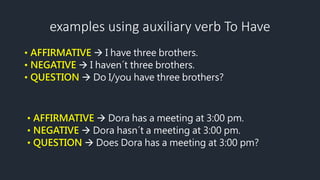
examples using auxiliary verb To Have
• AFFIRMATIVE  I have three brothers.
• NEGATIVE  I haven´t three brothers.
• QUESTION  Do I/you have three brothers?
• AFFIRMATIVE  Dora has a meeting at 3:00 pm.
• NEGATIVE  Dora hasn´t a meeting at 3:00 pm.
• QUESTION  Does Dora has a meeting at 3:00 pm?
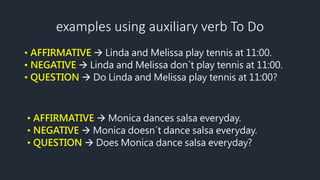
examples using auxiliary verb To Do
• AFFIRMATIVE  Linda and Melissa play tennis at 11:00.
• NEGATIVE  Linda and Melissa don´t play tennis at 11:00.
• QUESTION  Do Linda and Melissa play tennis at 11:00?
• AFFIRMATIVE  Monica dances salsa everyday.
• NEGATIVE  Monica doesn´t dance salsa everyday.
• QUESTION  Does Monica dance salsa everyday?
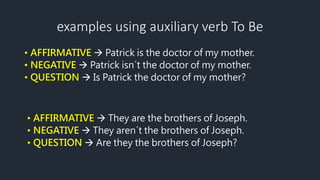
examples using auxiliary verb To Be
• AFFIRMATIVE  Patrick is the doctor of my mother.
• NEGATIVE  Patrick isn´t the doctor of my mother.
• QUESTION  Is Patrick the doctor of my mother?
• AFFIRMATIVE  They are the brothers of Joseph.
• NEGATIVE  They aren´t the brothers of Joseph.
• QUESTION  Are they the brothers of Joseph?

Simple present auxiliary verbs

  • 1.
    AUXILIARY VERB AFFIRMATIVENEGATIVE INTERROGATIVE TO HAVE I/You/We/They Have I/You/We/They Haven´t Do I/You/We/They… ? Does He/She/It…? He/She/It Has He/She/It Hasn´t TO DO I/You/We/They Verb in present I/You/We/They Don´t He/She/It Verb in Present + (s) He/She/It Doesn´t TO BE I am I am not Am I …? You/We/They are You/We/They Aren´t Are You/We/They ..? He/She/It is He/She/It Isn´t Is He/She/It …?
  • 2.
    examples using auxiliaryverb To Have • AFFIRMATIVE  I have three brothers. • NEGATIVE  I haven´t three brothers. • QUESTION  Do I/you have three brothers? • AFFIRMATIVE  Dora has a meeting at 3:00 pm. • NEGATIVE  Dora hasn´t a meeting at 3:00 pm. • QUESTION  Does Dora has a meeting at 3:00 pm?
  • 3.
    examples using auxiliaryverb To Do • AFFIRMATIVE  Linda and Melissa play tennis at 11:00. • NEGATIVE  Linda and Melissa don´t play tennis at 11:00. • QUESTION  Do Linda and Melissa play tennis at 11:00? • AFFIRMATIVE  Monica dances salsa everyday. • NEGATIVE  Monica doesn´t dance salsa everyday. • QUESTION  Does Monica dance salsa everyday?
  • 4.
    examples using auxiliaryverb To Be • AFFIRMATIVE  Patrick is the doctor of my mother. • NEGATIVE  Patrick isn´t the doctor of my mother. • QUESTION  Is Patrick the doctor of my mother? • AFFIRMATIVE  They are the brothers of Joseph. • NEGATIVE  They aren´t the brothers of Joseph. • QUESTION  Are they the brothers of Joseph?