 Other music magazines I have looked at are NME, Q, Kerrang! and
  Empire.
 NME is published in weekly editions by Time Inc.
 Q is published monthly by the Bauer Media Group
 Kerrang! is published weekly also by the Bauer Media Group
 Empire is published monthly by Bauer (a sub-section of the Bauer
  Media Group).

   NME is the longest running of these magazines as it was first
    published 1952 with an estimated reach of 23,000 people each
    week (this is determined by working an average of sales across 52
    weeks.)
 MixMag reaches its audience through viable information. The
  magazine publishes information which the audience can strongly
  relate to. As its focus genre of drum and bass and electronic music
  began in nightclubs, it often refers to clubs for nights out for older
  readers.
 MixMag also appeals to younger readers through including free mix
  CDs to listen to and inspire any young potential DJs. On top of this
  the magazine appeals to its entire audience through keeping
  readers up to date with the latest big releases and unheard music
  which we can expect to be known in the coming months
 Finally MixMag reaches its audience through its photography, it uses
  shots of the crowd with attractive people to draw in an audience, it
  also uses action shots of DJs during sets to draw in keen music lovers
  and incorporates images which involve the crowd and DJ to
  convey that it is suitable for both music makers and music lovers.
 DJ Mag reaches to its audience through interaction. It often
  appeals for readers to either write a letter or e-mail a vote for its
  annual competition which lists the top 100 DJs and then publishes
  the results based upon votes from the audience and leaders in the
  music industry.
 DJ Mag also reaches its audience by including relevant articles to its
  audience about underground, unheard of music artists in the hope
  of getting them known in the industry – this therefore appeals to
  people as it not only offers the chance for the unknown music talent
  to become known but allows the audience to know of potential
  music stars before they were famous which is a bragging right to
  many.
 DJ mag also draws in an audience through its regular publications, it
  is published only once a month which entices the audience to buy
  the magazine so they do not miss out on an entire month of events
  and big hits.
   MixMag during the 90’s which was the height of particular sub-
    cultures of the electronic music genre reached a circulation of
    70,000 copies per month which allowed it to claim to be the largest
    selling music magazine at the time. Between 2011 and 2012 it is
    thought that circulation is around 20,000 per issue.
   DJ Mag has had no huge peak in circulation and instead shows
    consistent circulation figures relative to the audience size in the
    electronic genre. However, there was an increase in circulation at a
    similar time to MixMag as more and more people began fans to
    electronic music – this allowing the magazine to reach a peak of
    around 40,000 copies per month. Taking into account the current
    climate and the option to read magazines online, it is anticipated
    that through 2012 DJ Mag will have a circulation of around 20,000
    per issue – the same as MixMag meaning neither magazine now
    claim to be the largest selling in the genre.

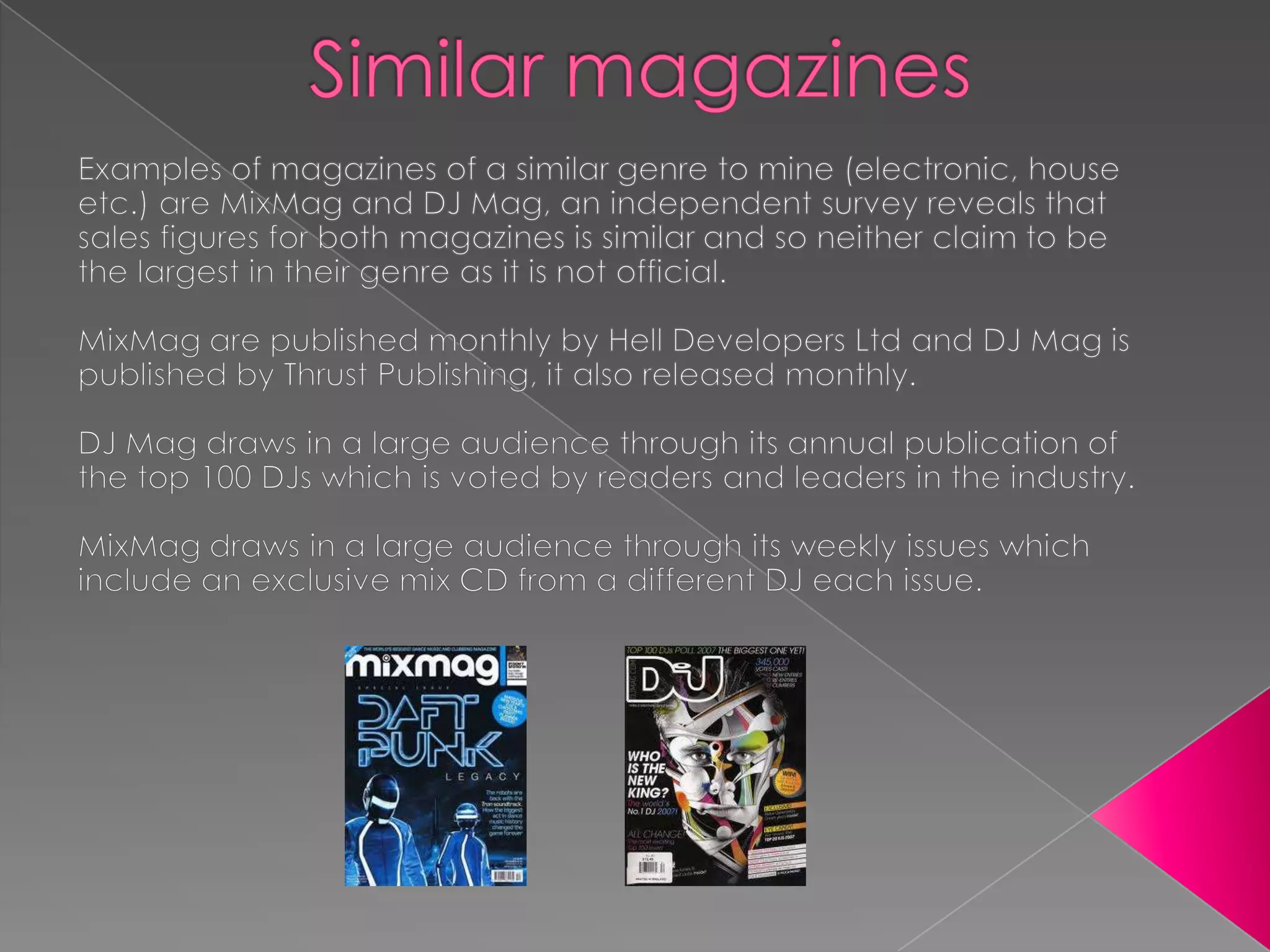
Similar magazines

  • 2.
     Other musicmagazines I have looked at are NME, Q, Kerrang! and Empire.  NME is published in weekly editions by Time Inc.  Q is published monthly by the Bauer Media Group  Kerrang! is published weekly also by the Bauer Media Group  Empire is published monthly by Bauer (a sub-section of the Bauer Media Group).  NME is the longest running of these magazines as it was first published 1952 with an estimated reach of 23,000 people each week (this is determined by working an average of sales across 52 weeks.)
  • 3.
     MixMag reachesits audience through viable information. The magazine publishes information which the audience can strongly relate to. As its focus genre of drum and bass and electronic music began in nightclubs, it often refers to clubs for nights out for older readers.  MixMag also appeals to younger readers through including free mix CDs to listen to and inspire any young potential DJs. On top of this the magazine appeals to its entire audience through keeping readers up to date with the latest big releases and unheard music which we can expect to be known in the coming months  Finally MixMag reaches its audience through its photography, it uses shots of the crowd with attractive people to draw in an audience, it also uses action shots of DJs during sets to draw in keen music lovers and incorporates images which involve the crowd and DJ to convey that it is suitable for both music makers and music lovers.
  • 4.
     DJ Magreaches to its audience through interaction. It often appeals for readers to either write a letter or e-mail a vote for its annual competition which lists the top 100 DJs and then publishes the results based upon votes from the audience and leaders in the music industry.  DJ Mag also reaches its audience by including relevant articles to its audience about underground, unheard of music artists in the hope of getting them known in the industry – this therefore appeals to people as it not only offers the chance for the unknown music talent to become known but allows the audience to know of potential music stars before they were famous which is a bragging right to many.  DJ mag also draws in an audience through its regular publications, it is published only once a month which entices the audience to buy the magazine so they do not miss out on an entire month of events and big hits.
  • 5.
    MixMag during the 90’s which was the height of particular sub- cultures of the electronic music genre reached a circulation of 70,000 copies per month which allowed it to claim to be the largest selling music magazine at the time. Between 2011 and 2012 it is thought that circulation is around 20,000 per issue.  DJ Mag has had no huge peak in circulation and instead shows consistent circulation figures relative to the audience size in the electronic genre. However, there was an increase in circulation at a similar time to MixMag as more and more people began fans to electronic music – this allowing the magazine to reach a peak of around 40,000 copies per month. Taking into account the current climate and the option to read magazines online, it is anticipated that through 2012 DJ Mag will have a circulation of around 20,000 per issue – the same as MixMag meaning neither magazine now claim to be the largest selling in the genre.