Downloaded 2,046 times
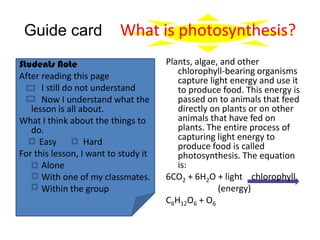
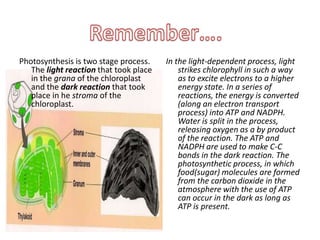
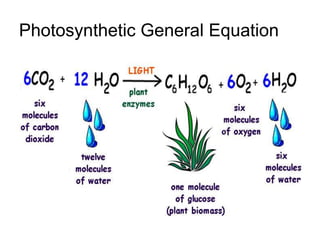
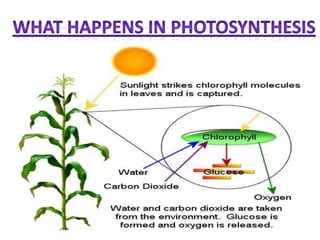
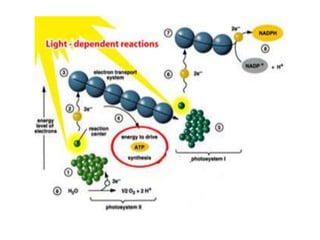
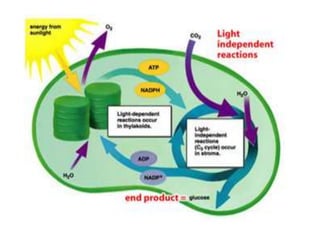
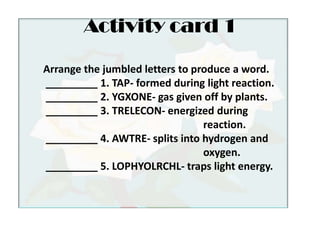
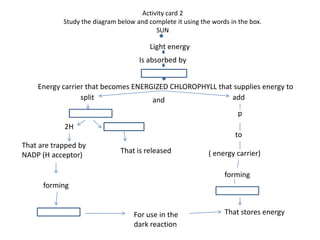
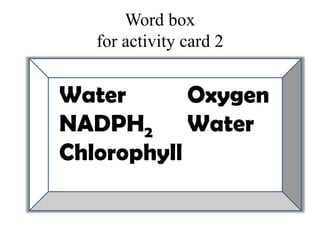
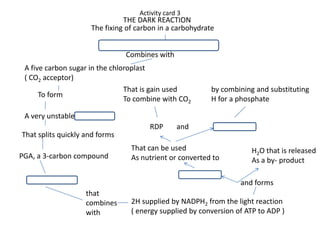
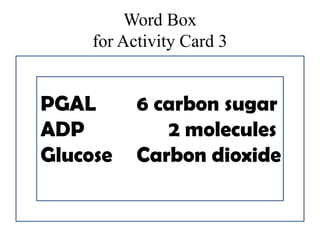
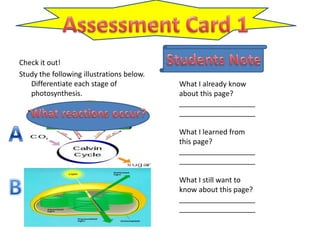
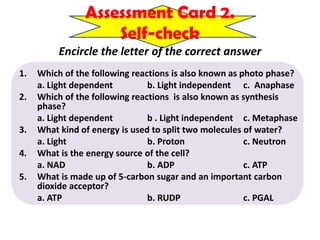
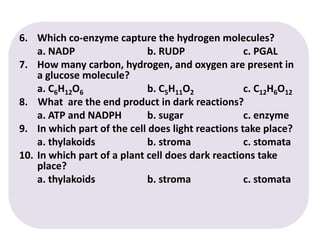
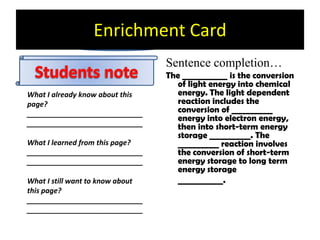
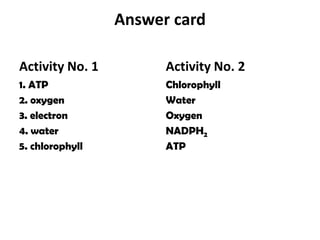
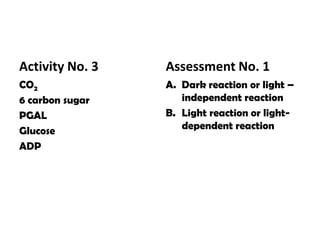
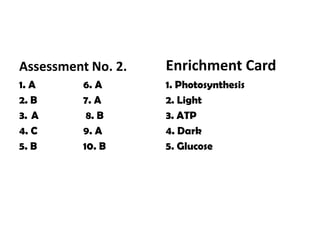

- Photosynthesis is a two-stage process where light energy is converted to chemical energy. The light reaction uses light energy to produce ATP and NADPH. The dark reaction uses these products to fix carbon and produce glucose. - The light reaction takes place in the thylakoids and splits water, producing oxygen and energized electrons. These electrons are used to produce ATP and NADPH. - The dark reaction occurs in the stroma and uses ATP and NADPH to fix carbon from CO2 into glucose, producing oxygen as a byproduct. This provides the basic energy and materials for plant growth and survival.


