Sify Finance
Glossary


Annual fee

Air accident insurance

Add-on Card

Baggage cover

Charge Card

Credit shield

Credit Card

Cash advance facility

Debit Card

Entrance fee

Eligibility

Free credit period

General Insurance

Global Card

Gold Card, Silver Card, Executive Card

Interest

Issuing Bank

Joining Fee

Late payment fee

Lost card liability
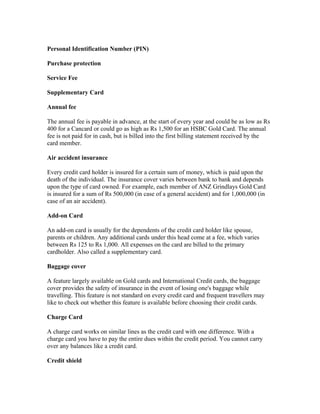
Personal Identification Number (PIN)

Purchase protection

Service Fee

Supplementary Card

Annual fee

The annual fee is payable in advance, at the start of every year and could be as low as Rs
400 for a Cancard or could go as high as Rs 1,500 for an HSBC Gold Card. The annual
fee is not paid for in cash, but is billed into the first billing statement received by the
card member.

Air accident insurance

Every credit card holder is insured for a certain sum of money, which is paid upon the
death of the individual. The insurance cover varies between bank to bank and depends
upon the type of card owned. For example, each member of ANZ Grindlays Gold Card
is insured for a sum of Rs 500,000 (in case of a general accident) and for 1,000,000 (in
case of an air accident).

Add-on Card

An add-on card is usually for the dependents of the credit card holder like spouse,
parents or children. Any additional cards under this head come at a fee, which varies
between Rs 125 to Rs 1,000. All expenses on the card are billed to the primary
cardholder. Also called a supplementary card.

Baggage cover

A feature largely available on Gold cards and International Credit cards, the baggage
cover provides the safety of insurance in the event of losing one's baggage while
travelling. This feature is not standard on every credit card and frequent travellers may
like to check out whether this feature is available before choosing their credit cards.

Charge Card

A charge card works on similar lines as the credit card with one difference. With a
charge card you have to pay the entire dues within the credit period. You cannot carry
over any balances like a credit card.

Credit shield
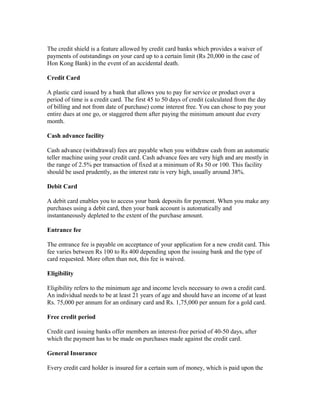
The credit shield is a feature allowed by credit card banks which provides a waiver of
payments of outstandings on your card up to a certain limit (Rs 20,000 in the case of
Hon Kong Bank) in the event of an accidental death.

Credit Card

A plastic card issued by a bank that allows you to pay for service or product over a
period of time is a credit card. The first 45 to 50 days of credit (calculated from the day
of billing and not from date of purchase) come interest free. You can chose to pay your
entire dues at one go, or staggered them after paying the minimum amount due every
month.

Cash advance facility

Cash advance (withdrawal) fees are payable when you withdraw cash from an automatic
teller machine using your credit card. Cash advance fees are very high and are mostly in
the range of 2.5% per transaction of fixed at a minimum of Rs 50 or 100. This facility
should be used prudently, as the interest rate is very high, usually around 38%.

Debit Card

A debit card enables you to access your bank deposits for payment. When you make any
purchases using a debit card, then your bank account is automatically and
instantaneously depleted to the extent of the purchase amount.

Entrance fee

The entrance fee is payable on acceptance of your application for a new credit card. This
fee varies between Rs 100 to Rs 400 depending upon the issuing bank and the type of
card requested. More often than not, this fee is waived.

Eligibility

Eligibility refers to the minimum age and income levels necessary to own a credit card.
An individual needs to be at least 21 years of age and should have an income of at least
Rs. 75,000 per annum for an ordinary card and Rs. 1,75,000 per annum for a gold card.

Free credit period

Credit card issuing banks offer members an interest-free period of 40-50 days, after
which the payment has to be made on purchases made against the credit card.

General Insurance

Every credit card holder is insured for a certain sum of money, which is paid upon the
death of the individual. The insurance cover varies between bank to bank and depends
upon the type of card owned. For example, each member of ANZ Grindlays Gold Card
is insured for a sum of Rs 500,000 (in case of a general accident) and for 1,000,000 (in
case of an air accident).

Global Card

A Global Card enables you to use your credit card when you are overseas. You can
spend in dollars or any other foreign currency and settle the dues in your local currency.
Your credit limit is based on the basic travel quota (BTQ) entitlement, and if this more
than your assessed credit limit, you could buy traveler's cheques.

Gold Card, Silver Card, Executive Card

Gold, Silver and Classic/Executive are the terms used by issuing banks to differentiate
between the levels of services offered on each. Naturally the gold card offers better
features, higher insurance covers and more facilities. There is also an element of esteem
associate with gold cards. However, all these features do not come cheap. Gold cards
have the highest fees and service charges associated with them.

Interest

The charge payable to the card issuing bank for funds withdrawn from ATMs or on the
funds carried forward beyond the free credit period.

Issuing Bank

The issuing bank, as the term goes, refers to the banks that issue credit cards. These
include both Indian Banks (Bank of Baroda, Canara Bank) and Foreign Banks (Citibank,
Standard Chartered Bank).

Joining Fee

Fee that is to be paid to the credit card issuer when your application form for a credit
card is accepted. The fee varies from bank to bank and on the type of card applied for.
Typically joining fees vary between Rs 100 and Rs 1,000. Also see Entrance Fee

Late payment fee

Late payment fees, as the term indicates are payable in the event of any delay in
repayment of the out standings on your credit card after the stipulated 'interest-free
period'. These charges are very steep and card members are well advised to pay off at
least the minimum amount due on out standings every month.
Lost card liability

In the event that you lose your credit card or it is stolen, then you must inform the bank
immediately. The bank then deactivates your credit card to prevent any fraud. The lost
card liability fee is payable on the expenses incurred during the period between the loss
of your card and your having reported it to the bank. The lost liability fee is restricted to
a maximum sum of Rs 1,000 in the case of most credit cards issuing banks.

Personal Identification Number (PIN)

The PIN or the Personal Identification Number is unique to every card and isa
combination of numbers. The PIN serves as a key, which allows you to avail certain
services like cash withdrawal from automatic teller machines. This number is very
important and must be stored carefully. Most credit card issuing banks instruct their
clients to write the PIN in a very safe place or better still, to simply memorise the digits.

Purchase protection

The purchase protection feature automatically insures all items bought on the credit card
from damage or loss due to fire or theft up to a certain sum of money.

Service Fee

Fees levied by the credit card issuer on services offered like cash advance, tele draft.

Supplementary Card

A supplementary card is usually for the dependents of the credit card holder like spouse,
parents or children. Any additional cards under this head come at a fee, which varies
between Rs 125 to Rs 1,000. All expenses on the card are billed to the primary
cardholder. Also called an add-on card.

Sify finance

  • 1.
    Sify Finance Glossary Annual fee Airaccident insurance Add-on Card Baggage cover Charge Card Credit shield Credit Card Cash advance facility Debit Card Entrance fee Eligibility Free credit period General Insurance Global Card Gold Card, Silver Card, Executive Card Interest Issuing Bank Joining Fee Late payment fee Lost card liability
  • 2.
    Personal Identification Number(PIN) Purchase protection Service Fee Supplementary Card Annual fee The annual fee is payable in advance, at the start of every year and could be as low as Rs 400 for a Cancard or could go as high as Rs 1,500 for an HSBC Gold Card. The annual fee is not paid for in cash, but is billed into the first billing statement received by the card member. Air accident insurance Every credit card holder is insured for a certain sum of money, which is paid upon the death of the individual. The insurance cover varies between bank to bank and depends upon the type of card owned. For example, each member of ANZ Grindlays Gold Card is insured for a sum of Rs 500,000 (in case of a general accident) and for 1,000,000 (in case of an air accident). Add-on Card An add-on card is usually for the dependents of the credit card holder like spouse, parents or children. Any additional cards under this head come at a fee, which varies between Rs 125 to Rs 1,000. All expenses on the card are billed to the primary cardholder. Also called a supplementary card. Baggage cover A feature largely available on Gold cards and International Credit cards, the baggage cover provides the safety of insurance in the event of losing one's baggage while travelling. This feature is not standard on every credit card and frequent travellers may like to check out whether this feature is available before choosing their credit cards. Charge Card A charge card works on similar lines as the credit card with one difference. With a charge card you have to pay the entire dues within the credit period. You cannot carry over any balances like a credit card. Credit shield
  • 3.
    The credit shieldis a feature allowed by credit card banks which provides a waiver of payments of outstandings on your card up to a certain limit (Rs 20,000 in the case of Hon Kong Bank) in the event of an accidental death. Credit Card A plastic card issued by a bank that allows you to pay for service or product over a period of time is a credit card. The first 45 to 50 days of credit (calculated from the day of billing and not from date of purchase) come interest free. You can chose to pay your entire dues at one go, or staggered them after paying the minimum amount due every month. Cash advance facility Cash advance (withdrawal) fees are payable when you withdraw cash from an automatic teller machine using your credit card. Cash advance fees are very high and are mostly in the range of 2.5% per transaction of fixed at a minimum of Rs 50 or 100. This facility should be used prudently, as the interest rate is very high, usually around 38%. Debit Card A debit card enables you to access your bank deposits for payment. When you make any purchases using a debit card, then your bank account is automatically and instantaneously depleted to the extent of the purchase amount. Entrance fee The entrance fee is payable on acceptance of your application for a new credit card. This fee varies between Rs 100 to Rs 400 depending upon the issuing bank and the type of card requested. More often than not, this fee is waived. Eligibility Eligibility refers to the minimum age and income levels necessary to own a credit card. An individual needs to be at least 21 years of age and should have an income of at least Rs. 75,000 per annum for an ordinary card and Rs. 1,75,000 per annum for a gold card. Free credit period Credit card issuing banks offer members an interest-free period of 40-50 days, after which the payment has to be made on purchases made against the credit card. General Insurance Every credit card holder is insured for a certain sum of money, which is paid upon the
  • 4.
    death of theindividual. The insurance cover varies between bank to bank and depends upon the type of card owned. For example, each member of ANZ Grindlays Gold Card is insured for a sum of Rs 500,000 (in case of a general accident) and for 1,000,000 (in case of an air accident). Global Card A Global Card enables you to use your credit card when you are overseas. You can spend in dollars or any other foreign currency and settle the dues in your local currency. Your credit limit is based on the basic travel quota (BTQ) entitlement, and if this more than your assessed credit limit, you could buy traveler's cheques. Gold Card, Silver Card, Executive Card Gold, Silver and Classic/Executive are the terms used by issuing banks to differentiate between the levels of services offered on each. Naturally the gold card offers better features, higher insurance covers and more facilities. There is also an element of esteem associate with gold cards. However, all these features do not come cheap. Gold cards have the highest fees and service charges associated with them. Interest The charge payable to the card issuing bank for funds withdrawn from ATMs or on the funds carried forward beyond the free credit period. Issuing Bank The issuing bank, as the term goes, refers to the banks that issue credit cards. These include both Indian Banks (Bank of Baroda, Canara Bank) and Foreign Banks (Citibank, Standard Chartered Bank). Joining Fee Fee that is to be paid to the credit card issuer when your application form for a credit card is accepted. The fee varies from bank to bank and on the type of card applied for. Typically joining fees vary between Rs 100 and Rs 1,000. Also see Entrance Fee Late payment fee Late payment fees, as the term indicates are payable in the event of any delay in repayment of the out standings on your credit card after the stipulated 'interest-free period'. These charges are very steep and card members are well advised to pay off at least the minimum amount due on out standings every month.
  • 5.
    Lost card liability Inthe event that you lose your credit card or it is stolen, then you must inform the bank immediately. The bank then deactivates your credit card to prevent any fraud. The lost card liability fee is payable on the expenses incurred during the period between the loss of your card and your having reported it to the bank. The lost liability fee is restricted to a maximum sum of Rs 1,000 in the case of most credit cards issuing banks. Personal Identification Number (PIN) The PIN or the Personal Identification Number is unique to every card and isa combination of numbers. The PIN serves as a key, which allows you to avail certain services like cash withdrawal from automatic teller machines. This number is very important and must be stored carefully. Most credit card issuing banks instruct their clients to write the PIN in a very safe place or better still, to simply memorise the digits. Purchase protection The purchase protection feature automatically insures all items bought on the credit card from damage or loss due to fire or theft up to a certain sum of money. Service Fee Fees levied by the credit card issuer on services offered like cash advance, tele draft. Supplementary Card A supplementary card is usually for the dependents of the credit card holder like spouse, parents or children. Any additional cards under this head come at a fee, which varies between Rs 125 to Rs 1,000. All expenses on the card are billed to the primary cardholder. Also called an add-on card.