Credit Card 
By: 
Harsh Gupta 
Himanshu Chugh
Credit 
 A legal agreement to receive cash, 
goods, or services now and pay for 
them in the future.
Credit Cards 
 Plastic cards with electronic 
information that can be used by the 
holder to make purchases or obtain 
cash advances using a line of credit 
made available by the card-issuing 
financial institution.
Debit Cards 
 Debit cards are plastic cards with 
electronic information, that look 
very similar to credit cards, that 
you can use to take money out 
against your checking account. 
 When you swipe your debit card 
remember that the money is taken 
immediately from your checking 
account.
History of Credit Card 
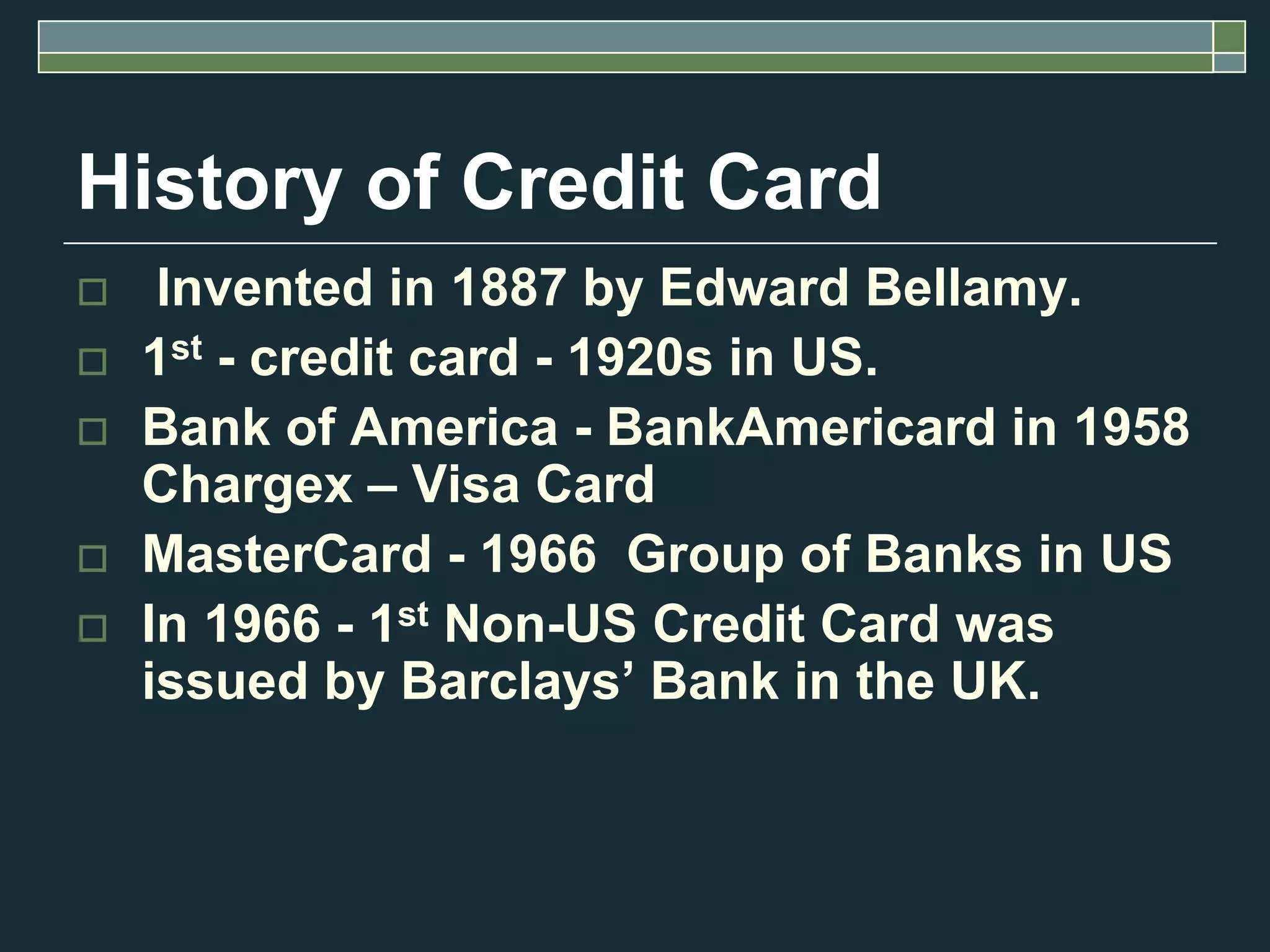
 Invented in 1887 by Edward Bellamy. 
 1st - credit card - 1920s in US. 
 Bank of America - BankAmericard in 1958 
Chargex – Visa Card 
 MasterCard - 1966 Group of Banks in US 
 In 1966 - 1st Non-US Credit Card was 
issued by Barclays’ Bank in the UK.
Particulars Displayed On Credit 
Cards 
 Name of the customer 
 16-digit card number 
 Validity date 
 The VISA hologram and the VISA logo 
 Name of the issuing bank 
 Signature period 
 Magnetic strip 
 PIN
CREDIT CARD NUMBER 
STRUCTURING 
 1ST – 6 No’s – Issuing bank code. 
 Next – 9 No’s – Individual A/c No. 
 Final Digit – Validity Check Code. 
 Extra Codes - Will be Issue & Security 
Codes. 
 The size of most credit cards 
is 3 3⁄8 × 2 1⁄8 in (85.60 × 53.98 mm)
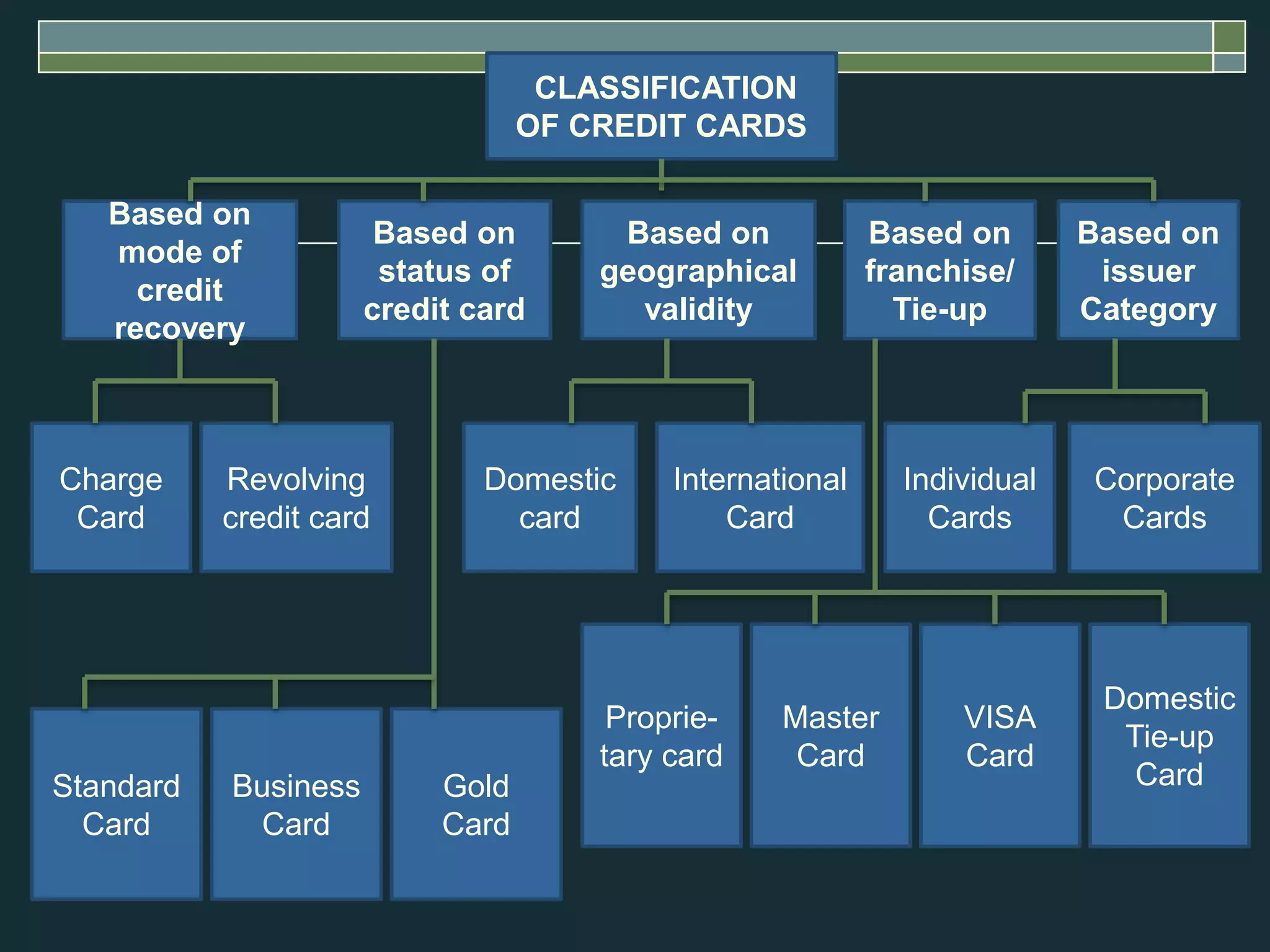
CLASSIFICATION 
OF CREDIT CARDS 
Based on 
mode of 
credit 
recovery 
Based on 
status of 
credit card 
Based on 
geographical 
validity 
Based on 
franchise/ 
Tie-up 
Based on 
issuer 
Category 
Charge 
Card 
Revolving 
credit card 
Standard 
Card 
Domestic 
card 
International 
Card 
Individual 
Cards 
Corporate 
Cards 
Proprie-tary 
card 
Business 
Card 
Gold 
Card 
Master 
Card 
VISA 
Card 
Domestic 
Tie-up 
Card
Based on mode of credit 
recovery 
 Charge Card- A card that charges no interest but 
requires the user to pay his/her balance in full upon 
receipt of the statement, usually on a monthly basis. 
While it is similar to a credit card, the major benefit 
offered by a charge card is that it has much higher, often 
unlimited, spending limits. 
 Revolving credit card- A line of credit where the 
customer pays a commitment fee and is then allowed to 
use the funds when they are needed. It is usually used 
for operating purposes, fluctuating each month 
depending on the customer's current cash flow needs
Based on status of credit card 
 Standard Card- It is a generally issued 
credit card. 
 Business Card(Executive cards)- It is 
issued to small partnership firms, 
solicitors, tax- consultants ,for use by 
executives on their business trips. 
 Gold Card- A credit card issued by credit 
card companies to favoured clients, 
entitling them to high unsecured 
overdrafts, some insurance cover, etc.
Based on geographical validity 
 Domestic card- Cards that are 
valid only in India and Nepal are called 
domestic cards. 
 International Card- Credit Cards 
that are valid internationally are called 
international cards.
Based on franchise/ Tie-up 
 Proprietary card- A bank issues such cards 
under its own brands. Eg. SBI card, Cancard of 
canara bank. 
 Master Card- This card is issued under the umbrella 
of “MasterCard International” 
 VISA Card – It is issued by any bank having tie 
up with “VISA international” 
 Domestic Tie-up Card- It is issued by any 
bank having tie up with domestic credit card brands 
such as CanCard and IndCard.
Based on issuer Category 
 Individual Cards- Non-corporate 
cards that are issued to individuals. 
 Corporate Cards- Issued to 
corporate and business firms.
Credit card cycle 
Credit purchase 
• Purchase of goods and 
service on card. 
Credit card 
processing 
• Merchant delivers goods after taking an authenticated credit card 
and noting the number and taking signature on certain forms. 
Bill raising 
• Merchant raises the bill for the purchase and sends it to 
the credit card issuing bank for payment 
Payment 
• Issuing bank pays amount to the merchant 
establishment 
Bill to card holder 
• Issuing bank raises bill on the credit cardholder and 
sends it for payment 
Card payment 
• Credit card holder makes the payment to the 
issuing bank
Grace period 
 A credit card's grace period is the time 
the customer has to pay the balance 
before interest is assessed on the 
outstanding balance. 
 Grace periods may vary, but usually 
range from 20 to 55 days depending on 
the type of credit card and the issuing 
bank.
Advantages 
To Cardholders : 
 Simple, convenient and can be substituted for cash. 
 Convenient method of payment. 
 Quick way to borrow. 
 Credit cards issued by leading banks are acceptable in 
many countries 
 Holders can withdraw cash from any branch of major 
banks worldwide. 
 Issuer of card provides 24 hrs customer helpline available 
across the world in case of any emergency.
To credit card companies/ Banks : 
 Source of revenue 
- Joining fee 
- Card renew fee 
- Services charges from retailers 
- Interest charged to customer
DISADVANTAGES 
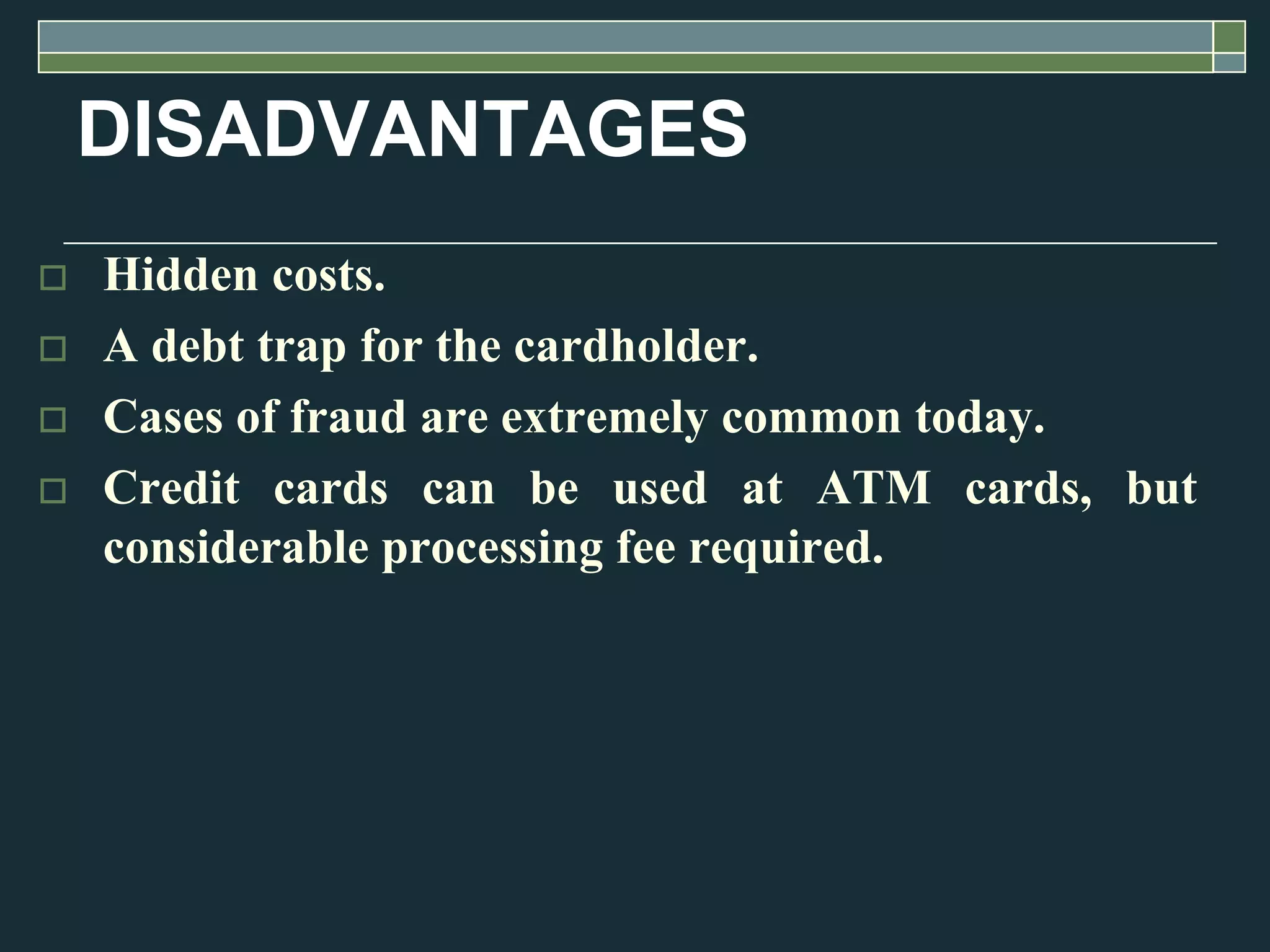
 Hidden costs. 
 A debt trap for the cardholder. 
 Cases of fraud are extremely common today. 
 Credit cards can be used at ATM cards, but 
considerable processing fee required.
THANK You..!! 
HAPPY DIWALI

Credit Card

  • 1.
    Credit Card By: Harsh Gupta Himanshu Chugh
  • 2.
    Credit  Alegal agreement to receive cash, goods, or services now and pay for them in the future.
  • 3.
    Credit Cards Plastic cards with electronic information that can be used by the holder to make purchases or obtain cash advances using a line of credit made available by the card-issuing financial institution.
  • 4.
    Debit Cards Debit cards are plastic cards with electronic information, that look very similar to credit cards, that you can use to take money out against your checking account.  When you swipe your debit card remember that the money is taken immediately from your checking account.
  • 5.
    History of CreditCard  Invented in 1887 by Edward Bellamy.  1st - credit card - 1920s in US.  Bank of America - BankAmericard in 1958 Chargex – Visa Card  MasterCard - 1966 Group of Banks in US  In 1966 - 1st Non-US Credit Card was issued by Barclays’ Bank in the UK.
  • 6.
    Particulars Displayed OnCredit Cards  Name of the customer  16-digit card number  Validity date  The VISA hologram and the VISA logo  Name of the issuing bank  Signature period  Magnetic strip  PIN
  • 7.
    CREDIT CARD NUMBER STRUCTURING  1ST – 6 No’s – Issuing bank code.  Next – 9 No’s – Individual A/c No.  Final Digit – Validity Check Code.  Extra Codes - Will be Issue & Security Codes.  The size of most credit cards is 3 3⁄8 × 2 1⁄8 in (85.60 × 53.98 mm)
  • 8.
    CLASSIFICATION OF CREDITCARDS Based on mode of credit recovery Based on status of credit card Based on geographical validity Based on franchise/ Tie-up Based on issuer Category Charge Card Revolving credit card Standard Card Domestic card International Card Individual Cards Corporate Cards Proprie-tary card Business Card Gold Card Master Card VISA Card Domestic Tie-up Card
  • 9.
    Based on modeof credit recovery  Charge Card- A card that charges no interest but requires the user to pay his/her balance in full upon receipt of the statement, usually on a monthly basis. While it is similar to a credit card, the major benefit offered by a charge card is that it has much higher, often unlimited, spending limits.  Revolving credit card- A line of credit where the customer pays a commitment fee and is then allowed to use the funds when they are needed. It is usually used for operating purposes, fluctuating each month depending on the customer's current cash flow needs
  • 10.
    Based on statusof credit card  Standard Card- It is a generally issued credit card.  Business Card(Executive cards)- It is issued to small partnership firms, solicitors, tax- consultants ,for use by executives on their business trips.  Gold Card- A credit card issued by credit card companies to favoured clients, entitling them to high unsecured overdrafts, some insurance cover, etc.
  • 11.
    Based on geographicalvalidity  Domestic card- Cards that are valid only in India and Nepal are called domestic cards.  International Card- Credit Cards that are valid internationally are called international cards.
  • 12.
    Based on franchise/Tie-up  Proprietary card- A bank issues such cards under its own brands. Eg. SBI card, Cancard of canara bank.  Master Card- This card is issued under the umbrella of “MasterCard International”  VISA Card – It is issued by any bank having tie up with “VISA international”  Domestic Tie-up Card- It is issued by any bank having tie up with domestic credit card brands such as CanCard and IndCard.
  • 13.
    Based on issuerCategory  Individual Cards- Non-corporate cards that are issued to individuals.  Corporate Cards- Issued to corporate and business firms.
  • 14.
    Credit card cycle Credit purchase • Purchase of goods and service on card. Credit card processing • Merchant delivers goods after taking an authenticated credit card and noting the number and taking signature on certain forms. Bill raising • Merchant raises the bill for the purchase and sends it to the credit card issuing bank for payment Payment • Issuing bank pays amount to the merchant establishment Bill to card holder • Issuing bank raises bill on the credit cardholder and sends it for payment Card payment • Credit card holder makes the payment to the issuing bank
  • 15.
    Grace period A credit card's grace period is the time the customer has to pay the balance before interest is assessed on the outstanding balance.  Grace periods may vary, but usually range from 20 to 55 days depending on the type of credit card and the issuing bank.
  • 16.
    Advantages To Cardholders:  Simple, convenient and can be substituted for cash.  Convenient method of payment.  Quick way to borrow.  Credit cards issued by leading banks are acceptable in many countries  Holders can withdraw cash from any branch of major banks worldwide.  Issuer of card provides 24 hrs customer helpline available across the world in case of any emergency.
  • 17.
    To credit cardcompanies/ Banks :  Source of revenue - Joining fee - Card renew fee - Services charges from retailers - Interest charged to customer
  • 18.
    DISADVANTAGES  Hiddencosts.  A debt trap for the cardholder.  Cases of fraud are extremely common today.  Credit cards can be used at ATM cards, but considerable processing fee required.
  • 19.

Editor's Notes