A
PRESENTATIPON
ON
CREDIT AND
DEBIT CARD
Debit Card
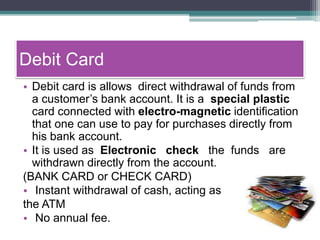
• Debit card is allows direct withdrawal of funds from
a customer’s bank account. It is a special plastic
card connected with electro-magnetic identification
that one can use to pay for purchases directly from
his bank account.
• It is used as Electronic check the funds are
withdrawn directly from the account.
(BANK CARD or CHECK CARD)
• Instant withdrawal of cash, acting as
the ATM
• No annual fee.
Types of Debit Cards
• Pin only debit cards
• Dual-use cards
• Prepaid debit card
• Online /offline debit cards and others
Credit Card
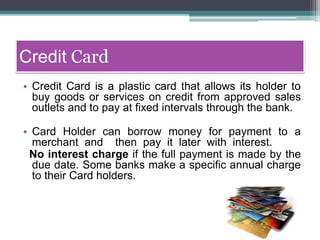
• Credit Card is a plastic card that allows its holder to
buy goods or services on credit from approved sales
outlets and to pay at fixed intervals through the bank.
• Card Holder can borrow money for payment to a
merchant and then pay it later with interest.
No interest charge if the full payment is made by the
due date. Some banks make a specific annual charge
to their Card holders.
Types of Credit Cards
• Standard Credit Card
• Premium Credit Card
• Limited Purpose Credit Card
• Specialty Credit Card
Standard Credit Cards
• Standard credit cards are the general purpose
cards They are issued to those people whose
age is above 18 year or exceed the financial
institution's minimum credit criteria. No deposits
are needed and the credit limit is established by
the credit card issuer.
Premium Credit Card
• ". They are generally referred to as "upscale".
They are offered to consumers with excellent
credit, which means they've retained this
standing for few years, and can afford high
credit limit. These consumers typically have
huge salaries and are heavy spenders and
travelers. The interest and annual fees,
however, tend to be high.
• Example: Gold And Platinum Cards
Limited Purpose Credit Card
• Limited Purpose credit cards can only be used
at specific locations. The card is used with a
minimum payment and finance charge.
• Example:
Store Credit Cards and Gas Credit Cards
Specialty Credit Cards
Specialty cards typically are offered through
affiliations, partnerships, major brand retailers or
service providers. specialty credit cards share a
partnership between organizations that support
a social cause, professional organization or an
alumni association.
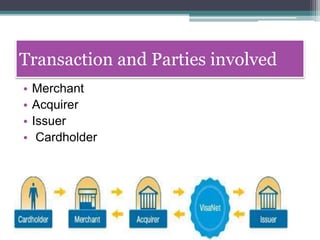
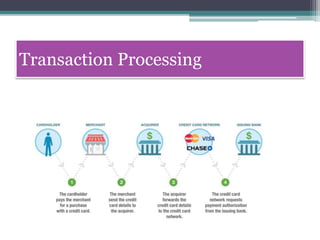
Transaction and Parties involved
• Merchant
• Acquirer
• Issuer
• Cardholder
Transaction Processing
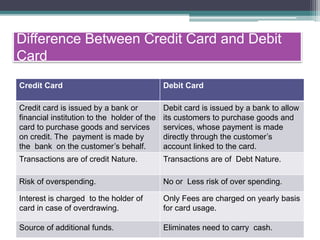
Difference Between Credit Card and Debit
Card
Credit Card Debit Card
Credit card is issued by a bank or
financial institution to the holder of the
card to purchase goods and services
on credit. The payment is made by
the bank on the customer’s behalf.
Debit card is issued by a bank to allow
its customers to purchase goods and
services, whose payment is made
directly through the customer’s
account linked to the card.
Transactions are of credit Nature. Transactions are of Debt Nature.
Risk of overspending. No or Less risk of over spending.
Interest is charged to the holder of
card in case of overdrawing.
Only Fees are charged on yearly basis
for card usage.
Source of additional funds. Eliminates need to carry cash.
Credit and debit card

Credit and debit card

  • 1.
  • 2.
    Debit Card • Debitcard is allows direct withdrawal of funds from a customer’s bank account. It is a special plastic card connected with electro-magnetic identification that one can use to pay for purchases directly from his bank account. • It is used as Electronic check the funds are withdrawn directly from the account. (BANK CARD or CHECK CARD) • Instant withdrawal of cash, acting as the ATM • No annual fee.
  • 3.
    Types of DebitCards • Pin only debit cards • Dual-use cards • Prepaid debit card • Online /offline debit cards and others
  • 4.
    Credit Card • CreditCard is a plastic card that allows its holder to buy goods or services on credit from approved sales outlets and to pay at fixed intervals through the bank. • Card Holder can borrow money for payment to a merchant and then pay it later with interest. No interest charge if the full payment is made by the due date. Some banks make a specific annual charge to their Card holders.
  • 5.
    Types of CreditCards • Standard Credit Card • Premium Credit Card • Limited Purpose Credit Card • Specialty Credit Card
  • 6.
    Standard Credit Cards •Standard credit cards are the general purpose cards They are issued to those people whose age is above 18 year or exceed the financial institution's minimum credit criteria. No deposits are needed and the credit limit is established by the credit card issuer.
  • 7.
    Premium Credit Card •". They are generally referred to as "upscale". They are offered to consumers with excellent credit, which means they've retained this standing for few years, and can afford high credit limit. These consumers typically have huge salaries and are heavy spenders and travelers. The interest and annual fees, however, tend to be high. • Example: Gold And Platinum Cards
  • 8.
    Limited Purpose CreditCard • Limited Purpose credit cards can only be used at specific locations. The card is used with a minimum payment and finance charge. • Example: Store Credit Cards and Gas Credit Cards
  • 9.
    Specialty Credit Cards Specialtycards typically are offered through affiliations, partnerships, major brand retailers or service providers. specialty credit cards share a partnership between organizations that support a social cause, professional organization or an alumni association.
  • 10.
    Transaction and Partiesinvolved • Merchant • Acquirer • Issuer • Cardholder
  • 11.
  • 12.
    Difference Between CreditCard and Debit Card Credit Card Debit Card Credit card is issued by a bank or financial institution to the holder of the card to purchase goods and services on credit. The payment is made by the bank on the customer’s behalf. Debit card is issued by a bank to allow its customers to purchase goods and services, whose payment is made directly through the customer’s account linked to the card. Transactions are of credit Nature. Transactions are of Debt Nature. Risk of overspending. No or Less risk of over spending. Interest is charged to the holder of card in case of overdrawing. Only Fees are charged on yearly basis for card usage. Source of additional funds. Eliminates need to carry cash.