SICKLE CELL ANAEMIA
Abolarin A. T, FMCPath
Lecturer/Consultant Haematologist,
Bowen University, Iwo.
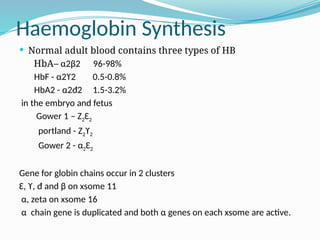
Haemoglobin Synthesis
 Normal adult blood contains three types of HB
HbA– α2β2 96-98%
HbF - α2ϒ2 0.5-0.8%
HbA2 - α2đ2 1.5-3.2%
in the embryo and fetus
Gower 1 – Z2Ɛ2
portland - Z2ϒ2
Gower 2 - α2Ɛ2
Gene for globin chains occur in 2 clusters
Ɛ, ϒ, đ and β on xsome 11
α, zeta on xsome 16
α chain gene is duplicated and both α genes on each xsome are active.
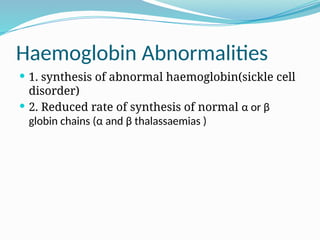
Haemoglobin Abnormalities
 1. synthesis of abnormal haemoglobin(sickle cell
disorder)
 2. Reduced rate of synthesis of normal α or β
globin chains (α and β thalassaemias )
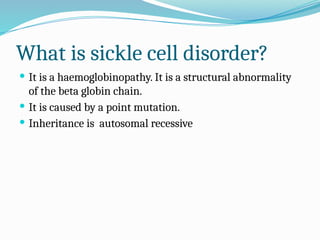
What is sickle cell disorder?
 It is a haemoglobinopathy. It is a structural abnormality
of the beta globin chain.
 It is caused by a point mutation.
 Inheritance is autosomal recessive
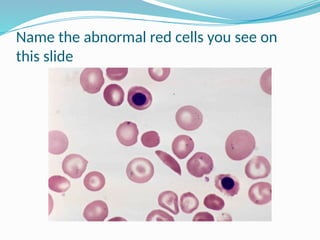
Name the abnormal red cells you see on
this slide
What is the sickle cell disorder?
 Sickle cell disease/ disorder are a group of
haemoglobinopathies that are due to presence of the S
hemoglobin and another abnormal hemoglobin – E, C ,
Beta thalassemia.
 SCD= HbS + others
 Sickle cell anaemia is the homozygous state. The
inheritance of two S hemoglobin
 Sickle cell trait means the inheritance of the S with a
normal A
Epidemiology
 The commonest haemoglobinopathy in the world is S in
terms of distribution and number affected and the
second is C.
 Due to immigration now found in other parts of the
world .
 Sickle cell disease is still a disease of black Africa
 25-30% have sickle cell trait AS and 2-3% are
homozygous SS in Nigeria
Epidemiology
 Sickle cell disease is found in the Arabs, Indians and parts
of the Mediterranean region because malaria used to be
endemic in these environment.
MOLECULAR BASIS.
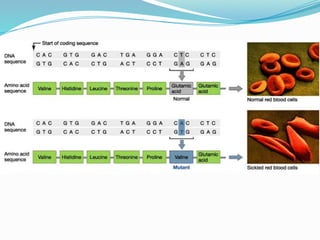
 Sickle cell disease was the first disease to be molecularly
analyzed.
 The defect was localized to the beta globin chain
 On the sixth amino acid.
 In the normal adult HBA, in position 6 there is glutamic
acid (acidic).
 In Hb S, there is valine (neutral).
 In Hb C there is lysine(basic)
PATHOGENESIS
 Hemoglobin S polymerizes and aggregates when
deoxygenated, then it precipitates out of solution.
 This is initially reversible when normal oxygen supply is
restored.
 But over time the red cell becomes permanently sickled
because repeated sickling destroys the red cell membrane
and the sickle shape is retained even when oxygen
tension is restored.
PATHOGENESIS
 In vivo, sickling occurs in the microcirculation where
deoxygenation occurs namely in capillaries and venules
CLINICAL PATHOLOGY
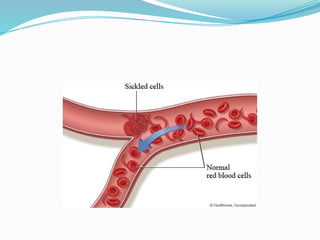
 Its rigid structure makes it difficult for sickle cells to
pass through the capillaries.
 Therefore in the spleen, the macrophages have time to
consume the sluggish red cells leading to chronic
hemolysis .
 There is impaired splenic function from congestion, poor
blood flow, infarction and ultimately autosplenectomy.
CLINICAL PATHOLOGY
 The spleen normally produces complement.
There is defect in alternate pathway of complement
activation in sickle cell anaemia.
 Impaired opsonization of encapsulated organisms .eg
pneumococci and haemophilus.
 Sickle cell anaemia have increased susceptibility to
infections .e.g. pneumococcus , viral and malaria
 Salmonella infections are increased due to availability
of iron from breakdown of hemoglobin
CLINICAL PATHOLOGY
 There is diminished cell mediated immunity.
 The irreversibly sickled erythrocytes , by occluding
capillaries, lead to ischemic tissue damage thereby giving
further role to inflammation.
 Infarcted tissue also provides foci for infections
especially in the bones and kidneys.
 Hemoglobin from lysed cells bind and inactivates nitrous
oxide, a potent vasodilator and inhibitor of platelet
aggregation leading to undesirable vasoconstriction.
6117278584
Factors affecting the rate and frequency of sickling
 The amount of hemoglobin S and its interaction with other
hemoglobins
 HBF particularly inhibits polymerization of HBS and
situations with high F is protective e.g in infants less than 6 months
 Higher hemoglobin S levels in the red cell will increase the
probability of aggregation and polymerization during
deoxygenation
 A decreased pH which decreases the hemoglobin’s affinity for
oxygen will worsen sickling.
 The length of time of exposure of red blood cells to low oxygen
tension, in the venules and capillaries. Prolonged hypoxia worsens
sickling.
How do you diagnosis sickle cell anaemia?
 By combining the presenting clinical features (signs and
symptoms) with laboratory investigations.
Clinical Features of sickle cell anaemia
Sickle cell disease (SCD) usually manifests early in
childhood. Typically after 6 months of age.
 Anemia is universally present. It is chronic, hemolytic
and very well tolerated. (6-7gm/dL)
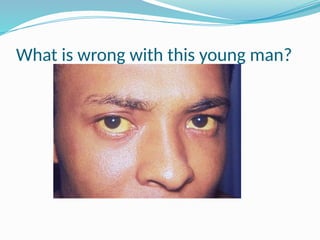
 Jaundice
What is wrong with this young man?
Clinical Features of sickle cell anaemia
 Infections are also a common first presentation in sickle
cell anaemia e.g osteomyelitis, pyelonephritis.
 During childhood and adolescence, sickle cell disease is
associated with growth retardation, delayed sexual
maturation, and being underweight.
Crises in Sickle Cell Anaemia And Disease
 The word ‘sickle cell crises’ refers to episodic, life
threatening exacerbations of symptoms.
 They often constitute medical emergencies and occur more
commonly in sickle cell anaemia than other sickle cell
diseases like Hb SC
 Factors which commonly precipitate crisis are infections,
 extremes of temperature ,
 dehydration,
 rigorous exercise,
 onset of menses in females etc
Crises in Sickle Cell Anaemia And Disease
The most common clinical manifestation of SCD is pain from vaso-
occlusive crisis. This is the most distinguishing clinical feature of
sickle cell disease.
 Vasoocclusive Crises can occur in any organ.
- Manifestations of VOC include:
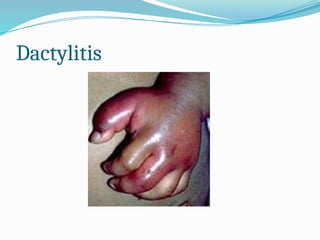
 Dactilytis
 Bone pain/ joint swelling
 stroke
 Acute chest syndrome
 priapism
 Abdominal pain
dactylitis
The hand and foot syndrome(Dactylitis) is a well known
vaso occlusive crisis in infants . The syndrome develops
suddenly and lasts 1-2 weeks. Hand-foot
syndrome occurs between age 6 months and 3
years; it is not seen after age 5 years because
hematopoiesis in the small bones of the hands
and feet ceases at this age.
Dactylitis
ACS
In young children, the acute chest syndrome a VOC
presents with
 chest pain,
 fever,
 cough,
 tachypnea,
 leukocytosis, and
 pulmonary infiltrates in the upper lobes.
 Adults are usually afebrile and dyspneic with severe
chest pain.
Stroke
 One of the most severe manifestation of sickle cell
anaemia patients is stroke. Stroke affects 30% of children
and 11% of patients by 20 years. It is usually ischemic in
children and hemorrhagic in adults.
Priapism
 Priapism is an unwanted, painful, and persistent erection of the penis.
 Most priapism episodes begin during sleep or early in the morning;
they may be associated with physiologic dehydration and
hypoventilation, which results in metabolic acidosis followed by
increases in sickling and stagnation of blood within the penile
sinusoids or the corpora cavernosa.
 Patients with priapism have increased hemolysis within the penis,
leading to a diminished availability of circulating NO, which plays an
important role in erectile function.
 Although priapism is usually self-limited and of relatively short
duration, it is often recurrent and may become chronic.
 “Stuttering” priapism refers to multiple episodes, each <4 hours in
duration, which may occur several times a week and may herald a
prolonged event.
Other Crises in Sickle Cell Anaemia And
Disease
 Hematologic “crises,” characterized by sudden
exaggeration of anemia, are pathogenetically
unrelated to vaso-occlusive crises.
 they include
- Sequestration crisis
- Aplastic crisis
- Hemolytic (hyperhemolytic crisis)
- Megaloblastic crisis
 Aplastic Crisis - Aplasia is the result of direct
cytotoxicity of the parvovirus to erythroid precursors,
especially colony-forming units, erythroid (CFU-E).
• Because red cell survival in Hb SS is no more than 10 to
20 days, cessation of erythropoiesis is followed by a
rapid decrease in Hb concentration.
• The process is self-limited, within 10 days, red cell
production resumes spontaneously, and large numbers of
reticulocytes and nucleated erythrocytes appear in the
peripheral blood.
 Sequestration crisis – is characterized by sudden
trapping of blood in the spleen/ liver.
 A splenic sequestration crisis is defined by a
 decrease in the steady-state Hb concentration of at least 2
g/dl,
 evidence of compensatory marrow erythropoiesis,
 and an acutely enlarging spleen.
 May lead to hypovolemic shock and death in a few hours.
 occur in the spleen and liver commonly in children under
the age of 9 years. Repeated episodes are common, until
fibrosis of the spleen occurs and limits its expansion.
 Hemolytic (hyperhemolytic) crises - result
from a sudden acceleration of the hemolytic
process
Occurs due to -
1. Concurrent mycoplasma infection
2. Coinheritance of hereditary spherocytosis
3. Drug induced hemolysis
4. Acute and delayed transfusion reactions
 Megaloblastic crises - results from the sudden
arrest of erythropoiesis by folate depletion.
 Chronic erythroid hyperplasia imposes a drain
on folate reserves, and biochemical evidence of
mild folate deficiency has been demonstrated
with high frequency in subjects with SCA.
 Megaloblastic crises likely occurs when food
consumption is interrupted by illness or
alcoholism or when the folate requirement is
augmented by rapid growth or pregnancy.
Clinical Features of sickle cell anaemia
Physical findings are multisystemic
 Gnathopathy
 Frontal bossing
 Asthenia
 Shortening of fingers or toes
 Pale and jaundiced
Laboratory investigations
FBC and PBF
Screening tests:
1. Sickling test
2. Solubility test
Confirmatory test:
3. Electrophoresis(alkaline and acid)
4. High performance liquid chromatography
5. Iso-electric focusing
Blood Smear
 Marked anisopoikilocytosis
 Target cells
 Poikiloctyes
 Hypochromasia
 Sickled RBC
 Nucleated RBCs
 Howell-Jolly bodies
FBC
 anaemia
 leukocytosis – Corrected wbc count is needed
due to high numbers of nucleated red cells
 neutrophilia in infections
 thrombocytosis may be seen, platelets usually
adequate.
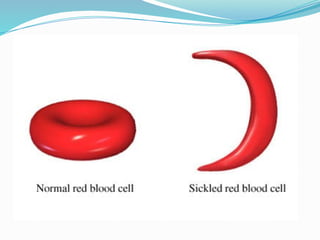
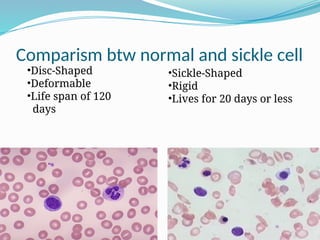
Comparism btw normal and sickle cell
•Disc-Shaped
•Deformable
•Life span of 120
days
•Sickle-Shaped
•Rigid
•Lives for 20 days or less
Laboratory investigations
 1. Sickling test: Sickling is demonstrated on a thin wet
film of blood that is sealed with a petroleum
jelly/paraffin wax mixture or nail varnish/ petroleum
jelly mixure. If Hb S is present, the red cells lose their
smooth, round shape and become sickle.
Laboratory investigations
 This process takes 12 h in AS and 1 hour in SS
 To hasten the process, add sodium dithionite a
reducing agent.
Laboratory investigations
 2. The solubility test: Hemoglobin S is insoluble in the
deoxygenated state in a high molarity phosphate
buffer.
 Crystals form that refract light and cause turbidity.
Addition of a reducing agent like sodium dithionate will
cause hemoglobin S containing blood to be turbid quickly.
Confirmatory tests
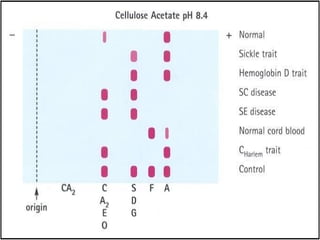
 Cellulose Acetate Electrophoresis
 At Alkaline pH (8.4–8.6) using cellulose acetate
membrane is simple, reliable and rapid. At alkaline pH,
normal hemoglobin is a negatively charged protein
and during electrophoresis will migrate toward the
positively charged anode.
 Structural variants that have a change in the charge on
the surface of the molecule at alkaline pH will separate
from Hb A and migrate at different speeds.
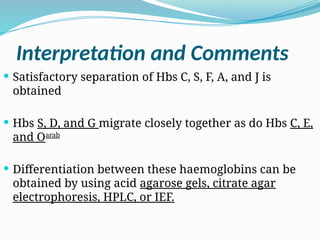
Interpretation and Comments
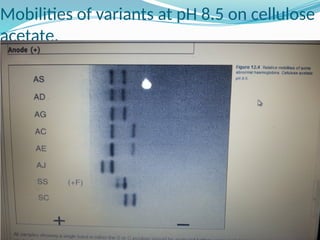
 Satisfactory separation of Hbs C, S, F, A, and J is
obtained
 Hbs S, D, and G migrate closely together as do Hbs C, E,
and Oarab
 Differentiation between these haemoglobins can be
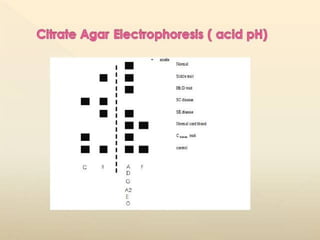
obtained by using acid agarose gels, citrate agar
electrophoresis, HPLC, or IEF.
Mobilities of variants at pH 8.5 on cellulose
acetate.
Confirmatory tests
 Citrate agar electrophoresis and acid agarose gel agar are
performed at acidic pH (6.0 – 6.2)
Confirmatory tests
 High performance liquid chromatography depends
on the exchange of charged groups on an exchange
medium with charged groups on the hemoglobin
molecule.
 The surface of the support is modified by carboxyl groups
to have a weakly cationic charge, which allows the
separation of haemoglobin molecules with different
charges by ion exchange.
Confirmatory tests
 When a hemolysate containing a mixture of haemoglobin
is adsorbed onto the support, the rate of separation of
different haemoglobins is determined by the pH and
ionic strength of any buffer applied to the column.
Confirmatory tests
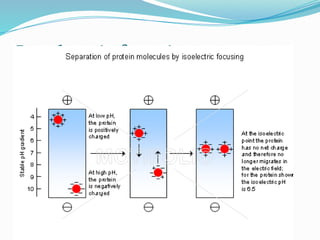
Iso electric focusing IEF: IEF utilizes a matrix containing
carrier ampholytes of low molecular weight and
varying isoelectric points . These molecules migrate
to their respective isoelectric points when a current is
applied, resulting in a pH.
Hemoglobin molecules migrate through the gel until they
reach the point at which their individual isoelectric
points is equal to the corresponding pH on the gel. The
migration ceases.
Iso electric focusing
Chronic complications of sickle cell
anaemia
1. Pulmonary hypertension, cor-pulmonale,
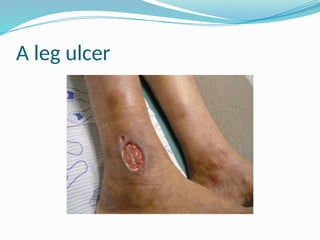
2. Chronic leg ulcers,
3. Sickle cell hepatic fibrosis
4. Hepatomegaly
5. Hepatic infarcts
6. gall stones(rare).
A leg ulcer
Chronic complications of sickle cell
anaemia
 Tropical splenomegaly syndrome in childhood,
autosplenectomy in adult
 Delayed menarche, hypospermia
 Bone infarction ( especially in children less than 2 years,
which leads to osteomyelitis due to salmonella and staph
aureas. and aseptic necrosis of joints particularly of hip
joints
Chronic complications of sickle cell
anaemia
 The kidneys are functionally impaired in SCA giving rise
to an impaired ability to concentrate urine Hypostenuria.
 Chronic pyelonephritis.
 Renal papillary necrosis. It may be life threatening.
 Marrow infarction can lead to embolism.
 Hyperdynamic circulation can lead to cardiomegaly and
finally heart failure.
Chronic complications of sickle cell
anaemia
 Priapism: there is an intense engorgement of corporal
carvenosa leading to persistent and painful penile
erections. Massive sickling with accompanied thrombosis
which may lead to fibrosis. Impotence is a
complication!!!
 Retinopathy involving the retinal vessels which can
result in blindness
 Osteonecrosis
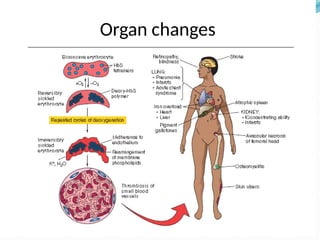
Organ changes
Management of sickle cell anaemia
 The 8 point agenda
I. Primary prevention of crises and complications
II. Management of vaso-occlusive crisis
III. Management of chronic pain syndromes
IV. Management of chronic hemolytic anemia
V. Prevention and treatment of infections
VI. Management of the complications and the various organ
damage syndromes associated with the disease
VII. Prevention of stroke
VIII.Detection and treatment of pulmonary hypertension
 Primary prevention of Crises:
 Constant clinic appointments with a haematologist
 Baseline test: FBC, LFT, tests of Renal Function, CXR
 Pharmacology: Commence on folic acid 5 mg daily, Vitamin
B12, Hydroxyurea 500mg daily
 Primary Prevention of infections:
 Malarial prophylaxis i.e Paludrine
 Pneumococcus vaccine
 Meningococcus vacine
 In cold climates penicillin prophylaxis is given
Management goals for VOC
 Proper hydration
 liberal analgesia – opioids, nsaids
 identify and treat any underlying infections
 antimalarial treatment
 transfusion if pcv is less than steady state
 Chronic transfusion therapy – with AA blood.
 Hydroxyurea is of benefit in patients with
recurrent VOC.
hydroxyurea
 HU inhibits ribonucleotide reductase,
leading to S-phase arrest of replicating
cells, and is used in SCD because of its
ability to stimulate production of HbF.
 HU increases HbF as a result of stress
erythropoiesis induced by its
myelosuppressive effect
hydroxyurea therapy
 HU is started at a dose of 15 mg/kg per
day and increased to 25 mg/kg per day
provided that there are no side-effects.
 HU therapy is offered to patients
(adults and children over 6 years) with
frequent pain episodes and acute chest
syndrome
analgesics and rehydration
 Adequate hydration should be provided
along with analgesia with narcotics and
non-steroidal anti inflammatory agents,
narcotic for oral and parenteral use and
the choice of medicine depends upon
local experience as well as the patients.
 Pain must not be left untreated and
must be eliminated….
 Transfusion is not usually needed in usual anaemia
or pain.
 Urgent exchange is needed in:
1. Acute infarctive stroke
2. Severe acute chest syndrome
3. Multiorgan failure syndromes
4. Right upper quadrant syndrome ??
5. Unresolving Priaprism
6. Pregnancy
7. Patients going for surgery
Blood transfusion and exchange
Haemoglobin SC
 Better clinical course but more of end organ
complications.
 Worse thromboembolic phenomenon
 Worse retinopathy
 Numerous target cells seen.

Sickle cell anemia hemoglobinopathy.pptx

  • 1.
    SICKLE CELL ANAEMIA AbolarinA. T, FMCPath Lecturer/Consultant Haematologist, Bowen University, Iwo.
  • 2.
    Haemoglobin Synthesis  Normaladult blood contains three types of HB HbA– α2β2 96-98% HbF - α2ϒ2 0.5-0.8% HbA2 - α2đ2 1.5-3.2% in the embryo and fetus Gower 1 – Z2Ɛ2 portland - Z2ϒ2 Gower 2 - α2Ɛ2 Gene for globin chains occur in 2 clusters Ɛ, ϒ, đ and β on xsome 11 α, zeta on xsome 16 α chain gene is duplicated and both α genes on each xsome are active.
  • 3.
    Haemoglobin Abnormalities  1.synthesis of abnormal haemoglobin(sickle cell disorder)  2. Reduced rate of synthesis of normal α or β globin chains (α and β thalassaemias )
  • 4.
    What is sicklecell disorder?  It is a haemoglobinopathy. It is a structural abnormality of the beta globin chain.  It is caused by a point mutation.  Inheritance is autosomal recessive
  • 6.
    Name the abnormalred cells you see on this slide
  • 8.
    What is thesickle cell disorder?  Sickle cell disease/ disorder are a group of haemoglobinopathies that are due to presence of the S hemoglobin and another abnormal hemoglobin – E, C , Beta thalassemia.  SCD= HbS + others  Sickle cell anaemia is the homozygous state. The inheritance of two S hemoglobin  Sickle cell trait means the inheritance of the S with a normal A
  • 9.
    Epidemiology  The commonesthaemoglobinopathy in the world is S in terms of distribution and number affected and the second is C.  Due to immigration now found in other parts of the world .  Sickle cell disease is still a disease of black Africa  25-30% have sickle cell trait AS and 2-3% are homozygous SS in Nigeria
  • 10.
    Epidemiology  Sickle celldisease is found in the Arabs, Indians and parts of the Mediterranean region because malaria used to be endemic in these environment.
  • 11.
    MOLECULAR BASIS.  Sicklecell disease was the first disease to be molecularly analyzed.  The defect was localized to the beta globin chain  On the sixth amino acid.  In the normal adult HBA, in position 6 there is glutamic acid (acidic).  In Hb S, there is valine (neutral).  In Hb C there is lysine(basic)
  • 13.
    PATHOGENESIS  Hemoglobin Spolymerizes and aggregates when deoxygenated, then it precipitates out of solution.  This is initially reversible when normal oxygen supply is restored.  But over time the red cell becomes permanently sickled because repeated sickling destroys the red cell membrane and the sickle shape is retained even when oxygen tension is restored.
  • 14.
    PATHOGENESIS  In vivo,sickling occurs in the microcirculation where deoxygenation occurs namely in capillaries and venules
  • 15.
    CLINICAL PATHOLOGY  Itsrigid structure makes it difficult for sickle cells to pass through the capillaries.  Therefore in the spleen, the macrophages have time to consume the sluggish red cells leading to chronic hemolysis .  There is impaired splenic function from congestion, poor blood flow, infarction and ultimately autosplenectomy.
  • 16.
    CLINICAL PATHOLOGY  Thespleen normally produces complement. There is defect in alternate pathway of complement activation in sickle cell anaemia.  Impaired opsonization of encapsulated organisms .eg pneumococci and haemophilus.  Sickle cell anaemia have increased susceptibility to infections .e.g. pneumococcus , viral and malaria  Salmonella infections are increased due to availability of iron from breakdown of hemoglobin
  • 17.
    CLINICAL PATHOLOGY  Thereis diminished cell mediated immunity.  The irreversibly sickled erythrocytes , by occluding capillaries, lead to ischemic tissue damage thereby giving further role to inflammation.  Infarcted tissue also provides foci for infections especially in the bones and kidneys.  Hemoglobin from lysed cells bind and inactivates nitrous oxide, a potent vasodilator and inhibitor of platelet aggregation leading to undesirable vasoconstriction. 6117278584
  • 18.
    Factors affecting therate and frequency of sickling  The amount of hemoglobin S and its interaction with other hemoglobins  HBF particularly inhibits polymerization of HBS and situations with high F is protective e.g in infants less than 6 months  Higher hemoglobin S levels in the red cell will increase the probability of aggregation and polymerization during deoxygenation  A decreased pH which decreases the hemoglobin’s affinity for oxygen will worsen sickling.  The length of time of exposure of red blood cells to low oxygen tension, in the venules and capillaries. Prolonged hypoxia worsens sickling.
  • 19.
    How do youdiagnosis sickle cell anaemia?  By combining the presenting clinical features (signs and symptoms) with laboratory investigations.
  • 20.
    Clinical Features ofsickle cell anaemia Sickle cell disease (SCD) usually manifests early in childhood. Typically after 6 months of age.  Anemia is universally present. It is chronic, hemolytic and very well tolerated. (6-7gm/dL)  Jaundice
  • 21.
    What is wrongwith this young man?
  • 22.
    Clinical Features ofsickle cell anaemia  Infections are also a common first presentation in sickle cell anaemia e.g osteomyelitis, pyelonephritis.  During childhood and adolescence, sickle cell disease is associated with growth retardation, delayed sexual maturation, and being underweight.
  • 23.
    Crises in SickleCell Anaemia And Disease  The word ‘sickle cell crises’ refers to episodic, life threatening exacerbations of symptoms.  They often constitute medical emergencies and occur more commonly in sickle cell anaemia than other sickle cell diseases like Hb SC  Factors which commonly precipitate crisis are infections,  extremes of temperature ,  dehydration,  rigorous exercise,  onset of menses in females etc
  • 24.
    Crises in SickleCell Anaemia And Disease The most common clinical manifestation of SCD is pain from vaso- occlusive crisis. This is the most distinguishing clinical feature of sickle cell disease.  Vasoocclusive Crises can occur in any organ. - Manifestations of VOC include:  Dactilytis  Bone pain/ joint swelling  stroke  Acute chest syndrome  priapism  Abdominal pain
  • 25.
    dactylitis The hand andfoot syndrome(Dactylitis) is a well known vaso occlusive crisis in infants . The syndrome develops suddenly and lasts 1-2 weeks. Hand-foot syndrome occurs between age 6 months and 3 years; it is not seen after age 5 years because hematopoiesis in the small bones of the hands and feet ceases at this age.
  • 26.
  • 27.
    ACS In young children,the acute chest syndrome a VOC presents with  chest pain,  fever,  cough,  tachypnea,  leukocytosis, and  pulmonary infiltrates in the upper lobes.  Adults are usually afebrile and dyspneic with severe chest pain.
  • 28.
    Stroke  One ofthe most severe manifestation of sickle cell anaemia patients is stroke. Stroke affects 30% of children and 11% of patients by 20 years. It is usually ischemic in children and hemorrhagic in adults.
  • 29.
    Priapism  Priapism isan unwanted, painful, and persistent erection of the penis.  Most priapism episodes begin during sleep or early in the morning; they may be associated with physiologic dehydration and hypoventilation, which results in metabolic acidosis followed by increases in sickling and stagnation of blood within the penile sinusoids or the corpora cavernosa.  Patients with priapism have increased hemolysis within the penis, leading to a diminished availability of circulating NO, which plays an important role in erectile function.  Although priapism is usually self-limited and of relatively short duration, it is often recurrent and may become chronic.  “Stuttering” priapism refers to multiple episodes, each <4 hours in duration, which may occur several times a week and may herald a prolonged event.
  • 30.
    Other Crises inSickle Cell Anaemia And Disease  Hematologic “crises,” characterized by sudden exaggeration of anemia, are pathogenetically unrelated to vaso-occlusive crises.  they include - Sequestration crisis - Aplastic crisis - Hemolytic (hyperhemolytic crisis) - Megaloblastic crisis
  • 31.
     Aplastic Crisis- Aplasia is the result of direct cytotoxicity of the parvovirus to erythroid precursors, especially colony-forming units, erythroid (CFU-E). • Because red cell survival in Hb SS is no more than 10 to 20 days, cessation of erythropoiesis is followed by a rapid decrease in Hb concentration. • The process is self-limited, within 10 days, red cell production resumes spontaneously, and large numbers of reticulocytes and nucleated erythrocytes appear in the peripheral blood.
  • 32.
     Sequestration crisis– is characterized by sudden trapping of blood in the spleen/ liver.  A splenic sequestration crisis is defined by a  decrease in the steady-state Hb concentration of at least 2 g/dl,  evidence of compensatory marrow erythropoiesis,  and an acutely enlarging spleen.  May lead to hypovolemic shock and death in a few hours.  occur in the spleen and liver commonly in children under the age of 9 years. Repeated episodes are common, until fibrosis of the spleen occurs and limits its expansion.
  • 33.
     Hemolytic (hyperhemolytic)crises - result from a sudden acceleration of the hemolytic process Occurs due to - 1. Concurrent mycoplasma infection 2. Coinheritance of hereditary spherocytosis 3. Drug induced hemolysis 4. Acute and delayed transfusion reactions
  • 34.
     Megaloblastic crises- results from the sudden arrest of erythropoiesis by folate depletion.  Chronic erythroid hyperplasia imposes a drain on folate reserves, and biochemical evidence of mild folate deficiency has been demonstrated with high frequency in subjects with SCA.  Megaloblastic crises likely occurs when food consumption is interrupted by illness or alcoholism or when the folate requirement is augmented by rapid growth or pregnancy.
  • 35.
    Clinical Features ofsickle cell anaemia Physical findings are multisystemic  Gnathopathy  Frontal bossing  Asthenia  Shortening of fingers or toes  Pale and jaundiced
  • 36.
    Laboratory investigations FBC andPBF Screening tests: 1. Sickling test 2. Solubility test Confirmatory test: 3. Electrophoresis(alkaline and acid) 4. High performance liquid chromatography 5. Iso-electric focusing
  • 37.
    Blood Smear  Markedanisopoikilocytosis  Target cells  Poikiloctyes  Hypochromasia  Sickled RBC  Nucleated RBCs  Howell-Jolly bodies
  • 38.
    FBC  anaemia  leukocytosis– Corrected wbc count is needed due to high numbers of nucleated red cells  neutrophilia in infections  thrombocytosis may be seen, platelets usually adequate.
  • 39.
    Comparism btw normaland sickle cell •Disc-Shaped •Deformable •Life span of 120 days •Sickle-Shaped •Rigid •Lives for 20 days or less
  • 40.
    Laboratory investigations  1.Sickling test: Sickling is demonstrated on a thin wet film of blood that is sealed with a petroleum jelly/paraffin wax mixture or nail varnish/ petroleum jelly mixure. If Hb S is present, the red cells lose their smooth, round shape and become sickle.
  • 41.
    Laboratory investigations  Thisprocess takes 12 h in AS and 1 hour in SS  To hasten the process, add sodium dithionite a reducing agent.
  • 42.
    Laboratory investigations  2.The solubility test: Hemoglobin S is insoluble in the deoxygenated state in a high molarity phosphate buffer.  Crystals form that refract light and cause turbidity. Addition of a reducing agent like sodium dithionate will cause hemoglobin S containing blood to be turbid quickly.
  • 43.
    Confirmatory tests  CelluloseAcetate Electrophoresis  At Alkaline pH (8.4–8.6) using cellulose acetate membrane is simple, reliable and rapid. At alkaline pH, normal hemoglobin is a negatively charged protein and during electrophoresis will migrate toward the positively charged anode.  Structural variants that have a change in the charge on the surface of the molecule at alkaline pH will separate from Hb A and migrate at different speeds.
  • 44.
    Interpretation and Comments Satisfactory separation of Hbs C, S, F, A, and J is obtained  Hbs S, D, and G migrate closely together as do Hbs C, E, and Oarab  Differentiation between these haemoglobins can be obtained by using acid agarose gels, citrate agar electrophoresis, HPLC, or IEF.
  • 46.
    Mobilities of variantsat pH 8.5 on cellulose acetate.
  • 47.
    Confirmatory tests  Citrateagar electrophoresis and acid agarose gel agar are performed at acidic pH (6.0 – 6.2)
  • 49.
    Confirmatory tests  Highperformance liquid chromatography depends on the exchange of charged groups on an exchange medium with charged groups on the hemoglobin molecule.  The surface of the support is modified by carboxyl groups to have a weakly cationic charge, which allows the separation of haemoglobin molecules with different charges by ion exchange.
  • 50.
    Confirmatory tests  Whena hemolysate containing a mixture of haemoglobin is adsorbed onto the support, the rate of separation of different haemoglobins is determined by the pH and ionic strength of any buffer applied to the column.
  • 51.
    Confirmatory tests Iso electricfocusing IEF: IEF utilizes a matrix containing carrier ampholytes of low molecular weight and varying isoelectric points . These molecules migrate to their respective isoelectric points when a current is applied, resulting in a pH. Hemoglobin molecules migrate through the gel until they reach the point at which their individual isoelectric points is equal to the corresponding pH on the gel. The migration ceases.
  • 52.
  • 53.
    Chronic complications ofsickle cell anaemia 1. Pulmonary hypertension, cor-pulmonale, 2. Chronic leg ulcers, 3. Sickle cell hepatic fibrosis 4. Hepatomegaly 5. Hepatic infarcts 6. gall stones(rare).
  • 54.
  • 55.
    Chronic complications ofsickle cell anaemia  Tropical splenomegaly syndrome in childhood, autosplenectomy in adult  Delayed menarche, hypospermia  Bone infarction ( especially in children less than 2 years, which leads to osteomyelitis due to salmonella and staph aureas. and aseptic necrosis of joints particularly of hip joints
  • 56.
    Chronic complications ofsickle cell anaemia  The kidneys are functionally impaired in SCA giving rise to an impaired ability to concentrate urine Hypostenuria.  Chronic pyelonephritis.  Renal papillary necrosis. It may be life threatening.  Marrow infarction can lead to embolism.  Hyperdynamic circulation can lead to cardiomegaly and finally heart failure.
  • 57.
    Chronic complications ofsickle cell anaemia  Priapism: there is an intense engorgement of corporal carvenosa leading to persistent and painful penile erections. Massive sickling with accompanied thrombosis which may lead to fibrosis. Impotence is a complication!!!  Retinopathy involving the retinal vessels which can result in blindness  Osteonecrosis
  • 58.
  • 59.
    Management of sicklecell anaemia  The 8 point agenda I. Primary prevention of crises and complications II. Management of vaso-occlusive crisis III. Management of chronic pain syndromes IV. Management of chronic hemolytic anemia V. Prevention and treatment of infections VI. Management of the complications and the various organ damage syndromes associated with the disease VII. Prevention of stroke VIII.Detection and treatment of pulmonary hypertension
  • 60.
     Primary preventionof Crises:  Constant clinic appointments with a haematologist  Baseline test: FBC, LFT, tests of Renal Function, CXR  Pharmacology: Commence on folic acid 5 mg daily, Vitamin B12, Hydroxyurea 500mg daily  Primary Prevention of infections:  Malarial prophylaxis i.e Paludrine  Pneumococcus vaccine  Meningococcus vacine  In cold climates penicillin prophylaxis is given
  • 61.
    Management goals forVOC  Proper hydration  liberal analgesia – opioids, nsaids  identify and treat any underlying infections  antimalarial treatment  transfusion if pcv is less than steady state  Chronic transfusion therapy – with AA blood.  Hydroxyurea is of benefit in patients with recurrent VOC.
  • 62.
    hydroxyurea  HU inhibitsribonucleotide reductase, leading to S-phase arrest of replicating cells, and is used in SCD because of its ability to stimulate production of HbF.  HU increases HbF as a result of stress erythropoiesis induced by its myelosuppressive effect
  • 63.
    hydroxyurea therapy  HUis started at a dose of 15 mg/kg per day and increased to 25 mg/kg per day provided that there are no side-effects.  HU therapy is offered to patients (adults and children over 6 years) with frequent pain episodes and acute chest syndrome
  • 64.
    analgesics and rehydration Adequate hydration should be provided along with analgesia with narcotics and non-steroidal anti inflammatory agents, narcotic for oral and parenteral use and the choice of medicine depends upon local experience as well as the patients.  Pain must not be left untreated and must be eliminated….
  • 65.
     Transfusion isnot usually needed in usual anaemia or pain.  Urgent exchange is needed in: 1. Acute infarctive stroke 2. Severe acute chest syndrome 3. Multiorgan failure syndromes 4. Right upper quadrant syndrome ?? 5. Unresolving Priaprism 6. Pregnancy 7. Patients going for surgery Blood transfusion and exchange
  • 66.
    Haemoglobin SC  Betterclinical course but more of end organ complications.  Worse thromboembolic phenomenon  Worse retinopathy  Numerous target cells seen.

Editor's Notes

  • #22 Acute pyelonephritis is a bacterial infection of the kidney parenchyma that can be organ- and/or life-threatening and that often leads to scarring of the kidney. The bacteria in these cases have usually ascended from the lower urinary tract, but may also reach the kidney via the bloodstream.  The main cause of acute pyelonephritis is gram-negative bacteria, the most common being Escherichia coli. Other gram-negative bacteria which cause acute pyelonephritis include Proteus, Klebsiella, and Enterobacter
  • #23 Exacerbate/ worsen
  • #28 Hemorrhagic strokes occur when a blood vessel that supplies the brain ruptures and bleeds. When an artery bleeds into the brain, brain cells and tissues do not get oxygen and nutrients. In addition, pressure builds up in surrounding tissues and irritation and swelling occur, which can lead to further brain damage. Types are ; Intracerebral hemorrhage. Bleeding is from the blood vessels within the brain. Subarachnoid hemorrhage. Bleeding is in the subarachnoid space (the space between the brain and the membranes that cover the brain). An ischemic stroke occurs when a blood vessel that supplies the brain becomes blocked or "clogged" and impairs blood flow to part of the brain. The brain cells and tissues begin to die within minutes from lack of oxygen and nutrients. Types are; Thrombotic strokes. These are caused by a blood clot that develops in the blood vessels inside the brain. Embolic strokes. These are caused by a blood clot or plaque debris that develops elsewhere in the body and then travels to one of the blood vessels in the brain through the bloodstream.
  • #35 asthenia, a condition in which the body lacks strength or has lost strength, either as a whole or in any of its parts