Height below 3 rd  centile or less than 2 standard deviations below the median height for that age & sex according to the population standard  OR  Even if the height is within the normal percentiles but growth velocity is consistently below 25 th  percentile over 6-12 months of observation The term  ‘Dwarfism’  is no longer used for short stature Essential Pediatrics, 7 th  Edition, OP Ghai; Fima Lifschitz- Pediatric Endocrinology
Approximately 3% children in any population will be short Approximately half will be physiological ( familial or constitutional ) & half will be pathological short stature
Proportionate Short Stature 1) Normal Variants: i) Familial ii) Constitutional Growth Delay 2) Prenatal Causes: i) Intra-uterine Growth Restriction- Placental causes, Infections, Teratogens ii) Intra-uterine Infections iii) Genetic Disorders (Chromosomal  & Metabolic Disorders)
3) Postnatal Causes: i) Undernutrition ii) Chronic Systemic Illness - Cardiopulmonary: CHD, Chronic Asthma, Cystic Fibrosis - Renal: RTA, CRF, Steroid dependent  Nephrotic Syndrome - GI and Hepatic: Malabsorption, IBD, chronic liver disease - Chronic Severe Infections - Hematological : Thalassemia, Sickle cell anemia
iii) Psychosocial Short Stature (emotional deprivation)  iv) Endocrine Causes: - Growth Hormone Deficiency/ insensitivity - Hypothyroidism - Juvenile Diabetes Mellitus - Cushing Syndrome - Pseudohypoparathyroidism - Precocious/ delayed puberty
B) Disproportionate Short Stature 1) With Short Limbs: - Achondroplasia, Hypochondroplasia, Chondrodysplasia punctata,  Chondroectodermal Dysplasia, Diastrophic dysplasia, Metaphyseal Chondrodysplasia - Deformities due to Osteogenesis Imperfecta, Refractory Rickets 2) With Short Trunk: - Spondyloepiphyseal dysplasia, Mucolipidosis, Mucopolysaccharidosis - Caries Spine, Hemivertebrae
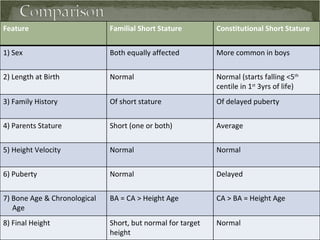
Feature Familial Short Stature Constitutional Short Stature 1) Sex Both equally affected More common in boys 2) Length at Birth Normal Normal (starts falling <5 th  centile in 1 st  3yrs of life) 3) Family History Of short stature Of delayed puberty 4) Parents Stature Short (one or both) Average 5) Height Velocity Normal Normal 6) Puberty  Normal Delayed 7) Bone Age & Chronological Age BA = CA > Height Age CA > BA = Height Age 8) Final Height Short, but normal for target height  Normal
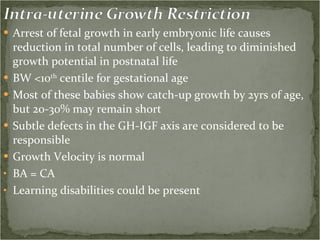
Arrest of fetal growth in early embryonic life causes reduction in total number of cells, leading to diminished growth potential in postnatal life BW <10 th  centile for gestational age Most of these babies show catch-up growth by 2yrs of age, but 20-30% may remain short Subtle defects in the GH-IGF axis are considered to be responsible Growth Velocity is normal  BA = CA  Learning disabilities could be present
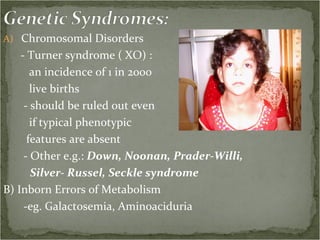
Chromosomal Disorders - Turner syndrome ( XO) :  an incidence of 1 in 2000 live births - should be ruled out even if typical phenotypic features are absent - Other e.g.:  Down, Noonan, Prader-Willi,  Silver- Russel, Seckle syndrome B) Inborn Errors of Metabolism -eg. Galactosemia, Aminoaciduria
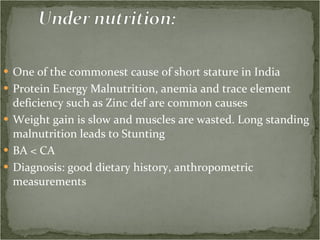
One of the commonest cause of short stature in India Protein Energy Malnutrition, anemia and trace element deficiency such as Zinc def are common causes Weight gain is slow and muscles are wasted. Long standing malnutrition leads to Stunting BA < CA Diagnosis: good dietary history, anthropometric measurements
Chronic Infections  -eg:TB, Malaria, Leishmaniasis, Chr. pyelonephiritis - Growth retardation is due to impaired appetite, decreased food intake, increased catabolism, poor utilization of food, vomiting & diarrhoea 2) Malabsorbtion Syndromes - eg:  chronic recurrent infective diarrhoea, lactose intolerance, cystic fibrosis, celiac disease, giardiasis, cow’s milk allergy,  abeta lipoproteinemia
3) Birth defects: CHD, urinary tract & nervous system anomalies 4) Miscellaneous: Cirrhosis of liver, bronchiectasis, acquired heart diseases, cardiomyopathies, SDH
Human growth hormone deficiency - Normal length & weight at birth - Growth delay seen >1yr of age, growth velocity <  4cm/year - BA < CA by at least 2 yrs - Infantile gonadal devlopment, - Delay in SSC - Normal intelligence - Diagnosis: hGH levels in sleep & after provocation with clonidine, insulin, propranolol - hGH>10ng/ml excludes hGH deficiency
2) Laron’s Syndrome - Metabolic disorder, AR inheritence - Clinically resembles hGH deficiency, but blood hGH levels are high - Somatomedin levels are low 3) Type 1 Diabetes Mellitus - significant growth retardation - insulin has chondrotropic effect
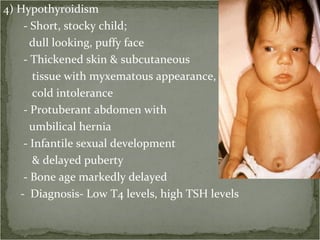
4) Hypothyroidism - Short, stocky child; dull looking, puffy face - Thickened skin & subcutaneous  tissue with myxematous appearance, cold intolerance - Protuberant abdomen with  umbilical hernia - Infantile sexual development  & delayed puberty - Bone age markedly delayed -  Diagnosis- Low T4 levels, high TSH levels
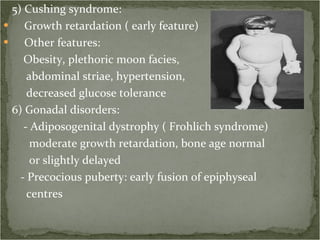
5) Cushing syndrome: Growth retardation ( early feature) Other features:  Obesity, plethoric moon facies, abdominal striae, hypertension, decreased glucose tolerance 6) Gonadal disorders: - Adiposogenital dystrophy ( Frohlich syndrome) moderate growth retardation, bone age normal or slightly delayed - Precocious puberty: early fusion of epiphyseal centres
Aka:  emotional deprivation dwarfism, maternal deprivation dwarfism, hyperphagic short stature Functional hypopituitarism- low IGF-1 levels & inadequate response to GH stimulation Type1- below 2 yrs, failure to thrive, no Gh deficiency Type2- in > 3 yrs Other behavioural disorders: enuresis, encorpresis, sleep & appetite disturbances, crying spasms, tantrums Dental eruptions & sexual development delayed
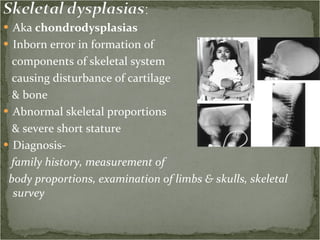
Aka  chondrodysplasias Inborn error in formation of  components of skeletal system  causing disturbance of cartilage  & bone  Abnormal skeletal proportions & severe short stature Diagnosis-  family history, measurement of  body proportions, examination of limbs & skulls, skeletal survey
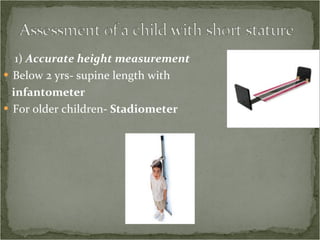
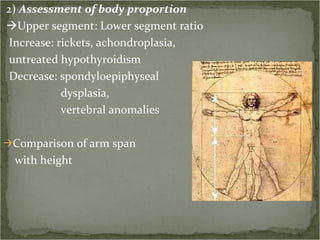
1)  Accurate height measurement Below 2 yrs- supine length with  infantometer For older children - Stadiometer
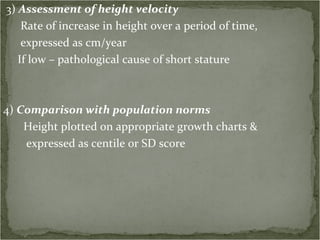
2)  Assessment of body proportion  Upper segment: Lower segment ratio Increase: rickets, achondroplasia,  untreated hypothyroidism Decrease: spondyloepiphyseal  dysplasia,  vertebral anomalies Comparison of arm span  with height
3)  Assessment of height velocity Rate of increase in height over a period of time, expressed as cm/year If low – pathological cause of short stature 4)  Comparison with population norms Height plotted on appropriate growth charts & expressed as centile or SD score
5)  Comparison with child’s own genetic potential Mid parental height  for boys = mother's height + father's height /2 + 6.5cm Mid parental height for girls = mother's height + father's height /2 – 6.5cm 6)  Sexual maturity rating ( SMR): Also known as  Tanners stages Used in older children Total 5 stages included in each gender
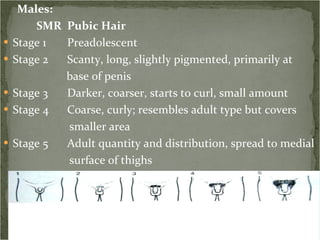
Males: SMR Pubic Hair Stage 1 Preadolescent Stage 2 Scanty, long, slightly pigmented, primarily at base of penis Stage 3 Darker, coarser, starts to curl, small amount Stage 4 Coarse, curly; resembles adult type but covers smaller area Stage 5 Adult quantity and distribution, spread to medial surface of thighs
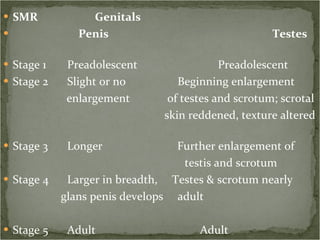
SMR           Genitals   Penis   Testes Stage 1 Preadolescent   Preadolescent Stage 2 Slight or no    Beginning enlargement enlargement  of testes and scrotum; scrotal skin reddened, texture altered Stage 3 Longer   Further enlargement of testis and scrotum Stage 4 Larger in breadth,  Testes & scrotum nearly  glans penis develops  adult   Stage 5 Adult   Adult
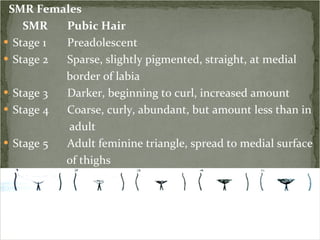
SMR Females  SMR Pubic Hair Stage 1 Preadolescent Stage 2 Sparse, slightly pigmented, straight, at medial  border of labia Stage 3 Darker, beginning to curl, increased amount Stage 4 Coarse, curly, abundant, but amount less than in adult Stage 5 Adult feminine triangle, spread to medial surface of thighs
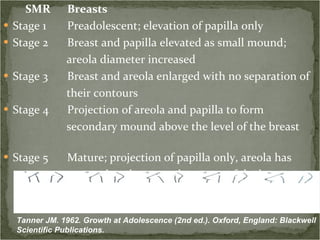
SMR Breasts Stage 1 Preadolescent; elevation of papilla only Stage 2 Breast and papilla elevated as small mound; areola diameter increased Stage 3 Breast and areola enlarged with no separation of their contours Stage 4 Projection of areola and papilla to form secondary mound above the level of the breast Stage 5 Mature; projection of papilla only, areola has recessed to the general contour of the breast Tanner JM. 1962. Growth at Adolescence (2nd ed.). Oxford, England: Blackwell Scientific Publications.
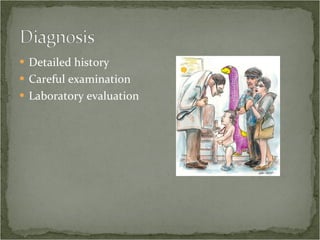
Detailed history Careful examination Laboratory evaluation
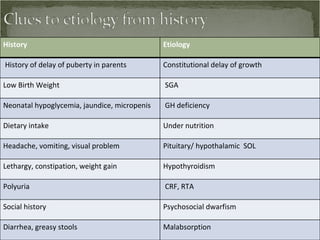
History Etiology History of delay of puberty in parents Constitutional delay of growth Low Birth Weight SGA  Neonatal hypoglycemia, jaundice, micropenis GH deficiency Dietary intake Under nutrition Headache, vomiting, visual problem Pituitary/ hypothalamic  SOL Lethargy, constipation, weight gain Hypothyroidism Polyuria CRF, RTA Social history Psychosocial dwarfism Diarrhea, greasy stools Malabsorption
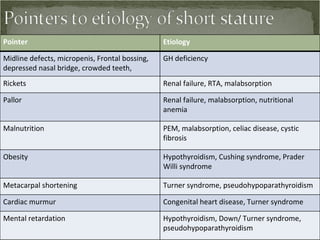
Pointer Etiology Midline defects, micropenis, Frontal bossing, depressed nasal bridge, crowded teeth,  GH deficiency Rickets Renal failure, RTA, malabsorption Pallor Renal failure, malabsorption, nutritional anemia Malnutrition PEM, malabsorption, celiac disease, cystic fibrosis Obesity Hypothyroidism, Cushing syndrome, Prader Willi syndrome Metacarpal shortening Turner syndrome, pseudohypoparathyroidism Cardiac murmur Congenital heart disease, Turner syndrome Mental retardation Hypothyroidism, Down/ Turner syndrome, pseudohypoparathyroidism
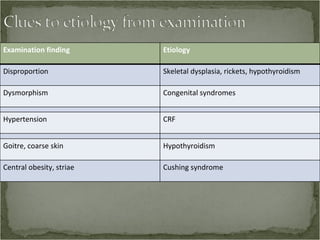
Examination finding Etiology Disproportion Skeletal dysplasia, rickets, hypothyroidism Dysmorphism Congenital syndromes Hypertension CRF Goitre, coarse skin Hypothyroidism Central obesity, striae Cushing syndrome
Level 1 ( essential investigations): Complete hemogram with ESR BONE AGE Urinalysis ( Microscopy, pH, Osmolality) Stool ( parasites, steatorrhea, occult blood) Blood ( RFT, Calcium, Phosphate, alkaline phosphatase, venous gas, fasting sugar, albumin, transaminases)
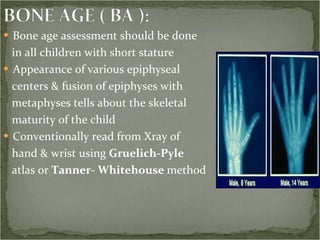
Bone age assessment should be done  in all children with short stature Appearance of various epiphyseal  centers & fusion of epiphyses with  metaphyses tells about the skeletal  maturity of the child Conventionally read from Xray of  hand & wrist using  Gruelich-Pyle  atlas or  Tanner- Whitehouse  method
Bone age gives an idea as to what proportion of adult height has been achieved by the child & what is remaining potential for height gain BA is delayed compared to chronological age in almost all causes of short stature Exceptions: Familial short stature, Precocious puberty
Level 2: Serum thyroxine, TSH Karyotype to rule out Turner syndrome in girls If above investigations are normal and height between -2 to -3 SD   Observe height velocity for 6-12 months If height < 3SD   level 3 investigations
Level 3: Celiac serology ( anti- endomysial or anti- tissue transglutaminase antibodies)  Duodenal biopsy GH stimulation test with Clonidine or insulin & serum insulin like GF-1 levels
Counselling of parents  ( for physiological causes) Dietary advice  ( Undernutrition, Celiac disease, RTA ) Limb lengthening procedures ( skeletal dysplasias ) Levothyroxine ( In Hypothyroidism) GH s/c injections ( GH deficiency, Turner syndrome, SGA, CRF prior to transplant)
Monitoring with regular & accurate recording of height is mandatory for a good outcome in any form of therapy
Genghis  Khan Voltaire  Pablo Picasso
 

Short stature ppt

  • 1.
  • 2.
    Height below 3rd centile or less than 2 standard deviations below the median height for that age & sex according to the population standard OR Even if the height is within the normal percentiles but growth velocity is consistently below 25 th percentile over 6-12 months of observation The term ‘Dwarfism’ is no longer used for short stature Essential Pediatrics, 7 th Edition, OP Ghai; Fima Lifschitz- Pediatric Endocrinology
  • 3.
    Approximately 3% childrenin any population will be short Approximately half will be physiological ( familial or constitutional ) & half will be pathological short stature
  • 4.
    Proportionate Short Stature1) Normal Variants: i) Familial ii) Constitutional Growth Delay 2) Prenatal Causes: i) Intra-uterine Growth Restriction- Placental causes, Infections, Teratogens ii) Intra-uterine Infections iii) Genetic Disorders (Chromosomal & Metabolic Disorders)
  • 5.
    3) Postnatal Causes:i) Undernutrition ii) Chronic Systemic Illness - Cardiopulmonary: CHD, Chronic Asthma, Cystic Fibrosis - Renal: RTA, CRF, Steroid dependent Nephrotic Syndrome - GI and Hepatic: Malabsorption, IBD, chronic liver disease - Chronic Severe Infections - Hematological : Thalassemia, Sickle cell anemia
  • 6.
    iii) Psychosocial ShortStature (emotional deprivation) iv) Endocrine Causes: - Growth Hormone Deficiency/ insensitivity - Hypothyroidism - Juvenile Diabetes Mellitus - Cushing Syndrome - Pseudohypoparathyroidism - Precocious/ delayed puberty
  • 7.
    B) Disproportionate ShortStature 1) With Short Limbs: - Achondroplasia, Hypochondroplasia, Chondrodysplasia punctata, Chondroectodermal Dysplasia, Diastrophic dysplasia, Metaphyseal Chondrodysplasia - Deformities due to Osteogenesis Imperfecta, Refractory Rickets 2) With Short Trunk: - Spondyloepiphyseal dysplasia, Mucolipidosis, Mucopolysaccharidosis - Caries Spine, Hemivertebrae
  • 8.
    Feature Familial ShortStature Constitutional Short Stature 1) Sex Both equally affected More common in boys 2) Length at Birth Normal Normal (starts falling <5 th centile in 1 st 3yrs of life) 3) Family History Of short stature Of delayed puberty 4) Parents Stature Short (one or both) Average 5) Height Velocity Normal Normal 6) Puberty Normal Delayed 7) Bone Age & Chronological Age BA = CA > Height Age CA > BA = Height Age 8) Final Height Short, but normal for target height Normal
  • 9.
    Arrest of fetalgrowth in early embryonic life causes reduction in total number of cells, leading to diminished growth potential in postnatal life BW <10 th centile for gestational age Most of these babies show catch-up growth by 2yrs of age, but 20-30% may remain short Subtle defects in the GH-IGF axis are considered to be responsible Growth Velocity is normal BA = CA Learning disabilities could be present
  • 10.
    Chromosomal Disorders -Turner syndrome ( XO) : an incidence of 1 in 2000 live births - should be ruled out even if typical phenotypic features are absent - Other e.g.: Down, Noonan, Prader-Willi, Silver- Russel, Seckle syndrome B) Inborn Errors of Metabolism -eg. Galactosemia, Aminoaciduria
  • 11.
    One of thecommonest cause of short stature in India Protein Energy Malnutrition, anemia and trace element deficiency such as Zinc def are common causes Weight gain is slow and muscles are wasted. Long standing malnutrition leads to Stunting BA < CA Diagnosis: good dietary history, anthropometric measurements
  • 12.
    Chronic Infections -eg:TB, Malaria, Leishmaniasis, Chr. pyelonephiritis - Growth retardation is due to impaired appetite, decreased food intake, increased catabolism, poor utilization of food, vomiting & diarrhoea 2) Malabsorbtion Syndromes - eg: chronic recurrent infective diarrhoea, lactose intolerance, cystic fibrosis, celiac disease, giardiasis, cow’s milk allergy, abeta lipoproteinemia
  • 13.
    3) Birth defects:CHD, urinary tract & nervous system anomalies 4) Miscellaneous: Cirrhosis of liver, bronchiectasis, acquired heart diseases, cardiomyopathies, SDH
  • 14.
    Human growth hormonedeficiency - Normal length & weight at birth - Growth delay seen >1yr of age, growth velocity < 4cm/year - BA < CA by at least 2 yrs - Infantile gonadal devlopment, - Delay in SSC - Normal intelligence - Diagnosis: hGH levels in sleep & after provocation with clonidine, insulin, propranolol - hGH>10ng/ml excludes hGH deficiency
  • 15.
    2) Laron’s Syndrome- Metabolic disorder, AR inheritence - Clinically resembles hGH deficiency, but blood hGH levels are high - Somatomedin levels are low 3) Type 1 Diabetes Mellitus - significant growth retardation - insulin has chondrotropic effect
  • 16.
    4) Hypothyroidism -Short, stocky child; dull looking, puffy face - Thickened skin & subcutaneous tissue with myxematous appearance, cold intolerance - Protuberant abdomen with umbilical hernia - Infantile sexual development & delayed puberty - Bone age markedly delayed - Diagnosis- Low T4 levels, high TSH levels
  • 17.
    5) Cushing syndrome:Growth retardation ( early feature) Other features: Obesity, plethoric moon facies, abdominal striae, hypertension, decreased glucose tolerance 6) Gonadal disorders: - Adiposogenital dystrophy ( Frohlich syndrome) moderate growth retardation, bone age normal or slightly delayed - Precocious puberty: early fusion of epiphyseal centres
  • 18.
    Aka: emotionaldeprivation dwarfism, maternal deprivation dwarfism, hyperphagic short stature Functional hypopituitarism- low IGF-1 levels & inadequate response to GH stimulation Type1- below 2 yrs, failure to thrive, no Gh deficiency Type2- in > 3 yrs Other behavioural disorders: enuresis, encorpresis, sleep & appetite disturbances, crying spasms, tantrums Dental eruptions & sexual development delayed
  • 19.
    Aka chondrodysplasiasInborn error in formation of components of skeletal system causing disturbance of cartilage & bone Abnormal skeletal proportions & severe short stature Diagnosis- family history, measurement of body proportions, examination of limbs & skulls, skeletal survey
  • 20.
    1) Accurateheight measurement Below 2 yrs- supine length with infantometer For older children - Stadiometer
  • 21.
    2) Assessmentof body proportion  Upper segment: Lower segment ratio Increase: rickets, achondroplasia, untreated hypothyroidism Decrease: spondyloepiphyseal dysplasia, vertebral anomalies Comparison of arm span with height
  • 22.
    3) Assessmentof height velocity Rate of increase in height over a period of time, expressed as cm/year If low – pathological cause of short stature 4) Comparison with population norms Height plotted on appropriate growth charts & expressed as centile or SD score
  • 23.
    5) Comparisonwith child’s own genetic potential Mid parental height for boys = mother's height + father's height /2 + 6.5cm Mid parental height for girls = mother's height + father's height /2 – 6.5cm 6) Sexual maturity rating ( SMR): Also known as Tanners stages Used in older children Total 5 stages included in each gender
  • 24.
    Males: SMR PubicHair Stage 1 Preadolescent Stage 2 Scanty, long, slightly pigmented, primarily at base of penis Stage 3 Darker, coarser, starts to curl, small amount Stage 4 Coarse, curly; resembles adult type but covers smaller area Stage 5 Adult quantity and distribution, spread to medial surface of thighs
  • 25.
    SMR           Genitals Penis Testes Stage 1 Preadolescent Preadolescent Stage 2 Slight or no Beginning enlargement enlargement of testes and scrotum; scrotal skin reddened, texture altered Stage 3 Longer Further enlargement of testis and scrotum Stage 4 Larger in breadth, Testes & scrotum nearly glans penis develops adult Stage 5 Adult Adult
  • 26.
    SMR Females SMR Pubic Hair Stage 1 Preadolescent Stage 2 Sparse, slightly pigmented, straight, at medial border of labia Stage 3 Darker, beginning to curl, increased amount Stage 4 Coarse, curly, abundant, but amount less than in adult Stage 5 Adult feminine triangle, spread to medial surface of thighs
  • 27.
    SMR Breasts Stage1 Preadolescent; elevation of papilla only Stage 2 Breast and papilla elevated as small mound; areola diameter increased Stage 3 Breast and areola enlarged with no separation of their contours Stage 4 Projection of areola and papilla to form secondary mound above the level of the breast Stage 5 Mature; projection of papilla only, areola has recessed to the general contour of the breast Tanner JM. 1962. Growth at Adolescence (2nd ed.). Oxford, England: Blackwell Scientific Publications.
  • 28.
    Detailed history Carefulexamination Laboratory evaluation
  • 29.
    History Etiology Historyof delay of puberty in parents Constitutional delay of growth Low Birth Weight SGA Neonatal hypoglycemia, jaundice, micropenis GH deficiency Dietary intake Under nutrition Headache, vomiting, visual problem Pituitary/ hypothalamic SOL Lethargy, constipation, weight gain Hypothyroidism Polyuria CRF, RTA Social history Psychosocial dwarfism Diarrhea, greasy stools Malabsorption
  • 30.
    Pointer Etiology Midlinedefects, micropenis, Frontal bossing, depressed nasal bridge, crowded teeth, GH deficiency Rickets Renal failure, RTA, malabsorption Pallor Renal failure, malabsorption, nutritional anemia Malnutrition PEM, malabsorption, celiac disease, cystic fibrosis Obesity Hypothyroidism, Cushing syndrome, Prader Willi syndrome Metacarpal shortening Turner syndrome, pseudohypoparathyroidism Cardiac murmur Congenital heart disease, Turner syndrome Mental retardation Hypothyroidism, Down/ Turner syndrome, pseudohypoparathyroidism
  • 31.
    Examination finding EtiologyDisproportion Skeletal dysplasia, rickets, hypothyroidism Dysmorphism Congenital syndromes Hypertension CRF Goitre, coarse skin Hypothyroidism Central obesity, striae Cushing syndrome
  • 32.
    Level 1 (essential investigations): Complete hemogram with ESR BONE AGE Urinalysis ( Microscopy, pH, Osmolality) Stool ( parasites, steatorrhea, occult blood) Blood ( RFT, Calcium, Phosphate, alkaline phosphatase, venous gas, fasting sugar, albumin, transaminases)
  • 33.
    Bone age assessmentshould be done in all children with short stature Appearance of various epiphyseal centers & fusion of epiphyses with metaphyses tells about the skeletal maturity of the child Conventionally read from Xray of hand & wrist using Gruelich-Pyle atlas or Tanner- Whitehouse method
  • 34.
    Bone age givesan idea as to what proportion of adult height has been achieved by the child & what is remaining potential for height gain BA is delayed compared to chronological age in almost all causes of short stature Exceptions: Familial short stature, Precocious puberty
  • 35.
    Level 2: Serumthyroxine, TSH Karyotype to rule out Turner syndrome in girls If above investigations are normal and height between -2 to -3 SD  Observe height velocity for 6-12 months If height < 3SD  level 3 investigations
  • 36.
    Level 3: Celiacserology ( anti- endomysial or anti- tissue transglutaminase antibodies) Duodenal biopsy GH stimulation test with Clonidine or insulin & serum insulin like GF-1 levels
  • 37.
    Counselling of parents ( for physiological causes) Dietary advice ( Undernutrition, Celiac disease, RTA ) Limb lengthening procedures ( skeletal dysplasias ) Levothyroxine ( In Hypothyroidism) GH s/c injections ( GH deficiency, Turner syndrome, SGA, CRF prior to transplant)
  • 38.
    Monitoring with regular& accurate recording of height is mandatory for a good outcome in any form of therapy
  • 39.
    Genghis KhanVoltaire Pablo Picasso
  • 40.