

Presented By-
 Rekha Tiwari
 In 1970, Ilaben Bhat, founder member of ‘SEWA’(Self Employed
    Women’s Association) in Ahmadabad, had developed a concept
    of ‘women and micro-finance’.
   The Annapurna Mahila Mandal’ in Maharashtra.
   ‘Working Women’s Forum’ in Tamilnadu.
   Since 1987 ‘Mysore Resettlement and Development Agency’
    (MYRADA) has promoted Credit Management Groups (CMGs).
    CMGs are similar to self-help groups.
   In 1991-92 NABARD started promoting self-help groups on a
    large scale. And it was the real take-off point for the ‘SHG
    movement’. In 1993, the Reserve Bank of India also allowed SHGs
    to open saving accounts in banks.
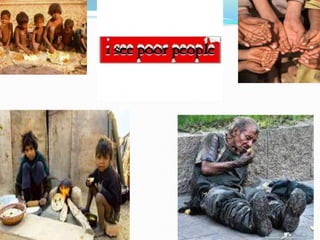
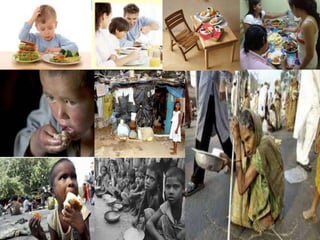
Why SHGs….?
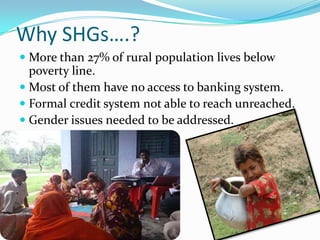
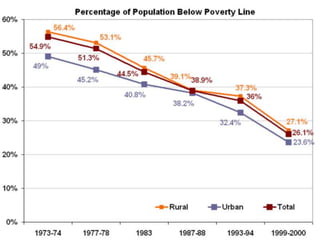
 More than 27% of rural population lives below
  poverty line.
 Most of them have no access to banking system.
 Formal credit system not able to reach unreached.
 Gender issues needed to be addressed.
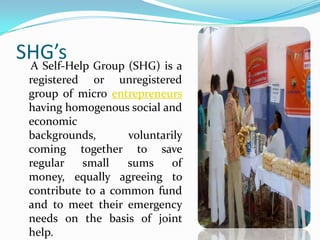
SHG’s Group (SHG) is a
 A Self-Help
 registered or unregistered
 group of micro entrepreneurs
 having homogenous social and
 economic
 backgrounds,       voluntarily
 coming together to save
 regular   small    sums    of
 money, equally agreeing to
 contribute to a common fund
 and to meet their emergency
 needs on the basis of joint
 help.
BASIC FEATURES OF SHG
  Small- homogenous group of 10-20 peoples.
  Registered or unregistered.
  Has a code of conduct rules and regulations for
   effective administration.
  Maintenance of simple books.
  Participatory Decision making Process.
  Mobilises Local Resources through regular savings.
  Plans own Programme with own Resources.
PRINCIPLES OF SHG
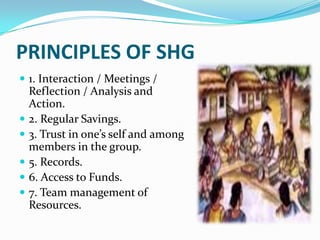
 1. Interaction / Meetings /
    Reflection / Analysis and
    Action.
   2. Regular Savings.
   3. Trust in one’s self and among
    members in the group.
   5. Records.
   6. Access to Funds.
   7. Team management of
    Resources.
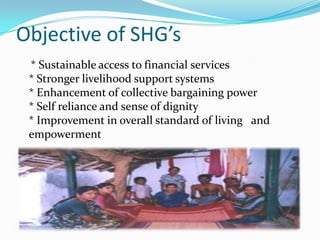
Objective of SHG’s
 * Sustainable access to financial services
 * Stronger livelihood support systems
 * Enhancement of collective bargaining power
 * Self reliance and sense of dignity
 * Improvement in overall standard of living and
 empowerment
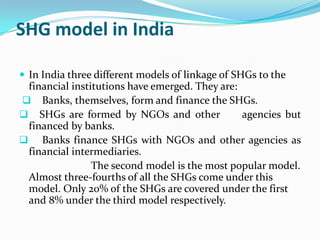
SHG model in India

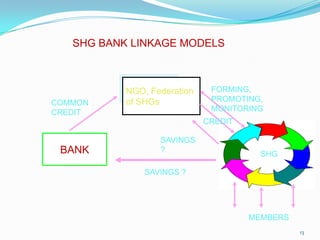
 In India three different models of linkage of SHGs to the
 financial institutions have emerged. They are:
 Banks, themselves, form and finance the SHGs.
 SHGs are formed by NGOs and other             agencies but
 financed by banks.
 Banks finance SHGs with NGOs and other agencies as
 financial intermediaries.
                The second model is the most popular model.
 Almost three-fourths of all the SHGs come under this
 model. Only 20% of the SHGs are covered under the first
 and 8% under the third model respectively.
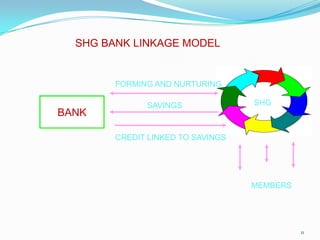
SHG BANK LINKAGE MODEL


        FORMING AND NURTURING

              SAVINGS              SHG
BANK

        CREDIT LINKED TO SAVINGS


                                   MEMBERS


                                             11
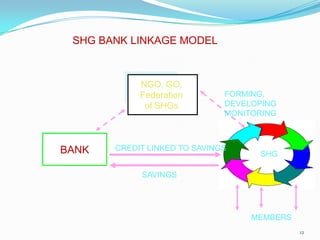
SHG BANK LINKAGE MODEL


            NGO, GO,
            Federation        FORMING,
             of SHGs          DEVELOPING
                              MONITORING


BANK   CREDIT LINKED TO SAVINGS
                                    SHG

            SAVINGS


                                   MEMBERS
                                             12
SHG BANK LINKAGE MODELS


           NGO, Federation    FORMING,
COMMON     of SHGs            PROMOTING,
CREDIT                        MONITORING
                             CREDIT

                  SAVINGS
 BANK             ?
                                        SHG

               SAVINGS ?


                                      MEMBERS
                                                13
Indian scenario
 India has adopted the Bangladesh’s model in a
  modified form.
 To improve the poverty and to empower the women,
  the micro-finance has emerged as a powerful
  instrument.
 With availability of micro-finance, self-help groups
  (SHGs) and credit management groups have also
  started in India. And thus the movement of SHG has
  increase out in India.
 The movement of SHG was nourished in the states of
  Gujarat, Maharashtra, Andhra
  Pradesh, Rajasthan, Tamilnadu and Kerala.
 Now many banks are provide help like -
 NABARD
 Bank of Maharashtra
 State Bank of India
 Cooperative Banks
 Regional rural banks
 The Government institutions like Maharashtra Arthik Vikas
  Mahamandal (MAVIM)
 District Rural Development Agency (DRDA)
 Municipal corporations
 & also 3,024 NGOs are collectively and actively involved in the
  promotion of SHG movement.
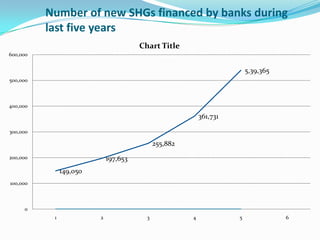
Number of new SHGs financed by banks during
          last five years
                                       Chart Title
600,000


                                                                         5,39,365
500,000


400,000

                                                           361,731

300,000

                                             255,882
200,000                      197,653
               149,050
100,000


     0
           1             2               3             4             5              6
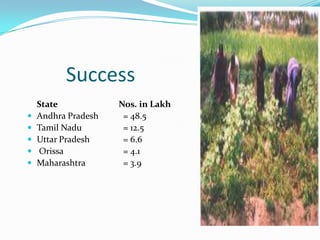
Success
    State            Nos. in Lakh
   Andhra Pradesh    = 48.5
   Tamil Nadu        = 12.5
   Uttar Pradesh     = 6.6
   Orissa            = 4.1
   Maharashtra       = 3.9
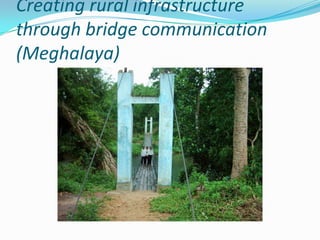
Creating rural infrastructure
through bridge communication
(Meghalaya)
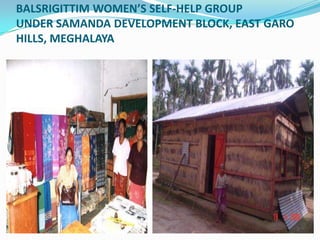
BALSRIGITTIM WOMEN’S SELF-HELP GROUP
UNDER SAMANDA DEVELOPMENT BLOCK, EAST GARO
HILLS, MEGHALAYA
Advantages of SHGs
1.To the group:
 Access to large resources
 Up gradation in skill and technology
 Exposure
2.To the bank:
 Externalization of work
 Reduction in transaction cost
 Better margin
 Wider coverage
 Larger smaller savings
 Improvement in general credit
Conclusion:

            If we join our hands together to support
 SHGs we will start talking about rural prosperity
 instead of rural poverty.

                        …………..
Thanks…………………

Shg’s.rt (2)

  • 1.
  • 3.
     In 1970,Ilaben Bhat, founder member of ‘SEWA’(Self Employed Women’s Association) in Ahmadabad, had developed a concept of ‘women and micro-finance’.  The Annapurna Mahila Mandal’ in Maharashtra.  ‘Working Women’s Forum’ in Tamilnadu.  Since 1987 ‘Mysore Resettlement and Development Agency’ (MYRADA) has promoted Credit Management Groups (CMGs). CMGs are similar to self-help groups.  In 1991-92 NABARD started promoting self-help groups on a large scale. And it was the real take-off point for the ‘SHG movement’. In 1993, the Reserve Bank of India also allowed SHGs to open saving accounts in banks.
  • 4.
    Why SHGs….?  Morethan 27% of rural population lives below poverty line.  Most of them have no access to banking system.  Formal credit system not able to reach unreached.  Gender issues needed to be addressed.
  • 6.
    SHG’s Group (SHG)is a A Self-Help registered or unregistered group of micro entrepreneurs having homogenous social and economic backgrounds, voluntarily coming together to save regular small sums of money, equally agreeing to contribute to a common fund and to meet their emergency needs on the basis of joint help.
  • 7.
    BASIC FEATURES OFSHG  Small- homogenous group of 10-20 peoples.  Registered or unregistered.  Has a code of conduct rules and regulations for effective administration.  Maintenance of simple books.  Participatory Decision making Process.  Mobilises Local Resources through regular savings.  Plans own Programme with own Resources.
  • 8.
    PRINCIPLES OF SHG 1. Interaction / Meetings / Reflection / Analysis and Action.  2. Regular Savings.  3. Trust in one’s self and among members in the group.  5. Records.  6. Access to Funds.  7. Team management of Resources.
  • 9.
    Objective of SHG’s * Sustainable access to financial services * Stronger livelihood support systems * Enhancement of collective bargaining power * Self reliance and sense of dignity * Improvement in overall standard of living and empowerment
  • 10.
    SHG model inIndia  In India three different models of linkage of SHGs to the financial institutions have emerged. They are:  Banks, themselves, form and finance the SHGs.  SHGs are formed by NGOs and other agencies but financed by banks.  Banks finance SHGs with NGOs and other agencies as financial intermediaries. The second model is the most popular model. Almost three-fourths of all the SHGs come under this model. Only 20% of the SHGs are covered under the first and 8% under the third model respectively.
  • 11.
    SHG BANK LINKAGEMODEL FORMING AND NURTURING SAVINGS SHG BANK CREDIT LINKED TO SAVINGS MEMBERS 11
  • 12.
    SHG BANK LINKAGEMODEL NGO, GO, Federation FORMING, of SHGs DEVELOPING MONITORING BANK CREDIT LINKED TO SAVINGS SHG SAVINGS MEMBERS 12
  • 13.
    SHG BANK LINKAGEMODELS NGO, Federation FORMING, COMMON of SHGs PROMOTING, CREDIT MONITORING CREDIT SAVINGS BANK ? SHG SAVINGS ? MEMBERS 13
  • 14.
    Indian scenario  Indiahas adopted the Bangladesh’s model in a modified form.  To improve the poverty and to empower the women, the micro-finance has emerged as a powerful instrument.  With availability of micro-finance, self-help groups (SHGs) and credit management groups have also started in India. And thus the movement of SHG has increase out in India.
  • 15.
     The movementof SHG was nourished in the states of Gujarat, Maharashtra, Andhra Pradesh, Rajasthan, Tamilnadu and Kerala.  Now many banks are provide help like -  NABARD  Bank of Maharashtra  State Bank of India  Cooperative Banks  Regional rural banks  The Government institutions like Maharashtra Arthik Vikas Mahamandal (MAVIM)  District Rural Development Agency (DRDA)  Municipal corporations  & also 3,024 NGOs are collectively and actively involved in the promotion of SHG movement.
  • 16.
    Number of newSHGs financed by banks during last five years Chart Title 600,000 5,39,365 500,000 400,000 361,731 300,000 255,882 200,000 197,653 149,050 100,000 0 1 2 3 4 5 6
  • 17.
    Success State Nos. in Lakh  Andhra Pradesh = 48.5  Tamil Nadu = 12.5  Uttar Pradesh = 6.6  Orissa = 4.1  Maharashtra = 3.9
  • 18.
    Creating rural infrastructure throughbridge communication (Meghalaya)
  • 19.
    BALSRIGITTIM WOMEN’S SELF-HELPGROUP UNDER SAMANDA DEVELOPMENT BLOCK, EAST GARO HILLS, MEGHALAYA
  • 20.
    Advantages of SHGs 1.Tothe group:  Access to large resources  Up gradation in skill and technology  Exposure 2.To the bank:  Externalization of work  Reduction in transaction cost  Better margin  Wider coverage  Larger smaller savings  Improvement in general credit
  • 23.
    Conclusion: If we join our hands together to support SHGs we will start talking about rural prosperity instead of rural poverty. …………..
  • 24.