Jasmeet Wadehra
General Counsel
International Paper – India
Corruption Risk Assessment
 Law Enforcement and Regulators
 Need to focus time, effort and resources
 Supports risk awareness and structured
decision making
 Highlighted in FCPA & Bribery Act guidance
 Complexities of multi-jurisdiction business
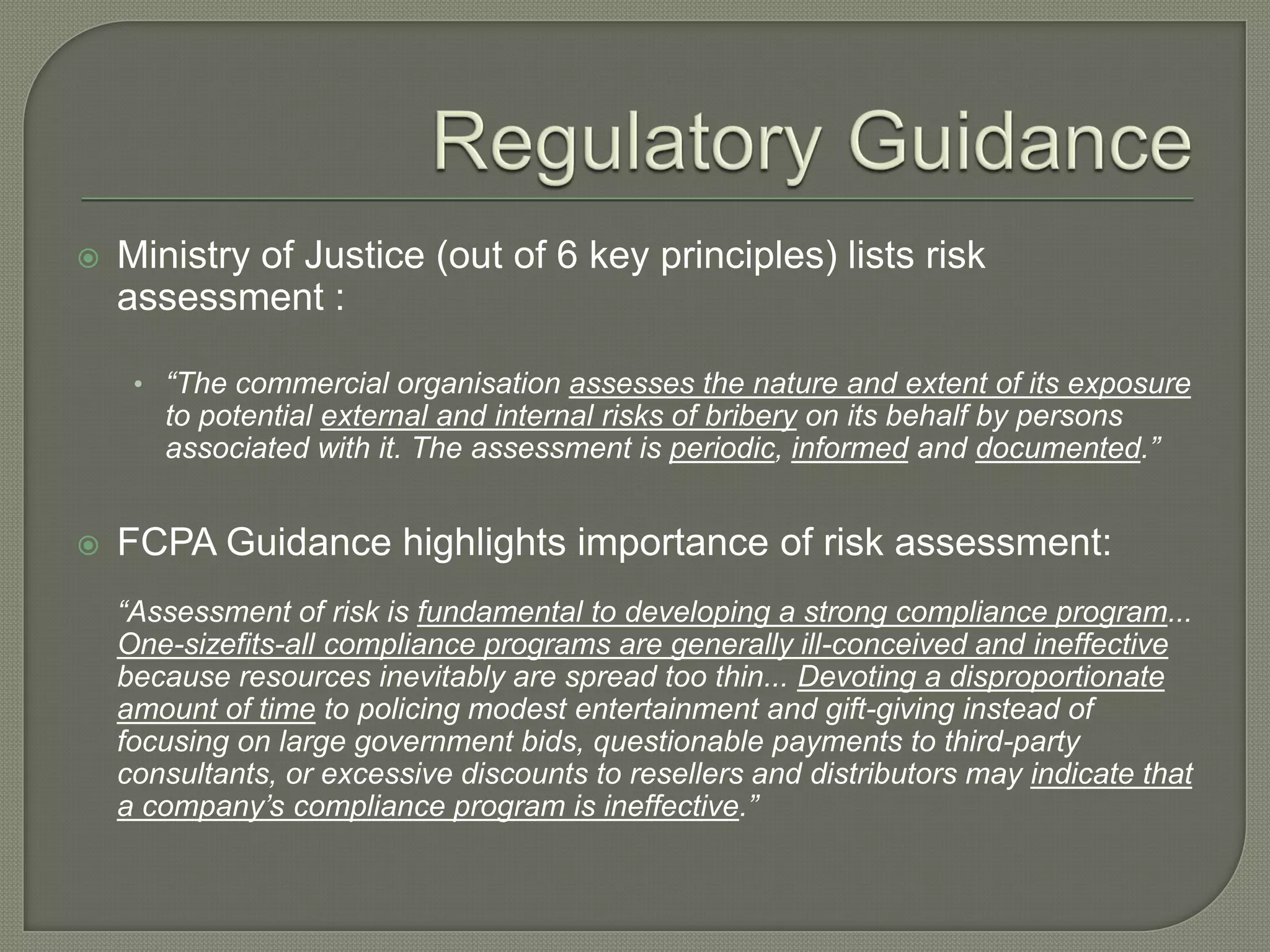
 Ministry of Justice (out of 6 key principles) lists risk
assessment :
• “The commercial organisation assesses the nature and extent of its exposure
to potential external and internal risks of bribery on its behalf by persons
associated with it. The assessment is periodic, informed and documented.”
 FCPA Guidance highlights importance of risk assessment:
“Assessment of risk is fundamental to developing a strong compliance program...
One-sizefits-all compliance programs are generally ill-conceived and ineffective
because resources inevitably are spread too thin... Devoting a disproportionate
amount of time to policing modest entertainment and gift-giving instead of
focusing on large government bids, questionable payments to third-party
consultants, or excessive discounts to resellers and distributors may indicate that
a company’s compliance program is ineffective.”
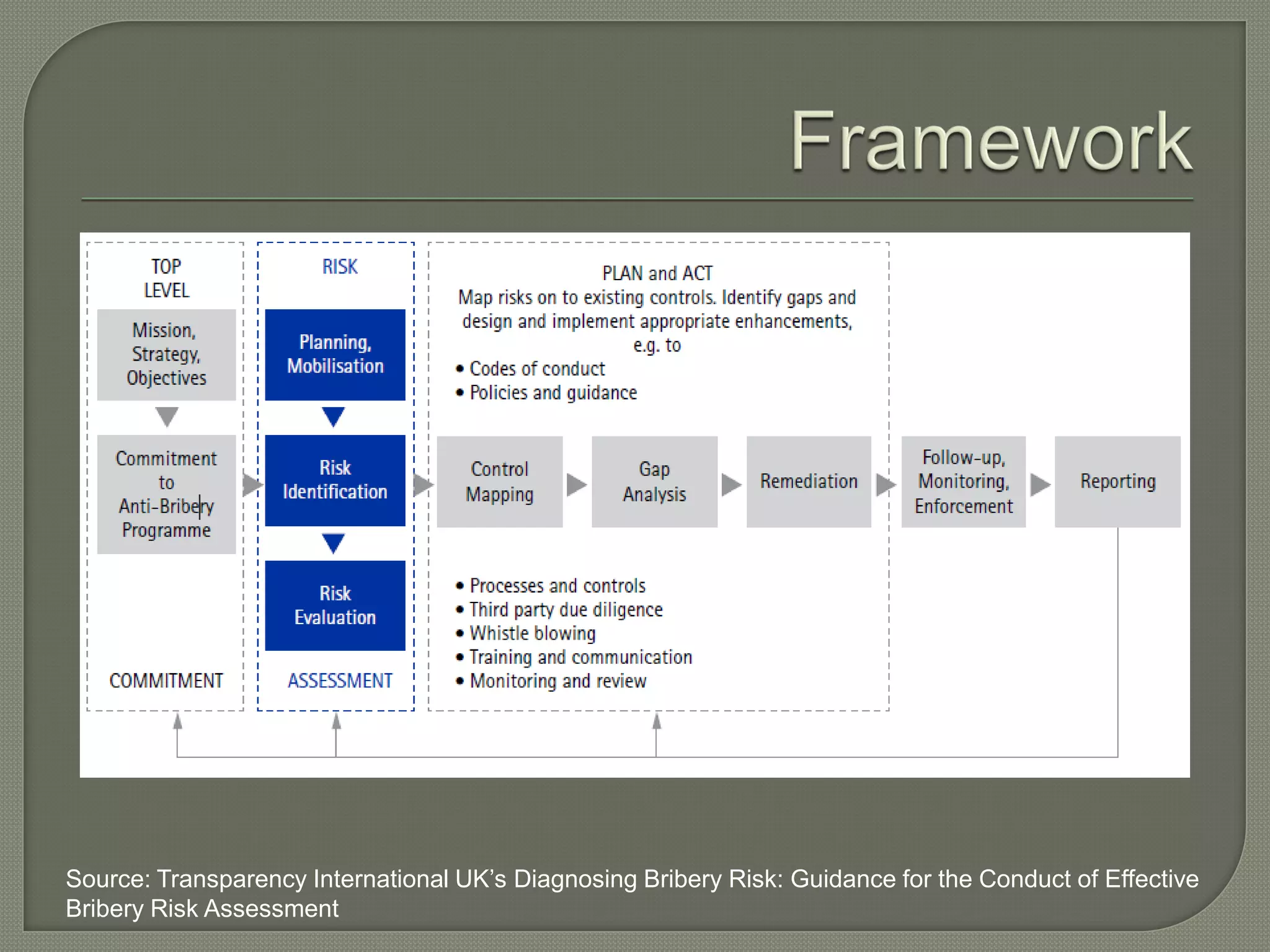
Source: Transparency International UK’s Diagnosing Bribery Risk: Guidance for the Conduct of Effective
Bribery Risk Assessment
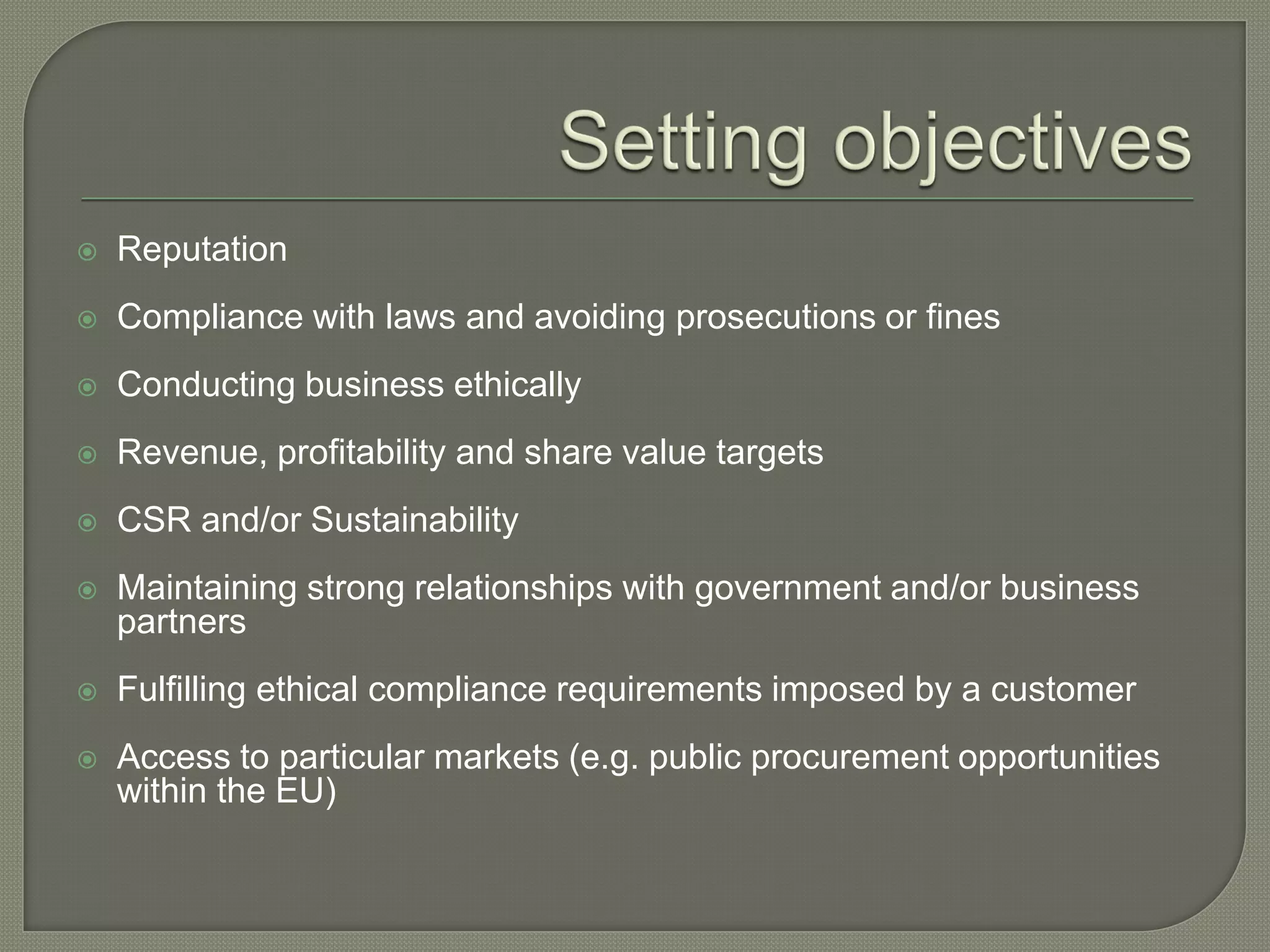
 Reputation
 Compliance with laws and avoiding prosecutions or fines
 Conducting business ethically
 Revenue, profitability and share value targets
 CSR and/or Sustainability
 Maintaining strong relationships with government and/or business
partners
 Fulfilling ethical compliance requirements imposed by a customer
 Access to particular markets (e.g. public procurement opportunities
within the EU)
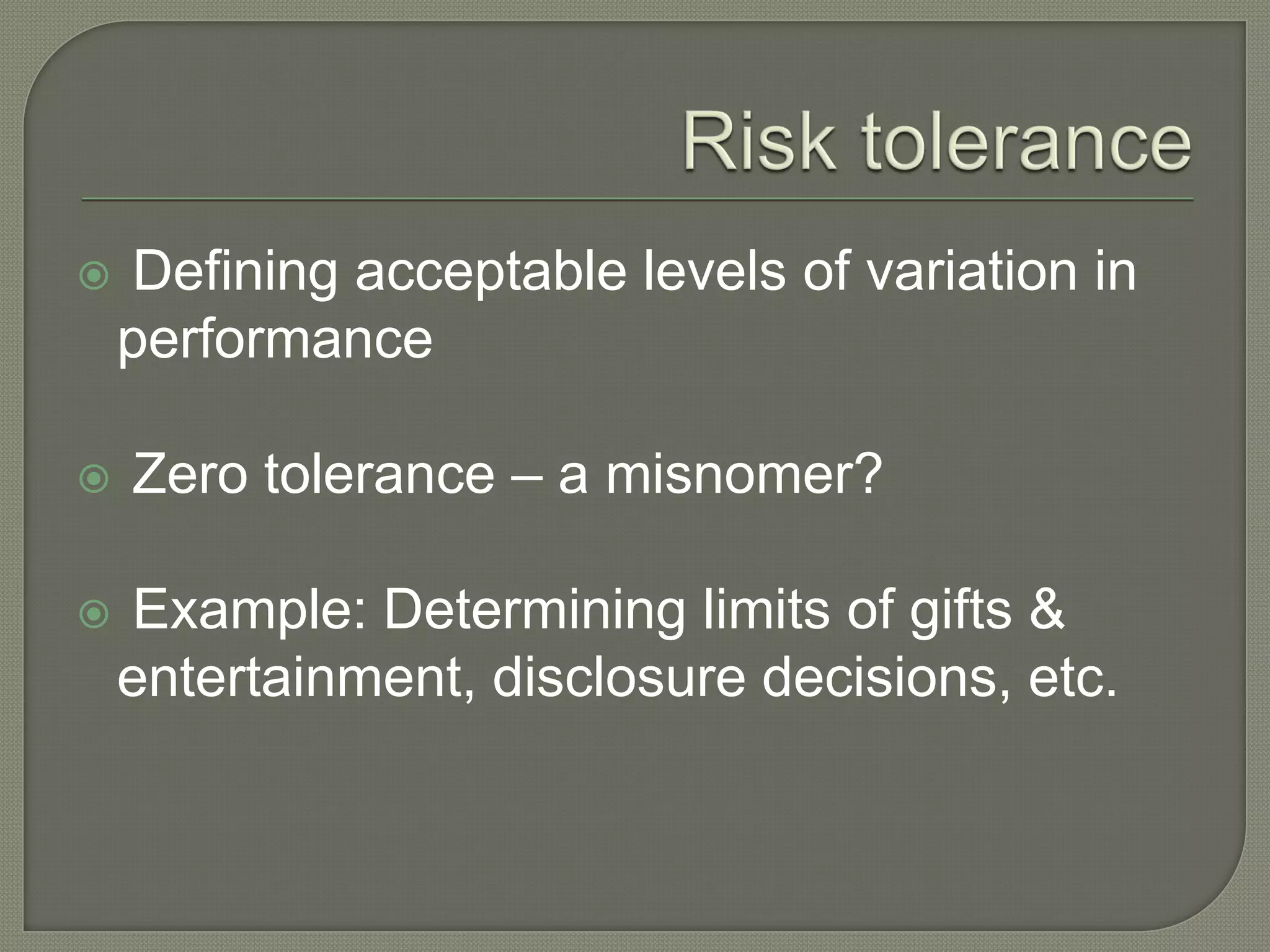
 Defining acceptable levels of variation in
performance
 Zero tolerance – a misnomer?
 Example: Determining limits of gifts &
entertainment, disclosure decisions, etc.
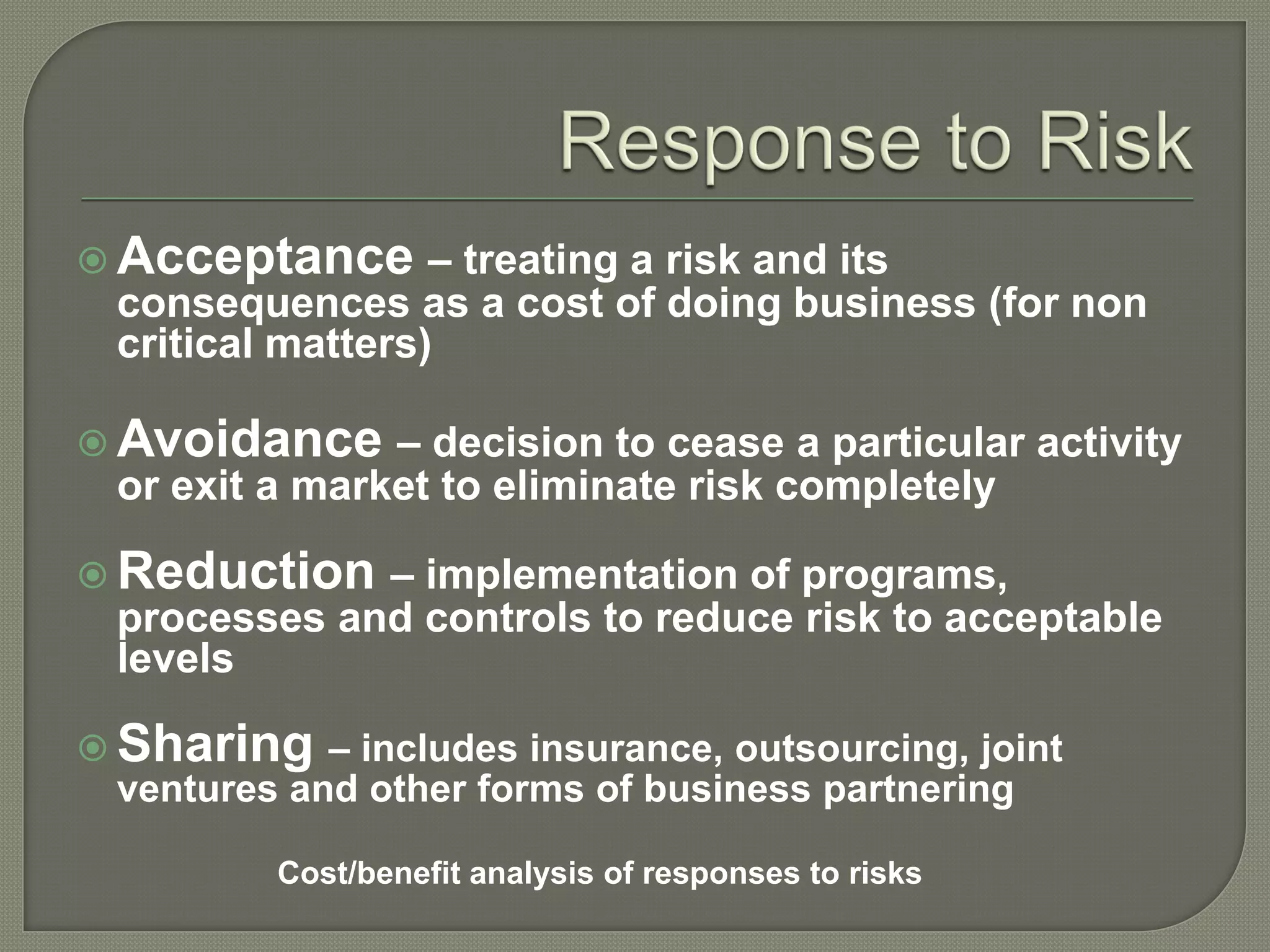
 Acceptance – treating a risk and its
consequences as a cost of doing business (for non
critical matters)
 Avoidance – decision to cease a particular activity
or exit a market to eliminate risk completely
 Reduction – implementation of programs,
processes and controls to reduce risk to acceptable
levels
 Sharing – includes insurance, outsourcing, joint
ventures and other forms of business partnering
Cost/benefit analysis of responses to risks
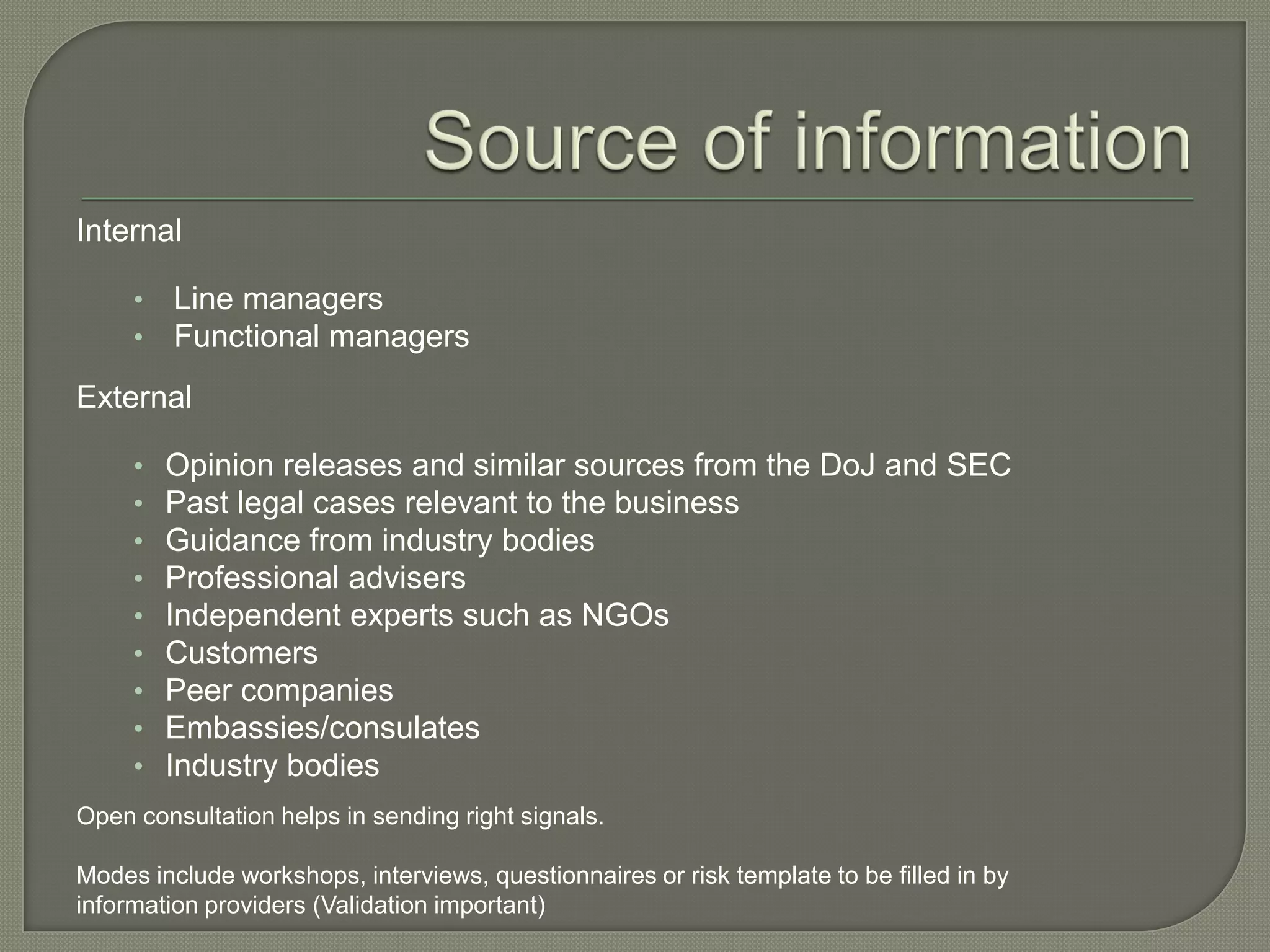
Internal
• Line managers
• Functional managers
External
• Opinion releases and similar sources from the DoJ and SEC
• Past legal cases relevant to the business
• Guidance from industry bodies
• Professional advisers
• Independent experts such as NGOs
• Customers
• Peer companies
• Embassies/consulates
• Industry bodies
Open consultation helps in sending right signals.
Modes include workshops, interviews, questionnaires or risk template to be filled in by
information providers (Validation important)
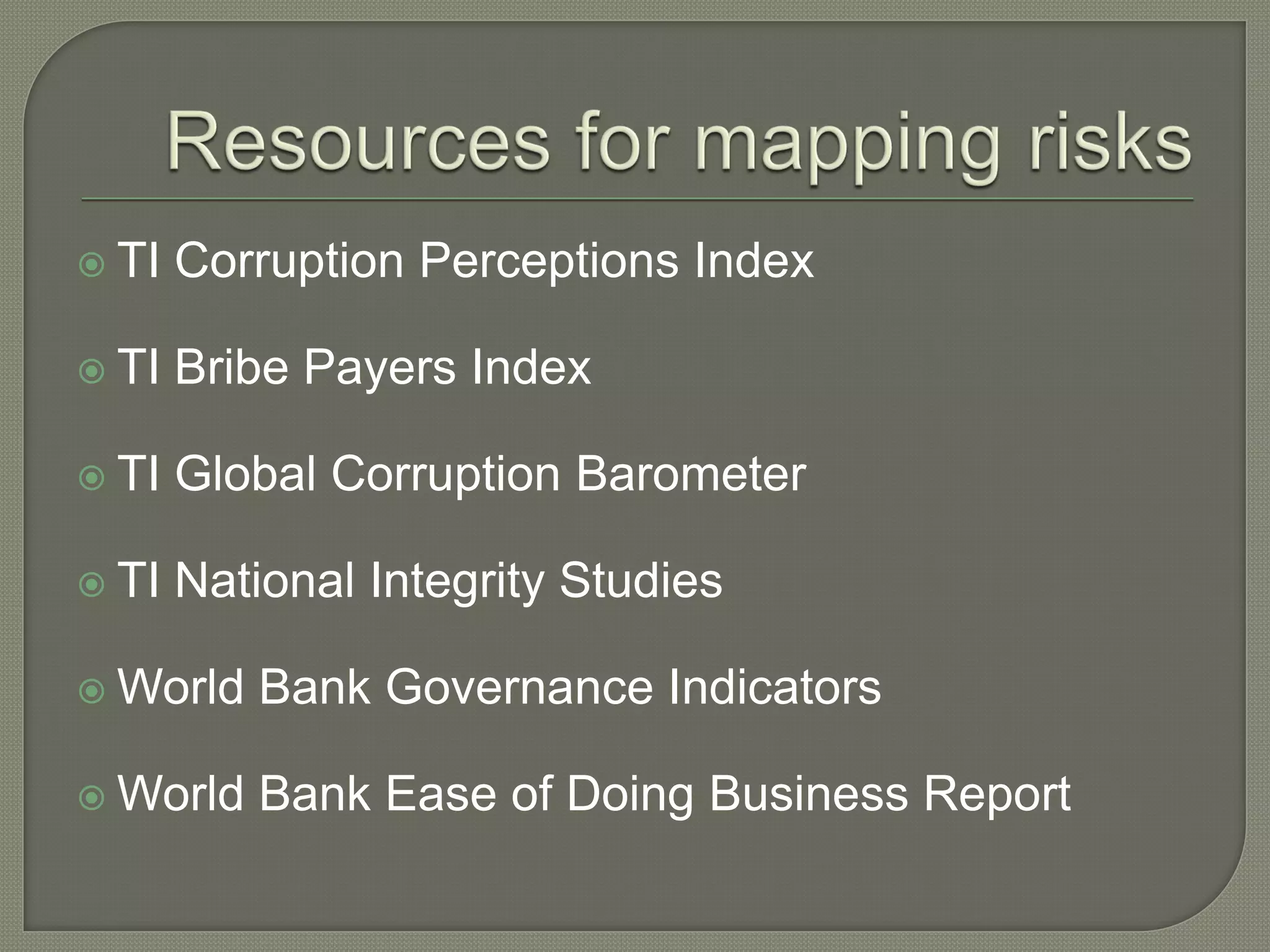
 TI Corruption Perceptions Index
 TI Bribe Payers Index
 TI Global Corruption Barometer
 TI National Integrity Studies
 World Bank Governance Indicators
 World Bank Ease of Doing Business Report
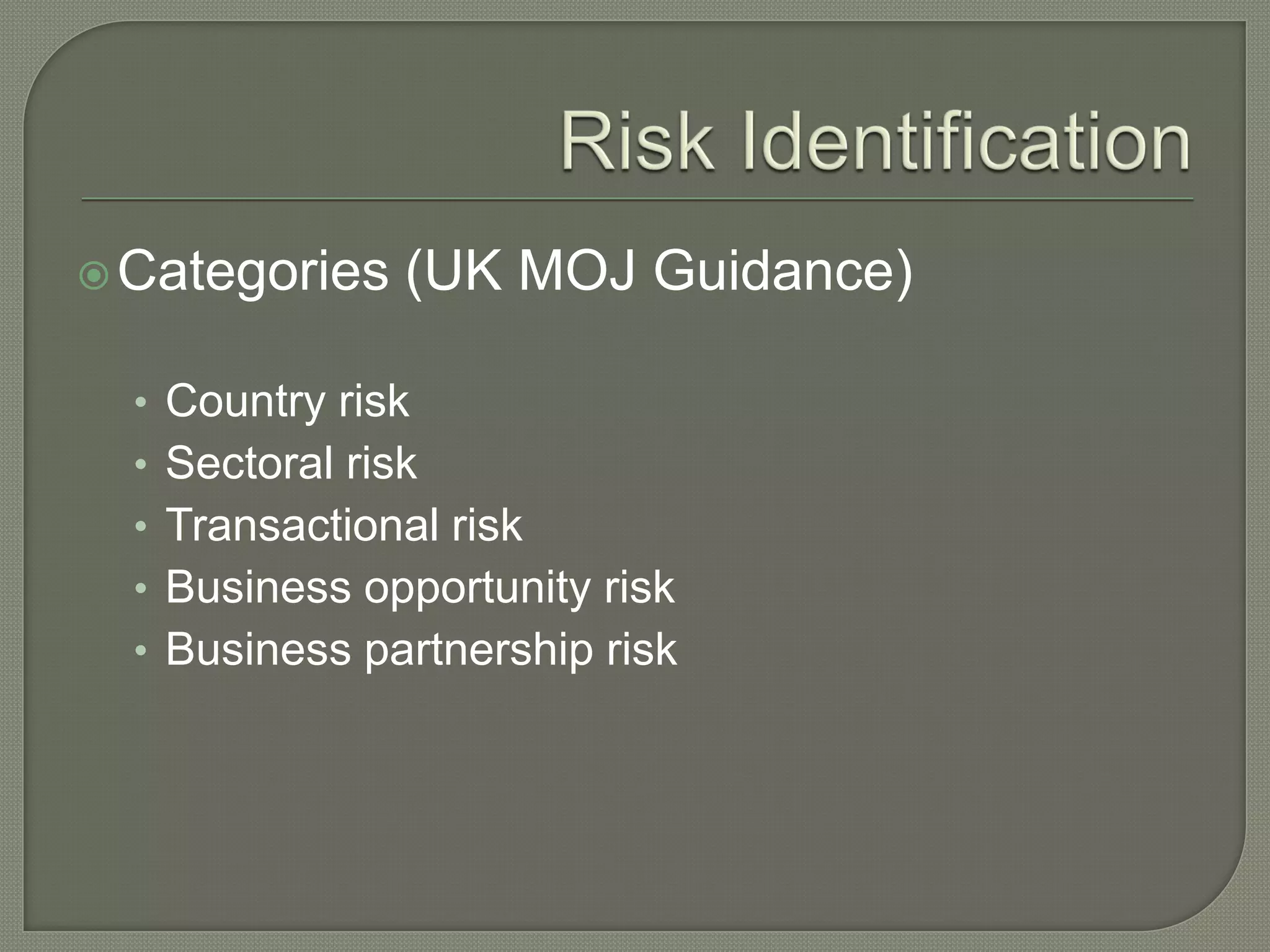
Categories (UK MOJ Guidance)
• Country risk
• Sectoral risk
• Transactional risk
• Business opportunity risk
• Business partnership risk
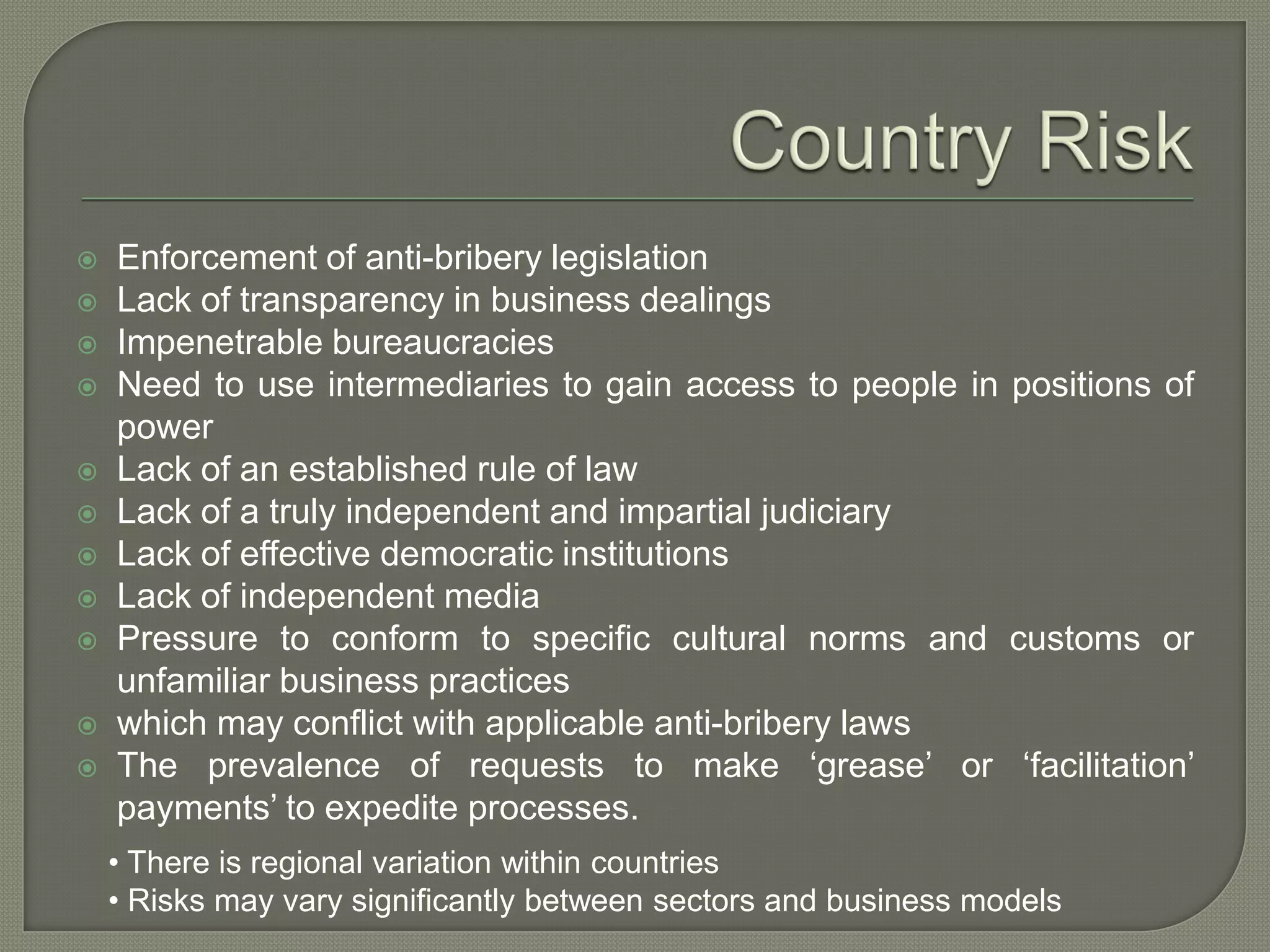
 Enforcement of anti-bribery legislation
 Lack of transparency in business dealings
 Impenetrable bureaucracies
 Need to use intermediaries to gain access to people in positions of
power
 Lack of an established rule of law
 Lack of a truly independent and impartial judiciary
 Lack of effective democratic institutions
 Lack of independent media
 Pressure to conform to specific cultural norms and customs or
unfamiliar business practices
 which may conflict with applicable anti-bribery laws
 The prevalence of requests to make ‘grease’ or ‘facilitation’
payments’ to expedite processes.
• There is regional variation within countries
• Risks may vary significantly between sectors and business models
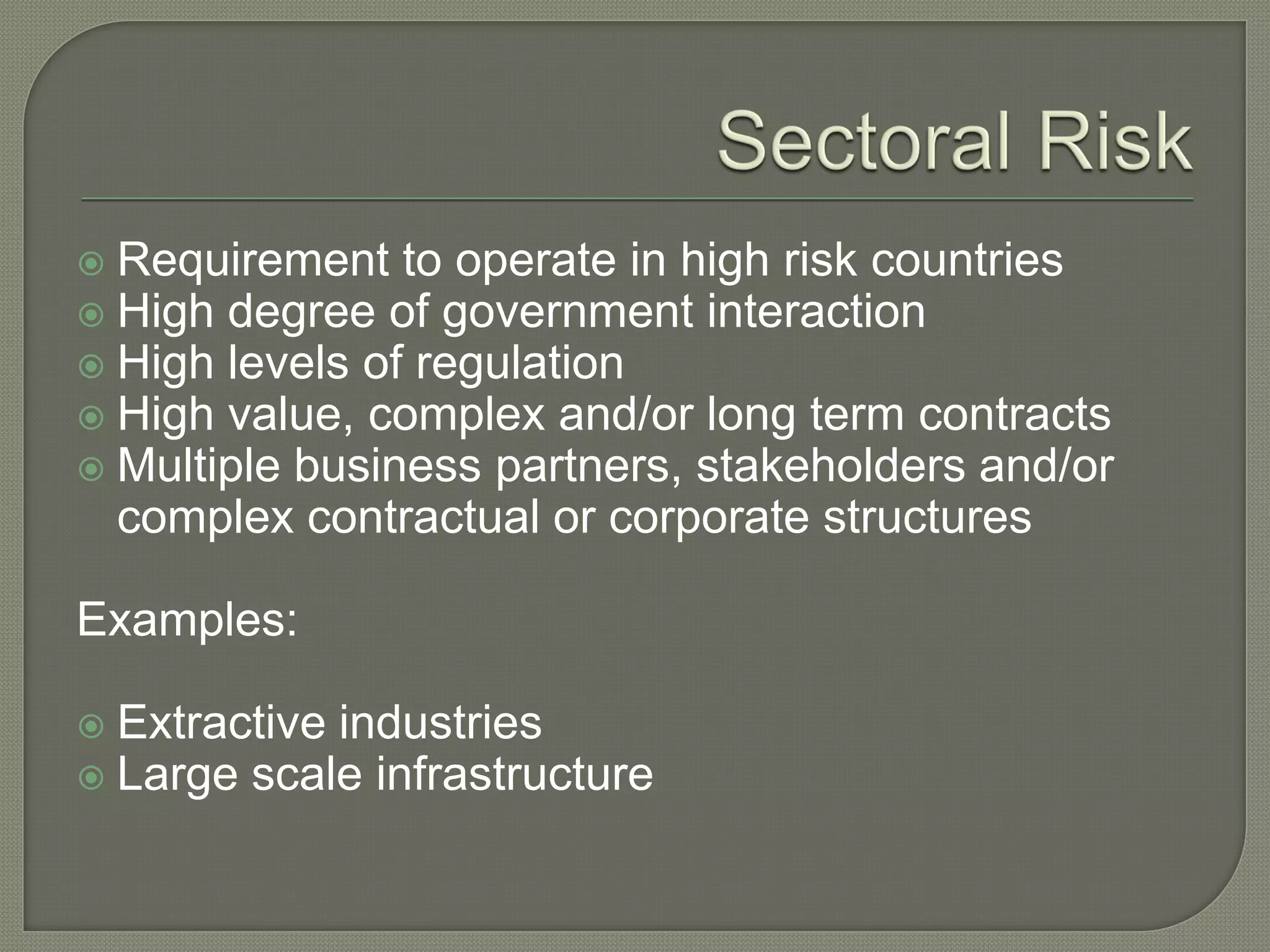
 Requirement to operate in high risk countries
 High degree of government interaction
 High levels of regulation
 High value, complex and/or long term contracts
 Multiple business partners, stakeholders and/or
complex contractual or corporate structures
Examples:
 Extractive industries
 Large scale infrastructure
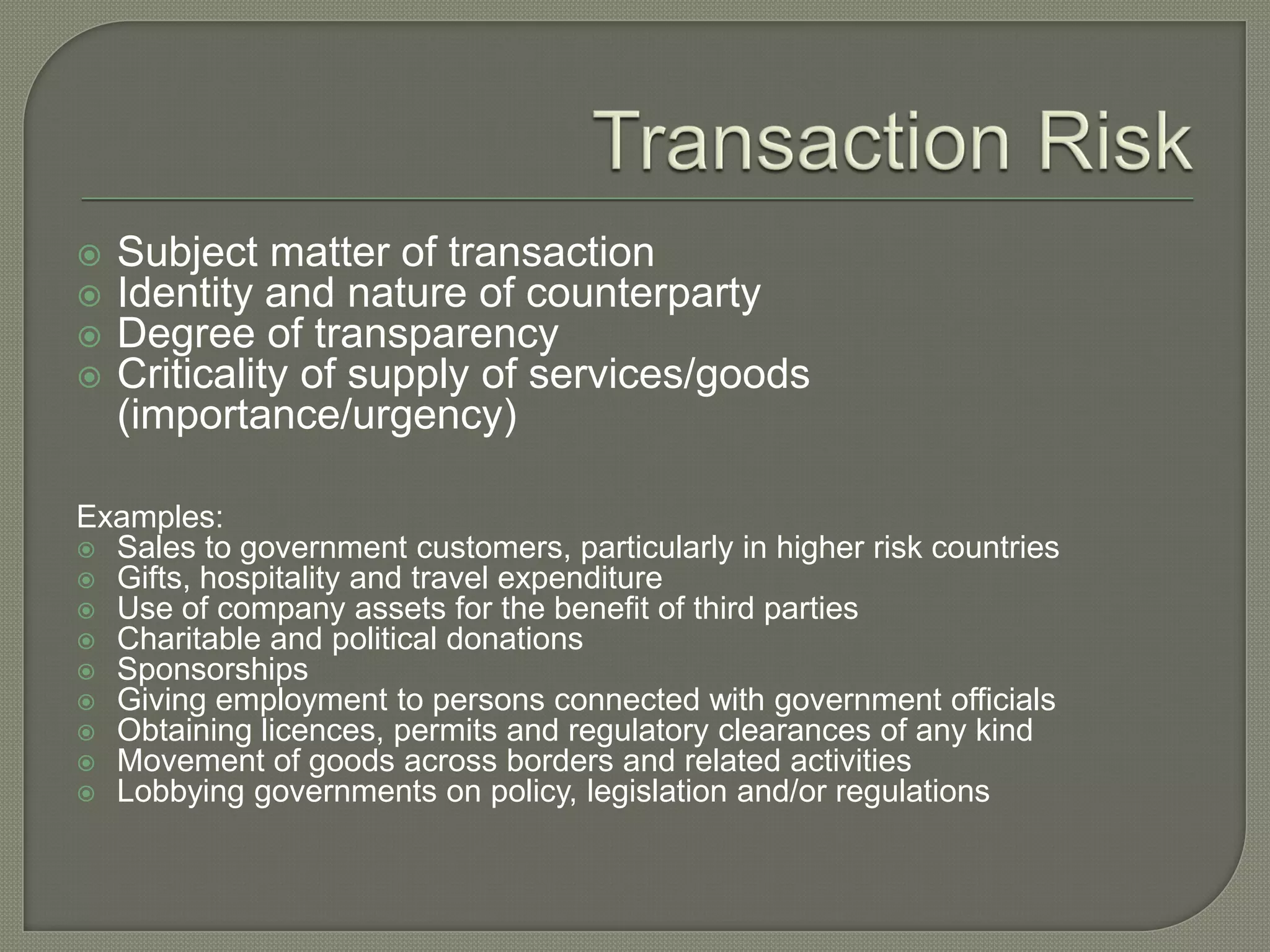
 Subject matter of transaction
 Identity and nature of counterparty
 Degree of transparency
 Criticality of supply of services/goods
(importance/urgency)
Examples:
 Sales to government customers, particularly in higher risk countries
 Gifts, hospitality and travel expenditure
 Use of company assets for the benefit of third parties
 Charitable and political donations
 Sponsorships
 Giving employment to persons connected with government officials
 Obtaining licences, permits and regulatory clearances of any kind
 Movement of goods across borders and related activities
 Lobbying governments on policy, legislation and/or regulations
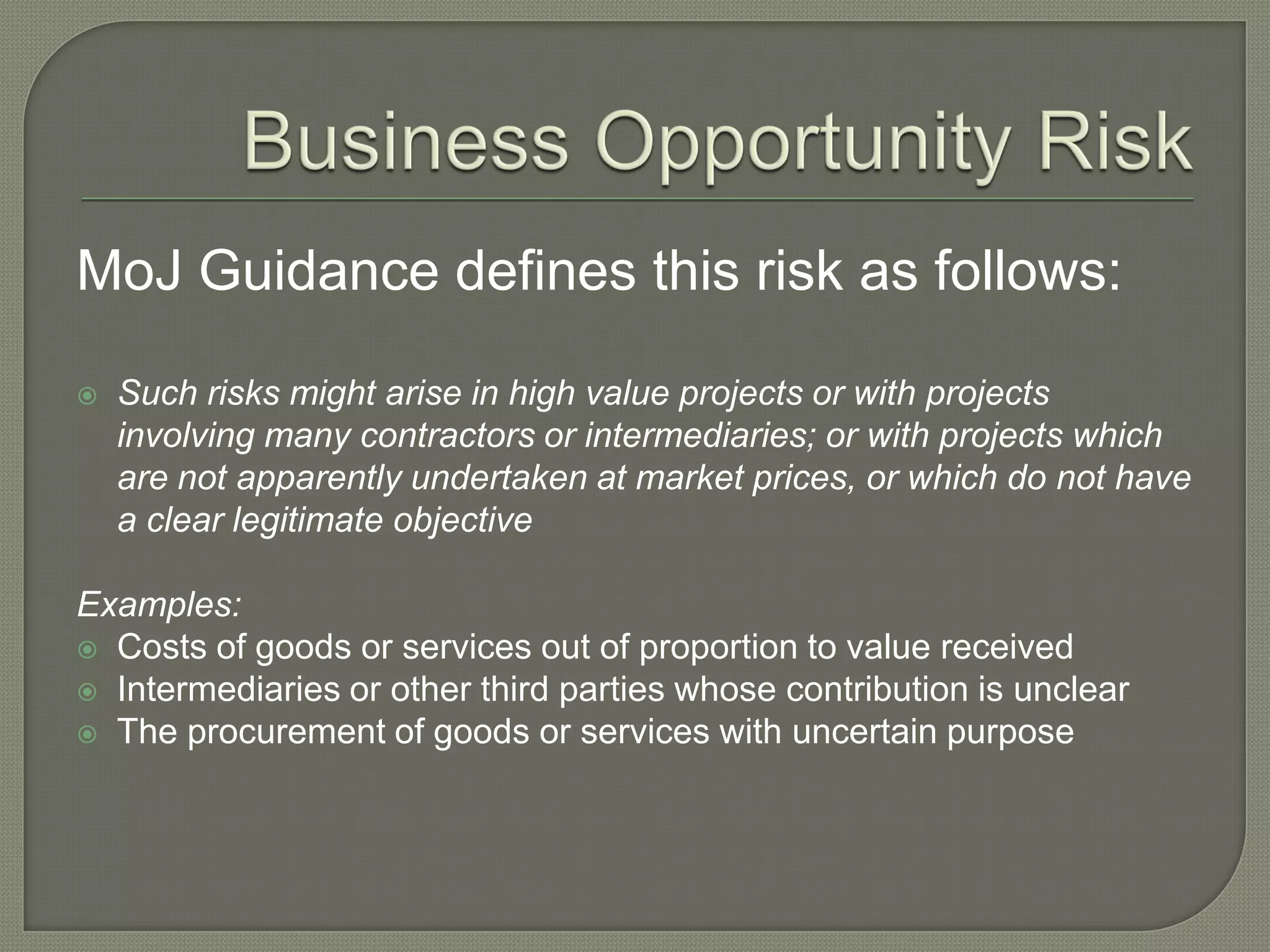
MoJ Guidance defines this risk as follows:
 Such risks might arise in high value projects or with projects
involving many contractors or intermediaries; or with projects which
are not apparently undertaken at market prices, or which do not have
a clear legitimate objective
Examples:
 Costs of goods or services out of proportion to value received
 Intermediaries or other third parties whose contribution is unclear
 The procurement of goods or services with uncertain purpose
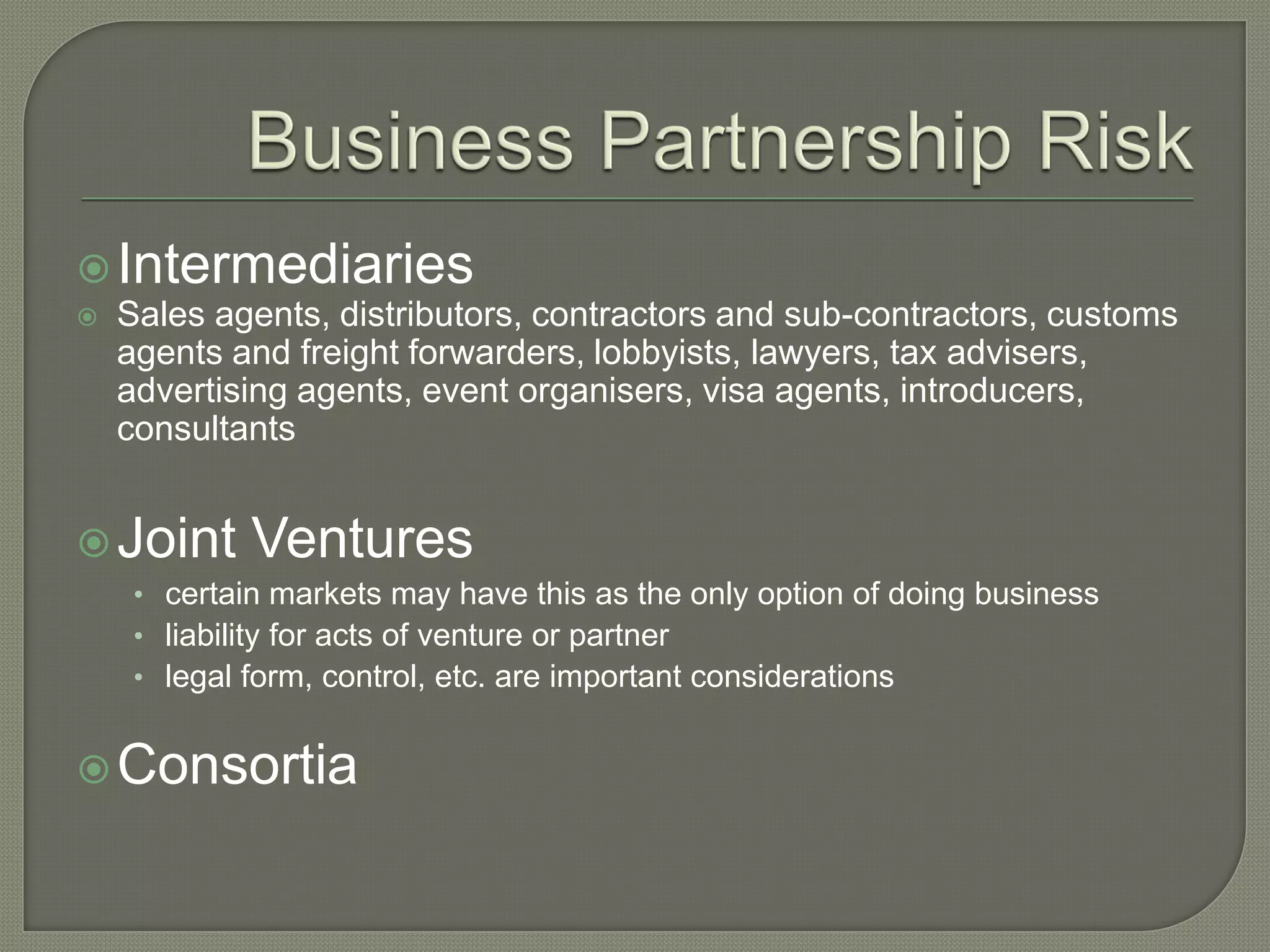
Intermediaries
 Sales agents, distributors, contractors and sub-contractors, customs
agents and freight forwarders, lobbyists, lawyers, tax advisers,
advertising agents, event organisers, visa agents, introducers,
consultants
Joint Ventures
• certain markets may have this as the only option of doing business
• liability for acts of venture or partner
• legal form, control, etc. are important considerations
Consortia
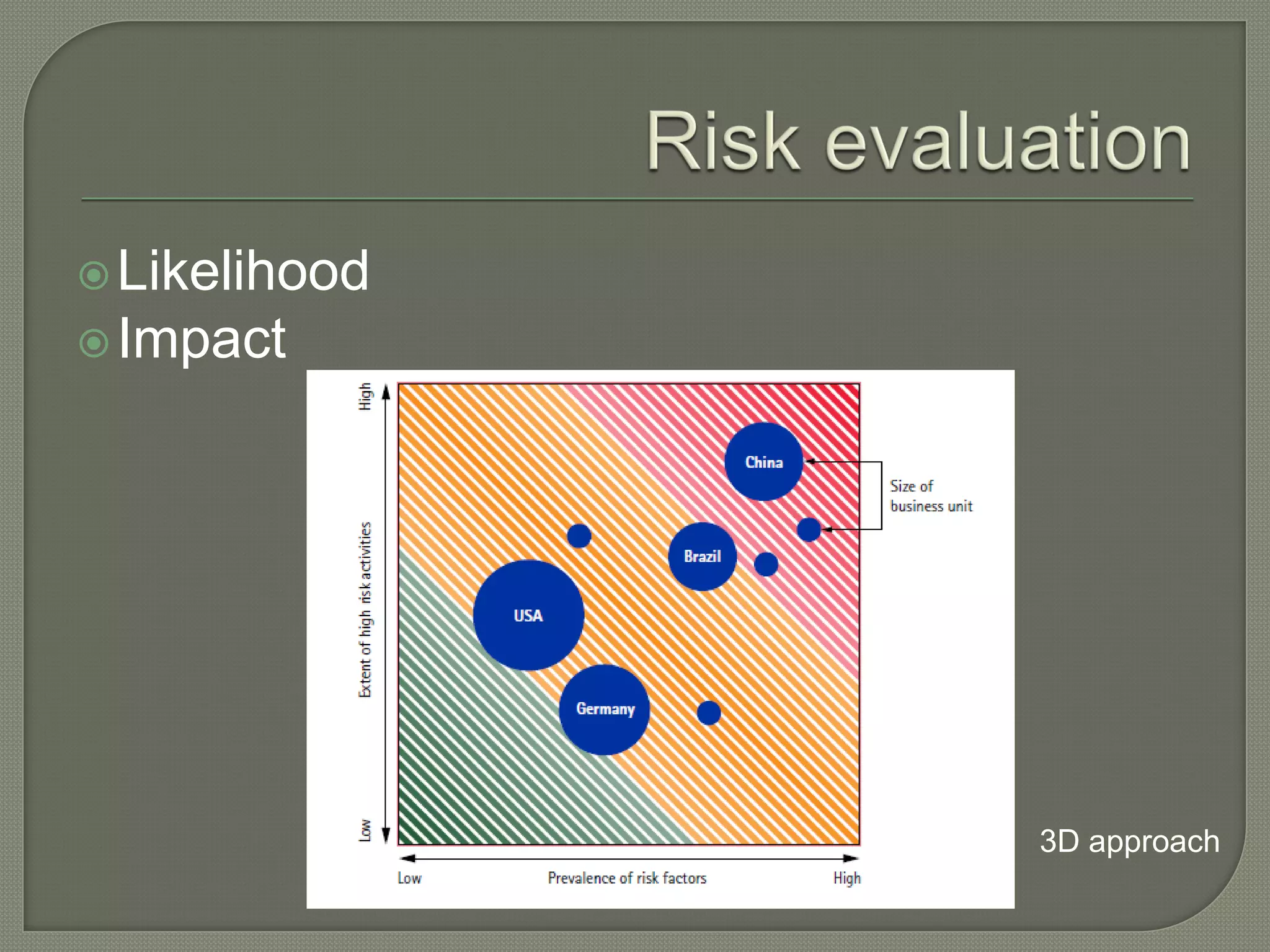
Likelihood
Impact
3D approach
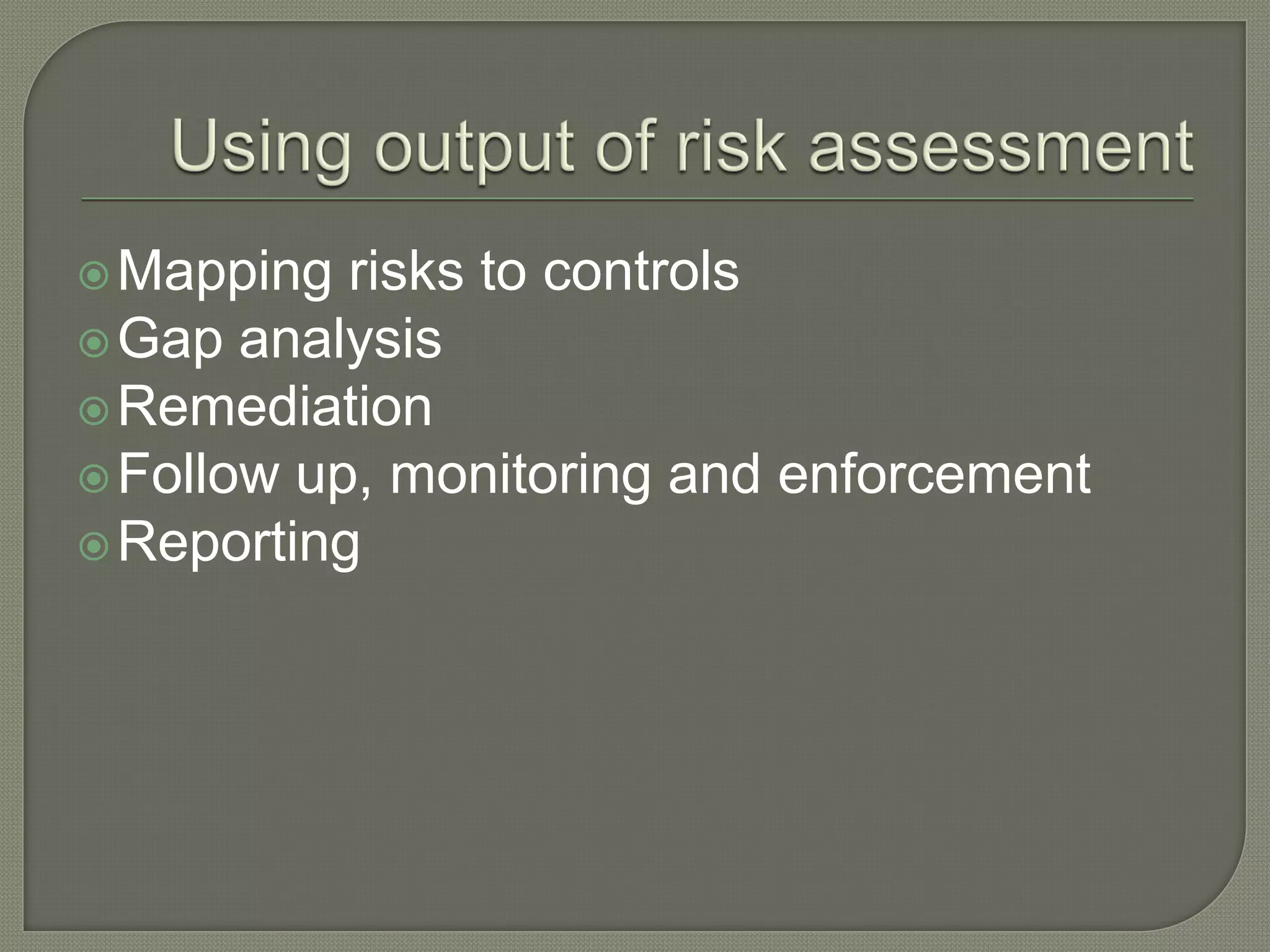
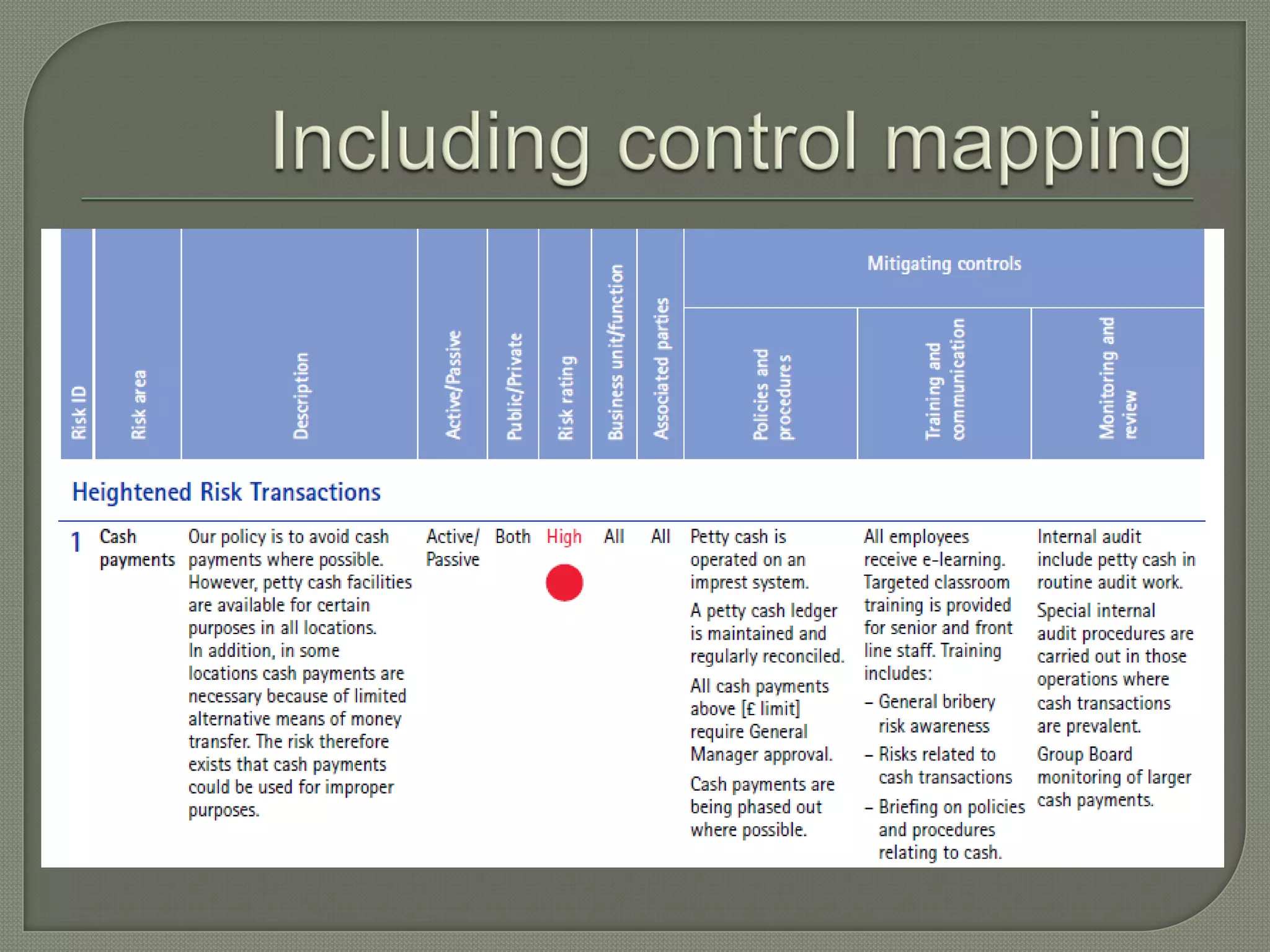
Mapping risks to controls
Gap analysis
Remediation
Follow up, monitoring and enforcement
Reporting
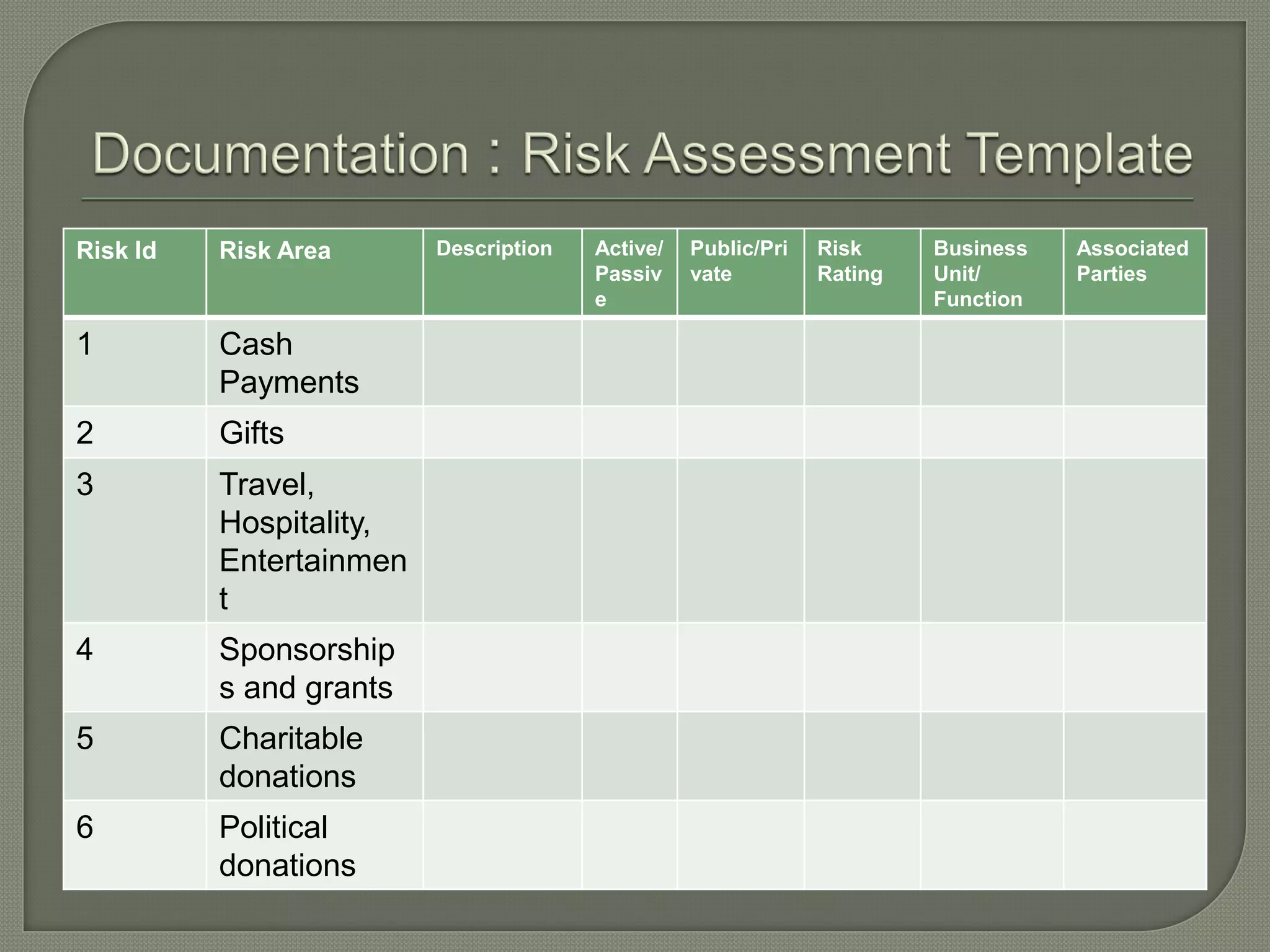
Risk Id Risk Area Description Active/
Passiv
e
Public/Pri
vate
Risk
Rating
Business
Unit/
Function
Associated
Parties
1 Cash
Payments
2 Gifts
3 Travel,
Hospitality,
Entertainmen
t
4 Sponsorship
s and grants
5 Charitable
donations
6 Political
donations
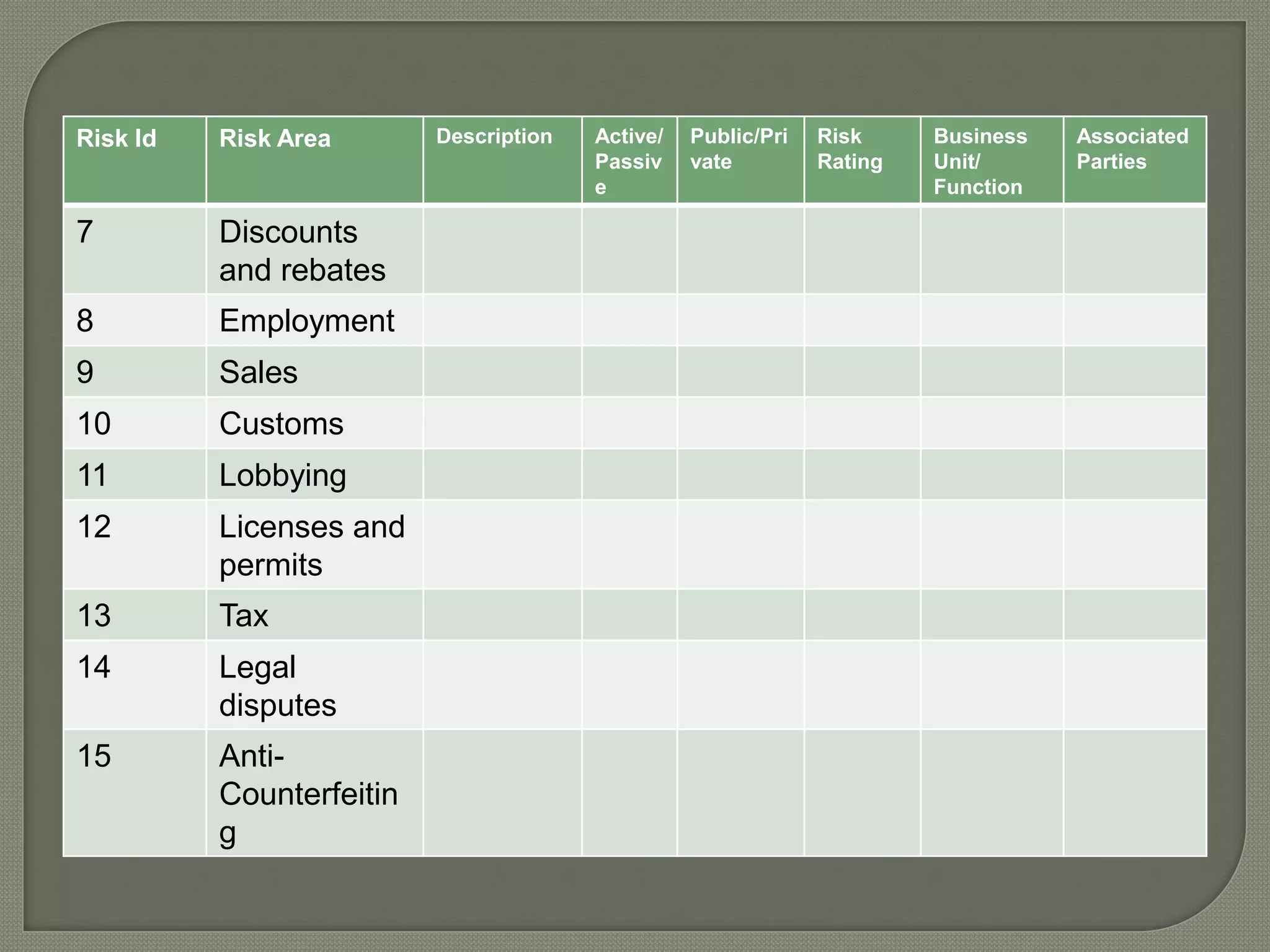
Risk Id Risk Area Description Active/
Passiv
e
Public/Pri
vate
Risk
Rating
Business
Unit/
Function
Associated
Parties
7 Discounts
and rebates
8 Employment
9 Sales
10 Customs
11 Lobbying
12 Licenses and
permits
13 Tax
14 Legal
disputes
15 Anti-
Counterfeitin
g
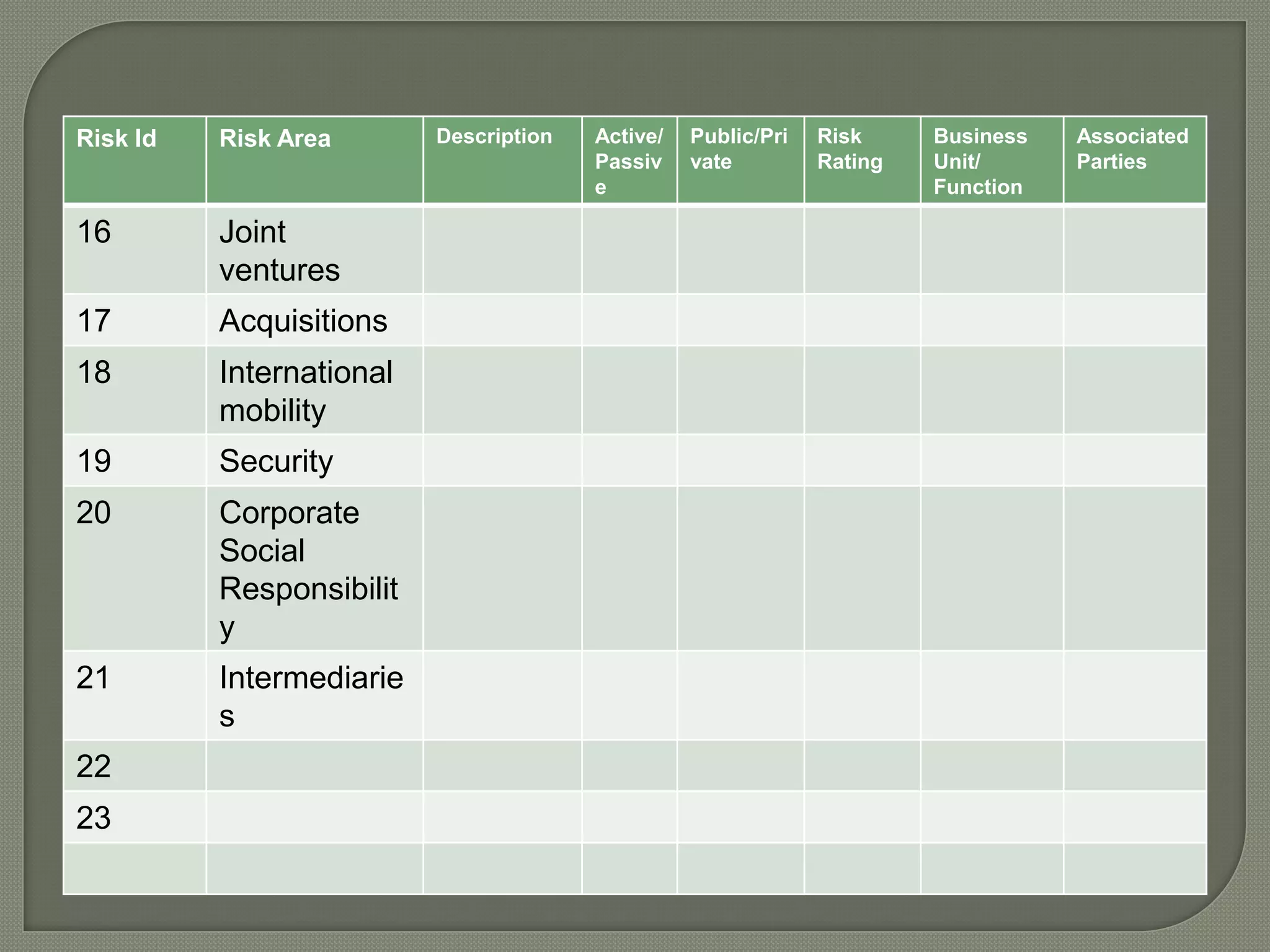
Risk Id Risk Area Description Active/
Passiv
e
Public/Pri
vate
Risk
Rating
Business
Unit/
Function
Associated
Parties
16 Joint
ventures
17 Acquisitions
18 International
mobility
19 Security
20 Corporate
Social
Responsibilit
y
21 Intermediarie
s
22
23
Q & A

Corruption Risk Assessment

  • 1.
    Jasmeet Wadehra General Counsel InternationalPaper – India Corruption Risk Assessment
  • 2.
     Law Enforcementand Regulators  Need to focus time, effort and resources  Supports risk awareness and structured decision making  Highlighted in FCPA & Bribery Act guidance  Complexities of multi-jurisdiction business
  • 3.
     Ministry ofJustice (out of 6 key principles) lists risk assessment : • “The commercial organisation assesses the nature and extent of its exposure to potential external and internal risks of bribery on its behalf by persons associated with it. The assessment is periodic, informed and documented.”  FCPA Guidance highlights importance of risk assessment: “Assessment of risk is fundamental to developing a strong compliance program... One-sizefits-all compliance programs are generally ill-conceived and ineffective because resources inevitably are spread too thin... Devoting a disproportionate amount of time to policing modest entertainment and gift-giving instead of focusing on large government bids, questionable payments to third-party consultants, or excessive discounts to resellers and distributors may indicate that a company’s compliance program is ineffective.”
  • 4.
    Source: Transparency InternationalUK’s Diagnosing Bribery Risk: Guidance for the Conduct of Effective Bribery Risk Assessment
  • 5.
     Reputation  Compliancewith laws and avoiding prosecutions or fines  Conducting business ethically  Revenue, profitability and share value targets  CSR and/or Sustainability  Maintaining strong relationships with government and/or business partners  Fulfilling ethical compliance requirements imposed by a customer  Access to particular markets (e.g. public procurement opportunities within the EU)
  • 6.
     Defining acceptablelevels of variation in performance  Zero tolerance – a misnomer?  Example: Determining limits of gifts & entertainment, disclosure decisions, etc.
  • 7.
     Acceptance –treating a risk and its consequences as a cost of doing business (for non critical matters)  Avoidance – decision to cease a particular activity or exit a market to eliminate risk completely  Reduction – implementation of programs, processes and controls to reduce risk to acceptable levels  Sharing – includes insurance, outsourcing, joint ventures and other forms of business partnering Cost/benefit analysis of responses to risks
  • 9.
    Internal • Line managers •Functional managers External • Opinion releases and similar sources from the DoJ and SEC • Past legal cases relevant to the business • Guidance from industry bodies • Professional advisers • Independent experts such as NGOs • Customers • Peer companies • Embassies/consulates • Industry bodies Open consultation helps in sending right signals. Modes include workshops, interviews, questionnaires or risk template to be filled in by information providers (Validation important)
  • 10.
     TI CorruptionPerceptions Index  TI Bribe Payers Index  TI Global Corruption Barometer  TI National Integrity Studies  World Bank Governance Indicators  World Bank Ease of Doing Business Report
  • 11.
    Categories (UK MOJGuidance) • Country risk • Sectoral risk • Transactional risk • Business opportunity risk • Business partnership risk
  • 12.
     Enforcement ofanti-bribery legislation  Lack of transparency in business dealings  Impenetrable bureaucracies  Need to use intermediaries to gain access to people in positions of power  Lack of an established rule of law  Lack of a truly independent and impartial judiciary  Lack of effective democratic institutions  Lack of independent media  Pressure to conform to specific cultural norms and customs or unfamiliar business practices  which may conflict with applicable anti-bribery laws  The prevalence of requests to make ‘grease’ or ‘facilitation’ payments’ to expedite processes. • There is regional variation within countries • Risks may vary significantly between sectors and business models
  • 13.
     Requirement tooperate in high risk countries  High degree of government interaction  High levels of regulation  High value, complex and/or long term contracts  Multiple business partners, stakeholders and/or complex contractual or corporate structures Examples:  Extractive industries  Large scale infrastructure
  • 14.
     Subject matterof transaction  Identity and nature of counterparty  Degree of transparency  Criticality of supply of services/goods (importance/urgency) Examples:  Sales to government customers, particularly in higher risk countries  Gifts, hospitality and travel expenditure  Use of company assets for the benefit of third parties  Charitable and political donations  Sponsorships  Giving employment to persons connected with government officials  Obtaining licences, permits and regulatory clearances of any kind  Movement of goods across borders and related activities  Lobbying governments on policy, legislation and/or regulations
  • 15.
    MoJ Guidance definesthis risk as follows:  Such risks might arise in high value projects or with projects involving many contractors or intermediaries; or with projects which are not apparently undertaken at market prices, or which do not have a clear legitimate objective Examples:  Costs of goods or services out of proportion to value received  Intermediaries or other third parties whose contribution is unclear  The procurement of goods or services with uncertain purpose
  • 16.
    Intermediaries  Sales agents,distributors, contractors and sub-contractors, customs agents and freight forwarders, lobbyists, lawyers, tax advisers, advertising agents, event organisers, visa agents, introducers, consultants Joint Ventures • certain markets may have this as the only option of doing business • liability for acts of venture or partner • legal form, control, etc. are important considerations Consortia
  • 17.
  • 18.
    Mapping risks tocontrols Gap analysis Remediation Follow up, monitoring and enforcement Reporting
  • 21.
    Risk Id RiskArea Description Active/ Passiv e Public/Pri vate Risk Rating Business Unit/ Function Associated Parties 1 Cash Payments 2 Gifts 3 Travel, Hospitality, Entertainmen t 4 Sponsorship s and grants 5 Charitable donations 6 Political donations
  • 22.
    Risk Id RiskArea Description Active/ Passiv e Public/Pri vate Risk Rating Business Unit/ Function Associated Parties 7 Discounts and rebates 8 Employment 9 Sales 10 Customs 11 Lobbying 12 Licenses and permits 13 Tax 14 Legal disputes 15 Anti- Counterfeitin g
  • 23.
    Risk Id RiskArea Description Active/ Passiv e Public/Pri vate Risk Rating Business Unit/ Function Associated Parties 16 Joint ventures 17 Acquisitions 18 International mobility 19 Security 20 Corporate Social Responsibilit y 21 Intermediarie s 22 23
  • 25.