Workshop on Agriculture and
Food Systems for Nutrition
Ghana and Other Regional Successes
By Francis Zotor,
President of the African Nutrition Society
Image: Frontierofficial
For Ghana ‘business as usual’ on nutrition status
will be costly to its growing economy3
Projected productivity losses assuming status quo on nutrition status (million cedis), 2011-2020
*Based on present-day value of future productivity losses; demographic data based on the United
Nations population projection for Ghana and adjusted for the preliminary total population from the
2010 census; nutrition data from the Ghana Demographic and Health Surveys (GDHS), national
surveys, and other sources
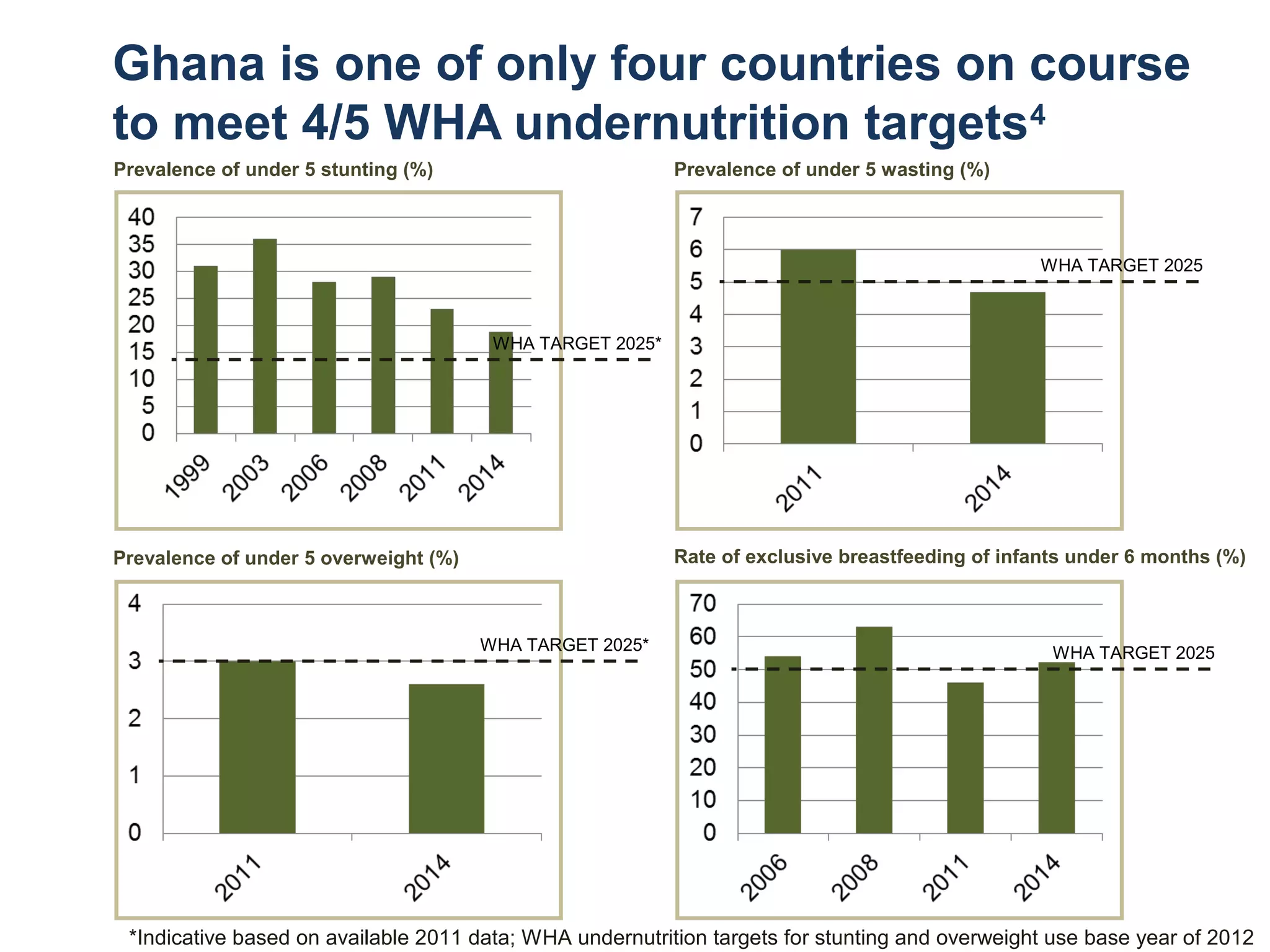
Ghana is one of only four countries on course
to meet 4/5 WHA undernutrition targets4
Prevalence of under 5 stunting (%) Prevalence of under 5 wasting (%)
Prevalence of under 5 overweight (%) Rate of exclusive breastfeeding of infants under 6 months (%)
WHA TARGET 2025
WHA TARGET 2025
WHA TARGET 2025*
*Indicative based on available 2011 data; WHA undernutrition targets for stunting and overweight use base year of 2012
WHA TARGET 2025*
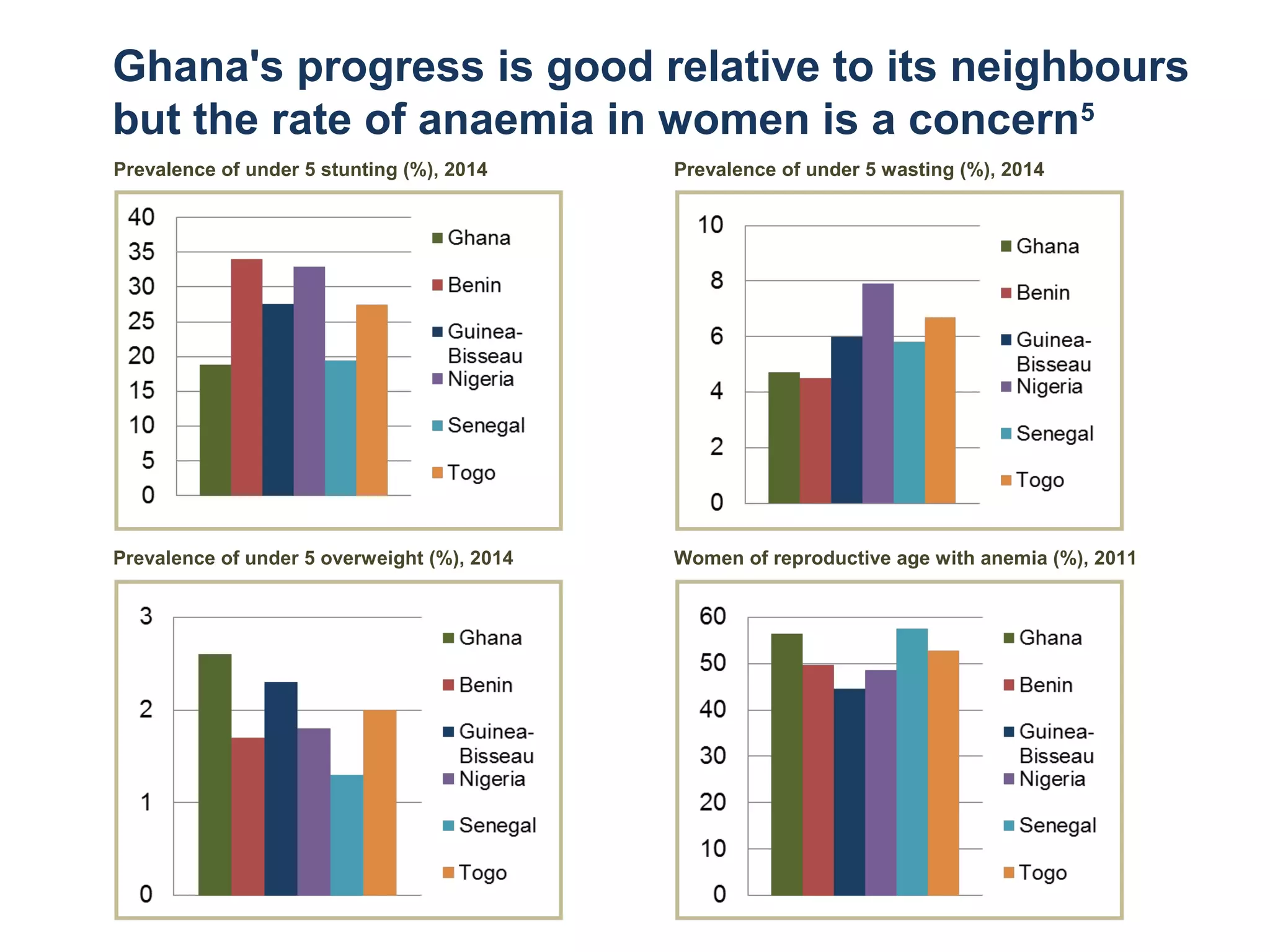
Ghana's progress is good relative to its neighbours
but the rate of anaemia in women is a concern5
Prevalence of under 5 stunting (%), 2014 Prevalence of under 5 wasting (%), 2014
Prevalence of under 5 overweight (%), 2014 Women of reproductive age with anemia (%), 2011
A closer look at Anaemia levels in Ghana - 1
Indicator
Under 5yrs
Male 139852 142421 114839
Female 127716 130369 105728
Total 267568 272790 220567
Above 5yrs 2013 2014 2015 (Jan-Oct)
Male 362297 226867 151421
Female 591855 493453 433230
Total 954152 720320 584651
Total Anaemia cases (All ages) 1221720 993110 805218
2013 2014 2015 (Jan - Oct)
Source: GHS - DHIMS II Report, 2013 - 2015
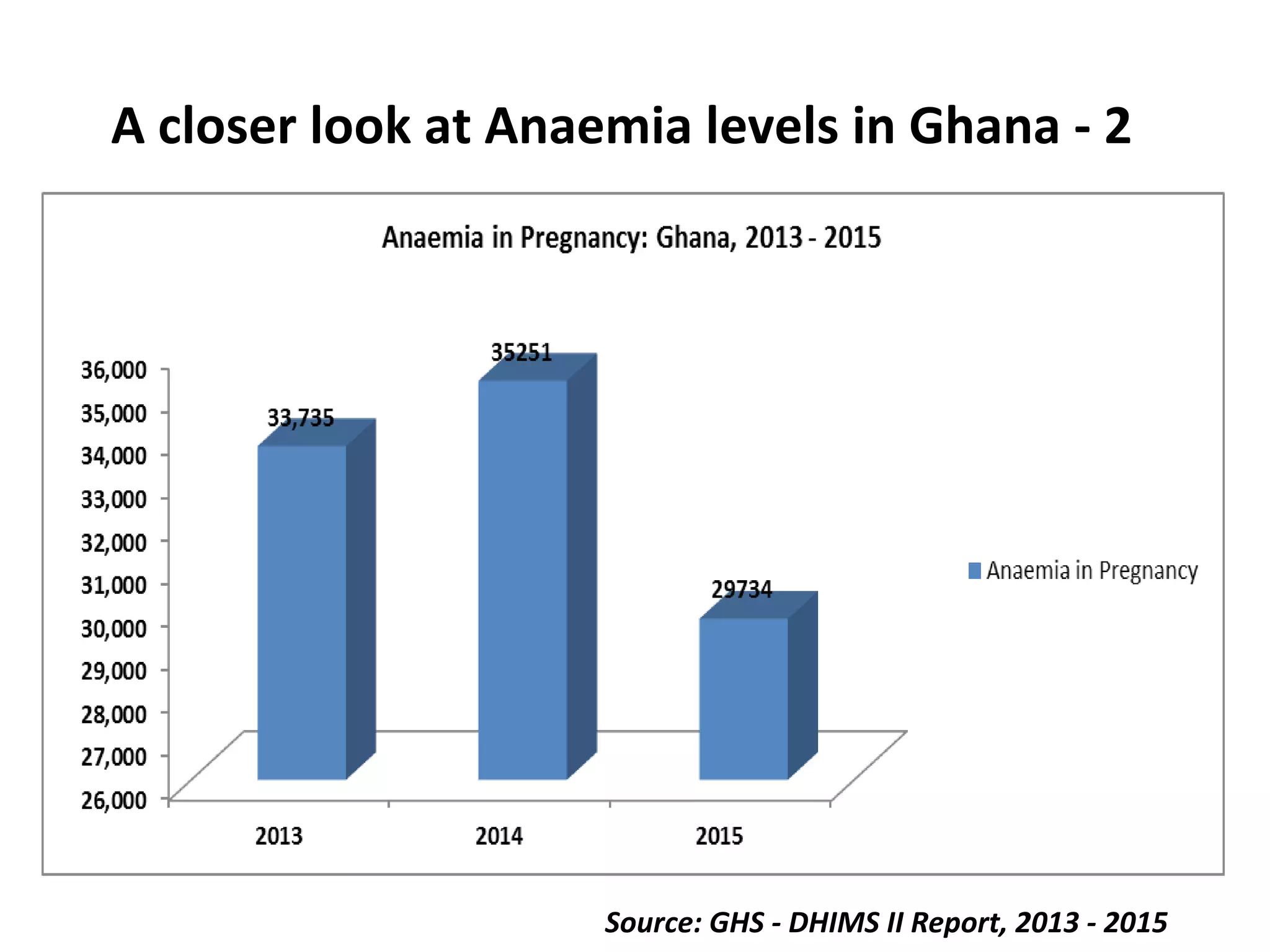
A closer look at Anaemia levels in Ghana - 2
Source: GHS - DHIMS II Report, 2013 - 2015
A closer look at Anaemia levels in Ghana - 3
Source: GHS - DHIMS II Report, 2013 - 2015
Diversity of diet is critical to improved
nutrition, health and human development
Ghanaian children aged 6-23 months consuming at least 4 food groups based on WHO/UNICEF guidelines (%), 20117
FAO reported in 2009 that the “Ghanaian diet largely
relies on starchy roots… the share of protein and of
lipids in the dietary energy supply is lower than
recommendations”8
Data suggests a
correlation in Ghana
between mother’s
level of education
and recommended
infant and young
children feeding
practices
*consumption based on the day or night preceding the survey
Ghana has a strong commitment to reduce
hunger and to improve nutrition9
Countries’ ranks for commitment to reduce hunger and commitment to improve nutrition
NCI (commitment to reduce malnutrition) rank
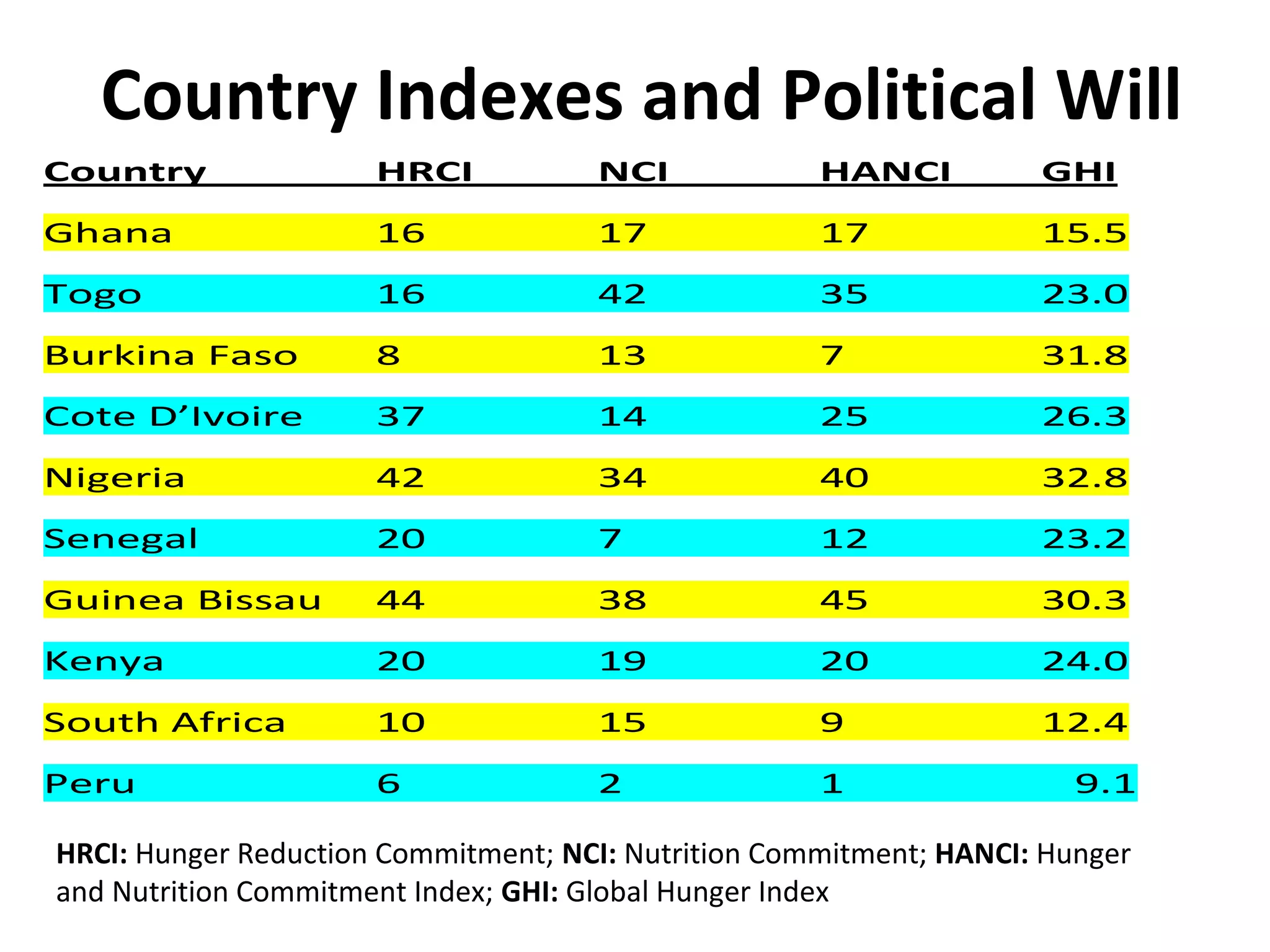
Country Indexes and Political Will
Country HRCI NCI HANCI GHI
Ghana 16 17 17 15.5
Togo 16 42 35 23.0
Burkina Faso 8 13 7 31.8
Cote D’Ivoire 37 14 25 26.3
Nigeria 42 34 40 32.8
Senegal 20 7 12 23.2
Guinea Bissau 44 38 45 30.3
Kenya 20 19 20 24.0
South Africa 10 15 9 12.4
Peru 6 2 1 9.1
HRCI: Hunger Reduction Commitment; NCI: Nutrition Commitment; HANCI: Hunger
and Nutrition Commitment Index; GHI: Global Hunger Index
Glopan.org
Follow us:
@Glo_PAN
Thank you
References
12
References
13

Ghana and Other Regional Successes - Francis Zotor

  • 1.
    Workshop on Agricultureand Food Systems for Nutrition Ghana and Other Regional Successes By Francis Zotor, President of the African Nutrition Society Image: Frontierofficial
  • 2.
    For Ghana ‘businessas usual’ on nutrition status will be costly to its growing economy3 Projected productivity losses assuming status quo on nutrition status (million cedis), 2011-2020 *Based on present-day value of future productivity losses; demographic data based on the United Nations population projection for Ghana and adjusted for the preliminary total population from the 2010 census; nutrition data from the Ghana Demographic and Health Surveys (GDHS), national surveys, and other sources
  • 3.
    Ghana is oneof only four countries on course to meet 4/5 WHA undernutrition targets4 Prevalence of under 5 stunting (%) Prevalence of under 5 wasting (%) Prevalence of under 5 overweight (%) Rate of exclusive breastfeeding of infants under 6 months (%) WHA TARGET 2025 WHA TARGET 2025 WHA TARGET 2025* *Indicative based on available 2011 data; WHA undernutrition targets for stunting and overweight use base year of 2012 WHA TARGET 2025*
  • 4.
    Ghana's progress isgood relative to its neighbours but the rate of anaemia in women is a concern5 Prevalence of under 5 stunting (%), 2014 Prevalence of under 5 wasting (%), 2014 Prevalence of under 5 overweight (%), 2014 Women of reproductive age with anemia (%), 2011
  • 5.
    A closer lookat Anaemia levels in Ghana - 1 Indicator Under 5yrs Male 139852 142421 114839 Female 127716 130369 105728 Total 267568 272790 220567 Above 5yrs 2013 2014 2015 (Jan-Oct) Male 362297 226867 151421 Female 591855 493453 433230 Total 954152 720320 584651 Total Anaemia cases (All ages) 1221720 993110 805218 2013 2014 2015 (Jan - Oct) Source: GHS - DHIMS II Report, 2013 - 2015
  • 6.
    A closer lookat Anaemia levels in Ghana - 2 Source: GHS - DHIMS II Report, 2013 - 2015
  • 7.
    A closer lookat Anaemia levels in Ghana - 3 Source: GHS - DHIMS II Report, 2013 - 2015
  • 8.
    Diversity of dietis critical to improved nutrition, health and human development Ghanaian children aged 6-23 months consuming at least 4 food groups based on WHO/UNICEF guidelines (%), 20117 FAO reported in 2009 that the “Ghanaian diet largely relies on starchy roots… the share of protein and of lipids in the dietary energy supply is lower than recommendations”8 Data suggests a correlation in Ghana between mother’s level of education and recommended infant and young children feeding practices *consumption based on the day or night preceding the survey
  • 9.
    Ghana has astrong commitment to reduce hunger and to improve nutrition9 Countries’ ranks for commitment to reduce hunger and commitment to improve nutrition NCI (commitment to reduce malnutrition) rank
  • 10.
    Country Indexes andPolitical Will Country HRCI NCI HANCI GHI Ghana 16 17 17 15.5 Togo 16 42 35 23.0 Burkina Faso 8 13 7 31.8 Cote D’Ivoire 37 14 25 26.3 Nigeria 42 34 40 32.8 Senegal 20 7 12 23.2 Guinea Bissau 44 38 45 30.3 Kenya 20 19 20 24.0 South Africa 10 15 9 12.4 Peru 6 2 1 9.1 HRCI: Hunger Reduction Commitment; NCI: Nutrition Commitment; HANCI: Hunger and Nutrition Commitment Index; GHI: Global Hunger Index
  • 11.
  • 12.
  • 13.

Editor's Notes

  • #3 The same modelling study makes an estimate on the other hand for productivity gains of 1658 million cedis from 2011-2020 as a consequence of “proven, effective interventions are implemented at scale to reduce nutrition problems and reach targets that are in alignment with Ghana’s development agenda.”