THE SHARING ECONOMY
LOIC LE MEUR
FOUNDER, LEWEB
I’M NOT AN EXPERT
IT’S JUST MY THEME
FOR LEWEB LONDON
RACHEL & LISA ARE EXPERTS
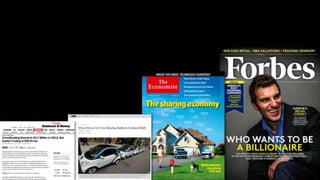
You cannot avoid it,
even if you try.
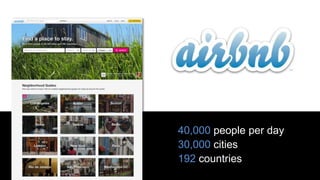
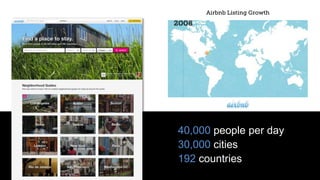
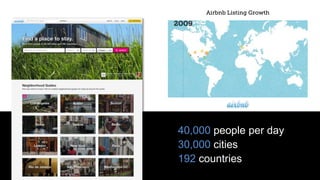
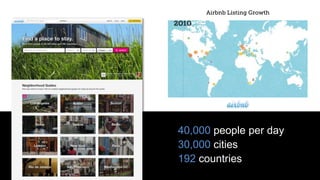
40,000 people per day
30,000 cities
192 countries
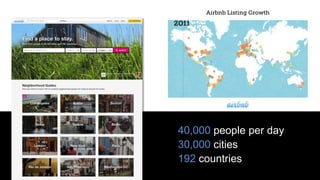
40,000 people per day
30,000 cities
192 countries
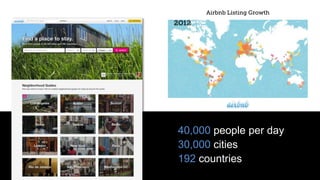
40,000 people per day
30,000 cities
192 countries
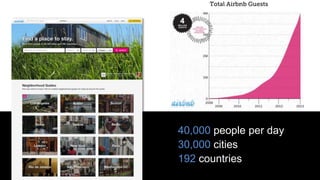
40,000 people per day
30,000 cities
192 countries
40,000 people per day
30,000 cities
192 countries
40,000 people per day
30,000 cities
192 countries
40,000 people per day
30,000 cities
192 countries
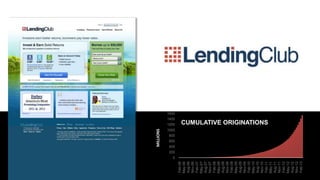
0
200
400
600
800
1000
1200
1400
1600
Feb-06
May-06
Aug-06
Nov-06
Feb-07
May-07
Aug-07
Nov-07
Feb-08
May-08
Aug-08
Nov-08
Feb-09
May-09
Aug-09
Nov-09
Feb-10
May-10
Aug-10
Nov-10
Feb-11
May-11
Aug-11
Nov-11
Feb-12
May-12
Aug-12
Nov-12
Feb-13
MILLIONS
CUMULATIVE ORIGINATIONS
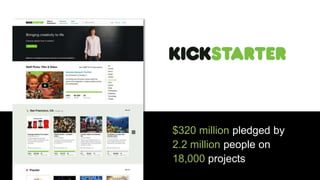
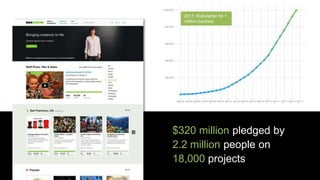
$320 million pledged by
2.2 million people on
18,000 projects
$320 million pledged by
2.2 million people on
18,000 projects
2011: Kickstarter hit 1
million backers
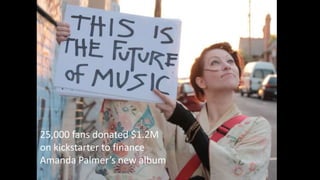
25,000 fans donated $1.2M
on kickstarter to finance
Amanda Palmer’s new album
767,000+ members
Largest Community
Garden on the Planet
25 million square feet
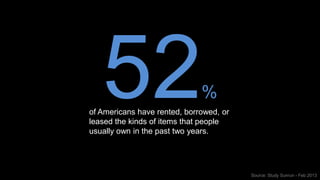
52%
of Americans have rented, borrowed, or
leased the kinds of items that people
usually own in the past two years.
Source: Study Sunrun - Feb 2013
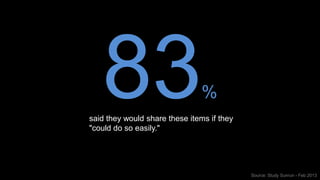
83%
said they would share these items if they
"could do so easily."
Source: Study Sunrun - Feb 2013
"We’ve always been in a culture where
more is more, and suddenly we’re in a
culture where less is a better quality of
life. It’s pretty revolutionary."
Bill Stewart, VP of customer care at Sunrun
Why sharing?
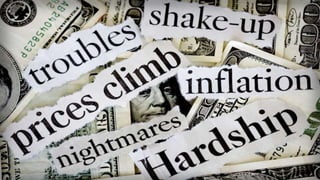
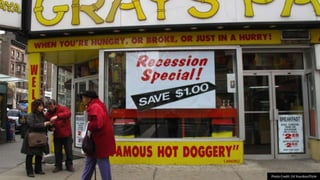
#1 Recession
Photo Credit: Ed Yourdon/Flickr
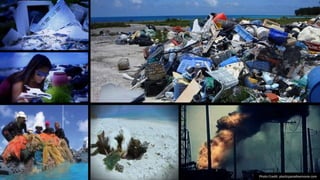
#2 Too much waste
Photo Credit: plasticparadisemovie.com
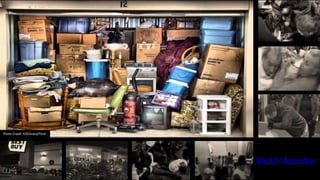
#3 Too much stuff we
don’t use
Photo Credit: K2D2vaca/Flickr
Black Friday video
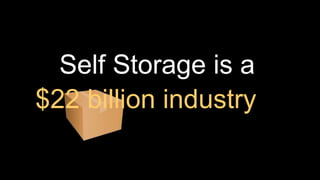
Self Storage is a
$22 billion industry
Larger than
box office
sales
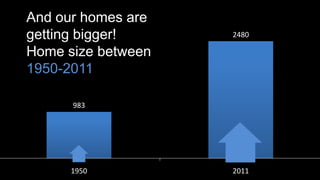
983
2480
1950 2011
And our homes are
getting bigger!
Home size between
1950-2011
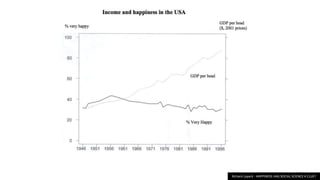
#4 Too much choice
and disconnect with
happiness
Richard Layard - HAPPINESS:HAS SOCIAL SCIENCE A CLUE?
Since 1960
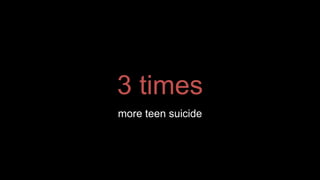
3 times
more teen suicide
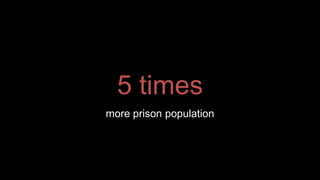
5 times
more prison population
There is always
something
better
There is always
something
BIGGER
There is always
something
faster
The more we have
The more we want
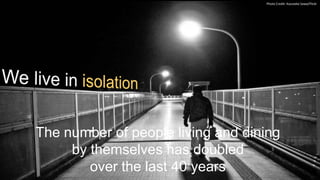
#5 Enough of crappy
products
Photo Credit: Kazutaka Sawa/Flickr
The number of people living and dining
by themselves has doubled
over the last 40 years
#6 Social Local Mobile
Revolution
• Technology enables this growth
• Sharing is at the core of tech growth
• Mobile and Local enable totally new
types of sharing services
What people are doing
1. Return to local markets: Etsy
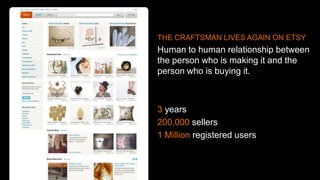
THE CRAFTSMAN LIVES AGAIN ON ETSY
Human to human relationship between
the person who is making it and the
person who is buying it.
3 years
200,000 sellers
1 Million registered users
1. Return to local markets: Etsy
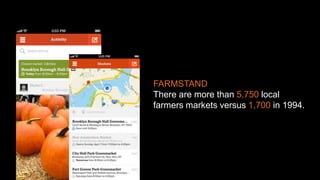
FARMSTAND
There are more than 5,750 local
farmers markets versus 1,700 in 1994.
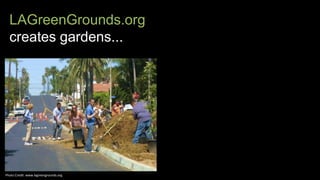
LAGreenGrounds.org
creates gardens...
Photo Credit: www.lagreengrounds.org
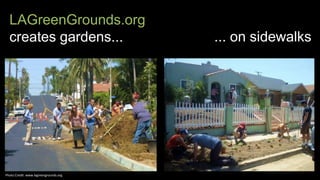
LAGreenGrounds.org
creates gardens... ... on sidewalks
Photo Credit: www.lagreengrounds.org
New consumer mindset
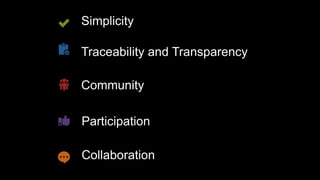
Simplicity
Traceability and Transparency
Community
Participation
Collaboration
An entire new
generation is growing
up with new values
They believe in
authenticity
They believe in
sustainability
They believe in
doing well is doing good
They believe in
community sharing
They believe in
creating together
They believe in
crowdfunding
They believe that
greed is BAD, money is OK
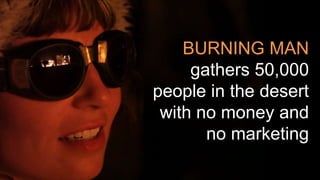
BURNING MAN
gathers 50,000
people in the desert
with no money and
no marketing
Burning Man video
From Spark
Photo Credit: Hawaii Savvy/Flickr
They want to live with
less
They want to live with
lessMUCH
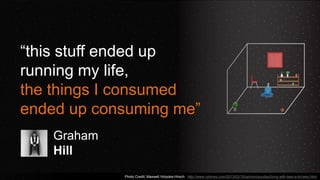
“this stuff ended up
running my life,
the things I consumed
ended up consuming me”
Photo Credit: Maxwell Holyoke-Hirsch http://www.nytimes.com/2013/03/10/opinion/sunday/living-with-less-a-lot-less.html
Graham
Hill
You are not the clothes you
wear, the contents of your
wallet, or the car you drive.
“Advertising has us chasing cars
and clothes, working jobs we hate
so we can buy shit we don't need”
Rachel Botsman, in “What’s mine is yours”
New products being created
Designed to last, not crappy
Preserve the planet
Focus on use availability more
than ownership
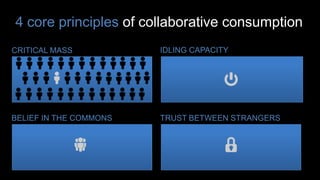
4 core principles of collaborative consumption
CRITICAL MASS IDLING CAPACITY
BELIEF IN THE COMMONS TRUST BETWEEN STRANGERS
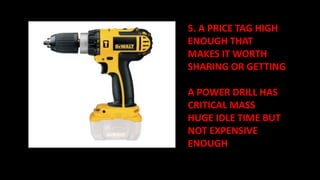
5. A PRICE TAG HIGH
ENOUGH THAT
MAKES IT WORTH
SHARING OR GETTING
A POWER DRILL HAS
CRITICAL MASS
HUGE IDLE TIME BUT
NOT EXPENSIVE
ENOUGH
The new brands
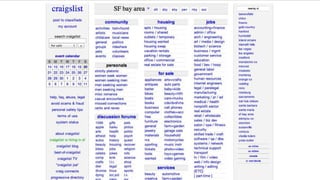
No brand is the new brand
No pushed or intrusive
advertising
Very community focused
Stays out of the way of the
users
Has purpose
Could the sharing
economy be a fad?
Cloo video
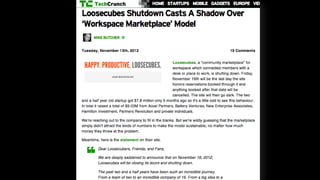
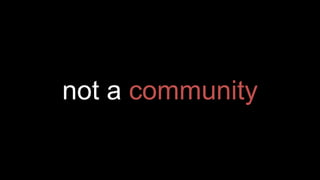
Loosecube built a
marketplace
not a community
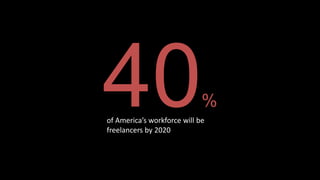
40%
of America’s workforce will be
freelancers by 2020
Trust is the key
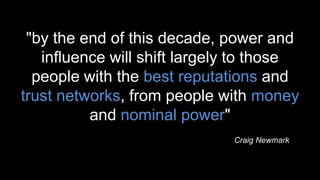
"by the end of this decade, power and
influence will shift largely to those
people with the best reputations and
trust networks, from people with money
and nominal power"
Craig Newmark
Why you should care
Large companies
already crowdsource
Red Bull Collective Art, in partnership with Adobe
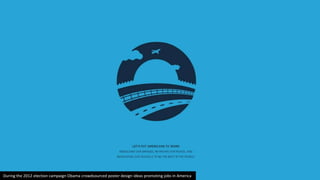
During the 2012 election campaign Obama crowdsourced poster design ideas promoting jobs in America
Coca Cola running crowdsourcing design and brand ideas
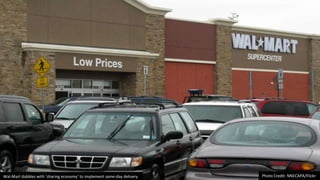
Photo Credit: NNECAPA/FlickrWal-Mart dabbles with ‘sharing economy’ to implement same-day delivery
How you can
participate
The growth of the sharing economy
can be slowed down by large
companies, governments with
unaligned interests
Replace consumerism with
peer to peer sharing
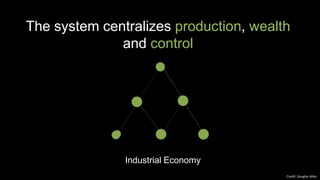
The system centralizes production, wealth
and control
Industrial Economy
Credit: Douglas Atkin
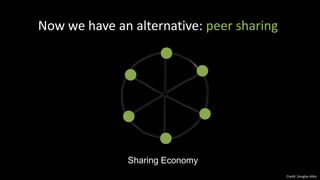
Now we have an alternative: peer sharing
Sharing Economy
Credit: Douglas Atkin
Legalize sharing
Make sharing mainstream by
shifting the culture
This is not a fad
it’s a huge movement
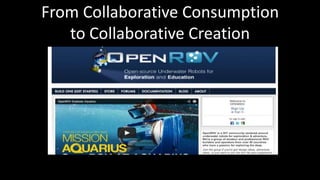
From Collaborative Consumption
to Collaborative Creation
LOIC LE MEUR
FOUNDER, LEWEB
LOIC@LEWEB.CO
FACEBOOK.COM/LOIC
TWITTER: @LOIC
Share.
Thanks for your help on
this presentation:
Morgan Denis
Axelle Tessandier
Karyn Kane Williams
Douglas Atkin

The Sharing Economy

Editor's Notes

  • #17 25,000 fans donated $1.2M on kickstarter to finance her next albumhttp://www.wired.com/underwire/2013/03/amanda-palmer-2/http://www.nytimes.com/2012/06/06/arts/music/amanda-palmer-takes-connecting-with-her-fans-to-a-new-level.html?pagewanted=all&_r=0
  • #77 SPARK VIDEO http://www.youtube.com/watch?v=JbSUyYXH8hs
  • #116 http://www.fastcoexist.com/1681790/your-reputation-will-be-the-currency-of-the-future?utm_source=twitter
  • #126 Distorted investment priorities, as wealth gets directed into what will earn the largest profit and not into what most people really need (so public health, public education, and even dikes for periodically swollen rivers receive little attention);Worsening exploitation of workers, since the harder, faster, and longer people work—just as the less they get paid—the more profit is earned by their employer (with this incentive and driven by the competition, employers are forever finding new ways to intensify exploitation);Overproduction of goods, since workers as a class are never paid enough to buy back, in their role as consumers, the ever growing amount of goods that they produce (in the era of automation, computerization and robotization, the gap between what workers produce—and can produce—and what their low wage allows them to consume has increased enormously);Unused industrial capacity (the mountain of unsold goods has resulted in a large percentage of machinery of all kinds lying idle, while many pressing needs—but needs that the people who have them can't pay for—go unmet);Growing unemployment (machines and raw materials are available, but using them to satisfy the needs of the people who don't have the money to pay for what could be made would not make profits for those who own the machines and raw materials—and in a market economy profits are what matters);Growing social and economic inequality (the rich get richer and everyone else gets poorer, many absolutely and the rest in relation to the rapidly growing wealth of the rich);The same market experiences develop a set of anti-social attitudes and emotions (people become egotistical, concerned only with themselves. "Me first", "anything for money", "winning in competition no matter what the human costs" become what drives them in all areas of life. They also become very anxious and economically insecure, afraid of losing their job, their home, their sale, etc.; and they worry about money all the time. In this situation, feelings as well as ideas of cooperation and mutual concern are seriously weakened, where they don't disappear altogether, for in a market economy it is against one's personal interest to cooperate with others);Worsening ecological degradation (since any effort to improve the quality of the air and of the water costs the owners of industry money and reduces profits, our natural home becomes increasingly unlivable);
  • #127 An individual with no specialized skills should be able to make an average of $41,000 per year in the SERead more at http://venturebeat.com/2013/01/21/will-you-leave-your-job-to-join-the-sharing-economy/#eBwU2PvBIYBJEa57.99Sabrina Hernandez, 23, used to work at Starbucks, but she isn’t going back after averaging $1,200 a month this fall hosting strangers’ dogs in her apartment through website DogVacay. “It’s so much more rewarding than working in a customer-service setting.”Airbnb commissioned a study of its economic impact on San Francisco last year and found a “spillover effect.” Because an Airbnb rental tends to be cheaper than a hotel, people stay longer and spent $1,100 in the city, compared with $840 for hotel guests; 14% of their customers said they would not have visited the city at all without Airbnb.Today, City CarShare members save an average of more than $8,000 per year compared with the costs of private car ownership. Studies have shown, for example, that for every reduction of 15,000 owned cars, a city keeps $127 million in the local economy as people are able to get what they need within a smaller geographic area.