Shared Solar: What’s Working, 
What’s Next 
Erica Schroeder McConnell 
Keyes, Fox & Wiedman LLP 
October 22, 2014 
www.irecusa.org 
@IRECUSA 
#3iForum
Why Shared Solar? 
I want to benefit from renewable energy generation, 
but I… 
– Rent my apartment 
– Live in a multitenant building (e.g., a condo) 
– Have insufficient or problematic roof space 
(e.g., too shady) 
– Am just not interested in on-site generation 
(maintenance responsibility, aesthetic issues, etc.) 
2 
Only 25% of residential roofs permit on-site generation 
Paidpati, Frantzis, Sawyer and Kurrasch, Nat’l Renewable Energy Lab., Rooftop Photovoltaics Market Penetration 
Scenarios, (Feb. 2008), available at http://www.nrel.gov/docs/fy08osti/42306.pdf.
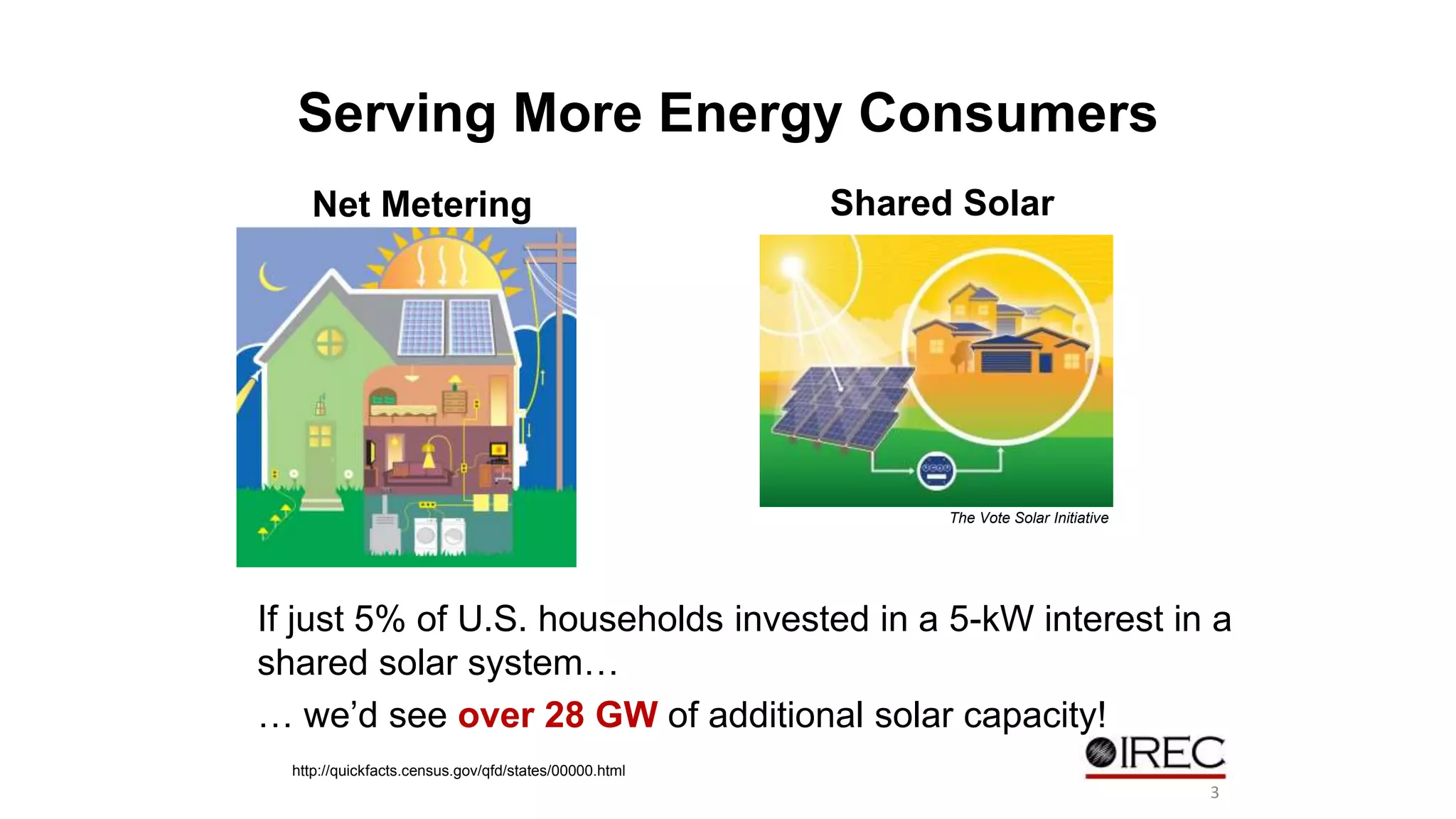
Serving More Energy Consumers 
Net Metering Shared Solar 
If just 5% of U.S. households invested in a 5-kW interest in a 
shared solar system… 
… we’d see over 28 GW of additional solar capacity! 
http://quickfacts.census.gov/qfd/states/00000.html 
The Vote Solar Initiative 
3
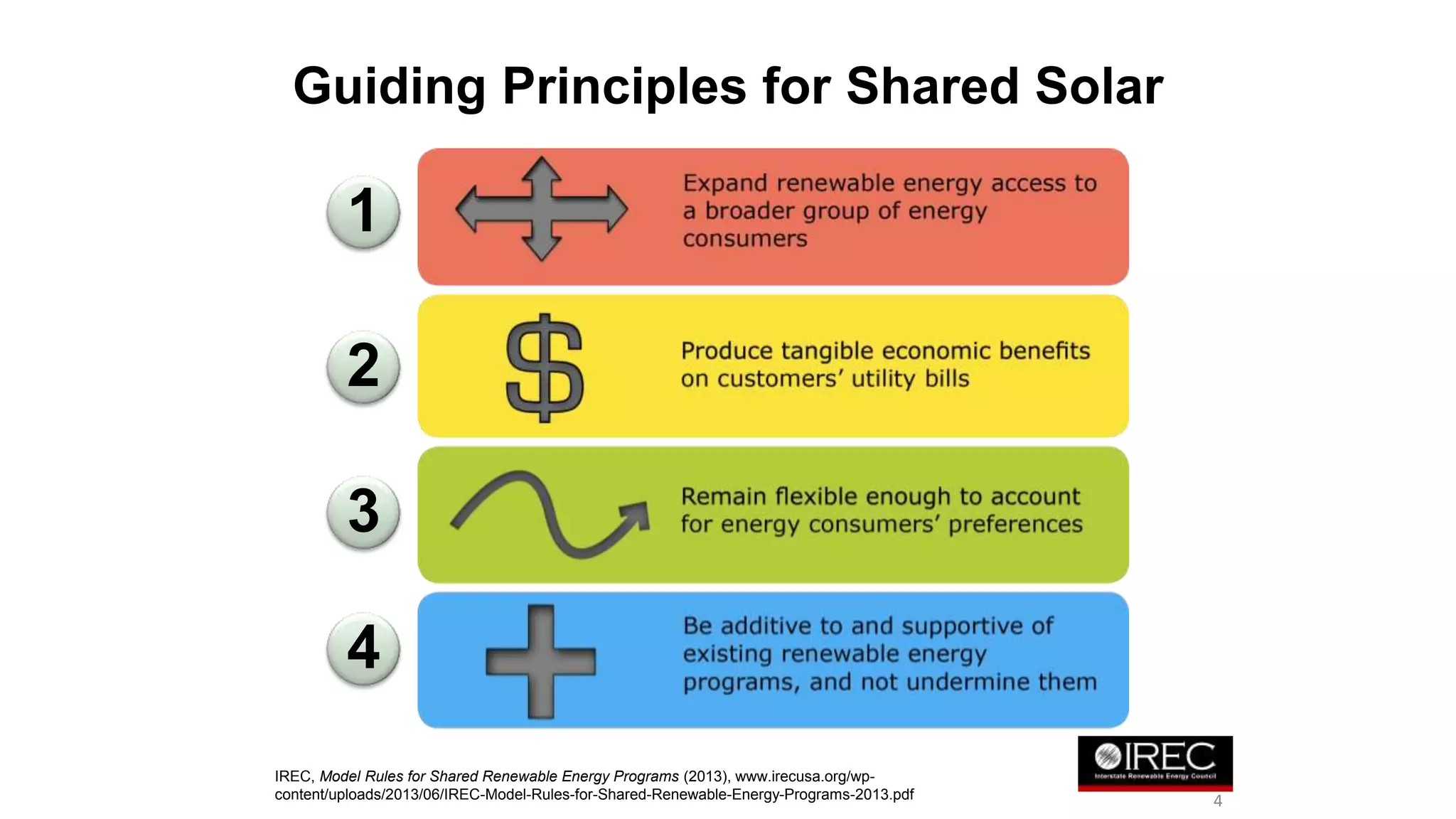
Guiding Principles for Shared Solar 
1 
2 
3 
4 
IREC, Model Rules for Shared Renewable Energy Programs (2013), www.irecusa.org/wp-content/ 
uploads/2013/06/IREC-Model-Rules-for-Shared-Renewable-Energy-Programs-2013.pdf 
4
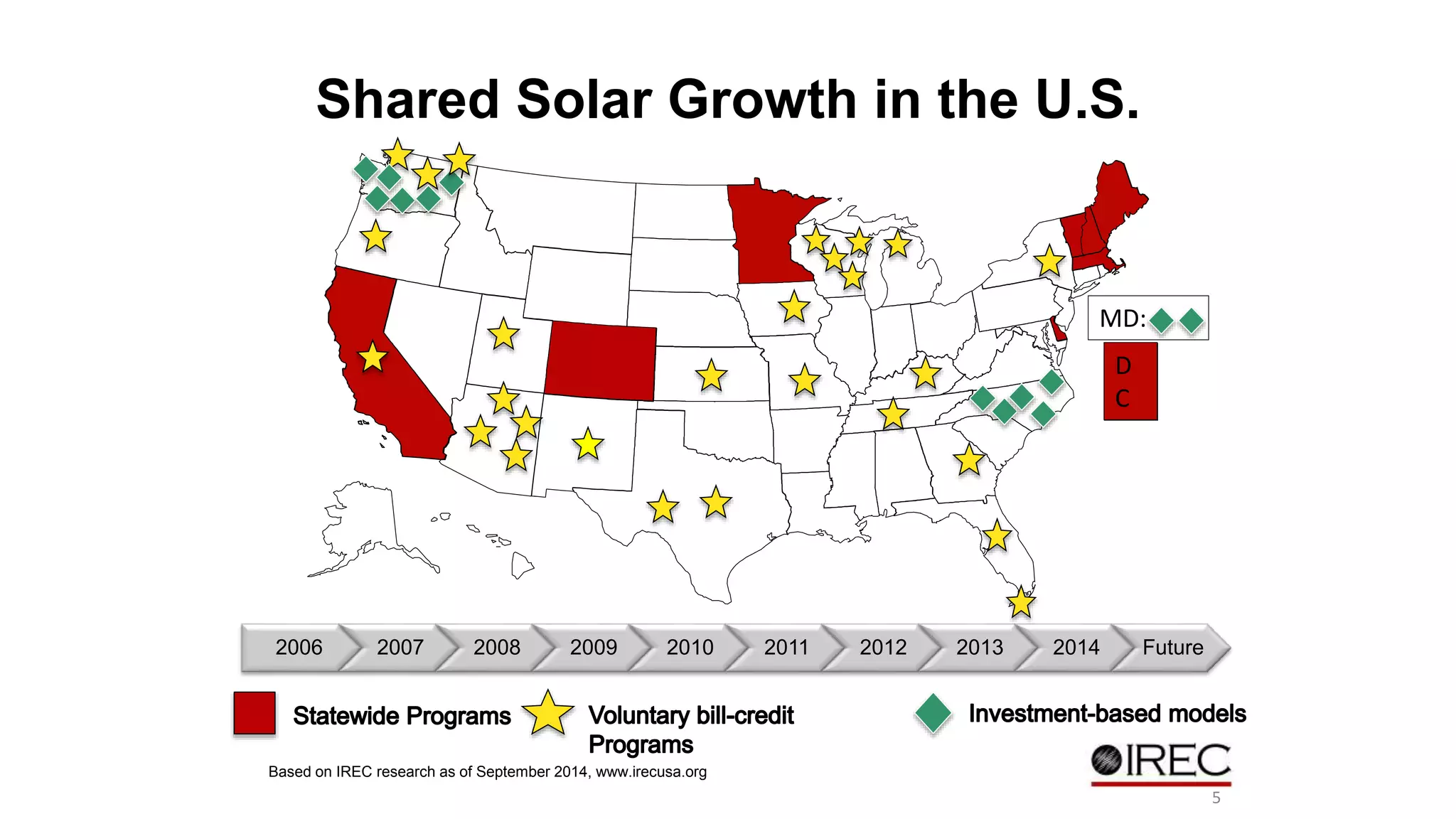
Shared Solar Growth in the U.S. 
2006 2007 2008 2009 2010 2011 2012 2013 2014 Future 
Based on IREC research as of September 2014, www.irecusa.org 
MD: 
D 
C 
5
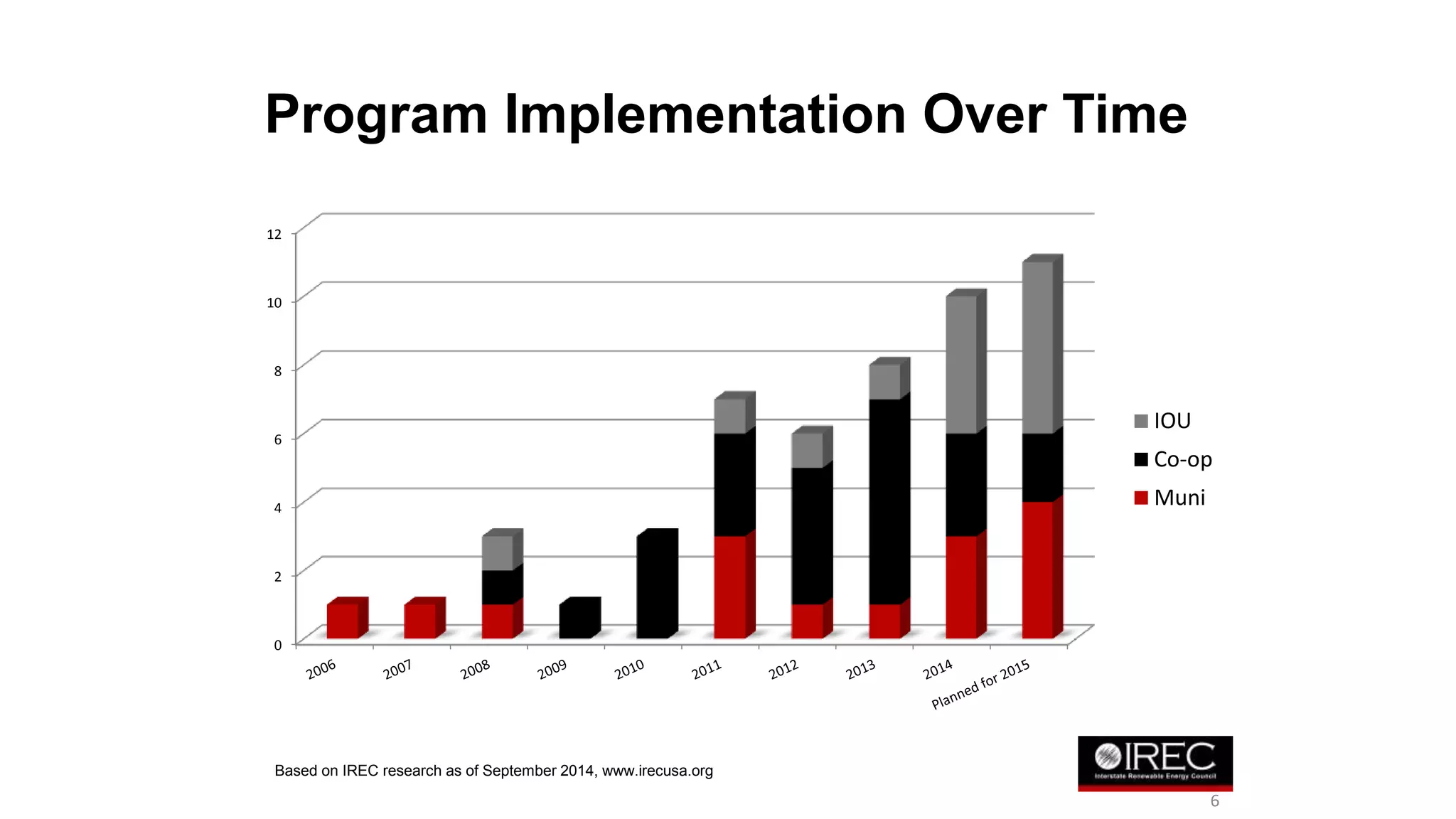
Program Implementation Over Time 
12 
10 
8 
6 
4 
2 
0 
IOU 
Co-op 
Muni 
Based on IREC research as of September 2014, www.irecusa.org 
6
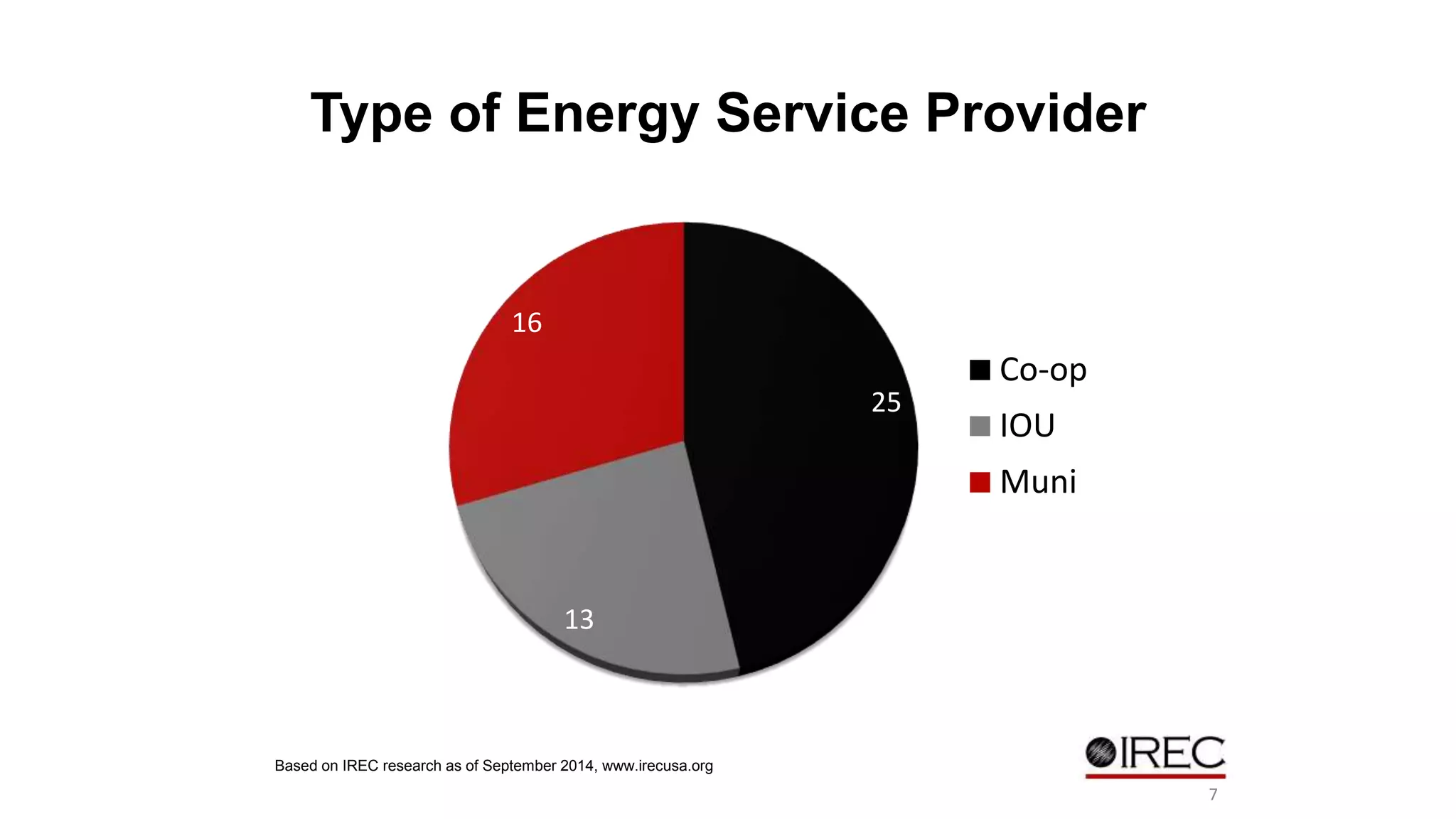
Type of Energy Service Provider 
Based on IREC research as of September 2014, www.irecusa.org 
25 
13 
16 
Co-op 
IOU 
Muni 
7
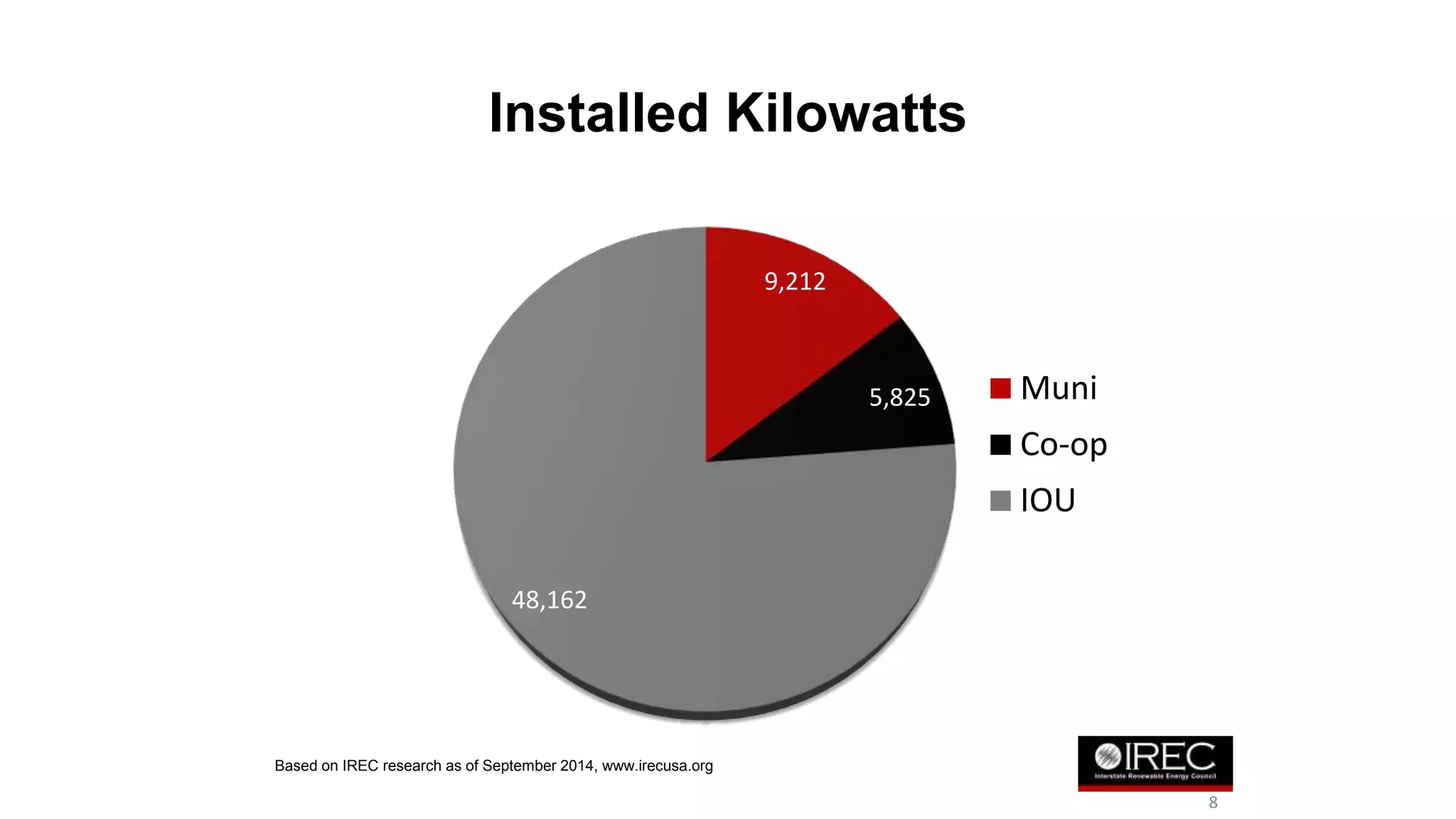
Installed Kilowatts 
Based on IREC research as of September 2014, www.irecusa.org 
9,212 
5,825 
48,162 
Muni 
Co-op 
IOU 
8
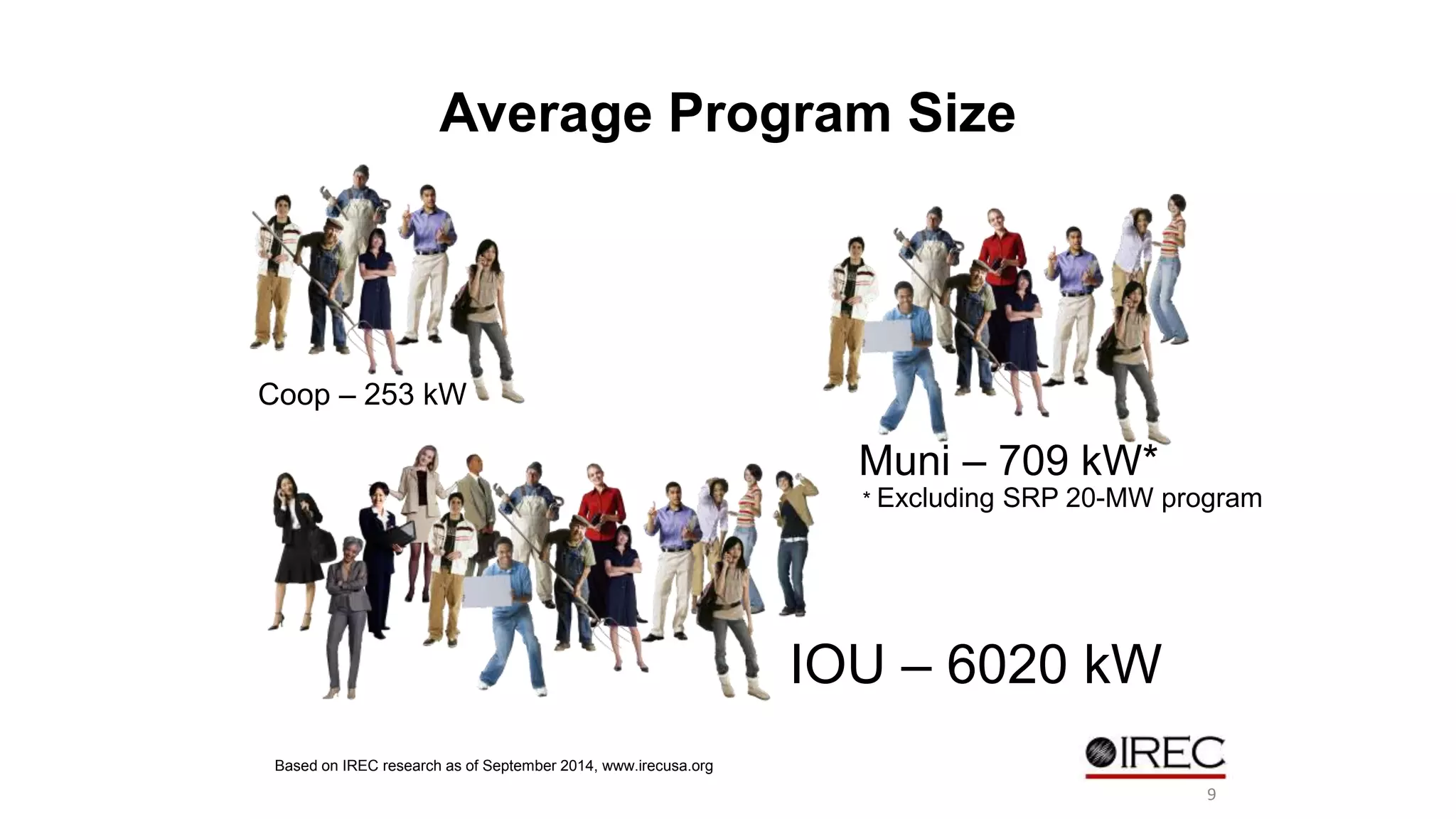
Average Program Size 
Coop – 253 kW 
Muni – 709 kW* 
* Excluding SRP 20-MW program 
IOU – 6020 kW 
Based on IREC research as of September 2014, www.irecusa.org 
9
Critical Program Elements 
1. Allocating the benefits of participation 
2. Valuation of the energy produced 
3. Program administration 
4. Shared solar facility ownership 
5. Shared solar facility size and location 
10
Additional Considerations 
• Number of program participants 
• Minimum and maximum subscription sizes 
• Portability and transferability of participation 
• REC ownership 
• Consumer protection 
• And more… 
Ultimately, the community’s goals, 
priorities and constraints determine 
what the program looks like 
11
What’s Next? 
• Programs nearing implementation: 
– Minnesota Community Solar Gardens 
– Washington, DC Community Renewable 
Energy Facilities 
– California Green Tariff Shared Renewables 
programs 
– Utility-level projects and programs 
12
What’s Next? 
Policy considerations—how can we: 
• Maximize grid benefits and minimize 
interconnection costs? 
– Interaction with distribution planning and 
interconnection procedures 
• Reach more low- and moderate-income 
consumers? 
– Interaction with financing opportunities 
13
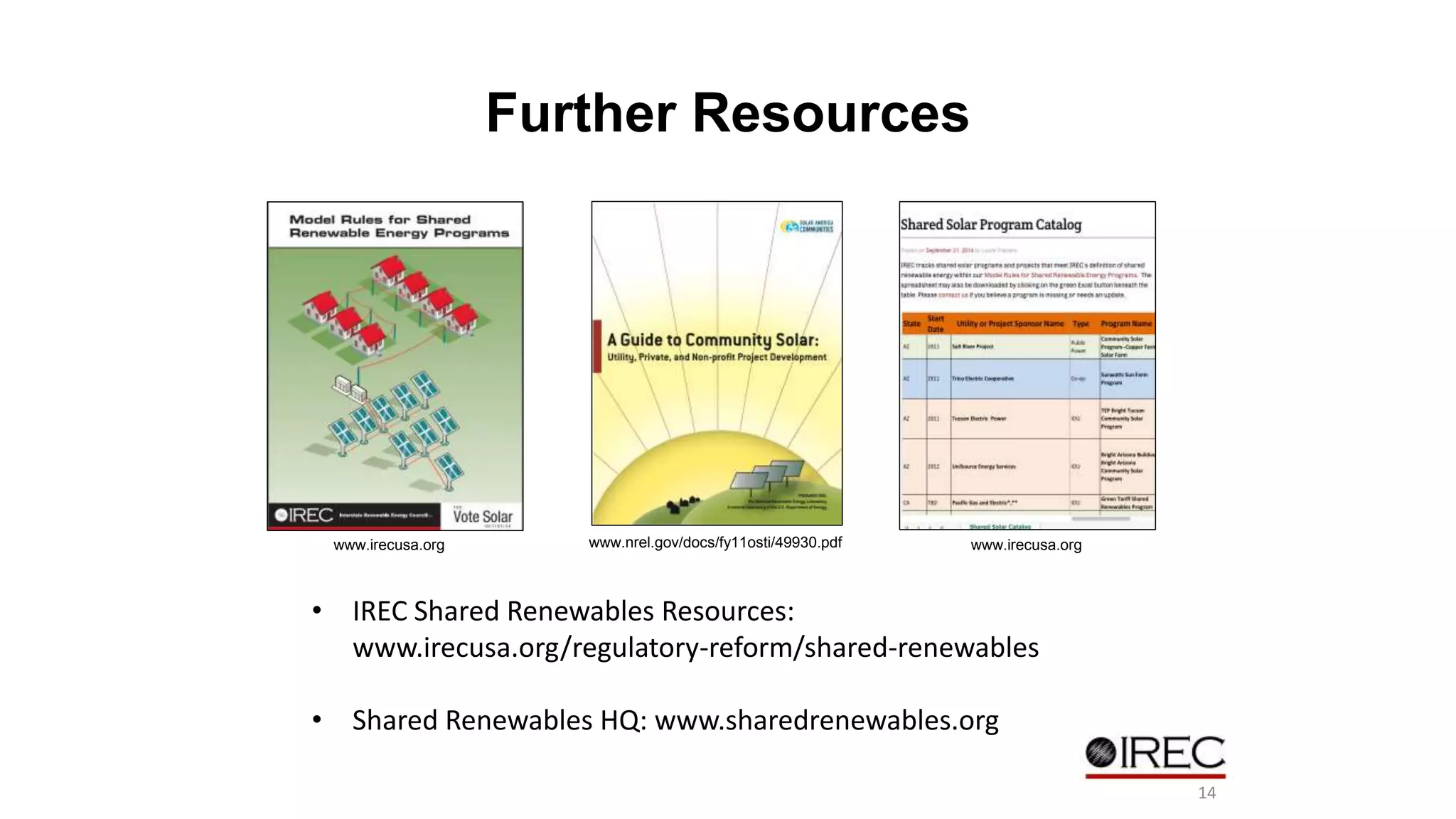
Further Resources 
www.nrel.gov/docs/fy11osti/49930.pdf 
www.irecusa.org www.irecusa.org 
• IREC Shared Renewables Resources: 
www.irecusa.org/regulatory-reform/shared-renewables 
• Shared Renewables HQ: www.sharedrenewables.org 
14
For more information 
Erica Schroeder McConnell 
emcconnell@kfwlaw.com

Shared Solar: What's Working & What's Next

  • 1.
    Shared Solar: What’sWorking, What’s Next Erica Schroeder McConnell Keyes, Fox & Wiedman LLP October 22, 2014 www.irecusa.org @IRECUSA #3iForum
  • 2.
    Why Shared Solar? I want to benefit from renewable energy generation, but I… – Rent my apartment – Live in a multitenant building (e.g., a condo) – Have insufficient or problematic roof space (e.g., too shady) – Am just not interested in on-site generation (maintenance responsibility, aesthetic issues, etc.) 2 Only 25% of residential roofs permit on-site generation Paidpati, Frantzis, Sawyer and Kurrasch, Nat’l Renewable Energy Lab., Rooftop Photovoltaics Market Penetration Scenarios, (Feb. 2008), available at http://www.nrel.gov/docs/fy08osti/42306.pdf.
  • 3.
    Serving More EnergyConsumers Net Metering Shared Solar If just 5% of U.S. households invested in a 5-kW interest in a shared solar system… … we’d see over 28 GW of additional solar capacity! http://quickfacts.census.gov/qfd/states/00000.html The Vote Solar Initiative 3
  • 4.
    Guiding Principles forShared Solar 1 2 3 4 IREC, Model Rules for Shared Renewable Energy Programs (2013), www.irecusa.org/wp-content/ uploads/2013/06/IREC-Model-Rules-for-Shared-Renewable-Energy-Programs-2013.pdf 4
  • 5.
    Shared Solar Growthin the U.S. 2006 2007 2008 2009 2010 2011 2012 2013 2014 Future Based on IREC research as of September 2014, www.irecusa.org MD: D C 5
  • 6.
    Program Implementation OverTime 12 10 8 6 4 2 0 IOU Co-op Muni Based on IREC research as of September 2014, www.irecusa.org 6
  • 7.
    Type of EnergyService Provider Based on IREC research as of September 2014, www.irecusa.org 25 13 16 Co-op IOU Muni 7
  • 8.
    Installed Kilowatts Basedon IREC research as of September 2014, www.irecusa.org 9,212 5,825 48,162 Muni Co-op IOU 8
  • 9.
    Average Program Size Coop – 253 kW Muni – 709 kW* * Excluding SRP 20-MW program IOU – 6020 kW Based on IREC research as of September 2014, www.irecusa.org 9
  • 10.
    Critical Program Elements 1. Allocating the benefits of participation 2. Valuation of the energy produced 3. Program administration 4. Shared solar facility ownership 5. Shared solar facility size and location 10
  • 11.
    Additional Considerations •Number of program participants • Minimum and maximum subscription sizes • Portability and transferability of participation • REC ownership • Consumer protection • And more… Ultimately, the community’s goals, priorities and constraints determine what the program looks like 11
  • 12.
    What’s Next? •Programs nearing implementation: – Minnesota Community Solar Gardens – Washington, DC Community Renewable Energy Facilities – California Green Tariff Shared Renewables programs – Utility-level projects and programs 12
  • 13.
    What’s Next? Policyconsiderations—how can we: • Maximize grid benefits and minimize interconnection costs? – Interaction with distribution planning and interconnection procedures • Reach more low- and moderate-income consumers? – Interaction with financing opportunities 13
  • 14.
    Further Resources www.nrel.gov/docs/fy11osti/49930.pdf www.irecusa.org www.irecusa.org • IREC Shared Renewables Resources: www.irecusa.org/regulatory-reform/shared-renewables • Shared Renewables HQ: www.sharedrenewables.org 14
  • 15.
    For more information Erica Schroeder McConnell emcconnell@kfwlaw.com