Friends House Retirement Community
Renewable Energy Outlook – Solar Presentation
Tom Weirich, Chief Operating Officer
October 7, 2015| Sandy Spring, MD
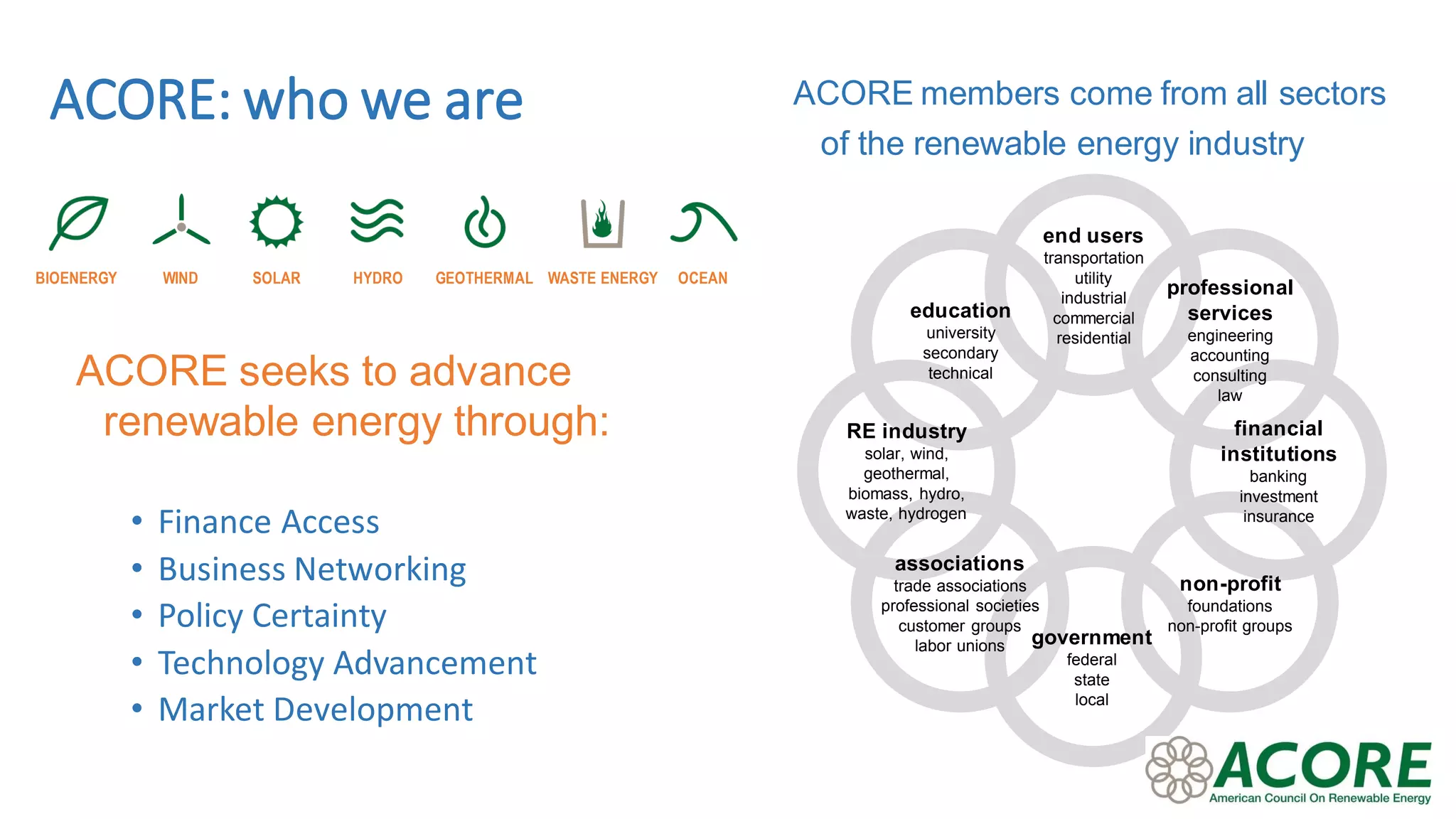
ACORE: who we are
ACORE seeks to advance
renewable energy through:
• Finance Access
• Business Networking
• Policy Certainty
• Technology Advancement
• Market Development
ACORE members come from all sectors
of the renewable energy industry
end users
transportation
utility
industrial
commercial
residential
professional
services
engineering
accounting
consulting
law
financial
institutions
banking
investment
insurance
government
federal
state
local
associations
trade associations
professional societies
customer groups
labor unions
RE industry
solar, wind,
geothermal,
biomass, hydro,
waste, hydrogen
education
university
secondary
technical
non-profit
foundations
non-profit groups
BIOENERGY SOLARWIND HYDRO WASTE ENERGY OCEANGEOTHERMAL
Members and Partners
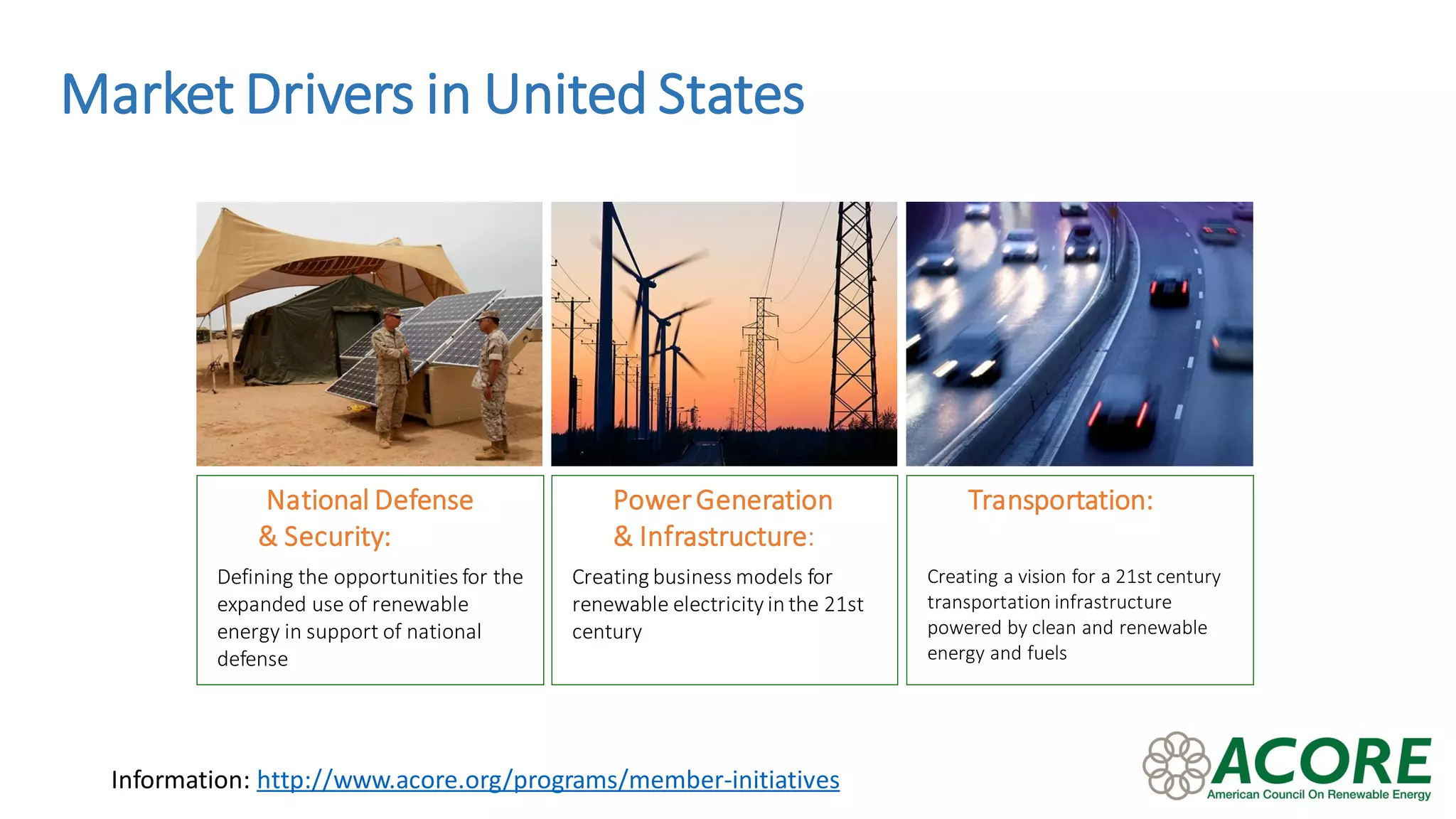
Market Drivers in United States
Information: http://www.acore.org/programs/member-initiatives
National Defense
& Security:
Defining the opportunities for the
expanded use of renewable
energy in support of national
defense
PowerGeneration
& Infrastructure:
Creating business models for
renewable electricity in the 21st
century
Transportation:
Creating a vision for a 21st century
transportation infrastructure
powered by clean and renewable
energy and fuels
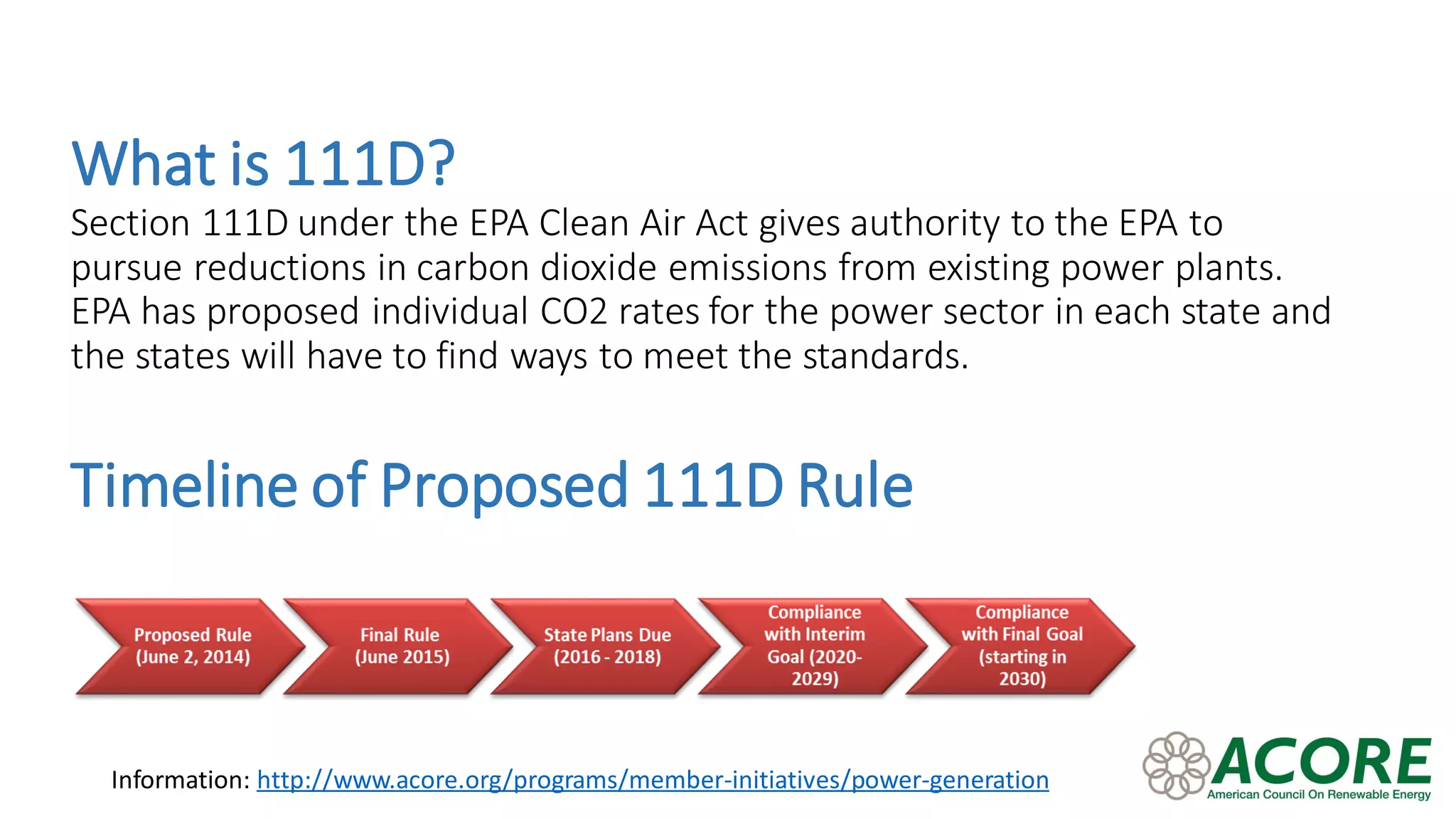
What is 111D?
Section 111D under the EPA Clean Air Act gives authority to the EPA to
pursue reductions in carbon dioxide emissions from existing power plants.
EPA has proposed individual CO2 rates for the power sector in each state and
the states will have to find ways to meet the standards.
Timeline of Proposed 111D Rule
Information: http://www.acore.org/programs/member-initiatives/power-generation
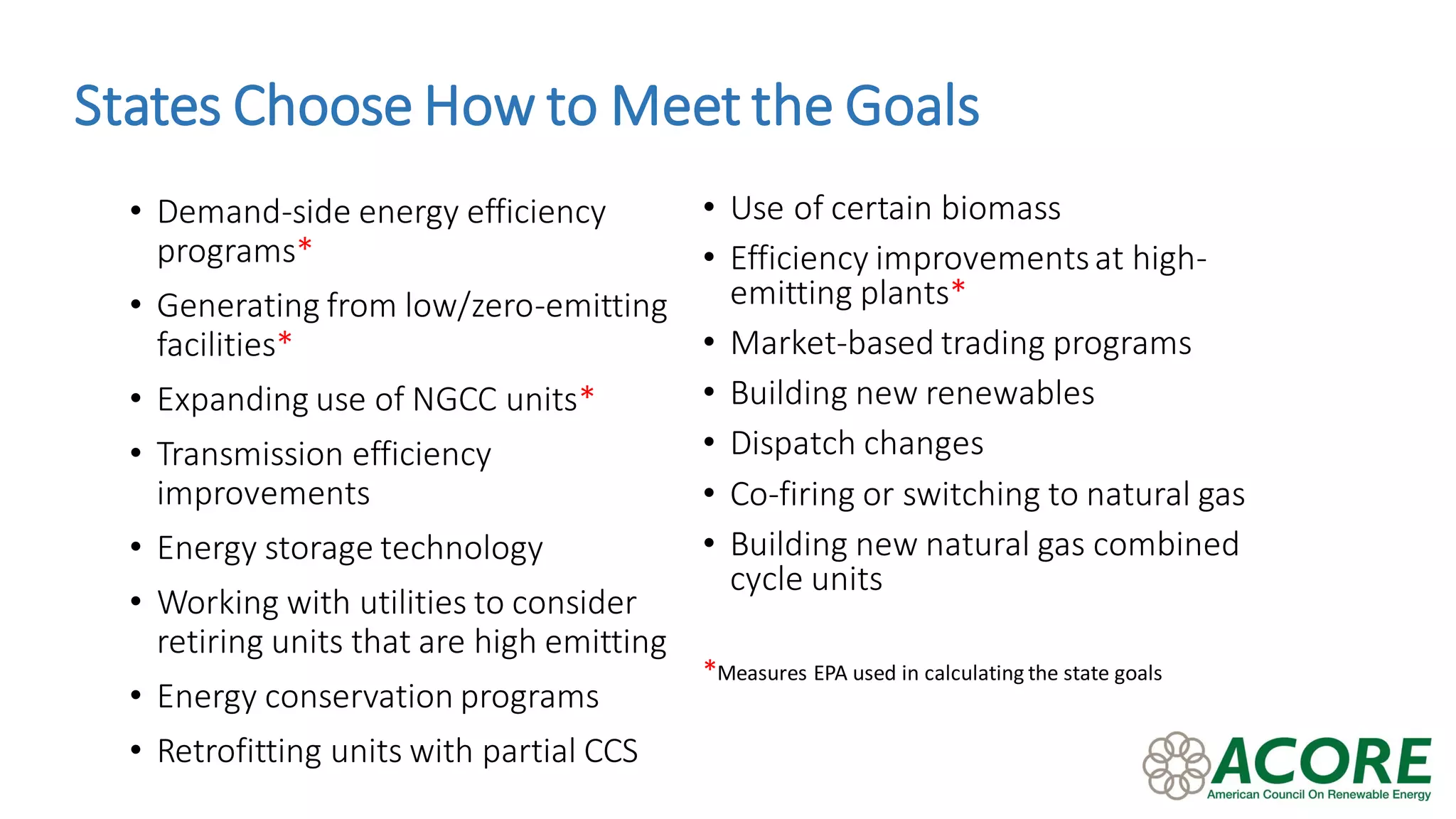
States Choose How to Meet the Goals
• Use of certain biomass
• Efficiency improvementsat high-
emitting plants*
• Market-based trading programs
• Building new renewables
• Dispatch changes
• Co-firing or switching to natural gas
• Building new natural gas combined
cycle units
*Measures EPA used in calculating the state goals
• Demand-side energy efficiency
programs*
• Generating from low/zero-emitting
facilities*
• Expanding use of NGCC units*
• Transmission efficiency
improvements
• Energy storage technology
• Working with utilities to consider
retiring units that are high emitting
• Energy conservation programs
• Retrofitting units with partial CCS
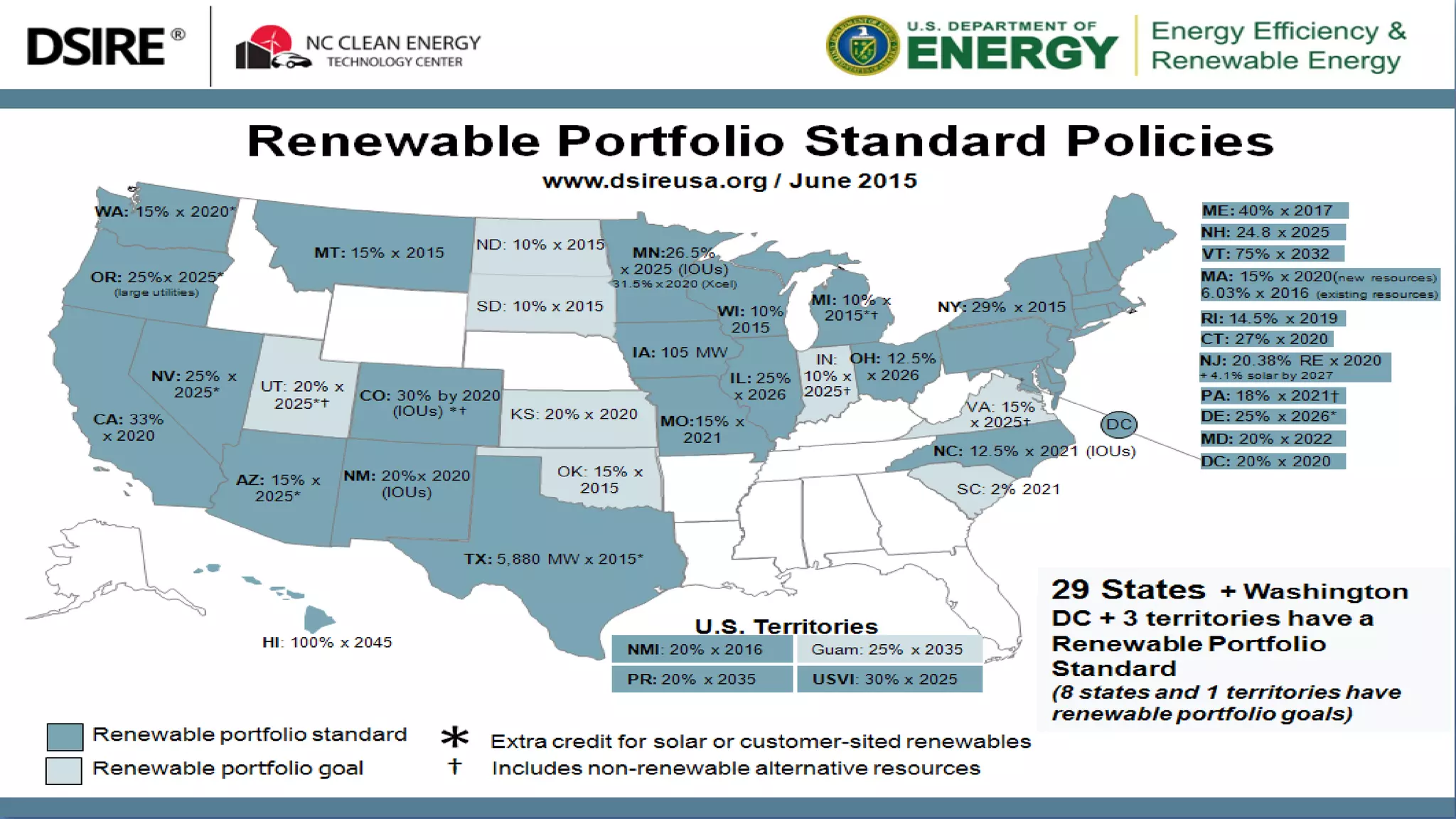
• RenewablePortfolio Standard: 20% with a target for 2% solar by 2022.
• In 2013 Solar Photovoltaicinstalled capacity was 152 MW
• MD seeksto install the majority of its 1.2 GW solar energy goal within the
next six years
• Net metering: All utilities; projects up to 2 MW (or 200% of customer
usage); aggregated net metering is allowed for certain customers
• Financial incentives: Rebates and grants for a variety of renewable
energy systems and applications, including solar PV in parking lots with
EV chargers; solar renewable energy credits; property and sales tax
incentives
• “Earlier this year, the General Assembly passed legislation that once
signed by Governor Hogan, will createcommunity solar projects
throughout the state. These community solar projects will allow
Maryland residential energy customers who are unable to install solar
panels on their property to have a choice when it comes to their
energy needs.” http://www.baltimoresun.com/news/opinion/readersrespond/bs-ed-solar-letter-20150521-story.html
Maryland Solar Incentives
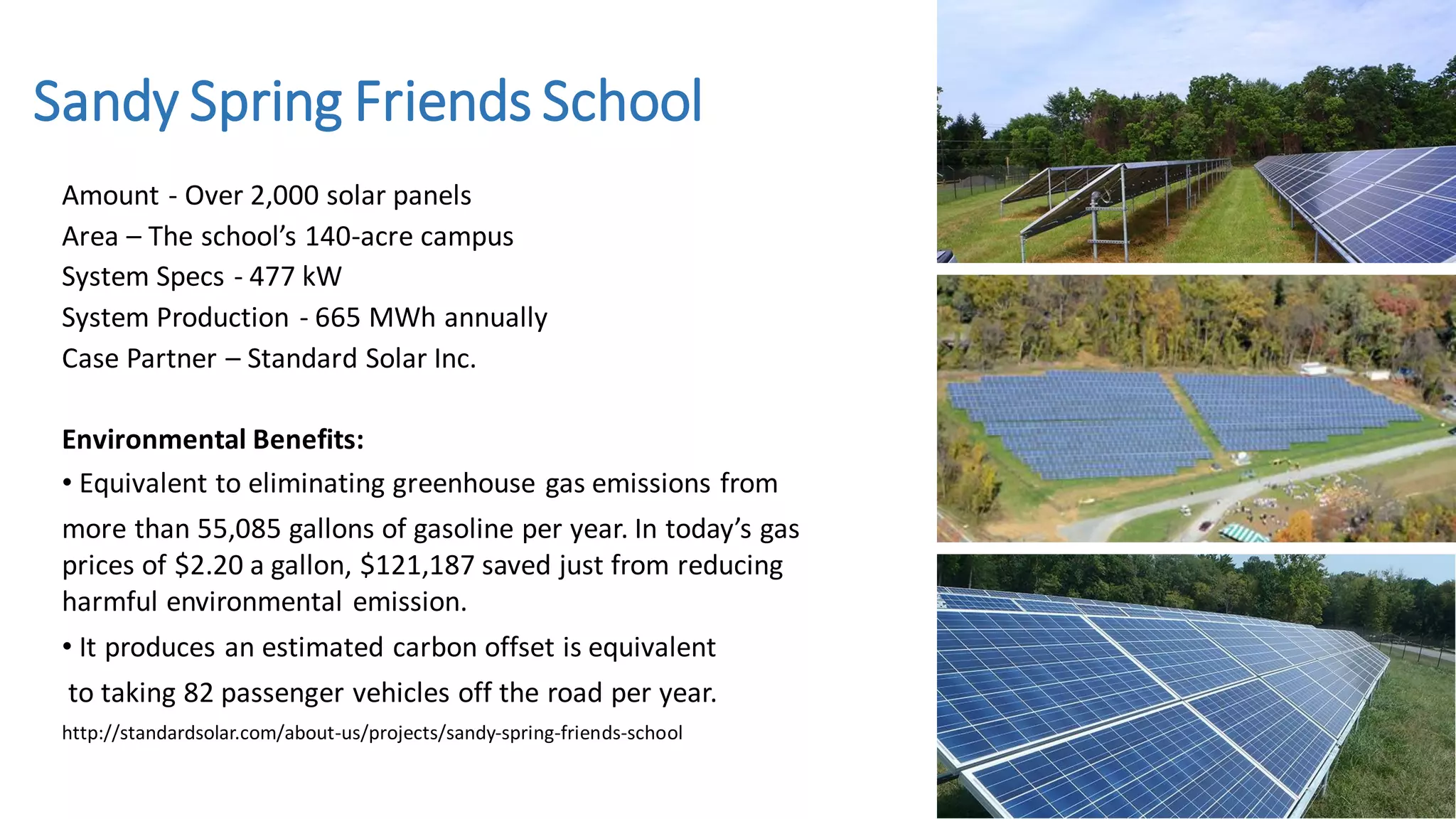
Amount - Over 2,000 solar panels
Area – The school’s 140-acre campus
System Specs - 477 kW
System Production - 665 MWh annually
Case Partner – Standard Solar Inc.
Environmental Benefits:
• Equivalent to eliminating greenhouse gas emissions from
more than 55,085 gallons of gasoline per year. In today’s gas
prices of $2.20 a gallon, $121,187 saved just from reducing
harmful environmental emission.
• It produces an estimated carbon offset is equivalent
to taking 82 passenger vehicles off the road per year.
http://standardsolar.com/about-us/projects/sandy-spring-friends-school
Sandy Spring Friends School
Thank you
Tom Weirich
Chief Operating Officer
American Council On Renewable Energy (ACORE)
1600 K Street, NW; Suite 650
Washington, DC 20006
Tel: +1 (202) 777-7582
Email: weirich@acore.org
Twitter: @tomweirich
LinkedIn: www.linkedin.com/in/tomweirich/
Web: www.acore.org

ACORE_FriendsHouse_Presentation_TW_10_7_15

  • 1.
    Friends House RetirementCommunity Renewable Energy Outlook – Solar Presentation Tom Weirich, Chief Operating Officer October 7, 2015| Sandy Spring, MD
  • 2.
    ACORE: who weare ACORE seeks to advance renewable energy through: • Finance Access • Business Networking • Policy Certainty • Technology Advancement • Market Development ACORE members come from all sectors of the renewable energy industry end users transportation utility industrial commercial residential professional services engineering accounting consulting law financial institutions banking investment insurance government federal state local associations trade associations professional societies customer groups labor unions RE industry solar, wind, geothermal, biomass, hydro, waste, hydrogen education university secondary technical non-profit foundations non-profit groups BIOENERGY SOLARWIND HYDRO WASTE ENERGY OCEANGEOTHERMAL
  • 3.
  • 4.
    Market Drivers inUnited States Information: http://www.acore.org/programs/member-initiatives National Defense & Security: Defining the opportunities for the expanded use of renewable energy in support of national defense PowerGeneration & Infrastructure: Creating business models for renewable electricity in the 21st century Transportation: Creating a vision for a 21st century transportation infrastructure powered by clean and renewable energy and fuels
  • 6.
    What is 111D? Section111D under the EPA Clean Air Act gives authority to the EPA to pursue reductions in carbon dioxide emissions from existing power plants. EPA has proposed individual CO2 rates for the power sector in each state and the states will have to find ways to meet the standards. Timeline of Proposed 111D Rule Information: http://www.acore.org/programs/member-initiatives/power-generation
  • 7.
    States Choose Howto Meet the Goals • Use of certain biomass • Efficiency improvementsat high- emitting plants* • Market-based trading programs • Building new renewables • Dispatch changes • Co-firing or switching to natural gas • Building new natural gas combined cycle units *Measures EPA used in calculating the state goals • Demand-side energy efficiency programs* • Generating from low/zero-emitting facilities* • Expanding use of NGCC units* • Transmission efficiency improvements • Energy storage technology • Working with utilities to consider retiring units that are high emitting • Energy conservation programs • Retrofitting units with partial CCS
  • 8.
    • RenewablePortfolio Standard:20% with a target for 2% solar by 2022. • In 2013 Solar Photovoltaicinstalled capacity was 152 MW • MD seeksto install the majority of its 1.2 GW solar energy goal within the next six years • Net metering: All utilities; projects up to 2 MW (or 200% of customer usage); aggregated net metering is allowed for certain customers • Financial incentives: Rebates and grants for a variety of renewable energy systems and applications, including solar PV in parking lots with EV chargers; solar renewable energy credits; property and sales tax incentives • “Earlier this year, the General Assembly passed legislation that once signed by Governor Hogan, will createcommunity solar projects throughout the state. These community solar projects will allow Maryland residential energy customers who are unable to install solar panels on their property to have a choice when it comes to their energy needs.” http://www.baltimoresun.com/news/opinion/readersrespond/bs-ed-solar-letter-20150521-story.html Maryland Solar Incentives
  • 9.
    Amount - Over2,000 solar panels Area – The school’s 140-acre campus System Specs - 477 kW System Production - 665 MWh annually Case Partner – Standard Solar Inc. Environmental Benefits: • Equivalent to eliminating greenhouse gas emissions from more than 55,085 gallons of gasoline per year. In today’s gas prices of $2.20 a gallon, $121,187 saved just from reducing harmful environmental emission. • It produces an estimated carbon offset is equivalent to taking 82 passenger vehicles off the road per year. http://standardsolar.com/about-us/projects/sandy-spring-friends-school Sandy Spring Friends School
  • 10.
    Thank you Tom Weirich ChiefOperating Officer American Council On Renewable Energy (ACORE) 1600 K Street, NW; Suite 650 Washington, DC 20006 Tel: +1 (202) 777-7582 Email: weirich@acore.org Twitter: @tomweirich LinkedIn: www.linkedin.com/in/tomweirich/ Web: www.acore.org