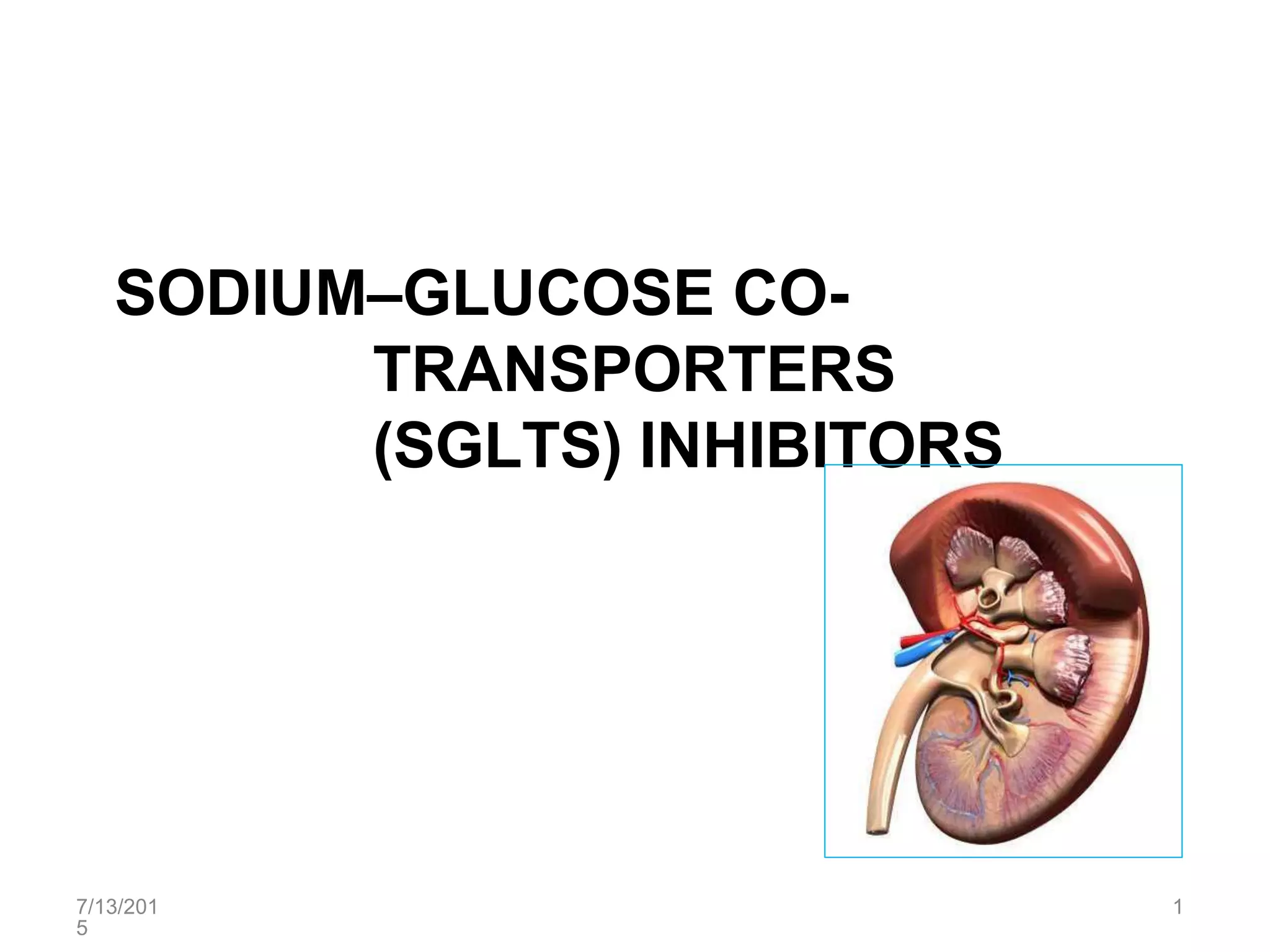
SODIUM–GLUCOSE CO-
TRANSPORTERS
(SGLTS) INHIBITORS
7/13/201
5
1
7/13/201
5
2
INTRODUCTI
ON
• T2DM progressive β-cell dysfunction &
peripheral insulin resistance
• Persisting hyperglycemia β-cell
dysfunction & worsens insulin resistance
• T2DM obese, HTN and dyslipidemia
• Need arises for new, well tolerated in all
stages of disease
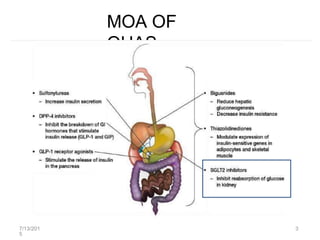
MOA OF
OHAS
7/13/201
5
3
HISTO
RY
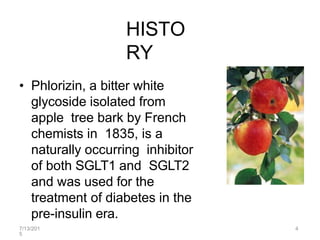
• Phlorizin, a bitter white
glycoside isolated from
apple tree bark by French
chemists in 1835, is a
naturally occurring inhibitor
of both SGLT1 and SGLT2
and was used for the
treatment of diabetes in the
pre-insulin era.
7/13/201
5
4
7/13/201
5
5
Familial Renal
Glycosuria
• A rare inherited condition caused by a
mutation in the SGLT2 gene.
• Patients with this condition have varying
degrees of glycosuria
• They remain asymptomatic
• They do not become dehydrated or
become hypoglycemic
• They can excrete up to 125 g of glucose/day.
7/13/201
5
6
SGLT2-
INHIBITORS
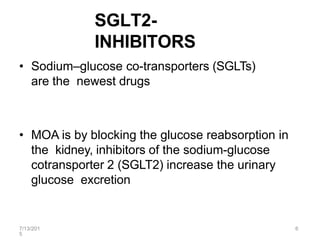
• Sodium–glucose co-transporters (SGLTs)
are the newest drugs
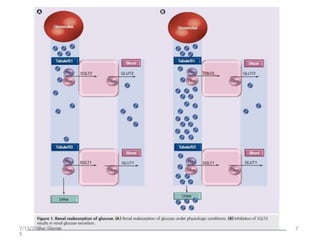
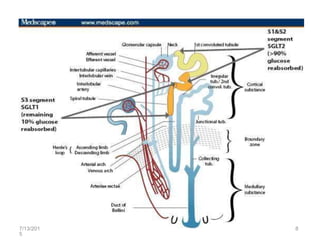
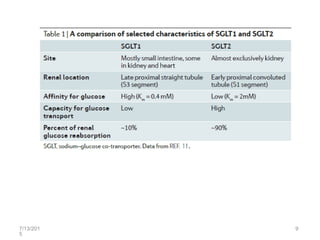
• MOA is by blocking the glucose reabsorption in
the kidney, inhibitors of the sodium-glucose
cotransporter 2 (SGLT2) increase the urinary
glucose excretion
7/13/201
5
7
7/13/201
5
8
7/13/201
5
9
HOW ARE SGLT2 INHIBITORS DIFFERENT
FROM OTHER ANTI-
HYPERGLYCEMIC AGENTS?
• Non-insulin dependent
mechanism
• SGLT2 inhibitors can be used in early
or late type 2 diabetes
7/13/201
5
10
7/13/201
5
11
FDA APPROVED SGLT2
INHIBITORS
 Canagliflozin (INVOKANA)™
• Approved March 2013
 Dapagliflozin (FARXIGA)™
• Approved in Europe since 2012
• FDA declined approval in 2012 due to possible cancer
signal with drug
• FDA recommends approval December 2013
• Approved January 2014
 Empagliflozin ( Jardiance ) ™
• Approved in January 2014
7/13/201
5
12
CANAGLIFLOZIN
(INVOKANA)™
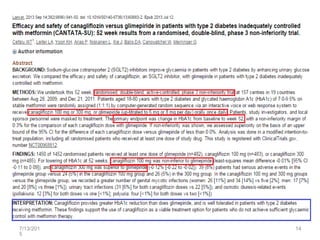
• Reduces glucose absorption by 31% in first hour and
20% by next hour of food intake.
• Dosage:- : Initial: 100 mg once daily prior to first meal
of the day; may increase to 300 mg once daily (only in
patients with GFR ≥60 mL/minute/1.73 m2)
• Drug interactions :- UGT inducers (e.g., rifampin,
phenytoin, phenobarbital, ritonavir) se metabolism of
CFZ.
• C/I- renal impairement
7/13/201
5
13
7/13/201
5
14
7/13/201
5
15
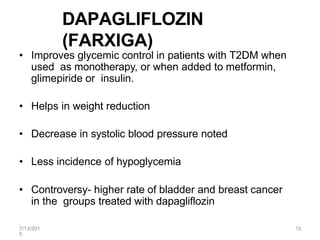
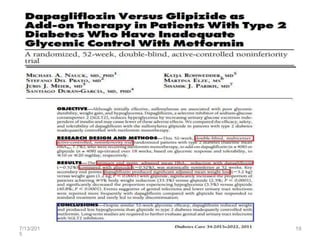
DAPAGLIFLOZIN
(FARXIGA)
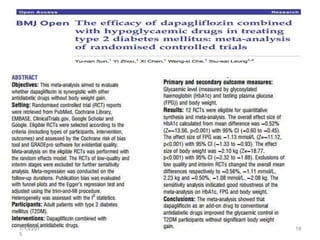
• Improves glycemic control in patients with T2DM when
used as monotherapy, or when added to metformin,
glimepiride or insulin.
• Helps in weight reduction
• Decrease in systolic blood pressure noted
• Less incidence of hypoglycemia
• Controversy- higher rate of bladder and breast cancer
in the groups treated with dapagliflozin
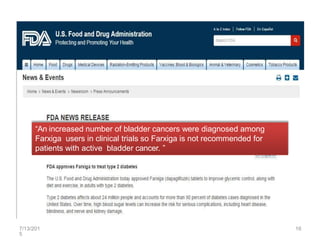
“An increased number of bladder cancers were diagnosed among
Farxiga users in clinical trials so Farxiga is not recommended for
patients with active bladder cancer. ”
7/13/201
5
16
7/13/201
5
17
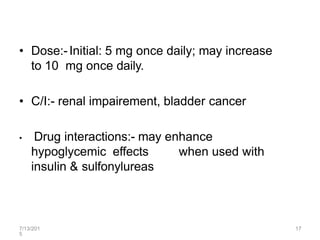
• Dose:-Initial: 5 mg once daily; may increase
to 10 mg once daily.
• C/I:- renal impairement, bladder cancer
• Drug interactions:- may enhance
hypoglycemic effects when used with
insulin & sulfonylureas
7/13/201
5
18
7/13/201
5
19
7/13/201
5
20
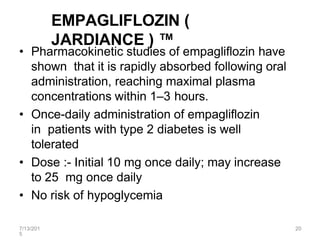
EMPAGLIFLOZIN (
JARDIANCE ) ™
• Pharmacokinetic studies of empagliflozin have
shown that it is rapidly absorbed following oral
administration, reaching maximal plasma
concentrations within 1–3 hours.
• Once-daily administration of empagliflozin
in patients with type 2 diabetes is well
tolerated
• Dose :- Initial 10 mg once daily; may increase
to 25 mg once daily
• No risk of hypoglycemia
7/13/201
5
21
• C/I in renal impairement
• No hepatic impairement
• No drug interactions with CVS drugs like
verapamil, ramipril, digoxin, and anticoagulant
warfarin.
7/13/201
5
22
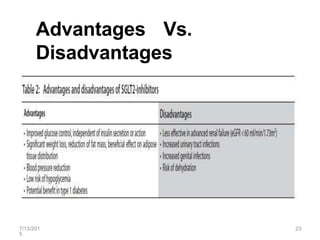
Advantages Vs.
Disadvantages
7/13/201
5
23
7/13/201
5
24
CONCLUSIO
NS
• SGLT2 inhibitors are a new option in
treatment for type 2 diabetes
• Insulin independent mechanism of action allows
use in early and late stages of diabetes
• Weight loss is a desirable side effect
• Long term outcome studies are necessary to
assess risk of cardiovascular events
7/13/201
5
25

sglt2-160421141320 (1) (2).pptx

  • 1.
  • 2.
    7/13/201 5 2 INTRODUCTI ON • T2DM progressiveβ-cell dysfunction & peripheral insulin resistance • Persisting hyperglycemia β-cell dysfunction & worsens insulin resistance • T2DM obese, HTN and dyslipidemia • Need arises for new, well tolerated in all stages of disease
  • 3.
  • 4.
    HISTO RY • Phlorizin, abitter white glycoside isolated from apple tree bark by French chemists in 1835, is a naturally occurring inhibitor of both SGLT1 and SGLT2 and was used for the treatment of diabetes in the pre-insulin era. 7/13/201 5 4
  • 5.
    7/13/201 5 5 Familial Renal Glycosuria • Arare inherited condition caused by a mutation in the SGLT2 gene. • Patients with this condition have varying degrees of glycosuria • They remain asymptomatic • They do not become dehydrated or become hypoglycemic • They can excrete up to 125 g of glucose/day.
  • 6.
    7/13/201 5 6 SGLT2- INHIBITORS • Sodium–glucose co-transporters(SGLTs) are the newest drugs • MOA is by blocking the glucose reabsorption in the kidney, inhibitors of the sodium-glucose cotransporter 2 (SGLT2) increase the urinary glucose excretion
  • 7.
  • 8.
  • 9.
  • 10.
    HOW ARE SGLT2INHIBITORS DIFFERENT FROM OTHER ANTI- HYPERGLYCEMIC AGENTS? • Non-insulin dependent mechanism • SGLT2 inhibitors can be used in early or late type 2 diabetes 7/13/201 5 10
  • 11.
    7/13/201 5 11 FDA APPROVED SGLT2 INHIBITORS Canagliflozin (INVOKANA)™ • Approved March 2013  Dapagliflozin (FARXIGA)™ • Approved in Europe since 2012 • FDA declined approval in 2012 due to possible cancer signal with drug • FDA recommends approval December 2013 • Approved January 2014  Empagliflozin ( Jardiance ) ™ • Approved in January 2014
  • 12.
    7/13/201 5 12 CANAGLIFLOZIN (INVOKANA)™ • Reduces glucoseabsorption by 31% in first hour and 20% by next hour of food intake. • Dosage:- : Initial: 100 mg once daily prior to first meal of the day; may increase to 300 mg once daily (only in patients with GFR ≥60 mL/minute/1.73 m2) • Drug interactions :- UGT inducers (e.g., rifampin, phenytoin, phenobarbital, ritonavir) se metabolism of CFZ. • C/I- renal impairement
  • 13.
  • 14.
  • 15.
    7/13/201 5 15 DAPAGLIFLOZIN (FARXIGA) • Improves glycemiccontrol in patients with T2DM when used as monotherapy, or when added to metformin, glimepiride or insulin. • Helps in weight reduction • Decrease in systolic blood pressure noted • Less incidence of hypoglycemia • Controversy- higher rate of bladder and breast cancer in the groups treated with dapagliflozin
  • 16.
    “An increased numberof bladder cancers were diagnosed among Farxiga users in clinical trials so Farxiga is not recommended for patients with active bladder cancer. ” 7/13/201 5 16
  • 17.
    7/13/201 5 17 • Dose:-Initial: 5mg once daily; may increase to 10 mg once daily. • C/I:- renal impairement, bladder cancer • Drug interactions:- may enhance hypoglycemic effects when used with insulin & sulfonylureas
  • 18.
  • 19.
  • 20.
    7/13/201 5 20 EMPAGLIFLOZIN ( JARDIANCE )™ • Pharmacokinetic studies of empagliflozin have shown that it is rapidly absorbed following oral administration, reaching maximal plasma concentrations within 1–3 hours. • Once-daily administration of empagliflozin in patients with type 2 diabetes is well tolerated • Dose :- Initial 10 mg once daily; may increase to 25 mg once daily • No risk of hypoglycemia
  • 21.
    7/13/201 5 21 • C/I inrenal impairement • No hepatic impairement • No drug interactions with CVS drugs like verapamil, ramipril, digoxin, and anticoagulant warfarin.
  • 22.
  • 23.
  • 24.
    7/13/201 5 24 CONCLUSIO NS • SGLT2 inhibitorsare a new option in treatment for type 2 diabetes • Insulin independent mechanism of action allows use in early and late stages of diabetes • Weight loss is a desirable side effect • Long term outcome studies are necessary to assess risk of cardiovascular events
  • 25.