











Imeglimin, What
is new?
Usama Ragab Youssif, MD
Lecturer of Medicine
5th International ISMA Conference
Hybrid Event – Tolip Elforsan Ismailia
2nd – 4th March 2022
New Drugs in Diabetes Session
Email: usamaragab@medicine.zu.edu.eg
Slideshare: https://www.slideshare.net/dr4spring/
Mobile: 00201000035863
Who Know Imeglimin?
Who
remember
Mitochondria?
Agenda
Mitochondrial function and dysfunction
Mitochondrial (dys)function in diabetes
Diabetes core defects and Imeglimin
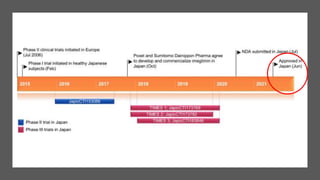
Imeglimin drug development and approval
Imeglimin and Heart
Take-home message
Agenda
Mitochondrial function and dysfunction
Mitochondrial (dys)function in diabetes
Diabetes core defects and Imeglimin
Imeglimin drug development and approval
Imeglimin and Heart
Take-home message
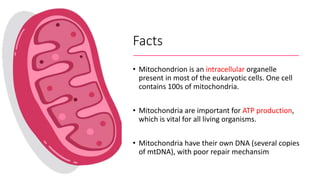
Facts
• Mitochondrion is an intracellular organelle
present in most of the eukaryotic cells. One cell
contains 100s of mitochondria.
• Mitochondria are important for ATP production,
which is vital for all living organisms.
• Mitochondria have their own DNA (several copies
of mtDNA), with poor repair mechansim
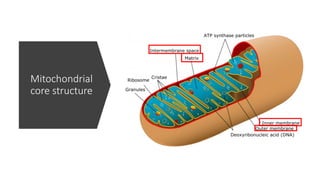
Mitochondrial
core structure
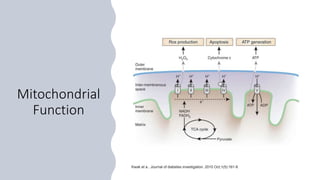
Mitochondrial
Function
Kwak et a.. Journal of diabetes investigation. 2010 Oct;1(5):161-9.
Not only ATP
production
but also
apoptosis and
ROS in excess
Mitochondria are also the prime regulators
of apoptosis.
Oversupply of calories or physical inactivity
can impair the transfer of electrons through
the electron transport chain, leading to
increased production of ROS.
These tissues includes beta cells, muscles,
and myocardium.
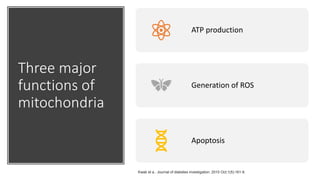
Three major
functions of
mitochondria
ATP production
Generation of ROS
Apoptosis
Kwak et a.. Journal of diabetes investigation. 2010 Oct;1(5):161-9.
The problem
is cumulative
These ROS can damage proteins, lipids and
mtDNA of mitochondria and further
increase the production of ROS = vicious
circle
The mtDNA has poor repair mechanism =
susceptible to oxidative damage and
mutations.
The mtDNA mutations accumulate with age,
and these mutations might play an
important role in the process of senescence
and diabetes
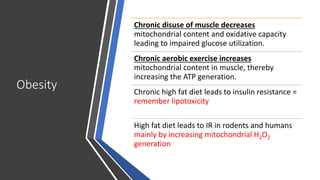
Obesity
Chronic disuse of muscle decreases
mitochondrial content and oxidative capacity
leading to impaired glucose utilization.
Chronic aerobic exercise increases
mitochondrial content in muscle, thereby
increasing the ATP generation.
Chronic high fat diet leads to insulin resistance =
remember lipotoxicity
High fat diet leads to IR in rodents and humans
mainly by increasing mitochondrial H2O2
generation
Not just
obesity
Intrauterine insults
Pollutants such as herbicides
Agenda
Mitochondrial function and dysfunction
Mitochondrial (dys)function in diabetes
Diabetes core defects and Imeglimin
Imeglimin drug development and approval
Imeglimin and Heart
Take-home message
Mitochondrial
dysfunction &
Diabetes
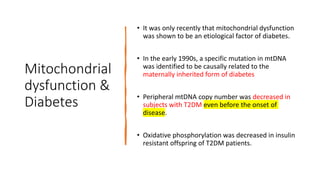
• It was only recently that mitochondrial dysfunction
was shown to be an etiological factor of diabetes.
• In the early 1990s, a specific mutation in mtDNA
was identified to be causally related to the
maternally inherited form of diabetes
• Peripheral mtDNA copy number was decreased in
subjects with T2DM even before the onset of
disease.
• Oxidative phosphorylation was decreased in insulin
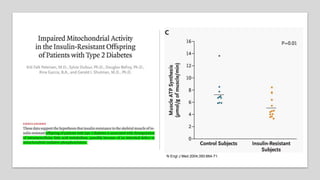
resistant offspring of T2DM patients.
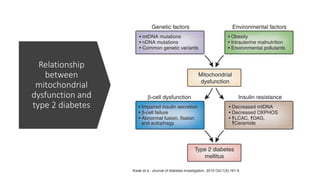
Relationship
between
mitochondrial
dysfunction and
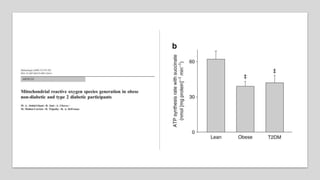
type 2 diabetes
Kwak et a.. Journal of diabetes investigation. 2010 Oct;1(5):161-9.
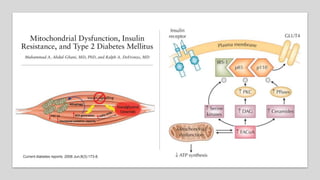
Current diabetes reports. 2008 Jun;8(3):173-8.
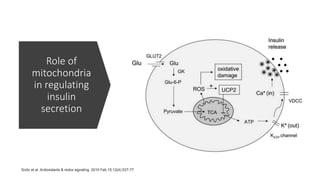
Role of
mitochondria
in regulating
insulin
secretion
Sivitz et al. Antioxidants & redox signaling. 2010 Feb 15;12(4):537-77.
N Engl J Med 2004;350:664-71.
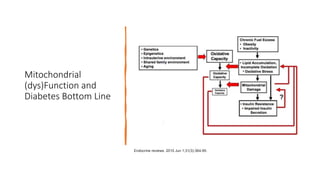
Mitochondrial
(dys)Function and
Diabetes Bottom Line
Endocrine reviews. 2010 Jun 1;31(3):364-95.
Agenda
Mitochondrial function and dysfunction
Mitochondrial (dys)function in diabetes
Diabetes core defects and Imeglimin
Imeglimin drug development and approval
Imeglimin and Heart
Take-home message
Diabetes core
defects
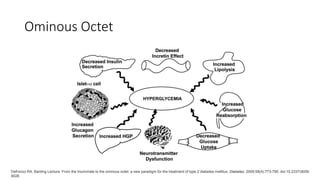
Ominous Octet
Defronzo RA. Banting Lecture. From the triumvirate to the ominous octet: a new paradigm for the treatment of type 2 diabetes mellitus. Diabetes. 2009;58(4):773-795. doi:10.2337/db09-
9028
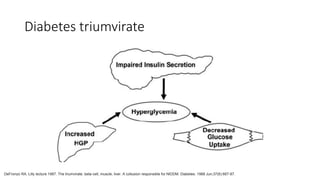
Diabetes triumvirate
DeFronzo RA. Lilly lecture 1987. The triumvirate: beta-cell, muscle, liver. A collusion responsible for NIDDM. Diabetes. 1988 Jun;37(6):667-87.
The ideal
Antidiabetic drug
Correct both insulin secretion defect and insulin
sensitivity defect
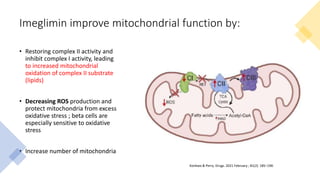
Imeglimin improve mitochondrial function by:
• Restoring complex II activity and
inhibit complex I activity, leading
to increased mitochondrial
oxidation of complex II substrate
(lipids)
• Decreasing ROS production and
protect mitochondria from excess
oxidative stress ; beta cells are
especially sensitive to oxidative
stress
• Increase number of mitochondria
Konkwo & Perry. Drugs. 2021 February ; 81(2): 185–190.
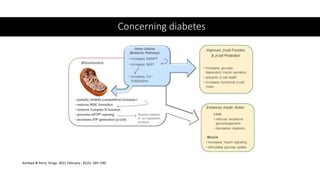
Concerning diabetes
Konkwo & Perry. Drugs. 2021 February ; 81(2): 185–190.
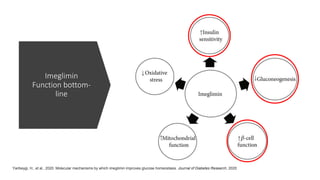
Imeglimin
Function bottom-
line
Yaribeygi, H., et al., 2020. Molecular mechanisms by which imeglimin improves glucose homeostasis. Journal of Diabetes Research, 2020.
Agenda
Mitochondrial function and dysfunction
Mitochondrial (dys)function in diabetes
Diabetes core defects and Imeglimin
Imeglimin drug development and approval
Imeglimin and Heart
Take-home message
Imeglimin
Development
Animal studies
As regard
insulin
secretion and
action
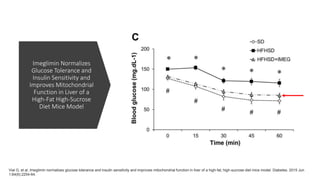
Imeglimin Normalizes
Glucose Tolerance and
Insulin Sensitivity and
Improves Mitochondrial
Function in Liver of a
High-Fat High-Sucrose
Diet Mice Model
Vial G, et al. Imeglimin normalizes glucose tolerance and insulin sensitivity and improves mitochondrial function in liver of a high-fat, high-sucrose diet mice model. Diabetes. 2015 Jun
1;64(6):2254-64.
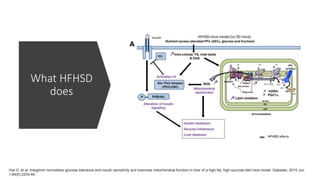
What HFHSD
does
Vial G, et al. Imeglimin normalizes glucose tolerance and insulin sensitivity and improves mitochondrial function in liver of a high-fat, high-sucrose diet mice model. Diabetes. 2015 Jun
1;64(6):2254-64.
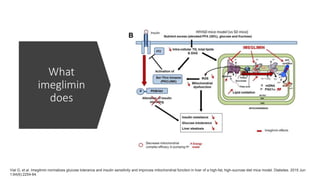
What
imeglimin
does
Vial G, et al. Imeglimin normalizes glucose tolerance and insulin sensitivity and improves mitochondrial function in liver of a high-fat, high-sucrose diet mice model. Diabetes. 2015 Jun
1;64(6):2254-64.
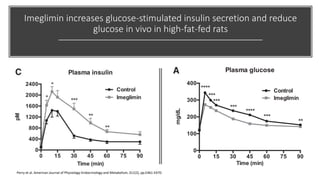
Imeglimin increases glucose-stimulated insulin secretion and reduce
glucose in vivo in high-fat-fed rats
Perry et al. American Journal of Physiology-Endocrinology and Metabolism, 311(2), pp.E461-E470.
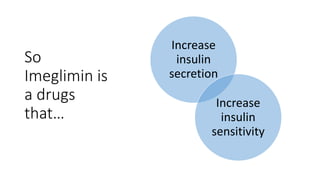
So
Imeglimin is
a drugs
that…
Increase
insulin
secretion
Increase
insulin
sensitivity
Human Studies
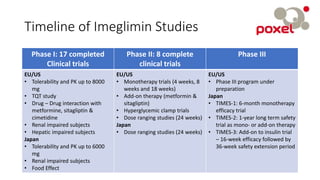
Timeline of Imeglimin Studies
Phase I: 17 completed
Clinical trials
Phase II: 8 complete
clinical trials
Phase III
EU/US
• Tolerability and PK up to 8000
mg
• TQT study
• Drug – Drug interaction with
metformine, sitagliptin &
cimetidine
• Renal impaired subjects
• Hepatic impaired subjects
Japan
• Tolerability and PK up to 6000
mg
• Renal impaired subjects
• Food Effect
EU/US
• Monotherapy trials (4 weeks, 8
weeks and 18 weeks)
• Add-on therapy (metformin &
sitagliptin)
• Hyperglycemic clamp trials
• Dose ranging studies (24 weeks)
Japan
• Dose ranging studies (24 weeks)
EU/US
• Phase III program under
preparation
Japan
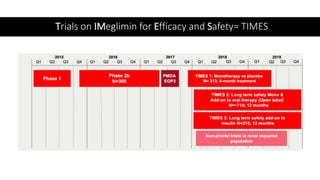
• TIMES-1: 6-month monotherapy
efficacy trial
• TIMES-2: 1-year long term safety
trial as mono- or add-on therapy
• TIMES-3: Add-on to insulin trial
– 16-week efficacy followed by
36-week safety extension period
Trials on IMeglimin for Efficacy and Safety= TIMES
Phase I
• Oral drug, administration twice a day (bid)
• Very low protein binding (1 — 8%)
• Very low hepatic metabolism
• Urinary excretion of unchanged drug
Imeglimin Clearance driven by Creatinine
Clearance
• No drug-drug interaction with metformin,
sitagliptin and cimetidine
• No TQT prolongation
• No PK differences between Caucasian and
Japanese subjects
• No food effect
Phase 2
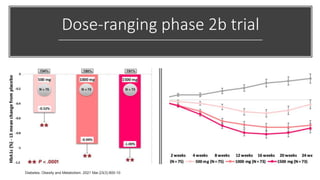
Dose‐ranging phase 2b trial
Diabetes, Obesity and Metabolism. 2021 Mar;23(3):800-10
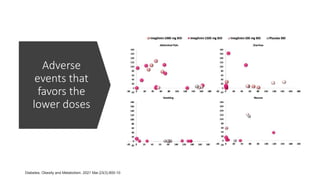
Adverse
events that
favors the
lower doses
Diabetes, Obesity and Metabolism. 2021 Mar;23(3):800-10
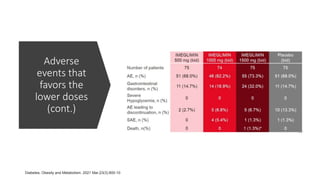
Adverse
events that
favors the
lower doses
(cont.)
Diabetes, Obesity and Metabolism. 2021 Mar;23(3):800-10
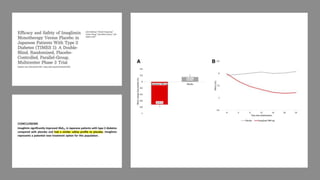
Diabetes Care 36:565–568, 2013
Diabetes Care 2014;37:1924–1930
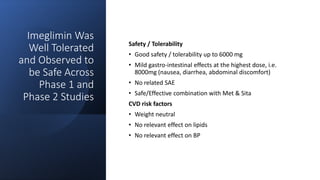
Imeglimin Was
Well Tolerated
and Observed to
be Safe Across
Phase 1 and
Phase 2 Studies
Safety / Tolerability
• Good safety / tolerability up to 6000 mg
• Mild gastro-intestinal effects at the highest dose, i.e.
8000mg (nausea, diarrhea, abdominal discomfort)
• No related SAE
• Safe/Effective combination with Met & Sita
CVD risk factors
• Weight neutral
• No relevant effect on lipids
• No relevant effect on BP
Phase 3
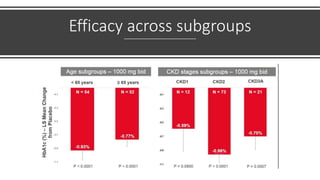
Efficacy across subgroups
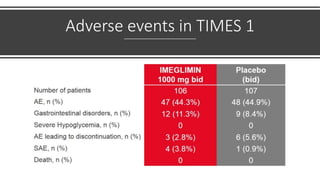
Adverse events in TIMES 1
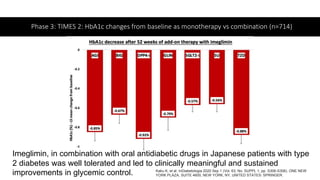
Phase 3: TIMES 2: HbA1c changes from baseline as monotherapy vs combination (n=714)
Imeglimin, in combination with oral antidiabetic drugs in Japanese patients with type
2 diabetes was well tolerated and led to clinically meaningful and sustained
improvements in glycemic control. Kaku K, et al. InDiabetologia 2020 Sep 1 (Vol. 63, No. SUPPL 1, pp. S306-S306). ONE NEW
YORK PLAZA, SUITE 4600, NEW YORK, NY, UNITED STATES: SPRINGER.
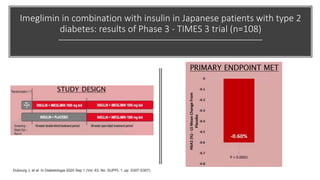
Imeglimin in combination with insulin in Japanese patients with type 2
diabetes: results of Phase 3 - TIMES 3 trial (n=108)
Dubourg J, et al. In Diabetologia 2020 Sep 1 (Vol. 63, No. SUPPL 1, pp. S307-S307).
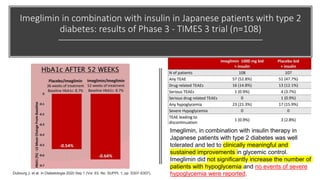
Imeglimin in combination with insulin in Japanese patients with type 2
diabetes: results of Phase 3 - TIMES 3 trial (n=108)
Imeglimin, in combination with insulin therapy in
Japanese patients with type 2 diabetes was well
tolerated and led to clinically meaningful and
sustained improvements in glycemic control.
Imeglimin did not significantly increase the number of
patients with hypoglycemia and no events of severe
hypoglycemia were reported.
Dubourg J, et al. In Diabetologia 2020 Sep 1 (Vol. 63, No. SUPPL 1, pp. S307-S307).
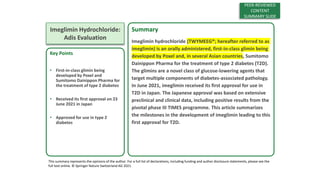
Key Points
• First-in-class glimin being
developed by Poxel and
Sumitomo Dainippon Pharma for
the treatment of type 2 diabetes
• Received its first approval on 23
June 2021 in Japan
• Approved for use in type 2
diabetes
This summary represents the opinions of the author. For a full list of declarations, including funding and author disclosure statements, please see the
full text online. © Springer Nature Switzerland AG 2021.
Imeglimin Hydrochloride: First Approval
Lamb, Y. N. Drugs. 2021. DOI: 10.1007/s40265-021-01589-9
Imeglimin Hydrochloride:
Adis Evaluation
Summary
Imeglimin hydrochloride (TWYMEEG®; hereafter referred to as
imeglimin) is an orally administered, first-in-class glimin being
developed by Poxel and, in several Asian countries, Sumitomo
Dainippon Pharma for the treatment of type 2 diabetes (T2D).
The glimins are a novel class of glucose-lowering agents that
target multiple components of diabetes-associated pathology.
In June 2021, imeglimin received its first approval for use in
T2D in Japan. The Japanese approval was based on extensive
preclinical and clinical data, including positive results from the
pivotal phase III TIMES programme. This article summarizes
the milestones in the development of imeglimin leading to this
first approval for T2D.
PEER-REVIEWED
CONTENT
SUMMARY SLIDE
Agenda
Mitochondrial function and dysfunction
Mitochondrial (dys)function in diabetes
Diabetes core defects and Imeglimin
Imeglimin drug development and approval
Imeglimin and Heart
Take-home message
Imeglimin & CVD
Mitochondrial
dysfunction
affect every
cell in the
body
• It was shown that mitochondrial function
is lower in the myocardium with LV
diastolic dysfunction, which is the
characteristic feature of diabetic
cardiomyopathy
Cell Death Discov. 2016;2:15072.
Imeglimin
and CVD
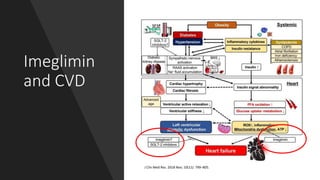
J Clin Med Res. 2018 Nov; 10(11): 799–805.
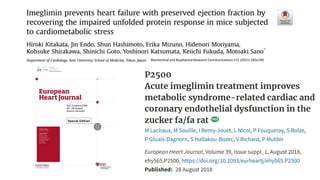
Biochemical and Biophysical Research Communications 572 (2021) 185e190
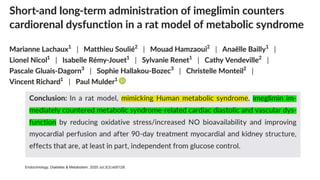
Endocrinology, Diabetes & Metabolism. 2020 Jul;3(3):e00128.
So, It may have “What is beyond
reputation”
Final Bottom line
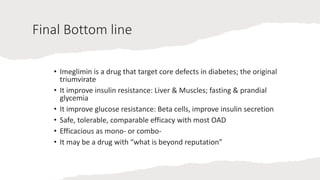
• Imeglimin is a drug that target core defects in diabetes; the original
triumvirate
• It improve insulin resistance: Liver & Muscles; fasting & prandial
glycemia
• It improve glucose resistance: Beta cells, improve insulin secretion
• Safe, tolerable, comparable efficacy with most OAD
• Efficacious as mono- or combo-
• It may be a drug with “what is beyond reputation”
Thank you
Usama Ragab

Imeglimin, What is new?

  • 1.
    Imeglimin, What is new? UsamaRagab Youssif, MD Lecturer of Medicine 5th International ISMA Conference Hybrid Event – Tolip Elforsan Ismailia 2nd – 4th March 2022 New Drugs in Diabetes Session Email: usamaragab@medicine.zu.edu.eg Slideshare: https://www.slideshare.net/dr4spring/ Mobile: 00201000035863
  • 2.
  • 3.
  • 4.
    Agenda Mitochondrial function anddysfunction Mitochondrial (dys)function in diabetes Diabetes core defects and Imeglimin Imeglimin drug development and approval Imeglimin and Heart Take-home message
  • 5.
    Agenda Mitochondrial function anddysfunction Mitochondrial (dys)function in diabetes Diabetes core defects and Imeglimin Imeglimin drug development and approval Imeglimin and Heart Take-home message
  • 6.
    Facts • Mitochondrion isan intracellular organelle present in most of the eukaryotic cells. One cell contains 100s of mitochondria. • Mitochondria are important for ATP production, which is vital for all living organisms. • Mitochondria have their own DNA (several copies of mtDNA), with poor repair mechansim
  • 7.
  • 8.
    Mitochondrial Function Kwak et a..Journal of diabetes investigation. 2010 Oct;1(5):161-9.
  • 9.
    Not only ATP production butalso apoptosis and ROS in excess Mitochondria are also the prime regulators of apoptosis. Oversupply of calories or physical inactivity can impair the transfer of electrons through the electron transport chain, leading to increased production of ROS. These tissues includes beta cells, muscles, and myocardium.
  • 10.
    Three major functions of mitochondria ATPproduction Generation of ROS Apoptosis Kwak et a.. Journal of diabetes investigation. 2010 Oct;1(5):161-9.
  • 11.
    The problem is cumulative TheseROS can damage proteins, lipids and mtDNA of mitochondria and further increase the production of ROS = vicious circle The mtDNA has poor repair mechanism = susceptible to oxidative damage and mutations. The mtDNA mutations accumulate with age, and these mutations might play an important role in the process of senescence and diabetes
  • 12.
    Obesity Chronic disuse ofmuscle decreases mitochondrial content and oxidative capacity leading to impaired glucose utilization. Chronic aerobic exercise increases mitochondrial content in muscle, thereby increasing the ATP generation. Chronic high fat diet leads to insulin resistance = remember lipotoxicity High fat diet leads to IR in rodents and humans mainly by increasing mitochondrial H2O2 generation
  • 13.
  • 14.
    Agenda Mitochondrial function anddysfunction Mitochondrial (dys)function in diabetes Diabetes core defects and Imeglimin Imeglimin drug development and approval Imeglimin and Heart Take-home message
  • 15.
    Mitochondrial dysfunction & Diabetes • Itwas only recently that mitochondrial dysfunction was shown to be an etiological factor of diabetes. • In the early 1990s, a specific mutation in mtDNA was identified to be causally related to the maternally inherited form of diabetes • Peripheral mtDNA copy number was decreased in subjects with T2DM even before the onset of disease. • Oxidative phosphorylation was decreased in insulin resistant offspring of T2DM patients.
  • 16.
    Relationship between mitochondrial dysfunction and type 2diabetes Kwak et a.. Journal of diabetes investigation. 2010 Oct;1(5):161-9.
  • 17.
    Current diabetes reports.2008 Jun;8(3):173-8.
  • 18.
    Role of mitochondria in regulating insulin secretion Sivitzet al. Antioxidants & redox signaling. 2010 Feb 15;12(4):537-77.
  • 19.
    N Engl JMed 2004;350:664-71.
  • 21.
    Mitochondrial (dys)Function and Diabetes BottomLine Endocrine reviews. 2010 Jun 1;31(3):364-95.
  • 22.
    Agenda Mitochondrial function anddysfunction Mitochondrial (dys)function in diabetes Diabetes core defects and Imeglimin Imeglimin drug development and approval Imeglimin and Heart Take-home message
  • 23.
  • 24.
    Ominous Octet Defronzo RA.Banting Lecture. From the triumvirate to the ominous octet: a new paradigm for the treatment of type 2 diabetes mellitus. Diabetes. 2009;58(4):773-795. doi:10.2337/db09- 9028
  • 25.
    Diabetes triumvirate DeFronzo RA.Lilly lecture 1987. The triumvirate: beta-cell, muscle, liver. A collusion responsible for NIDDM. Diabetes. 1988 Jun;37(6):667-87.
  • 26.
    The ideal Antidiabetic drug Correctboth insulin secretion defect and insulin sensitivity defect
  • 27.
    Imeglimin improve mitochondrialfunction by: • Restoring complex II activity and inhibit complex I activity, leading to increased mitochondrial oxidation of complex II substrate (lipids) • Decreasing ROS production and protect mitochondria from excess oxidative stress ; beta cells are especially sensitive to oxidative stress • Increase number of mitochondria Konkwo & Perry. Drugs. 2021 February ; 81(2): 185–190.
  • 28.
    Concerning diabetes Konkwo &Perry. Drugs. 2021 February ; 81(2): 185–190.
  • 29.
    Imeglimin Function bottom- line Yaribeygi, H.,et al., 2020. Molecular mechanisms by which imeglimin improves glucose homeostasis. Journal of Diabetes Research, 2020.
  • 30.
    Agenda Mitochondrial function anddysfunction Mitochondrial (dys)function in diabetes Diabetes core defects and Imeglimin Imeglimin drug development and approval Imeglimin and Heart Take-home message
  • 31.
  • 32.
  • 33.
  • 34.
    Imeglimin Normalizes Glucose Toleranceand Insulin Sensitivity and Improves Mitochondrial Function in Liver of a High-Fat High-Sucrose Diet Mice Model Vial G, et al. Imeglimin normalizes glucose tolerance and insulin sensitivity and improves mitochondrial function in liver of a high-fat, high-sucrose diet mice model. Diabetes. 2015 Jun 1;64(6):2254-64.
  • 35.
    What HFHSD does Vial G,et al. Imeglimin normalizes glucose tolerance and insulin sensitivity and improves mitochondrial function in liver of a high-fat, high-sucrose diet mice model. Diabetes. 2015 Jun 1;64(6):2254-64.
  • 36.
    What imeglimin does Vial G, etal. Imeglimin normalizes glucose tolerance and insulin sensitivity and improves mitochondrial function in liver of a high-fat, high-sucrose diet mice model. Diabetes. 2015 Jun 1;64(6):2254-64.
  • 37.
    Imeglimin increases glucose-stimulatedinsulin secretion and reduce glucose in vivo in high-fat-fed rats Perry et al. American Journal of Physiology-Endocrinology and Metabolism, 311(2), pp.E461-E470.
  • 38.
  • 39.
  • 40.
    Timeline of ImegliminStudies Phase I: 17 completed Clinical trials Phase II: 8 complete clinical trials Phase III EU/US • Tolerability and PK up to 8000 mg • TQT study • Drug – Drug interaction with metformine, sitagliptin & cimetidine • Renal impaired subjects • Hepatic impaired subjects Japan • Tolerability and PK up to 6000 mg • Renal impaired subjects • Food Effect EU/US • Monotherapy trials (4 weeks, 8 weeks and 18 weeks) • Add-on therapy (metformin & sitagliptin) • Hyperglycemic clamp trials • Dose ranging studies (24 weeks) Japan • Dose ranging studies (24 weeks) EU/US • Phase III program under preparation Japan • TIMES-1: 6-month monotherapy efficacy trial • TIMES-2: 1-year long term safety trial as mono- or add-on therapy • TIMES-3: Add-on to insulin trial – 16-week efficacy followed by 36-week safety extension period
  • 41.
    Trials on IMegliminfor Efficacy and Safety= TIMES
  • 42.
    Phase I • Oraldrug, administration twice a day (bid) • Very low protein binding (1 — 8%) • Very low hepatic metabolism • Urinary excretion of unchanged drug Imeglimin Clearance driven by Creatinine Clearance • No drug-drug interaction with metformin, sitagliptin and cimetidine • No TQT prolongation • No PK differences between Caucasian and Japanese subjects • No food effect
  • 43.
  • 44.
    Dose‐ranging phase 2btrial Diabetes, Obesity and Metabolism. 2021 Mar;23(3):800-10
  • 45.
    Adverse events that favors the lowerdoses Diabetes, Obesity and Metabolism. 2021 Mar;23(3):800-10
  • 46.
    Adverse events that favors the lowerdoses (cont.) Diabetes, Obesity and Metabolism. 2021 Mar;23(3):800-10
  • 47.
  • 48.
  • 49.
    Imeglimin Was Well Tolerated andObserved to be Safe Across Phase 1 and Phase 2 Studies Safety / Tolerability • Good safety / tolerability up to 6000 mg • Mild gastro-intestinal effects at the highest dose, i.e. 8000mg (nausea, diarrhea, abdominal discomfort) • No related SAE • Safe/Effective combination with Met & Sita CVD risk factors • Weight neutral • No relevant effect on lipids • No relevant effect on BP
  • 50.
  • 52.
  • 53.
  • 54.
    Phase 3: TIMES2: HbA1c changes from baseline as monotherapy vs combination (n=714) Imeglimin, in combination with oral antidiabetic drugs in Japanese patients with type 2 diabetes was well tolerated and led to clinically meaningful and sustained improvements in glycemic control. Kaku K, et al. InDiabetologia 2020 Sep 1 (Vol. 63, No. SUPPL 1, pp. S306-S306). ONE NEW YORK PLAZA, SUITE 4600, NEW YORK, NY, UNITED STATES: SPRINGER.
  • 55.
    Imeglimin in combinationwith insulin in Japanese patients with type 2 diabetes: results of Phase 3 - TIMES 3 trial (n=108) Dubourg J, et al. In Diabetologia 2020 Sep 1 (Vol. 63, No. SUPPL 1, pp. S307-S307).
  • 56.
    Imeglimin in combinationwith insulin in Japanese patients with type 2 diabetes: results of Phase 3 - TIMES 3 trial (n=108) Imeglimin, in combination with insulin therapy in Japanese patients with type 2 diabetes was well tolerated and led to clinically meaningful and sustained improvements in glycemic control. Imeglimin did not significantly increase the number of patients with hypoglycemia and no events of severe hypoglycemia were reported. Dubourg J, et al. In Diabetologia 2020 Sep 1 (Vol. 63, No. SUPPL 1, pp. S307-S307).
  • 58.
    Key Points • First-in-classglimin being developed by Poxel and Sumitomo Dainippon Pharma for the treatment of type 2 diabetes • Received its first approval on 23 June 2021 in Japan • Approved for use in type 2 diabetes This summary represents the opinions of the author. For a full list of declarations, including funding and author disclosure statements, please see the full text online. © Springer Nature Switzerland AG 2021. Imeglimin Hydrochloride: First Approval Lamb, Y. N. Drugs. 2021. DOI: 10.1007/s40265-021-01589-9 Imeglimin Hydrochloride: Adis Evaluation Summary Imeglimin hydrochloride (TWYMEEG®; hereafter referred to as imeglimin) is an orally administered, first-in-class glimin being developed by Poxel and, in several Asian countries, Sumitomo Dainippon Pharma for the treatment of type 2 diabetes (T2D). The glimins are a novel class of glucose-lowering agents that target multiple components of diabetes-associated pathology. In June 2021, imeglimin received its first approval for use in T2D in Japan. The Japanese approval was based on extensive preclinical and clinical data, including positive results from the pivotal phase III TIMES programme. This article summarizes the milestones in the development of imeglimin leading to this first approval for T2D. PEER-REVIEWED CONTENT SUMMARY SLIDE
  • 59.
    Agenda Mitochondrial function anddysfunction Mitochondrial (dys)function in diabetes Diabetes core defects and Imeglimin Imeglimin drug development and approval Imeglimin and Heart Take-home message
  • 60.
  • 61.
    Mitochondrial dysfunction affect every cell inthe body • It was shown that mitochondrial function is lower in the myocardium with LV diastolic dysfunction, which is the characteristic feature of diabetic cardiomyopathy Cell Death Discov. 2016;2:15072.
  • 62.
    Imeglimin and CVD J ClinMed Res. 2018 Nov; 10(11): 799–805.
  • 63.
    Biochemical and BiophysicalResearch Communications 572 (2021) 185e190
  • 64.
    Endocrinology, Diabetes &Metabolism. 2020 Jul;3(3):e00128.
  • 65.
    So, It mayhave “What is beyond reputation”
  • 66.
    Final Bottom line •Imeglimin is a drug that target core defects in diabetes; the original triumvirate • It improve insulin resistance: Liver & Muscles; fasting & prandial glycemia • It improve glucose resistance: Beta cells, improve insulin secretion • Safe, tolerable, comparable efficacy with most OAD • Efficacious as mono- or combo- • It may be a drug with “what is beyond reputation”
  • 67.

Editor's Notes

  • #7 adenosine triphosphate (ATP) عشان كدة هي عملة الطاقة mitochondrial DNA (mtDNA) الميتوكوندريا مش بتنسى
  • #8 A mitochondrion is structurally divided into four compartments: (i) the outer membrane, which is capable of freely transporting ions and small molecules; (ii) the intermembranous space, where protons are accumulated and generate an electrochemical gradient; (iii) the inner membrane, which allows the transport of otherwise impermeable adenosine diphosphate (ADP), phosphate and ATP, and anchors subunit complexes of the electron transport chains; and (iv) the matrix where oxidation of pyruvate and fatty acids occur which if present in excess, leads to gluco- and lipotoxicity ------------ The inner membrane has numerous invaginations called the cristae, which gives mitochondria its characteristic morphology. By increasing the surface area, mitochondria can increase the ATP generating capacity ---------------------
  • #9 TCA cycle = citric acid cycle = Krebs Cycle = is a series of chemical reactions to release stored energy through the oxidation of acetyle CoA derived from CHO, fats and protein The Krebs cycle is used by organisms that respire (as opposed to organisms that ferment) to generate energy, either by anaerobic respiration or aerobic respiration. In addition, the cycle provides precursors of certain amino acids, as well as the reducing agent NADH, that are used in numerous other reactions. NAD= Nicotinamide adenine dinucleotide FAD= flavin adenine dinucleotide The NADH and FADH2, which are reducing equivalents yielded from the tricarboxylic acid (TCA) cycle, transfer the electrons to the electron transport chain through complex I and complex II, respectively. As the electrons are transported to complex III and IV, the protons are accumulated in the intermembranous space generating the electrochemical gradient. Complex V uses the proton gradient as the driving force to generate ATP. During the process of electron transport, some of the electrons can be leaked and transferred to O2, which results in ROS generation. When the cellular ATP is depleted or in excess of ROS, mitochondrial proteins such as cytochrome c, caspases and apoptosis initiating factors are released to cytosol and initiate the process of apoptosis. ADP, adenosine diphosphate ------------- Glucose is metabolized by glycolysis to pyruvate and enters mitochondria to undergo a further metabolic pathway of the tricarboxylic acid (TCA) cycle. In contrast, fatty acids enter the mitochondria through carnitine-palmitoyltransferase (CPT)-1 and go through b-oxidation to make acetyl coenzyme A, which are further metabolized in the TCA cycle. The TCA cycle and b-oxidation yield reducing equivalents, such as NADH and FADH2. The electrons from NADH and FADH2 enter the electron transport chain through complex I and complex II, respectively. From these two complexes, electrons are transported sequentially to complex III through the coenzyme Q and then to complex IV through cytochrome c. As the electrons are transported, the free energy released is used to pump the protons into the intermembranous space. The proton gradient formed across the inner membrane creates the electrochemical gradient, which acts as the driving force of ATP generation in complex V (ATP synthase). ----------------- Several of the components and reactions of the citric acid cycle were established in the 1930s by the research of Albert Szent-Györgyi, who received the Nobel Prize in Physiology or Medicine in 1937 specifically for his discoveries pertaining to fumaric acid, a key component of the cycle. He made this discovery by studying pigeon breast muscle. Because this tissue maintains its oxidative capacity well after breaking down in the Latapie mill and releasing in aqueous solutions, breast muscle of the pigeon was very well qualified for the study of oxidative reactions. The citric acid cycle itself was finally identified in 1937 by Hans Adolf Krebs and William Arthur Johnson while at the University of Sheffield, for which the former received the Nobel Prize for Physiology or Medicine in 1953, and for whom the cycle is sometimes named the "Krebs cycle".
  • #10 Mitochondria are also the prime regulators of apoptosis. When confronted with cellular stress, mitochondria open the mitochondrial permeability transition pore (mtPTP). Opening of the mtPTP allows the release of mitochondrial proteins, such as cytochrome c, caspases and apoptosis initiating factor (AIF), to induce apoptosis. Oversupply of calories or physical inactivity can impair the transfer of electrons through the electron transport chain, leading to increased production of ROS and consequent apoptosis in various cells and tissues. ----------------------- The master switch of mitochondrial biogenesis is the peroxisome proliferator-activated receptor-c coactivator (PGC)-1a and PGC-1b. These are transcriptional coactivators, which activate a number of oxidative phosphorylation genes and TFAM through nuclear respiratory factor (NRF)-111. PGC-1a regulates various aspects of mitochondrial function including biogenesis, adaptive thermogenesis, fatty acid oxidation and peripheral tissue glucose uptake.
  • #11 The three major functions of mitochondria in regard to energy metabolism include: (i) adenosine triphosphate (ATP) production; (ii) generation of reactive oxygen species (ROS); and (iii) apoptosis.
  • #12 The mtDNA has no introns and has a poorly equipped repair mechanism, rendering it susceptible to oxidative damage and mutations. In biology, senescence is a process by which a cell ages and permanently stops dividing but does not die. Over time, large numbers of old (or senescent) cells can build up in tissues throughout the body.
  • #13 In regard to energy intake, a chronic high fat diet leads to insulin resistance. In a recent report, it has been shown that a high fat diet leads to insulin resistance in rodents and humans mainly by increasing mitochondrial H2O2 generation
  • #14 Not just obesity
  • #16 A few years later, our group reported that the peripheral mtDNA copy number was decreased in subjects with T2DM even before the onset of disease. Shulman et al. also have shown that oxidative phosphorylation was decreased in insulin resistant offspring of T2DM patients.
  • #17 Relationship between mitochondrial dysfunction and type 2 diabetes. Various genetic and environmental factors can cause mitochondrial dysfunction. Mitochondrial dysfunction is a culprit defect that leads to type 2 diabetes by affecting b-cell dysfunction and insulin resistance. DAG, diacylglycerols; LCAC, long-chain acyl-CoA; OXPHOS, oxidative phosphorylation
  • #18 Impaired mitochondria oxidative capacity leads to a decrease in metabolic substrate catabolism resulting in increased intramyocellular fatty acids availability, which may be channeled towards lipotoxic lipid species biosynthesis (i.e., ceramide and diacylglycerol) both of which have been associated with insulin resistance. Increased nutrient supplies also induce an increase in mitochondrial reactive oxygen species (ROS) production, which can directly induce insulin resistance and elicit oxidative damage to mitochondrial DNA, protein and lipid promoting the removal of damaged mitochondria by mitophagy.
  • #19 As shown, glucose sensing and glucose-induced insulin release is dependent on mitochondrial ATP generation and affected by both mitochondrial ROS and UCP2. ATP is essential for opening of potassium ATP channels and, therefore, for entry of calcium and insulin release from storage granules. Under conditions of hyperglycemia, it is possible that excess ROS may lead to oxidative damage, gradually impairing insulin secretion over time, with worsening of the diabetic state. þ, Positive effect. Dash, Negative effect. VDCC, voltage dependent calcium channel; GK, glucokinase. ------------------------ Steps involved in glucose-stimulated insulin secretion by the pancreatic beta cell. Following entry of glucose via GLUT transporters, phosphorylation by glucokinase occurs and pyruvate is formed via the process of glycolysis. This leads to increased activity of the TCA cycle within the mitochondria by which adenosine diphosphate (ADP) is converted to adenosine triphosphate (ATP). This causes closure of ATP-sensitive potassium channels, a wave of membrane depolarisation and the subsequent activation of voltage gated calcium channels. The entry of calcium into the cell is followed by vesicle docking and insulin granules are released into the circulation. Other factors play a role such as glucagon-like peptide 1 which has unique receptors in the beta-cell membrane. 
  • #22 Adenosine triphosphate production through oxidative phosphorylation, production of reactive oxygen species (ROS) and regulation of apoptosis are the main functions of mitochondria relevant to the pathogenesis of diabetes Aside from ATP production, mitochondria are the major source of endogenous ROS. When electron transport is impaired in the electron transport chain, it can be transferred to O2 and generates superoxide. Complex I of the electron transport chain is the predominant site of donating electrons to O2 and producing superoxide (O2–). Superoxide is processed to hydrogen peroxide (H2O2) by either superoxide dismutase 1 (SOD1) or 2 (SOD2). The decomposition of hydrogen peroxide to water is carried out by glutathione peroxidase (GPX)-1. However, in the presence of free irons or copper ions, such as in the case of mitochondria, hydrogen peroxide can be transformed to highly reactive hydroxyl radicals (OH–). When calorie intake is in excess or the capacity of oxidative phosphorylation is limited, the electron transport is impaired in the electron transport chain and has higher chance of being converted to ROS. ------------------ Mitochondria are also the key regulator of glucose-stimulated insulin secretion in the pancreatic beta-cells ATP production, ROS generation and apoptosis are the three main functions of mitochondria. There is a relationship between mitochondrial dysfunction and pathophysiological role of T2DM regarding insulin resistance and b-cell dysfunction.
  • #28 Increase PGC1α the master regulator of mitochondrial pathogenesis --------- Proposed mechanisms by which imeglimin improves mitochondrial bioenergetics Red arrows indicate changes in levels/activity observed in experimental models. Experimental models showed an increase in enzymes involved in fatty acid metabolism, such as CD36/fatty acid translocase (FAT) and 3-hydroxyacyl-CoA dehydrogenase (HAD), pointing to increased fatty acid oxidation. Increased fatty acid oxidation leads to the production of acetyl-CoA, which enters the tricarboxylic acid (TCA) cycle and increases flux through complex II (CII) and complex III (CIII). Reverse electron transfer (RET) from CII to CI is decreased, which results in a decrease in ROS production.
  • #30 A novel antidiabetic drug in the “glimin” class that inhibit oxidative phosphorylation