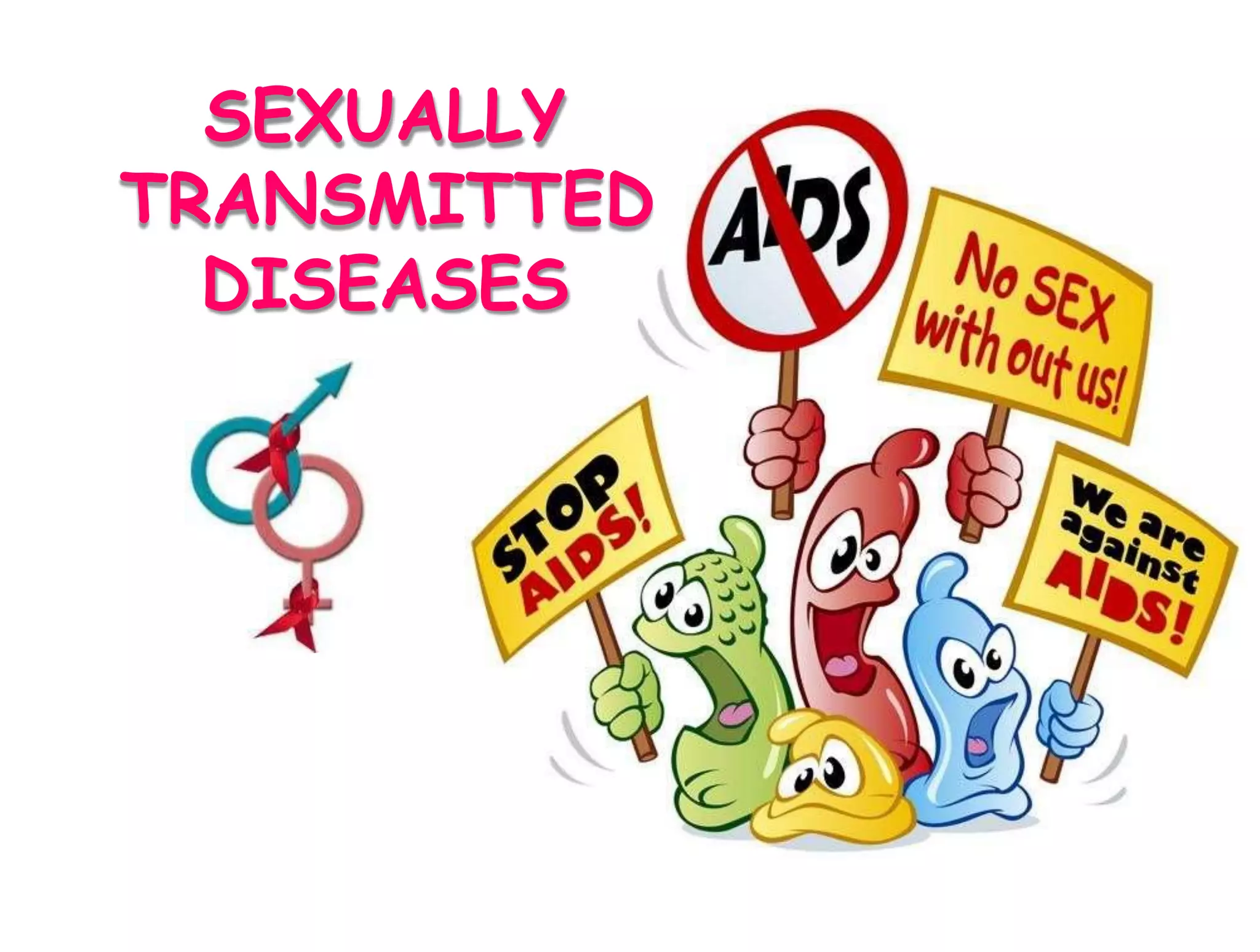

SEXUALLY
TRANSMITTED
DISEASES
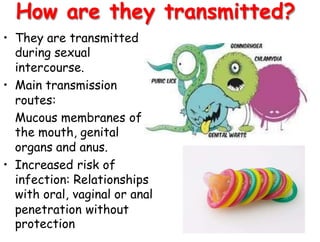
How are they transmitted?
• They are transmitted
during sexual
intercourse.
Main transmission
routes:
•
Mucous membranes
the mouth, genital
organs and anus.
Increased risk of
of
•
infection: Relationships
with oral, vaginal or anal
penetration without
protection
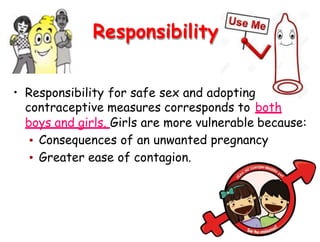
Responsibility
• Responsibility for safe sex and adopting
contraceptive measures corresponds to both
boys and girls. Girls are more vulnerable because:
•
•
Consequences of an unwanted
Greater ease of contagion.
pregnancy
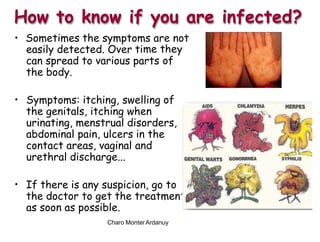
• Sometimes the symptoms are not
me the
t
How to know if you are infected?
easily detected. Over ti
can spread to various parts
the body.
y
of
• Symptoms: itching, swelling
the genitals, itching when
of
urinating, menstrual disorders,
abdominal pain, ulcers in the
contact areas, vaginal and
urethral discharge...
• If there is any suspicion, go to
the doctor to get the treatmen
as soon as possible.
Charo MonterArdanuy
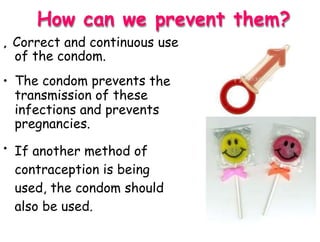
orrect and continuous use
How can we prevent them?
C
of the condom.
The condom prevents
transmission of these
,
• the
infections and prevents
pregnancies.
If another method of
contraception is being
used, the condom should
also be used.
•
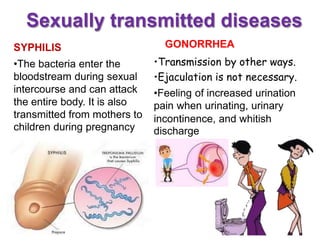
Sexually
SYPHILIS
transmitted diseases
GONORRHEA
•Transmission by other ways.
•Ejaculation is not necessary.
•Feeling of increased urination
pain when urinating, urinary
•The bacteria enter the
bloodstream during sexual
intercourse and can attack
the entire body. It is also
transmitted from mothers to incontinence,
discharge
and whitish
children during pregnancy
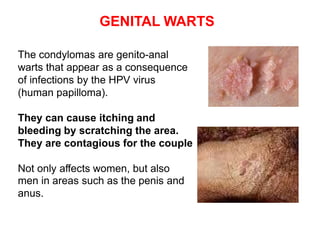
GENITAL WARTS
The condylomas are genito-anal
warts that appear as a consequence
of infections by the HPV virus
(human papilloma).
They can cause itching and
bleeding by scratching the area.
They are contagious for the couple
Not only affects women, but also
men in areas such as the penis and
anus.
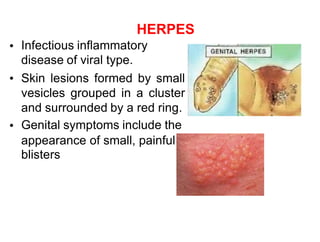
HERPES
Infectious inflammatory
disease of viral type.
Skin lesions formed by small
vesicles grouped in a cluster
and surrounded by a red ring.
Genital symptoms include the
•
•
•
appearance
blisters
of small, painful
Other
CHLAMYDIAS
sexually transmitted
diseases
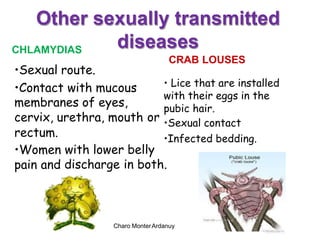
CRAB LOUSES
•Sexual route.
• Lice that are installed
with their eggs in the
pubic hair.
•Sexual contact
•Contact with mucous
membranes of eyes,
cervix, urethra, mouth
rectum.
or
•Infected bedding.
•Women
pain and
with lower belly
discharge in both.
Charo MonterArdanuy
Other sexually transmitted
diseases
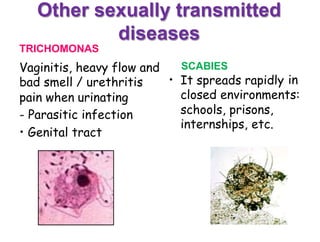
TRICHOMONAS
SCABIES
It spreads rapidly
Vaginitis, heavy flow and
bad smell / urethritis
pain when urinating
• in
closed environments:
schools, prisons,-
•
Parasitic infection
internships, etc.
Genital tract
How are they
cured?
Early treatment is essential.
All (except AIDS today) can be cured.
If you are diagnosed with an STI, it is
important to notify the person
have recently had sex so that
the doctor.
with
you
whom you
can see
se
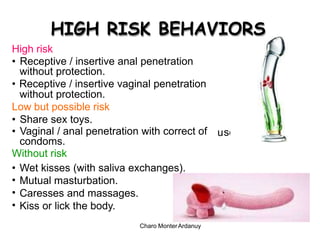
HIGH RISK BEHAVIORS
High risk
• Receptive / insertive anal penetration
without protection.
• Receptive / insertive vaginal penetration
without protection.
Low but possible risk
• Share sex toys.
• Vaginal / anal penetration with correct of
condoms.
Without risk
u
•
•
•
•
Wet kisses (with saliva exchanges).
Mutual masturbation.
Caresses and massages.
Kiss or lick the body.
Charo MonterArdanuy
PRECAUTIONARY MEASURES (I)
The personal attitude.
Practice safe sex (condom,
monogamy, sex without
penetration, etc.)).
Avoid multiple contacts
(promiscuity).
Try to know our partners
(sexual past, physical state
...).
Genital hygiene.
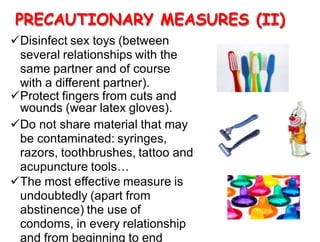
PRECAUTIONARY MEASURES (II)
Disinfect sex toys (between
several relationships with the
same partner and of course
with a different partner).
Protect fingers from cuts and
wounds (wear latex gloves).
Do not share material that may
be contaminated: syringes,
razors, toothbrushes, tattoo and
acupuncture tools…
The most effective measure is
undoubtedly (apart from
abstinence) the use of
condoms, in every relationship
and from beginning to end
TIPS
WHAT TO DO IF YOU SUSPECT OR
HAVE A CONFIRMED DIAGNOSIS:
 REFRAIN FROM SEXUAL RELATIONSHIPS,
UNTIL THE SUSPICION HAS BEEN
DISMISSED OR HAS BEEN CURED
COMPLETELY.
 DO NOT HIDE ANYTHING, AND NOTIFY
YOUR PARTNERS ENCOURAGING THEM
TO GO TO THE DOCTOR
 EACH STD HAS A SPECIAL TREATMENT,
DO NOT MEDICATE YOURSELF.
 HELP AT YOUR HEALTH CENTRE.
y
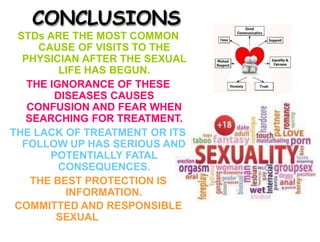
CONCLUSIONS
STDs ARE THE MOST COMMON
CAUSE OF VISITS TO THE
PHYSICIAN AFTER THE SEXUAL
LIFE HAS BEGUN.
THE IGNORANCE OF THESE
DISEASES CAUSES
CONFUSION AND FEAR WHEN
SEARCHING FOR TREATMENT.
THE LACK OF TREATMENT OR ITS
FOLLOW UP HAS SERIOUS AND
POTENTIALLY FATAL
CONSEQUENCES.
THE BEST PROTECTION IS
INFORMATION.
COMMITTED AND RESPONSIBLE
SEXUAL
sexually transmitted disease

sexually transmitted disease

  • 1.
  • 2.
    How are theytransmitted? • They are transmitted during sexual intercourse. Main transmission routes: • Mucous membranes the mouth, genital organs and anus. Increased risk of of • infection: Relationships with oral, vaginal or anal penetration without protection
  • 3.
    Responsibility • Responsibility forsafe sex and adopting contraceptive measures corresponds to both boys and girls. Girls are more vulnerable because: • • Consequences of an unwanted Greater ease of contagion. pregnancy
  • 4.
    • Sometimes thesymptoms are not me the t How to know if you are infected? easily detected. Over ti can spread to various parts the body. y of • Symptoms: itching, swelling the genitals, itching when of urinating, menstrual disorders, abdominal pain, ulcers in the contact areas, vaginal and urethral discharge... • If there is any suspicion, go to the doctor to get the treatmen as soon as possible. Charo MonterArdanuy
  • 5.
    orrect and continuoususe How can we prevent them? C of the condom. The condom prevents transmission of these , • the infections and prevents pregnancies. If another method of contraception is being used, the condom should also be used. •
  • 6.
    Sexually SYPHILIS transmitted diseases GONORRHEA •Transmission byother ways. •Ejaculation is not necessary. •Feeling of increased urination pain when urinating, urinary •The bacteria enter the bloodstream during sexual intercourse and can attack the entire body. It is also transmitted from mothers to incontinence, discharge and whitish children during pregnancy
  • 7.
    GENITAL WARTS The condylomasare genito-anal warts that appear as a consequence of infections by the HPV virus (human papilloma). They can cause itching and bleeding by scratching the area. They are contagious for the couple Not only affects women, but also men in areas such as the penis and anus.
  • 8.
    HERPES Infectious inflammatory disease ofviral type. Skin lesions formed by small vesicles grouped in a cluster and surrounded by a red ring. Genital symptoms include the • • • appearance blisters of small, painful
  • 9.
    Other CHLAMYDIAS sexually transmitted diseases CRAB LOUSES •Sexualroute. • Lice that are installed with their eggs in the pubic hair. •Sexual contact •Contact with mucous membranes of eyes, cervix, urethra, mouth rectum. or •Infected bedding. •Women pain and with lower belly discharge in both. Charo MonterArdanuy
  • 10.
    Other sexually transmitted diseases TRICHOMONAS SCABIES Itspreads rapidly Vaginitis, heavy flow and bad smell / urethritis pain when urinating • in closed environments: schools, prisons,- • Parasitic infection internships, etc. Genital tract
  • 11.
    How are they cured? Earlytreatment is essential. All (except AIDS today) can be cured. If you are diagnosed with an STI, it is important to notify the person have recently had sex so that the doctor. with you whom you can see
  • 12.
    se HIGH RISK BEHAVIORS Highrisk • Receptive / insertive anal penetration without protection. • Receptive / insertive vaginal penetration without protection. Low but possible risk • Share sex toys. • Vaginal / anal penetration with correct of condoms. Without risk u • • • • Wet kisses (with saliva exchanges). Mutual masturbation. Caresses and massages. Kiss or lick the body. Charo MonterArdanuy
  • 13.
    PRECAUTIONARY MEASURES (I) Thepersonal attitude. Practice safe sex (condom, monogamy, sex without penetration, etc.)). Avoid multiple contacts (promiscuity). Try to know our partners (sexual past, physical state ...). Genital hygiene.
  • 14.
    PRECAUTIONARY MEASURES (II) Disinfectsex toys (between several relationships with the same partner and of course with a different partner). Protect fingers from cuts and wounds (wear latex gloves). Do not share material that may be contaminated: syringes, razors, toothbrushes, tattoo and acupuncture tools… The most effective measure is undoubtedly (apart from abstinence) the use of condoms, in every relationship and from beginning to end
  • 15.
    TIPS WHAT TO DOIF YOU SUSPECT OR HAVE A CONFIRMED DIAGNOSIS:  REFRAIN FROM SEXUAL RELATIONSHIPS, UNTIL THE SUSPICION HAS BEEN DISMISSED OR HAS BEEN CURED COMPLETELY.  DO NOT HIDE ANYTHING, AND NOTIFY YOUR PARTNERS ENCOURAGING THEM TO GO TO THE DOCTOR  EACH STD HAS A SPECIAL TREATMENT, DO NOT MEDICATE YOURSELF.  HELP AT YOUR HEALTH CENTRE. y
  • 16.
    CONCLUSIONS STDs ARE THEMOST COMMON CAUSE OF VISITS TO THE PHYSICIAN AFTER THE SEXUAL LIFE HAS BEGUN. THE IGNORANCE OF THESE DISEASES CAUSES CONFUSION AND FEAR WHEN SEARCHING FOR TREATMENT. THE LACK OF TREATMENT OR ITS FOLLOW UP HAS SERIOUS AND POTENTIALLY FATAL CONSEQUENCES. THE BEST PROTECTION IS INFORMATION. COMMITTED AND RESPONSIBLE SEXUAL