








What Would your Grandma
Think?
These days, almost every teen
has many ways to get online:
via smartphones, tablets, and
laptops, all of which can be
used in private.
Why this presentation?
It's very easy for teens to
create and share personal
photos and videos of
themselves without their
parents knowing about it.
Most of the time, this is no big
deal. By sharing something with a
friend, your teen could have a
memory to enjoy forever. But if
what gets shared is a little too
personal, your teen's reputation
could be harmed.
Even if the image, video, or text
was only meant for one person,
once it's been sent or posted, it's
out of your teen's control. It could
be seen by lots of people, and it
could be impossible to erase from
the Internet, even after your teen
thinks it has been deleted.
Any sort of photo, video, or
message that shows someone
doing or saying something
embarrassing or offensive can
be damaging to a reputation.
But this is especially true if
there's nudity, sex, or sexually
suggestive content involved.
This type of sharing, known as
"sexting," has the potential to
haunt a teen for the rest of his
or her life.
Sexting (or "sex texting") is
the sending or receiving of
sexually explicit or sexually
suggestive images, messages,
or video via a cellphone or the
Internet.
Examples of sexting include
sending:
• nude or nearly nude photos or
"selfies“
• videos that show nudity, sex
acts, or simulated sex
• text messages that propose sex
or refer to sex acts
Why
Do Teens Sext?
Many girls sext as a joke
a way of getting attention
because of "pressure from guys”
For some it is normal behavior
a way of flirting
 being seen as cool
 becoming popular
Teens get some reinforcement for
that when lewd celebrity pictures
and videos go mainstream and the
consequences are greater fame
and reality TV shows.
It does not ruin careers or create
humiliation.
Why Do Teens Sext?
It's hard to know exactly how
common sexting is among
teens.
Studies have found that about
1 out of every 7 teens — boys
and girls — have sent sexually
suggestive pictures. And about
1 out of every 5 teens have
received them.
The studies focused mainly on
pictures, not sexually
suggestive comments,
messages, or tweets.
But one thing is clear: Sexting
is relatively common among
teens.
Teens should understand that
messages, pictures, or videos sent
via the Internet or smartphones
are never truly private or
anonymous. In seconds they can
be out there for all of the world to
see.
Consequences of sexting
If a compromising image of
your teen goes public or gets
sent to others, your teen could
be at risk of humiliation,
embarrassment, and public
ridicule.
Even worse, it could damage
your teen's self-image and
possibly lead to depression and
other mental health issues.
And don't overlook the
potential for legal
consequences.
In some states, a teen could
face felony charges for texting
explicit photos or even have to
register as a sex offender.
Beyond that, questionable
behavior online can haunt a
college applicant or
prospective employee years
later.
What Parents Should do?
Parents may help in developing life
skills such as :
Empathy
Decision
Coping with peer pressure
Self Control
Interpersonal relationship
Teens' decision-making skills,
judgment, and ideas about
privacy are to be developed.
They have to respect for
human rights.
Just as they might not consider
how smoking now can lead to
long-term health problems, they
can be reluctant to curb their
"share everything" tendencies now
for the sake of their reputations
later.
What to Say to Your Teen ?
One of the top responsibilities of
parents is to teach their kids how
to take responsibility for their own
safety and their own actions.
One of the top responsibilities
of parents is to teach their kids
how to take responsibility for
their own safety and their own
actions.
It's important to send that
message about the virtual world
too. Even if a teen's intentions are
playful or harmless, if messages
or pictures become public, the
outcome can be anything but.
It's crucial to talk to your kids
about how pictures, videos,
emails, and text messages that
seem temporary can
permanently exist in
cyberspace.
One ill-considered picture sent
to a crush's phone easily can
be forwarded to the recipient's
friends, posted online, or
printed and distributed.
Even an image sent to a
boyfriend or girlfriend could
lead to problems if someone
else sees it or it's distributed
after a break-up.
Intense peer pressure to take or
send nude pictures will follow
humiliation when the images land
on Facebook or the cellphones of
hundreds of other kids and even
adults.
So how can parents get
through to your kids?
The answer is to have open
conversations about personal
responsibility, personal
boundaries, and how to resist
peer pressure.
Explain to your kids, early and
often, that once an image or
message is sent, it is no longer
in their control and cannot be
taken back.
Parents can make it clear that
there will be limits to when
and how they can use these
Computers and cellphones.
Teach kids to follow the
"WWGT" ("What would
grandma think?") rule.
If grandma shouldn't see it,
they shouldn't send it.
What Would your Grandma
Think?
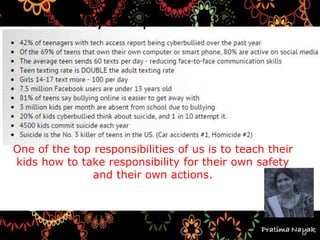
Why this presentation?
One of the top responsibilities of us is to teach their
kids how to take responsibility for their own safety
and their own actions.

Sexting?What would your Grandma Think?

  • 1.
    What Would yourGrandma Think?
  • 2.
    These days, almostevery teen has many ways to get online: via smartphones, tablets, and laptops, all of which can be used in private. Why this presentation?
  • 3.
    It's very easyfor teens to create and share personal photos and videos of themselves without their parents knowing about it.
  • 4.
    Most of thetime, this is no big deal. By sharing something with a friend, your teen could have a memory to enjoy forever. But if what gets shared is a little too personal, your teen's reputation could be harmed.
  • 5.
    Even if theimage, video, or text was only meant for one person, once it's been sent or posted, it's out of your teen's control. It could be seen by lots of people, and it could be impossible to erase from the Internet, even after your teen thinks it has been deleted.
  • 6.
    Any sort ofphoto, video, or message that shows someone doing or saying something embarrassing or offensive can be damaging to a reputation.
  • 7.
    But this isespecially true if there's nudity, sex, or sexually suggestive content involved.
  • 8.
    This type ofsharing, known as "sexting," has the potential to haunt a teen for the rest of his or her life.
  • 9.
    Sexting (or "sextexting") is the sending or receiving of sexually explicit or sexually suggestive images, messages, or video via a cellphone or the Internet.
  • 10.
    Examples of sextinginclude sending: • nude or nearly nude photos or "selfies“ • videos that show nudity, sex acts, or simulated sex • text messages that propose sex or refer to sex acts
  • 11.
    Why Do Teens Sext? Manygirls sext as a joke a way of getting attention because of "pressure from guys” For some it is normal behavior a way of flirting  being seen as cool  becoming popular
  • 12.
    Teens get somereinforcement for that when lewd celebrity pictures and videos go mainstream and the consequences are greater fame and reality TV shows. It does not ruin careers or create humiliation. Why Do Teens Sext?
  • 13.
    It's hard toknow exactly how common sexting is among teens.
  • 14.
    Studies have foundthat about 1 out of every 7 teens — boys and girls — have sent sexually suggestive pictures. And about 1 out of every 5 teens have received them.
  • 15.
    The studies focusedmainly on pictures, not sexually suggestive comments, messages, or tweets.
  • 16.
    But one thingis clear: Sexting is relatively common among teens.
  • 17.
    Teens should understandthat messages, pictures, or videos sent via the Internet or smartphones are never truly private or anonymous. In seconds they can be out there for all of the world to see. Consequences of sexting
  • 18.
    If a compromisingimage of your teen goes public or gets sent to others, your teen could be at risk of humiliation, embarrassment, and public ridicule.
  • 19.
    Even worse, itcould damage your teen's self-image and possibly lead to depression and other mental health issues.
  • 20.
    And don't overlookthe potential for legal consequences.
  • 21.
    In some states,a teen could face felony charges for texting explicit photos or even have to register as a sex offender.
  • 22.
    Beyond that, questionable behavioronline can haunt a college applicant or prospective employee years later.
  • 23.
    What Parents Shoulddo? Parents may help in developing life skills such as : Empathy Decision Coping with peer pressure Self Control Interpersonal relationship
  • 24.
    Teens' decision-making skills, judgment,and ideas about privacy are to be developed. They have to respect for human rights.
  • 25.
    Just as theymight not consider how smoking now can lead to long-term health problems, they can be reluctant to curb their "share everything" tendencies now for the sake of their reputations later.
  • 26.
    What to Sayto Your Teen ? One of the top responsibilities of parents is to teach their kids how to take responsibility for their own safety and their own actions.
  • 27.
    One of thetop responsibilities of parents is to teach their kids how to take responsibility for their own safety and their own actions.
  • 28.
    It's important tosend that message about the virtual world too. Even if a teen's intentions are playful or harmless, if messages or pictures become public, the outcome can be anything but.
  • 29.
    It's crucial totalk to your kids about how pictures, videos, emails, and text messages that seem temporary can permanently exist in cyberspace.
  • 30.
    One ill-considered picturesent to a crush's phone easily can be forwarded to the recipient's friends, posted online, or printed and distributed.
  • 31.
    Even an imagesent to a boyfriend or girlfriend could lead to problems if someone else sees it or it's distributed after a break-up.
  • 32.
    Intense peer pressureto take or send nude pictures will follow humiliation when the images land on Facebook or the cellphones of hundreds of other kids and even adults.
  • 33.
    So how canparents get through to your kids? The answer is to have open conversations about personal responsibility, personal boundaries, and how to resist peer pressure.
  • 34.
    Explain to yourkids, early and often, that once an image or message is sent, it is no longer in their control and cannot be taken back.
  • 35.
    Parents can makeit clear that there will be limits to when and how they can use these Computers and cellphones.
  • 36.
    Teach kids tofollow the "WWGT" ("What would grandma think?") rule. If grandma shouldn't see it, they shouldn't send it.
  • 37.
    What Would yourGrandma Think?
  • 38.
    Why this presentation? Oneof the top responsibilities of us is to teach their kids how to take responsibility for their own safety and their own actions.