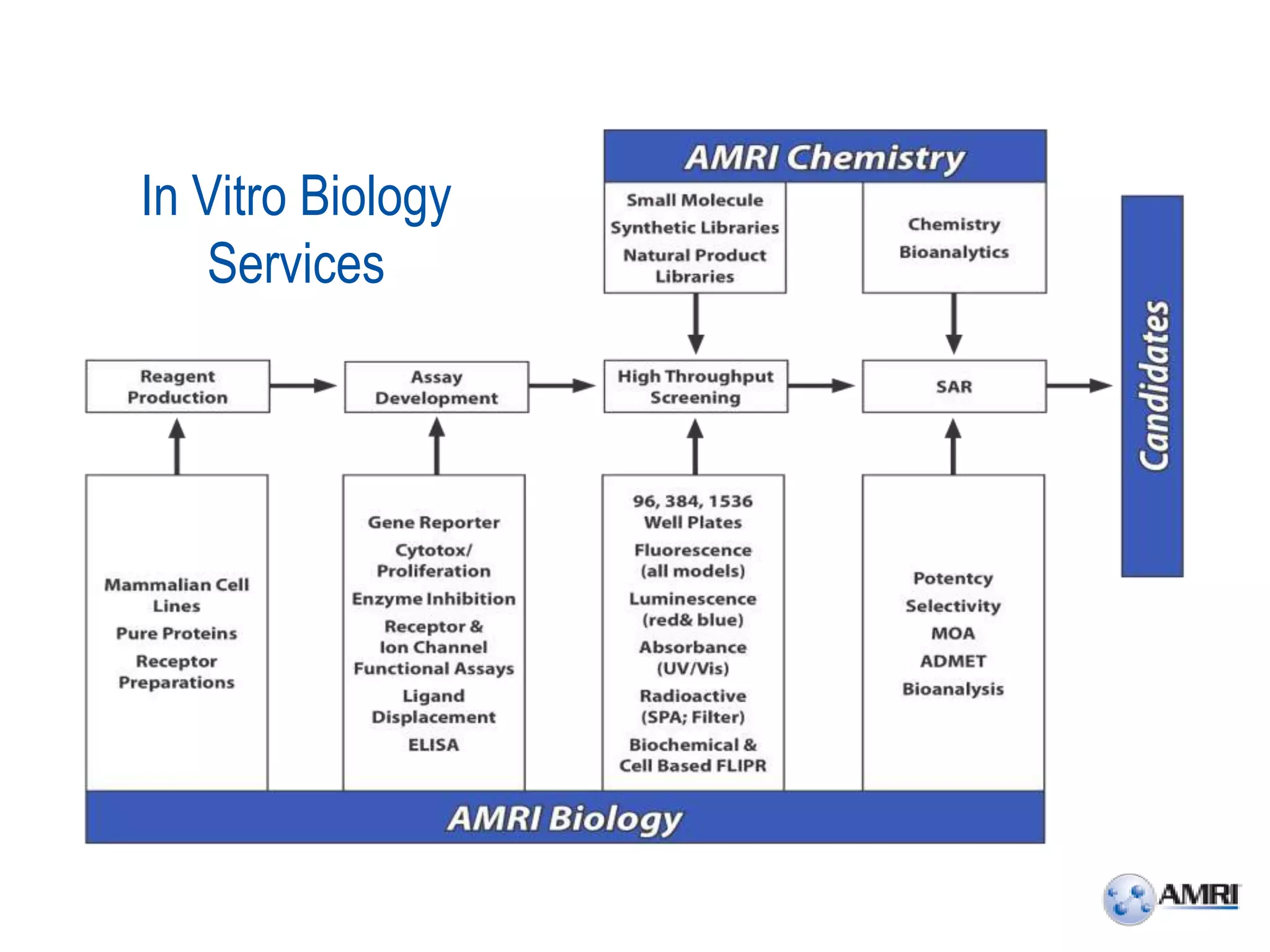
In Vitro Biology
    Services
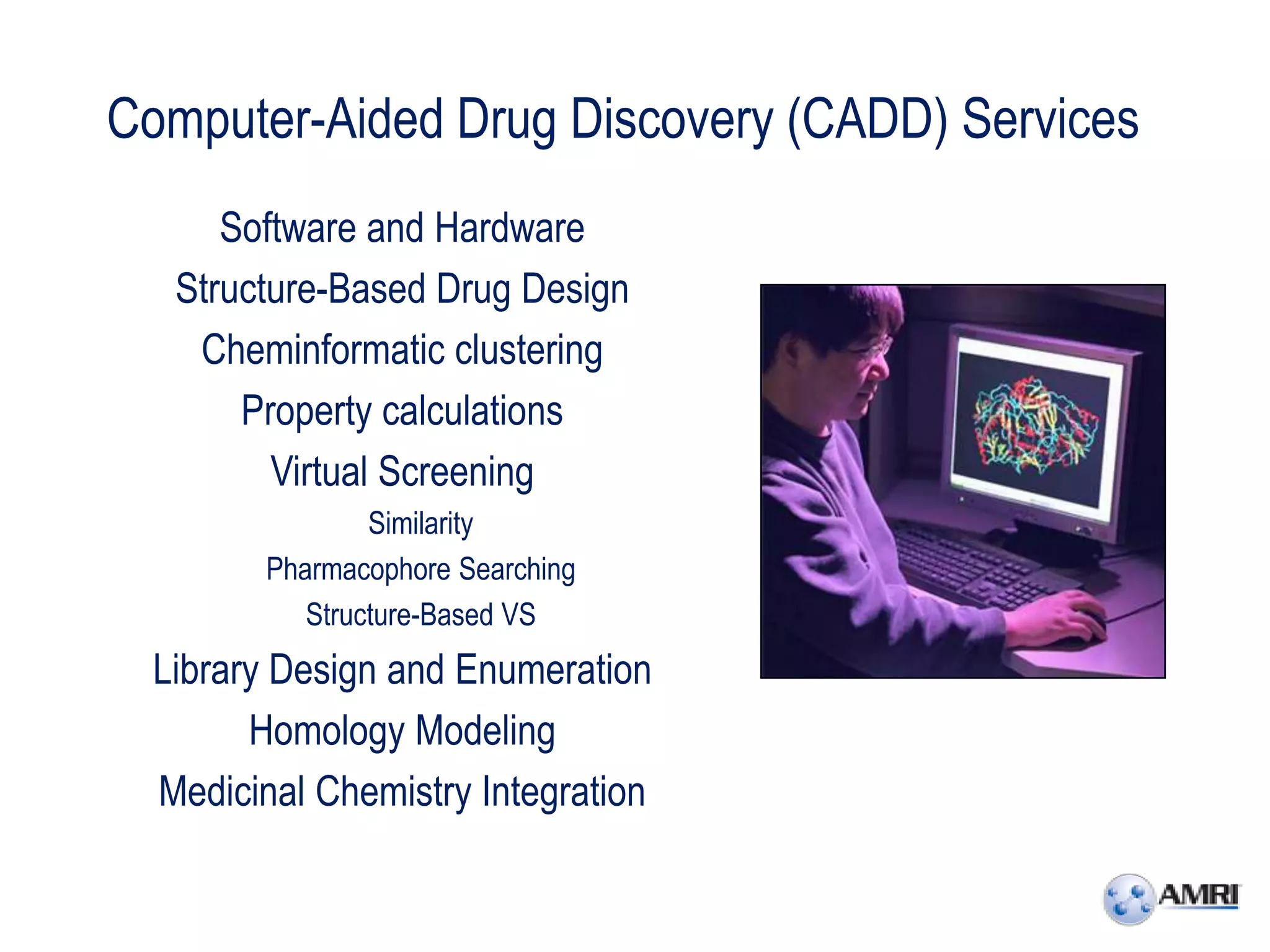
Computer-Aided Drug Discovery (CADD) Services
      Software and Hardware
   Structure-Based Drug Design
    Cheminformatic clustering
       Property calculations
         Virtual Screening
                 Similarity
         Pharmacophore Searching
            Structure-Based VS
  Library Design and Enumeration
        Homology Modeling
  Medicinal Chemistry Integration
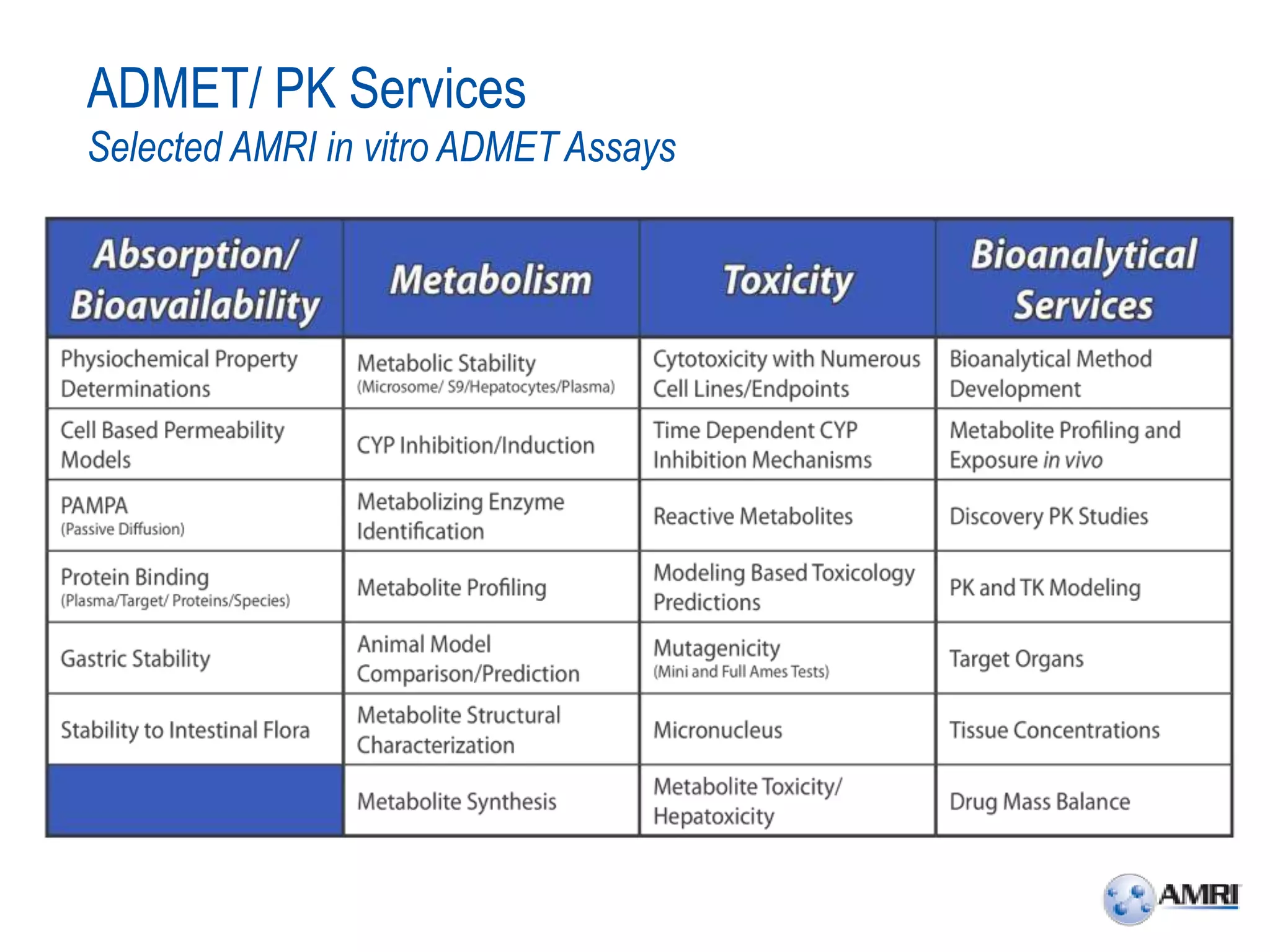
ADMET/ PK Services
Selected AMRI in vitro ADMET Assays
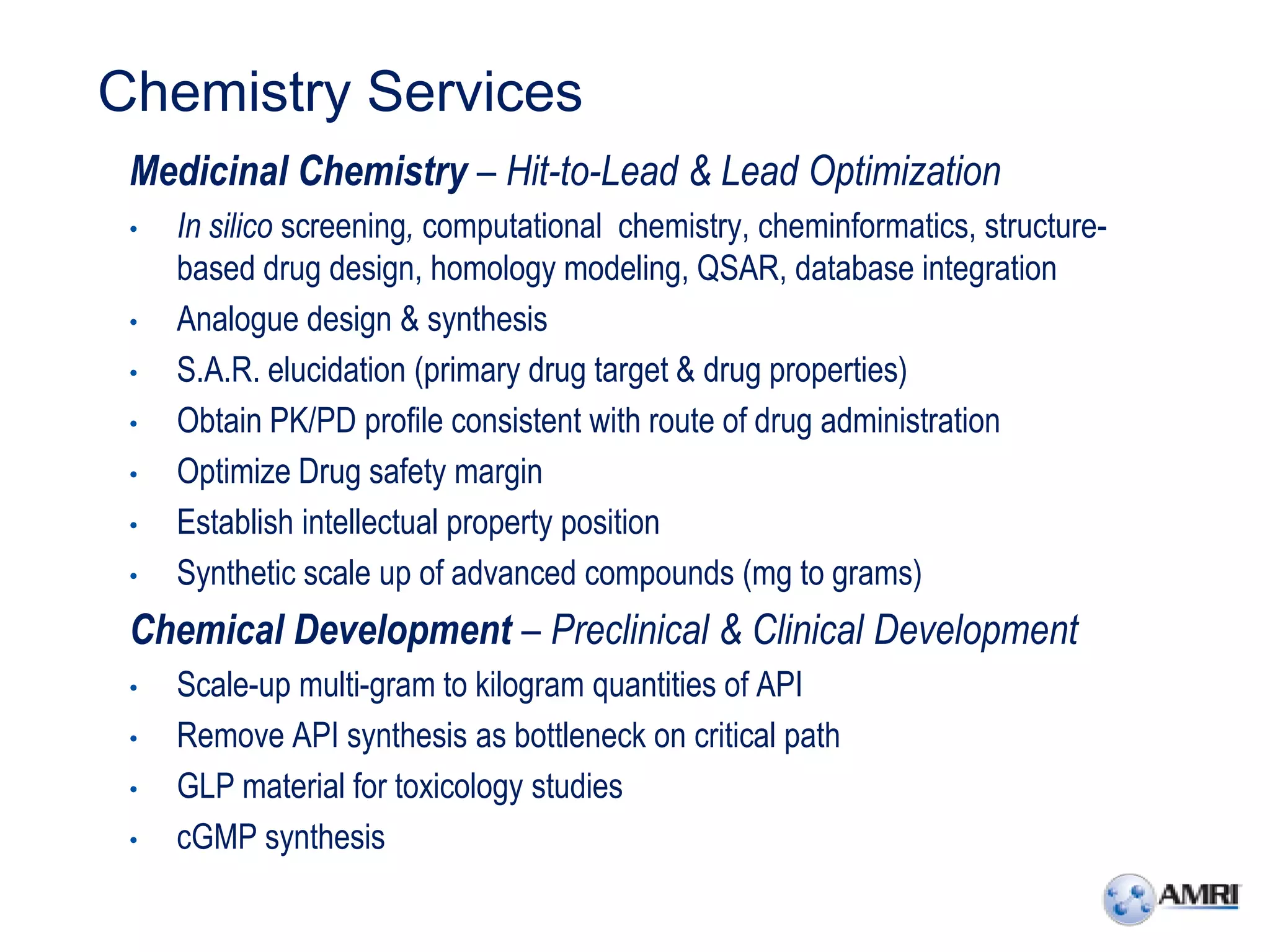
Chemistry Services
 Medicinal Chemistry – Hit-to-Lead & Lead Optimization
 •   In silico screening, computational chemistry, cheminformatics, structure-
     based drug design, homology modeling, QSAR, database integration
 •   Analogue design & synthesis
 •   S.A.R. elucidation (primary drug target & drug properties)
 •   Obtain PK/PD profile consistent with route of drug administration
 •   Optimize Drug safety margin
 •   Establish intellectual property position
 •   Synthetic scale up of advanced compounds (mg to grams)
 Chemical Development – Preclinical & Clinical Development
 •   Scale-up multi-gram to kilogram quantities of API
 •   Remove API synthesis as bottleneck on critical path
 •   GLP material for toxicology studies
 •   cGMP synthesis
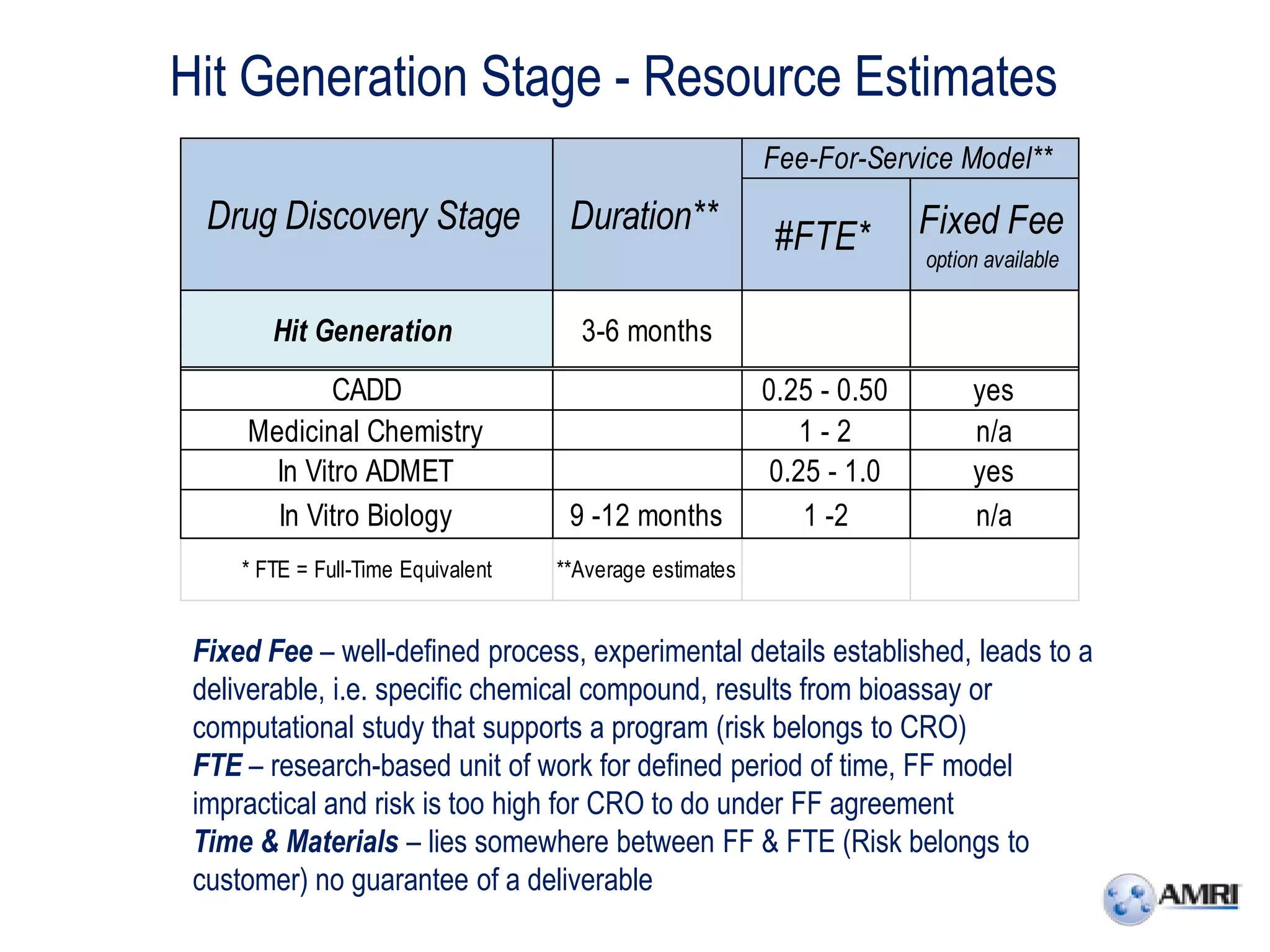
Hit Generation Stage - Resource Estimates
                                                          Fee-For-Service Model**
  Drug Discovery Stage               Duration**                         Fixed Fee
                                                           #FTE*        option available


        Hit Generation                3-6 months
             CADD                                         0.25 - 0.50        yes
     Medicinal Chemistry                                      1-2            n/a
       In Vitro ADMET                                      0.25 - 1.0        yes
       In Vitro Biology              9 -12 months             1 -2           n/a
     * FTE = Full-Time Equivalent   **Average estimates


 Fixed Fee – well-defined process, experimental details established, leads to a
 deliverable, i.e. specific chemical compound, results from bioassay or
 computational study that supports a program (risk belongs to CRO)
 FTE – research-based unit of work for defined period of time, FF model
 impractical and risk is too high for CRO to do under FF agreement
 Time & Materials – lies somewhere between FF & FTE (Risk belongs to
 customer) no guarantee of a deliverable
Iterative Drug Discovery Cycle for Lead
Generation & Lead Optimization
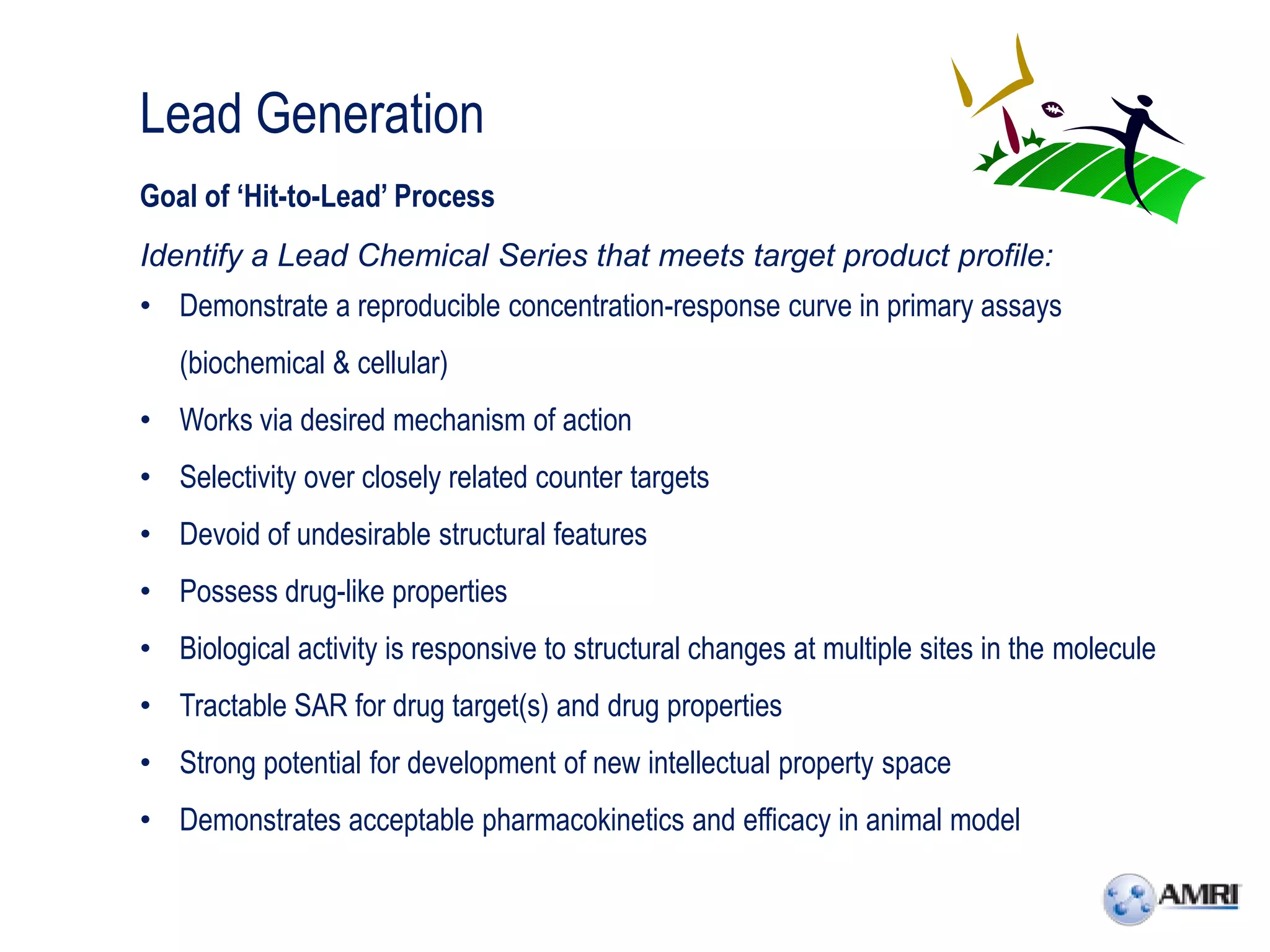
Lead Generation
Goal of ‘Hit-to-Lead’ Process
Identify a Lead Chemical Series that meets target product profile:
• Demonstrate a reproducible concentration-response curve in primary assays
   (biochemical & cellular)
• Works via desired mechanism of action
• Selectivity over closely related counter targets
• Devoid of undesirable structural features
• Possess drug-like properties
• Biological activity is responsive to structural changes at multiple sites in the molecule
• Tractable SAR for drug target(s) and drug properties
• Strong potential for development of new intellectual property space
• Demonstrates acceptable pharmacokinetics and efficacy in animal model
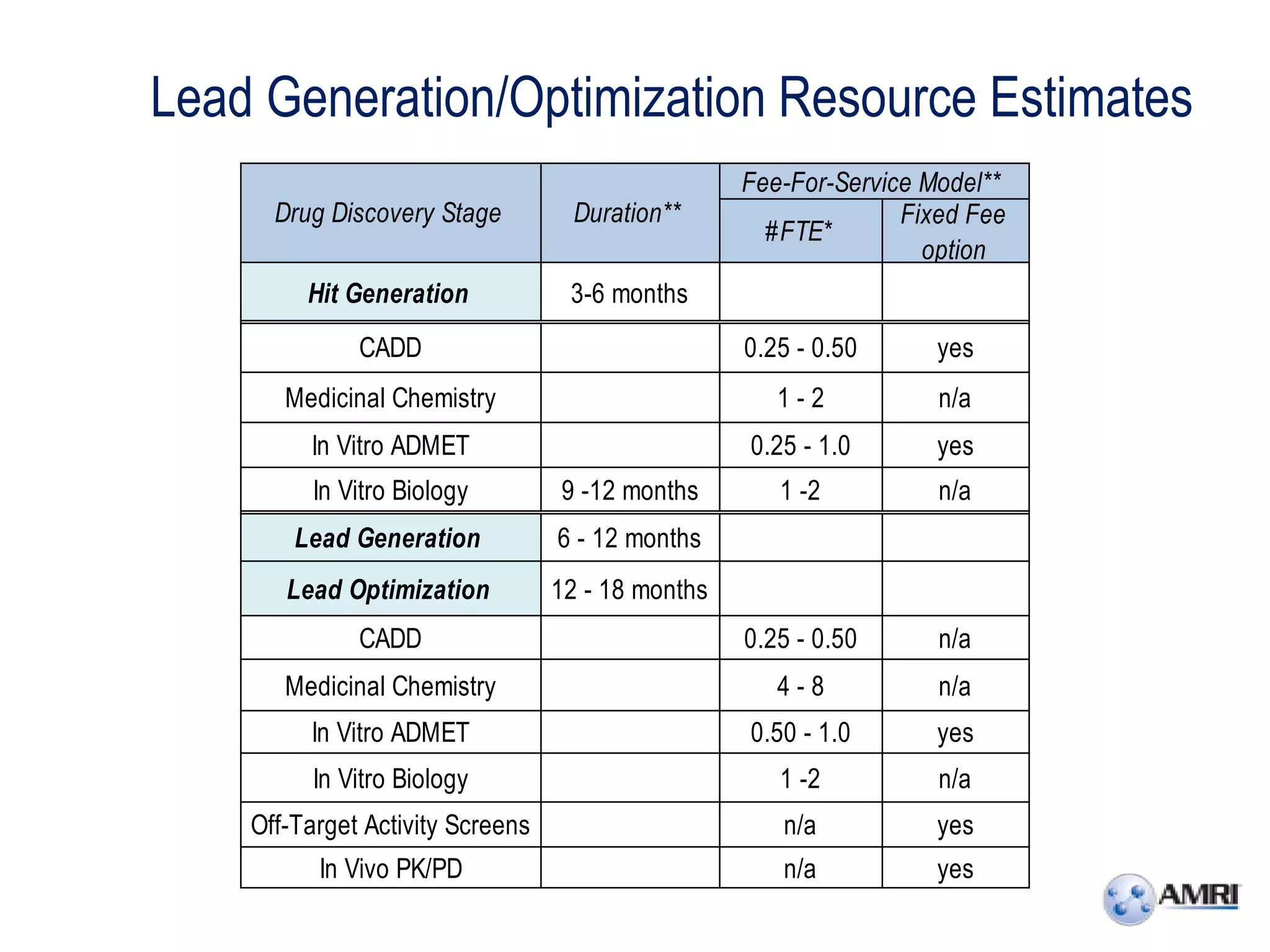
Lead Generation/Optimization Resource Estimates
                                                   Fee-For-Service Model**
      Drug Discovery Stage          Duration**                   Fixed Fee
                                                     #FTE*
                                                                   option
         Hit Generation            3-6 months
              CADD                                 0.25 - 0.50      yes
       Medicinal Chemistry                            1-2           n/a
         In Vitro ADMET                            0.25 - 1.0       yes
          In Vitro Biology        9 -12 months        1 -2          n/a
        Lead Generation           6 - 12 months
       Lead Optimization          12 - 18 months
              CADD                                 0.25 - 0.50      n/a
       Medicinal Chemistry                            4-8           n/a
         In Vitro ADMET                            0.50 - 1.0       yes
          In Vitro Biology                            1 -2          n/a
    Off-Target Activity Screens                       n/a           yes
          In Vivo PK/PD                               n/a           yes
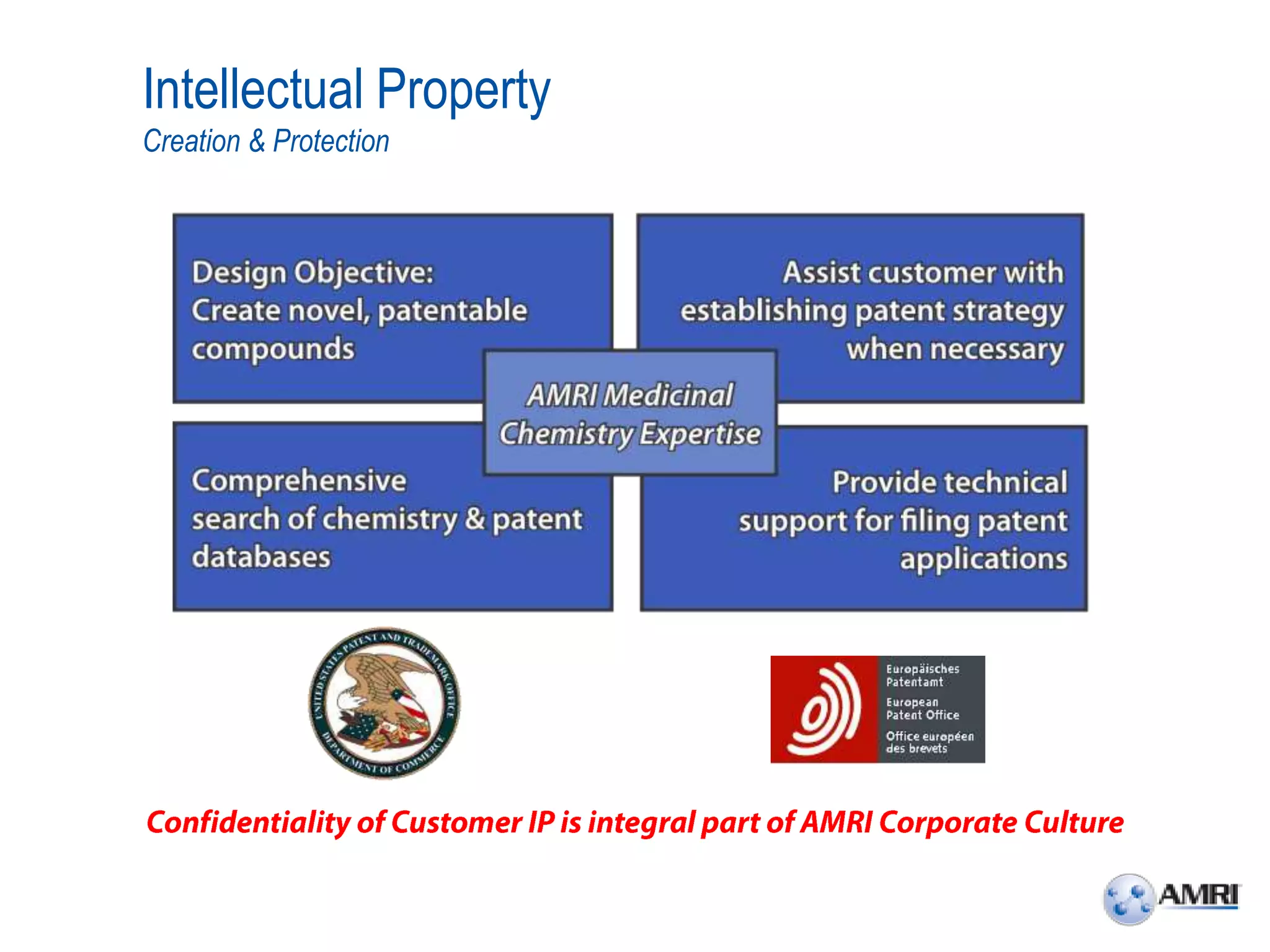
Intellectual Property
Creation & Protection
Lead Optimization

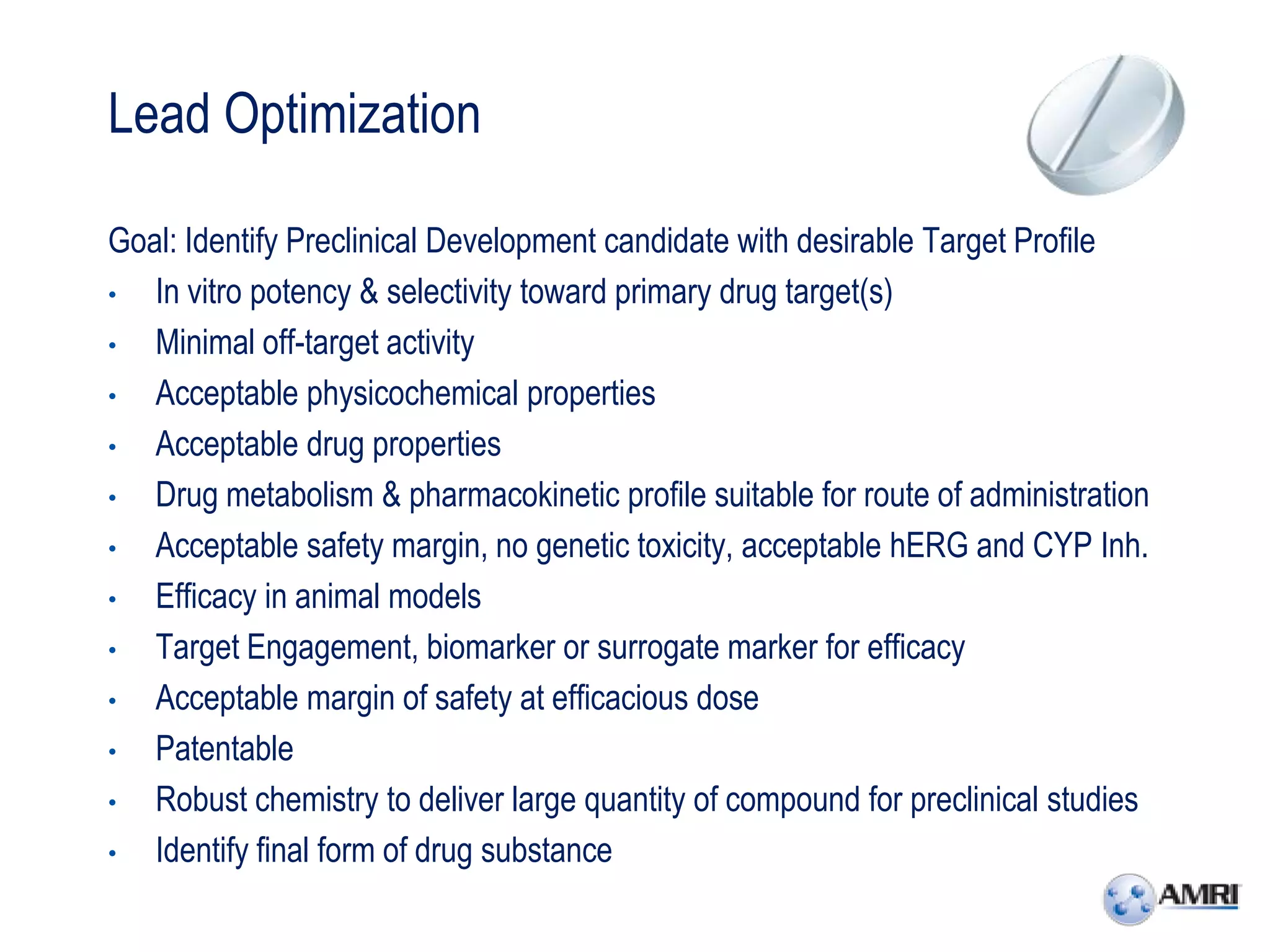
Goal: Identify Preclinical Development candidate with desirable Target Profile
•  In vitro potency & selectivity toward primary drug target(s)
•  Minimal off-target activity
•  Acceptable physicochemical properties
•  Acceptable drug properties
•  Drug metabolism & pharmacokinetic profile suitable for route of administration
•  Acceptable safety margin, no genetic toxicity, acceptable hERG and CYP Inh.
•  Efficacy in animal models
•  Target Engagement, biomarker or surrogate marker for efficacy
•  Acceptable margin of safety at efficacious dose
•  Patentable
•  Robust chemistry to deliver large quantity of compound for preclinical studies
•  Identify final form of drug substance
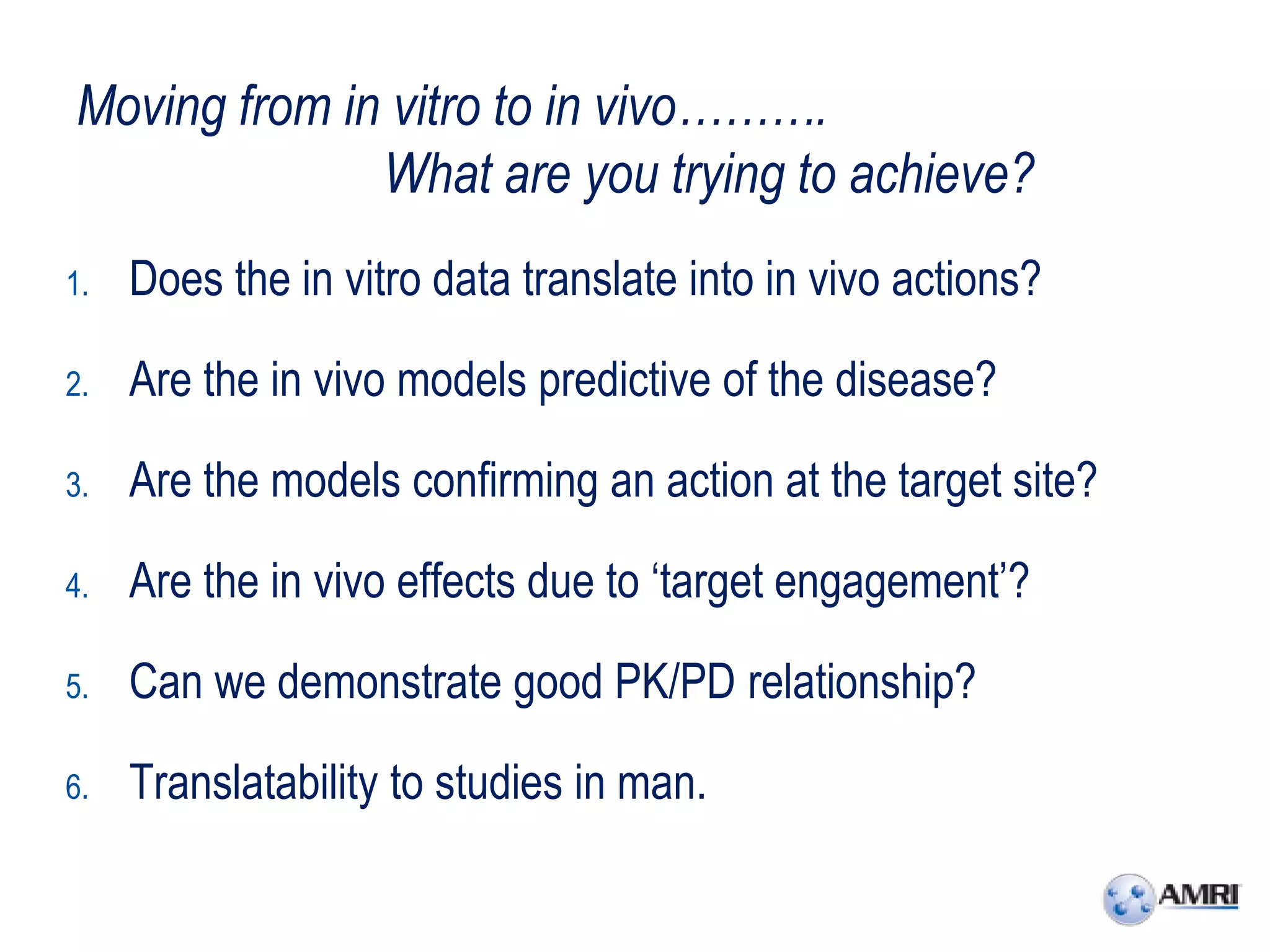
Moving from in vitro to in vivo……….
              What are you trying to achieve?
1.   Does the in vitro data translate into in vivo actions?

2.   Are the in vivo models predictive of the disease?

3.   Are the models confirming an action at the target site?

4.   Are the in vivo effects due to ‘target engagement’?

5.   Can we demonstrate good PK/PD relationship?

6.   Translatability to studies in man.
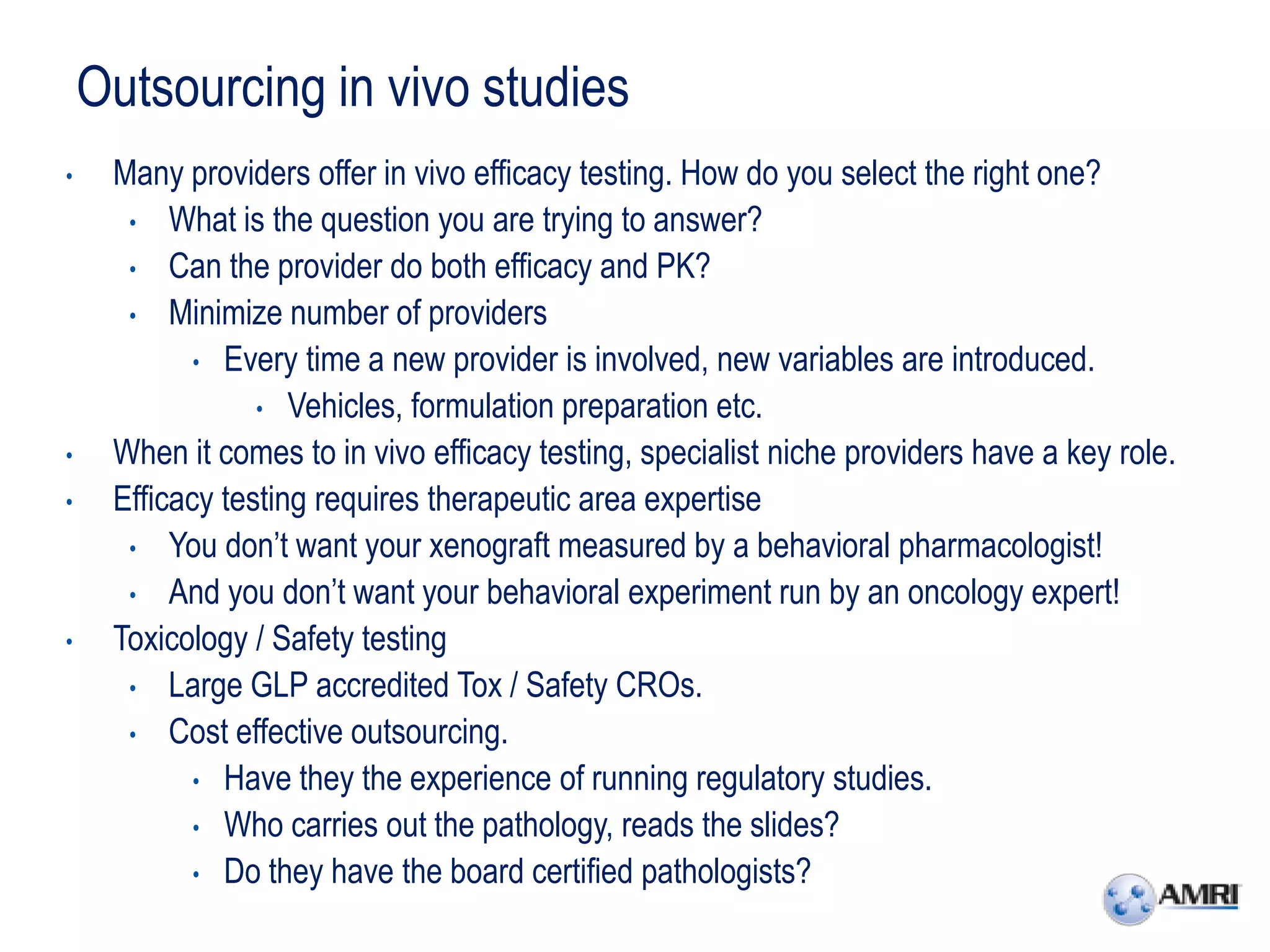
Outsourcing in vivo studies
•    Many providers offer in vivo efficacy testing. How do you select the right one?
      • What is the question you are trying to answer?
      • Can the provider do both efficacy and PK?
      • Minimize number of providers
            • Every time a new provider is involved, new variables are introduced.
                 • Vehicles, formulation preparation etc.
•    When it comes to in vivo efficacy testing, specialist niche providers have a key role.
•    Efficacy testing requires therapeutic area expertise
      • You don’t want your xenograft measured by a behavioral pharmacologist!
      • And you don’t want your behavioral experiment run by an oncology expert!
•    Toxicology / Safety testing
      • Large GLP accredited Tox / Safety CROs.
      • Cost effective outsourcing.
            • Have they the experience of running regulatory studies.
            • Who carries out the pathology, reads the slides?
            • Do they have the board certified pathologists?
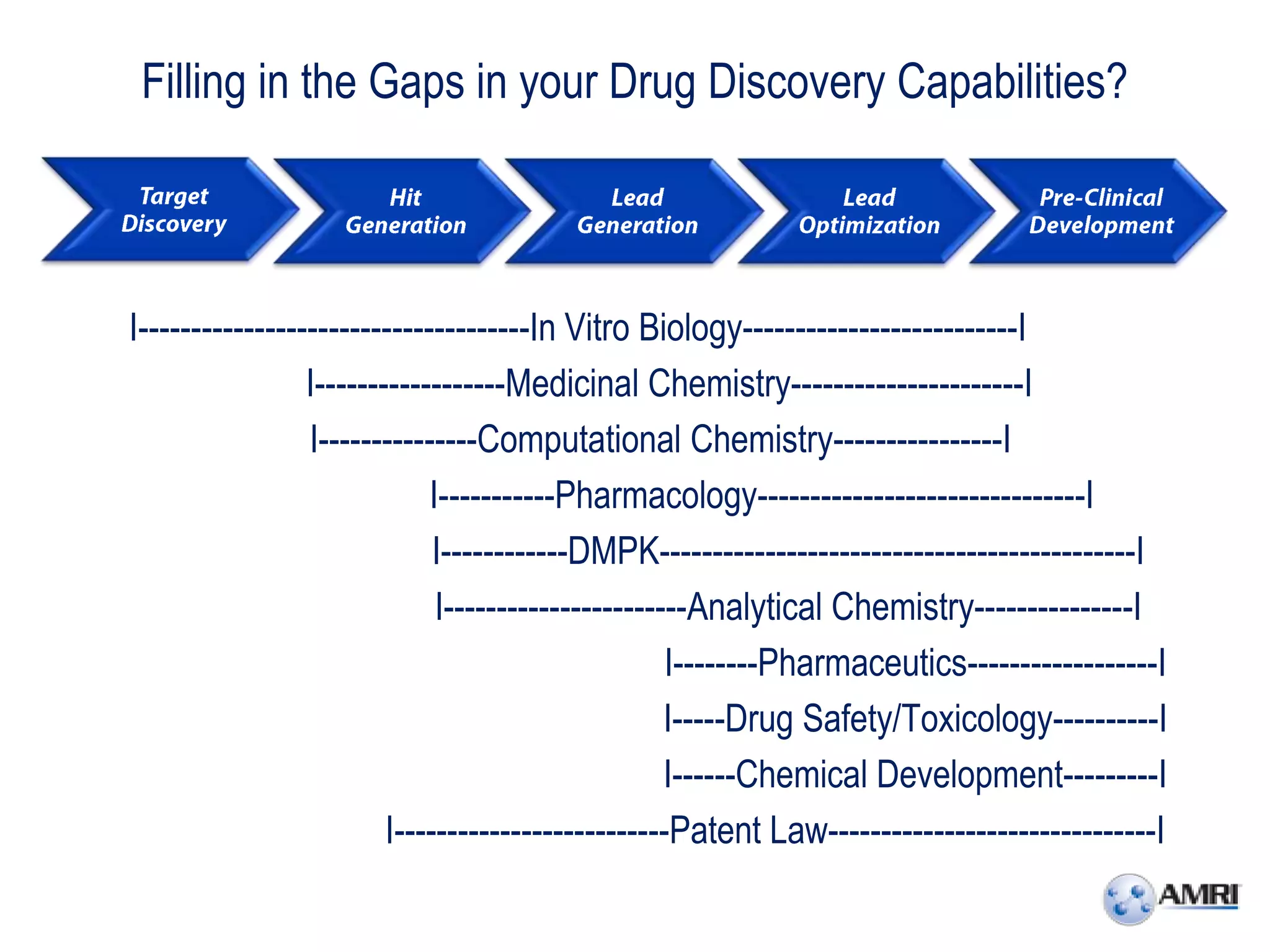
Filling in the Gaps in your Drug Discovery Capabilities?


I-------------------------------------In Vitro Biology--------------------------I
                 I------------------Medicinal Chemistry----------------------I
                 I---------------Computational Chemistry----------------I
                             I-----------Pharmacology-------------------------------I
                              I------------DMPK---------------------------------------------I
                              I-----------------------Analytical Chemistry---------------I
                                                    I--------Pharmaceutics------------------I
                                                    I-----Drug Safety/Toxicology----------I
                                                    I------Chemical Development---------I
                         I--------------------------Patent Law-------------------------------I
$$ Cost of Outsourcing $$

•    Cost a significant barrier to direct use of CRO services

•    Academic drug discovery centers

•    Non-profits, Foundations and Government Agencies, like
     the NINDS are making translation of academic innovation
     into drug therapies possible by providing the financial
     means for the universities, the NINDS and CROs to work
     together.
CROs and Venture-Based Groups working with Academia

Albany, NY (January 5, 2012) AMRI Announces Preferred Provider Agreement with
BioPontis Alliance LLC

Albany, NY (January 5, 2012)—AMRI (NASDAQ: AMRI), a global contract services
organization, announced today that it has entered into a preferred provider agreement with
BioPontis Alliance LLC. The agreement is aimed at supporting BioPontis’ mission to
bridge the gap between early-stage research and technologies being discovered and
developed in academia and other research entities. AMRI will provide its services in small
molecule discovery, development, and manufacturing in BioPontis’ drug discovery research
programs.
Drug Discovery Services - Why Outsource?

 •   Stay focused on your core strength

 •   Plug the gaps in your drug discovery capabilities

 •   Access technology

 •   Leverage industry drug discovery expertise

 •   Get to proof of concept more rapidly

 •   Improve chances of success
Thank you!

  We would like to learn more about your drug
discovery research needs and discuss ways that
   AMRI could help you achieve your goals?

        Kelly.Grover@amriglobal.com
        Bruce.Molino@amriglobal.com
Advancing Preclinical Therapy Development for Alzheimer’s Disease:
          Funding Opportunities and Services at the NIA
         6th ADDF Drug Discovery for Neurodegeneration Conference
                              Feb 12-14, 2012


                          Suzana Petanceska PhD
                         Division of Neuroscience
                                 National Institute on Aging
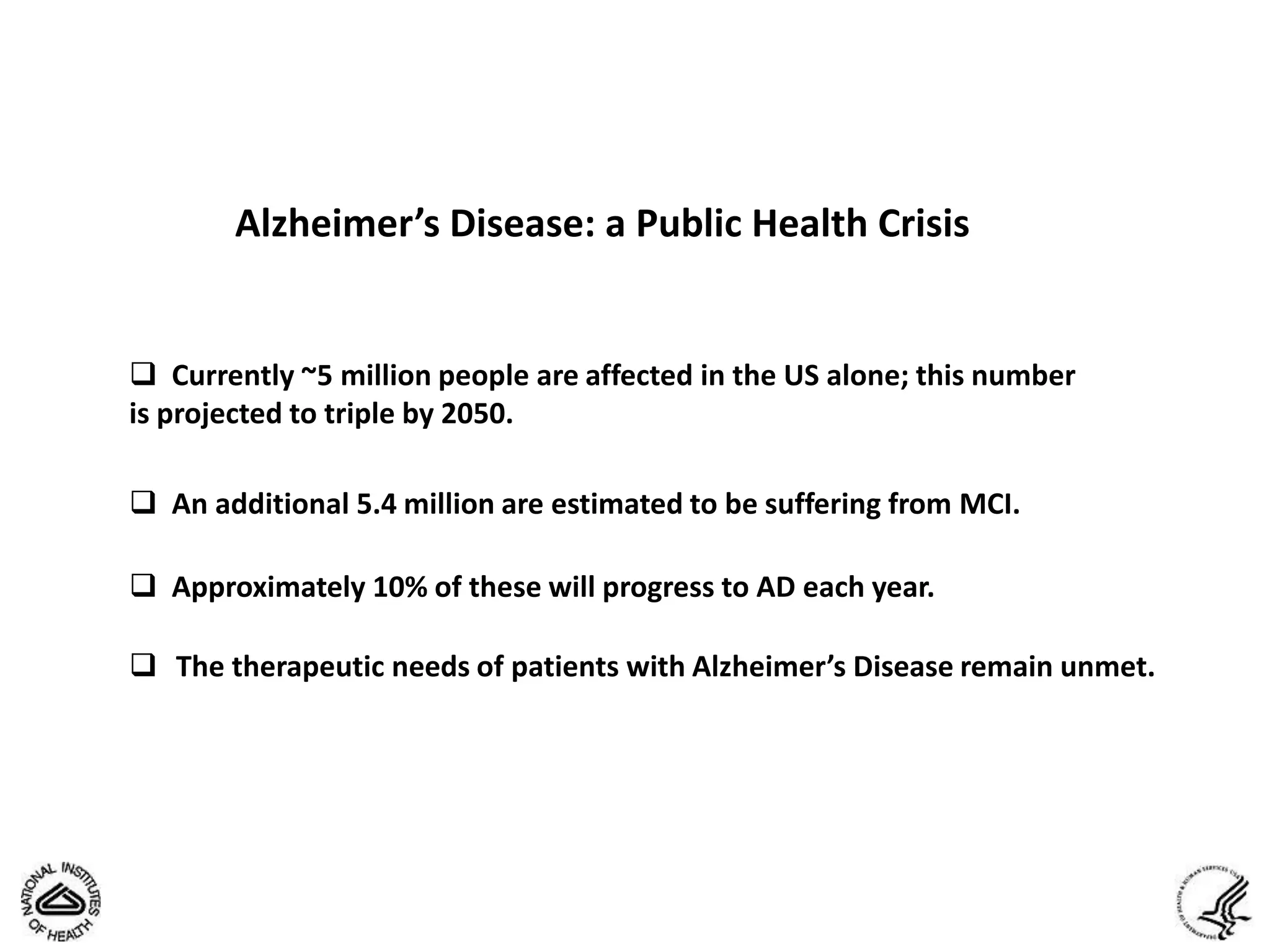
Alzheimer’s Disease: a Public Health Crisis


 Currently ~5 million people are affected in the US alone; this number
is projected to triple by 2050.

 An additional 5.4 million are estimated to be suffering from MCI.

 Approximately 10% of these will progress to AD each year.

 The therapeutic needs of patients with Alzheimer’s Disease remain unmet.
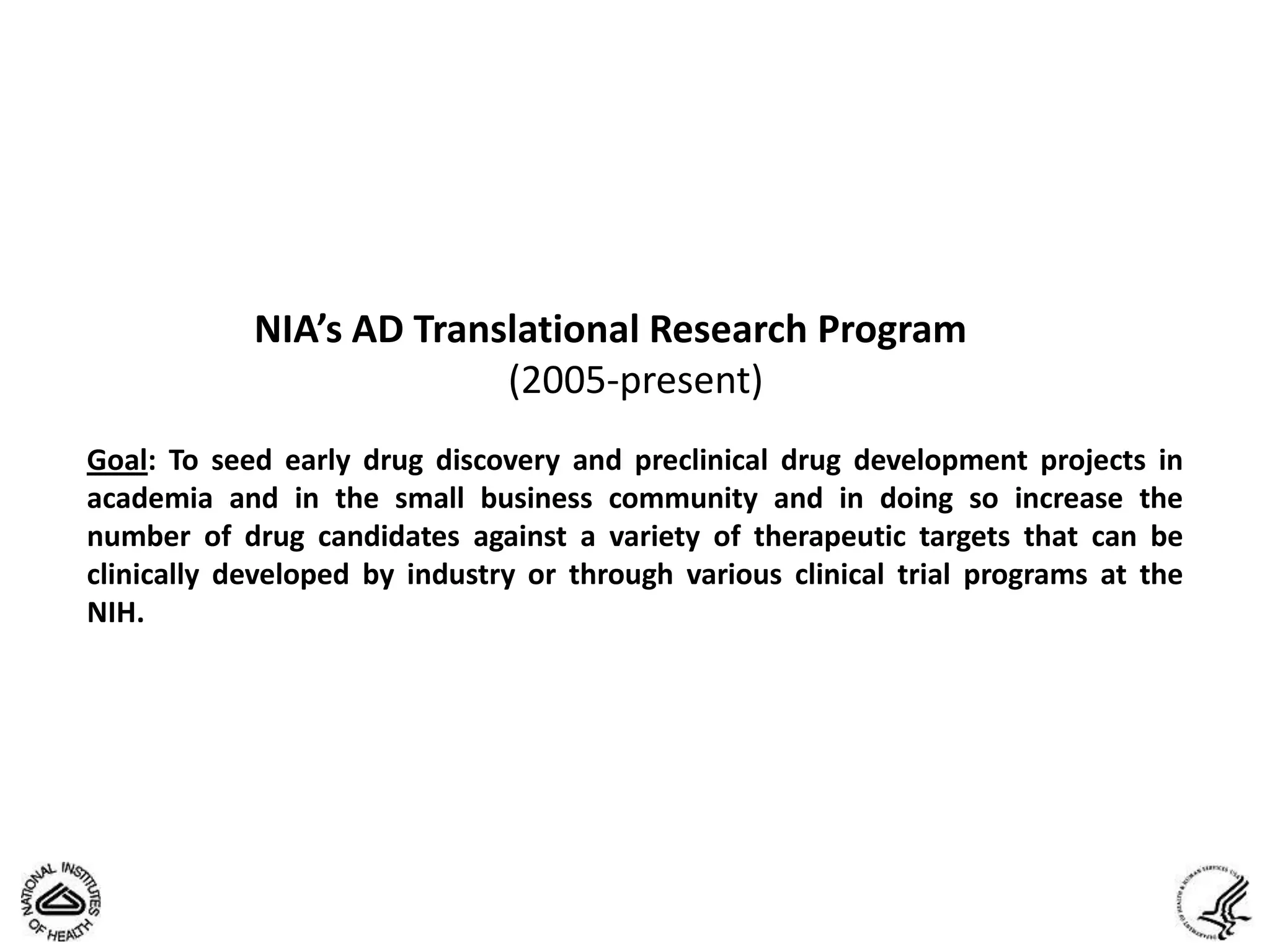
NIA’s AD Translational Research Program
                          (2005-present)
Goal: To seed early drug discovery and preclinical drug development projects in
academia and in the small business community and in doing so increase the
number of drug candidates against a variety of therapeutic targets that can be
clinically developed by industry or through various clinical trial programs at the
NIH.
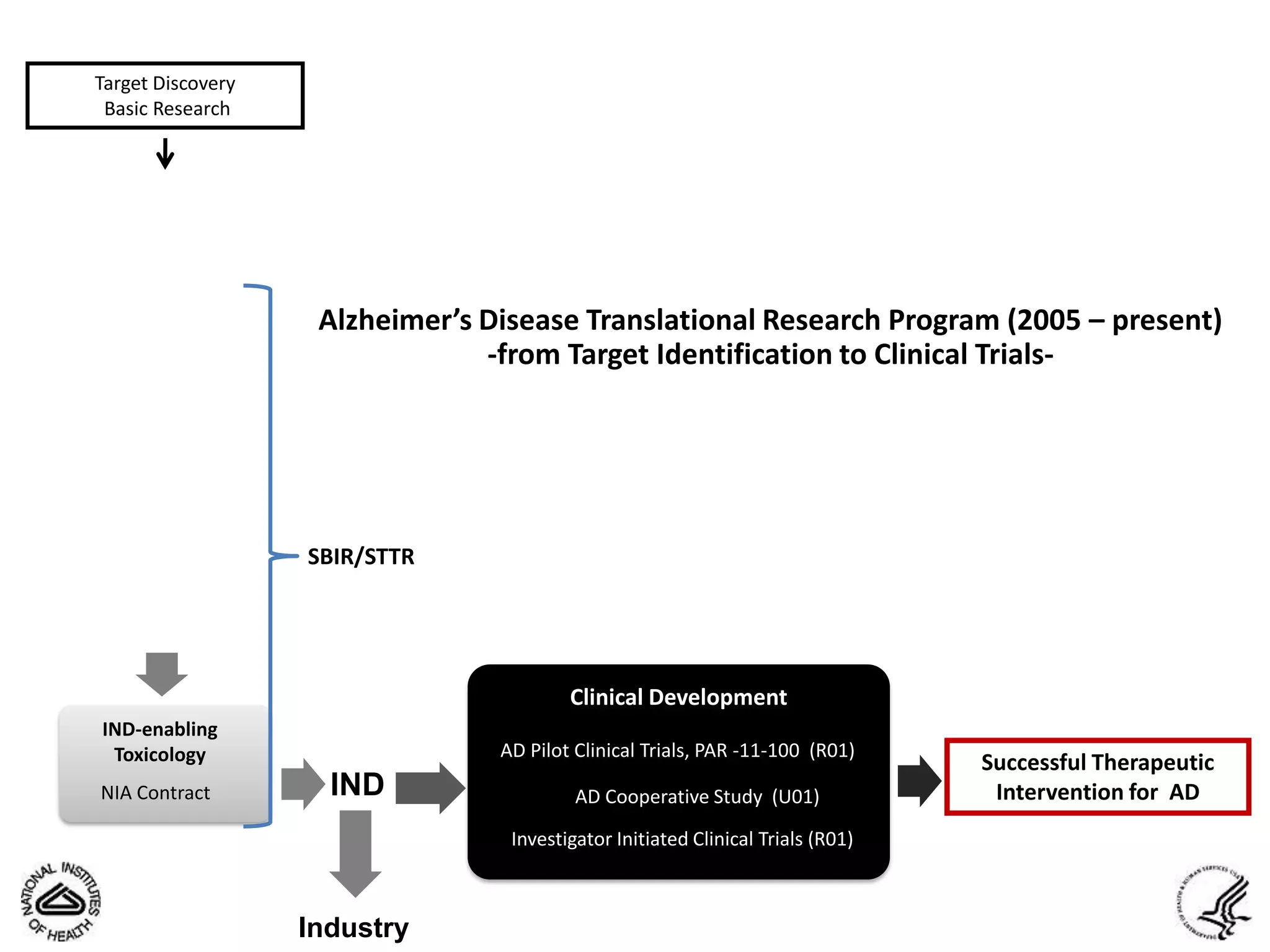
Target Discovery
 Basic Research


                    Alzheimer’s Disease Translational Research Program (2005 – present)
                                -from Target Identification to Clinical Trials-


                   SBIR/STTR


                                         Clinical Development
IND-enabling
 Toxicology                      AD Pilot Clinical Trials, PAR -11-100 (R01)
                                                                                 Successful Therapeutic
NIA Contract         IND                  AD Cooperative Study (U01)              Intervention for AD
                                  Investigator Initiated Clinical Trials (R01)


                   Industry
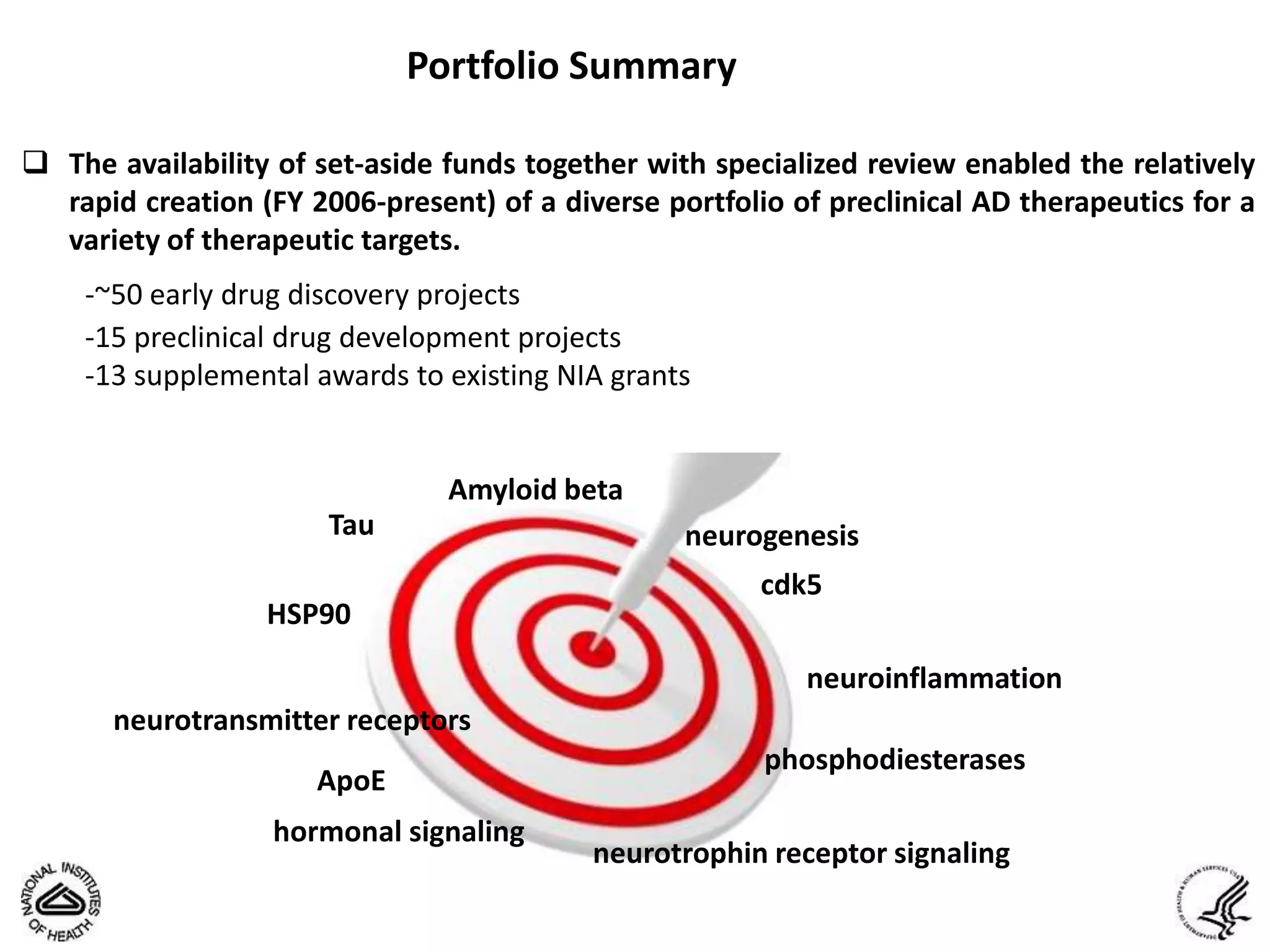
Portfolio Summary

 The availability of set-aside funds together with specialized review enabled the relatively
  rapid creation (FY 2006-present) of a diverse portfolio of preclinical AD therapeutics for a
  variety of therapeutic targets.
    -~50 early drug discovery projects
    -15 preclinical drug development projects
    -13 supplemental awards to existing NIA grants


                                Amyloid beta
                       Tau                        neurogenesis
                                                        cdk5
                  HSP90

                                                           neuroinflammation
      neurotransmitter receptors
                                                        phosphodiesterases
                      ApoE
                   hormonal signaling
                                           neurotrophin receptor signaling
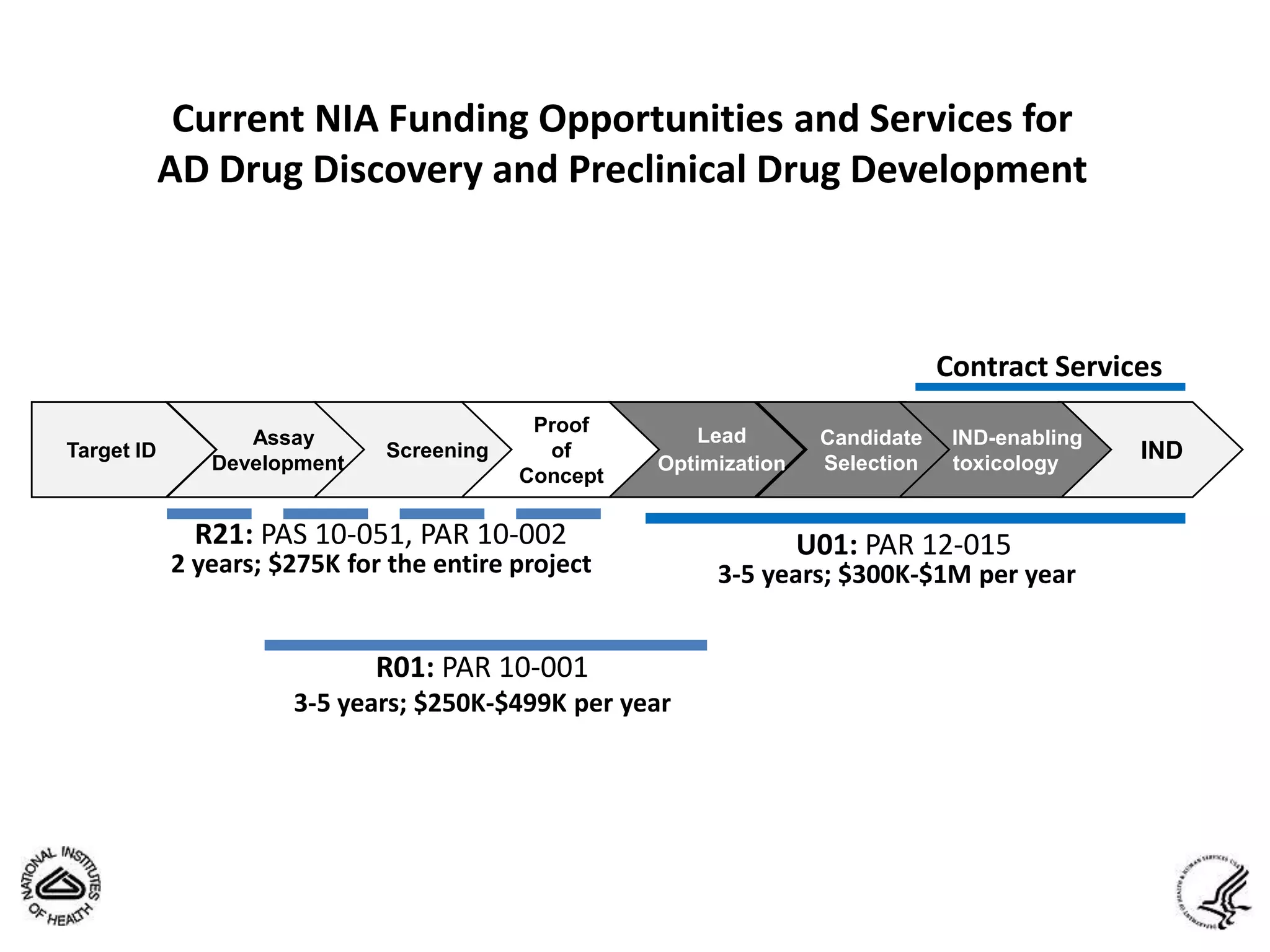
Current NIA Funding Opportunities and Services for
            AD Drug Discovery and Preclinical Drug Development


                                                                                Contract Services
                                           Proof
                  Assay                                Lead         Candidate    IND-enabling
Target ID
               Development
                              Screening     of
                                                    Optimization    Selection    toxicology
                                                                                                IND
                                          Concept

              R21: PAS 10-051, PAR 10-002                          U01: PAR 12-015
            2 years; $275K for the entire project        3-5 years; $300K-$1M per year


                              R01: PAR 10-001
                      3-5 years; $250K-$499K per year
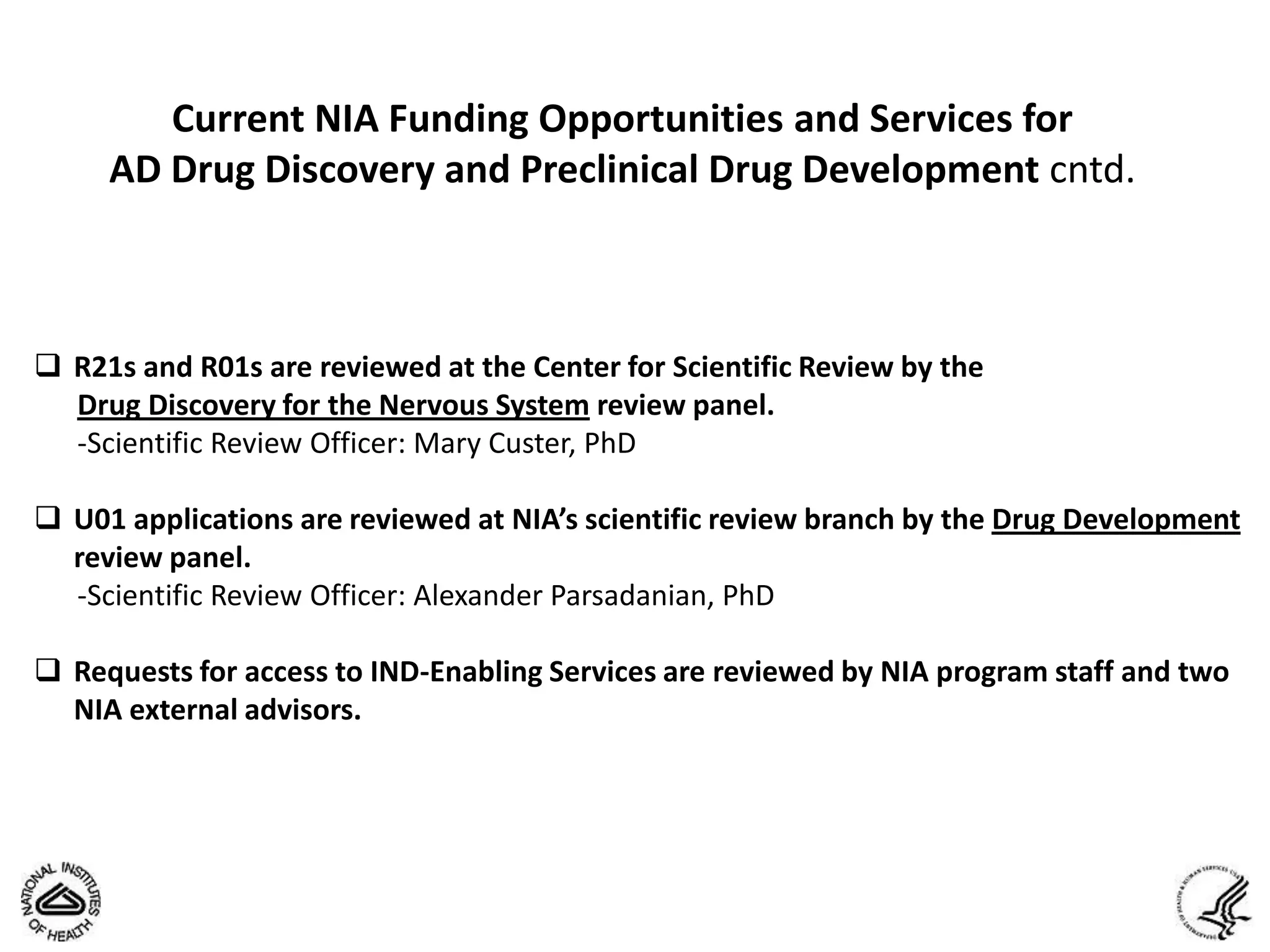
Current NIA Funding Opportunities and Services for
     AD Drug Discovery and Preclinical Drug Development cntd.


 R21s and R01s are reviewed at the Center for Scientific Review by the
  Drug Discovery for the Nervous System review panel.
  -Scientific Review Officer: Mary Custer, PhD

 U01 applications are reviewed at NIA’s scientific review branch by the Drug Development
  review panel.
  -Scientific Review Officer: Alexander Parsadanian, PhD

 Requests for access to IND-Enabling Services are reviewed by NIA program staff and two
  NIA external advisors.
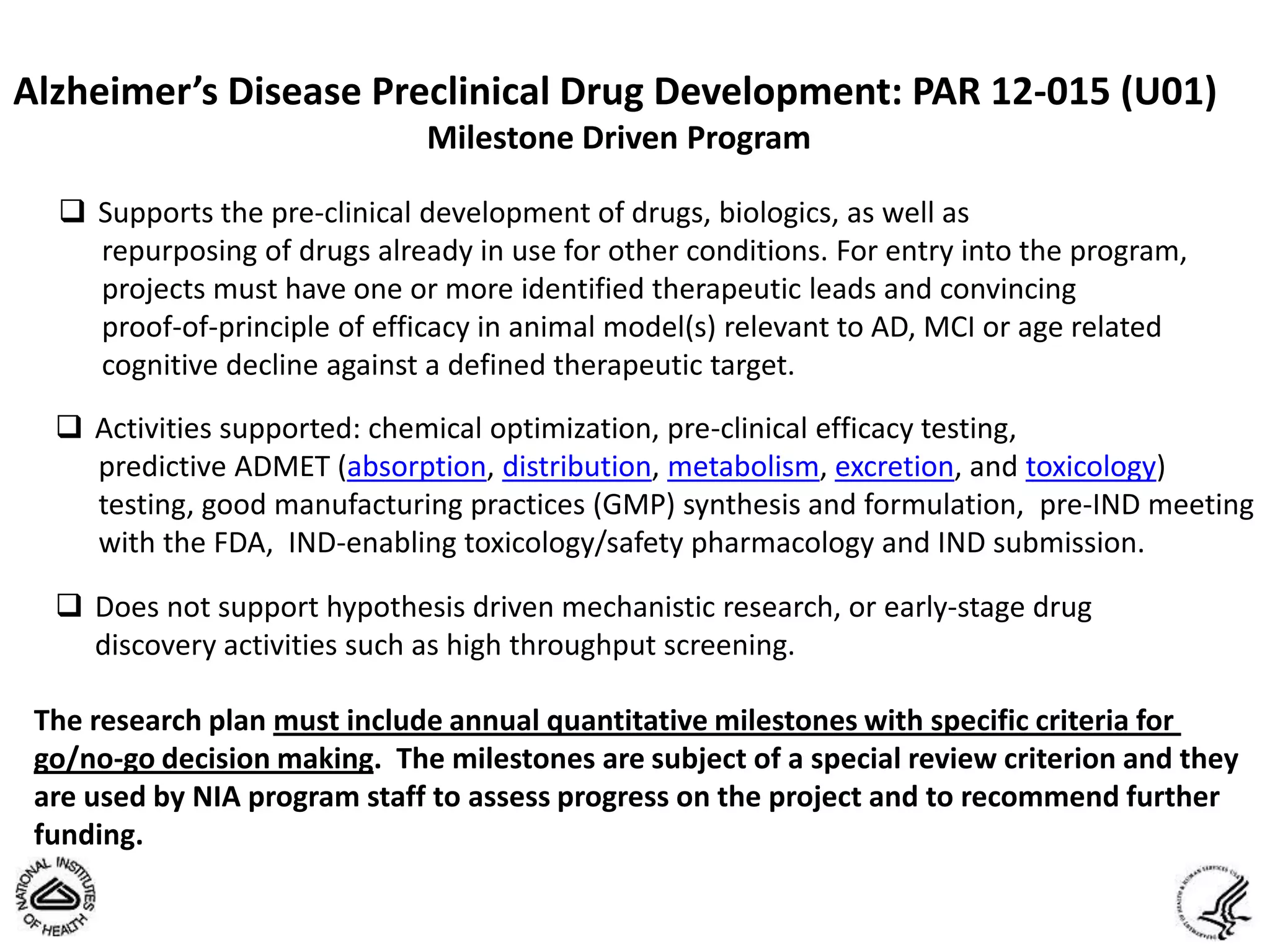
Alzheimer’s Disease Preclinical Drug Development: PAR 12-015 (U01)
                              Milestone Driven Program

   Supports the pre-clinical development of drugs, biologics, as well as
    repurposing of drugs already in use for other conditions. For entry into the program,
    projects must have one or more identified therapeutic leads and convincing
    proof-of-principle of efficacy in animal model(s) relevant to AD, MCI or age related
    cognitive decline against a defined therapeutic target.
   Activities supported: chemical optimization, pre-clinical efficacy testing,
    predictive ADMET (absorption, distribution, metabolism, excretion, and toxicology)
    testing, good manufacturing practices (GMP) synthesis and formulation, pre-IND meeting
    with the FDA, IND-enabling toxicology/safety pharmacology and IND submission.

   Does not support hypothesis driven mechanistic research, or early-stage drug
    discovery activities such as high throughput screening.

 The research plan must include annual quantitative milestones with specific criteria for
 go/no-go decision making. The milestones are subject of a special review criterion and they
 are used by NIA program staff to assess progress on the project and to recommend further
 funding.
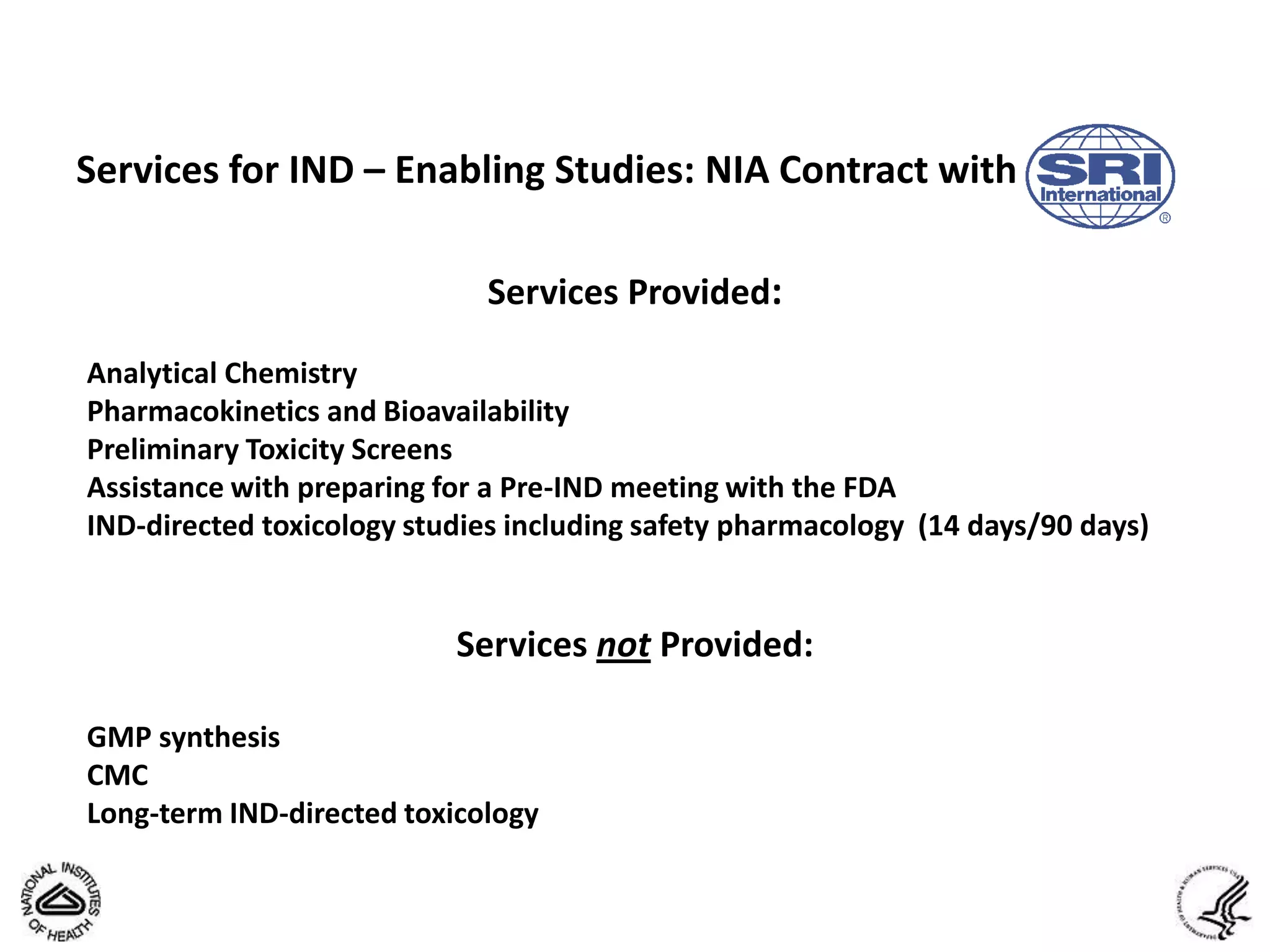
Services for IND – Enabling Studies: NIA Contract with

                             Services Provided:

Analytical Chemistry
Pharmacokinetics and Bioavailability
Preliminary Toxicity Screens
Assistance with preparing for a Pre-IND meeting with the FDA
IND-directed toxicology studies including safety pharmacology (14 days/90 days)


                           Services not Provided:

GMP synthesis
CMC
Long-term IND-directed toxicology
How to Apply for Contract Services:

 Contact the project officer:
-Neil Buckholtz PhD buckholn@nia.nih.gov


 Provide the project officer with supporting material/data
  justifying the request for the contract services.
What Follows?
 The project officer sends the material for review to two external
  expert advisors.

 If the request is approved the project officer will put the investigator in touch
  with the principal investigator (PI) at SRI International:
  -Karen Steinmetz, PhD, DABT karen.steinmetz@sri.com

 The PI at SRI prepares a protocol based on the information provided by the
  academic/biotech investigator.

 Once the protocol is approved by the NIH contracting office, SRI will carry
  out the agreed upon studies.

 Time between submission of request and approval of protocol for IND-
  enabling services: 4-6 months.
How to Decide Which Funding Opportunity
                        is Best for Your Project?

 Send a brief summary (one page) of your prospective project outlining the aims and
deliverables to the appropriate program officer(s).
-Suzana Petanceska PhD, petanceskas@nia.nih.gov

 Program staff will set up a teleconference and discuss the best funding venue(s) at the NIA
or refer you to another Institute (NINDS), a trans-NIH funding opportunity, or a non-federal
funding agency (i.e. ADDF).

 If the project is mature enough to enter the U01 program, program staff will
request preliminary milestones and budget and will work with the investigator to
formulate the quantitative milestones for the application.
-Lorenzo Refolo, refolol@nia.nih.gov

 If the project is at late preclinical development stage and needs only IND-safety
pharmacology and toxicology, program staff will advise you to submit a request for access
to these services.
-Neil Buckholtz PhD, buckholn@nia.nih.gov
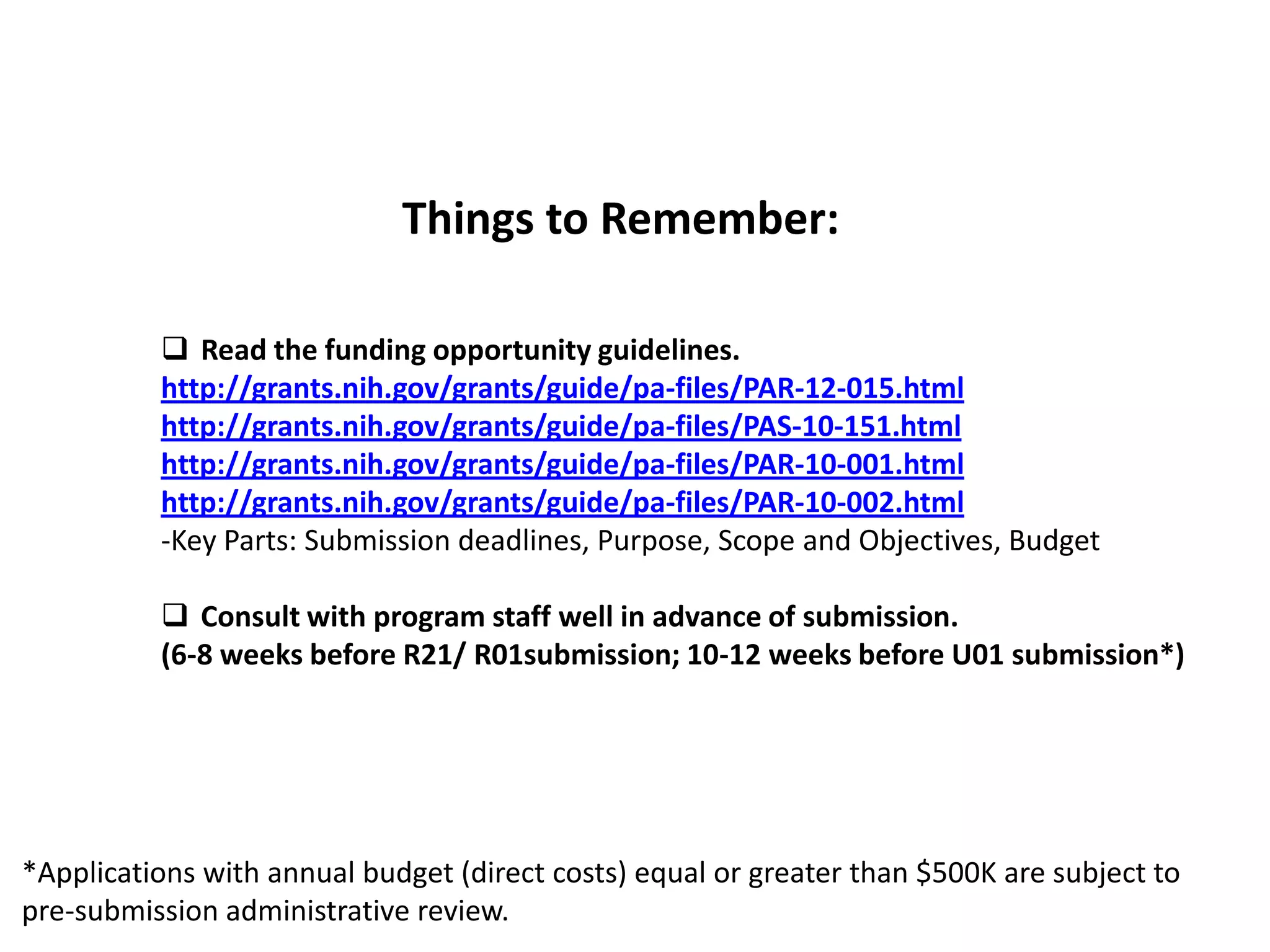
Things to Remember:

           Read the funding opportunity guidelines.
          http://grants.nih.gov/grants/guide/pa-files/PAR-12-015.html
          http://grants.nih.gov/grants/guide/pa-files/PAS-10-151.html
          http://grants.nih.gov/grants/guide/pa-files/PAR-10-001.html
          http://grants.nih.gov/grants/guide/pa-files/PAR-10-002.html
          -Key Parts: Submission deadlines, Purpose, Scope and Objectives, Budget

           Consult with program staff well in advance of submission.
          (6-8 weeks before R21/ R01submission; 10-12 weeks before U01 submission*)


*Applications with annual budget (direct costs) equal or greater than $500K are subject to
pre-submission administrative review.
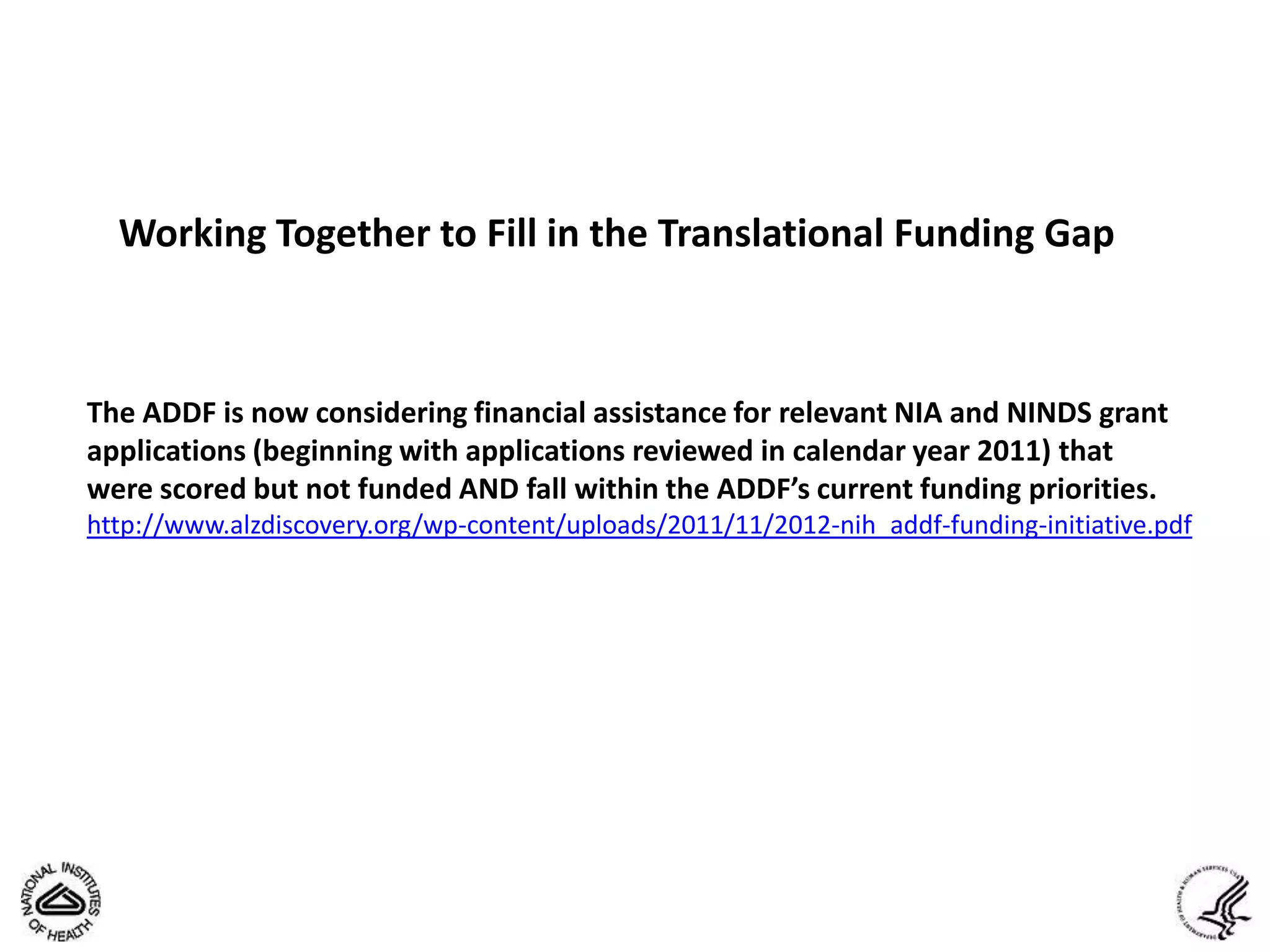
Working Together to Fill in the Translational Funding Gap


The ADDF is now considering financial assistance for relevant NIA and NINDS grant
applications (beginning with applications reviewed in calendar year 2011) that
were scored but not funded AND fall within the ADDF’s current funding priorities.
http://www.alzdiscovery.org/wp-content/uploads/2011/11/2012-nih_addf-funding-initiative.pdf
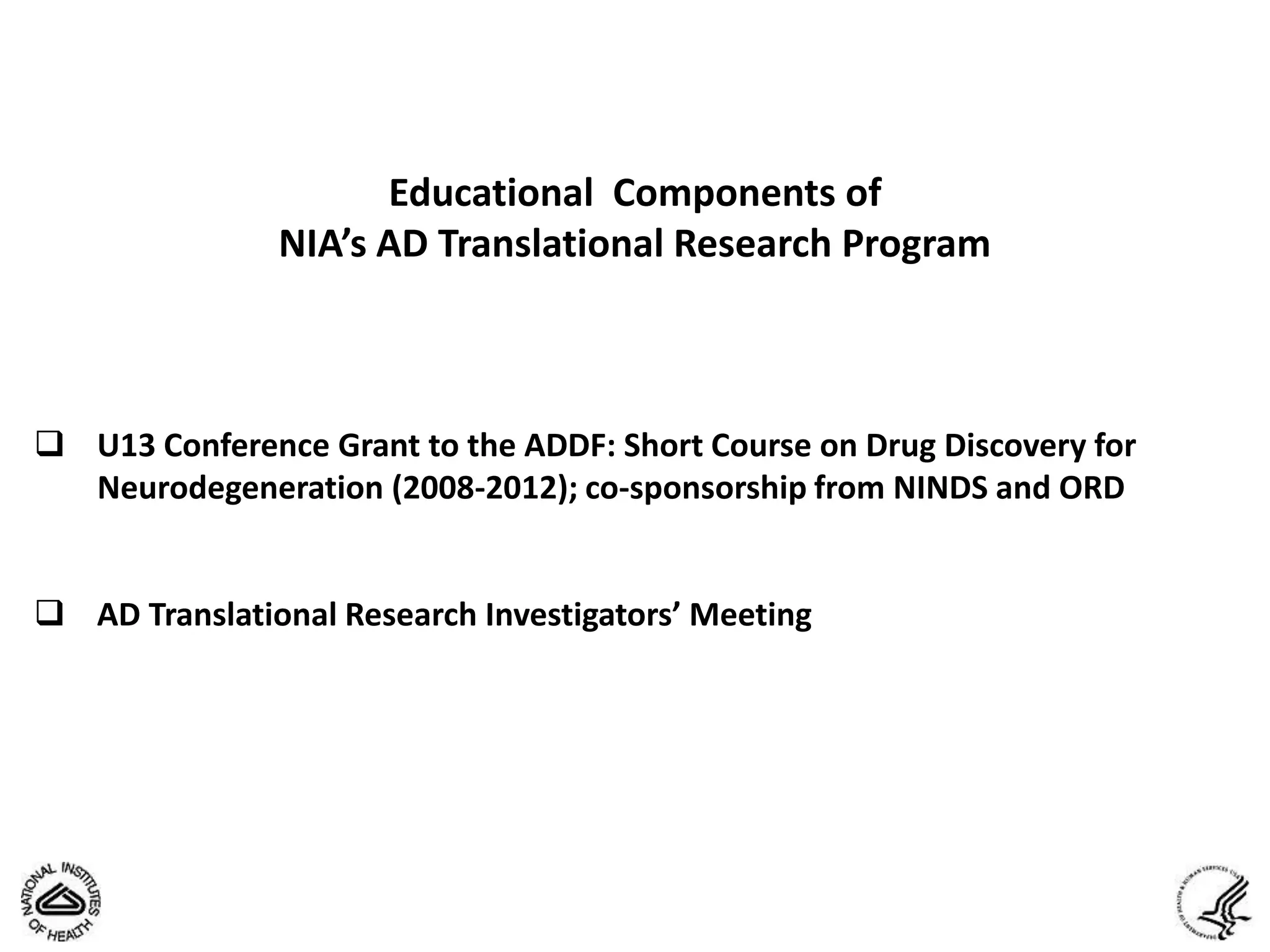
Educational Components of
               NIA’s AD Translational Research Program


 U13 Conference Grant to the ADDF: Short Course on Drug Discovery for
  Neurodegeneration (2008-2012); co-sponsorship from NINDS and ORD


 AD Translational Research Investigators’ Meeting
National Institute on Aging


Alzheimer’s Disease Translational Research Investigators’ Meeting
                              (2007, 2009, 2011)


Purpose: To provide guidance to NIA investigators funded by the translational
research initiatives, to foster interactions among the investigators and to provide a
venue for the investigators to interface with drug discovery and clinical experts as
well as FDA representatives.
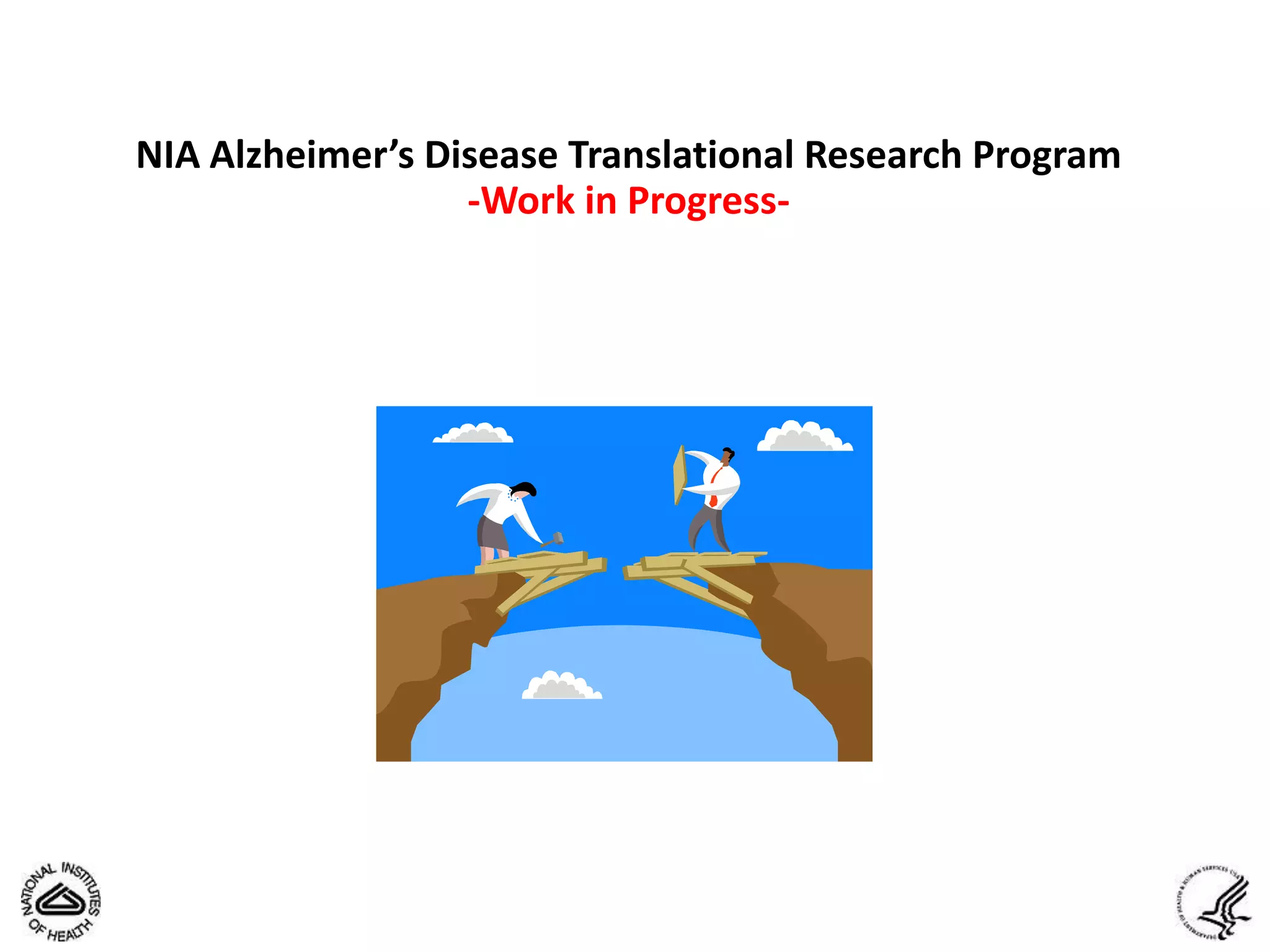
NIA Alzheimer’s Disease Translational Research Program
                  -Work in Progress-
NIA AD Translational Program Contacts:


         Suzana Petanceska PhD
        petanceskas@nia.nih.gov

          Lorenzo Refolo PhD            Drug discovery and
          refolol@nia.nih.gov      preclinical drug development

          Neil Buckholtz PhD
         buckholn@nia.nih.gov


            Laurie Ryan PhD       Clinical drug development
           ryanl@nia.nih.gov
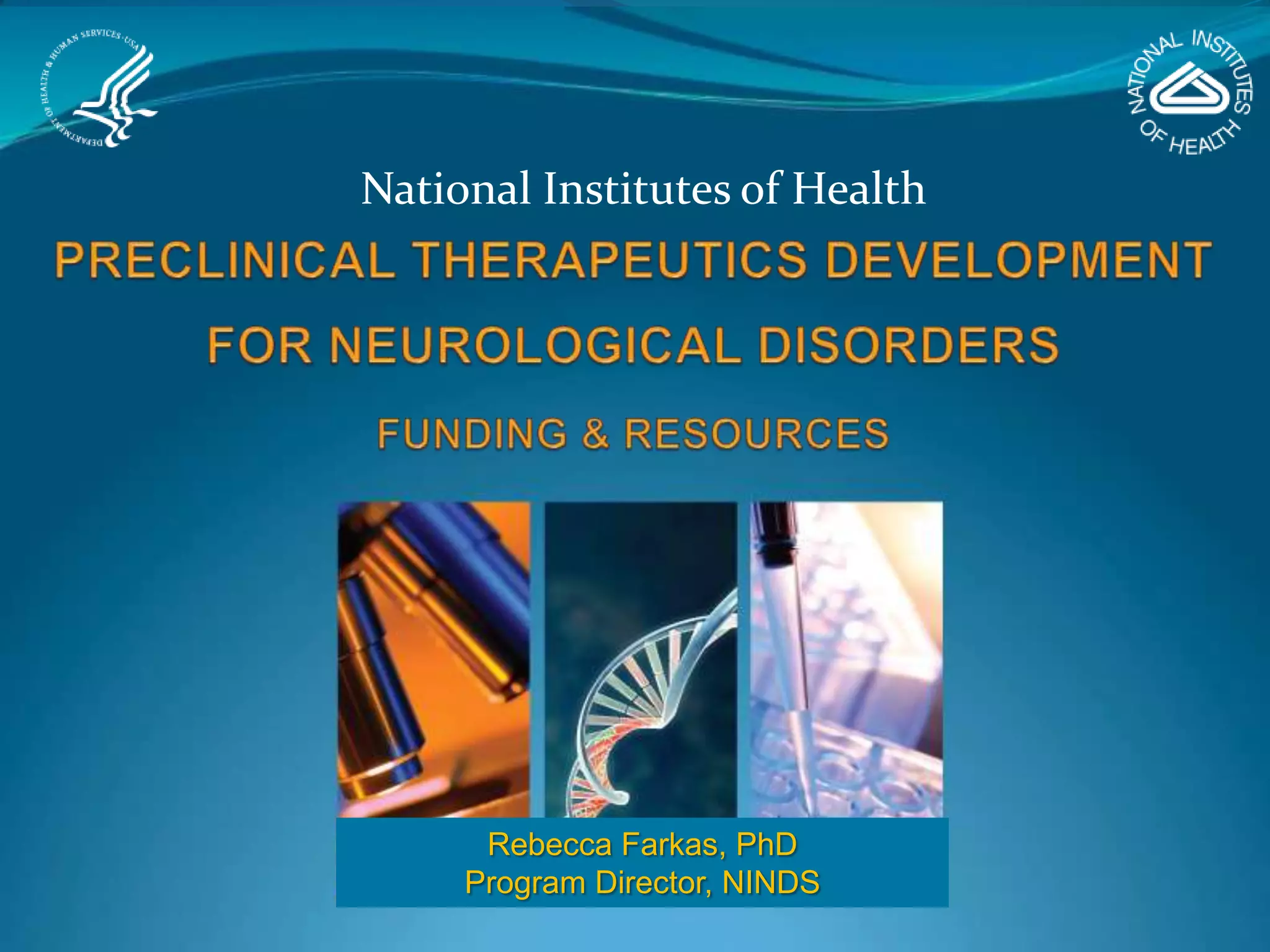
National Institutes of Health


      Rebecca Farkas, PhD
     Program Director, NINDS
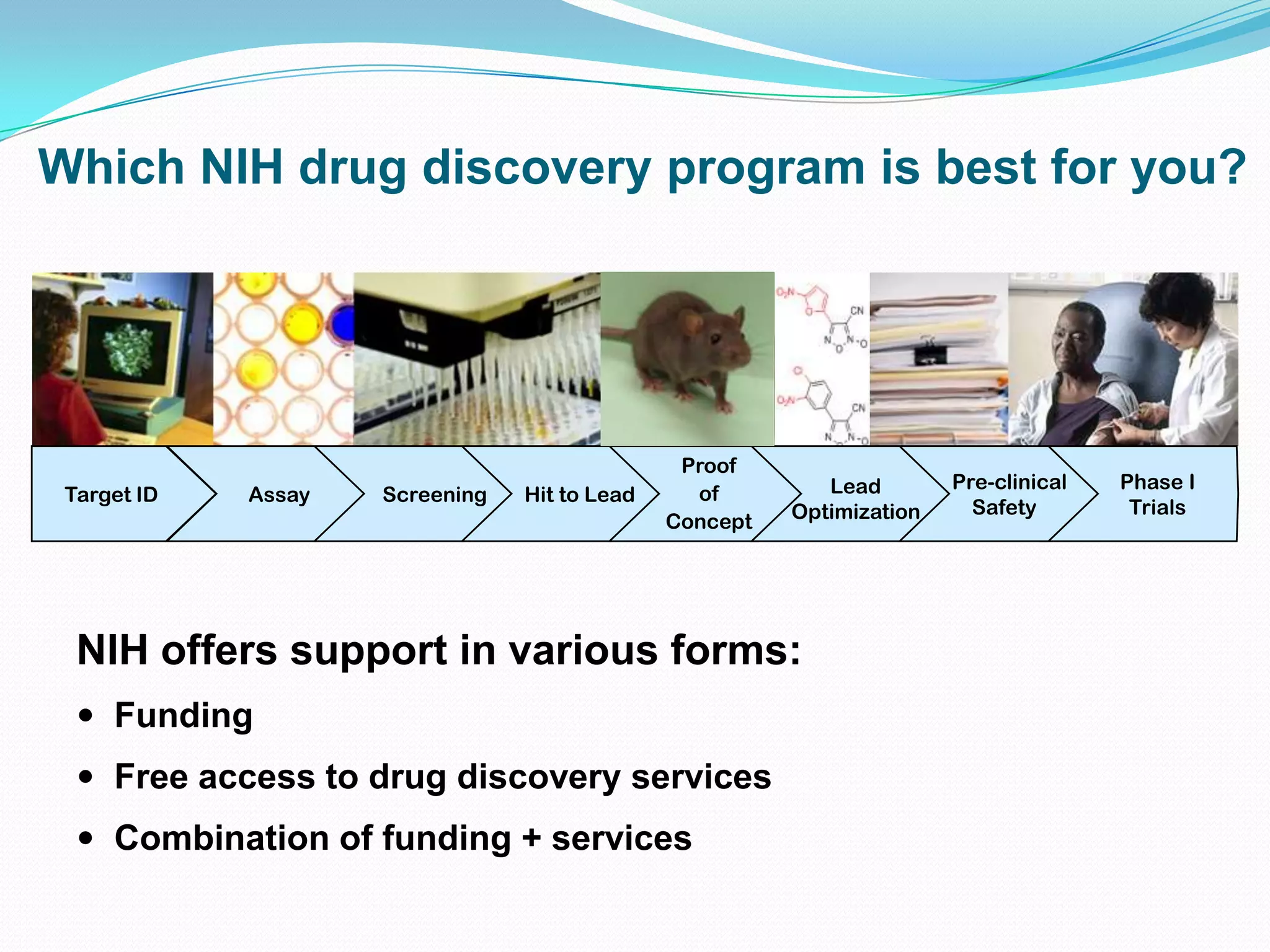
Which NIH drug discovery program is best for you?


                                                Proof
                                                            Lead        Pre-clinical   Phase I
 Target ID   Assay   Screening   Hit to Lead     of
                                                         Optimization     Safety        Trials
                                               Concept


  NIH offers support in various forms:
   Funding
   Free access to drug discovery services
   Combination of funding + services
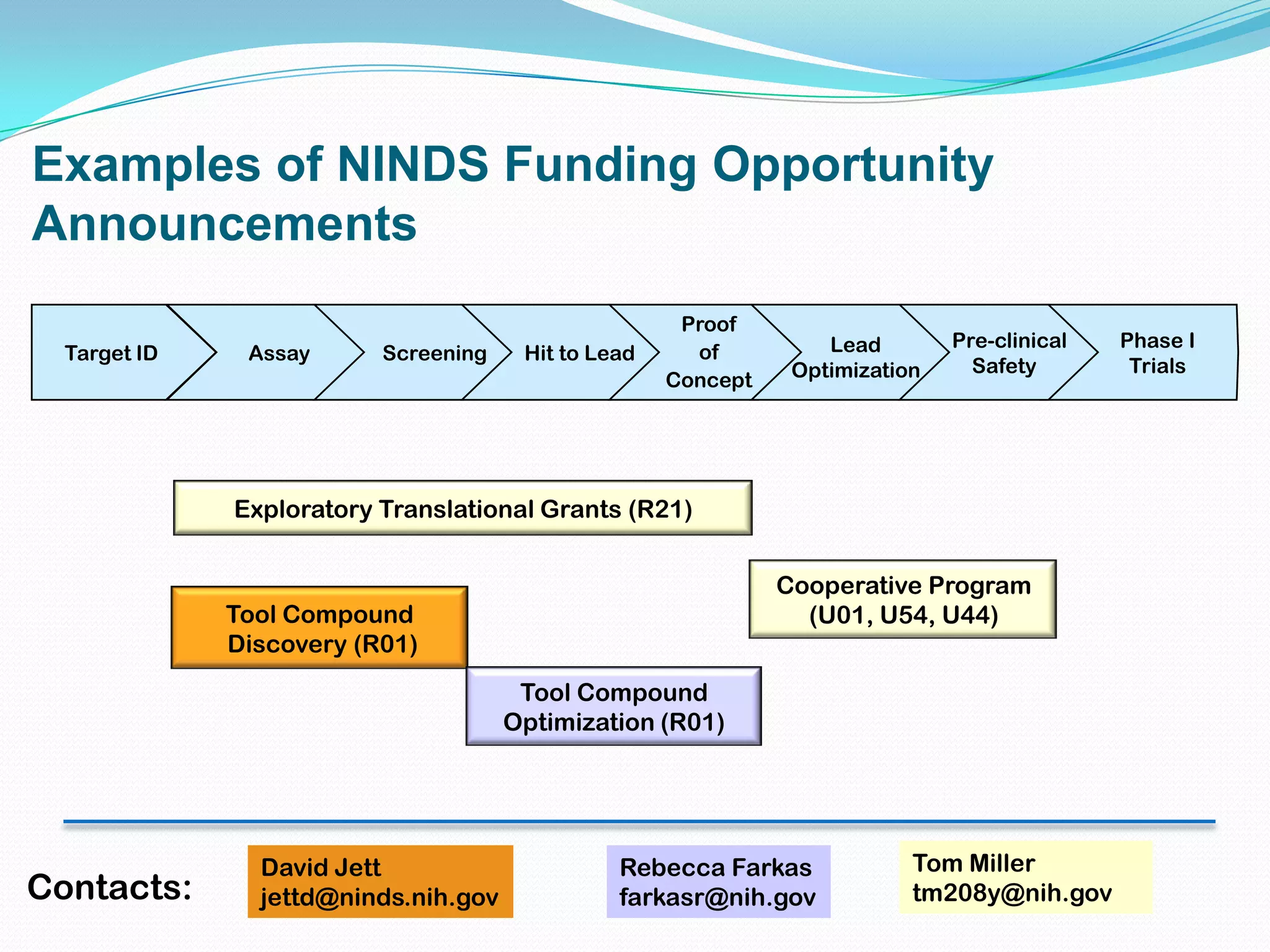
Examples of NINDS Funding Opportunity
Announcements
                                                      Proof
                                                                   Lead        Pre-clinical   Phase I
  Target ID    Assay      Screening    Hit to Lead     of
                                                                Optimization     Safety        Trials
                                                     Concept


              Exploratory Translational Grants (R21)


                                                               Cooperative Program
              Tool Compound                                      (U01, U54, U44)
              Discovery (R01)
                                       Tool Compound
                                      Optimization (R01)


                David Jett                      Rebecca Farkas             Tom Miller
Contacts:       jettd@ninds.nih.gov             farkasr@nih.gov            tm208y@nih.gov

Session 6 part 2

  • 1.
  • 2.
    Computer-Aided Drug Discovery(CADD) Services Software and Hardware Structure-Based Drug Design Cheminformatic clustering Property calculations Virtual Screening Similarity Pharmacophore Searching Structure-Based VS Library Design and Enumeration Homology Modeling Medicinal Chemistry Integration
  • 3.
    ADMET/ PK Services SelectedAMRI in vitro ADMET Assays
  • 4.
    Chemistry Services MedicinalChemistry – Hit-to-Lead & Lead Optimization • In silico screening, computational chemistry, cheminformatics, structure- based drug design, homology modeling, QSAR, database integration • Analogue design & synthesis • S.A.R. elucidation (primary drug target & drug properties) • Obtain PK/PD profile consistent with route of drug administration • Optimize Drug safety margin • Establish intellectual property position • Synthetic scale up of advanced compounds (mg to grams) Chemical Development – Preclinical & Clinical Development • Scale-up multi-gram to kilogram quantities of API • Remove API synthesis as bottleneck on critical path • GLP material for toxicology studies • cGMP synthesis
  • 5.
    Hit Generation Stage- Resource Estimates Fee-For-Service Model** Drug Discovery Stage Duration** Fixed Fee #FTE* option available Hit Generation 3-6 months CADD 0.25 - 0.50 yes Medicinal Chemistry 1-2 n/a In Vitro ADMET 0.25 - 1.0 yes In Vitro Biology 9 -12 months 1 -2 n/a * FTE = Full-Time Equivalent **Average estimates Fixed Fee – well-defined process, experimental details established, leads to a deliverable, i.e. specific chemical compound, results from bioassay or computational study that supports a program (risk belongs to CRO) FTE – research-based unit of work for defined period of time, FF model impractical and risk is too high for CRO to do under FF agreement Time & Materials – lies somewhere between FF & FTE (Risk belongs to customer) no guarantee of a deliverable
  • 6.
    Iterative Drug DiscoveryCycle for Lead Generation & Lead Optimization
  • 7.
    Lead Generation Goal of‘Hit-to-Lead’ Process Identify a Lead Chemical Series that meets target product profile: • Demonstrate a reproducible concentration-response curve in primary assays (biochemical & cellular) • Works via desired mechanism of action • Selectivity over closely related counter targets • Devoid of undesirable structural features • Possess drug-like properties • Biological activity is responsive to structural changes at multiple sites in the molecule • Tractable SAR for drug target(s) and drug properties • Strong potential for development of new intellectual property space • Demonstrates acceptable pharmacokinetics and efficacy in animal model
  • 8.
    Lead Generation/Optimization ResourceEstimates Fee-For-Service Model** Drug Discovery Stage Duration** Fixed Fee #FTE* option Hit Generation 3-6 months CADD 0.25 - 0.50 yes Medicinal Chemistry 1-2 n/a In Vitro ADMET 0.25 - 1.0 yes In Vitro Biology 9 -12 months 1 -2 n/a Lead Generation 6 - 12 months Lead Optimization 12 - 18 months CADD 0.25 - 0.50 n/a Medicinal Chemistry 4-8 n/a In Vitro ADMET 0.50 - 1.0 yes In Vitro Biology 1 -2 n/a Off-Target Activity Screens n/a yes In Vivo PK/PD n/a yes
  • 9.
  • 10.
    Lead Optimization Goal: IdentifyPreclinical Development candidate with desirable Target Profile • In vitro potency & selectivity toward primary drug target(s) • Minimal off-target activity • Acceptable physicochemical properties • Acceptable drug properties • Drug metabolism & pharmacokinetic profile suitable for route of administration • Acceptable safety margin, no genetic toxicity, acceptable hERG and CYP Inh. • Efficacy in animal models • Target Engagement, biomarker or surrogate marker for efficacy • Acceptable margin of safety at efficacious dose • Patentable • Robust chemistry to deliver large quantity of compound for preclinical studies • Identify final form of drug substance
  • 11.
    Moving from invitro to in vivo………. What are you trying to achieve? 1. Does the in vitro data translate into in vivo actions? 2. Are the in vivo models predictive of the disease? 3. Are the models confirming an action at the target site? 4. Are the in vivo effects due to ‘target engagement’? 5. Can we demonstrate good PK/PD relationship? 6. Translatability to studies in man.
  • 12.
    Outsourcing in vivostudies • Many providers offer in vivo efficacy testing. How do you select the right one? • What is the question you are trying to answer? • Can the provider do both efficacy and PK? • Minimize number of providers • Every time a new provider is involved, new variables are introduced. • Vehicles, formulation preparation etc. • When it comes to in vivo efficacy testing, specialist niche providers have a key role. • Efficacy testing requires therapeutic area expertise • You don’t want your xenograft measured by a behavioral pharmacologist! • And you don’t want your behavioral experiment run by an oncology expert! • Toxicology / Safety testing • Large GLP accredited Tox / Safety CROs. • Cost effective outsourcing. • Have they the experience of running regulatory studies. • Who carries out the pathology, reads the slides? • Do they have the board certified pathologists?
  • 13.
    Filling in theGaps in your Drug Discovery Capabilities? I-------------------------------------In Vitro Biology--------------------------I I------------------Medicinal Chemistry----------------------I I---------------Computational Chemistry----------------I I-----------Pharmacology-------------------------------I I------------DMPK---------------------------------------------I I-----------------------Analytical Chemistry---------------I I--------Pharmaceutics------------------I I-----Drug Safety/Toxicology----------I I------Chemical Development---------I I--------------------------Patent Law-------------------------------I
  • 14.
    $$ Cost ofOutsourcing $$ • Cost a significant barrier to direct use of CRO services • Academic drug discovery centers • Non-profits, Foundations and Government Agencies, like the NINDS are making translation of academic innovation into drug therapies possible by providing the financial means for the universities, the NINDS and CROs to work together.
  • 15.
    CROs and Venture-BasedGroups working with Academia Albany, NY (January 5, 2012) AMRI Announces Preferred Provider Agreement with BioPontis Alliance LLC Albany, NY (January 5, 2012)—AMRI (NASDAQ: AMRI), a global contract services organization, announced today that it has entered into a preferred provider agreement with BioPontis Alliance LLC. The agreement is aimed at supporting BioPontis’ mission to bridge the gap between early-stage research and technologies being discovered and developed in academia and other research entities. AMRI will provide its services in small molecule discovery, development, and manufacturing in BioPontis’ drug discovery research programs.
  • 16.
    Drug Discovery Services- Why Outsource? • Stay focused on your core strength • Plug the gaps in your drug discovery capabilities • Access technology • Leverage industry drug discovery expertise • Get to proof of concept more rapidly • Improve chances of success
  • 17.
    Thank you! We would like to learn more about your drug discovery research needs and discuss ways that AMRI could help you achieve your goals? Kelly.Grover@amriglobal.com Bruce.Molino@amriglobal.com
  • 18.
    Advancing Preclinical TherapyDevelopment for Alzheimer’s Disease: Funding Opportunities and Services at the NIA 6th ADDF Drug Discovery for Neurodegeneration Conference Feb 12-14, 2012 Suzana Petanceska PhD Division of Neuroscience National Institute on Aging
  • 19.
    Alzheimer’s Disease: aPublic Health Crisis  Currently ~5 million people are affected in the US alone; this number is projected to triple by 2050.  An additional 5.4 million are estimated to be suffering from MCI.  Approximately 10% of these will progress to AD each year.  The therapeutic needs of patients with Alzheimer’s Disease remain unmet.
  • 20.
    NIA’s AD TranslationalResearch Program (2005-present) Goal: To seed early drug discovery and preclinical drug development projects in academia and in the small business community and in doing so increase the number of drug candidates against a variety of therapeutic targets that can be clinically developed by industry or through various clinical trial programs at the NIH.
  • 21.
    Target Discovery BasicResearch Alzheimer’s Disease Translational Research Program (2005 – present) -from Target Identification to Clinical Trials- SBIR/STTR Clinical Development IND-enabling Toxicology AD Pilot Clinical Trials, PAR -11-100 (R01) Successful Therapeutic NIA Contract IND AD Cooperative Study (U01) Intervention for AD Investigator Initiated Clinical Trials (R01) Industry
  • 22.
    Portfolio Summary  Theavailability of set-aside funds together with specialized review enabled the relatively rapid creation (FY 2006-present) of a diverse portfolio of preclinical AD therapeutics for a variety of therapeutic targets. -~50 early drug discovery projects -15 preclinical drug development projects -13 supplemental awards to existing NIA grants Amyloid beta Tau neurogenesis cdk5 HSP90 neuroinflammation neurotransmitter receptors phosphodiesterases ApoE hormonal signaling neurotrophin receptor signaling
  • 23.
    Current NIA FundingOpportunities and Services for AD Drug Discovery and Preclinical Drug Development Contract Services Proof Assay Lead Candidate IND-enabling Target ID Development Screening of Optimization Selection toxicology IND Concept R21: PAS 10-051, PAR 10-002 U01: PAR 12-015 2 years; $275K for the entire project 3-5 years; $300K-$1M per year R01: PAR 10-001 3-5 years; $250K-$499K per year
  • 24.
    Current NIA FundingOpportunities and Services for AD Drug Discovery and Preclinical Drug Development cntd.  R21s and R01s are reviewed at the Center for Scientific Review by the Drug Discovery for the Nervous System review panel. -Scientific Review Officer: Mary Custer, PhD  U01 applications are reviewed at NIA’s scientific review branch by the Drug Development review panel. -Scientific Review Officer: Alexander Parsadanian, PhD  Requests for access to IND-Enabling Services are reviewed by NIA program staff and two NIA external advisors.
  • 25.
    Alzheimer’s Disease PreclinicalDrug Development: PAR 12-015 (U01) Milestone Driven Program  Supports the pre-clinical development of drugs, biologics, as well as repurposing of drugs already in use for other conditions. For entry into the program, projects must have one or more identified therapeutic leads and convincing proof-of-principle of efficacy in animal model(s) relevant to AD, MCI or age related cognitive decline against a defined therapeutic target.  Activities supported: chemical optimization, pre-clinical efficacy testing, predictive ADMET (absorption, distribution, metabolism, excretion, and toxicology) testing, good manufacturing practices (GMP) synthesis and formulation, pre-IND meeting with the FDA, IND-enabling toxicology/safety pharmacology and IND submission.  Does not support hypothesis driven mechanistic research, or early-stage drug discovery activities such as high throughput screening. The research plan must include annual quantitative milestones with specific criteria for go/no-go decision making. The milestones are subject of a special review criterion and they are used by NIA program staff to assess progress on the project and to recommend further funding.
  • 26.
    Services for IND– Enabling Studies: NIA Contract with Services Provided: Analytical Chemistry Pharmacokinetics and Bioavailability Preliminary Toxicity Screens Assistance with preparing for a Pre-IND meeting with the FDA IND-directed toxicology studies including safety pharmacology (14 days/90 days) Services not Provided: GMP synthesis CMC Long-term IND-directed toxicology
  • 27.
    How to Applyfor Contract Services:  Contact the project officer: -Neil Buckholtz PhD buckholn@nia.nih.gov  Provide the project officer with supporting material/data justifying the request for the contract services.
  • 28.
    What Follows?  Theproject officer sends the material for review to two external expert advisors.  If the request is approved the project officer will put the investigator in touch with the principal investigator (PI) at SRI International: -Karen Steinmetz, PhD, DABT karen.steinmetz@sri.com  The PI at SRI prepares a protocol based on the information provided by the academic/biotech investigator.  Once the protocol is approved by the NIH contracting office, SRI will carry out the agreed upon studies.  Time between submission of request and approval of protocol for IND- enabling services: 4-6 months.
  • 29.
    How to DecideWhich Funding Opportunity is Best for Your Project?  Send a brief summary (one page) of your prospective project outlining the aims and deliverables to the appropriate program officer(s). -Suzana Petanceska PhD, petanceskas@nia.nih.gov  Program staff will set up a teleconference and discuss the best funding venue(s) at the NIA or refer you to another Institute (NINDS), a trans-NIH funding opportunity, or a non-federal funding agency (i.e. ADDF).  If the project is mature enough to enter the U01 program, program staff will request preliminary milestones and budget and will work with the investigator to formulate the quantitative milestones for the application. -Lorenzo Refolo, refolol@nia.nih.gov  If the project is at late preclinical development stage and needs only IND-safety pharmacology and toxicology, program staff will advise you to submit a request for access to these services. -Neil Buckholtz PhD, buckholn@nia.nih.gov
  • 30.
    Things to Remember:  Read the funding opportunity guidelines. http://grants.nih.gov/grants/guide/pa-files/PAR-12-015.html http://grants.nih.gov/grants/guide/pa-files/PAS-10-151.html http://grants.nih.gov/grants/guide/pa-files/PAR-10-001.html http://grants.nih.gov/grants/guide/pa-files/PAR-10-002.html -Key Parts: Submission deadlines, Purpose, Scope and Objectives, Budget  Consult with program staff well in advance of submission. (6-8 weeks before R21/ R01submission; 10-12 weeks before U01 submission*) *Applications with annual budget (direct costs) equal or greater than $500K are subject to pre-submission administrative review.
  • 31.
    Working Together toFill in the Translational Funding Gap The ADDF is now considering financial assistance for relevant NIA and NINDS grant applications (beginning with applications reviewed in calendar year 2011) that were scored but not funded AND fall within the ADDF’s current funding priorities. http://www.alzdiscovery.org/wp-content/uploads/2011/11/2012-nih_addf-funding-initiative.pdf
  • 32.
    Educational Components of NIA’s AD Translational Research Program  U13 Conference Grant to the ADDF: Short Course on Drug Discovery for Neurodegeneration (2008-2012); co-sponsorship from NINDS and ORD  AD Translational Research Investigators’ Meeting
  • 33.
    National Institute onAging Alzheimer’s Disease Translational Research Investigators’ Meeting (2007, 2009, 2011) Purpose: To provide guidance to NIA investigators funded by the translational research initiatives, to foster interactions among the investigators and to provide a venue for the investigators to interface with drug discovery and clinical experts as well as FDA representatives.
  • 34.
    NIA Alzheimer’s DiseaseTranslational Research Program -Work in Progress-
  • 35.
    NIA AD TranslationalProgram Contacts: Suzana Petanceska PhD petanceskas@nia.nih.gov Lorenzo Refolo PhD Drug discovery and refolol@nia.nih.gov preclinical drug development Neil Buckholtz PhD buckholn@nia.nih.gov Laurie Ryan PhD Clinical drug development ryanl@nia.nih.gov
  • 36.
    National Institutes ofHealth Rebecca Farkas, PhD Program Director, NINDS
  • 37.
    Which NIH drugdiscovery program is best for you? Proof Lead Pre-clinical Phase I Target ID Assay Screening Hit to Lead of Optimization Safety Trials Concept NIH offers support in various forms:  Funding  Free access to drug discovery services  Combination of funding + services
  • 38.
    Examples of NINDSFunding Opportunity Announcements Proof Lead Pre-clinical Phase I Target ID Assay Screening Hit to Lead of Optimization Safety Trials Concept Exploratory Translational Grants (R21) Cooperative Program Tool Compound (U01, U54, U44) Discovery (R01) Tool Compound Optimization (R01) David Jett Rebecca Farkas Tom Miller Contacts: jettd@ninds.nih.gov farkasr@nih.gov tm208y@nih.gov