SERVICE MARKETING
Presented by-Prashant Kumar sahoo
SERVICE
MEANING
A Service is any act or performance that one party
Offer to another that is essentially intangible and
does not result in the ownership of anything. It may
or may not be tied to a physical product.
EXAMPLE OF SERVICE
INDUSTRY
HEALTH CARE SERVICE
Hospital, medical practice, eye care etc.
PROFESSIONAL SERVICE
Accounting, legal, Architectural etc.
HOSPITALITY SERVICE
Restaurant, hotel, bed& breakfast, rafting etc.
OTHER SERVICE
Hair styling, lawn maintenance, Health hub etc.
SERVICE MIX
Service mix is 7 types such as-:
1. Product
2. Price
3. Place
4. Promotion
5. People
6. Physical evidence
7. Process
PRODUCT
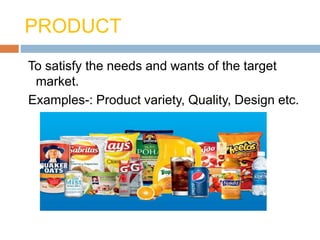
To satisfy the needs and wants of the target
market.
Examples-: Product variety, Quality, Design etc.
PRICE
To make the product affordable to the target
market
and reflect value of benefit provide.
Examples-: List price, Discount, Allowances etc.
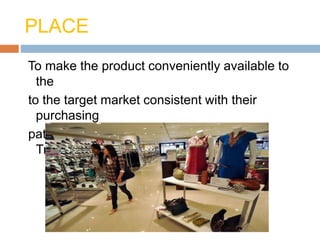
PLACE
To make the product conveniently available to
the
to the target market consistent with their
purchasing
pattern. Examples-: Location, Channels,
Transport etc.
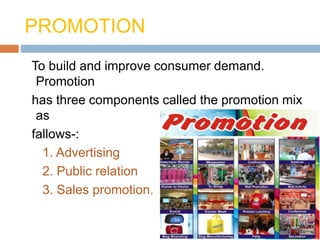
PROMOTION
To build and improve consumer demand.
Promotion
has three components called the promotion mix
as
fallows-:
1. Advertising
2. Public relation
3. Sales promotion.
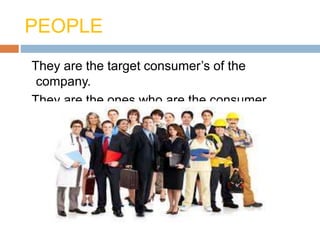
PEOPLE
They are the target consumer’s of the
company.
They are the ones who are the consumer
PROCESS
The process of product is essential in
marketing.
This determines the capability of the product to
supply the demand of the consumer’s.
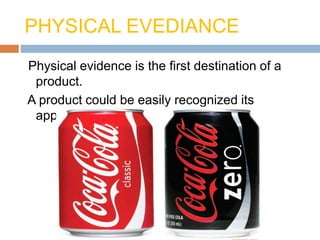
PHYSICAL EVEDIANCE
Physical evidence is the first destination of a
product.
A product could be easily recognized its
appearance.
CHARACTERISTICS OF
SERVICE
Four distinctive characteristics greatly affect the
design of marketing programs. Such as-:
1.Intangibility
2.Inseparability
3.Variability
4.Perishability
INTANGIBILITY
You can not hold or touch a service unlike a
product.
In saying that although service are intangible
the
the experience consumer’s obtain from the
service
has an impact on how they will perceive it.
What
do consumer’s perceive from customer service,
the
INSEPARABILITY
Service cannot be separated from the service
provi-
ders. A product when produced can be taken
away
from the producer. However a service is
produced at
or near the point of purchase.
VARIABILITY
It gives the nature of services, each service
offering
is unique and cannot be exactly repeated even
by
the same service provider. While products can
be
mass produced and be homogenous the same
is not
true of services.
PERISHABILITY
Service last a specific time and cannot be
stored
like a product for later use. The service is
developed and used almost simultaneously.
Again because of
this time constraint consumer demands more.
Examples-: If you travelling by train, coach or air
the
services will only last the duration of journey.
SERVICE GAP MODEL
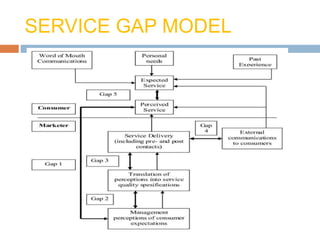
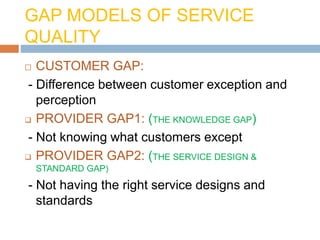
GAP MODELS OF SERVICE
QUALITY
 CUSTOMER GAP:
- Difference between customer exception and
perception
 PROVIDER GAP1: (THE KNOWLEDGE GAP)
- Not knowing what customers except
 PROVIDER GAP2: (THE SERVICE DESIGN &
STANDARD GAP)
- Not having the right service designs and
standards
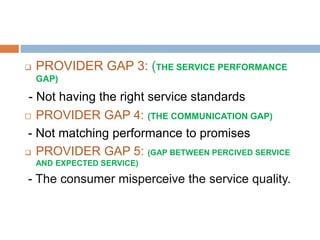
 PROVIDER GAP 3: (THE SERVICE PERFORMANCE
GAP)
- Not having the right service standards
 PROVIDER GAP 4: (THE COMMUNICATION GAP)
- Not matching performance to promises
 PROVIDER GAP 5: (GAP BETWEEN PERCIVED SERVICE
AND EXPECTED SERVICE)
- The consumer misperceive the service quality.
service marketing

service marketing

  • 1.
  • 2.
    SERVICE MEANING A Service isany act or performance that one party Offer to another that is essentially intangible and does not result in the ownership of anything. It may or may not be tied to a physical product.
  • 3.
    EXAMPLE OF SERVICE INDUSTRY HEALTHCARE SERVICE Hospital, medical practice, eye care etc. PROFESSIONAL SERVICE Accounting, legal, Architectural etc. HOSPITALITY SERVICE Restaurant, hotel, bed& breakfast, rafting etc. OTHER SERVICE Hair styling, lawn maintenance, Health hub etc.
  • 4.
    SERVICE MIX Service mixis 7 types such as-: 1. Product 2. Price 3. Place 4. Promotion 5. People 6. Physical evidence 7. Process
  • 5.
    PRODUCT To satisfy theneeds and wants of the target market. Examples-: Product variety, Quality, Design etc.
  • 6.
    PRICE To make theproduct affordable to the target market and reflect value of benefit provide. Examples-: List price, Discount, Allowances etc.
  • 7.
    PLACE To make theproduct conveniently available to the to the target market consistent with their purchasing pattern. Examples-: Location, Channels, Transport etc.
  • 8.
    PROMOTION To build andimprove consumer demand. Promotion has three components called the promotion mix as fallows-: 1. Advertising 2. Public relation 3. Sales promotion.
  • 9.
    PEOPLE They are thetarget consumer’s of the company. They are the ones who are the consumer
  • 10.
    PROCESS The process ofproduct is essential in marketing. This determines the capability of the product to supply the demand of the consumer’s.
  • 11.
    PHYSICAL EVEDIANCE Physical evidenceis the first destination of a product. A product could be easily recognized its appearance.
  • 12.
    CHARACTERISTICS OF SERVICE Four distinctivecharacteristics greatly affect the design of marketing programs. Such as-: 1.Intangibility 2.Inseparability 3.Variability 4.Perishability
  • 13.
    INTANGIBILITY You can nothold or touch a service unlike a product. In saying that although service are intangible the the experience consumer’s obtain from the service has an impact on how they will perceive it. What do consumer’s perceive from customer service, the
  • 14.
    INSEPARABILITY Service cannot beseparated from the service provi- ders. A product when produced can be taken away from the producer. However a service is produced at or near the point of purchase.
  • 15.
    VARIABILITY It gives thenature of services, each service offering is unique and cannot be exactly repeated even by the same service provider. While products can be mass produced and be homogenous the same is not true of services.
  • 16.
    PERISHABILITY Service last aspecific time and cannot be stored like a product for later use. The service is developed and used almost simultaneously. Again because of this time constraint consumer demands more. Examples-: If you travelling by train, coach or air the services will only last the duration of journey.
  • 17.
  • 18.
    GAP MODELS OFSERVICE QUALITY  CUSTOMER GAP: - Difference between customer exception and perception  PROVIDER GAP1: (THE KNOWLEDGE GAP) - Not knowing what customers except  PROVIDER GAP2: (THE SERVICE DESIGN & STANDARD GAP) - Not having the right service designs and standards
  • 19.
     PROVIDER GAP3: (THE SERVICE PERFORMANCE GAP) - Not having the right service standards  PROVIDER GAP 4: (THE COMMUNICATION GAP) - Not matching performance to promises  PROVIDER GAP 5: (GAP BETWEEN PERCIVED SERVICE AND EXPECTED SERVICE) - The consumer misperceive the service quality.