


SERVICE 
BLUEPRINTING 
By: 
Guljeet Singh
What is service blueprinting 
 A key tool to design new services or redesign existing ones 
 A more sophisticated version of flowchart 
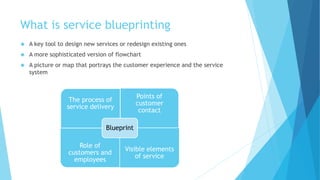
 A picture or map that portrays the customer experience and the service 
system 
The process of 
service delivery 
Points of 
customer 
contact 
Role of 
customers and 
employees 
Visible elements 
of service 
Blueprint
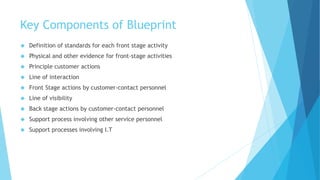
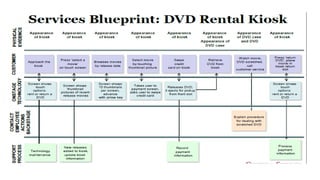
Key Components of Blueprint 
 Definition of standards for each front stage activity 
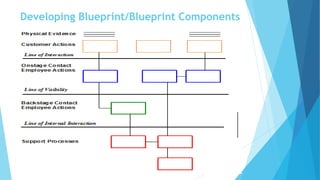
 Physical and other evidence for front-stage activities 
 Principle customer actions 
 Line of interaction 
 Front Stage actions by customer-contact personnel 
 Line of visibility 
 Back stage actions by customer-contact personnel 
 Support process involving other service personnel 
 Support processes involving I.T
Developing Blueprint/Blueprint Components
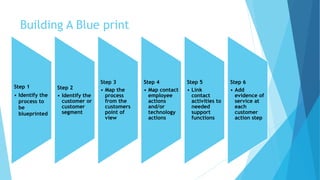
Building A Blue print 
Step 1 
• Identify the 
process to 
be 
blueprinted 
Step 2 
• Identify the 
customer or 
customer 
segment 
Step 3 
• Map the 
process 
from the 
customers 
point of 
view 
Step 4 
• Map contact 
employee 
actions 
and/or 
technology 
actions 
Step 5 
• Link 
contact 
activities to 
needed 
support 
functions 
Step 6 
• Add 
evidence of 
service at 
each 
customer 
action step
Identifying Fail points 
 Fail points are points in service delivery where things are particularly at risk 
of going wrong. 
 From customer perspective of points are those that will result in failure to 
access or enjoy the core product. 
Waits 
 Delays in specific action 
 Requiring the customer to wait 
 Waits for customer
Benefits and Uses 
 Providing a platform for innovation 
 Recognizing roles and interdependencies among functions, people, and 
organisation. 
 Facilitating both strategic innovation and service knowledge. 
 Transferring and storing innovation and service knowledge. 
 Designing moments of truth from the customers point of view 
 Suggesting critical points for measurement and feedback in the service 
process 
 Clarifying competitive positioning. 
 Understanding the ideal customer experience.
References 
 Zeithamal V .A, Bitner M.J et al (2013), Services Marketing: integrating 
Customer Focus Across the Firm 6th ed., TMH, New Delhi. 
 Christopher L, Wirtz J et al (20130, Services Marketing : People , Technology , 
Strategy , 7th ed., Pearson, New Delhi. 
 https://wpcarey.asu.edu/sites/default/files/uploads/research/services-leadership/ 
Example-Self-Service-Technology-Blueprints.pdf 
 http://www.assignmentpoint.com/wp-content/uploads/2013/03/one-bank15. 
png
Thank You

Service Blueprint

  • 1.
  • 2.
    What is serviceblueprinting  A key tool to design new services or redesign existing ones  A more sophisticated version of flowchart  A picture or map that portrays the customer experience and the service system The process of service delivery Points of customer contact Role of customers and employees Visible elements of service Blueprint
  • 3.
    Key Components ofBlueprint  Definition of standards for each front stage activity  Physical and other evidence for front-stage activities  Principle customer actions  Line of interaction  Front Stage actions by customer-contact personnel  Line of visibility  Back stage actions by customer-contact personnel  Support process involving other service personnel  Support processes involving I.T
  • 4.
  • 5.
    Building A Blueprint Step 1 • Identify the process to be blueprinted Step 2 • Identify the customer or customer segment Step 3 • Map the process from the customers point of view Step 4 • Map contact employee actions and/or technology actions Step 5 • Link contact activities to needed support functions Step 6 • Add evidence of service at each customer action step
  • 6.
    Identifying Fail points  Fail points are points in service delivery where things are particularly at risk of going wrong.  From customer perspective of points are those that will result in failure to access or enjoy the core product. Waits  Delays in specific action  Requiring the customer to wait  Waits for customer
  • 8.
    Benefits and Uses  Providing a platform for innovation  Recognizing roles and interdependencies among functions, people, and organisation.  Facilitating both strategic innovation and service knowledge.  Transferring and storing innovation and service knowledge.  Designing moments of truth from the customers point of view  Suggesting critical points for measurement and feedback in the service process  Clarifying competitive positioning.  Understanding the ideal customer experience.
  • 9.
    References  ZeithamalV .A, Bitner M.J et al (2013), Services Marketing: integrating Customer Focus Across the Firm 6th ed., TMH, New Delhi.  Christopher L, Wirtz J et al (20130, Services Marketing : People , Technology , Strategy , 7th ed., Pearson, New Delhi.  https://wpcarey.asu.edu/sites/default/files/uploads/research/services-leadership/ Example-Self-Service-Technology-Blueprints.pdf  http://www.assignmentpoint.com/wp-content/uploads/2013/03/one-bank15. png
  • 10.