Designing and Managing Service
Processes
Dr.Jayashree R. Kotnal
Asst. Professor , M.Com Vijayapur
ASP College of Commerce
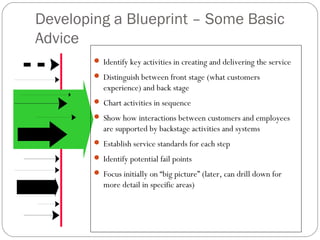
Developing a Blueprint – Some Basic
Advice
 Identify key activities in creating and delivering the service
 Distinguish between front stage (what customers
experience) and back stage
 Chart activities in sequence
 Show how interactions between customers and employees
are supported by backstage activities and systems
 Establish service standards for each step
 Identify potential fail points
 Focus initially on “big picture” (later, can drill down for
more detail in specific areas)
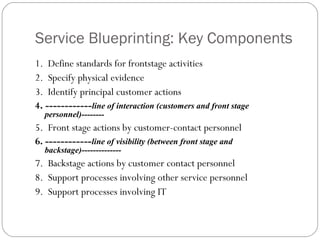
Service Blueprinting: Key Components
1. Define standards for frontstage activities
2. Specify physical evidence
3. Identify principal customer actions
4. ------------line of interaction (customers and front stage
personnel)--------
5. Front stage actions by customer-contact personnel
6. ------------line of visibility (between front stage and
backstage)--------------
7. Backstage actions by customer contact personnel
8. Support processes involving other service personnel
9. Support processes involving IT
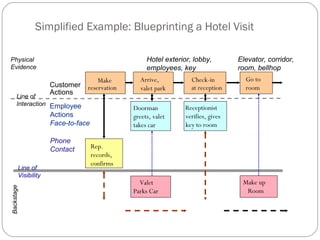
Simplified Example: Blueprinting a Hotel Visit
Physical
Evidence
Customer
Actions
Employee
Actions
Face-to-face
Phone
Contact
Backstage
Make
reservation
Rep.
records,
confirms
Arrive,
valet park
Check-in
at reception
Doorman
greets, valet
takes car
Valet
Parks Car
Make up
Room
Receptionist
verifies, gives
key to room
Go to
room
Hotel exterior, lobby,
employees, key
Elevator, corridor,
room, bellhop
Line of
Interaction
Line of
Visibility
Improving Reliability of Processes
by Failure Proofing
Analysis of reasons for failure often reveals opportunities for failure
proofing to reduce/eliminate risk of errors
Errors include:
treatment errors—human failures during contact with customers
tangible errors—failures in physical elements of service
Fail-safe procedures include measures to prevent omission of tasks or
performance of tasks
incorrectly
in wrong order
too slowly
not needed or specified
Need fail-safe methods for both employees and customers
Process Redesign: Principal
Approaches
(Table 8-1)
Eliminating non-value-adding steps
Shifting to self-service
Delivering direct service
Bundling services
Redesigning physical aspects of service processes
Customers as Co-Producers:
Levels of Participation in Service
Production
Low – Employees and systems do all the work
Medium – Customer inputs required to assist provider
Provide needed information, instructions
Make personal effort
May share physical possessions
High – Customer works actively with provider to
co-produce the service
Self Service Technologies (SSTs)
Self-service is ultimate form of customer involvement in service
production
Customers undertake specific activities using facilities or systems
provided by service supplier
Customer’s time and effort replace those of employees
Concept is not new—self-serve supermarkets date from 1930s,
ATMs and self-serve gas pumps from 1970s
Today, customers face wide array of SSTs to deliver information-
based services, both core and supplementary
Many companies seek to divert customers from employee contact
to Internet-based self-service
Service Firms as Teachers:
Well-trained Customers Perform Better
 Firms must teach customers roles as co-producers
of service
 Customers need to know how to achieve best
results
 Education can be provided through:
 Brochures
 Advertising
 Posted instructions
 Machine-based instructions
 Websites, including FAQs
 Service providers
 Fellow customers
 Employees must be well-trained to help advise,
assist customers
Thank You

4. services marketing

  • 1.
    Designing and ManagingService Processes Dr.Jayashree R. Kotnal Asst. Professor , M.Com Vijayapur ASP College of Commerce
  • 2.
    Developing a Blueprint– Some Basic Advice  Identify key activities in creating and delivering the service  Distinguish between front stage (what customers experience) and back stage  Chart activities in sequence  Show how interactions between customers and employees are supported by backstage activities and systems  Establish service standards for each step  Identify potential fail points  Focus initially on “big picture” (later, can drill down for more detail in specific areas)
  • 3.
    Service Blueprinting: KeyComponents 1. Define standards for frontstage activities 2. Specify physical evidence 3. Identify principal customer actions 4. ------------line of interaction (customers and front stage personnel)-------- 5. Front stage actions by customer-contact personnel 6. ------------line of visibility (between front stage and backstage)-------------- 7. Backstage actions by customer contact personnel 8. Support processes involving other service personnel 9. Support processes involving IT
  • 4.
    Simplified Example: Blueprintinga Hotel Visit Physical Evidence Customer Actions Employee Actions Face-to-face Phone Contact Backstage Make reservation Rep. records, confirms Arrive, valet park Check-in at reception Doorman greets, valet takes car Valet Parks Car Make up Room Receptionist verifies, gives key to room Go to room Hotel exterior, lobby, employees, key Elevator, corridor, room, bellhop Line of Interaction Line of Visibility
  • 5.
    Improving Reliability ofProcesses by Failure Proofing Analysis of reasons for failure often reveals opportunities for failure proofing to reduce/eliminate risk of errors Errors include: treatment errors—human failures during contact with customers tangible errors—failures in physical elements of service Fail-safe procedures include measures to prevent omission of tasks or performance of tasks incorrectly in wrong order too slowly not needed or specified Need fail-safe methods for both employees and customers
  • 6.
    Process Redesign: Principal Approaches (Table8-1) Eliminating non-value-adding steps Shifting to self-service Delivering direct service Bundling services Redesigning physical aspects of service processes
  • 7.
    Customers as Co-Producers: Levelsof Participation in Service Production Low – Employees and systems do all the work Medium – Customer inputs required to assist provider Provide needed information, instructions Make personal effort May share physical possessions High – Customer works actively with provider to co-produce the service
  • 8.
    Self Service Technologies(SSTs) Self-service is ultimate form of customer involvement in service production Customers undertake specific activities using facilities or systems provided by service supplier Customer’s time and effort replace those of employees Concept is not new—self-serve supermarkets date from 1930s, ATMs and self-serve gas pumps from 1970s Today, customers face wide array of SSTs to deliver information- based services, both core and supplementary Many companies seek to divert customers from employee contact to Internet-based self-service
  • 9.
    Service Firms asTeachers: Well-trained Customers Perform Better  Firms must teach customers roles as co-producers of service  Customers need to know how to achieve best results  Education can be provided through:  Brochures  Advertising  Posted instructions  Machine-based instructions  Websites, including FAQs  Service providers  Fellow customers  Employees must be well-trained to help advise, assist customers
  • 10.