New Service Development Stages
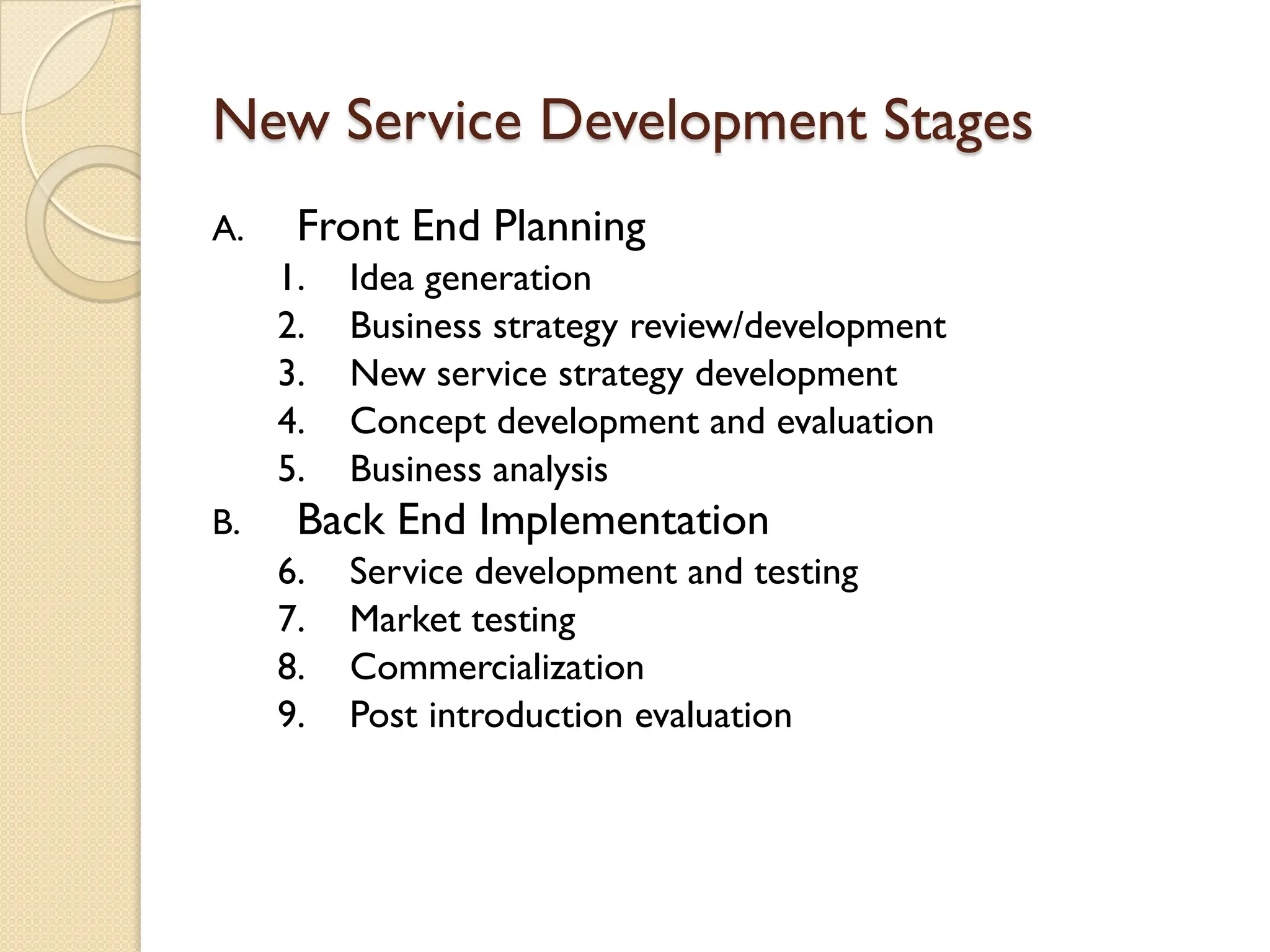
A. Front End Planning
1. Idea generation
2. Business strategy review/development
3. New service strategy development
4. Concept development and evaluation
5. Business analysis
B. Back End Implementation
6. Service development and testing
7. Market testing
8. Commercialization
9. Post introduction evaluation
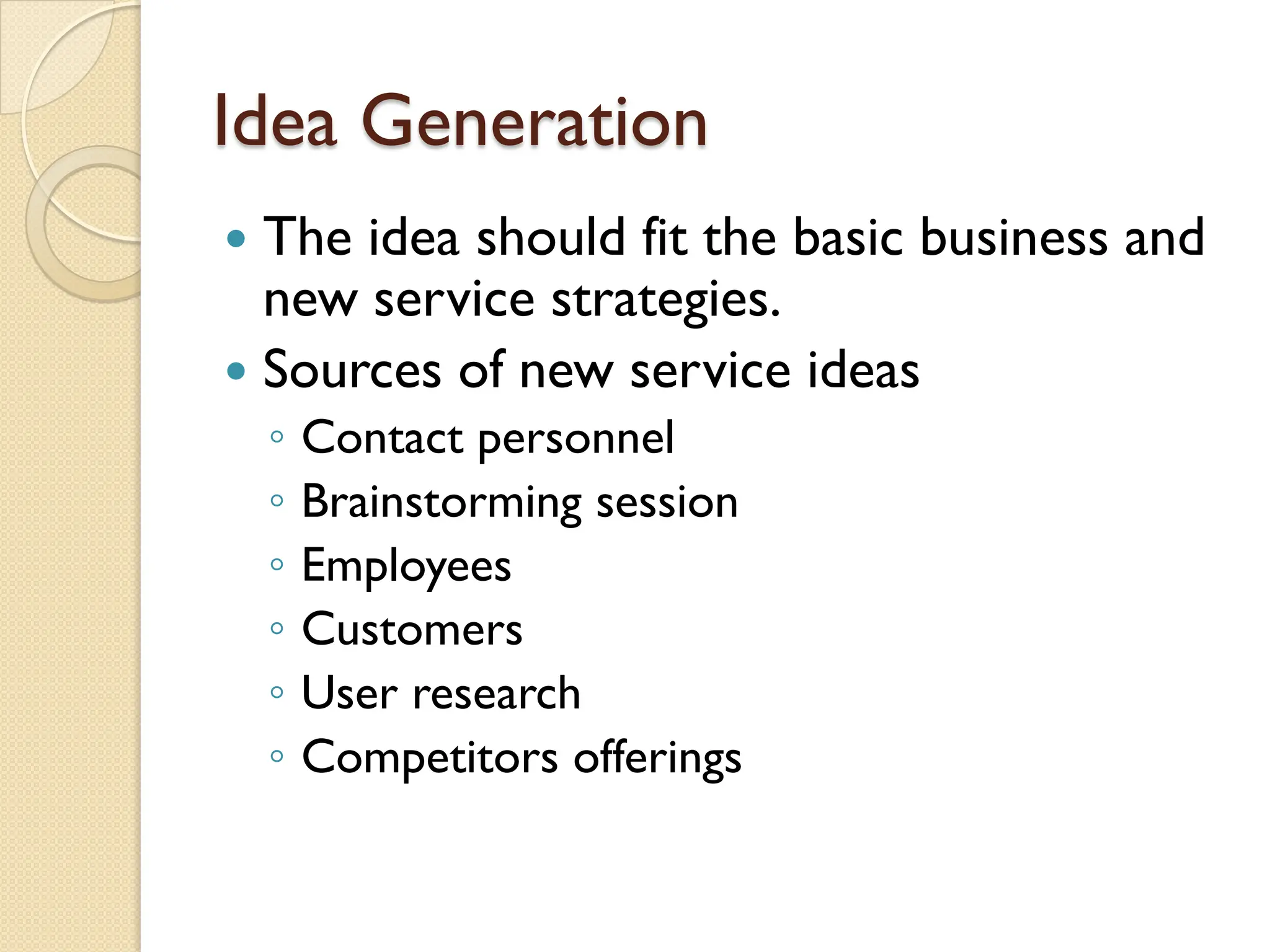
Idea Generation
 The idea should fit the basic business and
new service strategies.
 Sources of new service ideas
◦ Contact personnel
◦ Brainstorming session
◦ Employees
◦ Customers
◦ User research
◦ Competitors offerings
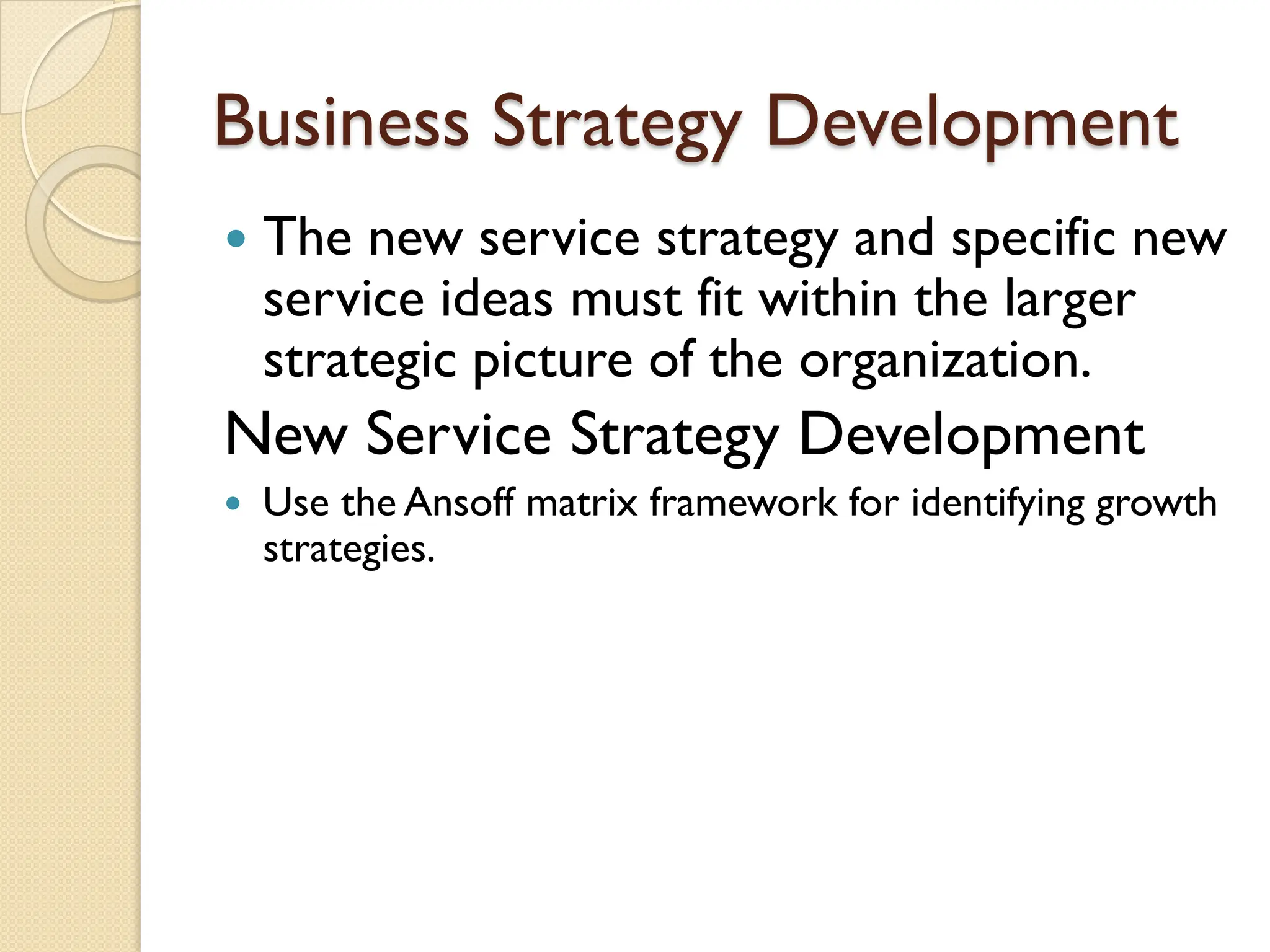
Business Strategy Development
 The new service strategy and specific new
service ideas must fit within the larger
strategic picture of the organization.
New Service Strategy Development
 Use the Ansoff matrix framework for identifying growth
strategies.
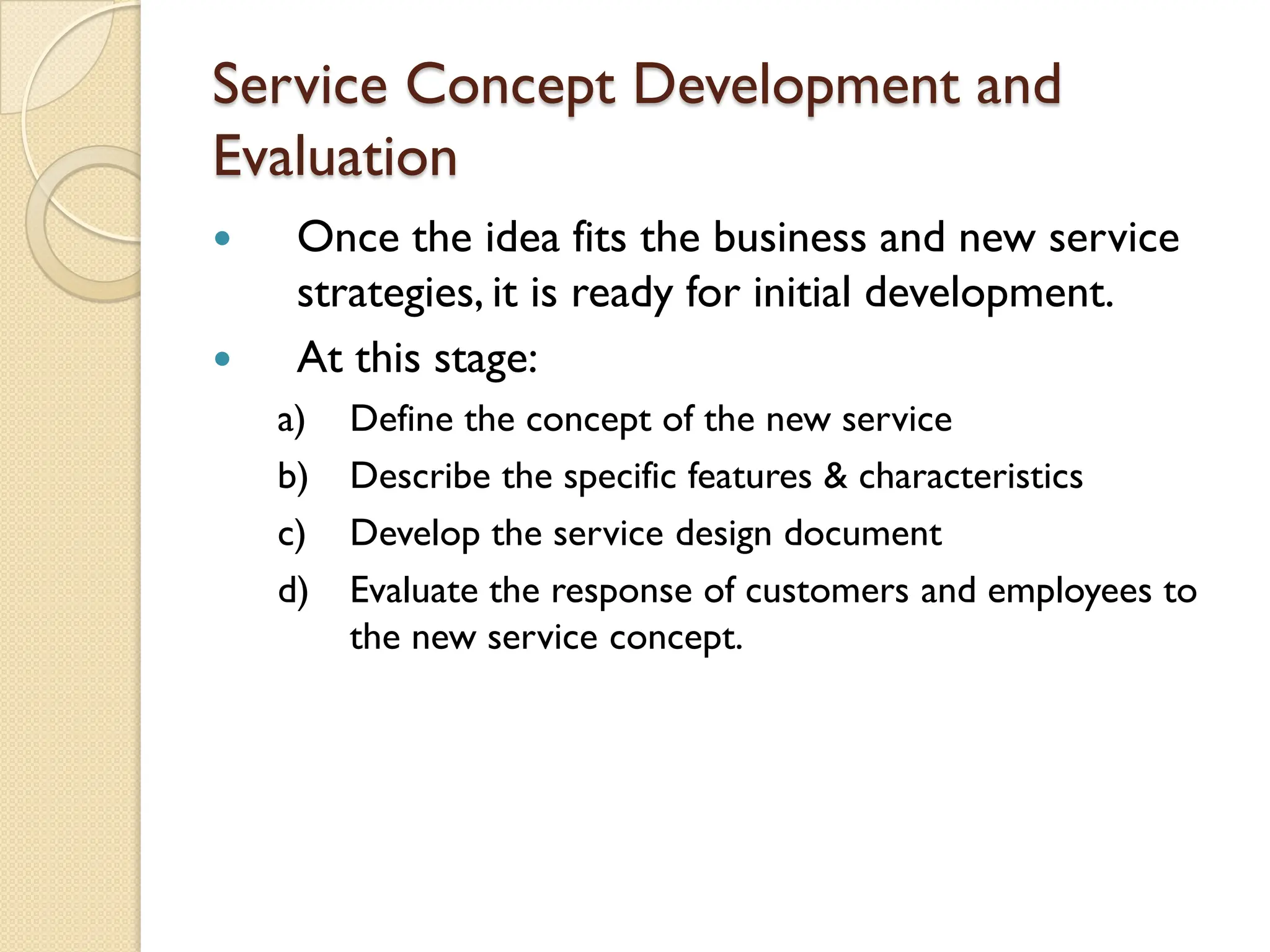
Service Concept Development and
Evaluation
 Once the idea fits the business and new service
strategies, it is ready for initial development.
 At this stage:
a) Define the concept of the new service
b) Describe the specific features & characteristics
c) Develop the service design document
d) Evaluate the response of customers and employees to
the new service concept.
Business Analysis
 Determine the feasibility of the service concept and
its profit potential.
Implementation
 This is the service development
 Develop a detailed service blue print
 Translate the blue print in to specific
implementation plan.
Market Testing
It is needed to determine:
a) Market place acceptance of the product
b) Acceptance of marketing mix variables: -
pricing, promotion, and distribution
systems.
Commercialization
 This is the introduction stage of the
service to the market place.
 Two primary objectives:
1) To build and maintain acceptance of the
new service
2) To monitor all aspects of the service during
introduction and through the complete
service cycle.
Post Introduction Evaluation
At this stage:
a) Review the information gathered during
the commercialization of the service.
b) Make changes to the delivery process,
staffing, or marketing mix variables
based on the response of the market to
the new service offer.
Service Blueprinting
 It is a picture or map that accurately
portrays the service system so that the
different people can understand and
deal with it regardless of their roles.
 It visually displays:
a) The process of the service delivery
b) The points of customers contact
c) The roles of employees and customers
d) Visible elements of the service evidence.
The Purpose of Service Blueprinting
a) To enable employees, customers, &
managers know what the service is.
b) To make employees and customers see
their roles in the service delivery.
c) To understand all of the steps and flows
involved in the service process.
Blue Print Components
1. Customer action
2. Onstage contact employees action
3. Backstage contact employees action
4. Support process.
The Customer Action
 All the steps, choices, activities, and
interactions that the customer performs
in the process of purchasing, consuming,
and evaluating the service.
 Customers actions in legal service.
◦ A decision to contact an attorney
◦ A face-to-face meeting
◦ Receipt of documents
◦ Receipt of a bill
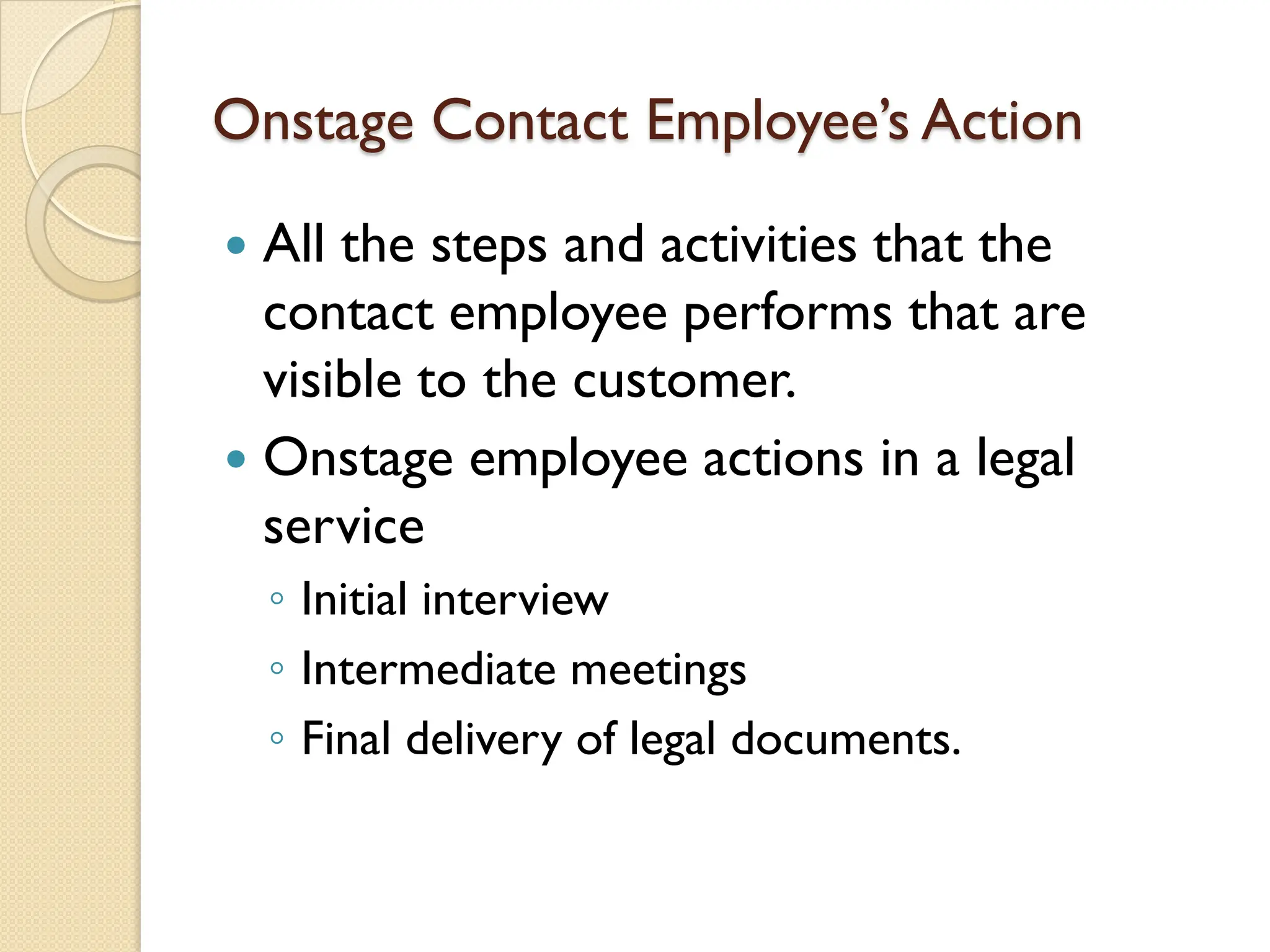
Onstage Contact Employee’s Action
 All the steps and activities that the
contact employee performs that are
visible to the customer.
 Onstage employee actions in a legal
service
◦ Initial interview
◦ Intermediate meetings
◦ Final delivery of legal documents.
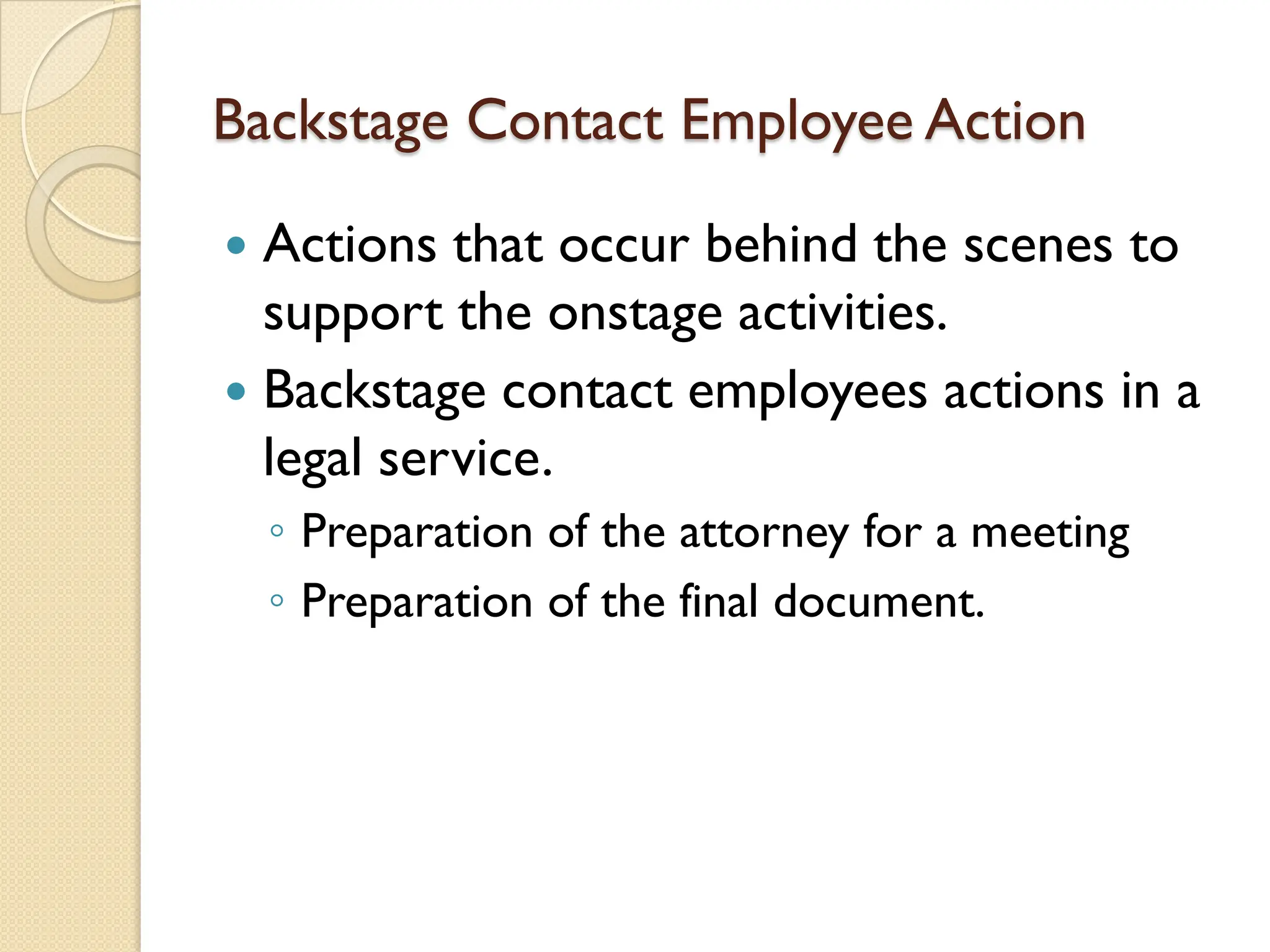
Backstage Contact Employee Action
 Actions that occur behind the scenes to
support the onstage activities.
 Backstage contact employees actions in a
legal service.
◦ Preparation of the attorney for a meeting
◦ Preparation of the final document.
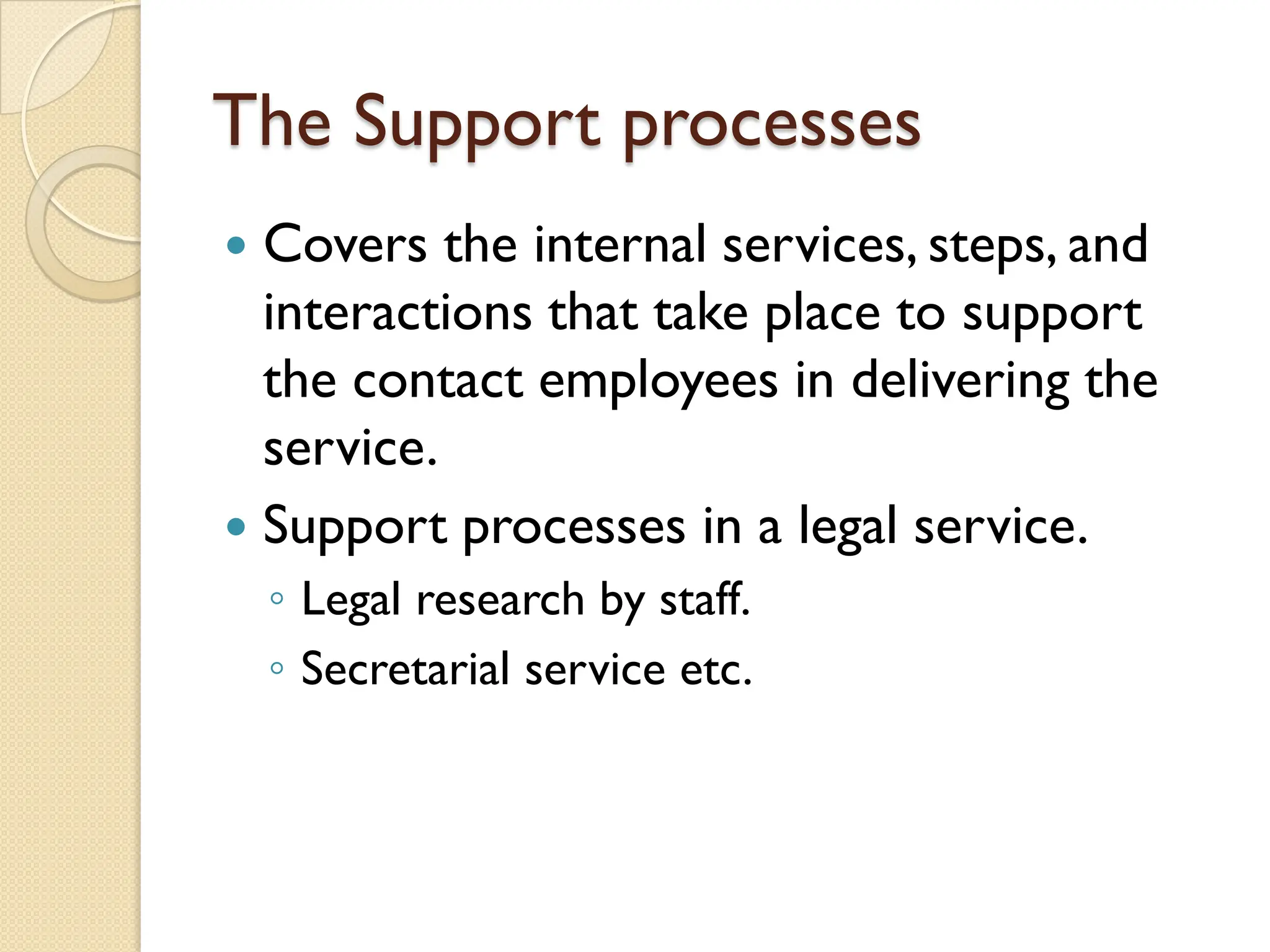
The Support processes
 Covers the internal services, steps, and
interactions that take place to support
the contact employees in delivering the
service.
 Support processes in a legal service.
◦ Legal research by staff.
◦ Secretarial service etc.
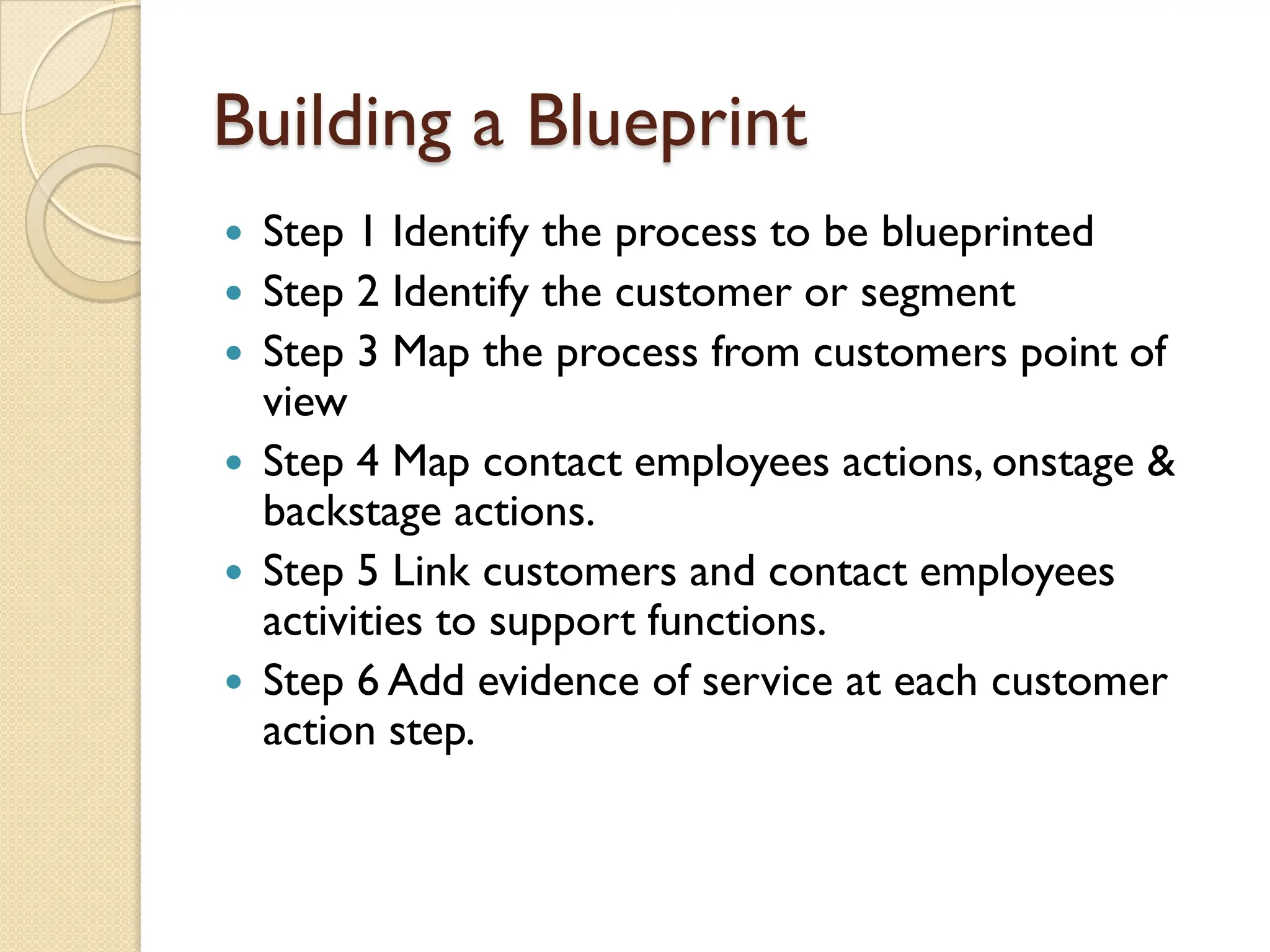
Building a Blueprint
 Step 1 Identify the process to be blueprinted
 Step 2 Identify the customer or segment
 Step 3 Map the process from customers point of
view
 Step 4 Map contact employees actions, onstage &
backstage actions.
 Step 5 Link customers and contact employees
activities to support functions.
 Step 6 Add evidence of service at each customer
action step.

Various Components of Service marketing Design and Elements

  • 1.
    New Service DevelopmentStages A. Front End Planning 1. Idea generation 2. Business strategy review/development 3. New service strategy development 4. Concept development and evaluation 5. Business analysis B. Back End Implementation 6. Service development and testing 7. Market testing 8. Commercialization 9. Post introduction evaluation
  • 2.
    Idea Generation  Theidea should fit the basic business and new service strategies.  Sources of new service ideas ◦ Contact personnel ◦ Brainstorming session ◦ Employees ◦ Customers ◦ User research ◦ Competitors offerings
  • 3.
    Business Strategy Development The new service strategy and specific new service ideas must fit within the larger strategic picture of the organization. New Service Strategy Development  Use the Ansoff matrix framework for identifying growth strategies.
  • 4.
    Service Concept Developmentand Evaluation  Once the idea fits the business and new service strategies, it is ready for initial development.  At this stage: a) Define the concept of the new service b) Describe the specific features & characteristics c) Develop the service design document d) Evaluate the response of customers and employees to the new service concept.
  • 5.
    Business Analysis  Determinethe feasibility of the service concept and its profit potential. Implementation  This is the service development  Develop a detailed service blue print  Translate the blue print in to specific implementation plan.
  • 6.
    Market Testing It isneeded to determine: a) Market place acceptance of the product b) Acceptance of marketing mix variables: - pricing, promotion, and distribution systems.
  • 7.
    Commercialization  This isthe introduction stage of the service to the market place.  Two primary objectives: 1) To build and maintain acceptance of the new service 2) To monitor all aspects of the service during introduction and through the complete service cycle.
  • 8.
    Post Introduction Evaluation Atthis stage: a) Review the information gathered during the commercialization of the service. b) Make changes to the delivery process, staffing, or marketing mix variables based on the response of the market to the new service offer.
  • 9.
    Service Blueprinting  Itis a picture or map that accurately portrays the service system so that the different people can understand and deal with it regardless of their roles.  It visually displays: a) The process of the service delivery b) The points of customers contact c) The roles of employees and customers d) Visible elements of the service evidence.
  • 10.
    The Purpose ofService Blueprinting a) To enable employees, customers, & managers know what the service is. b) To make employees and customers see their roles in the service delivery. c) To understand all of the steps and flows involved in the service process.
  • 11.
    Blue Print Components 1.Customer action 2. Onstage contact employees action 3. Backstage contact employees action 4. Support process.
  • 12.
    The Customer Action All the steps, choices, activities, and interactions that the customer performs in the process of purchasing, consuming, and evaluating the service.  Customers actions in legal service. ◦ A decision to contact an attorney ◦ A face-to-face meeting ◦ Receipt of documents ◦ Receipt of a bill
  • 13.
    Onstage Contact Employee’sAction  All the steps and activities that the contact employee performs that are visible to the customer.  Onstage employee actions in a legal service ◦ Initial interview ◦ Intermediate meetings ◦ Final delivery of legal documents.
  • 14.
    Backstage Contact EmployeeAction  Actions that occur behind the scenes to support the onstage activities.  Backstage contact employees actions in a legal service. ◦ Preparation of the attorney for a meeting ◦ Preparation of the final document.
  • 15.
    The Support processes Covers the internal services, steps, and interactions that take place to support the contact employees in delivering the service.  Support processes in a legal service. ◦ Legal research by staff. ◦ Secretarial service etc.
  • 16.
    Building a Blueprint Step 1 Identify the process to be blueprinted  Step 2 Identify the customer or segment  Step 3 Map the process from customers point of view  Step 4 Map contact employees actions, onstage & backstage actions.  Step 5 Link customers and contact employees activities to support functions.  Step 6 Add evidence of service at each customer action step.