Unit-v-FRICTION drives
FRICTION IN MACHINE ELEMENTS
• Surface contacts
• Sliding and Rolling friction
• Friction drives
• Friction in screw threads
• Bearings and lubrication
• Friction clutches
• Belt and rope drives
• Friction in brakes- Band and Block brakes.
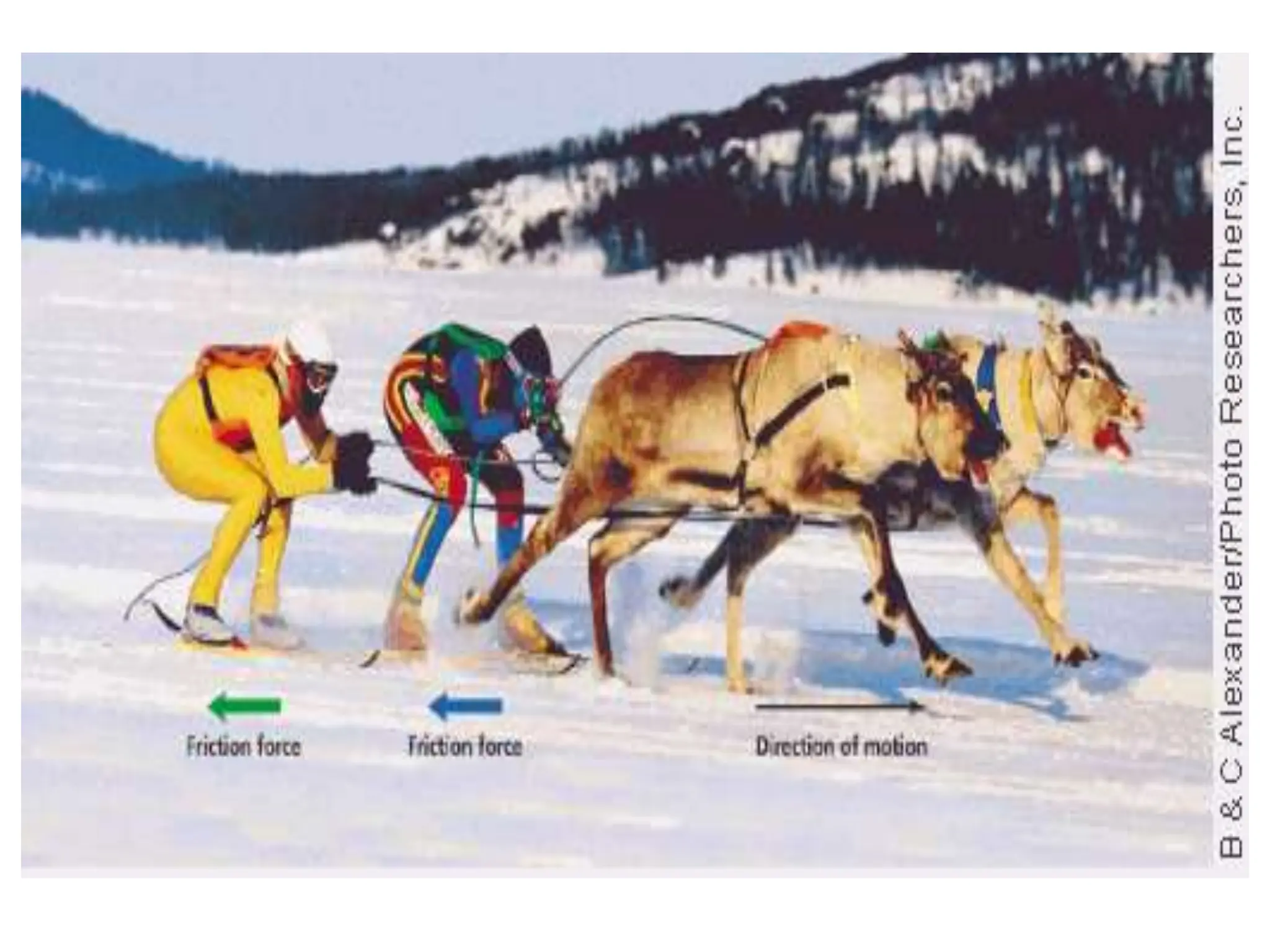
FRICTION
• Friction is the force resisting the
relative motion of solid surfaces,
fluid layers, and material
elements sliding against each
other.
Static Friction
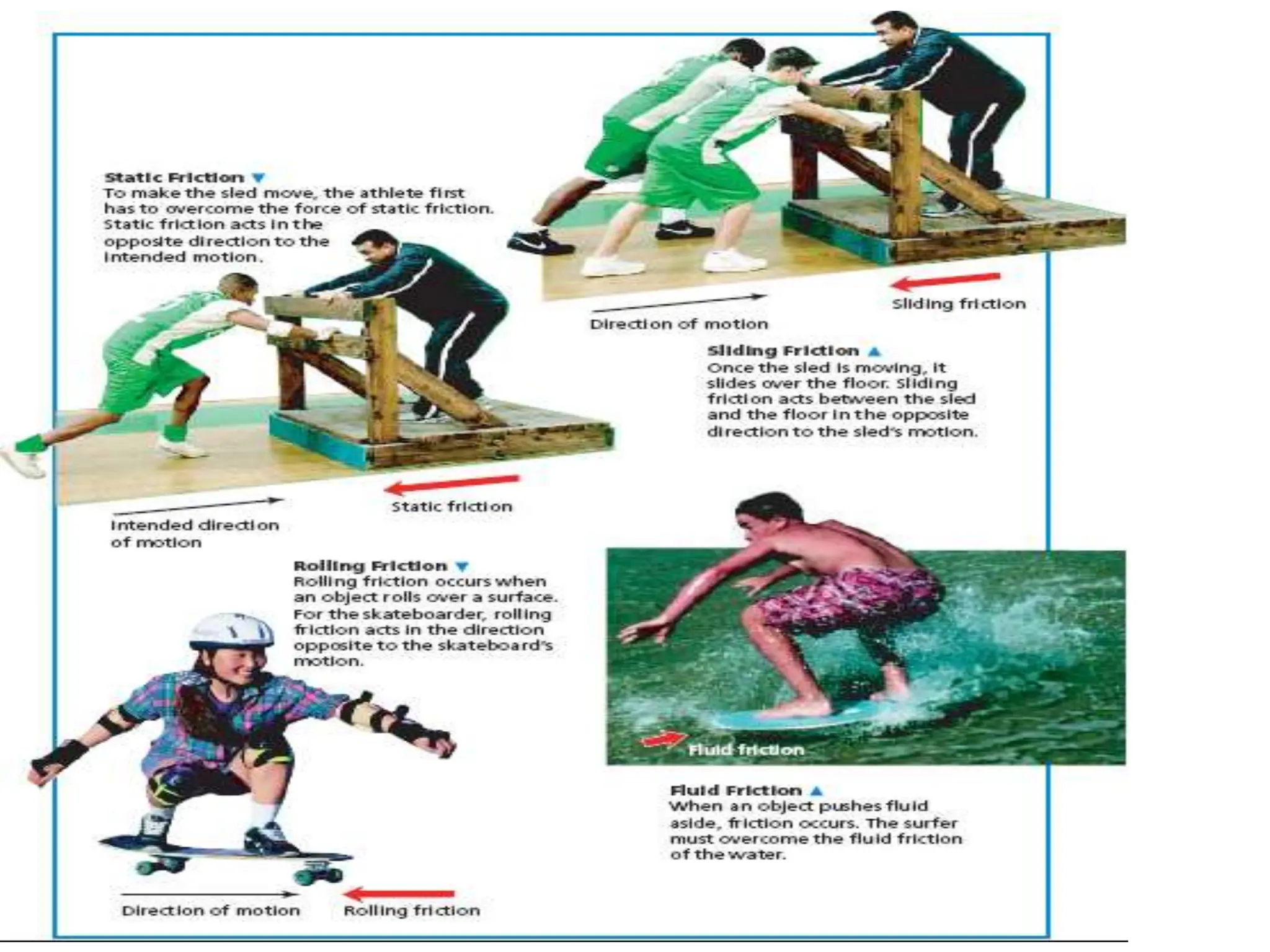
• Four types of friction are shown in Figure 6. The friction that
acts on objects that are not moving is called static friction.
• Because of static friction, you must use extra force to start
the motion of stationary objects.
• For example, think about what happens when you try to push
a heavy desk across a floor.
• If you push on the desk with a force less than the force of
static friction between the desk and the floor, the desk will
not move.
• To make the desk move, you must exert a force greater than
the force of static friction.
• Once the desk is moving, there is no longer any static friction.
• However, there is another type of friction—sliding friction.
Sliding Friction
• Sliding friction occurs when two solid surfaces slide
over each other.
• Sliding friction can be useful.
• For example, you can spread sand on an icy path to
improve your footing.
• Ballet dancers apply a sticky powder to the soles of
their ballet slippers so they won’t slip on the dance
floor.
• And when you stop a bicycle with hand brakes,
rubber pads slide against the tire surfaces, causing
the wheels to slow and eventually stop.
• On the other hand, sliding friction is a problem if you
fall off your bike and skin your knee!
Rolling Friction
• When an object rolls across a surface, rolling
friction occurs.
• Rolling friction is easier to overcome than
sliding friction for similar materials.
• This type of friction is important to engineers
who design certain products.
• For example, skates, skateboards, and bicycles
need wheels that move freely.
• So engineers use ball bearings to reduce the
friction between the wheels and the rest of
the product.
• These ball bearings are small, smooth steel
balls that reduce friction by rolling between
moving parts.
Fluid Friction
• Fluids, such as water, oil, or air, are
materials that flow easily.
• Fluid friction occurs when a solid object
moves through a fluid.
• Like rolling friction, fluid friction is easier
to overcome than sliding friction.
• This is why the parts of machines that must
slide over each other are often bathed in oil.
• In this way, the solid parts move through the
fluid instead of sliding against each other.
• When you ride a bike, fluid friction occurs
between you and the air.
• Cyclists often wear streamlined helmets and
specially designed clothing to reduce fluid
friction.
FRICTION IN MACHINE ELEMENTS-SCREW AND NUT.pptx

FRICTION IN MACHINE ELEMENTS-SCREW AND NUT.pptx

  • 1.
  • 2.
    FRICTION IN MACHINEELEMENTS • Surface contacts • Sliding and Rolling friction • Friction drives • Friction in screw threads • Bearings and lubrication • Friction clutches • Belt and rope drives • Friction in brakes- Band and Block brakes.
  • 3.
    FRICTION • Friction isthe force resisting the relative motion of solid surfaces, fluid layers, and material elements sliding against each other.
  • 5.
    Static Friction • Fourtypes of friction are shown in Figure 6. The friction that acts on objects that are not moving is called static friction. • Because of static friction, you must use extra force to start the motion of stationary objects. • For example, think about what happens when you try to push a heavy desk across a floor. • If you push on the desk with a force less than the force of static friction between the desk and the floor, the desk will not move. • To make the desk move, you must exert a force greater than the force of static friction. • Once the desk is moving, there is no longer any static friction. • However, there is another type of friction—sliding friction.
  • 7.
    Sliding Friction • Slidingfriction occurs when two solid surfaces slide over each other. • Sliding friction can be useful. • For example, you can spread sand on an icy path to improve your footing. • Ballet dancers apply a sticky powder to the soles of their ballet slippers so they won’t slip on the dance floor. • And when you stop a bicycle with hand brakes, rubber pads slide against the tire surfaces, causing the wheels to slow and eventually stop. • On the other hand, sliding friction is a problem if you fall off your bike and skin your knee!
  • 9.
    Rolling Friction • Whenan object rolls across a surface, rolling friction occurs. • Rolling friction is easier to overcome than sliding friction for similar materials. • This type of friction is important to engineers who design certain products. • For example, skates, skateboards, and bicycles need wheels that move freely.
  • 10.
    • So engineersuse ball bearings to reduce the friction between the wheels and the rest of the product. • These ball bearings are small, smooth steel balls that reduce friction by rolling between moving parts.
  • 12.
    Fluid Friction • Fluids,such as water, oil, or air, are materials that flow easily. • Fluid friction occurs when a solid object moves through a fluid. • Like rolling friction, fluid friction is easier to overcome than sliding friction.
  • 13.
    • This iswhy the parts of machines that must slide over each other are often bathed in oil. • In this way, the solid parts move through the fluid instead of sliding against each other. • When you ride a bike, fluid friction occurs between you and the air. • Cyclists often wear streamlined helmets and specially designed clothing to reduce fluid friction.