Semiotics
Semiotics


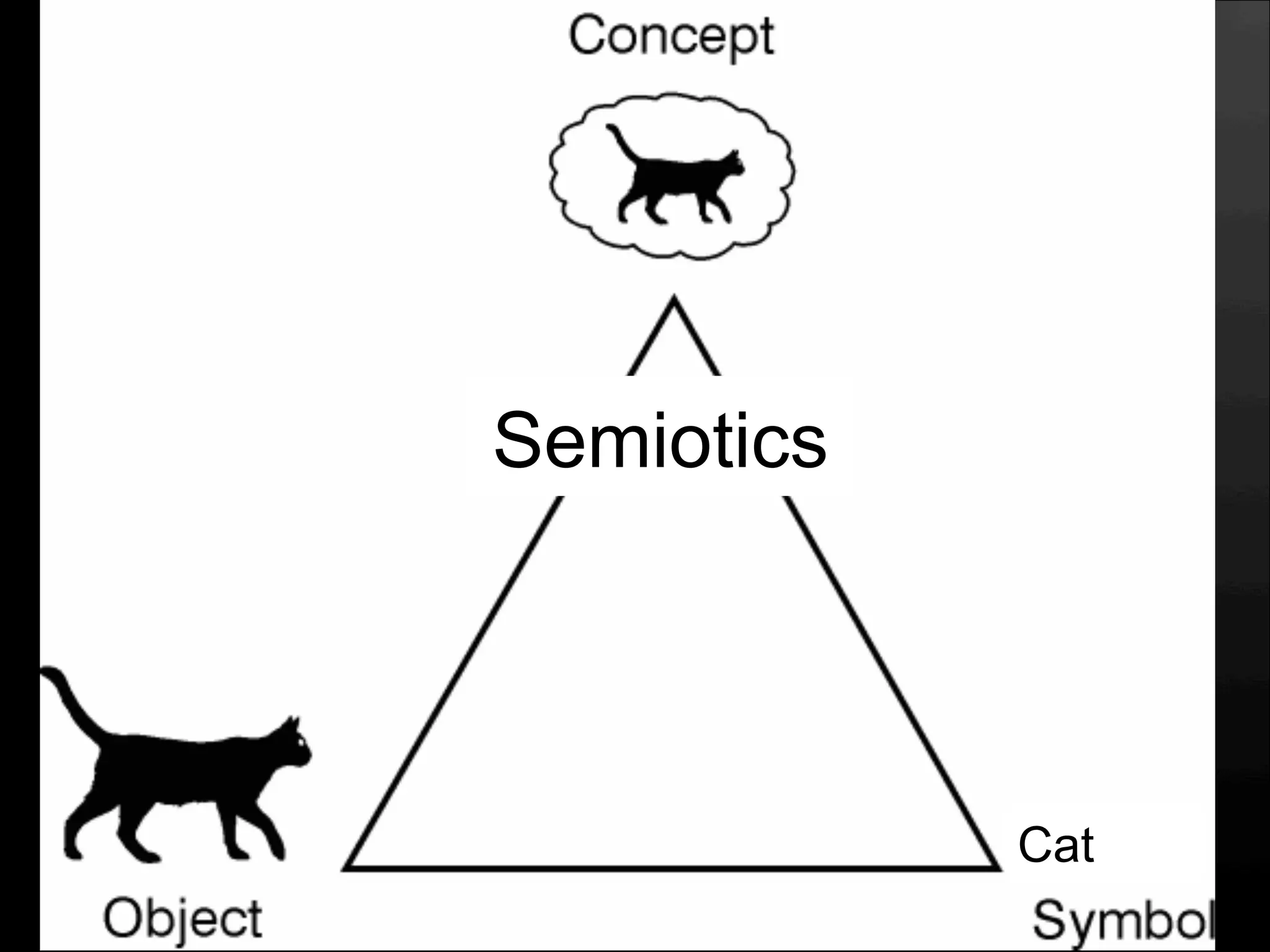
            Cat
Semiotics came from
linguistics.
From structuralism to
post-structuralism till now,
semiotics is still a
popular method to code
and decode signs
(linguistic sign and
images).


                               Cat
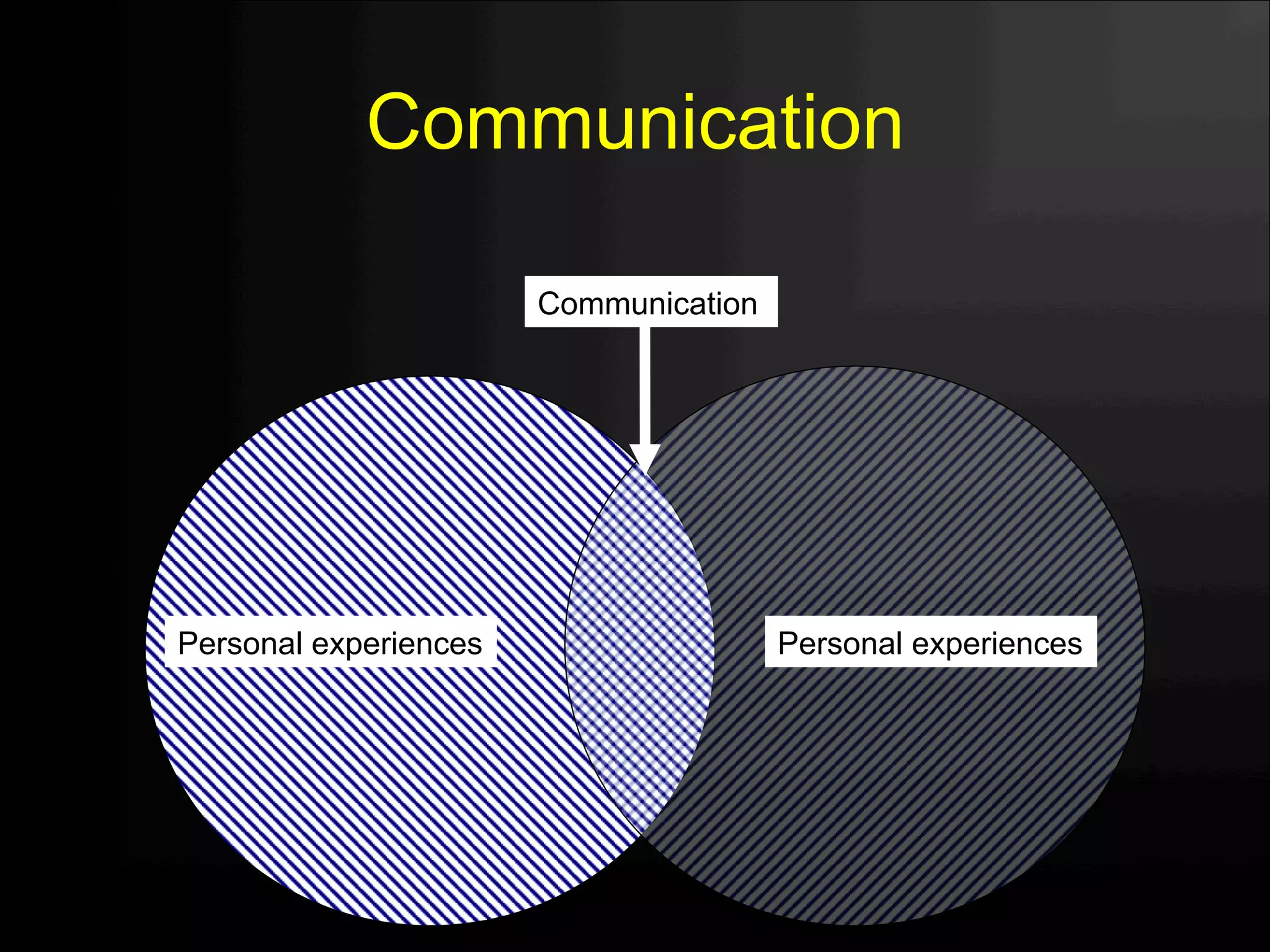
Communication

                       Communication


Personal experiences                   Personal experiences
semiotics
•  The science of signs.
•  Something which stands to somebody for
   something in some respect or capacity.
                             –  Charles Sanders Peirce

•  Anything that can be used to lie.
                                       –  Umberto Eco
•  A broad approach to understanding the
   nature of meaning, cognition, culture,
   behavior, and life itself.
                                 –  Smith-Shank, 1995
Semiotics
•  the pivotal branch of the integrated science of
   communication, is concerned with the
   formulation and encoding of messages by
   sources, the transmission of these messages
   through channels, the decoding and
   interpretation of these messages by
   destinations, and their signification. The entire
   transaction, or semiosis, takes place within a
   context to which the system is highly sensitive
   and which the system, in turn, affects. Any living
   entity, or its products, can be either message
   sources or destinations.
Semiosis
•  Essentially we are wayfaring interpretants
   from beginning to end. We endlessly
   analyse concepts, signs, objects and
   symbols. Every time you interpret a
   symbol you add new meanings and
   sometimes knowledge (which may be
   false) but always you enlarge the meaning
   of the concept. We live in an interpretive
   world and we are interpretive beings.
Models of signs
•    Signifier and Signified
•    Denotation and Connotation
•    Icon, index, and symbol
•    Metaphor
•    Myth
Signifier and Signified
•  Signifier and signified.
  –  Signifier is a sign, a sound, or a written
     character that we can see.
  –  Signified is the concept of the sign in our mind
•  Saussure, “A linguistic sign is not a link
   between a thing and a name, but between
   a concept (signified) and a sound pattern
   (signifier)”
Denotation and Connotation
•  Denotation and Connotation
  –  Denotation is the object that we can see in an
     image (text).
  –  Connotation means what the object means
     and the metaphors of the object
Icon, index, and symbol
•  Icon, index, and symbol
  –  Icon is an image which resembling or imitating
     the meaning.
  –  index is an image which does not arbitrary but
     directly connected to the meaning.
  –  symbol is an image which does not directly
     represent the meaning, but it fundamentally
     arbitrary or purely conventional.
Metaphor
•  Metaphor
  –  Metaphor is something not essentially
     represents something else; however, we use
     this image to represent the meaning we want
     to represent.
Myth
•  “Myths can be seen as extended
   metaphors; myths help us to mark sense
   of our experience within a
   culture” (Chandler, 2004, p. 145).

Semiotics

  • 1.
  • 2.
  • 3.
    Semiotics came from linguistics. Fromstructuralism to post-structuralism till now, semiotics is still a popular method to code and decode signs (linguistic sign and images). Cat
  • 4.
    Communication Communication Personal experiences Personal experiences
  • 5.
    semiotics •  The scienceof signs. •  Something which stands to somebody for something in some respect or capacity. –  Charles Sanders Peirce •  Anything that can be used to lie. –  Umberto Eco •  A broad approach to understanding the nature of meaning, cognition, culture, behavior, and life itself. –  Smith-Shank, 1995
  • 6.
    Semiotics •  the pivotalbranch of the integrated science of communication, is concerned with the formulation and encoding of messages by sources, the transmission of these messages through channels, the decoding and interpretation of these messages by destinations, and their signification. The entire transaction, or semiosis, takes place within a context to which the system is highly sensitive and which the system, in turn, affects. Any living entity, or its products, can be either message sources or destinations.
  • 7.
    Semiosis •  Essentially weare wayfaring interpretants from beginning to end. We endlessly analyse concepts, signs, objects and symbols. Every time you interpret a symbol you add new meanings and sometimes knowledge (which may be false) but always you enlarge the meaning of the concept. We live in an interpretive world and we are interpretive beings.
  • 8.
    Models of signs •  Signifier and Signified •  Denotation and Connotation •  Icon, index, and symbol •  Metaphor •  Myth
  • 9.
    Signifier and Signified • Signifier and signified. –  Signifier is a sign, a sound, or a written character that we can see. –  Signified is the concept of the sign in our mind •  Saussure, “A linguistic sign is not a link between a thing and a name, but between a concept (signified) and a sound pattern (signifier)”
  • 10.
    Denotation and Connotation • Denotation and Connotation –  Denotation is the object that we can see in an image (text). –  Connotation means what the object means and the metaphors of the object
  • 11.
    Icon, index, andsymbol •  Icon, index, and symbol –  Icon is an image which resembling or imitating the meaning. –  index is an image which does not arbitrary but directly connected to the meaning. –  symbol is an image which does not directly represent the meaning, but it fundamentally arbitrary or purely conventional.
  • 12.
    Metaphor •  Metaphor –  Metaphor is something not essentially represents something else; however, we use this image to represent the meaning we want to represent.
  • 13.
    Myth •  “Myths canbe seen as extended metaphors; myths help us to mark sense of our experience within a culture” (Chandler, 2004, p. 145).