INTRODUCTION
 The world we are living is becoming internet controlled
day by day .
 In this sense we should have some regarding embedded
web technology(EWT)
Introduction to EWT
Embedded web technology is defined as the marriage
of embedded system and world wide web
 EWT was developed by members of NASA
Lewis Research Center
 It was modified in 2002.
history
EWT- BASICS
 Embedded system
 Embedded web server
 Client server
 HTML and XML
Embedded system
•An embedded system is a computer system with a
dedicated function within a larger mechanical or
electrical system, often with real-time computing
constraints
Embedded web server
• Embedded Web Server Technology is most evolving technology
for Internet Devices. There are many application areas including
internet devices, telecommunication devices, measuring
instruments and lots of consumer electronics
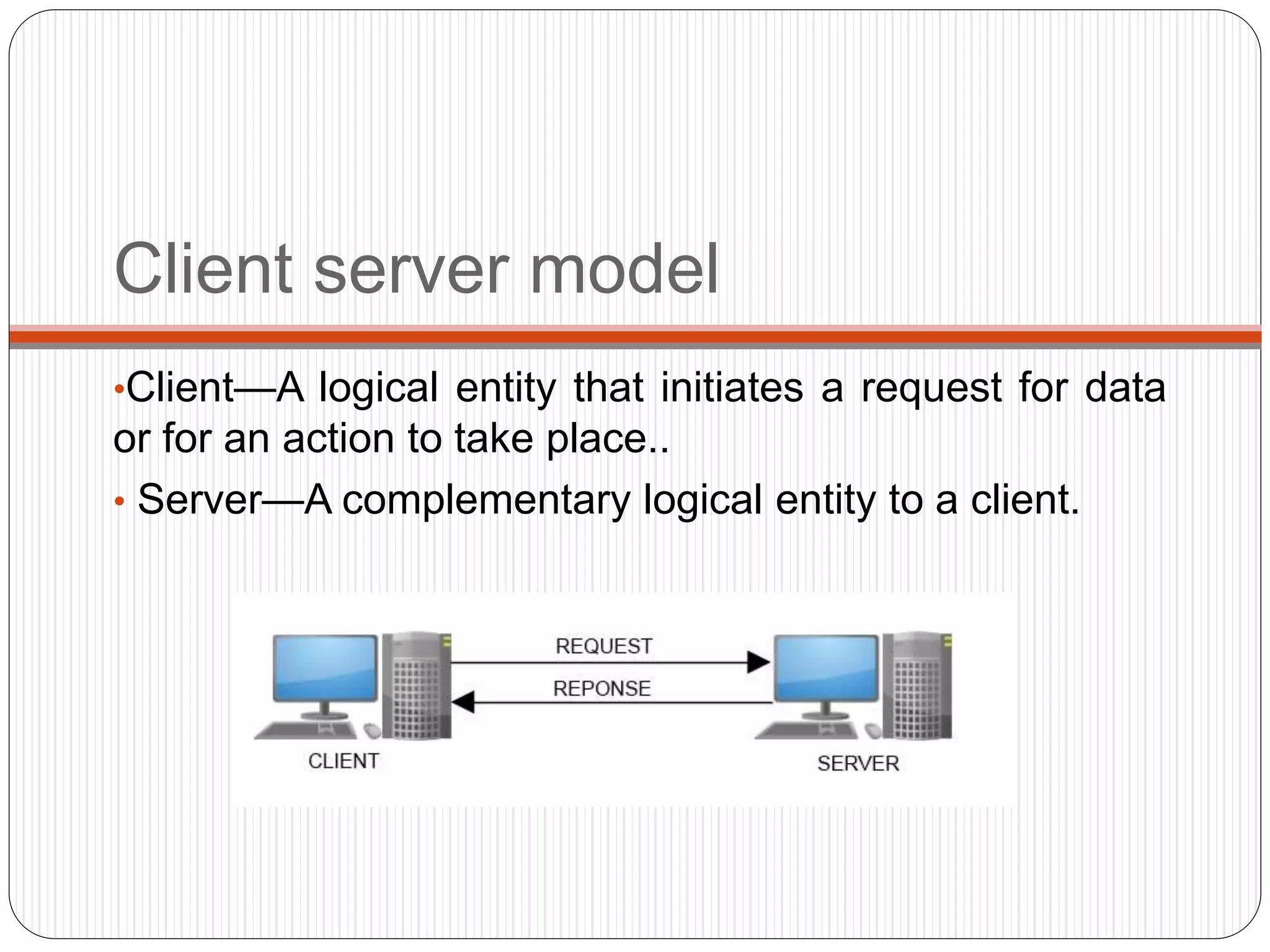
Client server model
•Client—A logical entity that initiates a request for data
or for an action to take place..
• Server—A complementary logical entity to a client.
HTML and XML
HTML
 Hypertext markup language
(HTML) is a language used to
describe a webpage.
 When a web browser receives
content that is HTML it will try
to render the content into a web
page. Similar to XML, HTML
is made up of tags, but unlike
XML, HTML defines what
types of tags are acceptable.
XML
• Extensible markup language
(XML) is a structure for text so
that information can be easily
stored and transmitted through a
web service.
 Although the L in XML stands
for language , but it is not a
programming language. XML is
a popular content choice
because it is human readable,
and translates easily to other
programming languages.
EWT-explanation
 Typical web server environment versus an embedded,
real-time environment
 World wide web EXAMPLE
 Embedded systems on the web TWO PROBLEMS
 Tempest
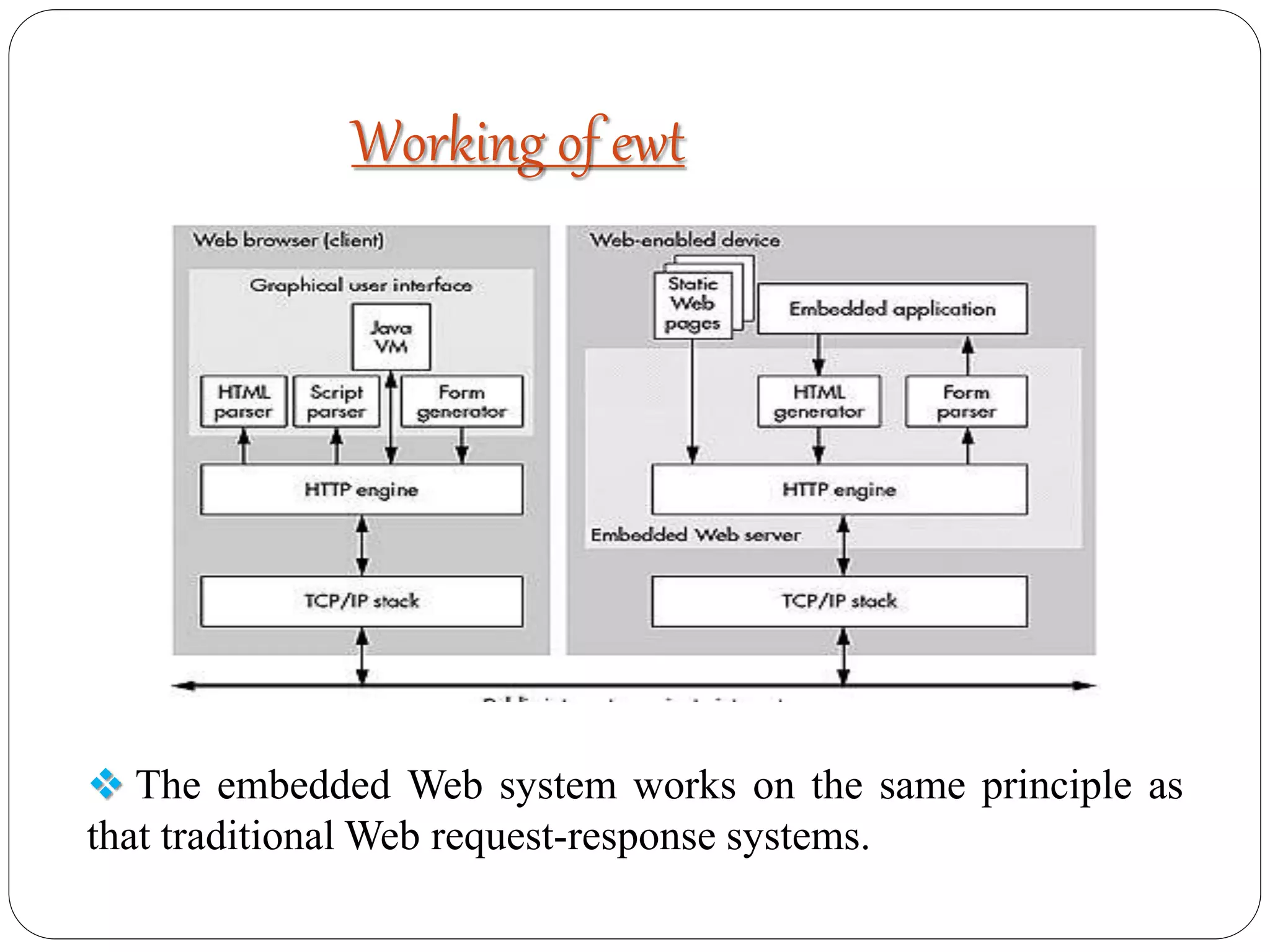
Working of ewt
 The embedded Web system works on the same principle as
that traditional Web request-response systems.
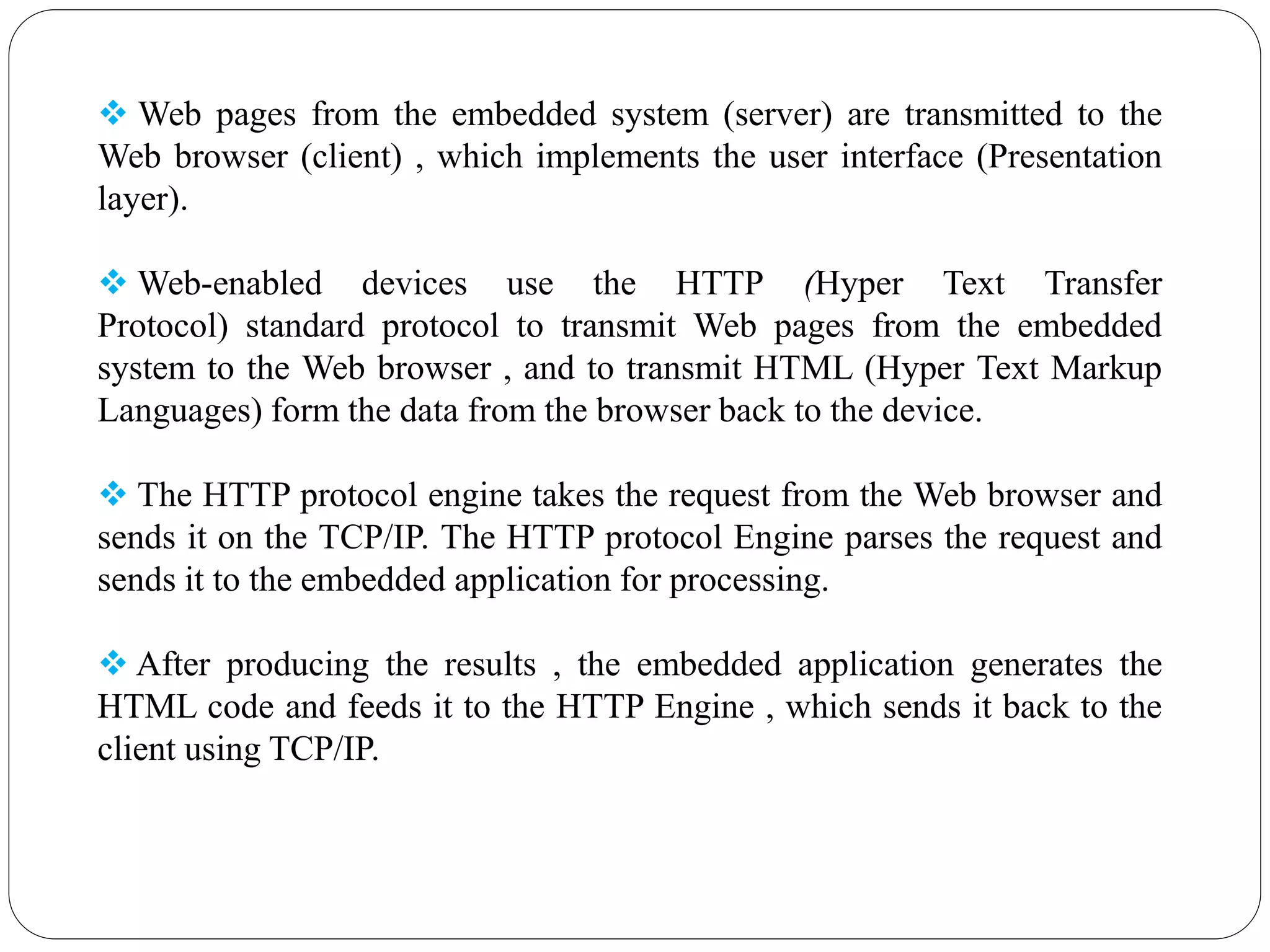
 Web pages from the embedded system (server) are transmitted to the
Web browser (client) , which implements the user interface (Presentation
layer).
 Web-enabled devices use the HTTP (Hyper Text Transfer
Protocol) standard protocol to transmit Web pages from the embedded
system to the Web browser , and to transmit HTML (Hyper Text Markup
Languages) form the data from the browser back to the device.
 The HTTP protocol engine takes the request from the Web browser and
sends it on the TCP/IP. The HTTP protocol Engine parses the request and
sends it to the embedded application for processing.
 After producing the results , the embedded application generates the
HTML code and feeds it to the HTTP Engine , which sends it back to the
client using TCP/IP.
Advantages
Utilizing Embedded Web Technology has several
advantages
 Web browser does not store the applet
permanently
 . User interface software upgrades
 Provide output to the remote user in any format
.
APPLICATIONS OF EWT
Traffic monitoring
Video monitoring
Power infrastructure monitoring
Web technology in embedded applications has distinct advantages over
legacy and custom communication mechanisms due to the scalability and
security. The amount of knowledge and skills needed to create a web
application may be large. However embedded technology is vastly
becoming an important tool in our daily lives
CONCLUSION
[1] “Embedded Web Technology: Applying World Wide Web Standards to Embedded
Systems”- Joseph G. Ponyik and David W. York Glenn Research Center, Cleveland,
Ohio; NASA/TM—2002-211199/March 2002/AIAA–2001–5107
[2] “Embedded web technology in traffic monitoring system”, International Journal of
Innovative Research in Advanced Engineering (IJIRAE) Volume 1 Issue 4 (May
2014 ISSN: 2349-2163 ) http://ijirae.com
[3] “Application Research of Embedded Web Technology in Traffic Monitoring System”
Proceedings of the Second Symposium International Computer Science and
Computational Technology(ISCSCT ’09) Huangshan, P. R. China, 26-28,Dec. 2009, pp.
094-097
[4] Dustdar, S.; Schreiner, W. (2005). "A survey on web services. composition". International
Journal of Web and Grid Services : Doi:10.1504/IJWGS.2005.007545
[5] “ Power infrastructure monitoring system on Embedded Web” International Journal of
Science and Engineering Volume 1, Number 2 - 2013 PP-71-76 ©IJSE
REFERENCES
EXAMPLE
REQUEST
 GET /index.html HTTP/1.0
 Connection: Keep-Alive
 User-Agent: Mozilla/4.7
[en] (WinNT; U)
 Host: jgp6290.grc.nasa.gov
 Accept: image/gif, image/x-
xbitmap, image/jpeg,
image/pjpeg, image/png, */*
 Accept-Encoding: gzip
 Accept-Language: en
 Accept-Charset: iso-8859-
1,*,utf-8
RESPONSE
 HTTP/1.1 200 OK
 Host:
jgp6290/139.88.219.70
 Date: Mon, 020 Aug
2001 17:27:31 GMT
 Server: TempestJava
1.2 (NASA/GRC Java
Version of Tempest)
 Connection: Close
 Content-Length: 293
293
 Content-Type: text/html
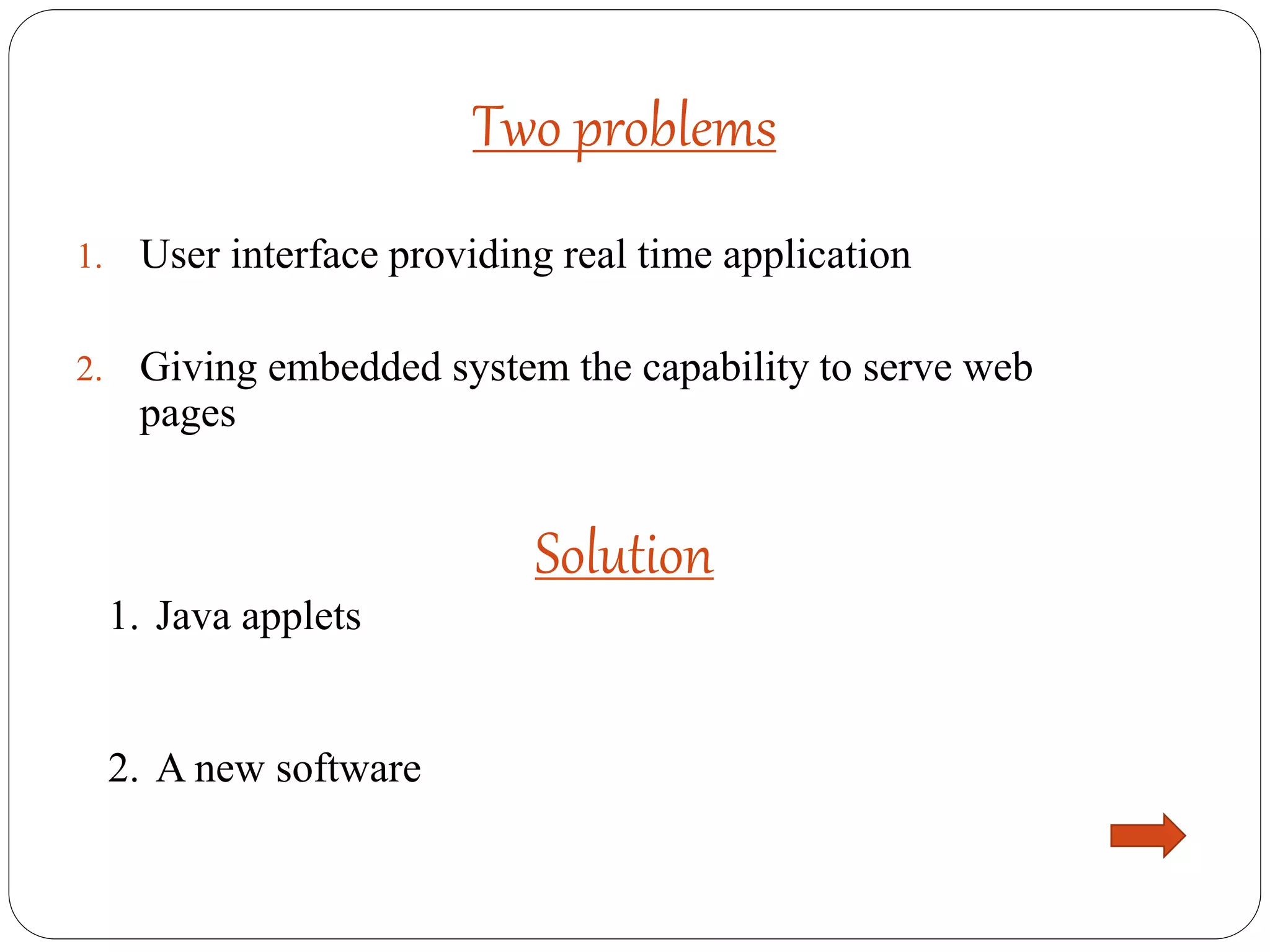
1. User interface providing real time application
2. Giving embedded system the capability to serve web
pages
Two problems
Solution
1. Java applets
2. A new software

Seminar presentation on embedded web technology

  • 2.
    INTRODUCTION  The worldwe are living is becoming internet controlled day by day .  In this sense we should have some regarding embedded web technology(EWT)
  • 3.
    Introduction to EWT Embeddedweb technology is defined as the marriage of embedded system and world wide web
  • 4.
     EWT wasdeveloped by members of NASA Lewis Research Center  It was modified in 2002. history
  • 5.
    EWT- BASICS  Embeddedsystem  Embedded web server  Client server  HTML and XML
  • 6.
    Embedded system •An embeddedsystem is a computer system with a dedicated function within a larger mechanical or electrical system, often with real-time computing constraints
  • 7.
    Embedded web server •Embedded Web Server Technology is most evolving technology for Internet Devices. There are many application areas including internet devices, telecommunication devices, measuring instruments and lots of consumer electronics
  • 8.
    Client server model •Client—Alogical entity that initiates a request for data or for an action to take place.. • Server—A complementary logical entity to a client.
  • 9.
    HTML and XML HTML Hypertext markup language (HTML) is a language used to describe a webpage.  When a web browser receives content that is HTML it will try to render the content into a web page. Similar to XML, HTML is made up of tags, but unlike XML, HTML defines what types of tags are acceptable. XML • Extensible markup language (XML) is a structure for text so that information can be easily stored and transmitted through a web service.  Although the L in XML stands for language , but it is not a programming language. XML is a popular content choice because it is human readable, and translates easily to other programming languages.
  • 10.
    EWT-explanation  Typical webserver environment versus an embedded, real-time environment  World wide web EXAMPLE  Embedded systems on the web TWO PROBLEMS  Tempest
  • 11.
    Working of ewt The embedded Web system works on the same principle as that traditional Web request-response systems.
  • 12.
     Web pagesfrom the embedded system (server) are transmitted to the Web browser (client) , which implements the user interface (Presentation layer).  Web-enabled devices use the HTTP (Hyper Text Transfer Protocol) standard protocol to transmit Web pages from the embedded system to the Web browser , and to transmit HTML (Hyper Text Markup Languages) form the data from the browser back to the device.  The HTTP protocol engine takes the request from the Web browser and sends it on the TCP/IP. The HTTP protocol Engine parses the request and sends it to the embedded application for processing.  After producing the results , the embedded application generates the HTML code and feeds it to the HTTP Engine , which sends it back to the client using TCP/IP.
  • 13.
    Advantages Utilizing Embedded WebTechnology has several advantages  Web browser does not store the applet permanently  . User interface software upgrades  Provide output to the remote user in any format .
  • 14.
    APPLICATIONS OF EWT Trafficmonitoring Video monitoring Power infrastructure monitoring
  • 15.
    Web technology inembedded applications has distinct advantages over legacy and custom communication mechanisms due to the scalability and security. The amount of knowledge and skills needed to create a web application may be large. However embedded technology is vastly becoming an important tool in our daily lives CONCLUSION
  • 16.
    [1] “Embedded WebTechnology: Applying World Wide Web Standards to Embedded Systems”- Joseph G. Ponyik and David W. York Glenn Research Center, Cleveland, Ohio; NASA/TM—2002-211199/March 2002/AIAA–2001–5107 [2] “Embedded web technology in traffic monitoring system”, International Journal of Innovative Research in Advanced Engineering (IJIRAE) Volume 1 Issue 4 (May 2014 ISSN: 2349-2163 ) http://ijirae.com [3] “Application Research of Embedded Web Technology in Traffic Monitoring System” Proceedings of the Second Symposium International Computer Science and Computational Technology(ISCSCT ’09) Huangshan, P. R. China, 26-28,Dec. 2009, pp. 094-097 [4] Dustdar, S.; Schreiner, W. (2005). "A survey on web services. composition". International Journal of Web and Grid Services : Doi:10.1504/IJWGS.2005.007545 [5] “ Power infrastructure monitoring system on Embedded Web” International Journal of Science and Engineering Volume 1, Number 2 - 2013 PP-71-76 ©IJSE REFERENCES
  • 18.
    EXAMPLE REQUEST  GET /index.htmlHTTP/1.0  Connection: Keep-Alive  User-Agent: Mozilla/4.7 [en] (WinNT; U)  Host: jgp6290.grc.nasa.gov  Accept: image/gif, image/x- xbitmap, image/jpeg, image/pjpeg, image/png, */*  Accept-Encoding: gzip  Accept-Language: en  Accept-Charset: iso-8859- 1,*,utf-8 RESPONSE  HTTP/1.1 200 OK  Host: jgp6290/139.88.219.70  Date: Mon, 020 Aug 2001 17:27:31 GMT  Server: TempestJava 1.2 (NASA/GRC Java Version of Tempest)  Connection: Close  Content-Length: 293 293  Content-Type: text/html
  • 19.
    1. User interfaceproviding real time application 2. Giving embedded system the capability to serve web pages Two problems Solution 1. Java applets 2. A new software

Editor's Notes

  • #15 Add slides for each example and explain them . If limitation of time then explain atleast one preferably traffic monitoring system
  • #18 Click esc after this slide
  • #19 Explain the example (read the pdf regarding ewt)
  • #20 After this slide go to tempest . It is the second solution (a new software)