Seminar on OLAP- online analytical
processing
By
Hareesh Babu M S
14GAMT4004
Contents
• Major features and functions
• General features
• Dimensional analysis
• OLAP models
• The MOLAP
• The ROLAP
• The implementation considerations
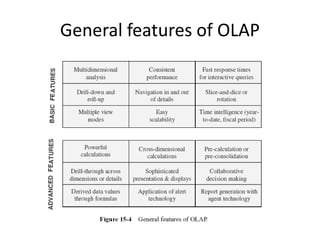
General features of OLAP
Dimensional analysis
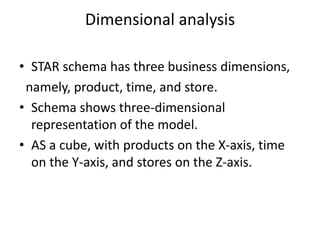
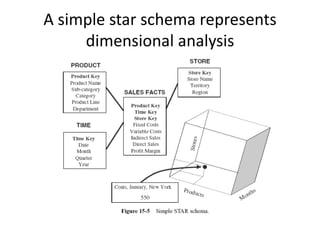
• STAR schema has three business dimensions,
namely, product, time, and store.
• Schema shows three-dimensional
representation of the model.
• AS a cube, with products on the X-axis, time
on the Y-axis, and stores on the Z-axis.
A simple star schema represents
dimensional analysis
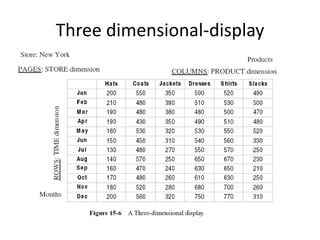
Three dimensional-display
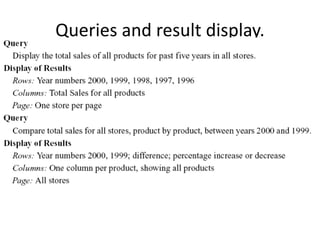
Queries and result display.
Uses and benefits of olap
• Increased productivity-of business managers, executives and
analysts
• Inherent flexibility- users can run their own analysis without
it assistance
• Benefits for IT developers- because using s/w specially
designed for the system development results in faster
delivery of application
• Self sufficiency of users resulting in reduction backlog
• faster delivery of applications following from the previous
benefits.
• More efficient operations through reducing time on query
executions and in network traffic
• Ability to model real-world challenges with business metrics
and dimensions
OLAP MODELS
There are three type of OLAP models
• ROLAP- stands for relational online analytical
processing
• MOLA- stands for multidimensional online
analytical processing.
• DOLAP- stands for desktop online analytical
processing.
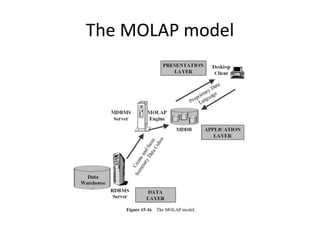
The MOLAP model
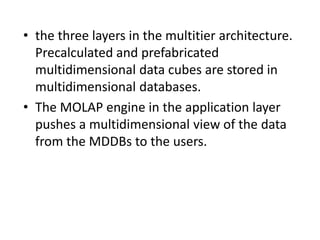
• the three layers in the multitier architecture.
Precalculated and prefabricated
multidimensional data cubes are stored in
multidimensional databases.
• The MOLAP engine in the application layer
pushes a multidimensional view of the data
from the MDDBs to the users.
The ROLAP Model
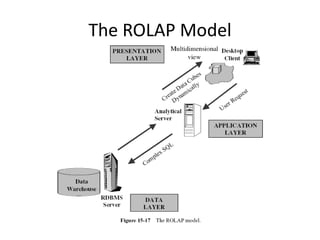
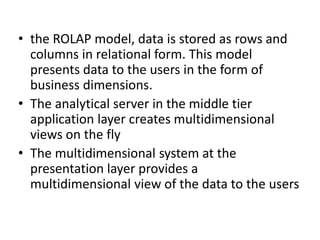
• the ROLAP model, data is stored as rows and
columns in relational form. This model
presents data to the users in the form of
business dimensions.
• The analytical server in the middle tier
application layer creates multidimensional
views on the fly
• The multidimensional system at the
presentation layer provides a
multidimensional view of the data to the users
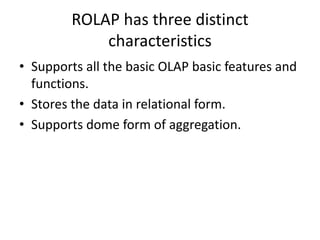
ROLAP has three distinct
characteristics
• Supports all the basic OLAP basic features and
functions.
• Stores the data in relational form.
• Supports dome form of aggregation.
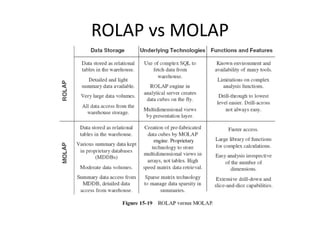
ROLAP vs MOLAP
The implementation considerations
• There are two main key issues considerations
regard to the MOLAP model running under
MDDBMS.
a) The first issue relates to the lack of
standardization. Each vendor tool has its own
client interface.
b) Another issue is scalability.
Data design and preparation
• In order to help prepare the data for the OLAP
system we have to consider these characteristics
• An OLAP system stores and uses much less data
compared to a data warehouse
• Data in the OLAP system is summarized. You will
rarely find data at the lowest level of detail as in
the data warehouse.
• OLAP data is more flexible for processing and
analysis partly because there is much less data to
work with.
OLAP TOOLS
Selection criteria for selecting olap tools and products
• Multidimensional representation of data.
• Aggregation, summarization, precalculation, and derivations.
• Formulas and complex calculations in an extensive library.
• Cross-dimensional calculations
• Time intelligence such as year-to-date, current and past fiscal
periods, moving averages,
• and moving totals.
• Pivoting, cross-tabs, drill-down, and roll-up along single or
multiple dimensions.
• Interface of OLAP with applications and software such as
spreadsheets, proprietary
• client tools, third-party tools, and 4GL environments.
Implementation steps
• Dimensional modelling.
• Design and building of the MDDB.
• Selection of the data to be moved into the OLAP
system.
• Data acquisition or extraction for the OLAP system.
• Data loading into the OLAP server.
• Computation of data aggregation and derived data
• Implementation of application on the desktop
• Provision of user training
Thank you

Seminar on olap online analytical

  • 1.
    Seminar on OLAP-online analytical processing By Hareesh Babu M S 14GAMT4004
  • 2.
    Contents • Major featuresand functions • General features • Dimensional analysis • OLAP models • The MOLAP • The ROLAP • The implementation considerations
  • 3.
  • 4.
    Dimensional analysis • STARschema has three business dimensions, namely, product, time, and store. • Schema shows three-dimensional representation of the model. • AS a cube, with products on the X-axis, time on the Y-axis, and stores on the Z-axis.
  • 5.
    A simple starschema represents dimensional analysis
  • 6.
  • 7.
  • 8.
    Uses and benefitsof olap • Increased productivity-of business managers, executives and analysts • Inherent flexibility- users can run their own analysis without it assistance • Benefits for IT developers- because using s/w specially designed for the system development results in faster delivery of application • Self sufficiency of users resulting in reduction backlog • faster delivery of applications following from the previous benefits. • More efficient operations through reducing time on query executions and in network traffic • Ability to model real-world challenges with business metrics and dimensions
  • 9.
    OLAP MODELS There arethree type of OLAP models • ROLAP- stands for relational online analytical processing • MOLA- stands for multidimensional online analytical processing. • DOLAP- stands for desktop online analytical processing.
  • 10.
  • 11.
    • the threelayers in the multitier architecture. Precalculated and prefabricated multidimensional data cubes are stored in multidimensional databases. • The MOLAP engine in the application layer pushes a multidimensional view of the data from the MDDBs to the users.
  • 12.
  • 13.
    • the ROLAPmodel, data is stored as rows and columns in relational form. This model presents data to the users in the form of business dimensions. • The analytical server in the middle tier application layer creates multidimensional views on the fly • The multidimensional system at the presentation layer provides a multidimensional view of the data to the users
  • 14.
    ROLAP has threedistinct characteristics • Supports all the basic OLAP basic features and functions. • Stores the data in relational form. • Supports dome form of aggregation.
  • 15.
  • 16.
    The implementation considerations •There are two main key issues considerations regard to the MOLAP model running under MDDBMS. a) The first issue relates to the lack of standardization. Each vendor tool has its own client interface. b) Another issue is scalability.
  • 17.
    Data design andpreparation • In order to help prepare the data for the OLAP system we have to consider these characteristics • An OLAP system stores and uses much less data compared to a data warehouse • Data in the OLAP system is summarized. You will rarely find data at the lowest level of detail as in the data warehouse. • OLAP data is more flexible for processing and analysis partly because there is much less data to work with.
  • 18.
    OLAP TOOLS Selection criteriafor selecting olap tools and products • Multidimensional representation of data. • Aggregation, summarization, precalculation, and derivations. • Formulas and complex calculations in an extensive library. • Cross-dimensional calculations • Time intelligence such as year-to-date, current and past fiscal periods, moving averages, • and moving totals. • Pivoting, cross-tabs, drill-down, and roll-up along single or multiple dimensions. • Interface of OLAP with applications and software such as spreadsheets, proprietary • client tools, third-party tools, and 4GL environments.
  • 19.
    Implementation steps • Dimensionalmodelling. • Design and building of the MDDB. • Selection of the data to be moved into the OLAP system. • Data acquisition or extraction for the OLAP system. • Data loading into the OLAP server. • Computation of data aggregation and derived data • Implementation of application on the desktop • Provision of user training
  • 20.