The Selling
Process
TRADITIONAL INDUSTRIAL
PERSPECTIVE
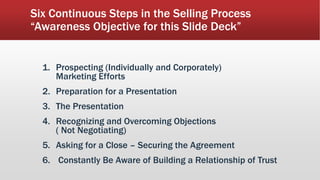
Six Continuous Steps in the Selling Process
“Awareness Objective for this Slide Deck”
1. Prospecting (Individually and Corporately)
Marketing Efforts
2. Preparation for a Presentation
3. The Presentation
4. Recognizing and Overcoming Objections
( Not Negotiating)
5. Asking for a Close – Securing the Agreement
6. Constantly Be Aware of Building a Relationship of Trust
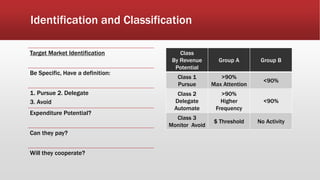
Identification and Classification
Target Market Identification
Be Specific, Have a definition:
1. Pursue 2. Delegate
3. Avoid
Expenditure Potential?
Can they pay?
Will they cooperate?
Class
By Revenue
Potential
Group A Group B
Class 1
Pursue
>90%
Max Attention
<90%
Class 2
Delegate
Automate
>90%
Higher
Frequency
<90%
Class 3
Monitor Avoid
$ Threshold No Activity
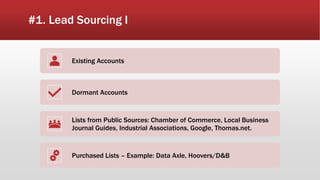
#1. Lead Sourcing I
Existing Accounts
Dormant Accounts
Lists from Public Sources: Chamber of Commerce, Local Business
Journal Guides, Industrial Associations, Google, Thomas.net.
Purchased Lists – Example: Data Axle, Hoovers/D&B
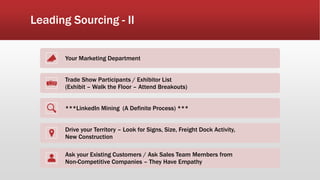
Leading Sourcing - II
Your Marketing Department
Trade Show Participants / Exhibitor List
(Exhibit – Walk the Floor – Attend Breakouts)
***LinkedIn Mining (A Definite Process) ***
Drive your Territory – Look for Signs, Size, Freight Dock Activity,
New Construction
Ask your Existing Customers / Ask Sales Team Members from
Non-Competitive Companies – They Have Empathy
Lead Sourcing III
Your Website
Social Media Interaction *Requires consistent posting and Interaction
Add Campaigns – Click Ads (With Caution)
Newsletters with helpful content – Monitor Opens
Landing Pages
Lead Sourcing IV
Personal Events: Receptions – Sports - Meals
Networking – 3rd Party Hosts
(Personal conversation with three to five people – Show up early – stay late)
Webinars: Tools… Zoom – Microsoft – Google
(You host or attend)
YouTube Info Videos (Shoot, Edit, Upload, Post and include in advertising)
White Papers from Reputable Sources – Post: LinkedIn, Slide Share, Twitter, Facebook
(As a link back to a specific article from a website)
Customer Meetings – Name Capture (Take notes)
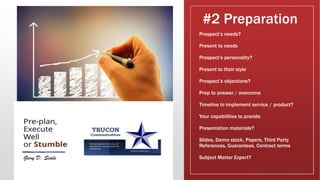
#2 Preparation
Prospect’s needs?
Present to needs
Prospect’s personality?
Present to their style
Prospect’s objections?
Prep to answer / overcome
Timeline to implement service / product?
Your capabilities to provide
Presentation materials?
Slides, Demo stock, Papers, Third Party
References, Guarantees, Contract terms
Subject Matter Expert?
#3 Presentation
Present Needs – Confirm Needs
Open ended questions
Feature –What it is
Advantage – What it does
Benefit – What it does for the
prospect
Product demonstration
Where are you in the close hierarchy?
Next step? Action plan to achieve the
goal?
• Know your product
• Know your company
• Know your industry
• Know your prospect
#4 Overcoming Objections
▪ Common Objections
▪ Price
▪ Features
▪ Service
▪ Delivery
▪ Terms
▪ Quantity
▪ Packaging
#5 Closing
THE LIFE BLOOD OF
YOUR BUSINESS
When to ask?
What to say?
Be firm, but reasonable. Don’t
negotiate without an agreement.
Delay Issues?
Why did you win?
Why did you not earn the business?
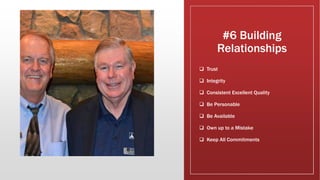
#6 Building
Relationships
 Trust
 Integrity
 Consistent Excellent Quality
 Be Personable
 Be Available
 Own up to a Mistake
 Keep All Commitments
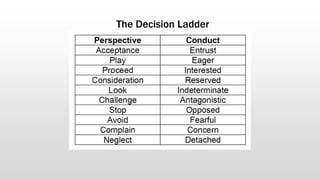
The Decision Ladder
Gary D. Seale – MBA Principal Trucon Communications 512-529-7045

The Six Step Selling Process.pptx

  • 1.
  • 2.
    Six Continuous Stepsin the Selling Process “Awareness Objective for this Slide Deck” 1. Prospecting (Individually and Corporately) Marketing Efforts 2. Preparation for a Presentation 3. The Presentation 4. Recognizing and Overcoming Objections ( Not Negotiating) 5. Asking for a Close – Securing the Agreement 6. Constantly Be Aware of Building a Relationship of Trust
  • 3.
    Identification and Classification TargetMarket Identification Be Specific, Have a definition: 1. Pursue 2. Delegate 3. Avoid Expenditure Potential? Can they pay? Will they cooperate? Class By Revenue Potential Group A Group B Class 1 Pursue >90% Max Attention <90% Class 2 Delegate Automate >90% Higher Frequency <90% Class 3 Monitor Avoid $ Threshold No Activity
  • 4.
    #1. Lead SourcingI Existing Accounts Dormant Accounts Lists from Public Sources: Chamber of Commerce, Local Business Journal Guides, Industrial Associations, Google, Thomas.net. Purchased Lists – Example: Data Axle, Hoovers/D&B
  • 5.
    Leading Sourcing -II Your Marketing Department Trade Show Participants / Exhibitor List (Exhibit – Walk the Floor – Attend Breakouts) ***LinkedIn Mining (A Definite Process) *** Drive your Territory – Look for Signs, Size, Freight Dock Activity, New Construction Ask your Existing Customers / Ask Sales Team Members from Non-Competitive Companies – They Have Empathy
  • 6.
    Lead Sourcing III YourWebsite Social Media Interaction *Requires consistent posting and Interaction Add Campaigns – Click Ads (With Caution) Newsletters with helpful content – Monitor Opens Landing Pages
  • 7.
    Lead Sourcing IV PersonalEvents: Receptions – Sports - Meals Networking – 3rd Party Hosts (Personal conversation with three to five people – Show up early – stay late) Webinars: Tools… Zoom – Microsoft – Google (You host or attend) YouTube Info Videos (Shoot, Edit, Upload, Post and include in advertising) White Papers from Reputable Sources – Post: LinkedIn, Slide Share, Twitter, Facebook (As a link back to a specific article from a website) Customer Meetings – Name Capture (Take notes)
  • 8.
    #2 Preparation Prospect’s needs? Presentto needs Prospect’s personality? Present to their style Prospect’s objections? Prep to answer / overcome Timeline to implement service / product? Your capabilities to provide Presentation materials? Slides, Demo stock, Papers, Third Party References, Guarantees, Contract terms Subject Matter Expert?
  • 9.
    #3 Presentation Present Needs– Confirm Needs Open ended questions Feature –What it is Advantage – What it does Benefit – What it does for the prospect Product demonstration Where are you in the close hierarchy? Next step? Action plan to achieve the goal? • Know your product • Know your company • Know your industry • Know your prospect
  • 10.
    #4 Overcoming Objections ▪Common Objections ▪ Price ▪ Features ▪ Service ▪ Delivery ▪ Terms ▪ Quantity ▪ Packaging
  • 11.
    #5 Closing THE LIFEBLOOD OF YOUR BUSINESS When to ask? What to say? Be firm, but reasonable. Don’t negotiate without an agreement. Delay Issues? Why did you win? Why did you not earn the business?
  • 12.
    #6 Building Relationships  Trust Integrity  Consistent Excellent Quality  Be Personable  Be Available  Own up to a Mistake  Keep All Commitments
  • 13.
  • 16.
    Gary D. Seale– MBA Principal Trucon Communications 512-529-7045