Laura Scherb, period 8
From the Renaissance to Pop Art

SELF PORTRAITS
SELF PORTRAITS
 A self portrait is representation of the artist, in
  any medium, as represented by the artist.
 This trend of creating self portraits first started in
  the mid 15th century when artists started to
  depict themselves as the main subject or an
  important character in their works.
 The purpose of self portraits is debated: some
  historians say that the self portrait emerged as a
  tool for self promotion, while others say it’s a
  tool for analyzing the self.
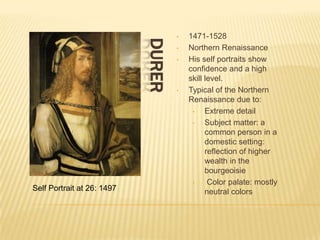
•   1471-1528


                            DURER
                                    •   Northern Renaissance
                                    •   His self portraits show
                                        confidence and a high
                                        skill level.
                                    •   Typical of the Northern
                                        Renaissance due to:
                                         •    Extreme detail
                                         •    Subject matter: a
                                              common person in a
                                              domestic setting:
                                              reflection of higher
                                              wealth in the
                                              bourgeoisie
                                         •     Color palate: mostly
Self Portrait at 26: 1497                     neutral colors
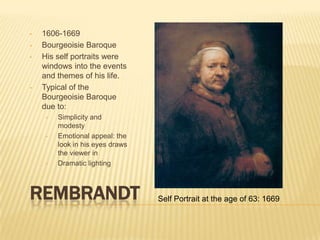
•   1606-1669
•   Bourgeoisie Baroque
•   His self portraits were
    windows into the events
    and themes of his life.
•   Typical of the
    Bourgeoisie Baroque
    due to:
     •   Simplicity and
         modesty
     •   Emotional appeal: the
         look in his eyes draws
         the viewer in
     •   Dramatic lighting


REMBRANDT                         Self Portrait at the age of 63: 1669
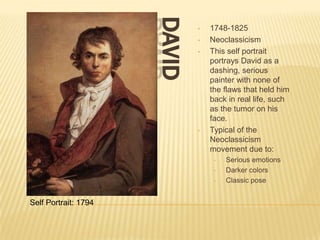
DAVID
                              •   1748-1825
                              •   Neoclassicism
                              •   This self portrait
                                  portrays David as a
                                  dashing, serious
                                  painter with none of
                                  the flaws that held him
                                  back in real life, such
                                  as the tumor on his
                                  face.
                              •   Typical of the
                                  Neoclassicism
                                  movement due to:
                                   •   Serious emotions
                                   •   Darker colors
                                   •   Classic pose


Self Portrait: 1794
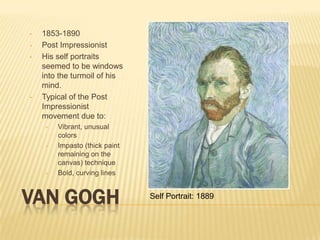
•   1853-1890
•   Post Impressionist
•   His self portraits
    seemed to be windows
    into the turmoil of his
    mind.
•   Typical of the Post
    Impressionist
    movement due to:
     •   Vibrant, unusual
         colors
     •   Impasto (thick paint
         remaining on the
         canvas) technique
     •   Bold, curving lines


VAN GOGH                        Self Portrait: 1889
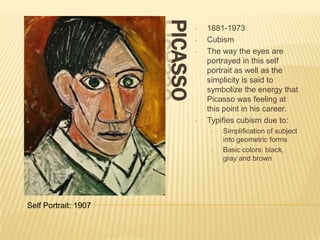
PICASSO
                                •   1881-1973
                                •   Cubism
                                •   The way the eyes are
                                    portrayed in this self
                                    portrait as well as the
                                    simplicity is said to
                                    symbolize the energy that
                                    Picasso was feeling at
                                    this point in his career.
                                •   Typifies cubism due to:
                                     •   Simplification of subject
                                         into geometric forms
                                     •   Basic colors: black,
                                         gray and brown


Self Portrait: 1907
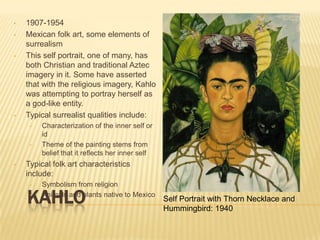
•   1907-1954
•   Mexican folk art, some elements of
    surrealism
•   This self portrait, one of many, has
    both Christian and traditional Aztec
    imagery in it. Some have asserted
    that with the religious imagery, Kahlo
    was attempting to portray herself as
    a god-like entity.
•   Typical surrealist qualities include:
     •   Characterization of the inner self or
         id
     •   Theme of the painting stems from
         belief that it reflects her inner self
•   Typical folk art characteristics
    include:
     •   Symbolism from religion

    KAHLO
     •   Animals and plants native to Mexico
                                                  Self Portrait with Thorn Necklace and
                                                  Hummingbird: 1940
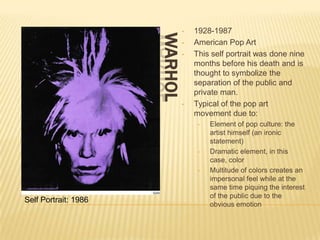
•   1928-1987


                      WARHOL
                               •   American Pop Art
                               •   This self portrait was done nine
                                   months before his death and is
                                   thought to symbolize the
                                   separation of the public and
                                   private man.
                               •   Typical of the pop art
                                   movement due to:
                                    •   Element of pop culture: the
                                        artist himself (an ironic
                                        statement)
                                    •   Dramatic element, in this
                                        case, color
                                    •   Multitude of colors creates an
                                        impersonal feel while at the
                                        same time piquing the interest
                                        of the public due to the
Self Portrait: 1986
                                        obvious emotion
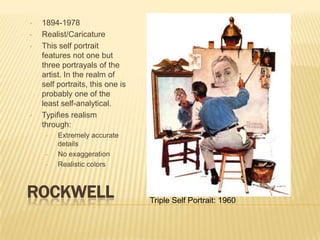
•   1894-1978
•   Realist/Caricature
•   This self portrait
    features not one but
    three portrayals of the
    artist. In the realm of
    self portraits, this one is
    probably one of the
    least self-analytical.
•   Typifies realism
    through:
     •   Extremely accurate
         details
     •   No exaggeration
     •   Realistic colors


ROCKWELL                          Triple Self Portrait: 1960
SELF PORTRAITS

   What’s the real purpose?
       In my opinion, the self portrait is a tool to examine
        who you are as a person.
   How do self portraits examine the self?
       Even though they’re not always accurate portrayals
        of the person, it’s evident through psychological
        examination how these people saw themselves.
   Why study self portraits?
       To give us insight into the minds of these artists and
        help us contrast styles not only in schools of art, but
        in ways to portray one’s self.
SELF PORTRAITS

 Studying self portraits fascinates me.
 Seeing how the artist sees themselves
  through their own eyes is enlightening and
  refreshing.
 My favorite self portrait that I studied was
  that of Van Gogh. The way he paints his face
  really gives you insight into the depth of
  emotion and the intellectual torment he was
  undergoing.
BIBLIOGRAPHY
   http://en.wikipedia.org/wiki/Self-portrait
   http://www.artchive.com/artchive/P/picasso.html
   http://www.fridakahlo.com/
   http://www.rembrandtpainting.net/rembrandt_painting
    _1636_54.htm
   http://www.albrecht-durer.org/
   http://www.vangoghgallery.com/misc/bio.html
   http://www.nrm.org/
   http://warhol.org/collection/art/selfportait.html
   http://en.wikipedia.org/wiki/jaques-louis-david
   http://picasso.fr.us/

Self portraits

  • 1.
    Laura Scherb, period8 From the Renaissance to Pop Art SELF PORTRAITS
  • 2.
    SELF PORTRAITS  Aself portrait is representation of the artist, in any medium, as represented by the artist.  This trend of creating self portraits first started in the mid 15th century when artists started to depict themselves as the main subject or an important character in their works.  The purpose of self portraits is debated: some historians say that the self portrait emerged as a tool for self promotion, while others say it’s a tool for analyzing the self.
  • 3.
    1471-1528 DURER • Northern Renaissance • His self portraits show confidence and a high skill level. • Typical of the Northern Renaissance due to: • Extreme detail • Subject matter: a common person in a domestic setting: reflection of higher wealth in the bourgeoisie • Color palate: mostly Self Portrait at 26: 1497 neutral colors
  • 4.
    1606-1669 • Bourgeoisie Baroque • His self portraits were windows into the events and themes of his life. • Typical of the Bourgeoisie Baroque due to: • Simplicity and modesty • Emotional appeal: the look in his eyes draws the viewer in • Dramatic lighting REMBRANDT Self Portrait at the age of 63: 1669
  • 5.
    DAVID • 1748-1825 • Neoclassicism • This self portrait portrays David as a dashing, serious painter with none of the flaws that held him back in real life, such as the tumor on his face. • Typical of the Neoclassicism movement due to: • Serious emotions • Darker colors • Classic pose Self Portrait: 1794
  • 6.
    1853-1890 • Post Impressionist • His self portraits seemed to be windows into the turmoil of his mind. • Typical of the Post Impressionist movement due to: • Vibrant, unusual colors • Impasto (thick paint remaining on the canvas) technique • Bold, curving lines VAN GOGH Self Portrait: 1889
  • 7.
    PICASSO • 1881-1973 • Cubism • The way the eyes are portrayed in this self portrait as well as the simplicity is said to symbolize the energy that Picasso was feeling at this point in his career. • Typifies cubism due to: • Simplification of subject into geometric forms • Basic colors: black, gray and brown Self Portrait: 1907
  • 8.
    1907-1954 • Mexican folk art, some elements of surrealism • This self portrait, one of many, has both Christian and traditional Aztec imagery in it. Some have asserted that with the religious imagery, Kahlo was attempting to portray herself as a god-like entity. • Typical surrealist qualities include: • Characterization of the inner self or id • Theme of the painting stems from belief that it reflects her inner self • Typical folk art characteristics include: • Symbolism from religion KAHLO • Animals and plants native to Mexico Self Portrait with Thorn Necklace and Hummingbird: 1940
  • 9.
    1928-1987 WARHOL • American Pop Art • This self portrait was done nine months before his death and is thought to symbolize the separation of the public and private man. • Typical of the pop art movement due to: • Element of pop culture: the artist himself (an ironic statement) • Dramatic element, in this case, color • Multitude of colors creates an impersonal feel while at the same time piquing the interest of the public due to the Self Portrait: 1986 obvious emotion
  • 10.
    1894-1978 • Realist/Caricature • This self portrait features not one but three portrayals of the artist. In the realm of self portraits, this one is probably one of the least self-analytical. • Typifies realism through: • Extremely accurate details • No exaggeration • Realistic colors ROCKWELL Triple Self Portrait: 1960
  • 11.
    SELF PORTRAITS  What’s the real purpose?  In my opinion, the self portrait is a tool to examine who you are as a person.  How do self portraits examine the self?  Even though they’re not always accurate portrayals of the person, it’s evident through psychological examination how these people saw themselves.  Why study self portraits?  To give us insight into the minds of these artists and help us contrast styles not only in schools of art, but in ways to portray one’s self.
  • 12.
    SELF PORTRAITS  Studyingself portraits fascinates me.  Seeing how the artist sees themselves through their own eyes is enlightening and refreshing.  My favorite self portrait that I studied was that of Van Gogh. The way he paints his face really gives you insight into the depth of emotion and the intellectual torment he was undergoing.
  • 13.
    BIBLIOGRAPHY  http://en.wikipedia.org/wiki/Self-portrait  http://www.artchive.com/artchive/P/picasso.html  http://www.fridakahlo.com/  http://www.rembrandtpainting.net/rembrandt_painting _1636_54.htm  http://www.albrecht-durer.org/  http://www.vangoghgallery.com/misc/bio.html  http://www.nrm.org/  http://warhol.org/collection/art/selfportait.html  http://en.wikipedia.org/wiki/jaques-louis-david  http://picasso.fr.us/