Developing Knowledge for Economic
    Advancement in Africa: 2nd International
    Conference on African Digital Libraries &
             Archives (ICADLA-2)

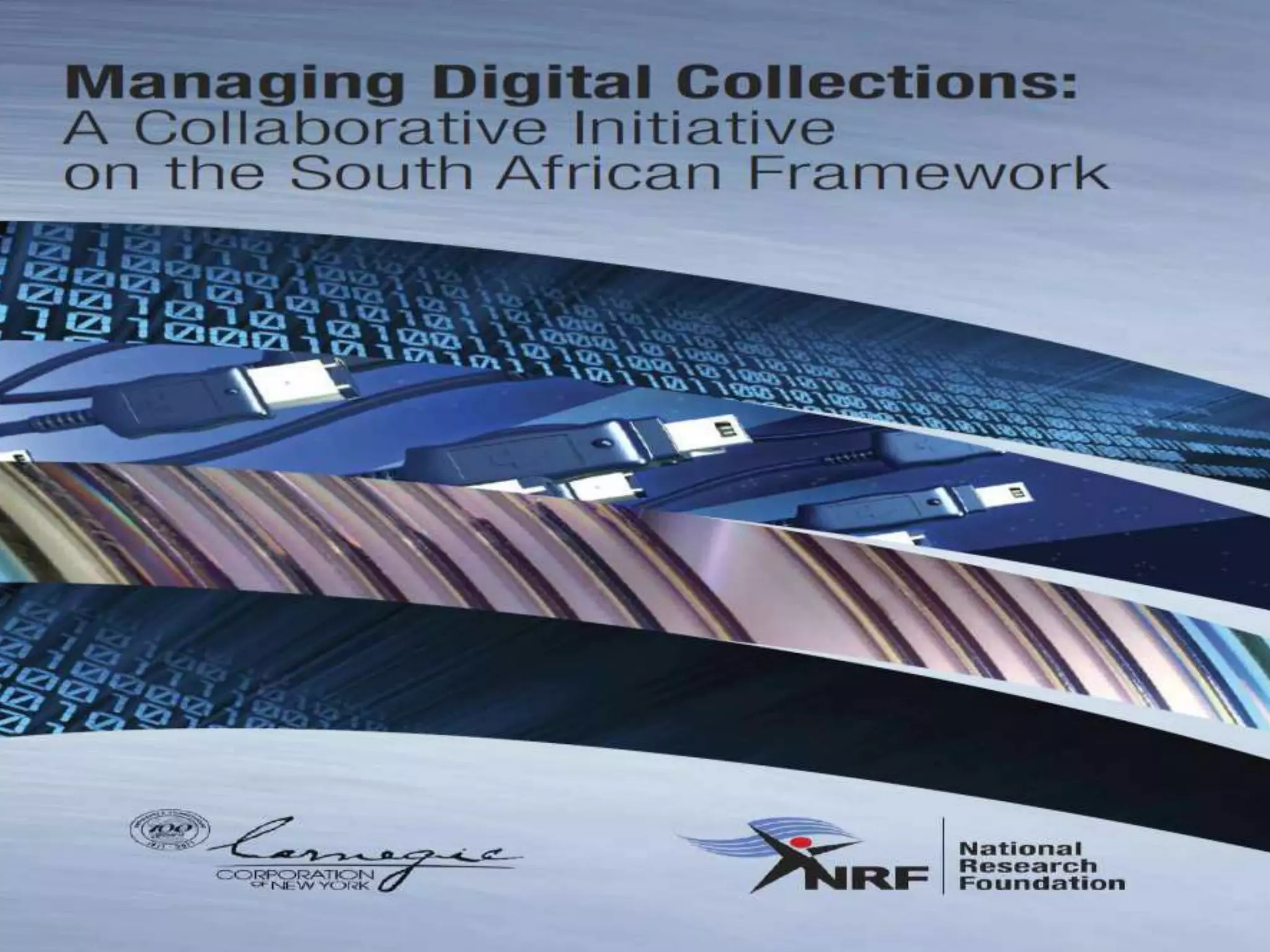
Managing Digital Collections: A South African collaborative
                          initiative

                  University of the Witwatersrand

                  18 November 2011

                  Dr Daisy Selematsela
                  Executive Director : Knowledge Management & Evaluation
History – National Digitisation Initiative


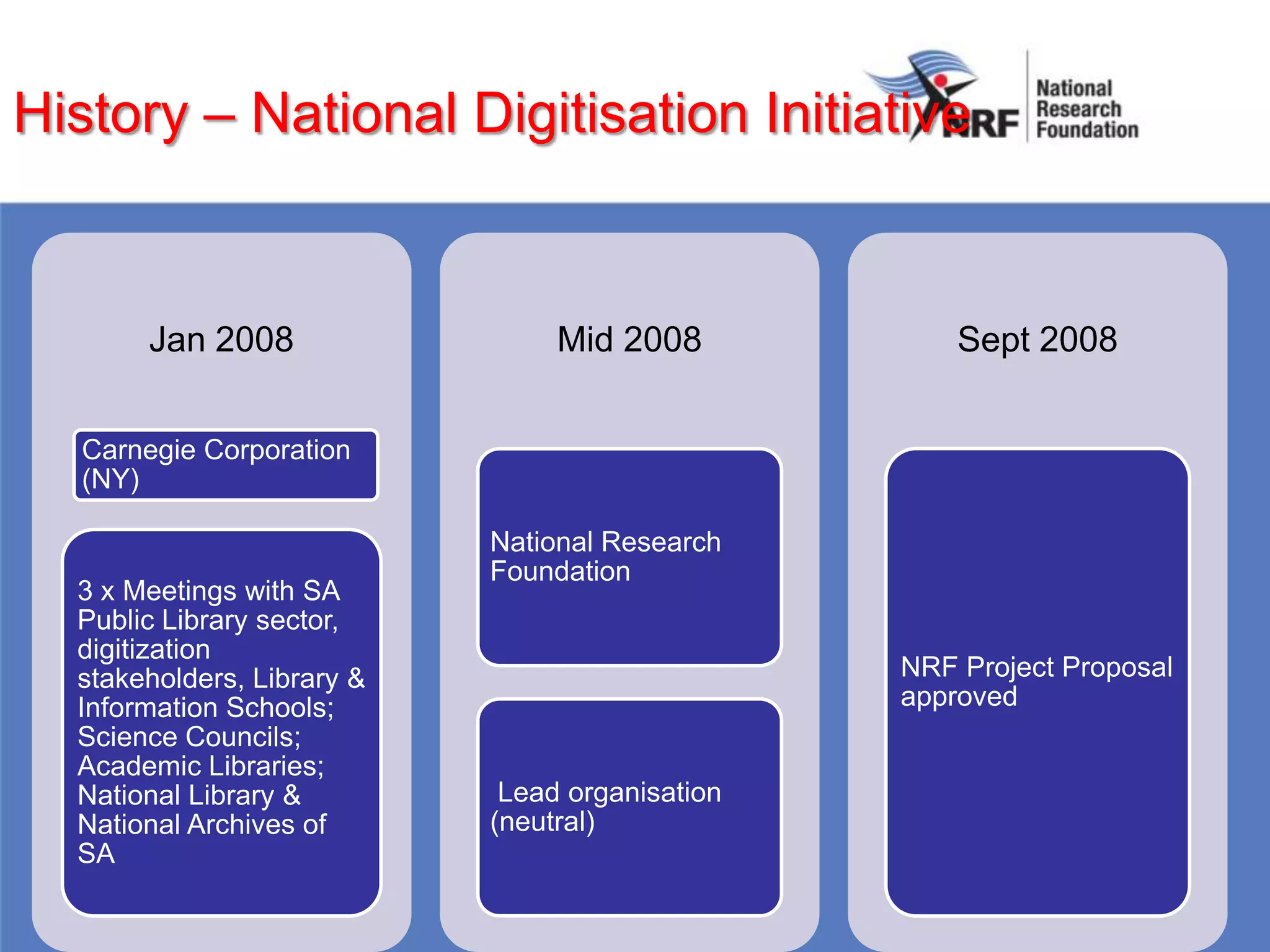
       Jan 2008                  Mid 2008            Sept 2008


   Carnegie Corporation
   (NY)

                            National Research
                            Foundation
  3 x Meetings with SA
  Public Library sector,
  digitization
  stakeholders, Library &                        NRF Project Proposal
  Information Schools;                           approved
  Science Councils;
  Academic Libraries;
  National Library &         Lead organisation
  National Archives of      (neutral)
  SA
                                                                        2
History – National Digitisation Initiative


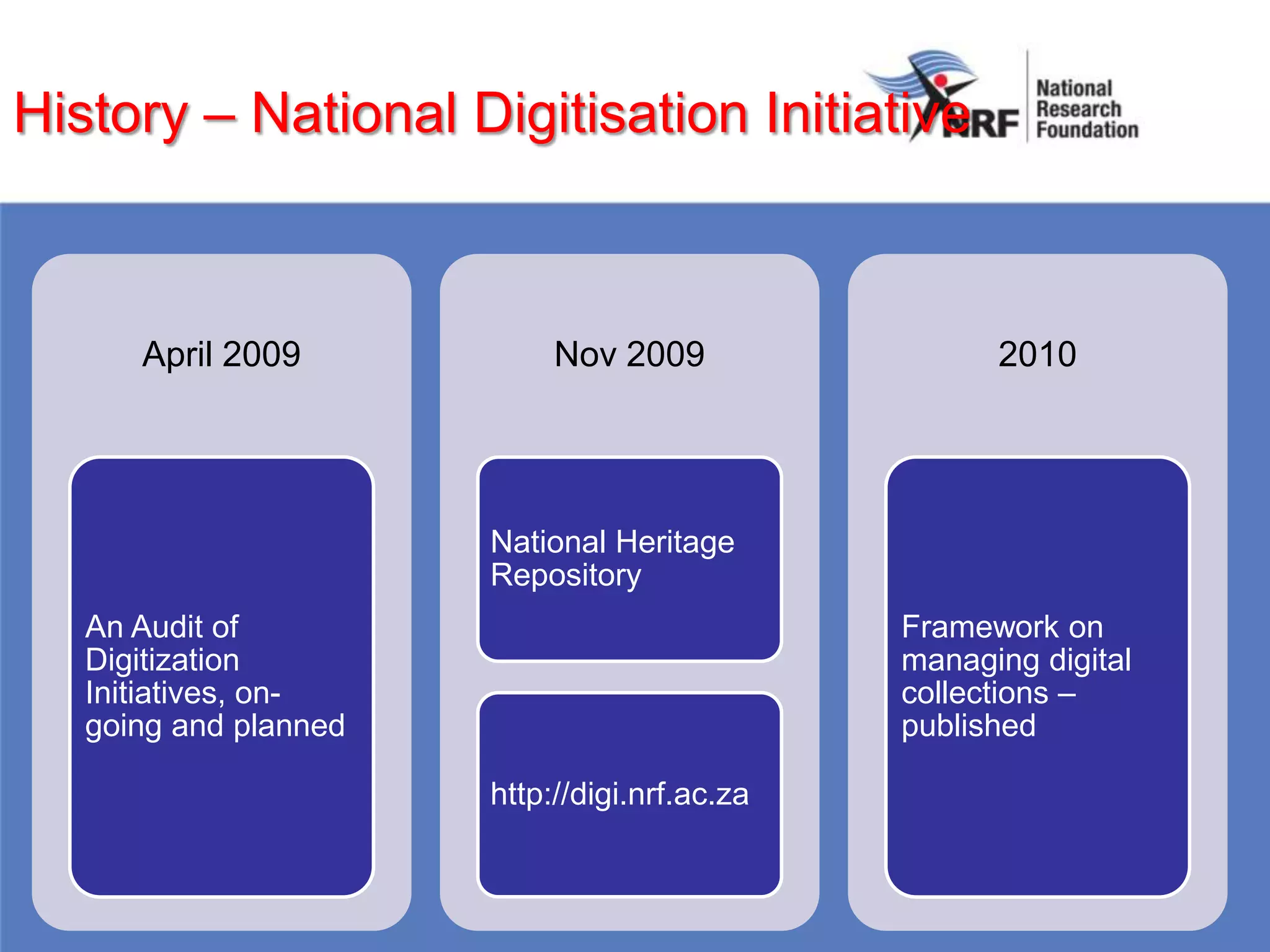
      April 2009            Nov 2009                 2010


                       National Heritage
                       Repository
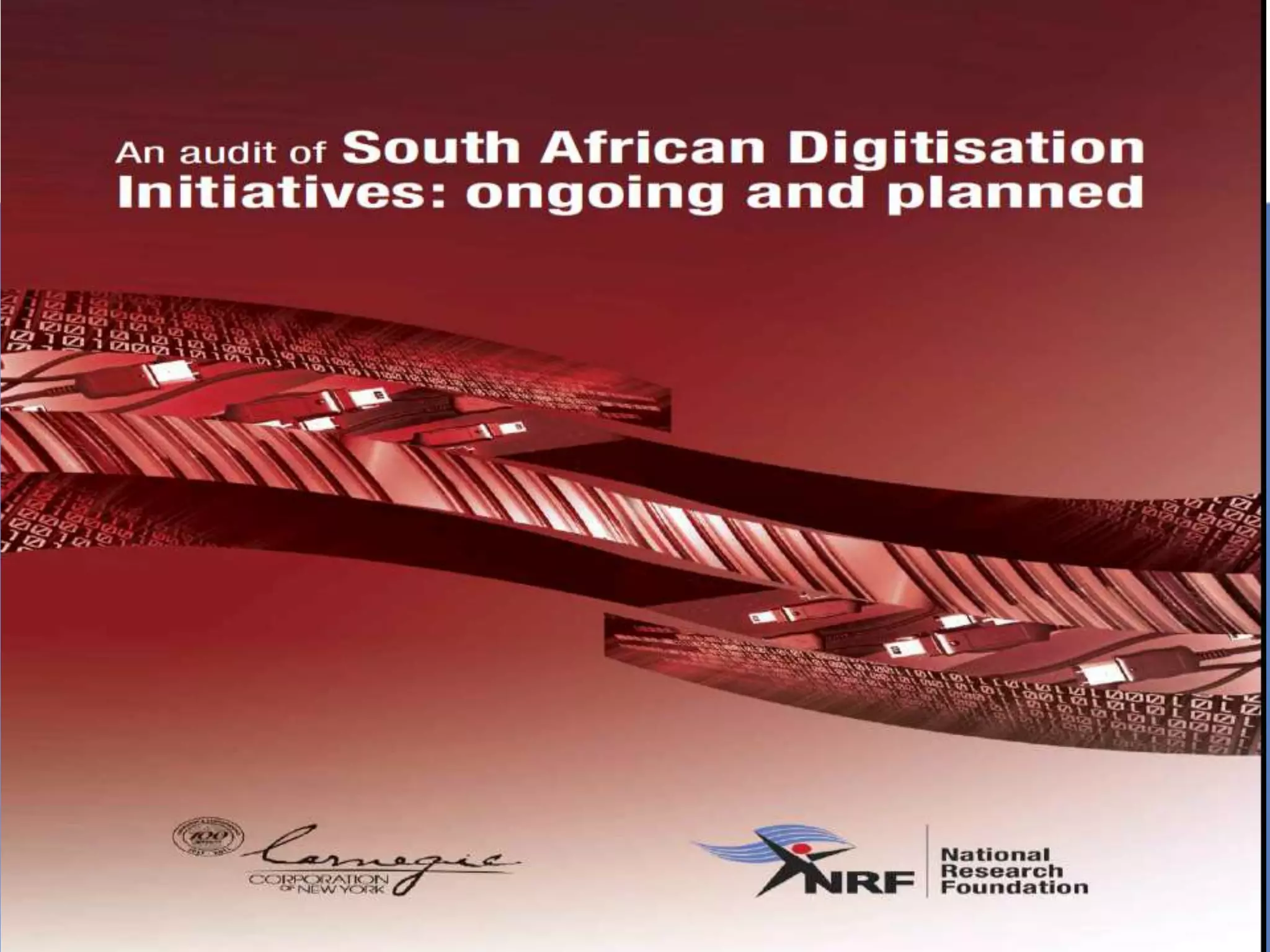
   An Audit of                                 Framework on
   Digitization                                managing digital
   Initiatives, on-                            collections –
   going and planned                           published

                       http://digi.nrf.ac.za

                                                                  3
History – National Digitisation Initiative


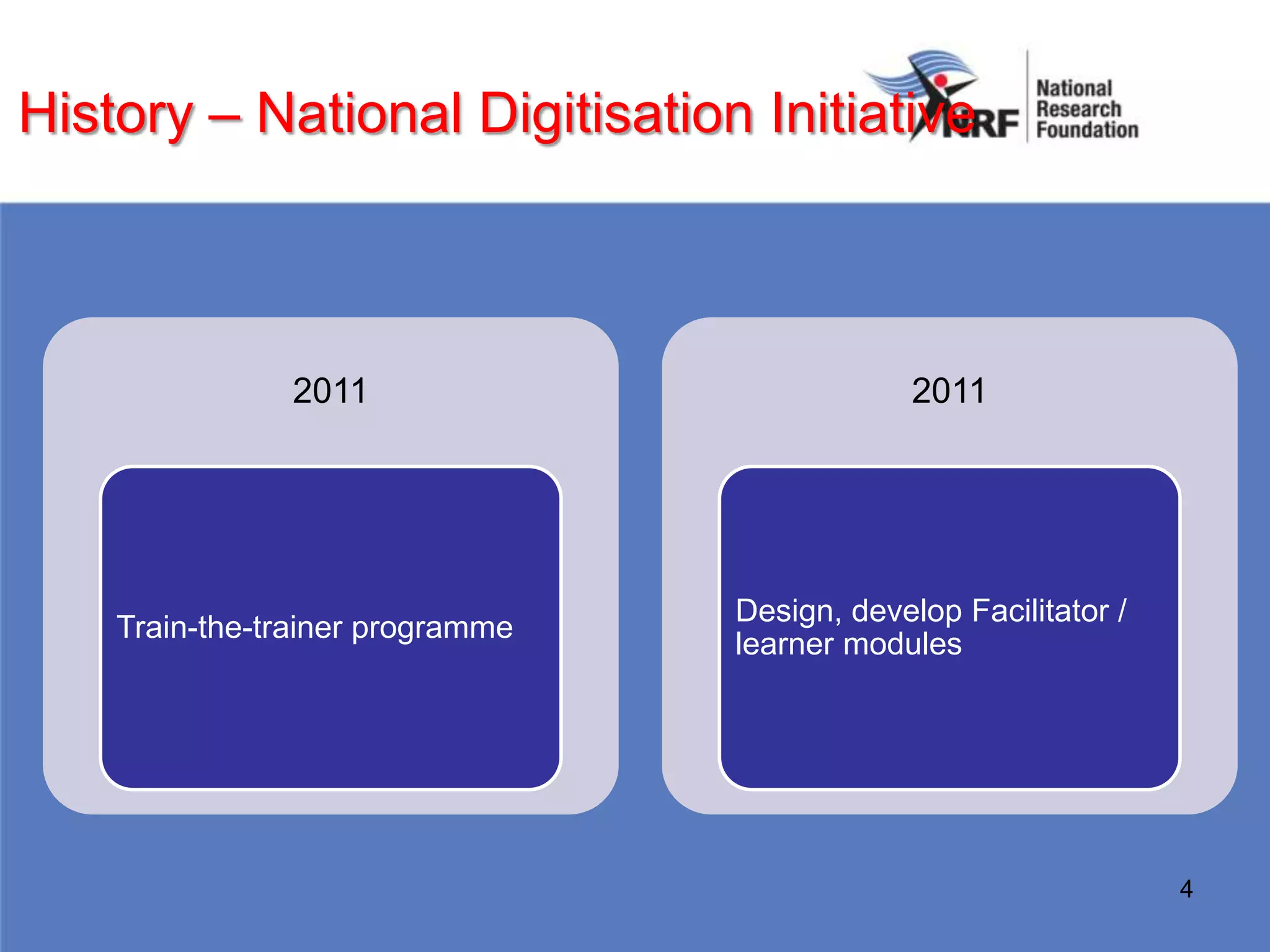
               2011                            2011


                                  Design, develop Facilitator /
    Train-the-trainer programme
                                  learner modules


                                                                  4
NRF lead organisation?

  • NRF has no authority over libraries

  • What is acknowledged is the independence &
    neutrality with the National System of Innovation

  • Established by Act of Parliament (23 of 1998)


                                                        5
6
Project mandate

• State of digitisation &
  nationwide digi initiatives

• Establishment of national
  portal/database

• Production of digi manual,
  templates, standards &
  policies
• Digitisation & Preservation
  Center (technical support,
  training, knowledge sharing).
                                  7
Elements – Audit of Digi initiatives


   • Identify whom & which institutions are
     involved in digi projects;
   • Identify potential projects for digi in SA;
   • Est. on basis of frequency, priority
     areas/content for potential digi projects &
     provide preliminary list for discussion with
     stakeholders;
   • Provide list of current/ongoing projects,
     to facilitate reduction of unnecessary
                                                  8
     duplication;
Elements – Audit of Digi initiatives


  • Reaffirm as appropriate the merits of a
    digi center, its activities & potential
    governance structure;
  • Collect data & information for the est. of a
    portal for digi projects that will ensure
    accessibility;
  • Identify levels of expertise/skills
    availability in digitisation across
    institutions;
                                                   9
Elements – Audit of Digi initiatives

 • Establish digitisation needs, i.e skills, expertise,
   knowledge, infrastructure requirements;
 • generate a national database & hardcopy report
   for stakeholder access – this would describe the:
    –   Content of collections
    –   Types of material
    –   Coverage of subject areas
    –   Motivation for digitising each collection
    –   Status of the levels of expertise in holding institutions
    –   Availability of hardware, software and systems
    –   Connectivity at the institutions, and
    –   Policies and procedures presently followed in relation to digital data
                                                                            10
11
Audit findings - overview

 • Major concerns (and misunderstanding) re „copyright‟
 • Much digitisation activity, a great deal by part-timers
 • Organisational operational budgets, simple equipment & infrastructure
   widely employed
 • Many collections availabe on Open Access websites
 • Some institutions expanding teams a& upgrading facilities
 • Some large-scale undertakings Freedom Struggle, Rock Art, ILAM
   ethnic music
 • Some world class outputs
 • Many untouched collections – probably under reported
 • Standards are reasonably well managed
 • Awareness of the need for long-term sustainability, but few plans
 • Need for capacity building & skills upgrading: training, advice from
   specialists and peer workshopping                                    12
Objective of Framework document


  • Provide high-level principles for planning
    and managing the full digital collection life
    cycle.


                                                    13
14
Aims of Framework document

• Provide overview of components & activities involved in
  creating good digital collections
• Provide a sense of the landscape of digital collections
  management
• Identify existing resources that support the development of
  sound local practices
• Encourage community participation in best practices for
  digital collection building
• Contribute to the benefits of sound data management
  practices, data sharing & long term access
• Introduce data management & curation issues
                                                        15
Aims of Framework document

• Assist cultural heritage organisations to create &
  manage complex digital collections
• Assist funding organisations who wish to
  encourage & support the development of good
  digital collections
• Advocate the use of internationally-created
  appropriate open community standards to ensure
  quality & to increase global interoperability for
  better exchange & re-use of data & digital content.

                                                        16
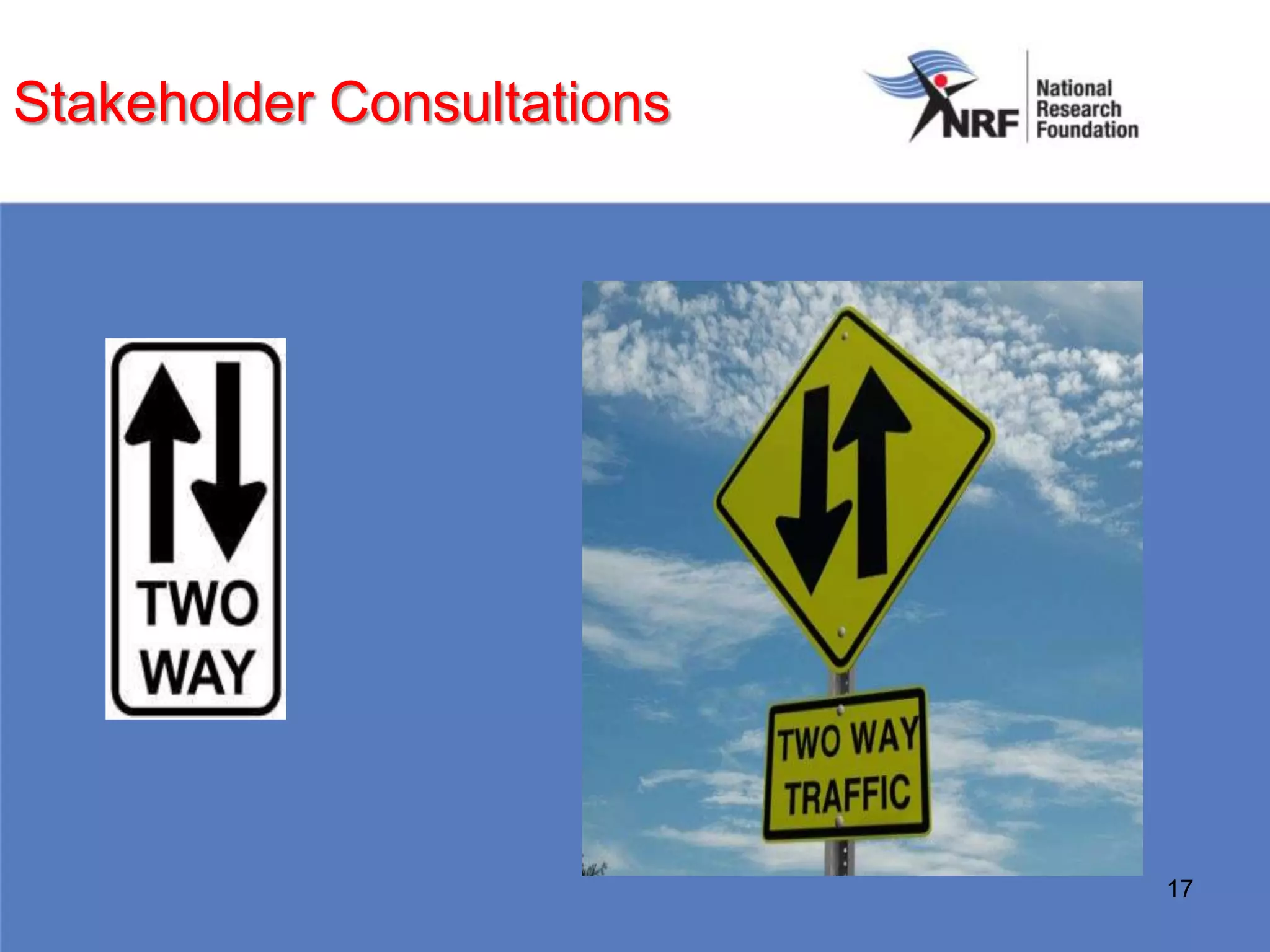
Stakeholder Consultations


                            17
Train-the-trainer Programme

National training programme (Managing Digital
Collections Workshop – 5 days)
      23 facilitators
      modules:
            1. Organisational stages of digital
                   preservation
            2. Preservation metadata management
            3. Digital preservation trends
            4. Resources Framework
            5. Readiness
                                                  18
            6. Principles of Presenting
Train-the-trainer Programme

• Toolkit focus: Facilitator/Learner training material
• South African Qualifications Authority:
• Unit standard: 15228 Advice on the establishment and
  implementation of a quality management system for
  skills development practices in an organisation (Level
  5/20 Credits)
  –   Purpose
  –   Unit Outcomes
  –   Assessment strategy
  –   Quality assurance
  –   Resources                                     19
What are we now?

  1. Department of Arts & Culture (Republic of SA)
      Input to National Policy on the Digitisation of Heritage
       Resources
      Input to Skills framework


  2. Facilitator / learner modules
      Design in collaboration with Centre for Curriculum
       Development (University of South Africa)


                                                              20
Implications for alignment of practices
across countries/institutions

• Technical digitisation support & services to institutions
  without “know how”.
• Provide/mobilize experts to conduct training & support
  for institutions/persons that would like to embark on
  digitisation /digital preservation initiatives
• Facilitate the sharing of knowledge.
• Collaborate on digitisation & digital data preservation
  initiatives.


                                                       21
Lessons learned!

  • Requirement for:

    – Technical Advisory Group

    – Advisory Body/Committee


                                 22
Enkosi, Thank you, Re a leboga, Siyabonga, Dankie

Selematsela icadla presentation

  • 1.
    Developing Knowledge forEconomic Advancement in Africa: 2nd International Conference on African Digital Libraries & Archives (ICADLA-2) Managing Digital Collections: A South African collaborative initiative University of the Witwatersrand 18 November 2011 Dr Daisy Selematsela Executive Director : Knowledge Management & Evaluation
  • 2.
    History – NationalDigitisation Initiative Jan 2008 Mid 2008 Sept 2008 Carnegie Corporation (NY) National Research Foundation 3 x Meetings with SA Public Library sector, digitization stakeholders, Library & NRF Project Proposal Information Schools; approved Science Councils; Academic Libraries; National Library & Lead organisation National Archives of (neutral) SA 2
  • 3.
    History – NationalDigitisation Initiative April 2009 Nov 2009 2010 National Heritage Repository An Audit of Framework on Digitization managing digital Initiatives, on- collections – going and planned published http://digi.nrf.ac.za 3
  • 4.
    History – NationalDigitisation Initiative 2011 2011 Design, develop Facilitator / Train-the-trainer programme learner modules 4
  • 5.
    NRF lead organisation? • NRF has no authority over libraries • What is acknowledged is the independence & neutrality with the National System of Innovation • Established by Act of Parliament (23 of 1998) 5
  • 6.
  • 7.
    Project mandate • Stateof digitisation & nationwide digi initiatives • Establishment of national portal/database • Production of digi manual, templates, standards & policies • Digitisation & Preservation Center (technical support, training, knowledge sharing). 7
  • 8.
    Elements – Auditof Digi initiatives • Identify whom & which institutions are involved in digi projects; • Identify potential projects for digi in SA; • Est. on basis of frequency, priority areas/content for potential digi projects & provide preliminary list for discussion with stakeholders; • Provide list of current/ongoing projects, to facilitate reduction of unnecessary 8 duplication;
  • 9.
    Elements – Auditof Digi initiatives • Reaffirm as appropriate the merits of a digi center, its activities & potential governance structure; • Collect data & information for the est. of a portal for digi projects that will ensure accessibility; • Identify levels of expertise/skills availability in digitisation across institutions; 9
  • 10.
    Elements – Auditof Digi initiatives • Establish digitisation needs, i.e skills, expertise, knowledge, infrastructure requirements; • generate a national database & hardcopy report for stakeholder access – this would describe the: – Content of collections – Types of material – Coverage of subject areas – Motivation for digitising each collection – Status of the levels of expertise in holding institutions – Availability of hardware, software and systems – Connectivity at the institutions, and – Policies and procedures presently followed in relation to digital data 10
  • 11.
  • 12.
    Audit findings -overview • Major concerns (and misunderstanding) re „copyright‟ • Much digitisation activity, a great deal by part-timers • Organisational operational budgets, simple equipment & infrastructure widely employed • Many collections availabe on Open Access websites • Some institutions expanding teams a& upgrading facilities • Some large-scale undertakings Freedom Struggle, Rock Art, ILAM ethnic music • Some world class outputs • Many untouched collections – probably under reported • Standards are reasonably well managed • Awareness of the need for long-term sustainability, but few plans • Need for capacity building & skills upgrading: training, advice from specialists and peer workshopping 12
  • 13.
    Objective of Frameworkdocument • Provide high-level principles for planning and managing the full digital collection life cycle. 13
  • 14.
  • 15.
    Aims of Frameworkdocument • Provide overview of components & activities involved in creating good digital collections • Provide a sense of the landscape of digital collections management • Identify existing resources that support the development of sound local practices • Encourage community participation in best practices for digital collection building • Contribute to the benefits of sound data management practices, data sharing & long term access • Introduce data management & curation issues 15
  • 16.
    Aims of Frameworkdocument • Assist cultural heritage organisations to create & manage complex digital collections • Assist funding organisations who wish to encourage & support the development of good digital collections • Advocate the use of internationally-created appropriate open community standards to ensure quality & to increase global interoperability for better exchange & re-use of data & digital content. 16
  • 17.
  • 18.
    Train-the-trainer Programme National trainingprogramme (Managing Digital Collections Workshop – 5 days) 23 facilitators modules: 1. Organisational stages of digital preservation 2. Preservation metadata management 3. Digital preservation trends 4. Resources Framework 5. Readiness 18 6. Principles of Presenting
  • 19.
    Train-the-trainer Programme • Toolkitfocus: Facilitator/Learner training material • South African Qualifications Authority: • Unit standard: 15228 Advice on the establishment and implementation of a quality management system for skills development practices in an organisation (Level 5/20 Credits) – Purpose – Unit Outcomes – Assessment strategy – Quality assurance – Resources 19
  • 20.
    What are wenow? 1. Department of Arts & Culture (Republic of SA)  Input to National Policy on the Digitisation of Heritage Resources  Input to Skills framework 2. Facilitator / learner modules  Design in collaboration with Centre for Curriculum Development (University of South Africa) 20
  • 21.
    Implications for alignmentof practices across countries/institutions • Technical digitisation support & services to institutions without “know how”. • Provide/mobilize experts to conduct training & support for institutions/persons that would like to embark on digitisation /digital preservation initiatives • Facilitate the sharing of knowledge. • Collaborate on digitisation & digital data preservation initiatives. 21
  • 22.
    Lessons learned! • Requirement for: – Technical Advisory Group – Advisory Body/Committee 22
  • 23.
    Enkosi, Thank you,Re a leboga, Siyabonga, Dankie