SELECTION OF
ABUTMENT TEETH
Submitted by: Lana Michael
IVth year
DEFINITION
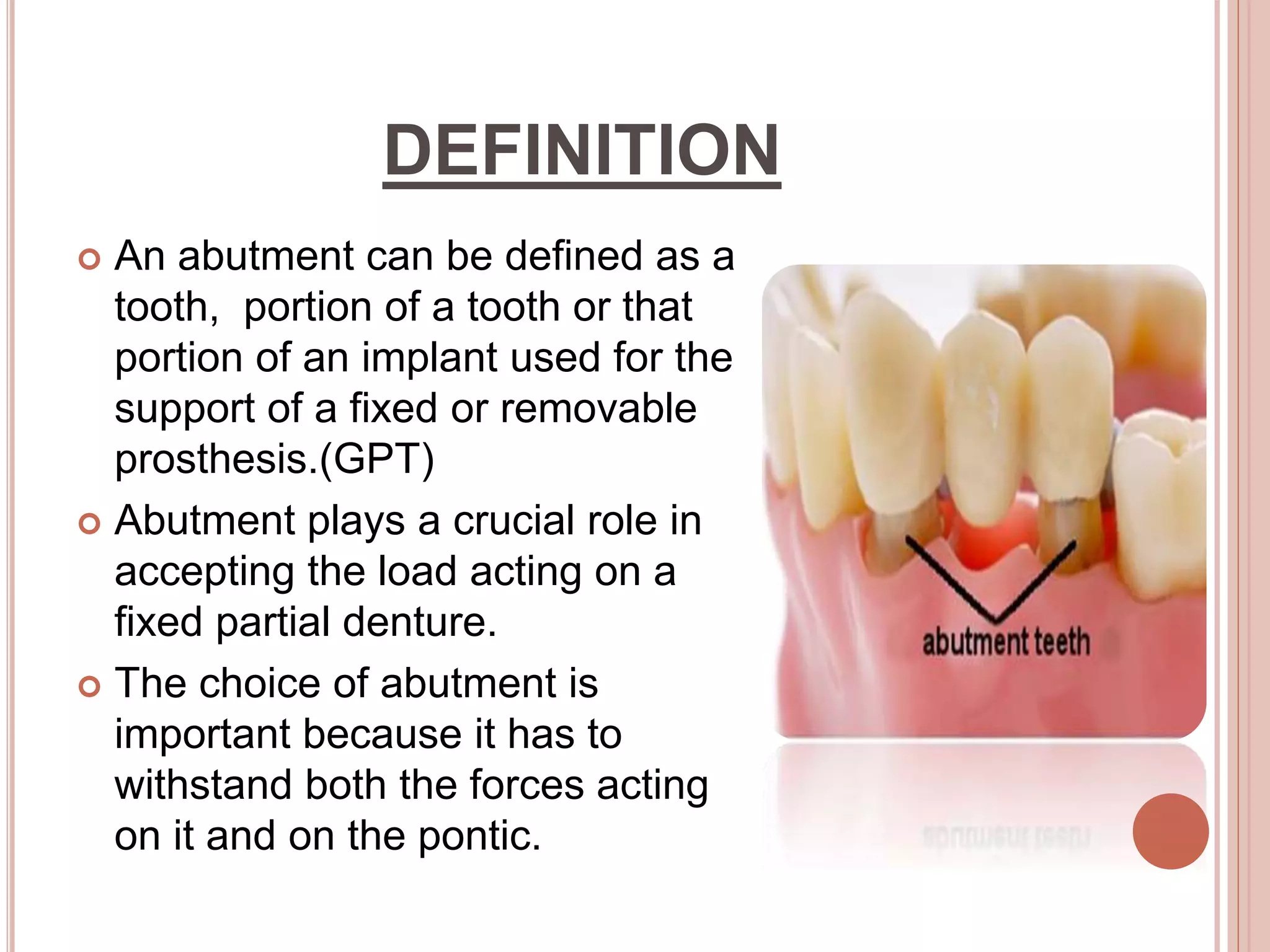
 An abutment can be defined as a
tooth, portion of a tooth or that
portion of an implant used for the
support of a fixed or removable
prosthesis.(GPT)
 Abutment plays a crucial role in
accepting the load acting on a
fixed partial denture.
 The choice of abutment is
important because it has to
withstand both the forces acting
on it and on the pontic.
FACTORS INFLUENCING THE
CHOICE OF AN ABUTMENT
Tooth
Gingivo-
periodontal
complex
Root
• Location
• Position
• Form
• Condition
• Crown-root
ratio
• Root
configuration
• Gingiva
• Periodontium
LOCATION, POSITION AND CONDITION OF
THE TOOTH
Characteristics of the preferred abutment:
 Teeth adjacent to edentulous spaces
 Teeth with grossly decayed crowns that can be
restored with a full veneer crown
 Modifications like dowel core and pin retained
amalgam restorations-needed to restore crown
morphology in grossly destructed teeth
 Vital teeth are preferred, though endodontic teeth can
be used
 Pulp capped teeth cannot be used as they are
always under risk of RCT
CROWN-ROOT RATIO
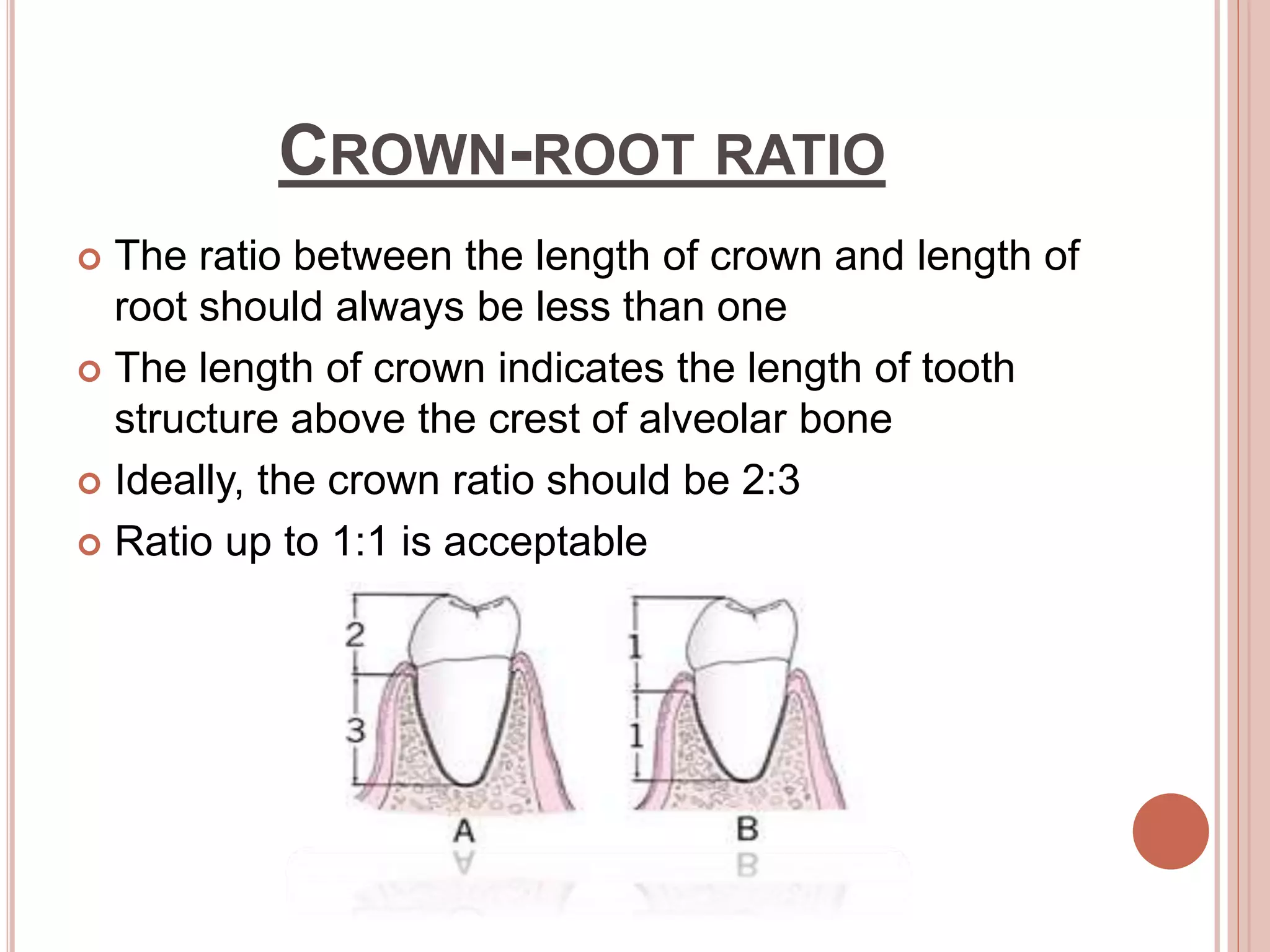
 The ratio between the length of crown and length of
root should always be less than one
 The length of crown indicates the length of tooth
structure above the crest of alveolar bone
 Ideally, the crown ratio should be 2:3
 Ratio up to 1:1 is acceptable
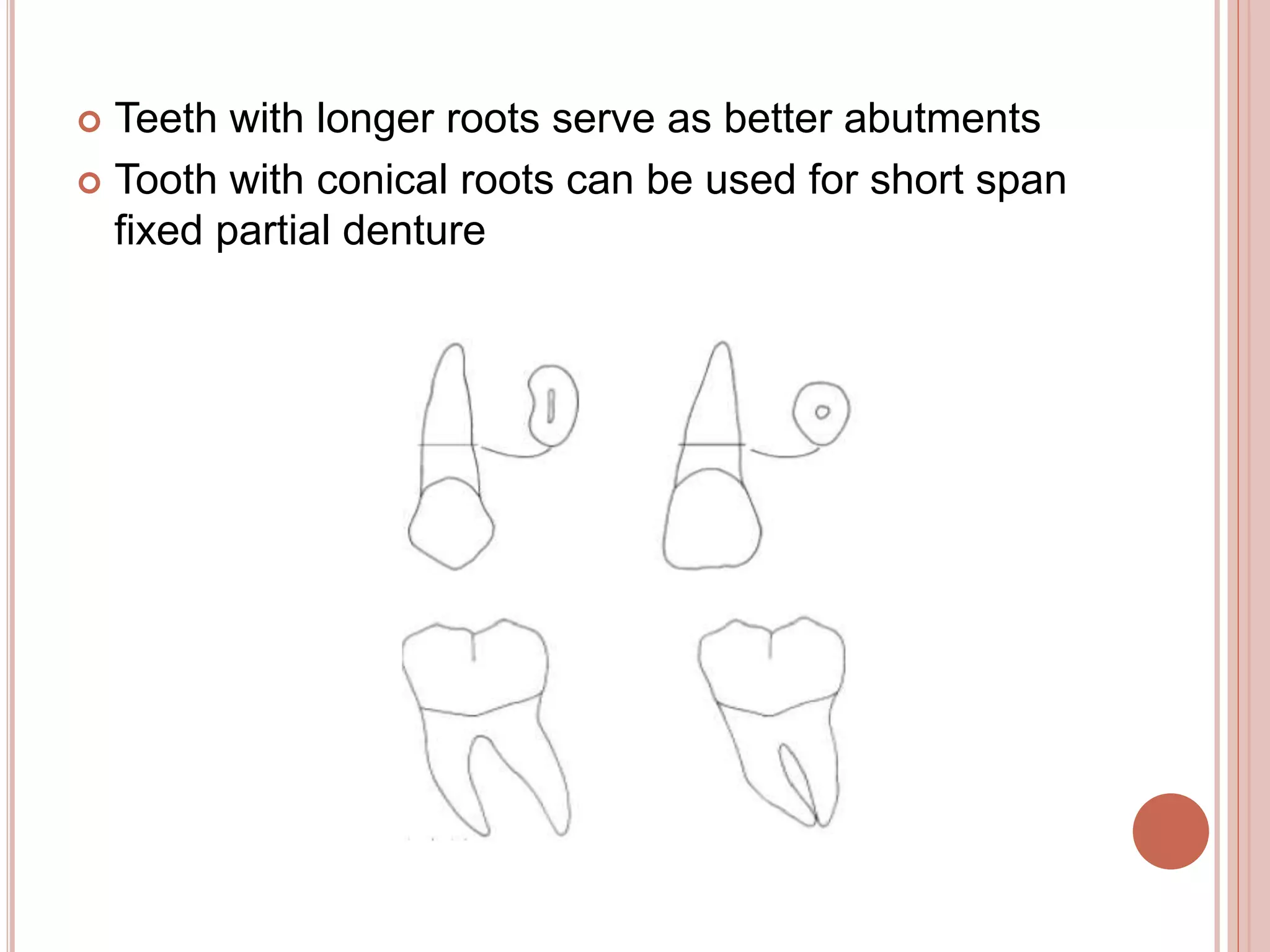
ROOT CONFIGURATION
 The forces acting on tooth are transferred to supporting
bone through the root.
 The shape of the root determines the ability of the
abutment to transfer the masticatory load to the
supporting bone.
Facts:
 Roots with greater labiolingual widths are preferred
 Roots with irregular curvature are preferred
 Teeth with longer roots serve as better abutments
 Tooth with conical roots can be used for short span
fixed partial denture
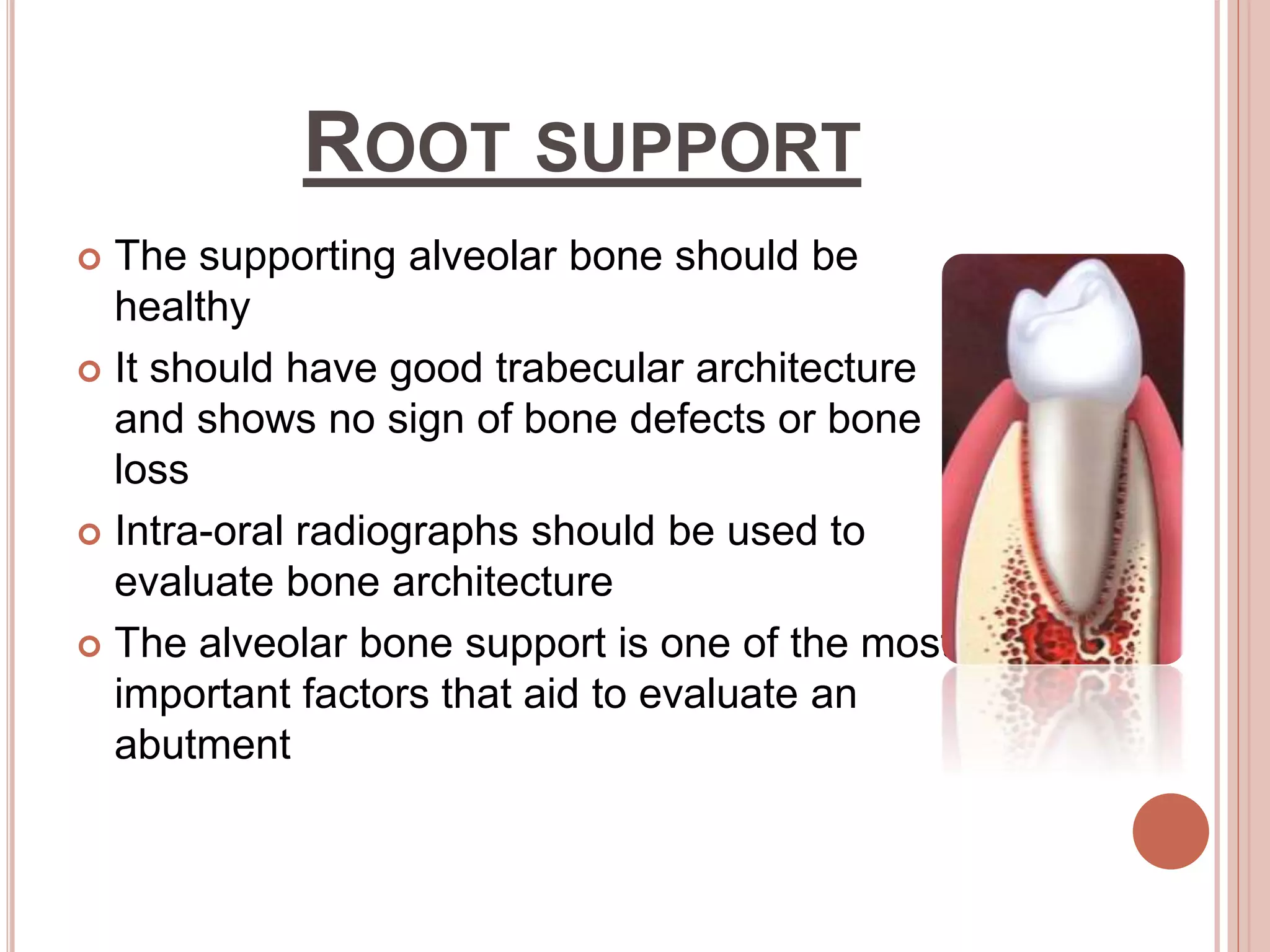
ROOT SUPPORT
 The supporting alveolar bone should be
healthy
 It should have good trabecular architecture
and shows no sign of bone defects or bone
loss
 Intra-oral radiographs should be used to
evaluate bone architecture
 The alveolar bone support is one of the most
important factors that aid to evaluate an
abutment
PERIODONTAL LIGAMENT AREA
 It can be used as a measurement or scale to
determine the potency of the abutment
 Tylman stated that the two abutment teeth could
support two pontics
 Johnston et al improvised Tylman’s statement and
proposed the famous Ante’s law
ANTE’S LAW
 The sum of the pericemental areas of the abutment
teeth should be equal to or greater than the tooth to be
replaced
 The periodontal area of the abutment should be
calculated and if it is not sufficient then an additional
tooth should be used as a secondary abutment
ASSESSMENT OF PULPAL HEALTH
 Usually unrestored abutments are preferred
 If caries is present, regular preparation can be done
 If large caries lesions are present they should be
scooped out and can be used for additional
retentions
 If the abutment tooth has a carious lesion with
pulpal involvement the RCT is advised. RCT not
advised for abutments with periapical lesion
Selection of Abutment Teeth

Selection of Abutment Teeth

  • 1.
    SELECTION OF ABUTMENT TEETH Submittedby: Lana Michael IVth year
  • 2.
    DEFINITION  An abutmentcan be defined as a tooth, portion of a tooth or that portion of an implant used for the support of a fixed or removable prosthesis.(GPT)  Abutment plays a crucial role in accepting the load acting on a fixed partial denture.  The choice of abutment is important because it has to withstand both the forces acting on it and on the pontic.
  • 3.
    FACTORS INFLUENCING THE CHOICEOF AN ABUTMENT Tooth Gingivo- periodontal complex Root • Location • Position • Form • Condition • Crown-root ratio • Root configuration • Gingiva • Periodontium
  • 4.
    LOCATION, POSITION ANDCONDITION OF THE TOOTH Characteristics of the preferred abutment:  Teeth adjacent to edentulous spaces  Teeth with grossly decayed crowns that can be restored with a full veneer crown  Modifications like dowel core and pin retained amalgam restorations-needed to restore crown morphology in grossly destructed teeth  Vital teeth are preferred, though endodontic teeth can be used  Pulp capped teeth cannot be used as they are always under risk of RCT
  • 5.
    CROWN-ROOT RATIO  Theratio between the length of crown and length of root should always be less than one  The length of crown indicates the length of tooth structure above the crest of alveolar bone  Ideally, the crown ratio should be 2:3  Ratio up to 1:1 is acceptable
  • 6.
    ROOT CONFIGURATION  Theforces acting on tooth are transferred to supporting bone through the root.  The shape of the root determines the ability of the abutment to transfer the masticatory load to the supporting bone. Facts:  Roots with greater labiolingual widths are preferred  Roots with irregular curvature are preferred
  • 7.
     Teeth withlonger roots serve as better abutments  Tooth with conical roots can be used for short span fixed partial denture
  • 8.
    ROOT SUPPORT  Thesupporting alveolar bone should be healthy  It should have good trabecular architecture and shows no sign of bone defects or bone loss  Intra-oral radiographs should be used to evaluate bone architecture  The alveolar bone support is one of the most important factors that aid to evaluate an abutment
  • 9.
    PERIODONTAL LIGAMENT AREA It can be used as a measurement or scale to determine the potency of the abutment  Tylman stated that the two abutment teeth could support two pontics  Johnston et al improvised Tylman’s statement and proposed the famous Ante’s law
  • 10.
    ANTE’S LAW  Thesum of the pericemental areas of the abutment teeth should be equal to or greater than the tooth to be replaced  The periodontal area of the abutment should be calculated and if it is not sufficient then an additional tooth should be used as a secondary abutment
  • 11.
    ASSESSMENT OF PULPALHEALTH  Usually unrestored abutments are preferred  If caries is present, regular preparation can be done  If large caries lesions are present they should be scooped out and can be used for additional retentions  If the abutment tooth has a carious lesion with pulpal involvement the RCT is advised. RCT not advised for abutments with periapical lesion