Lesson 10
SEDIMENT CELL
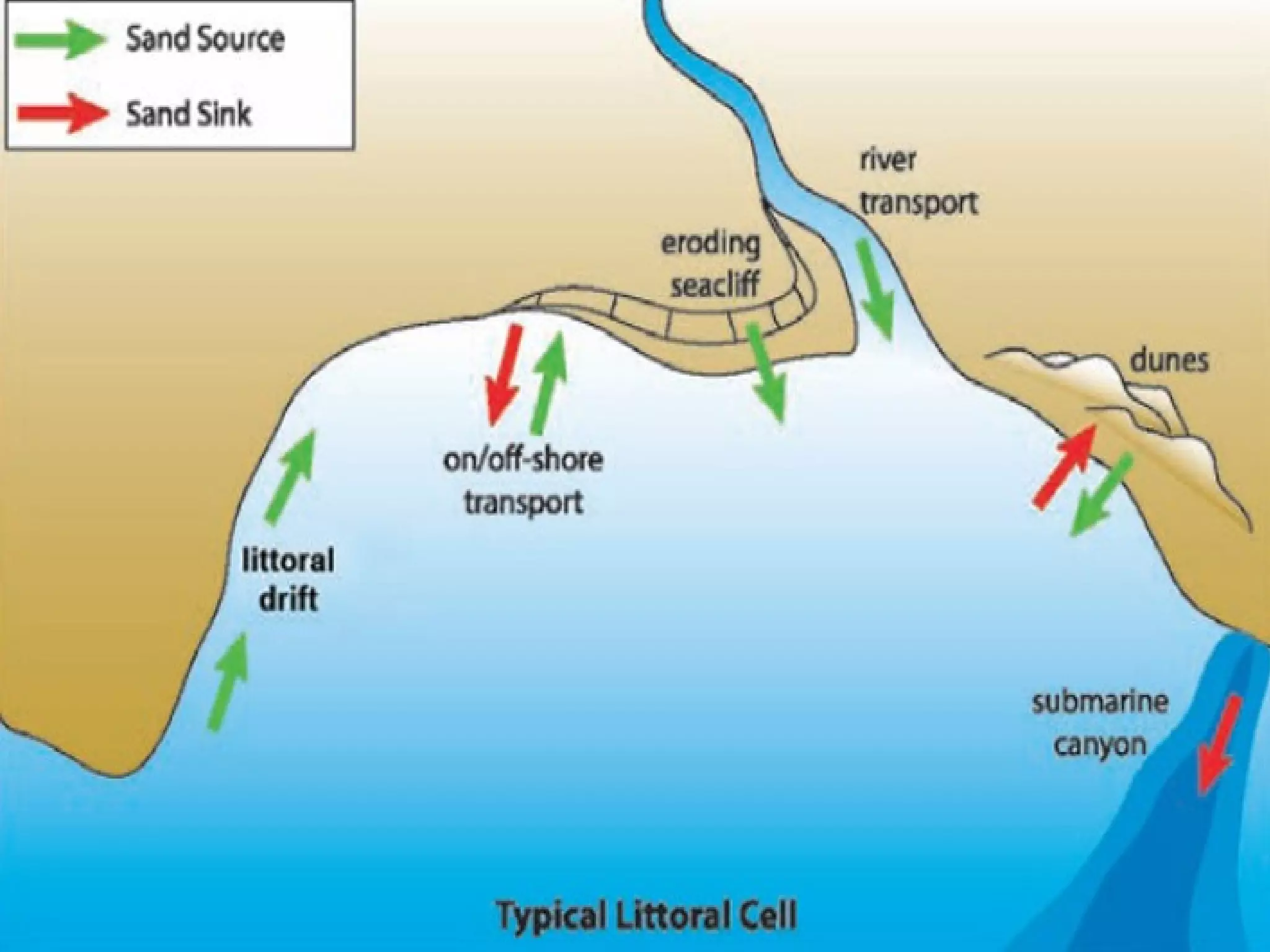
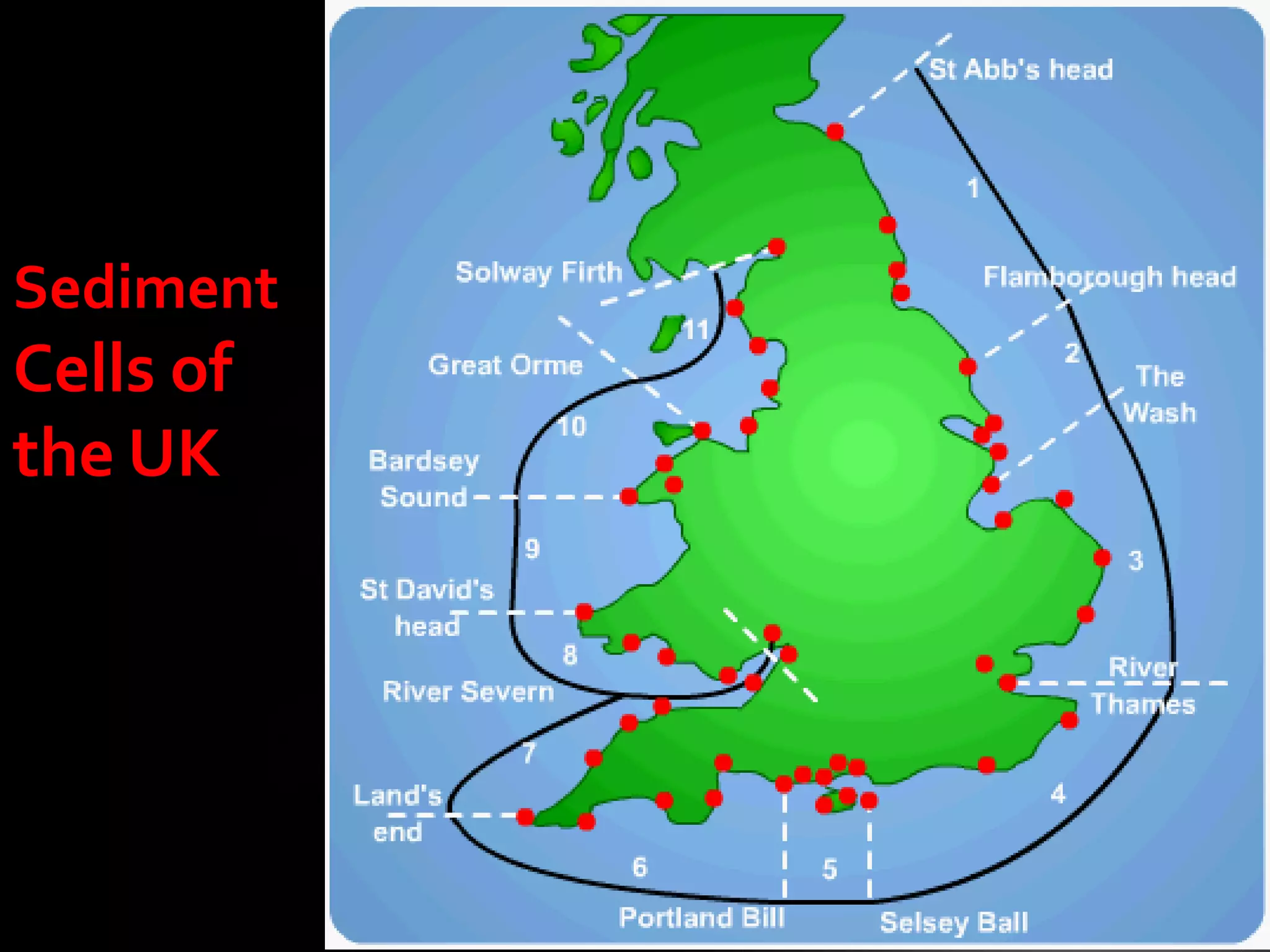
A stretch of coastline which sediment is
sourced, transported and deposited.
The cell is essentially closed to sediment
from other cells but some transfers may
take place.
The cell is bounded by coastal features i.e.
headlands or different Longshore drift
directions
What is a sediment cell or Littoral cell ?
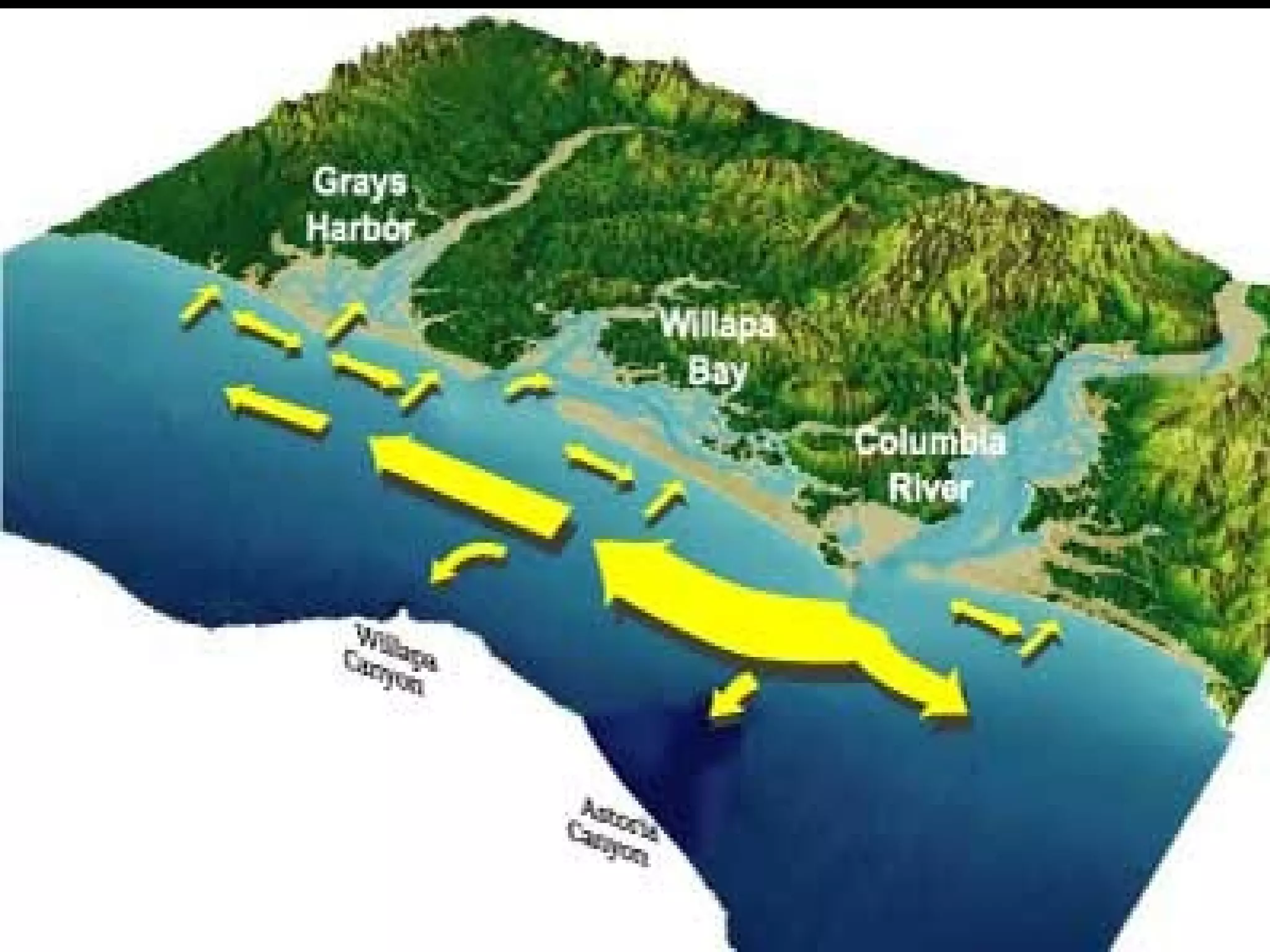
The cell is a system that is essentially closed to sediment from
other cells but receives INPUTS from within the cell and from
the land.
After being transported, the sediment is deposited in SINKS
(longterm stores), which effectively remove the sediment from
theTRANSFER processes within a cell.
The sediment may well remain geographically part of the cell
but not interact with Longshore drift currents and waves so
could be termed an OUTPUT.
SEDIMENT CELL / LITTORAL CELL
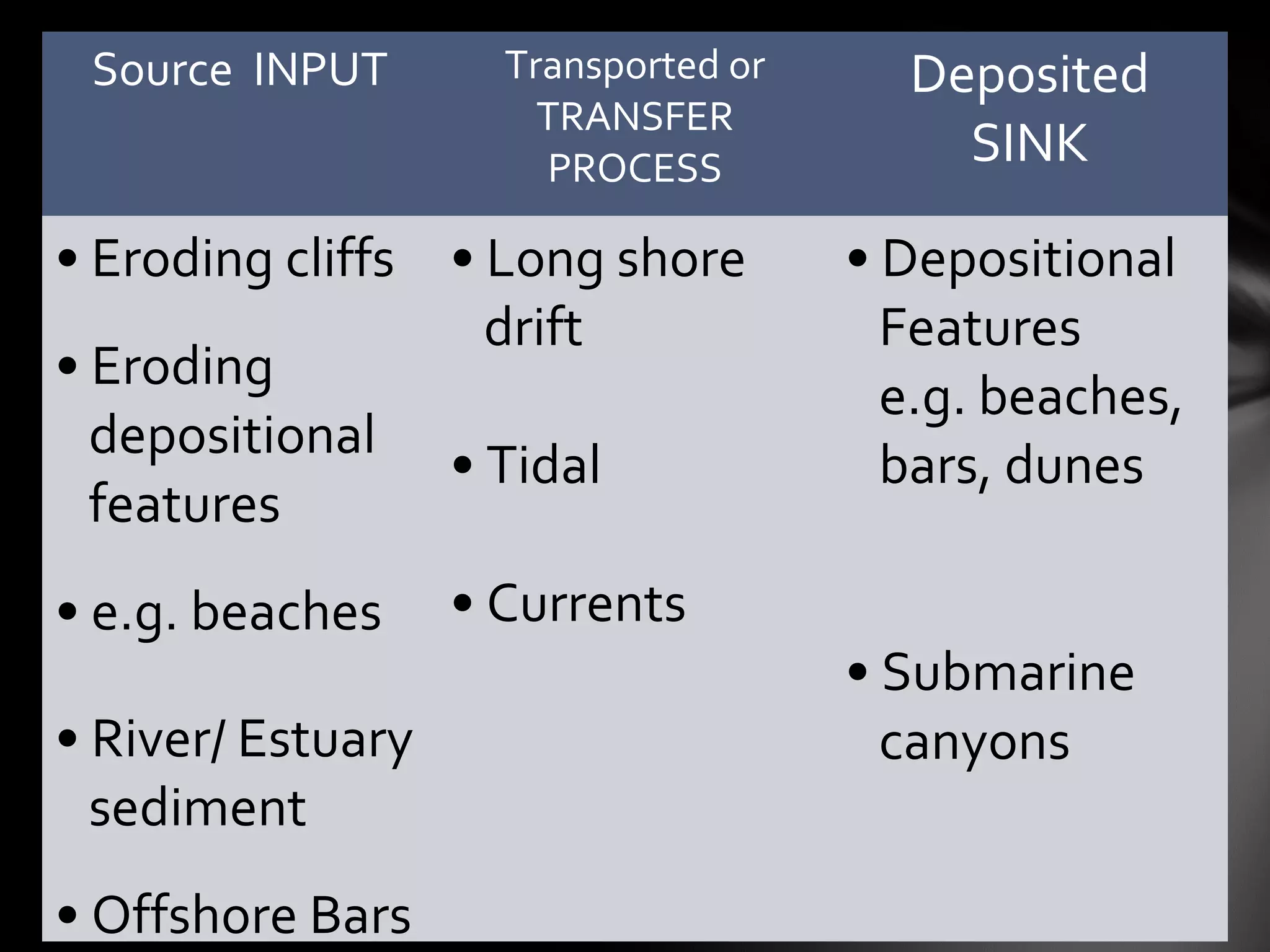
Source INPUT Transported or
TRANSFER
PROCESS
Deposited
SINK
• Eroding cliffs
• Eroding
depositional
features
• e.g. beaches
• River/ Estuary
sediment
• Offshore Bars
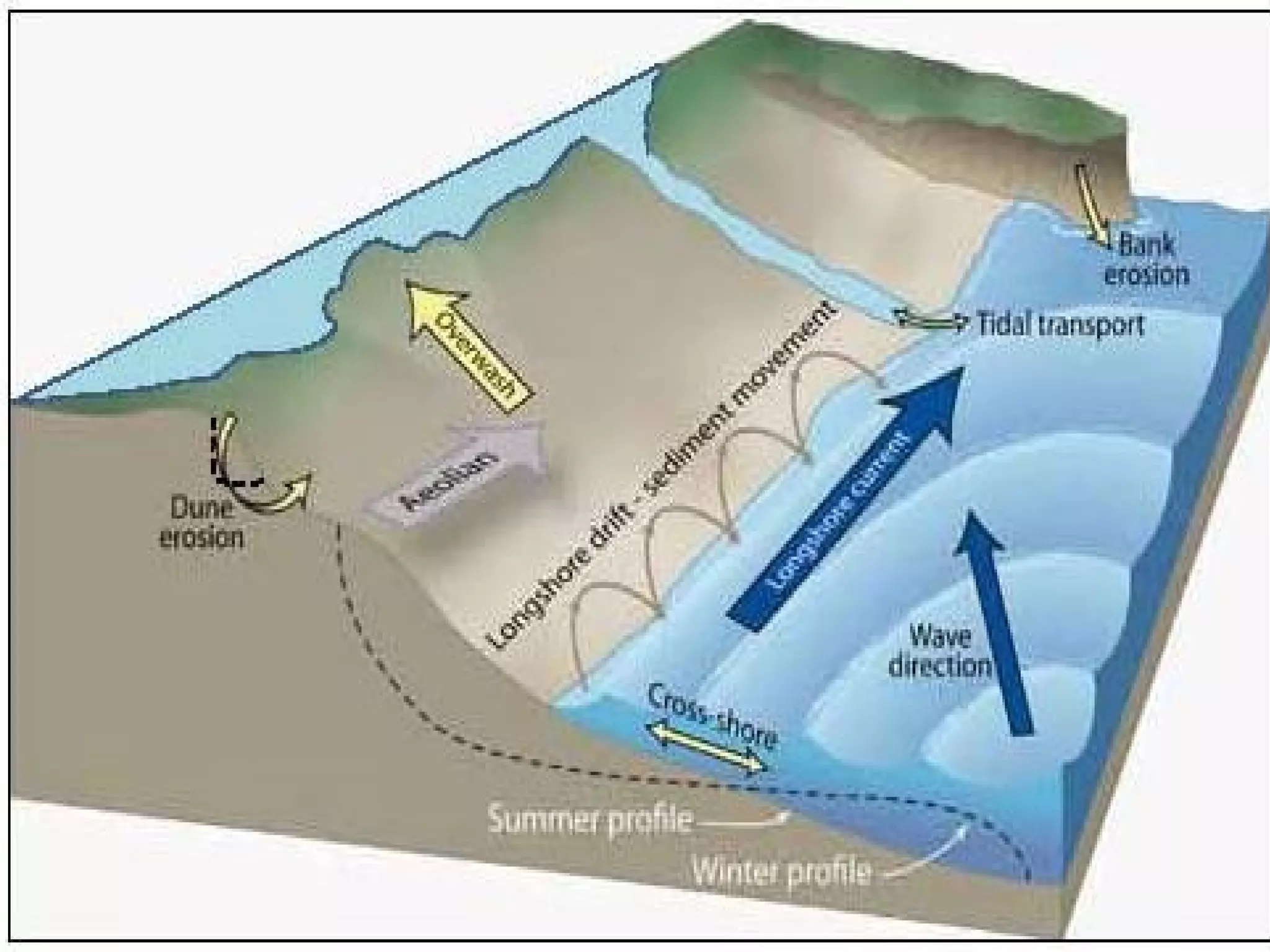
• Long shore
drift
• Tidal
• Currents
• Depositional
Features
e.g. beaches,
bars, dunes
• Submarine
canyons
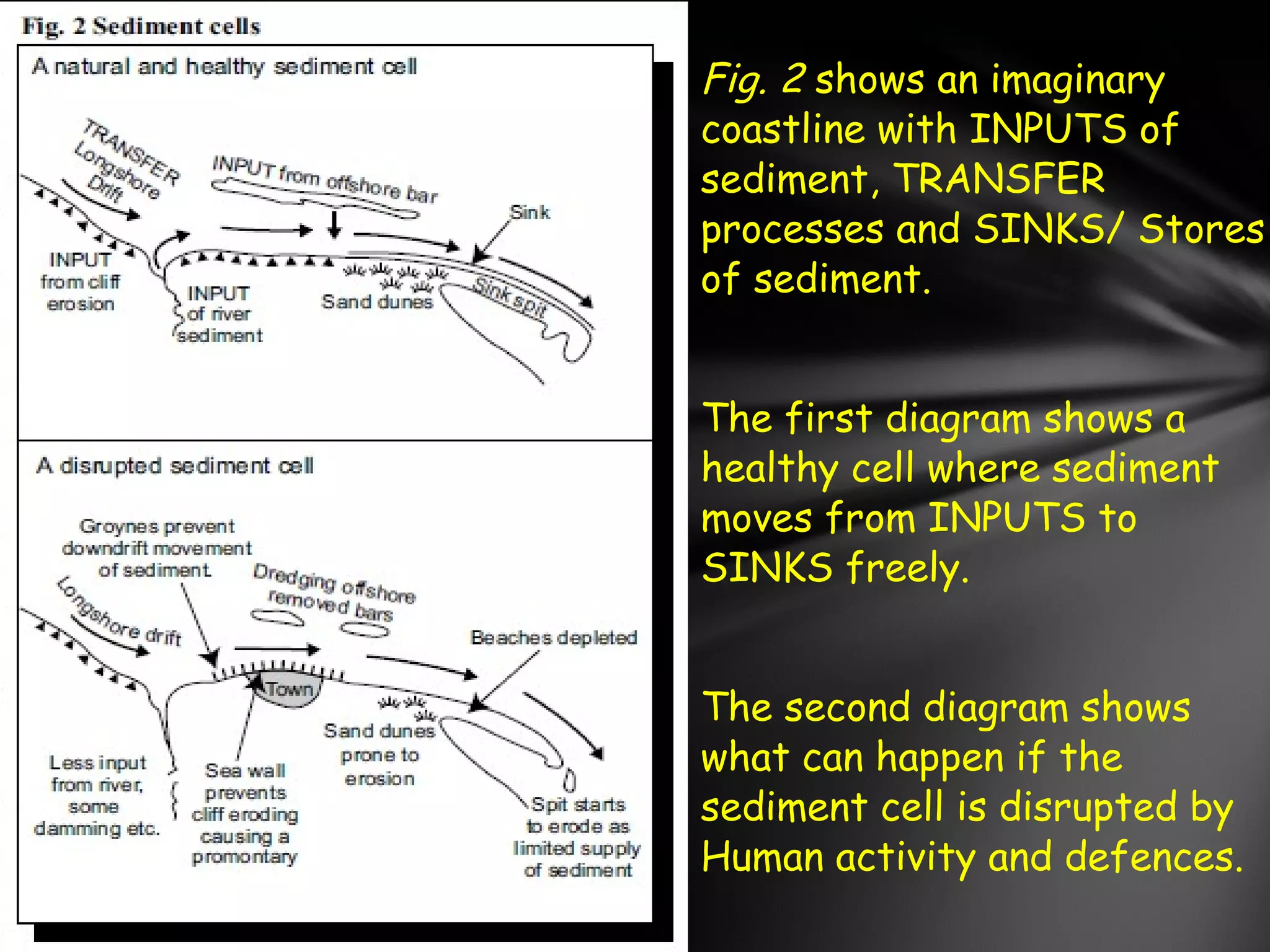
Fig. 2 shows an imaginary
coastline with INPUTS of
sediment, TRANSFER
processes and SINKS/ Stores
of sediment.
The first diagram shows a
healthy cell where sediment
moves from INPUTS to
SINKS freely.
The second diagram shows
what can happen if the
sediment cell is disrupted by
Human activity and defences.
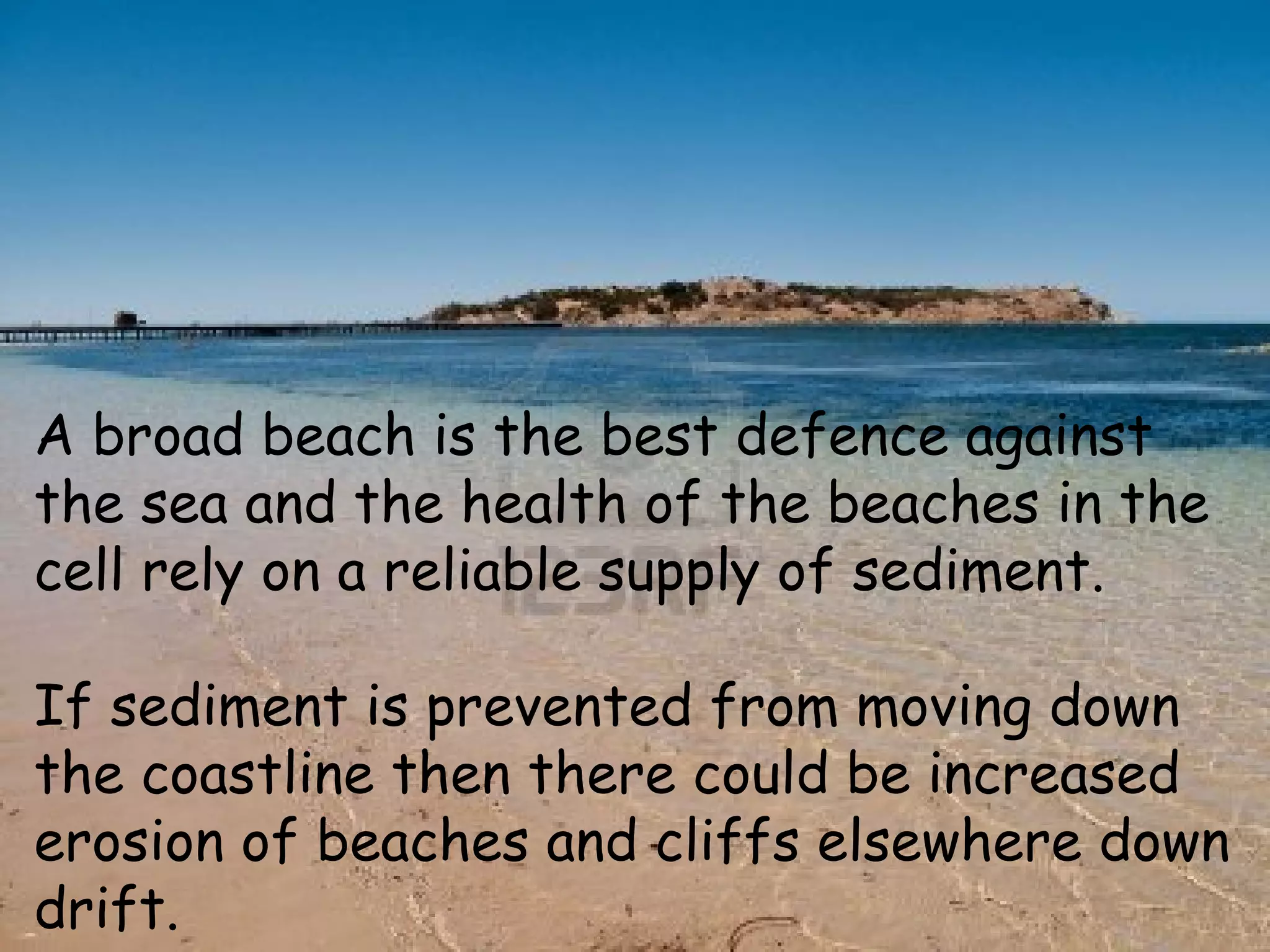
A broad beach is the best defence against
the sea and the health of the beaches in the
cell rely on a reliable supply of sediment.
If sediment is prevented from moving down
the coastline then there could be increased
erosion of beaches and cliffs elsewhere down
drift.
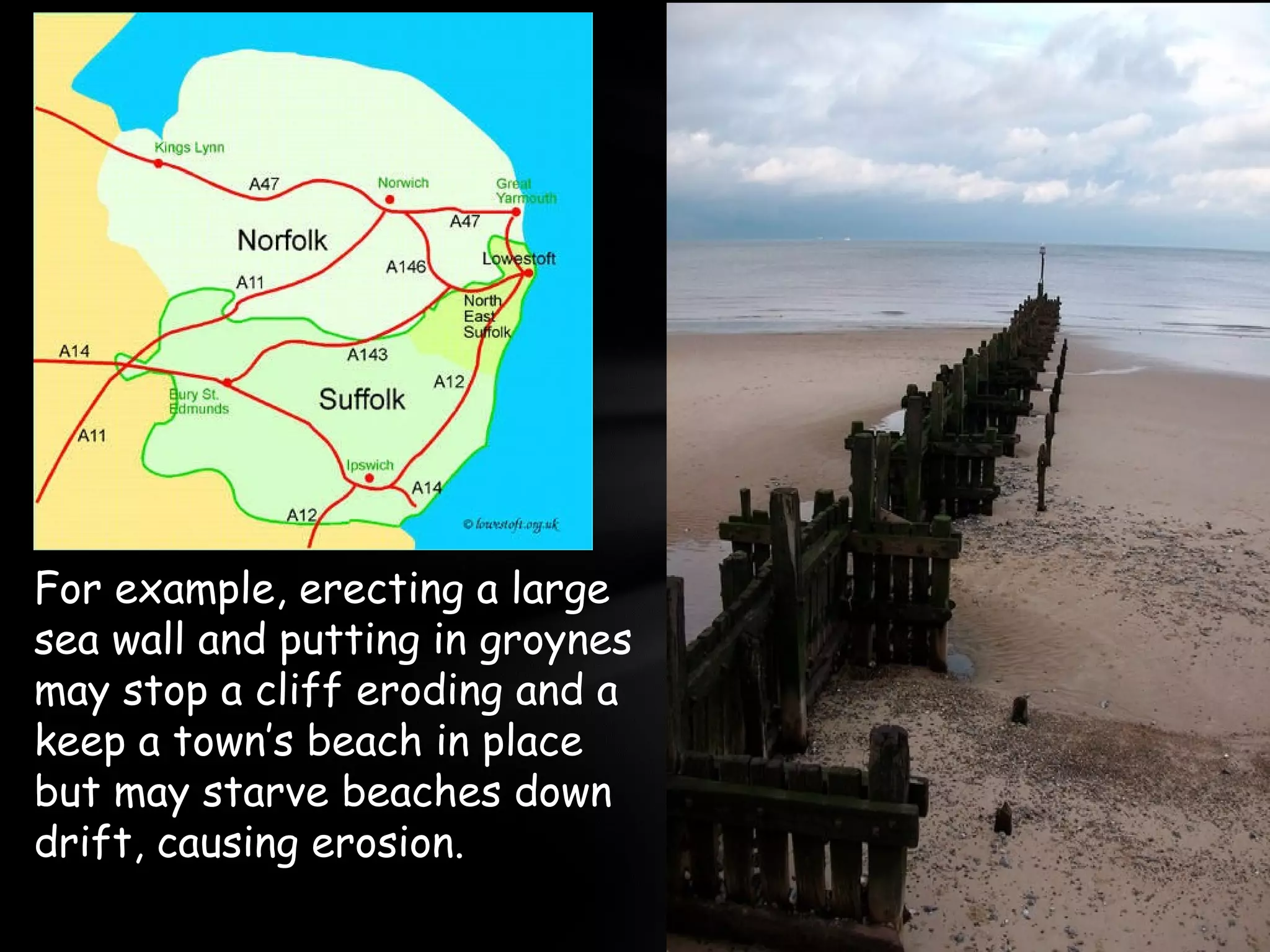
For example, erecting a large
sea wall and putting in groynes
may stop a cliff eroding and a
keep a town’s beach in place
but may starve beaches down
drift, causing erosion.
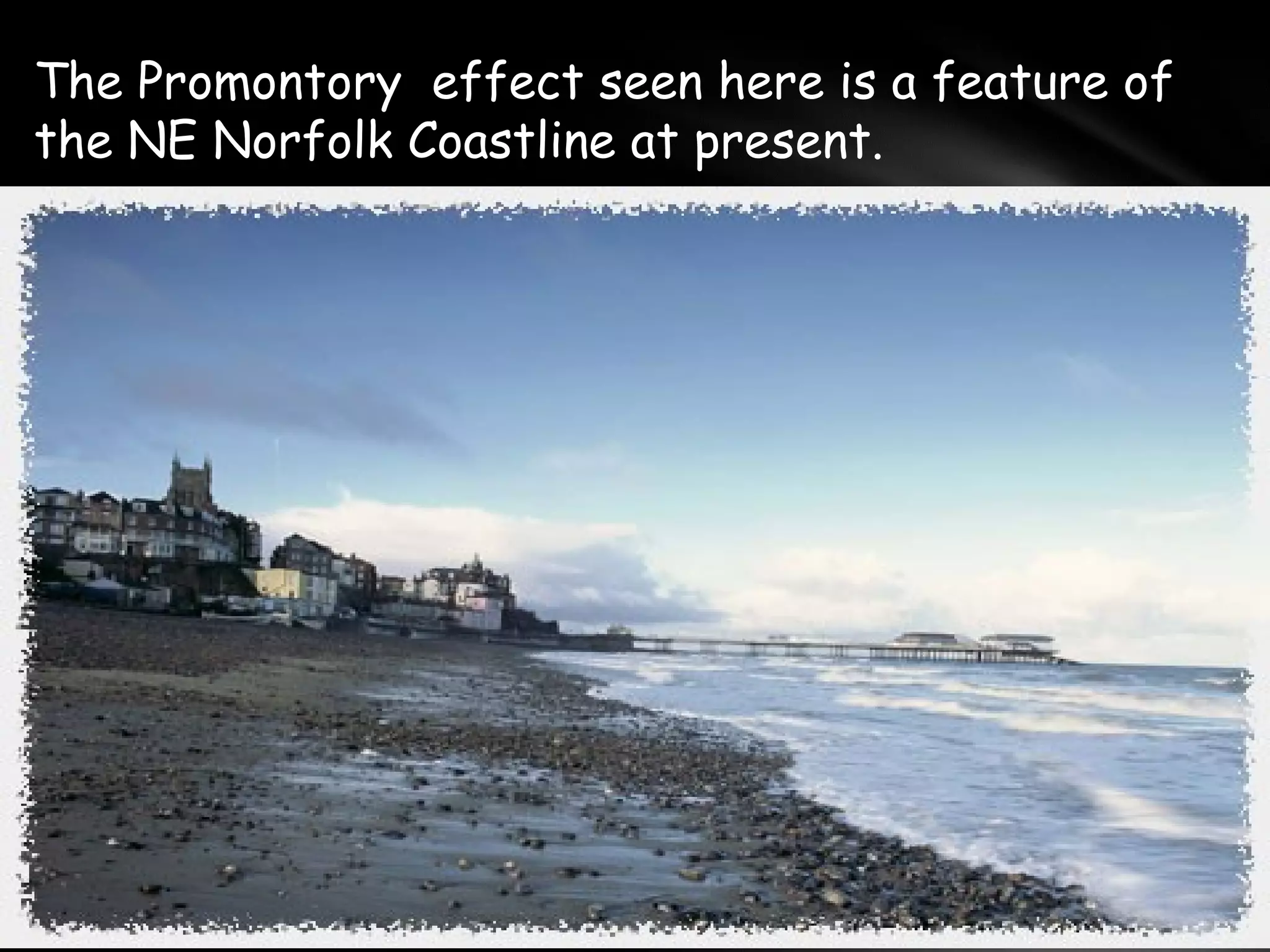
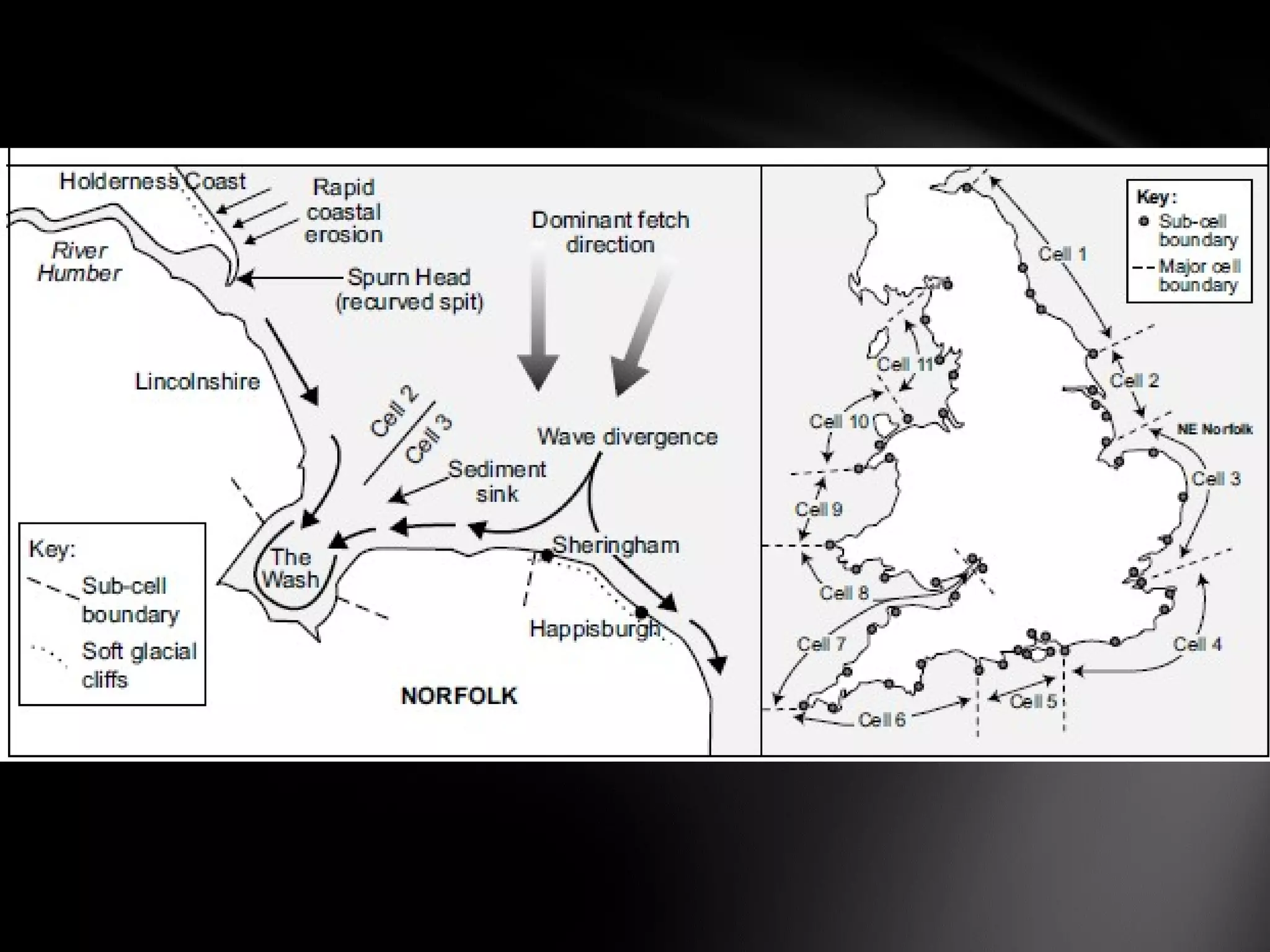
The Promontory effect seen here is a feature of
the NE Norfolk Coastline at present.
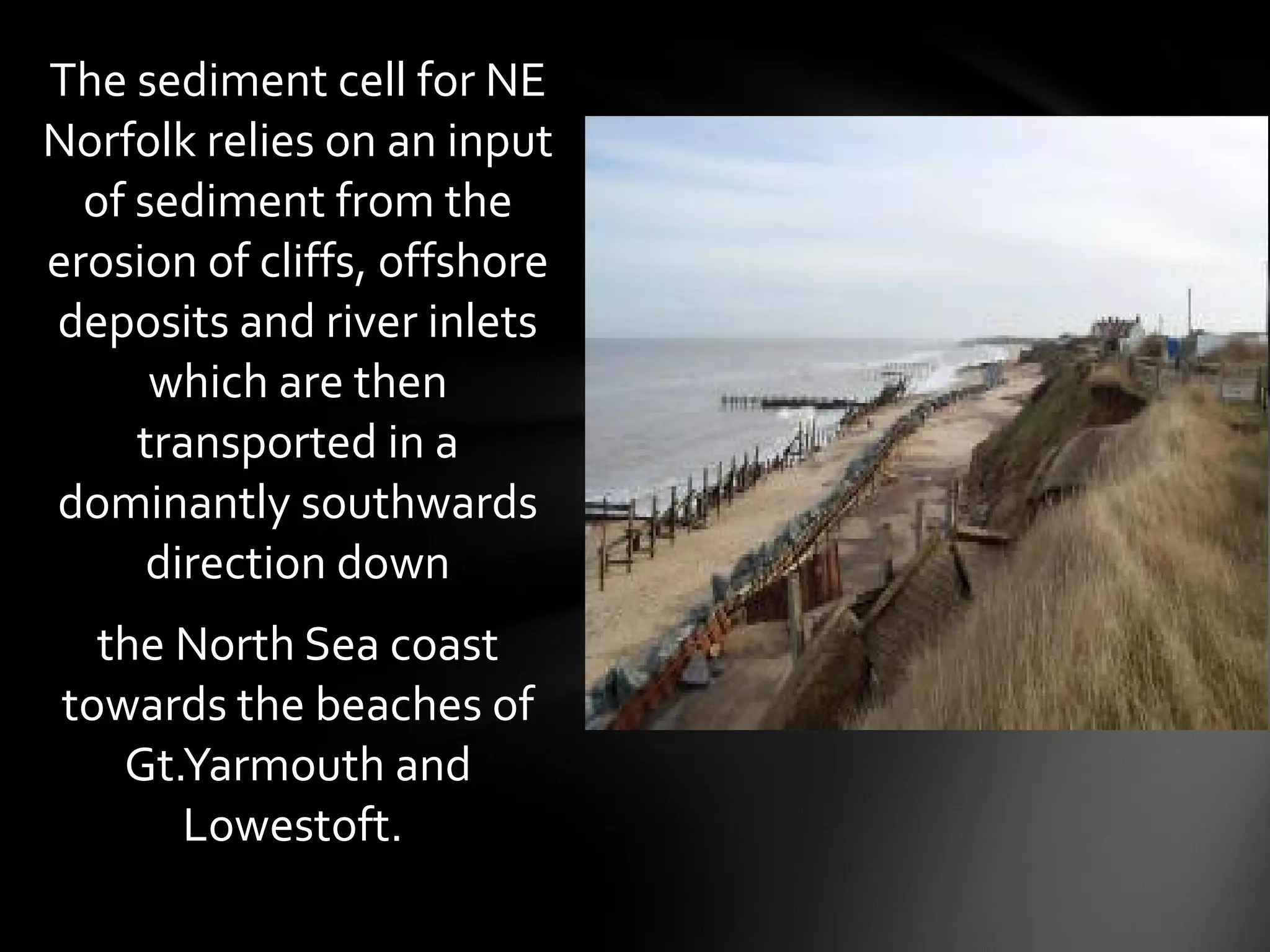
The sediment cell for NE
Norfolk relies on an input
of sediment from the
erosion of cliffs, offshore
deposits and river inlets
which are then
transported in a
dominantly southwards
direction down
the North Sea coast
towards the beaches of
Gt.Yarmouth and
Lowestoft.
Sediment
Cells of
the UK
Describe the sources, transportation and deposition of
coastal sediments. Illustrate your answer by reference to
examples of coastal landforms that are produced by these
processes. – NOV 2007
Describe the nature of a coastal sediment cell. How do
these cells contribute to the formation of coastal
landforms. – JUNE 2007
A LEVEL PAPER QUESTIONS
http://www.slideshare.net/fozzie/sediment-cells-and-sources
Sources:

sedimentcell-lesson10-130218002249-phpapp01.pdf

  • 1.
  • 2.
    A stretch ofcoastline which sediment is sourced, transported and deposited. The cell is essentially closed to sediment from other cells but some transfers may take place. The cell is bounded by coastal features i.e. headlands or different Longshore drift directions What is a sediment cell or Littoral cell ?
  • 4.
    The cell isa system that is essentially closed to sediment from other cells but receives INPUTS from within the cell and from the land. After being transported, the sediment is deposited in SINKS (longterm stores), which effectively remove the sediment from theTRANSFER processes within a cell. The sediment may well remain geographically part of the cell but not interact with Longshore drift currents and waves so could be termed an OUTPUT. SEDIMENT CELL / LITTORAL CELL
  • 6.
    Source INPUT Transportedor TRANSFER PROCESS Deposited SINK • Eroding cliffs • Eroding depositional features • e.g. beaches • River/ Estuary sediment • Offshore Bars • Long shore drift • Tidal • Currents • Depositional Features e.g. beaches, bars, dunes • Submarine canyons
  • 8.
    Fig. 2 showsan imaginary coastline with INPUTS of sediment, TRANSFER processes and SINKS/ Stores of sediment. The first diagram shows a healthy cell where sediment moves from INPUTS to SINKS freely. The second diagram shows what can happen if the sediment cell is disrupted by Human activity and defences.
  • 9.
    A broad beachis the best defence against the sea and the health of the beaches in the cell rely on a reliable supply of sediment. If sediment is prevented from moving down the coastline then there could be increased erosion of beaches and cliffs elsewhere down drift.
  • 10.
    For example, erectinga large sea wall and putting in groynes may stop a cliff eroding and a keep a town’s beach in place but may starve beaches down drift, causing erosion.
  • 11.
    The Promontory effectseen here is a feature of the NE Norfolk Coastline at present.
  • 12.
    The sediment cellfor NE Norfolk relies on an input of sediment from the erosion of cliffs, offshore deposits and river inlets which are then transported in a dominantly southwards direction down the North Sea coast towards the beaches of Gt.Yarmouth and Lowestoft.
  • 13.
  • 15.
    Describe the sources,transportation and deposition of coastal sediments. Illustrate your answer by reference to examples of coastal landforms that are produced by these processes. – NOV 2007 Describe the nature of a coastal sediment cell. How do these cells contribute to the formation of coastal landforms. – JUNE 2007 A LEVEL PAPER QUESTIONS
  • 16.