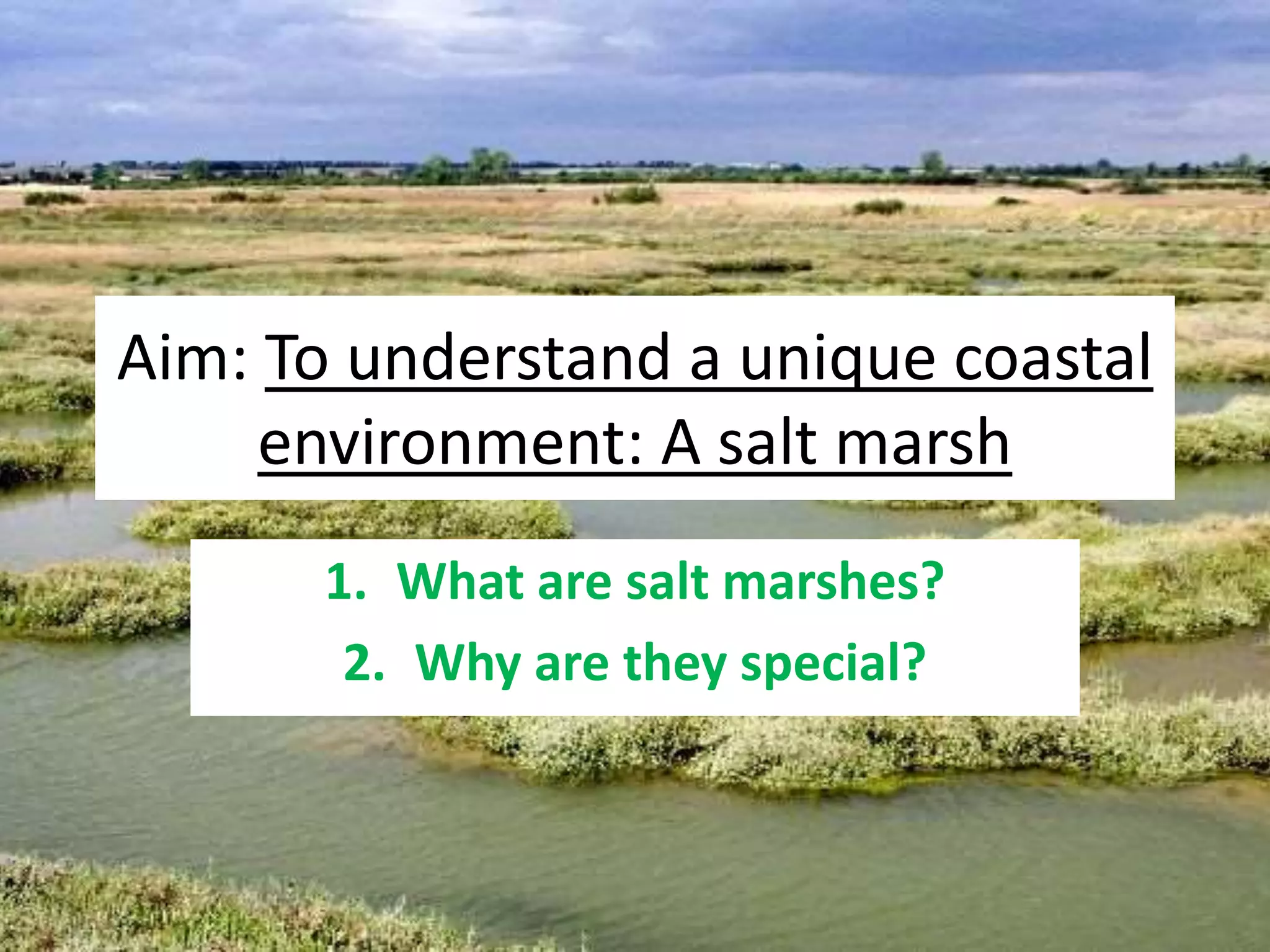
Aim: To understand a unique coastal
environment: A salt marsh
1. What are salt marshes?
2. Why are they special?
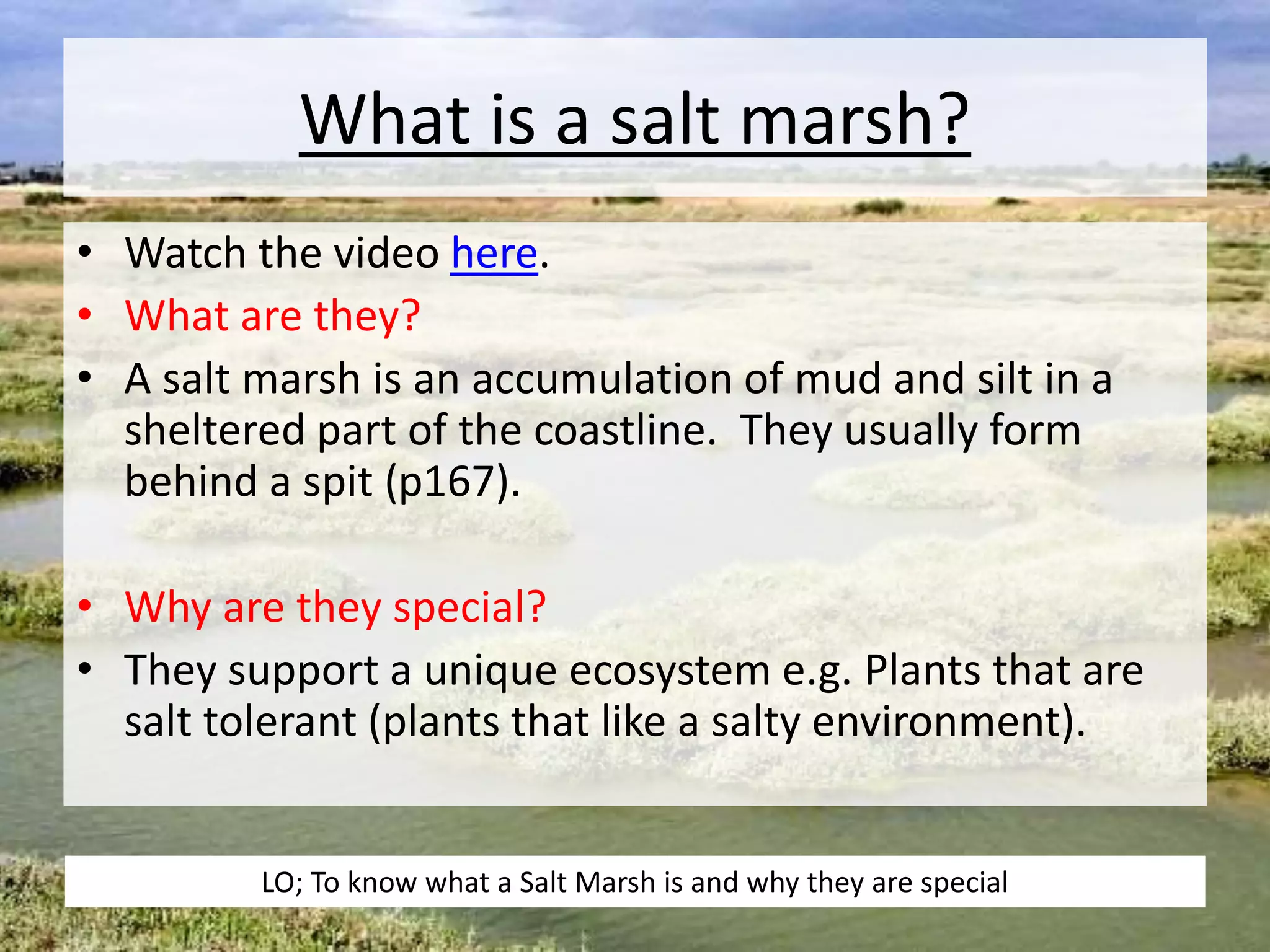
What is a salt marsh?
• Watch the video here.
• What are they?
• A salt marsh is an accumulation of mud and silt in a
sheltered part of the coastline. They usually form
behind a spit (p167).
• Why are they special?
• They support a unique ecosystem e.g. Plants that are
salt tolerant (plants that like a salty environment).
LO; To know what a Salt Marsh is and why they are special
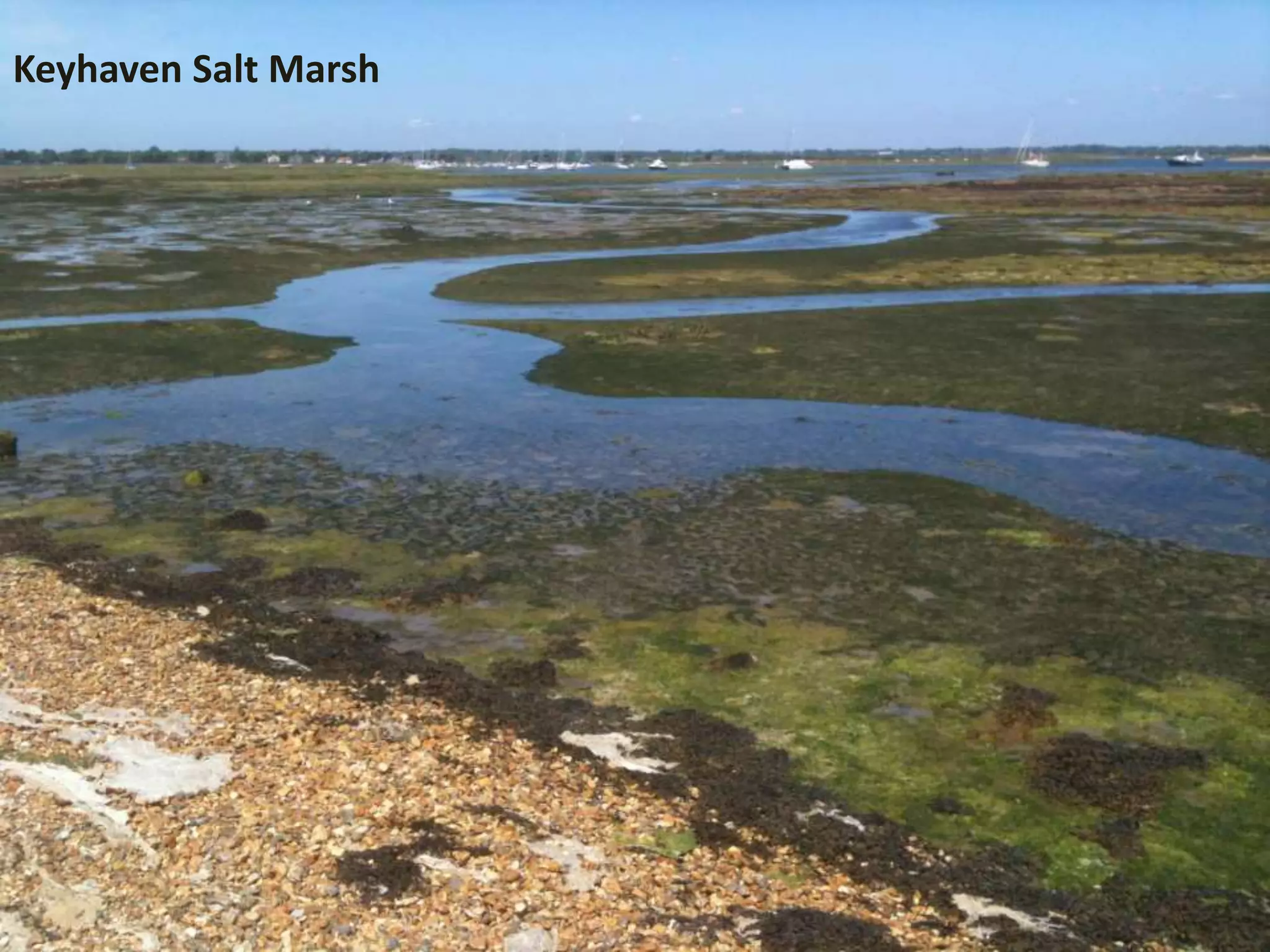
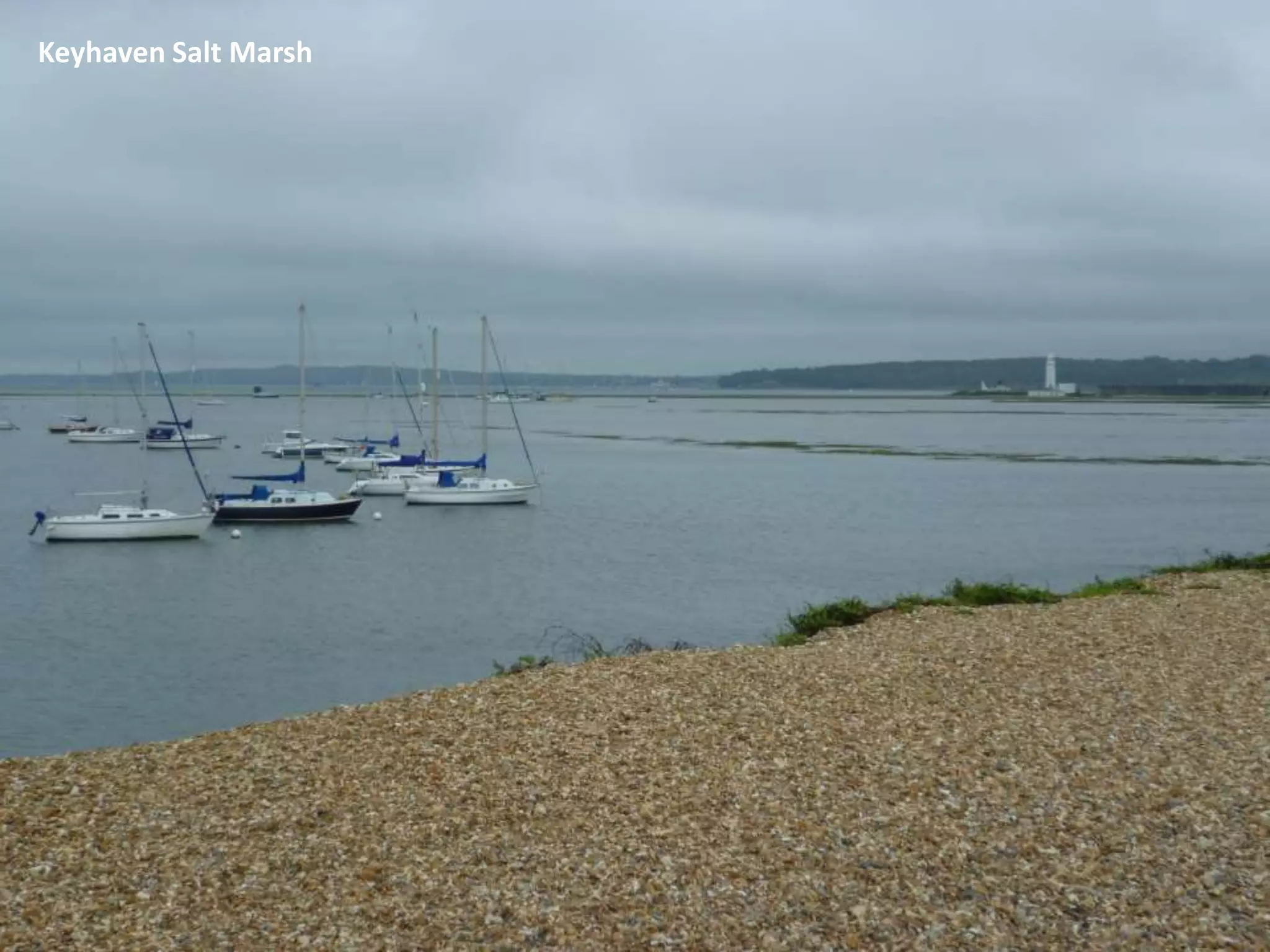
Keyhaven Salt Marsh
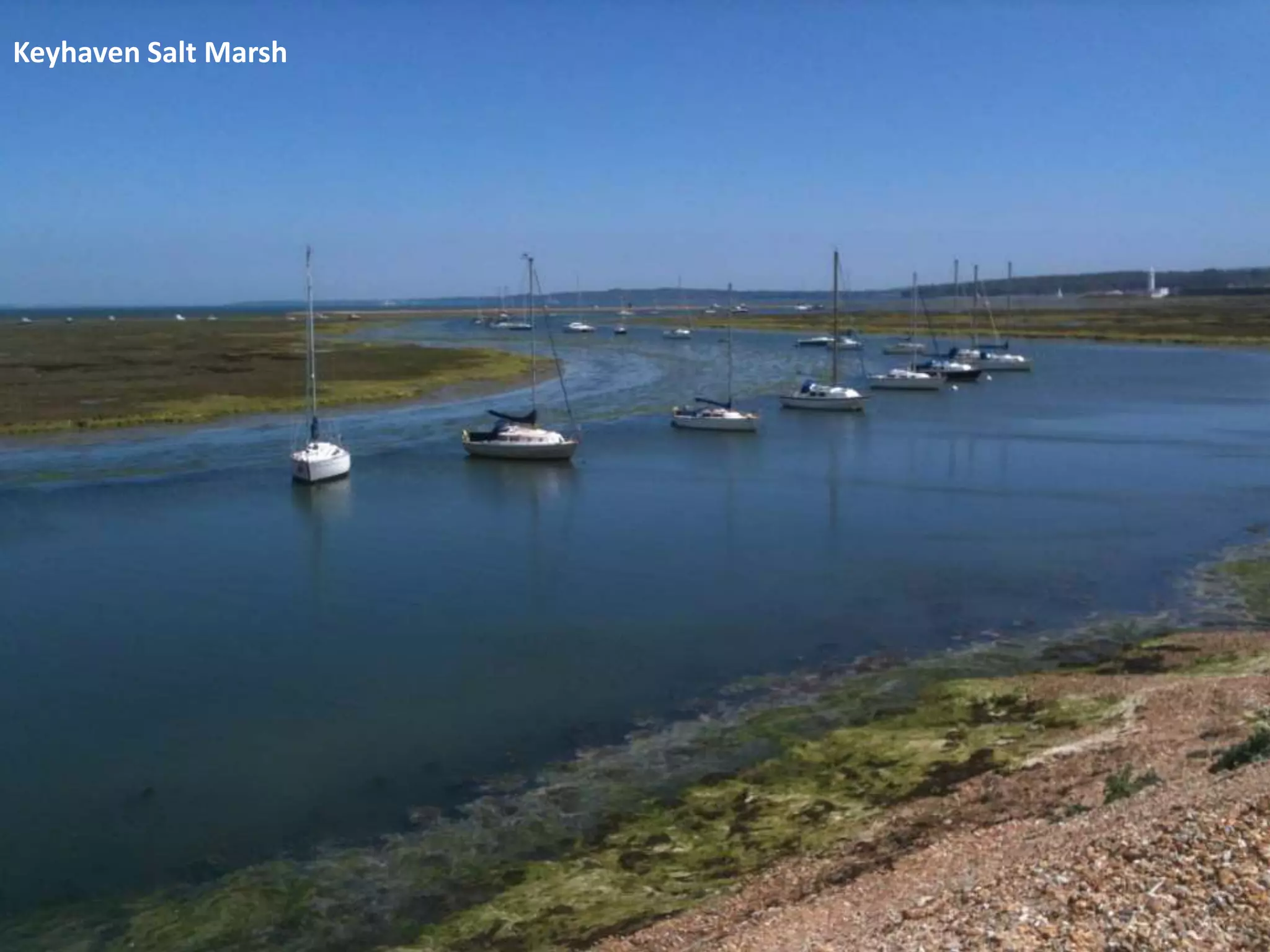
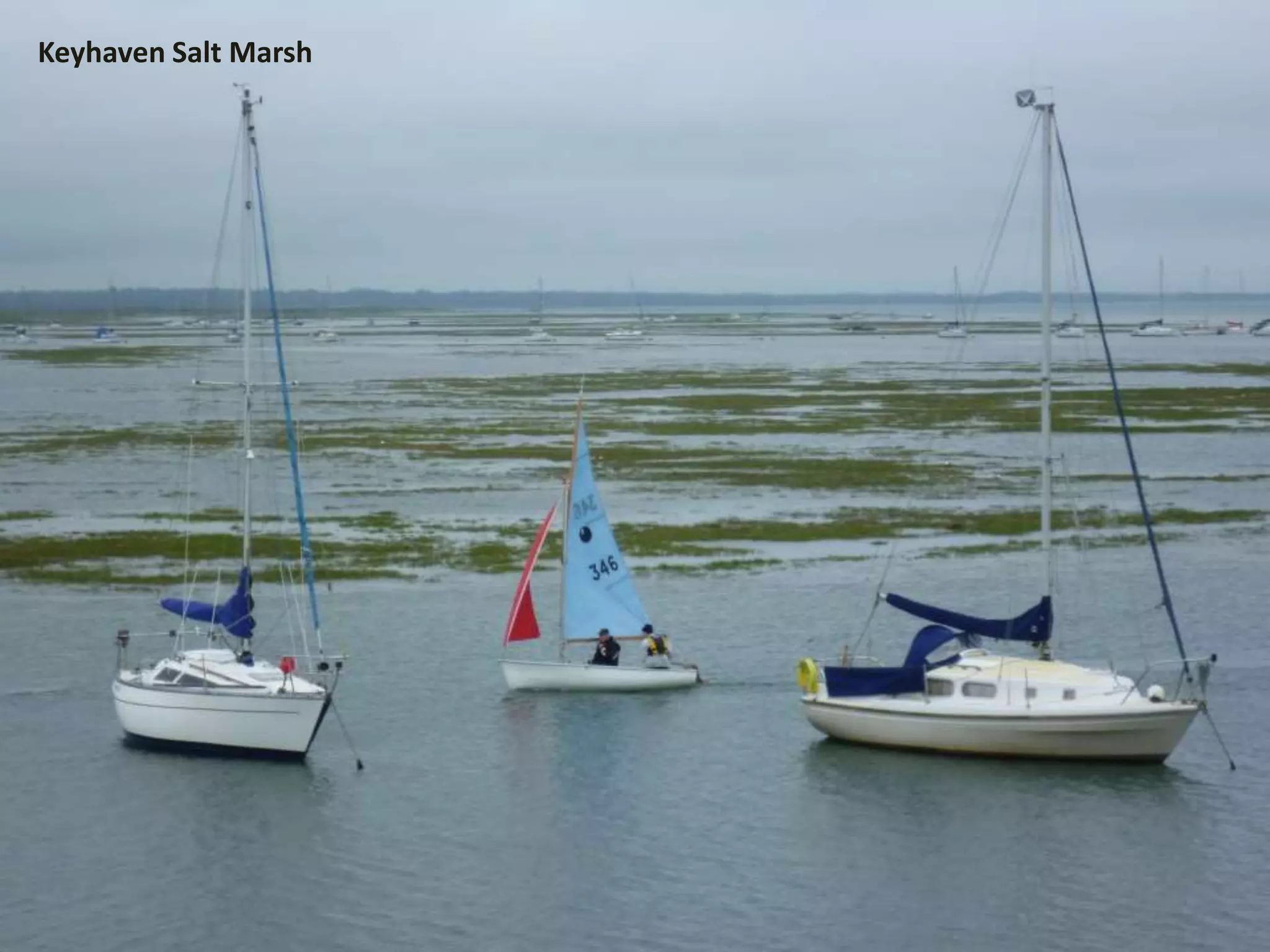
Keyhaven Salt Marsh
Keyhaven Salt Marsh
Keyhaven Salt Marsh
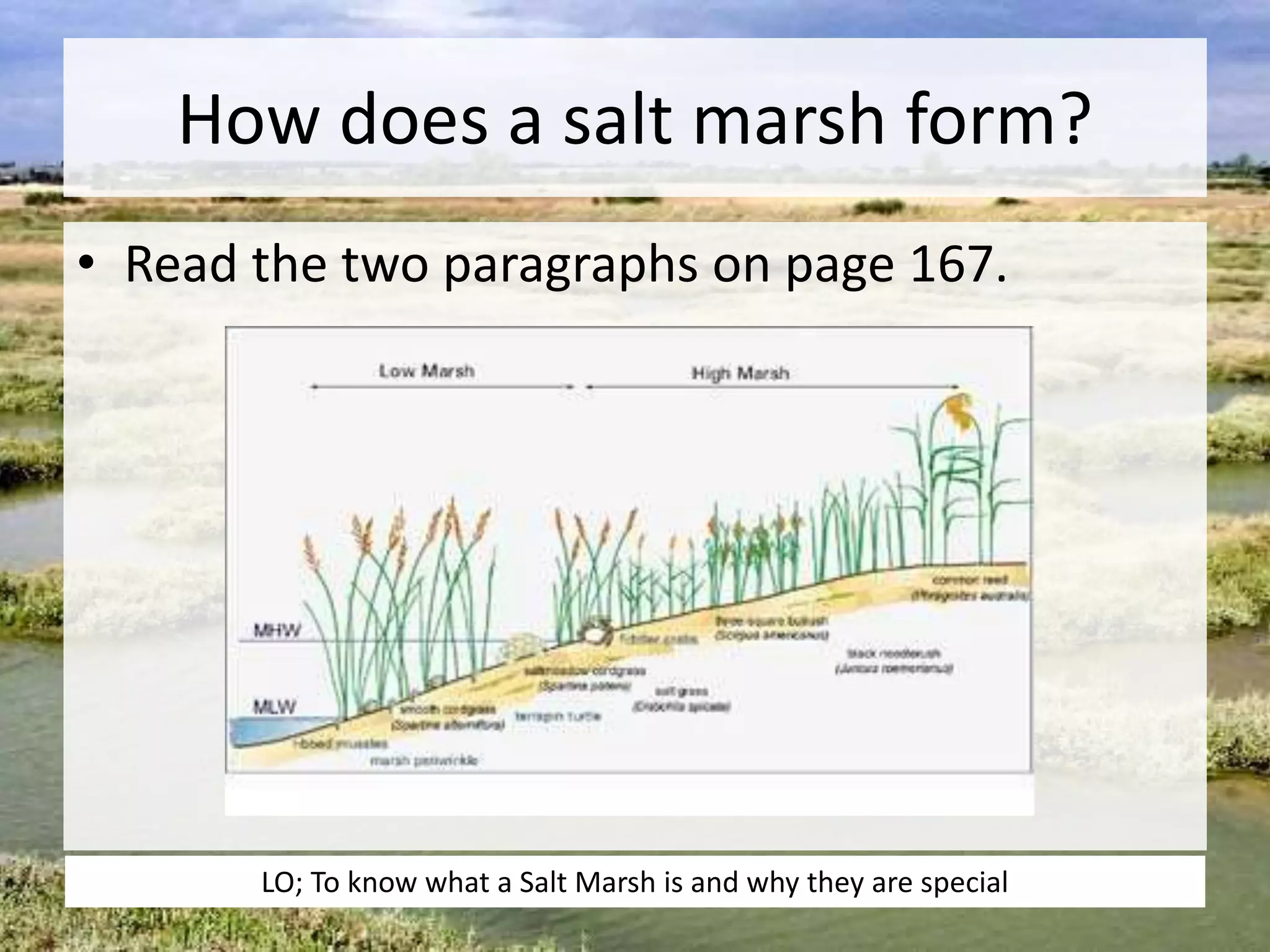
How does a salt marsh form?
• Read the two paragraphs on page 167.
LO; To know what a Salt Marsh is and why they are special
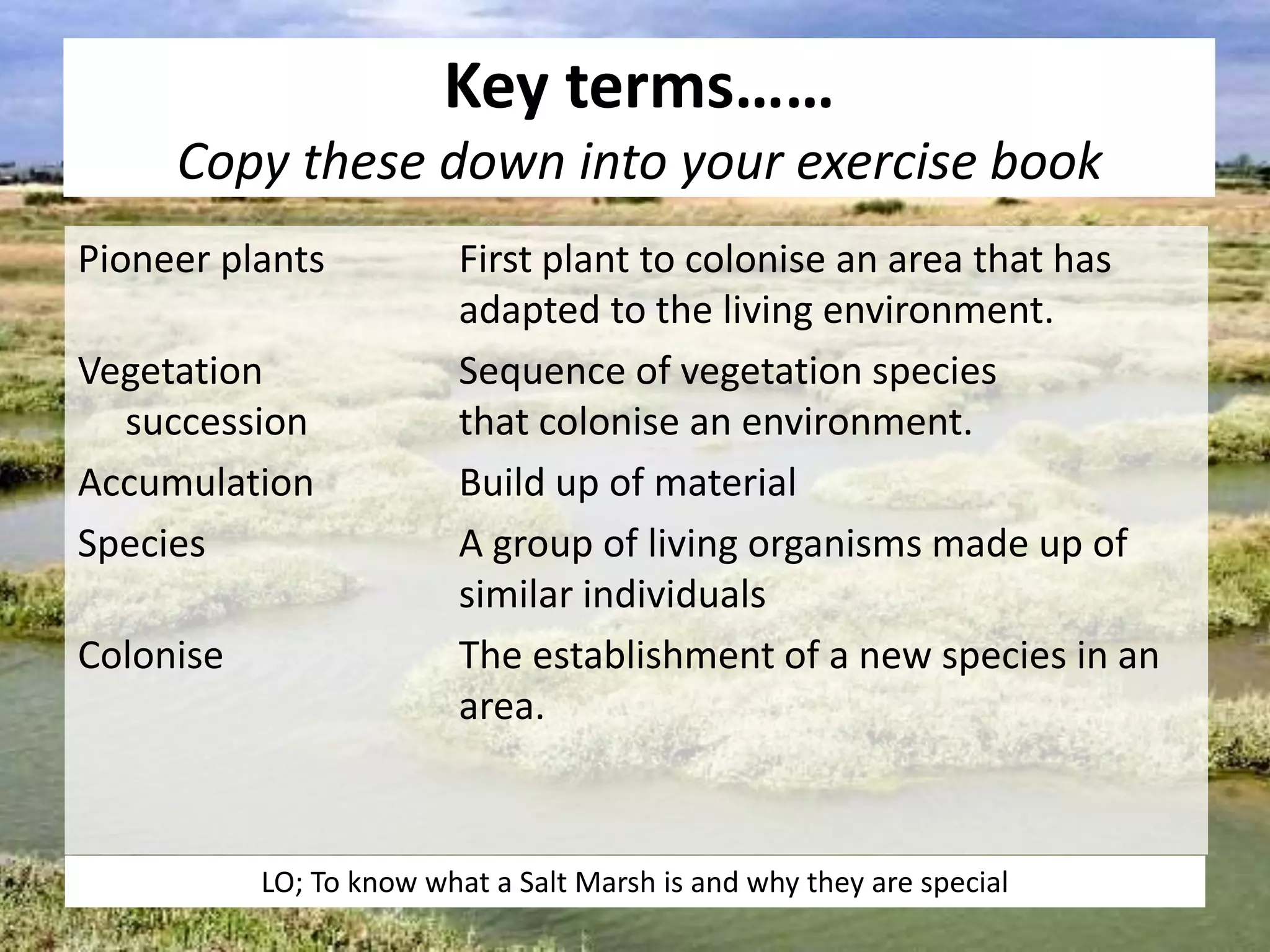
Key terms……
Copy these down into your exercise book
Pioneer plants First plant to colonise an area that has
adapted to the living environment.
Vegetation Sequence of vegetation species
succession that colonise an environment.
Accumulation Build up of material
Species A group of living organisms made up of
similar individuals
Colonise The establishment of a new species in an
area.
LO; To know what a Salt Marsh is and why they are special
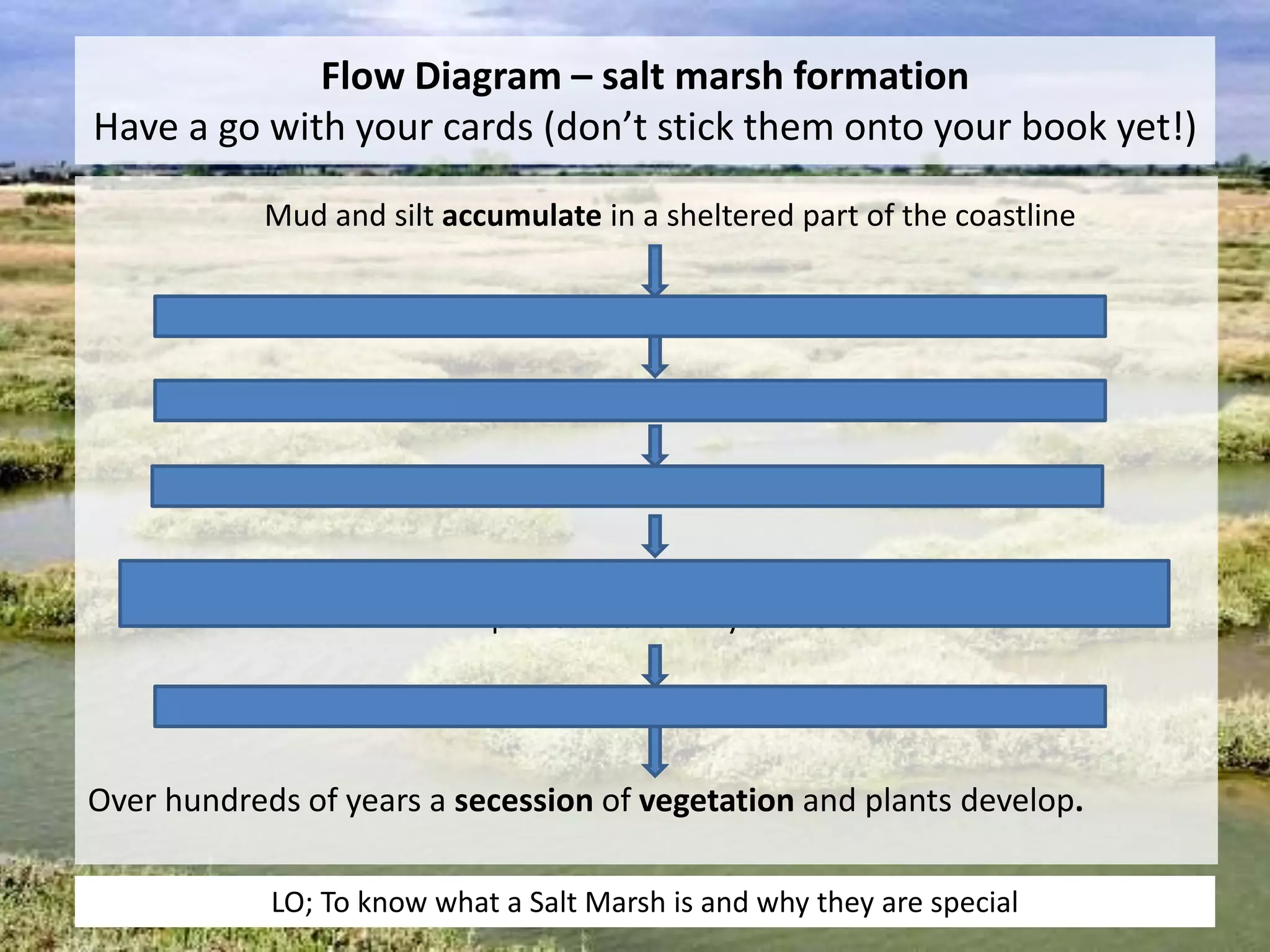
Flow Diagram – salt marsh formation
Have a go with your cards (don’t stick them onto your book yet!)
Mud and silt accumulate in a sheltered part of the coastline
Salt tolerant plants such as cord grass start to colonise the mudflats
The early plants like cord grass are called Pioneer plants
Its tangled roots help to stabilise the sediment and trap mud
Over time as rainwater washes out the salt, the decomposing plant matter
improves the fertility of the soil
New plant species start to colonise the area
Over hundreds of years a secession of vegetation and plants develop.
LO; To know what a Salt Marsh is and why they are special
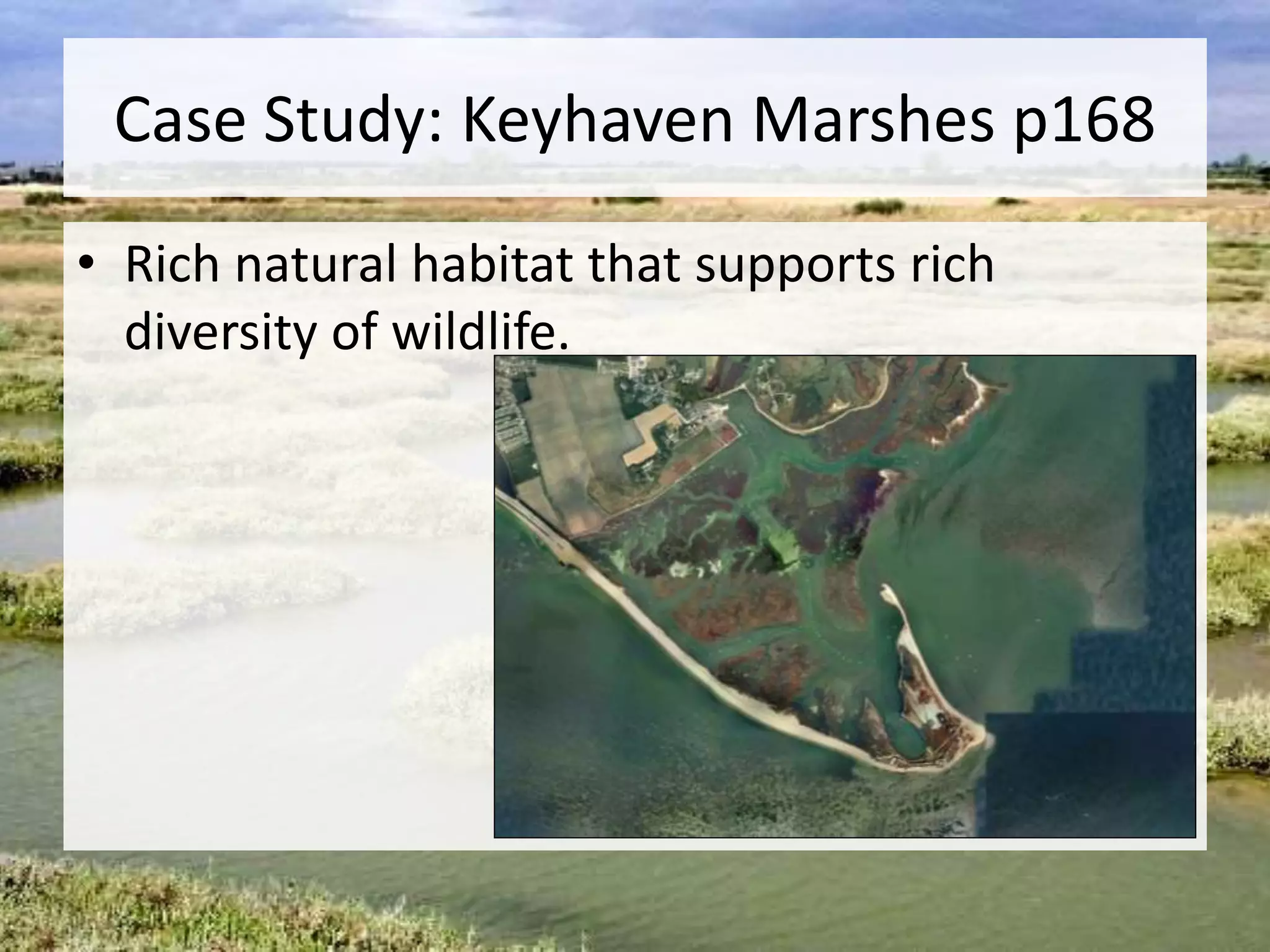
Case Study: Keyhaven Marshes p168
• Rich natural habitat that supports rich
diversity of wildlife.
Case Study: Keyhaven Salt Marsh
• Produce an information booklet on Keyhaven Salt Marshe
for the local tourist office.
• It need to include the following features for tourists;
1. How it is being conserved (1996)
2. How it is being used sustainably in the area
3. A map
4. Photos
5. 5 point guide to protect the marsh on the
tourists visit
6. Wildlife species guide  for the ornithologists.
• Good website;
www.conservancy.co.uk/learn/wildlife/saltmarsh.htm
LO; To know what a Salt Marsh is and why they are special
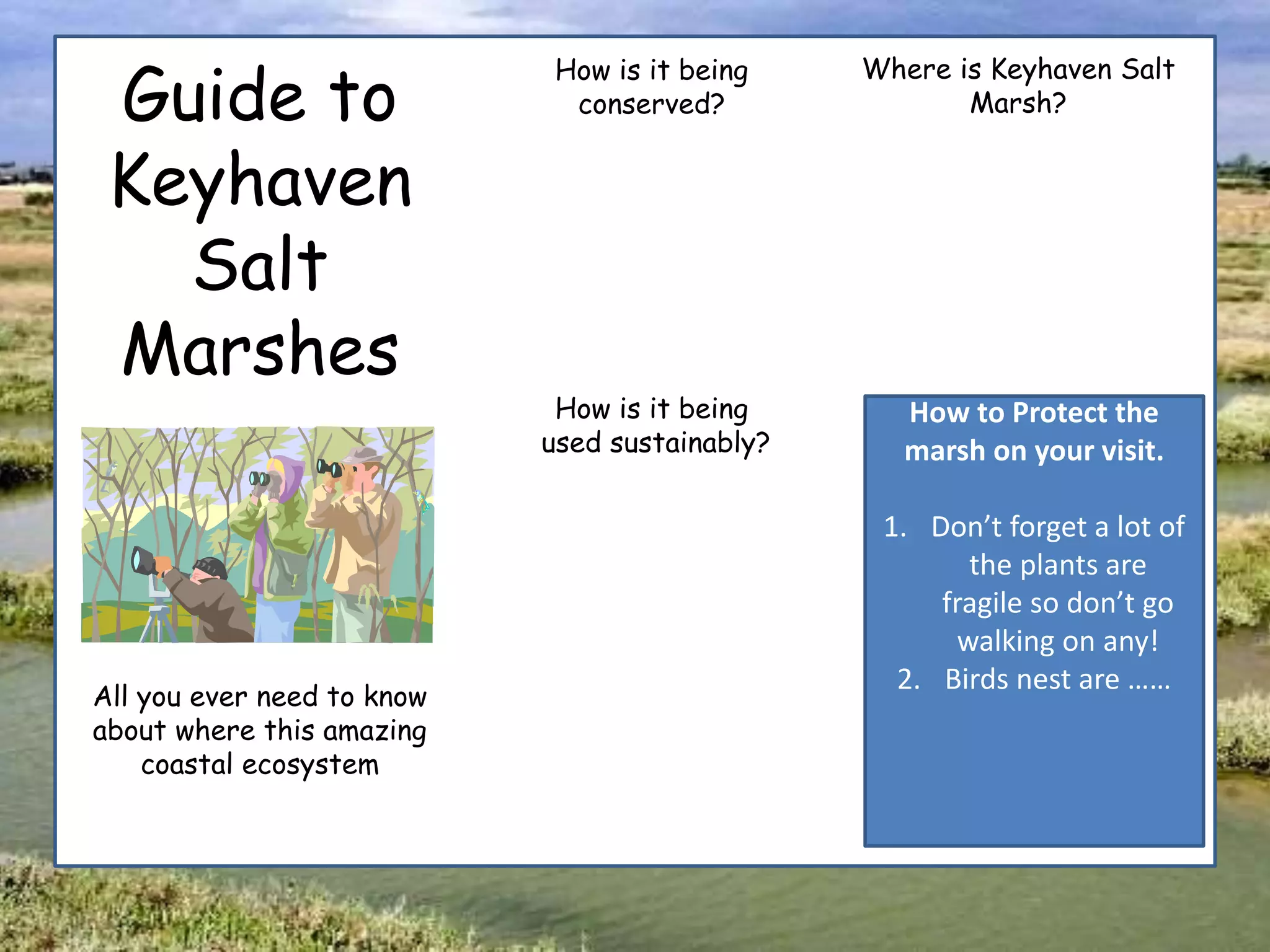
Guide to
Keyhaven
Salt
Marshes
All you ever need to know
about where this amazing
coastal ecosystem
How is it being
conserved?
How is it being
used sustainably?
Where is Keyhaven Salt
Marsh?
How to Protect the
marsh on your visit.
1. Don’t forget a lot of
the plants are
fragile so don’t go
walking on any!
2. Birds nest are ……

l11saltmarshesap-140428072234-phpapp02 2.pdf

  • 1.
    Aim: To understanda unique coastal environment: A salt marsh 1. What are salt marshes? 2. Why are they special?
  • 2.
    What is asalt marsh? • Watch the video here. • What are they? • A salt marsh is an accumulation of mud and silt in a sheltered part of the coastline. They usually form behind a spit (p167). • Why are they special? • They support a unique ecosystem e.g. Plants that are salt tolerant (plants that like a salty environment). LO; To know what a Salt Marsh is and why they are special
  • 3.
  • 4.
  • 5.
  • 6.
  • 7.
    How does asalt marsh form? • Read the two paragraphs on page 167. LO; To know what a Salt Marsh is and why they are special
  • 8.
    Key terms…… Copy thesedown into your exercise book Pioneer plants First plant to colonise an area that has adapted to the living environment. Vegetation Sequence of vegetation species succession that colonise an environment. Accumulation Build up of material Species A group of living organisms made up of similar individuals Colonise The establishment of a new species in an area. LO; To know what a Salt Marsh is and why they are special
  • 9.
    Flow Diagram –salt marsh formation Have a go with your cards (don’t stick them onto your book yet!) Mud and silt accumulate in a sheltered part of the coastline Salt tolerant plants such as cord grass start to colonise the mudflats The early plants like cord grass are called Pioneer plants Its tangled roots help to stabilise the sediment and trap mud Over time as rainwater washes out the salt, the decomposing plant matter improves the fertility of the soil New plant species start to colonise the area Over hundreds of years a secession of vegetation and plants develop. LO; To know what a Salt Marsh is and why they are special
  • 10.
    Case Study: KeyhavenMarshes p168 • Rich natural habitat that supports rich diversity of wildlife.
  • 11.
    Case Study: KeyhavenSalt Marsh • Produce an information booklet on Keyhaven Salt Marshe for the local tourist office. • It need to include the following features for tourists; 1. How it is being conserved (1996) 2. How it is being used sustainably in the area 3. A map 4. Photos 5. 5 point guide to protect the marsh on the tourists visit 6. Wildlife species guide  for the ornithologists. • Good website; www.conservancy.co.uk/learn/wildlife/saltmarsh.htm LO; To know what a Salt Marsh is and why they are special
  • 12.
    Guide to Keyhaven Salt Marshes All youever need to know about where this amazing coastal ecosystem How is it being conserved? How is it being used sustainably? Where is Keyhaven Salt Marsh? How to Protect the marsh on your visit. 1. Don’t forget a lot of the plants are fragile so don’t go walking on any! 2. Birds nest are ……