3 main points C.I.A.--related to
hardware, software, and
communications







Information security, sometimes shortened to InfoSec, is the practice of
defending information from unauthorized access, use, disclosure, disruption,
modification, perusal, inspection, recording or destruction. It is a general term that can
be used regardless of the form the data may take (electronic, physical, etc...)[1]
Two major aspects of information security are:
IT security: Sometimes referred to as computer security, Information Technology
Security is information security applied to technology (most often some form of
computer system). It is worthwhile to note that a computer does not necessarily mean a
home desktop. A computer is any device with a processor and some memory (even a
calculator). IT security specialists are almost always found in any major
enterprise/establishment due to the nature and value of the data within larger
businesses. They are responsible for keeping all of the technology within the company
secure from malicious cyber attacks that often attempt to breach into critical private
information or gain control of the internal systems.
Information assurance: The act of ensuring that data is not lost when critical issues arise.
These issues include but are not limited to: natural disasters, computer/server
malfunction, physical theft, or any other instance where data has the potential of being
lost. Since most information is stored on computers in our modern era, information
assurance is typically dealt with by IT security specialists. One of the most common
methods of providing information assurance is to have an off-site backup of the data in
case one of the mentioned issues arise.


Information Security Attributes: or qualities, i.e.,
Confidentiality, Integrity and Availability (CIA).
Information Systems are composed in three main
portions, hardware, software and communications
with the purpose to help identify and apply
information security industry standards, as
mechanisms of protection and prevention, at three
levels or layers: physical, personal and
organizational. Essentially, procedures or policies
are implemented to tell people (administrators,
users and operators) how to use products to ensure
information security within the organizations.




Confidentiality refers to preventing the disclosure of
information to unauthorized individuals or systems. For
example, a credit card transaction on the Internet requires
the credit card number to be transmitted from the buyer to
the merchant and from the merchant to a transaction
processing network. The system attempts to enforce
confidentiality by encrypting the card number during
transmission, by limiting the places where it might appear
(in databases, log files, backups, printed receipts, and so on),
and by restricting access to the places where it is stored. If
an unauthorized party obtains the card number in any way,
a breach of confidentiality has occurred.
Confidentiality is necessary for maintaining the privacy of
the people whose personal information is held in the
system.


In information security, data integrity means
maintaining and assuring the accuracy and
consistency of data over its entire life-cycle.[16]
This means that data cannot be modified in an
unauthorized or undetected manner. This is not
the same thing as referential integrity in databases,
although it can be viewed as a special case of
Consistency as understood in the classic ACID
model of transaction processing. Integrity is
violated when a message is actively modified in
transit. Information security systems typically
provide message integrity in addition to data
confidentiality.


For any information system to serve its purpose,
the information must be available when it is
needed. This means that the computing systems
used to store and process the information, the
security controls used to protect it, and the
communication channels used to access it must be
functioning correctly. High availability systems
aim to remain available at all times, preventing
service disruptions due to power outages,
hardware failures, and system upgrades. Ensuring
availability also involves preventing denial-ofservice attacks, such as a flood of incoming
messages to the target system essentially forcing it
to shut down.


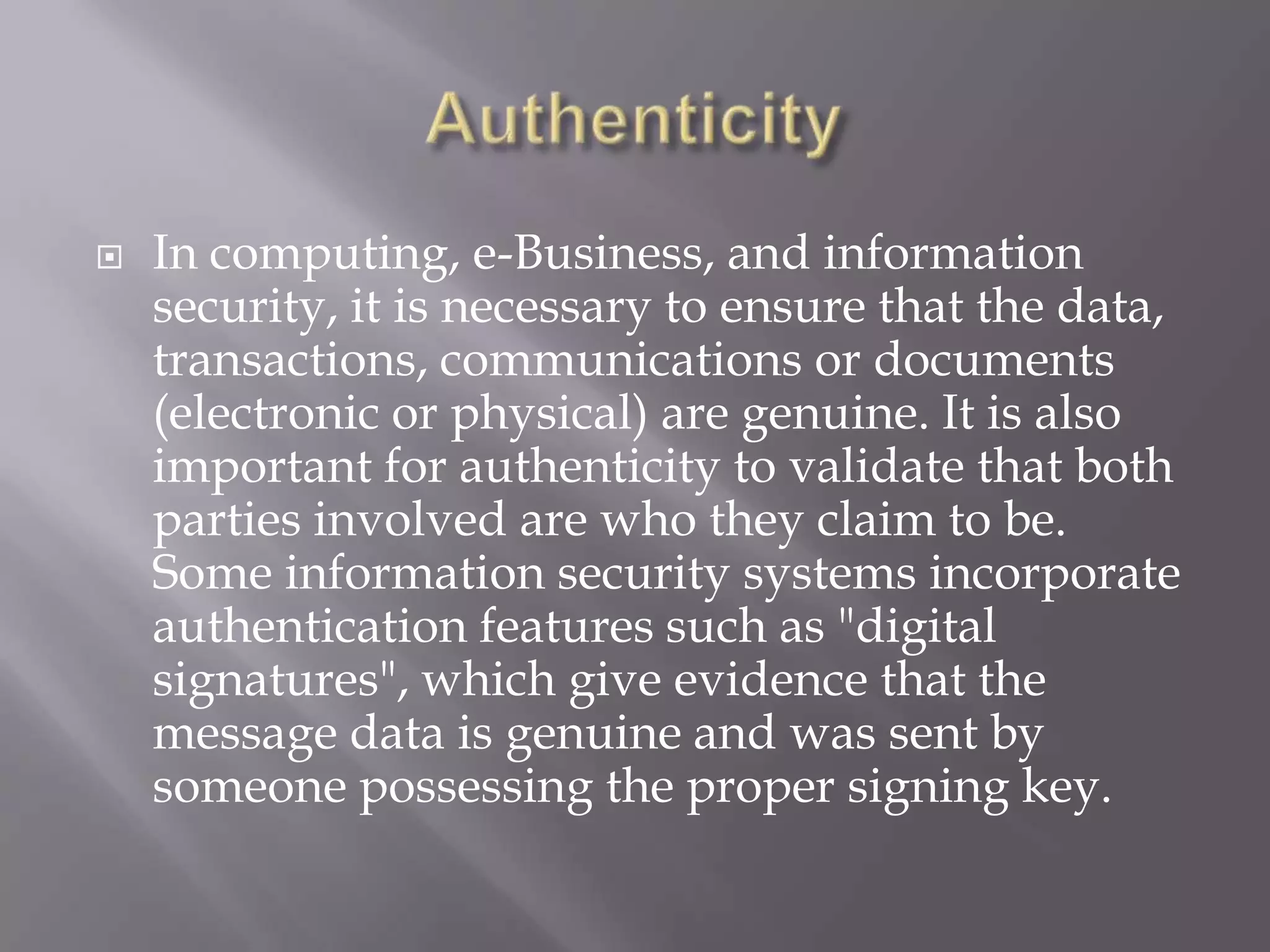
In computing, e-Business, and information
security, it is necessary to ensure that the data,
transactions, communications or documents
(electronic or physical) are genuine. It is also
important for authenticity to validate that both
parties involved are who they claim to be.
Some information security systems incorporate
authentication features such as "digital
signatures", which give evidence that the
message data is genuine and was sent by
someone possessing the proper signing key.




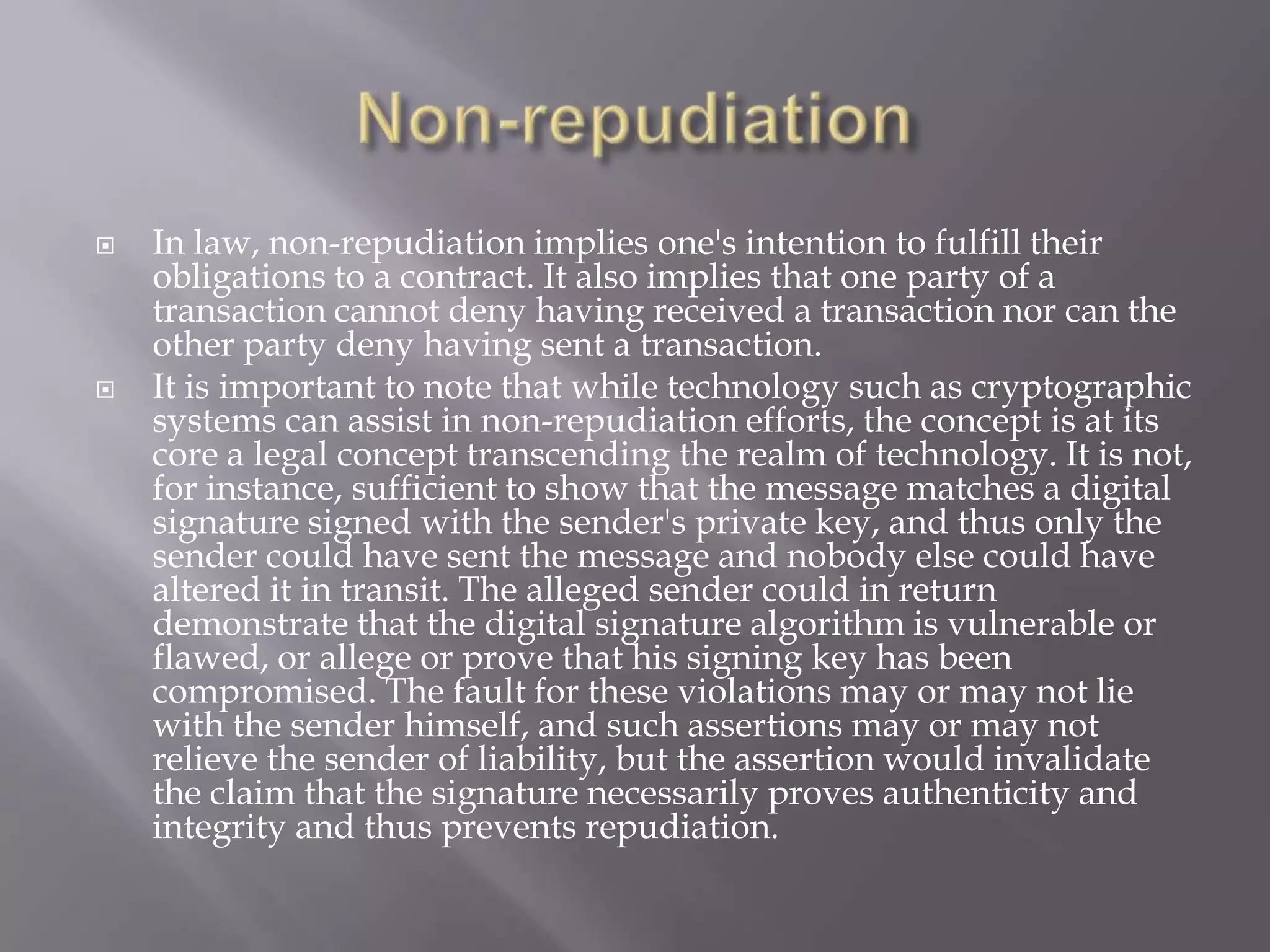
In law, non-repudiation implies one's intention to fulfill their
obligations to a contract. It also implies that one party of a
transaction cannot deny having received a transaction nor can the
other party deny having sent a transaction.
It is important to note that while technology such as cryptographic
systems can assist in non-repudiation efforts, the concept is at its
core a legal concept transcending the realm of technology. It is not,
for instance, sufficient to show that the message matches a digital
signature signed with the sender's private key, and thus only the
sender could have sent the message and nobody else could have
altered it in transit. The alleged sender could in return
demonstrate that the digital signature algorithm is vulnerable or
flawed, or allege or prove that his signing key has been
compromised. The fault for these violations may or may not lie
with the sender himself, and such assertions may or may not
relieve the sender of liability, but the assertion would invalidate
the claim that the signature necessarily proves authenticity and
integrity and thus prevents repudiation.




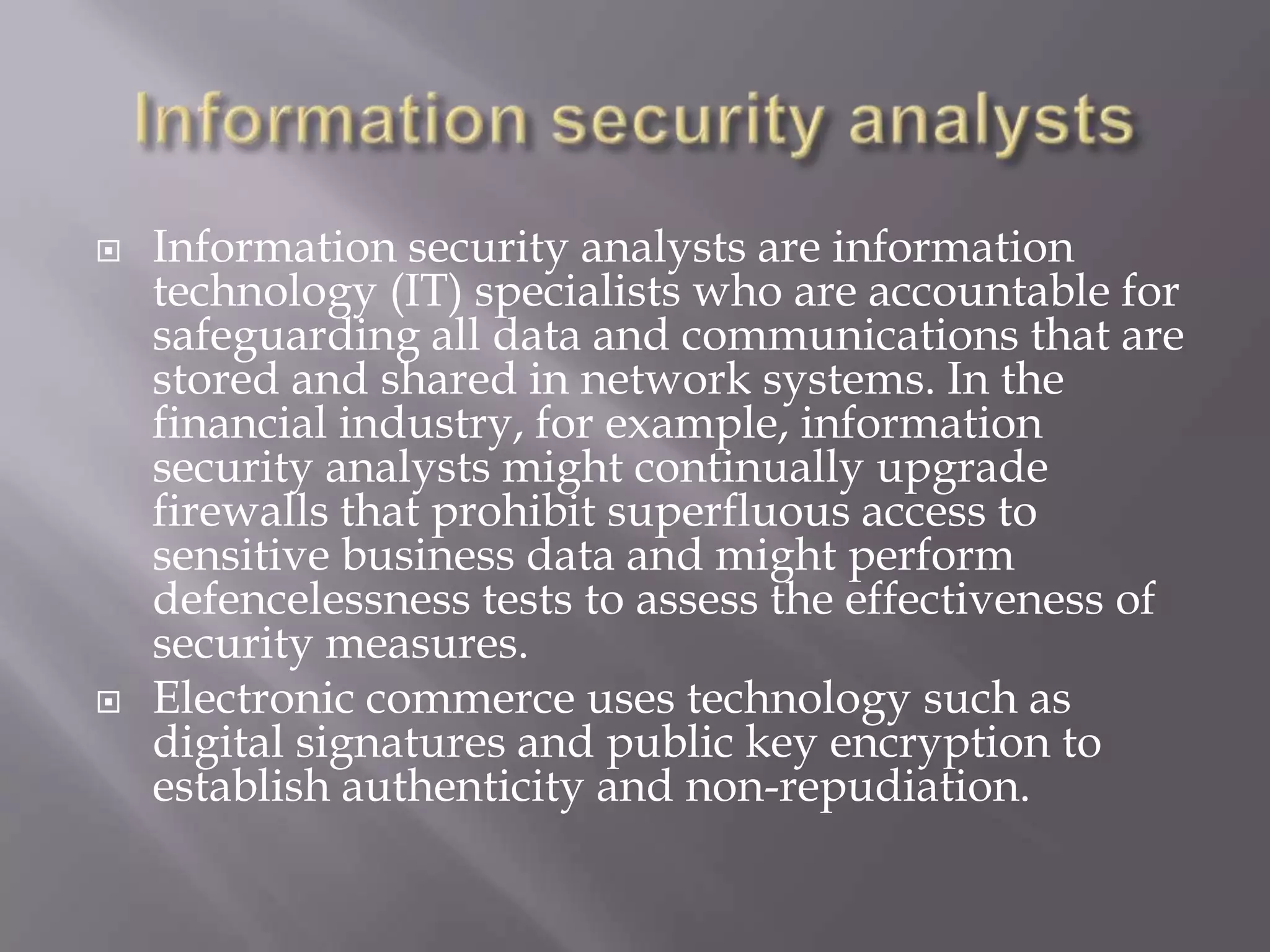
Information security analysts are information
technology (IT) specialists who are accountable for
safeguarding all data and communications that are
stored and shared in network systems. In the
financial industry, for example, information
security analysts might continually upgrade
firewalls that prohibit superfluous access to
sensitive business data and might perform
defencelessness tests to assess the effectiveness of
security measures.
Electronic commerce uses technology such as
digital signatures and public key encryption to
establish authenticity and non-repudiation.
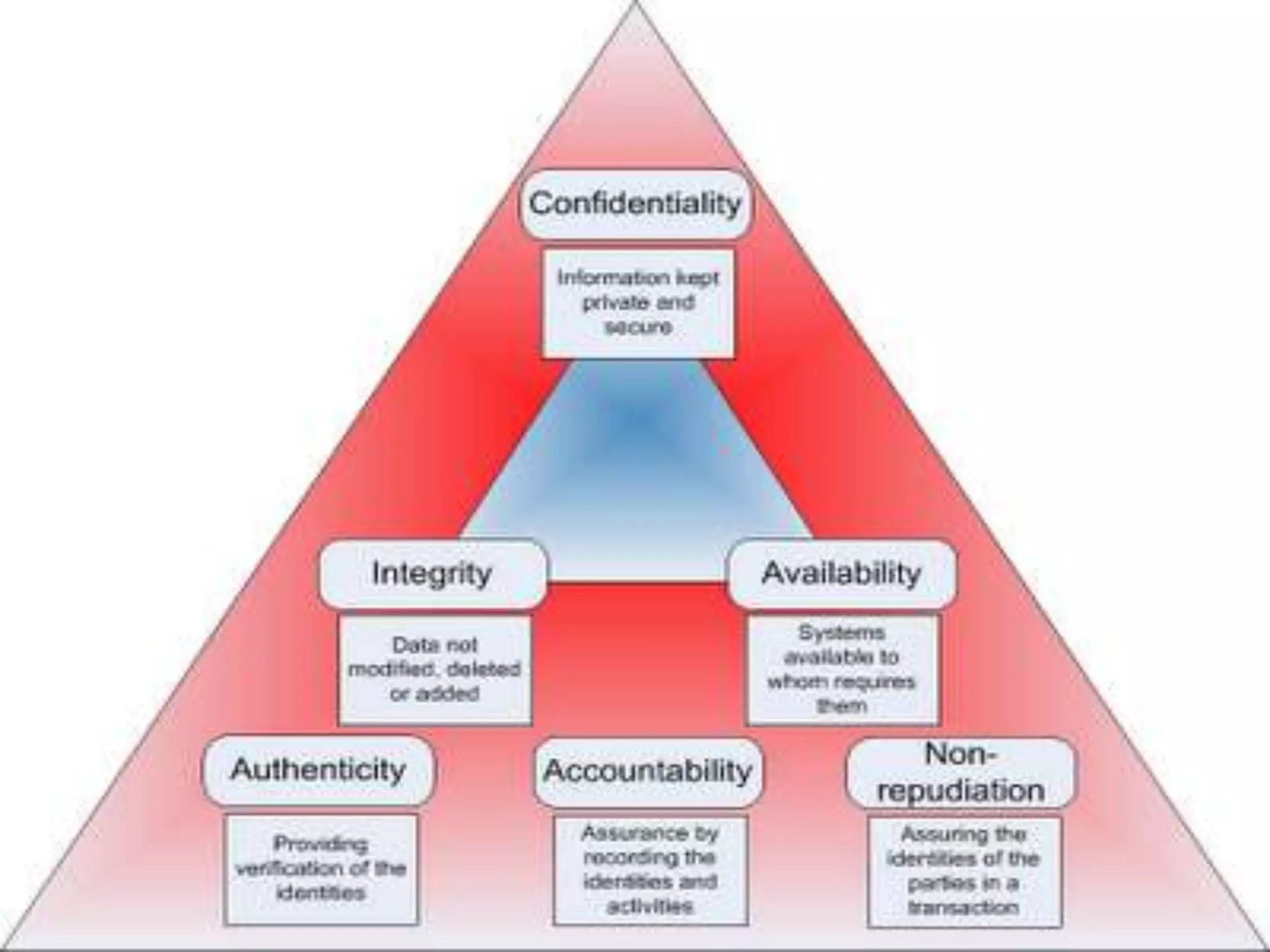
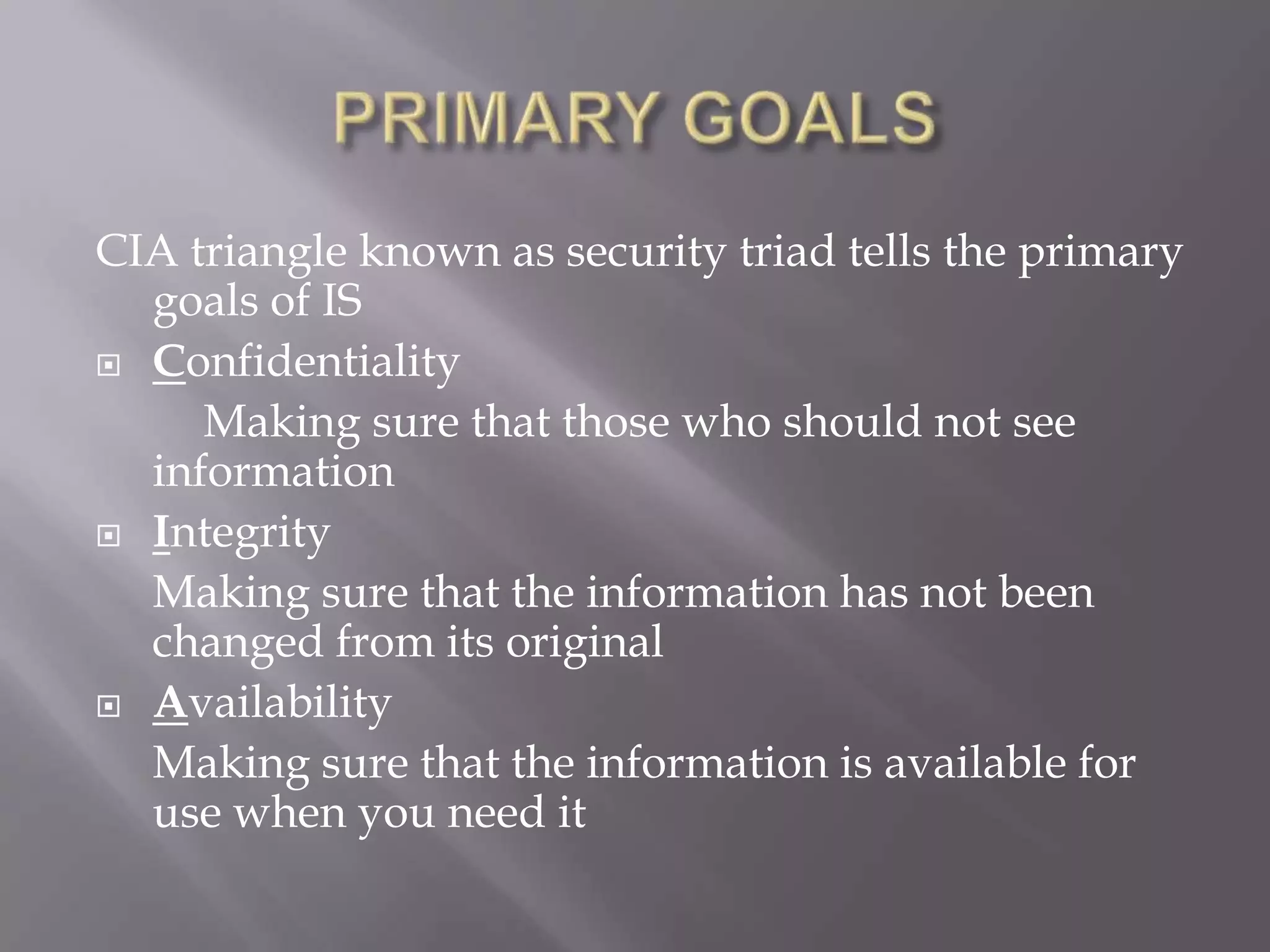
CIA triangle known as security triad tells the primary
goals of IS
 Confidentiality
Making sure that those who should not see
information
 Integrity
Making sure that the information has not been
changed from its original
 Availability
Making sure that the information is available for
use when you need it
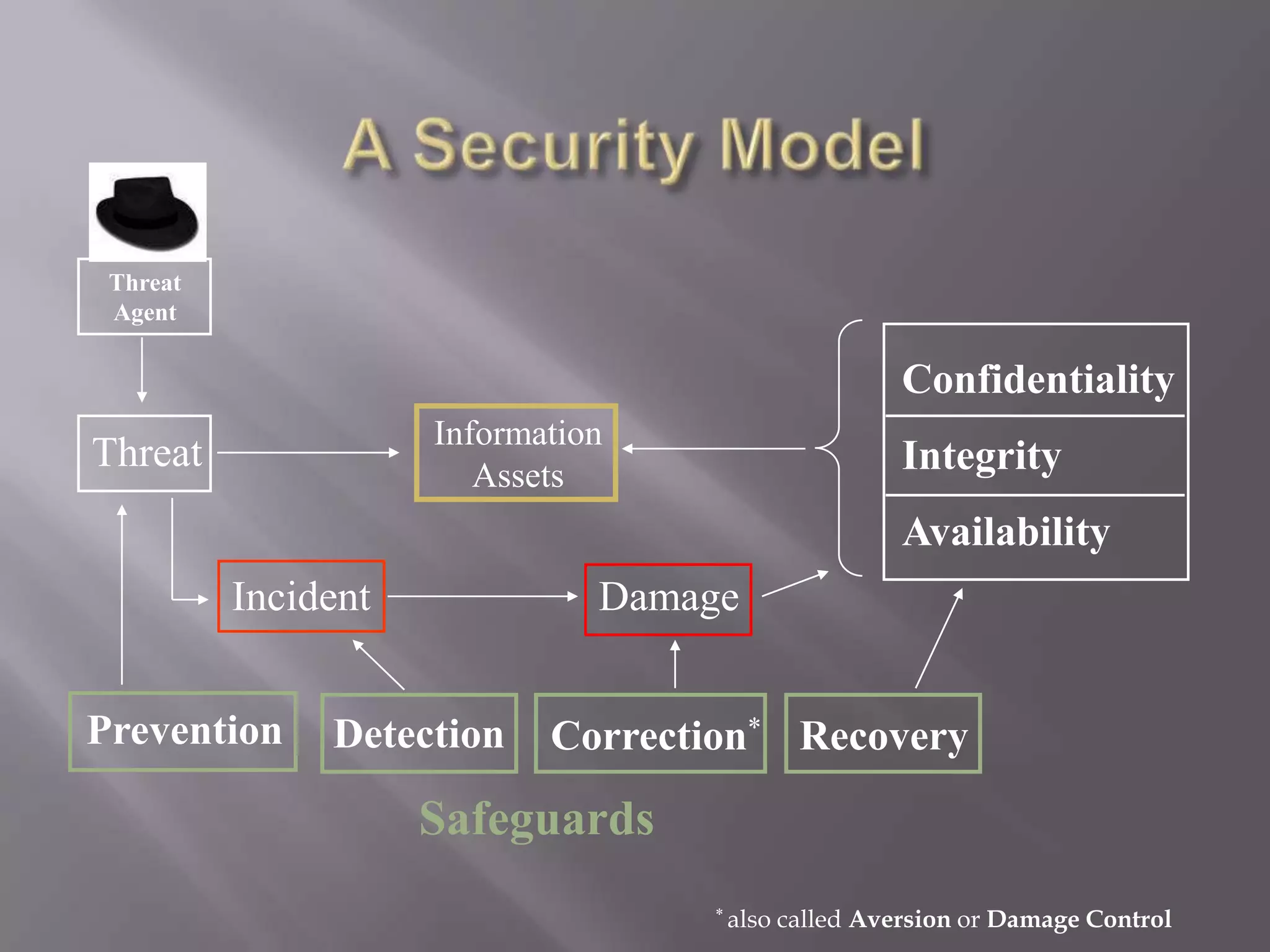
Threat
Agent

Confidentiality
Information
Assets

Threat

Integrity
Availability

Incident
Prevention

Damage

Detection

Correction* Recovery

Safeguards
* also

called Aversion or Damage Control
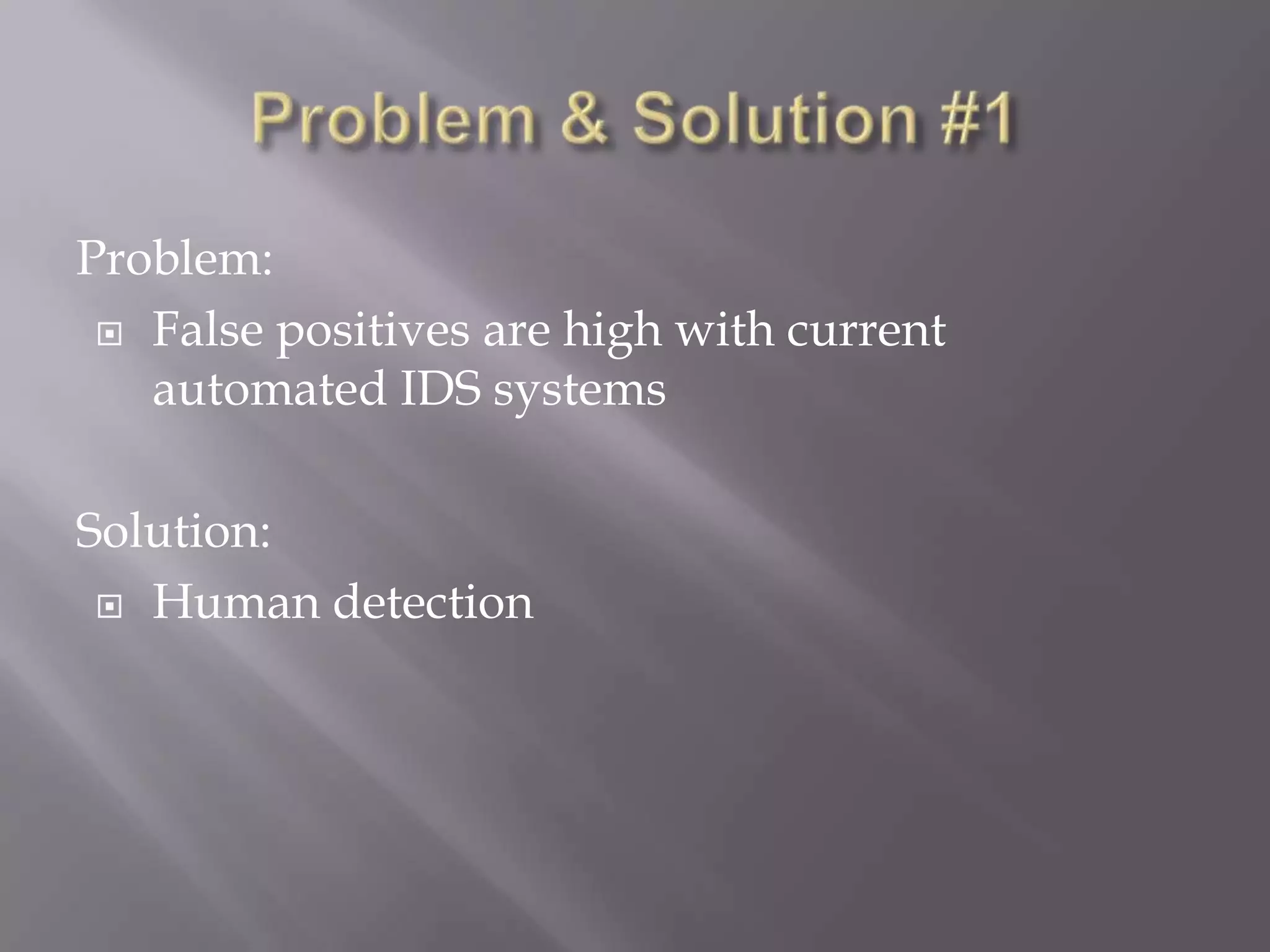
Problem:
 False positives are high with current
automated IDS systems
Solution:
 Human detection
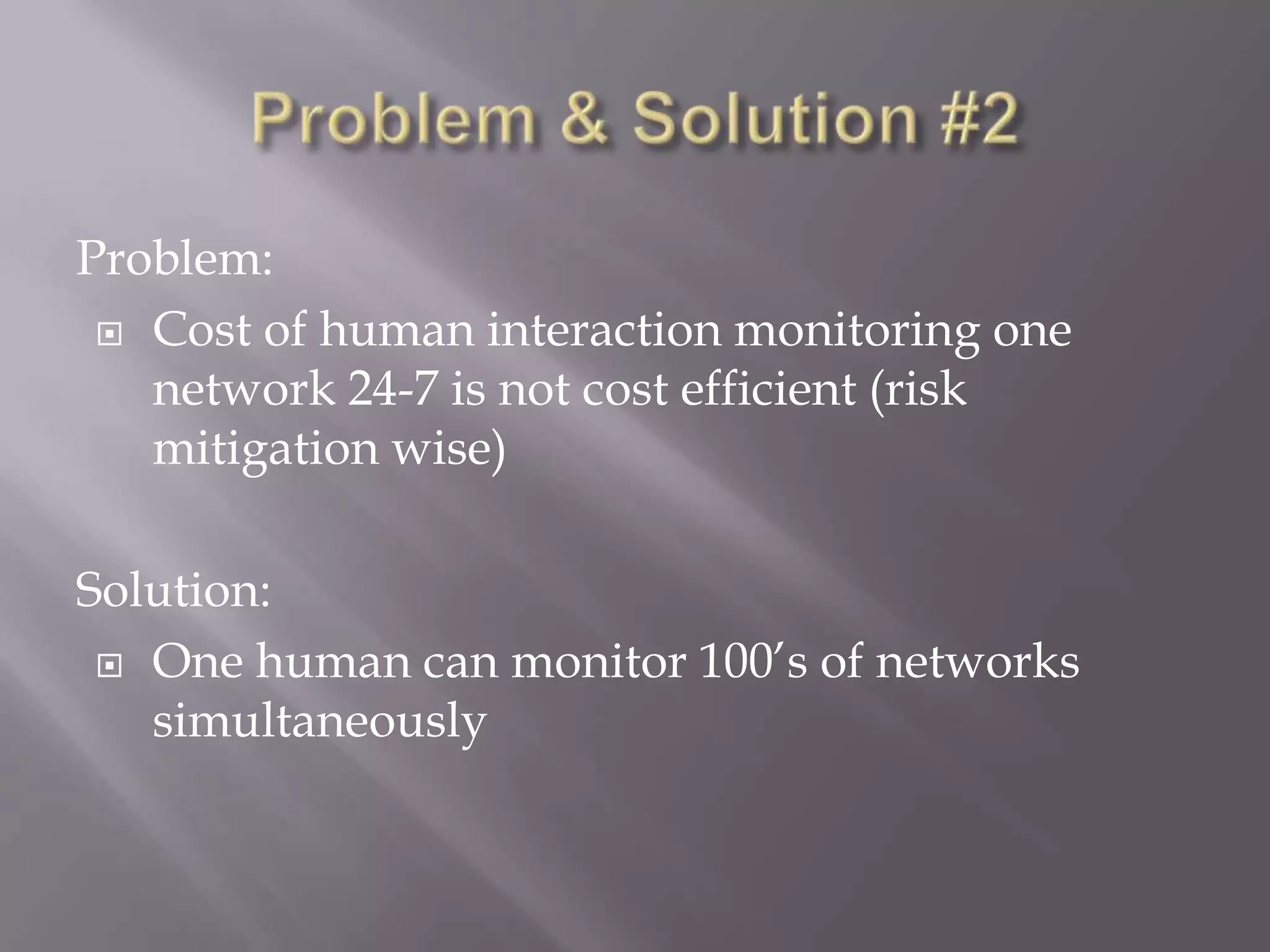
Problem:
 Cost of human interaction monitoring one
network 24-7 is not cost efficient (risk
mitigation wise)
Solution:
 One human can monitor 100’s of networks
simultaneously
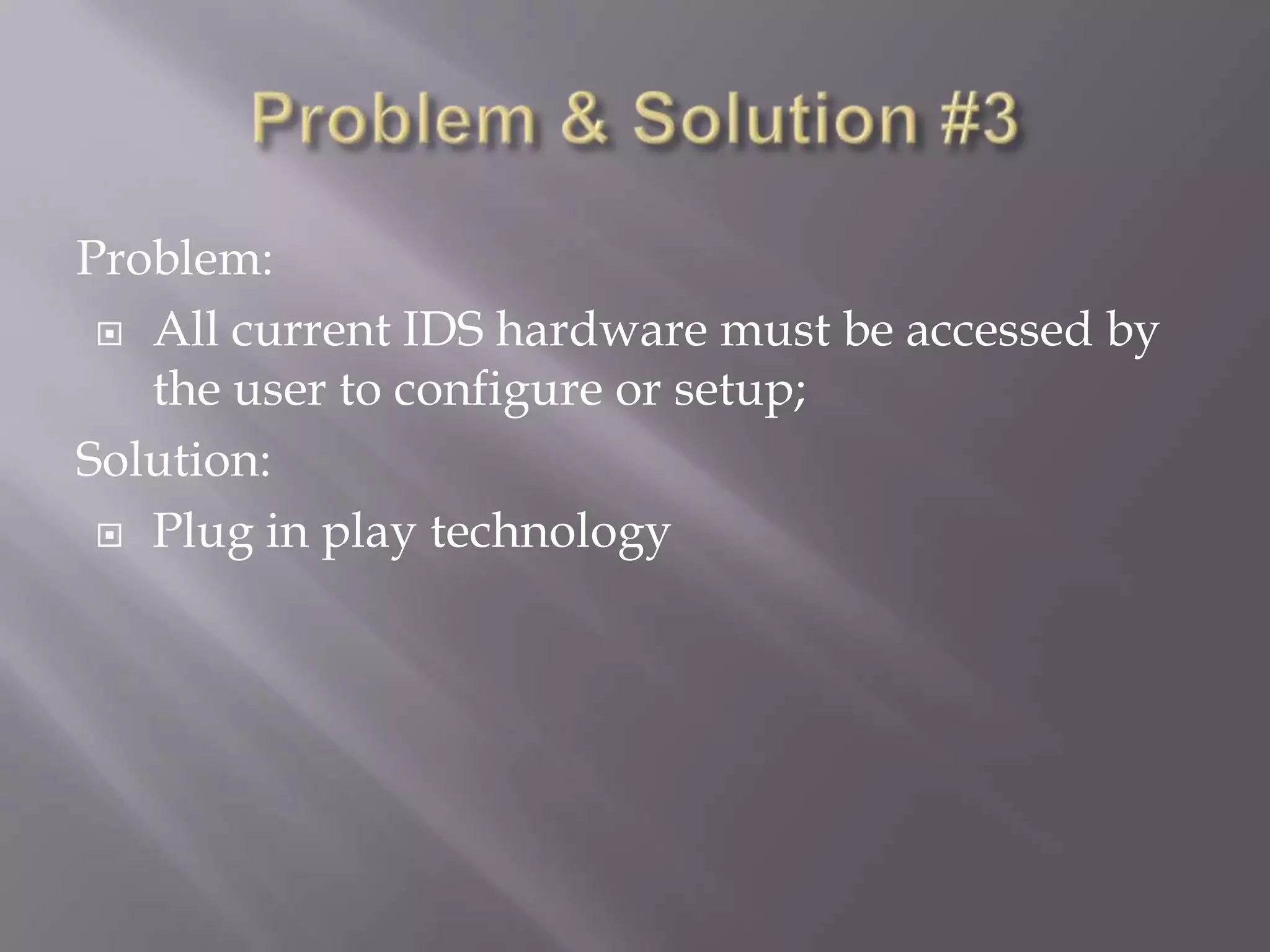
Problem:
 All current IDS hardware must be accessed by
the user to configure or setup;
Solution:
 Plug in play technology
Problem:
 Time intruder has access to network
Solution:
 Notification of compromised network to key
people within seconds
Problem:
 Scan all traffic causing latency and bottlenecks
in network
Solution:
 Passive and aggressive scanning used to sniff
traffic samples
Problem:
 Cannot detect novel or unknown attacks
Solution:
 Anomaly detection methods to audit data, also
using device specific traffic presence detection
Problem:
 Space to hold data collected over a period of
time during normal operation
Solution:
 Cloud based storage which allows collection
and collaboration with all devices in play
Problem:
 Locked into one method technique of detection
Solution:
 Use multiple techniques to detect
Problem:
 Cost of hardware $1,000-$7,000 plus licenses
Solution:
 $24 cost for hardware to run device
(store price)

security IDS

  • 1.
    3 main pointsC.I.A.--related to hardware, software, and communications
  • 2.
        Information security, sometimesshortened to InfoSec, is the practice of defending information from unauthorized access, use, disclosure, disruption, modification, perusal, inspection, recording or destruction. It is a general term that can be used regardless of the form the data may take (electronic, physical, etc...)[1] Two major aspects of information security are: IT security: Sometimes referred to as computer security, Information Technology Security is information security applied to technology (most often some form of computer system). It is worthwhile to note that a computer does not necessarily mean a home desktop. A computer is any device with a processor and some memory (even a calculator). IT security specialists are almost always found in any major enterprise/establishment due to the nature and value of the data within larger businesses. They are responsible for keeping all of the technology within the company secure from malicious cyber attacks that often attempt to breach into critical private information or gain control of the internal systems. Information assurance: The act of ensuring that data is not lost when critical issues arise. These issues include but are not limited to: natural disasters, computer/server malfunction, physical theft, or any other instance where data has the potential of being lost. Since most information is stored on computers in our modern era, information assurance is typically dealt with by IT security specialists. One of the most common methods of providing information assurance is to have an off-site backup of the data in case one of the mentioned issues arise.
  • 4.
     Information Security Attributes:or qualities, i.e., Confidentiality, Integrity and Availability (CIA). Information Systems are composed in three main portions, hardware, software and communications with the purpose to help identify and apply information security industry standards, as mechanisms of protection and prevention, at three levels or layers: physical, personal and organizational. Essentially, procedures or policies are implemented to tell people (administrators, users and operators) how to use products to ensure information security within the organizations.
  • 5.
      Confidentiality refers topreventing the disclosure of information to unauthorized individuals or systems. For example, a credit card transaction on the Internet requires the credit card number to be transmitted from the buyer to the merchant and from the merchant to a transaction processing network. The system attempts to enforce confidentiality by encrypting the card number during transmission, by limiting the places where it might appear (in databases, log files, backups, printed receipts, and so on), and by restricting access to the places where it is stored. If an unauthorized party obtains the card number in any way, a breach of confidentiality has occurred. Confidentiality is necessary for maintaining the privacy of the people whose personal information is held in the system.
  • 6.
     In information security,data integrity means maintaining and assuring the accuracy and consistency of data over its entire life-cycle.[16] This means that data cannot be modified in an unauthorized or undetected manner. This is not the same thing as referential integrity in databases, although it can be viewed as a special case of Consistency as understood in the classic ACID model of transaction processing. Integrity is violated when a message is actively modified in transit. Information security systems typically provide message integrity in addition to data confidentiality.
  • 7.
     For any informationsystem to serve its purpose, the information must be available when it is needed. This means that the computing systems used to store and process the information, the security controls used to protect it, and the communication channels used to access it must be functioning correctly. High availability systems aim to remain available at all times, preventing service disruptions due to power outages, hardware failures, and system upgrades. Ensuring availability also involves preventing denial-ofservice attacks, such as a flood of incoming messages to the target system essentially forcing it to shut down.
  • 8.
     In computing, e-Business,and information security, it is necessary to ensure that the data, transactions, communications or documents (electronic or physical) are genuine. It is also important for authenticity to validate that both parties involved are who they claim to be. Some information security systems incorporate authentication features such as "digital signatures", which give evidence that the message data is genuine and was sent by someone possessing the proper signing key.
  • 9.
      In law, non-repudiationimplies one's intention to fulfill their obligations to a contract. It also implies that one party of a transaction cannot deny having received a transaction nor can the other party deny having sent a transaction. It is important to note that while technology such as cryptographic systems can assist in non-repudiation efforts, the concept is at its core a legal concept transcending the realm of technology. It is not, for instance, sufficient to show that the message matches a digital signature signed with the sender's private key, and thus only the sender could have sent the message and nobody else could have altered it in transit. The alleged sender could in return demonstrate that the digital signature algorithm is vulnerable or flawed, or allege or prove that his signing key has been compromised. The fault for these violations may or may not lie with the sender himself, and such assertions may or may not relieve the sender of liability, but the assertion would invalidate the claim that the signature necessarily proves authenticity and integrity and thus prevents repudiation.
  • 10.
      Information security analystsare information technology (IT) specialists who are accountable for safeguarding all data and communications that are stored and shared in network systems. In the financial industry, for example, information security analysts might continually upgrade firewalls that prohibit superfluous access to sensitive business data and might perform defencelessness tests to assess the effectiveness of security measures. Electronic commerce uses technology such as digital signatures and public key encryption to establish authenticity and non-repudiation.
  • 11.
    CIA triangle knownas security triad tells the primary goals of IS  Confidentiality Making sure that those who should not see information  Integrity Making sure that the information has not been changed from its original  Availability Making sure that the information is available for use when you need it
  • 12.
  • 13.
    Problem:  False positivesare high with current automated IDS systems Solution:  Human detection
  • 14.
    Problem:  Cost ofhuman interaction monitoring one network 24-7 is not cost efficient (risk mitigation wise) Solution:  One human can monitor 100’s of networks simultaneously
  • 15.
    Problem:  All currentIDS hardware must be accessed by the user to configure or setup; Solution:  Plug in play technology
  • 16.
    Problem:  Time intruderhas access to network Solution:  Notification of compromised network to key people within seconds
  • 17.
    Problem:  Scan alltraffic causing latency and bottlenecks in network Solution:  Passive and aggressive scanning used to sniff traffic samples
  • 18.
    Problem:  Cannot detectnovel or unknown attacks Solution:  Anomaly detection methods to audit data, also using device specific traffic presence detection
  • 19.
    Problem:  Space tohold data collected over a period of time during normal operation Solution:  Cloud based storage which allows collection and collaboration with all devices in play
  • 20.
    Problem:  Locked intoone method technique of detection Solution:  Use multiple techniques to detect
  • 21.
    Problem:  Cost ofhardware $1,000-$7,000 plus licenses Solution:  $24 cost for hardware to run device (store price)

Editor's Notes

  • #16 which results in reverse engineering to find security holes.---------disable access to hardware no way to interface or change
  • #19 If something on the network scans the ids it will cause alarms, therefore preventingThe network to be scanned.
  • #20 Remote management/montoring