ASPECTS OF DATA SECURITY
Data security becomes more important when using cloud computing
at all “levels”: infrastructure-as-a-service (IaaS), platform-as-a-
service (PaaS), and software-as-a-service.
Data-in-transit
Data-at-rest
Processing of data, including multitenancy
Data lineage
Data provenance
Data remanence
DATA-IN-TRANSIT:
To insure the security of data in transit it is not only important to use
a vetted encryption algorithm, but also it is important to ensure that
the service protocol provides confidentiality as well as integrity (e.g.,
FTP over SSL [FTPS], Hypertext Transfer Protocol Secure [HTTPS], and
Secure Copy Program [SCP])—particularly if the protocol is used for
transferring data across the Internet.
Encrypting data and using a non-secured protocol (e.g., FTP or HTTP)
can provide confidentiality, but does not ensure the integrity of the
data.
DATA-AT-REST
If you are using an IaaS cloud service (public or private) for simple storage
(e.g., Amazon’s Simple Storage Service or S3), encrypting data-at-rest is
possible—and is strongly suggested.
However, encrypting data-at-rest that a PaaS or SaaS cloud-based
application is using (e.g., Google Apps, Salesforce.com) is not always
feasible. Data-at-rest used by a cloud-based application is generally not
encrypted, because encryption would prevent indexing or searching of that
data.
In other words, data, when processed by a cloud-based application or
stored for use by a cloud-based application, is commingled with other
users’ data (i.e., it is typically stored in a massive data store, such as
Google’s BigTable)
PROCESSING OF DATA, INCLUDING
MULTITENANCY
For any application to process data, that data must be unencrypted.
Until June 2009, there was no known method for fully processing
encrypted data.
Therefore, unless the data is in the cloud for only simple storage, the
data will be unencrypted during at least part of its life cycle in the
cloud—processing at a minimum
DATA LINEAGE
Whether the data of an organization has been put into the cloud is
encrypted or not, it is useful and might be required (for audit or
compliance purposes) to know exactly where and when the data was
specifically located within the cloud.
Following the path of data (mapping application data flows or data
path visualization) is known as data lineage, and it is important for an
auditor’s assurance.
Trying to provide accurate reporting on data lineage for a public
cloud service is really not possible
DATA PROVENANCE
Data provenance documents the inputs, entities, systems, and
processes that influence data of interest, in effect providing a
historical record of the data and its origins.
Those resources are not under your physical or even logical control,
and you probably have no ability to track the systems used or their
state at the times you used them—even if you know some identifying
information about the systems (e.g., their IP addresses) and the
“general” location (e.g., a country, and not even a specific data
center).
DATA REMANENCE
Data remanence is the residual representation of digital data that remains
even after attempts have been made to remove or erase the data.
This residue may be due to data being left intact by a nominal delete
operation, or through physical properties of the storage medium.
Data remanence may make inadvertent disclosure of sensitive information
possible. The risk posed by data remanence in cloud services is that an
organization’s data can be inadvertently exposed to an unauthorized
party—regardless of which cloud service you are using.
Various techniques have been developed to counter data remanence. These
techniques are classified as clearing, purging/sanitizing, or destruction.
DATA SECURITY MITIGATION
what should you do to mitigate these risks to data security? The only
viable option for mitigation is to ensure that any sensitive or
regulated data is not placed into a public cloud (or that you encrypt
data placed into the cloud for simple storage only)
PROVIDER DATA AND ITS SECURITY
In addition to the security of customers own data, customers should
also be concerned about what data the provider collects and how the
CSP protects that data. What metadata does the provider have about
customer data, how is it secured, and what of it is accessible to the
customer?
Additionally, your provider collects and must protect a huge amount
of security-related data
What data your CSP collects and how it monitors and protects that
data is important to the provider for its own audit purposes
Additionally, this information is important to both providers and
customers in case it is needed for incident response and any digital
forensics required for incident analysis.
STORAGE SECURITY
The same three information security concerns are associated with this
data stored in the cloud (e.g., Amazon’s S3) as with data stored
elsewhere:
1. confidentiality,
2. integrity,
3. availability
CONFIDENTIALITY
When it comes to the confidentiality of data stored in a public cloud,
you have two potential concerns.
First, what access control exists to protect the data? Access control
consists of both authentication and authorization.
The second potential concern is: How is the data that is stored in the
cloud actually protected? For all practical purposes, protection of data
stored in the cloud involves the use of encryption. So, is a customer’s
data actually encrypted when it is stored in the cloud? And if so, what
encryption algorithm, and with what key strength?
It depends, and specifically, it depends on which CSP you are using.
For example, EMC’s MozyEnterprise does encrypt a customer’s data.
However, AWS S3 does not encrypt a customer’s data. Customers are
able to encrypt their own data themselves prior to uploading, but S3
does not provide encryption.
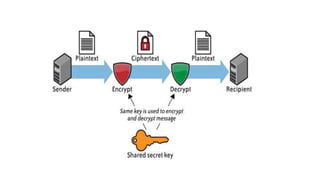
If a CSP does encrypt a customer’s data, the next consideration
concerns what encryption algorithm it uses. Only symmetric
encryption has the speed and computational efficiency to handle
encryption of large volumes of data. It would be highly unusual to use
an asymmetric algorithm for this encryption use case.
The next consideration for you is what key length is used.
What can be said is that key lengths should be a minimum of 112 bits
for Triple DES (Data Encryption Standard) and 128-bits for AES
(Advanced Encryption Standard).
Another confidentiality consideration for encryption is key
management. How are the encryption keys that are used going to be
managed—and by whom? Are you going to manage your own keys?
Hopefully, the answer is yes, and hopefully you have the expertise to
manage your own keys.
This means additional resources and capabilities are necessary. At a
minimum, a customer should consult all three parts of NIST’s 800-
57,
“Part 1: General”
“Part 2: Best Practices for Key Management Organization”
“Part 3: Application-Specific Key Management Guidance (Draft)”
Because key management is complex and difficult for a single
customer, it is even more complex and difficult for CSPs to try to
properly manage multiple customers’ keys
INTEGRITY
Confidentiality does not imply integrity; Encryption alone is sufficient
for confidentiality, but integrity also requires the use of message
authentication codes.
The simplest way to use MACs on encrypted data is to use a block
symmetric algorithm (as opposed to a streaming symmetric
algorithm) in cipher block chaining (CBC) mode, and to include a one-
way hash function.
Another aspect of data integrity is important, especially with bulk
storage using IaaS. Once a customer has several gigabytes (or more)
of its data up in the cloud for storage, how does the customer check
on the integrity of the data stored there?
What is needed instead is a proof of retrievability —that is, a
mathematical way to verify the integrity of the data as it is
AVAILABILITY
There are currently three major threats in this regard—none of which are
new to computing, but all of which take on increased importance in cloud
computing because of increased risk.
The first threat to availability is network-based attacks.
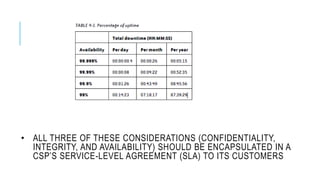
The second threat to availability is the CSP’s own availability. No CSPs offer
the sought-after “five 9s” (i.e., 99.999%) of uptime. A customer would be
lucky to get “three 9s” of uptime.
The third risk is absent of data backup as cloud storage does not mean the
stored data is actually backed up.
• ALL THREE OF THESE CONSIDERATIONS (CONFIDENTIALITY,
INTEGRITY, AND AVAILABILITY) SHOULD BE ENCAPSULATED IN A
CSP’S SERVICE-LEVEL AGREEMENT (SLA) TO ITS CUSTOMERS

Aspects of data security

  • 1.
  • 2.
    ASPECTS OF DATASECURITY Data security becomes more important when using cloud computing at all “levels”: infrastructure-as-a-service (IaaS), platform-as-a- service (PaaS), and software-as-a-service. Data-in-transit Data-at-rest Processing of data, including multitenancy Data lineage Data provenance Data remanence
  • 3.
    DATA-IN-TRANSIT: To insure thesecurity of data in transit it is not only important to use a vetted encryption algorithm, but also it is important to ensure that the service protocol provides confidentiality as well as integrity (e.g., FTP over SSL [FTPS], Hypertext Transfer Protocol Secure [HTTPS], and Secure Copy Program [SCP])—particularly if the protocol is used for transferring data across the Internet. Encrypting data and using a non-secured protocol (e.g., FTP or HTTP) can provide confidentiality, but does not ensure the integrity of the data.
  • 4.
    DATA-AT-REST If you areusing an IaaS cloud service (public or private) for simple storage (e.g., Amazon’s Simple Storage Service or S3), encrypting data-at-rest is possible—and is strongly suggested. However, encrypting data-at-rest that a PaaS or SaaS cloud-based application is using (e.g., Google Apps, Salesforce.com) is not always feasible. Data-at-rest used by a cloud-based application is generally not encrypted, because encryption would prevent indexing or searching of that data. In other words, data, when processed by a cloud-based application or stored for use by a cloud-based application, is commingled with other users’ data (i.e., it is typically stored in a massive data store, such as Google’s BigTable)
  • 5.
    PROCESSING OF DATA,INCLUDING MULTITENANCY For any application to process data, that data must be unencrypted. Until June 2009, there was no known method for fully processing encrypted data. Therefore, unless the data is in the cloud for only simple storage, the data will be unencrypted during at least part of its life cycle in the cloud—processing at a minimum
  • 6.
    DATA LINEAGE Whether thedata of an organization has been put into the cloud is encrypted or not, it is useful and might be required (for audit or compliance purposes) to know exactly where and when the data was specifically located within the cloud. Following the path of data (mapping application data flows or data path visualization) is known as data lineage, and it is important for an auditor’s assurance. Trying to provide accurate reporting on data lineage for a public cloud service is really not possible
  • 7.
    DATA PROVENANCE Data provenancedocuments the inputs, entities, systems, and processes that influence data of interest, in effect providing a historical record of the data and its origins. Those resources are not under your physical or even logical control, and you probably have no ability to track the systems used or their state at the times you used them—even if you know some identifying information about the systems (e.g., their IP addresses) and the “general” location (e.g., a country, and not even a specific data center).
  • 8.
    DATA REMANENCE Data remanenceis the residual representation of digital data that remains even after attempts have been made to remove or erase the data. This residue may be due to data being left intact by a nominal delete operation, or through physical properties of the storage medium. Data remanence may make inadvertent disclosure of sensitive information possible. The risk posed by data remanence in cloud services is that an organization’s data can be inadvertently exposed to an unauthorized party—regardless of which cloud service you are using. Various techniques have been developed to counter data remanence. These techniques are classified as clearing, purging/sanitizing, or destruction.
  • 9.
  • 10.
    what should youdo to mitigate these risks to data security? The only viable option for mitigation is to ensure that any sensitive or regulated data is not placed into a public cloud (or that you encrypt data placed into the cloud for simple storage only)
  • 11.
    PROVIDER DATA ANDITS SECURITY In addition to the security of customers own data, customers should also be concerned about what data the provider collects and how the CSP protects that data. What metadata does the provider have about customer data, how is it secured, and what of it is accessible to the customer? Additionally, your provider collects and must protect a huge amount of security-related data What data your CSP collects and how it monitors and protects that data is important to the provider for its own audit purposes Additionally, this information is important to both providers and customers in case it is needed for incident response and any digital forensics required for incident analysis.
  • 12.
    STORAGE SECURITY The samethree information security concerns are associated with this data stored in the cloud (e.g., Amazon’s S3) as with data stored elsewhere: 1. confidentiality, 2. integrity, 3. availability
  • 13.
    CONFIDENTIALITY When it comesto the confidentiality of data stored in a public cloud, you have two potential concerns. First, what access control exists to protect the data? Access control consists of both authentication and authorization. The second potential concern is: How is the data that is stored in the cloud actually protected? For all practical purposes, protection of data stored in the cloud involves the use of encryption. So, is a customer’s data actually encrypted when it is stored in the cloud? And if so, what encryption algorithm, and with what key strength? It depends, and specifically, it depends on which CSP you are using. For example, EMC’s MozyEnterprise does encrypt a customer’s data. However, AWS S3 does not encrypt a customer’s data. Customers are able to encrypt their own data themselves prior to uploading, but S3 does not provide encryption.
  • 14.
    If a CSPdoes encrypt a customer’s data, the next consideration concerns what encryption algorithm it uses. Only symmetric encryption has the speed and computational efficiency to handle encryption of large volumes of data. It would be highly unusual to use an asymmetric algorithm for this encryption use case.
  • 16.
    The next considerationfor you is what key length is used. What can be said is that key lengths should be a minimum of 112 bits for Triple DES (Data Encryption Standard) and 128-bits for AES (Advanced Encryption Standard). Another confidentiality consideration for encryption is key management. How are the encryption keys that are used going to be managed—and by whom? Are you going to manage your own keys? Hopefully, the answer is yes, and hopefully you have the expertise to manage your own keys.
  • 17.
    This means additionalresources and capabilities are necessary. At a minimum, a customer should consult all three parts of NIST’s 800- 57, “Part 1: General” “Part 2: Best Practices for Key Management Organization” “Part 3: Application-Specific Key Management Guidance (Draft)” Because key management is complex and difficult for a single customer, it is even more complex and difficult for CSPs to try to properly manage multiple customers’ keys
  • 18.
    INTEGRITY Confidentiality does notimply integrity; Encryption alone is sufficient for confidentiality, but integrity also requires the use of message authentication codes. The simplest way to use MACs on encrypted data is to use a block symmetric algorithm (as opposed to a streaming symmetric algorithm) in cipher block chaining (CBC) mode, and to include a one- way hash function. Another aspect of data integrity is important, especially with bulk storage using IaaS. Once a customer has several gigabytes (or more) of its data up in the cloud for storage, how does the customer check on the integrity of the data stored there? What is needed instead is a proof of retrievability —that is, a mathematical way to verify the integrity of the data as it is
  • 19.
    AVAILABILITY There are currentlythree major threats in this regard—none of which are new to computing, but all of which take on increased importance in cloud computing because of increased risk. The first threat to availability is network-based attacks. The second threat to availability is the CSP’s own availability. No CSPs offer the sought-after “five 9s” (i.e., 99.999%) of uptime. A customer would be lucky to get “three 9s” of uptime. The third risk is absent of data backup as cloud storage does not mean the stored data is actually backed up.
  • 20.
    • ALL THREEOF THESE CONSIDERATIONS (CONFIDENTIALITY, INTEGRITY, AND AVAILABILITY) SHOULD BE ENCAPSULATED IN A CSP’S SERVICE-LEVEL AGREEMENT (SLA) TO ITS CUSTOMERS