SECURE FILE STORAGE
ON CLOUD USING
HYBRID CRYPTOGRAPHY
INTRODUCTION
 Cloud storage is a convenient and reliable
option to store and retrieve data.
 The information over internet is becoming a
critical issue.
 Cryptography concept is used for securing
storage system of cloud.
LITERATUR SURVEY
 Punam V Maitri, Aruna Verma ”Data
security and cloud computing issues”
 Joseph Selvanayagam, Akash Singh,
Joans Michael, and Jaya Jeswani
“Secure File Storage on Cloud using
cryptography”
EXISTING SYSTEM
 User selects the file from the local
storage.
 The file will be uploaded to the cloud
after getting encrypted.
 It uses AES algorithms.
 It needs some more time for encryption
and decryption process.
PROPOSED SYSTEM
 The Proposed system is designed to provide
high security to the data.
 It converts the plain text into a cipher text
and store it into the cloud.
 It uses AES, 3DES and RC6 algorithms for
data encryption and decryption.
 It uses multithreading technique.
MODULE DESCRIPTION
Register
User can register themselves by giving username, password,
address, email-id and phone number.
Login
User can login using credentials.
Data encryption
Data will be encrypted using AES,3DES and RC6 algorithms.
 File upload
Encrypted file will be uploaded to the cloud.
 Request for file
If user wants to download a file then user needs to
request for a file to the cloud.
 Data decryption
Data will be decrypted by using AES, 3DES and
RC6 algorithm.
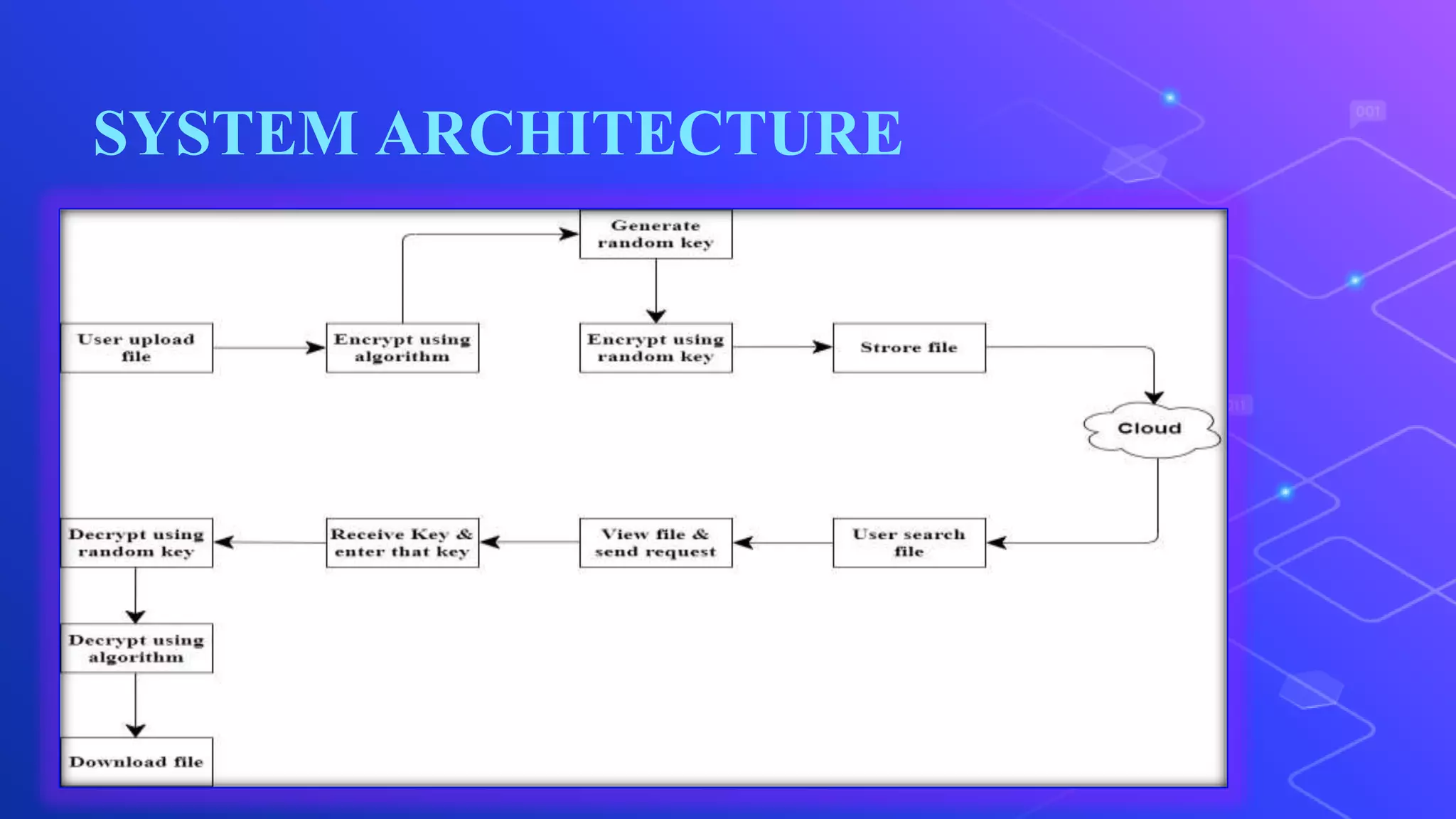
SYSTEM ARCHITECTURE
SYSTEM REQUIREMENTS
Hardware requirements
 System : Intel Core i3
 Hard Disk : 250 GB
 RAM : 4 GB
 Processor : i3 7th Generation
Software requirements
 Operating system : Windows 7
and above
 Front End :HTML,CSS, JavaScript
 Back End :SQLite Server
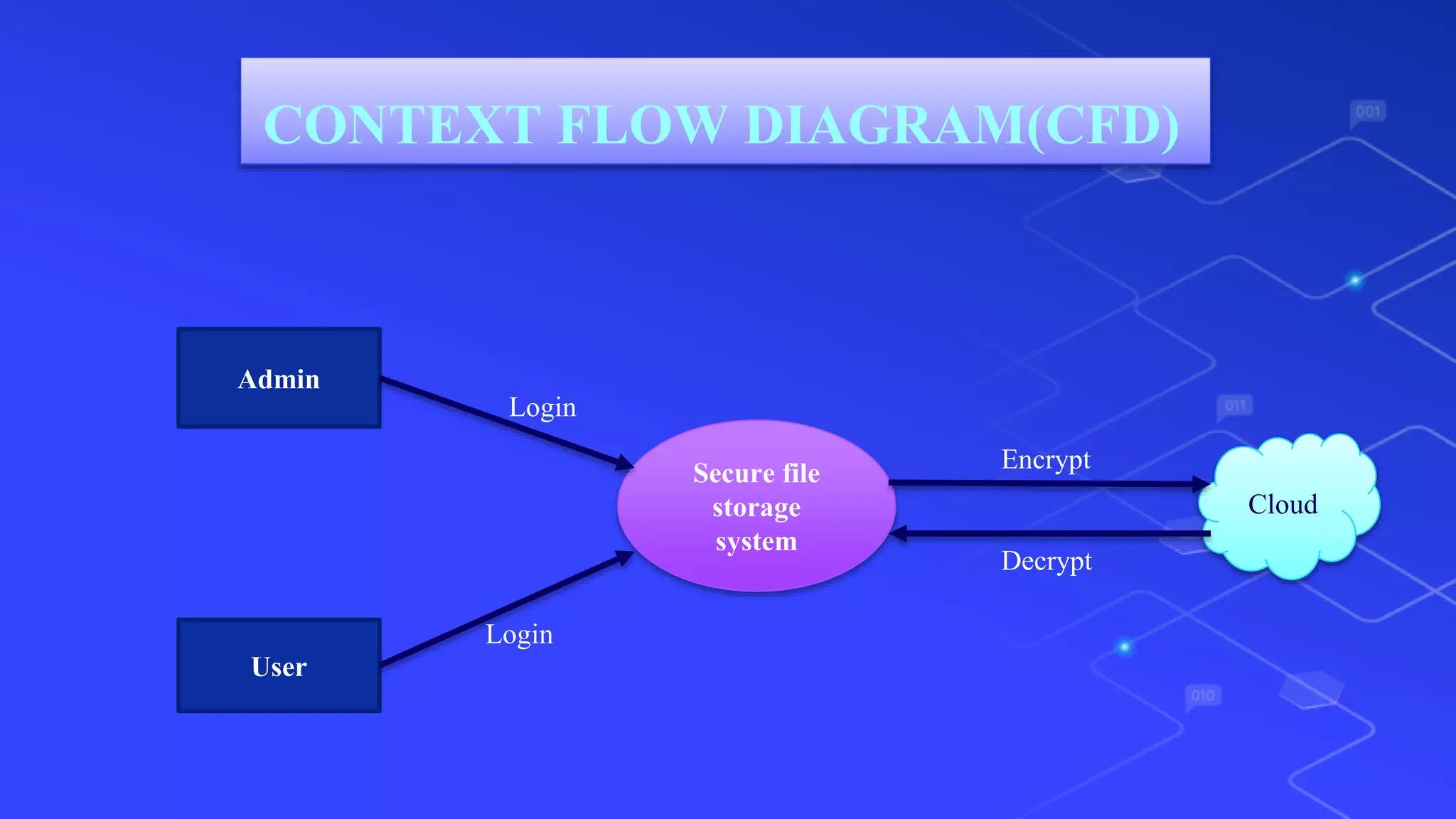
CONTEXT FLOW DIAGRAM(CFD)
Admin
User
Secure file
storage
system
Cloud
Login
Login
Encrypt
Decrypt
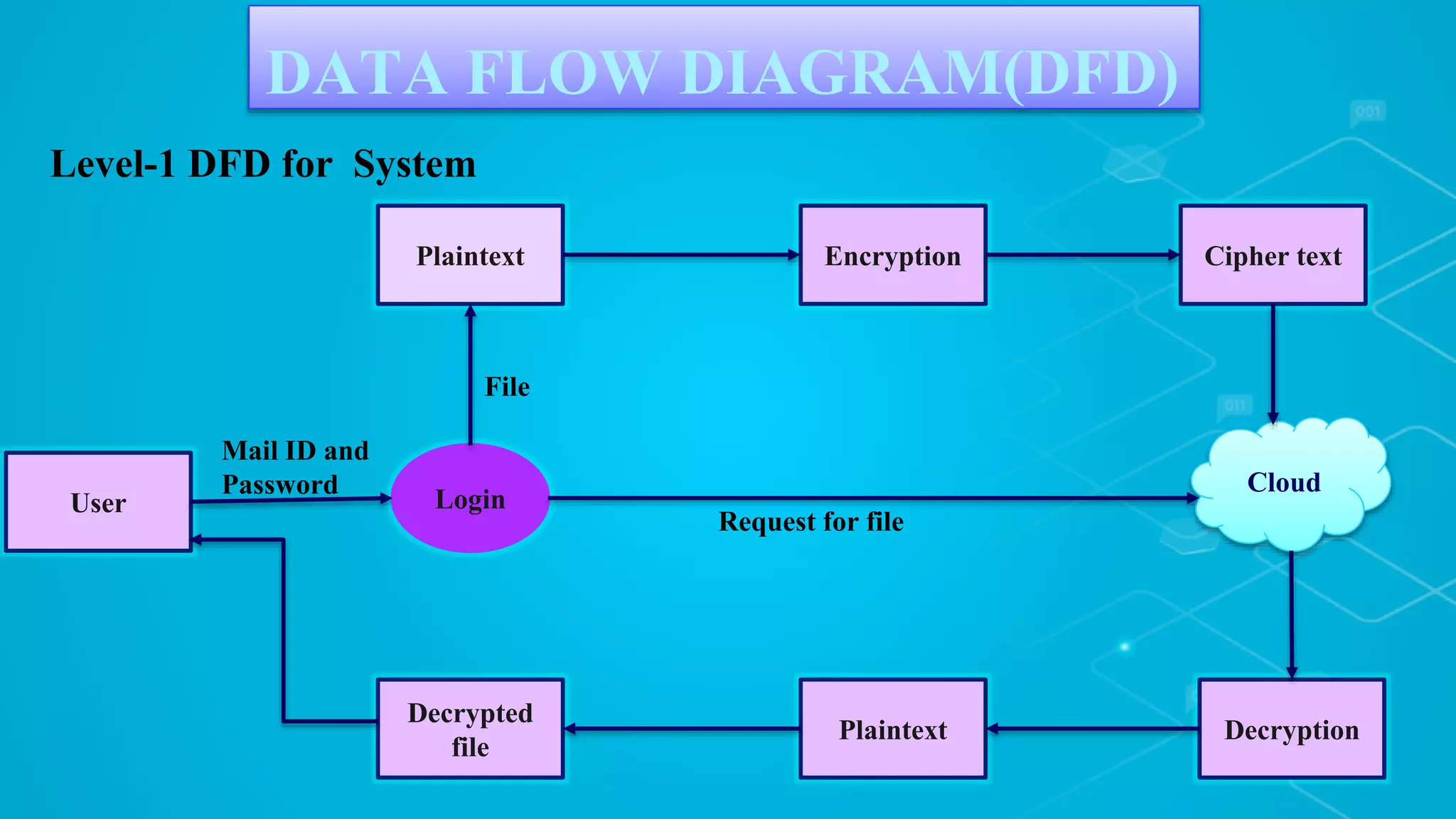
DATA FLOW DIAGRAM(DFD)
Plaintext Encryption Cipher text
User
Decryption
Plaintext
Decrypted
file
Cloud
Login
Request for file
File
Mail ID and
Password
Level-1 DFD for System
DFD LEVEL-2 for ADMIN
Admin Login
View
user
details
Database
Mail ID and
Password
Check for mail ID
And Password
Login
Successful
If mail ID and Password mismatch
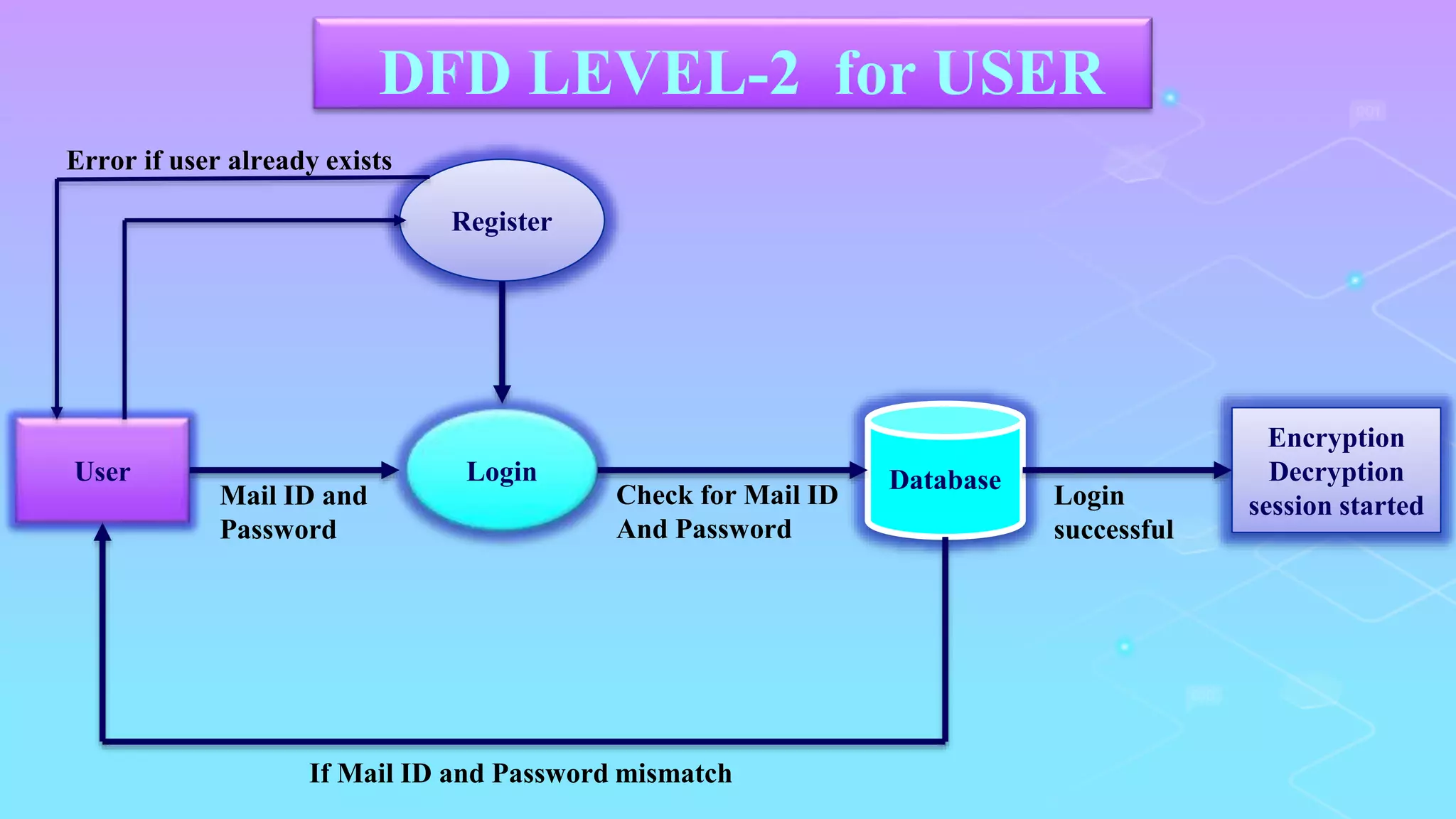
DFD LEVEL-2 for USER
User
Encryption
Decryption
session started
Register
Login Database
Mail ID and
Password
Check for Mail ID
And Password
Login
successful
If Mail ID and Password mismatch
Error if user already exists
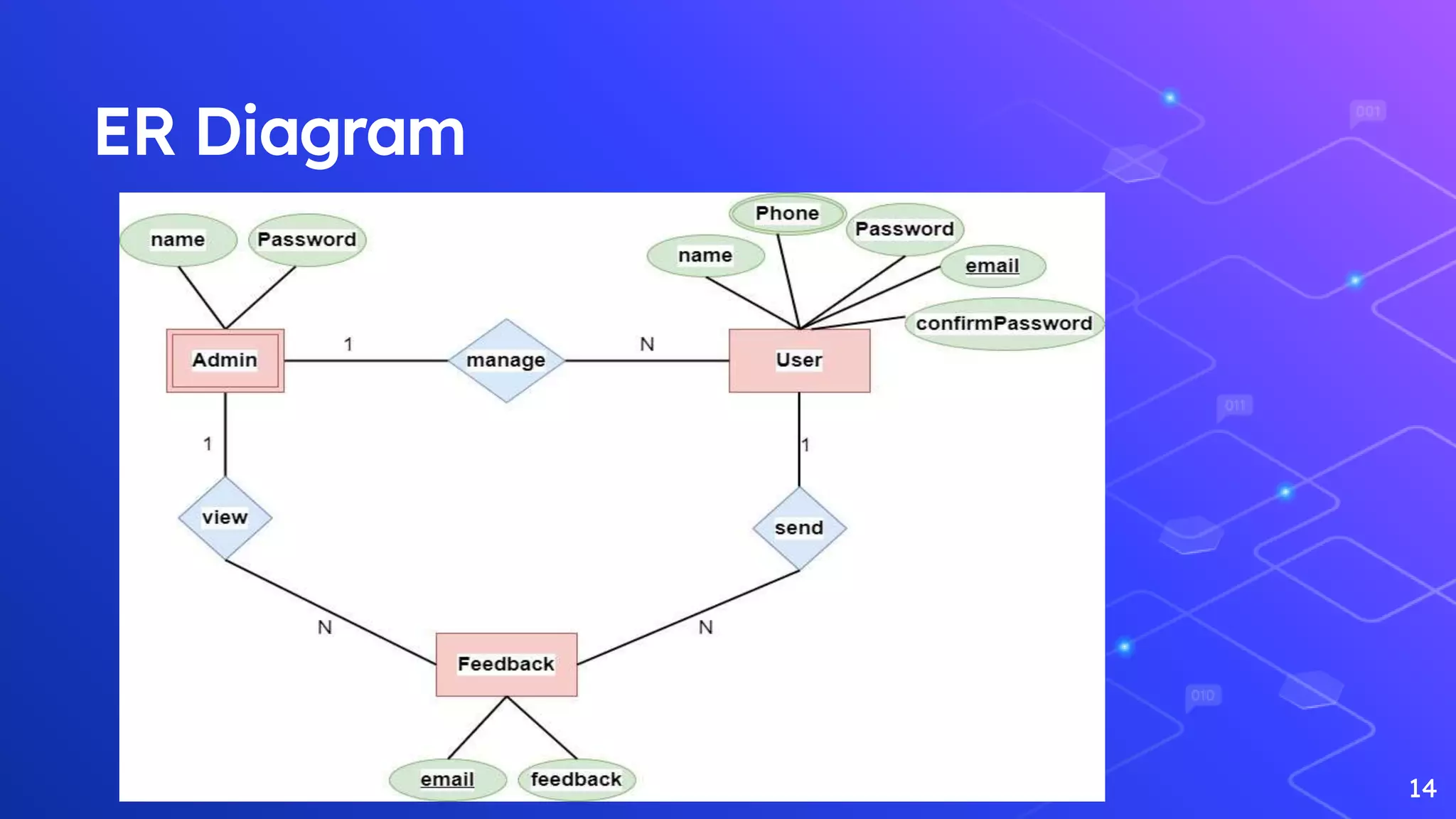
ER Diagram
14
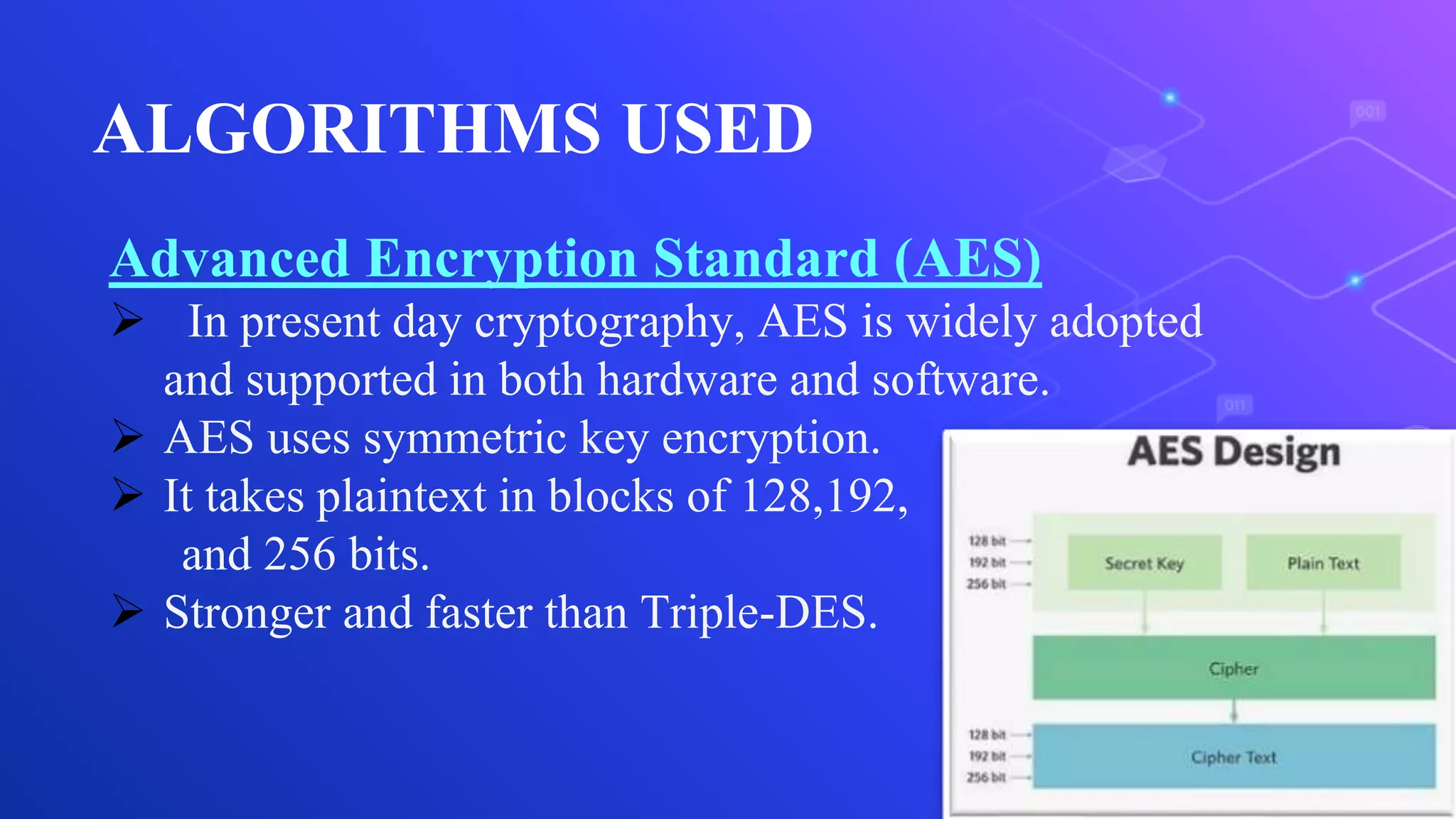
ALGORITHMS USED
Advanced Encryption Standard (AES)
 In present day cryptography, AES is widely adopted
and supported in both hardware and software.
 AES uses symmetric key encryption.
 It takes plaintext in blocks of 128,192,
and 256 bits.
 Stronger and faster than Triple-DES.
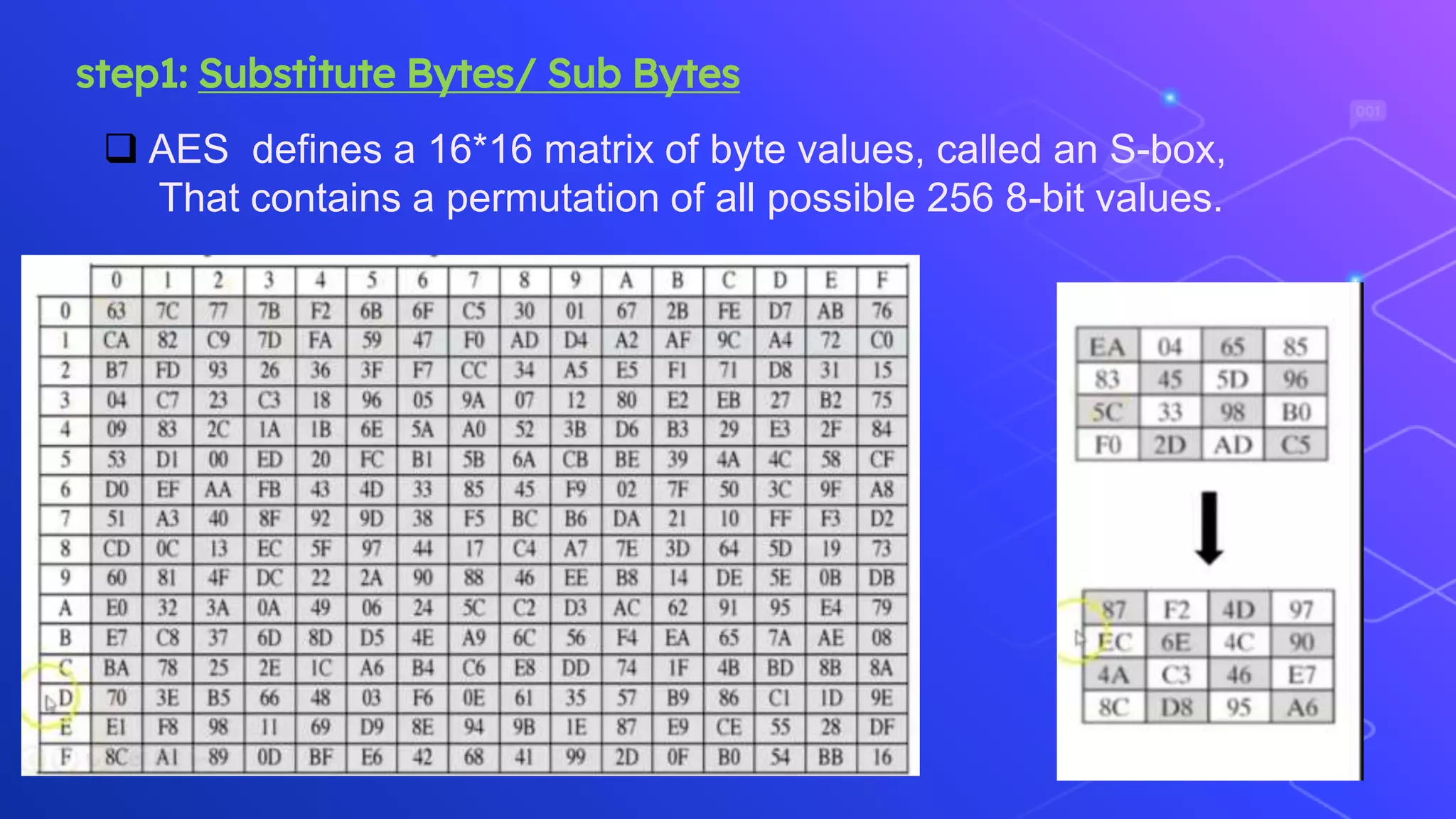
step1: Substitute Bytes/ Sub Bytes
 AES defines a 16*16 matrix of byte values, called an S-box,
That contains a permutation of all possible 256 8-bit values.
Below table is the inverse S-box. It will be used during
decryption process.
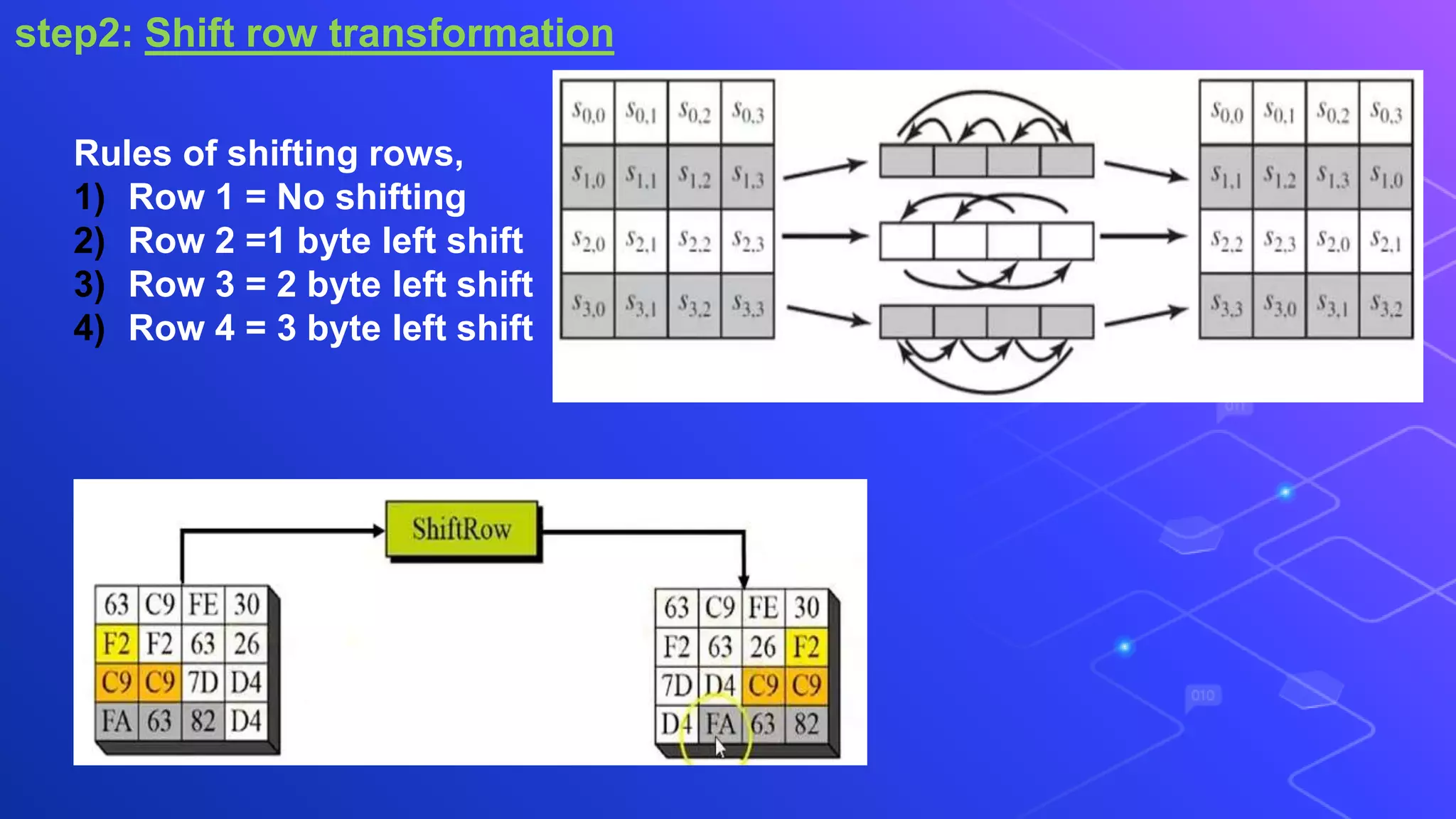
step2: Shift row transformation
Rules of shifting rows,
1) Row 1 = No shifting
2) Row 2 =1 byte left shift
3) Row 3 = 2 byte left shift
4) Row 4 = 3 byte left shift
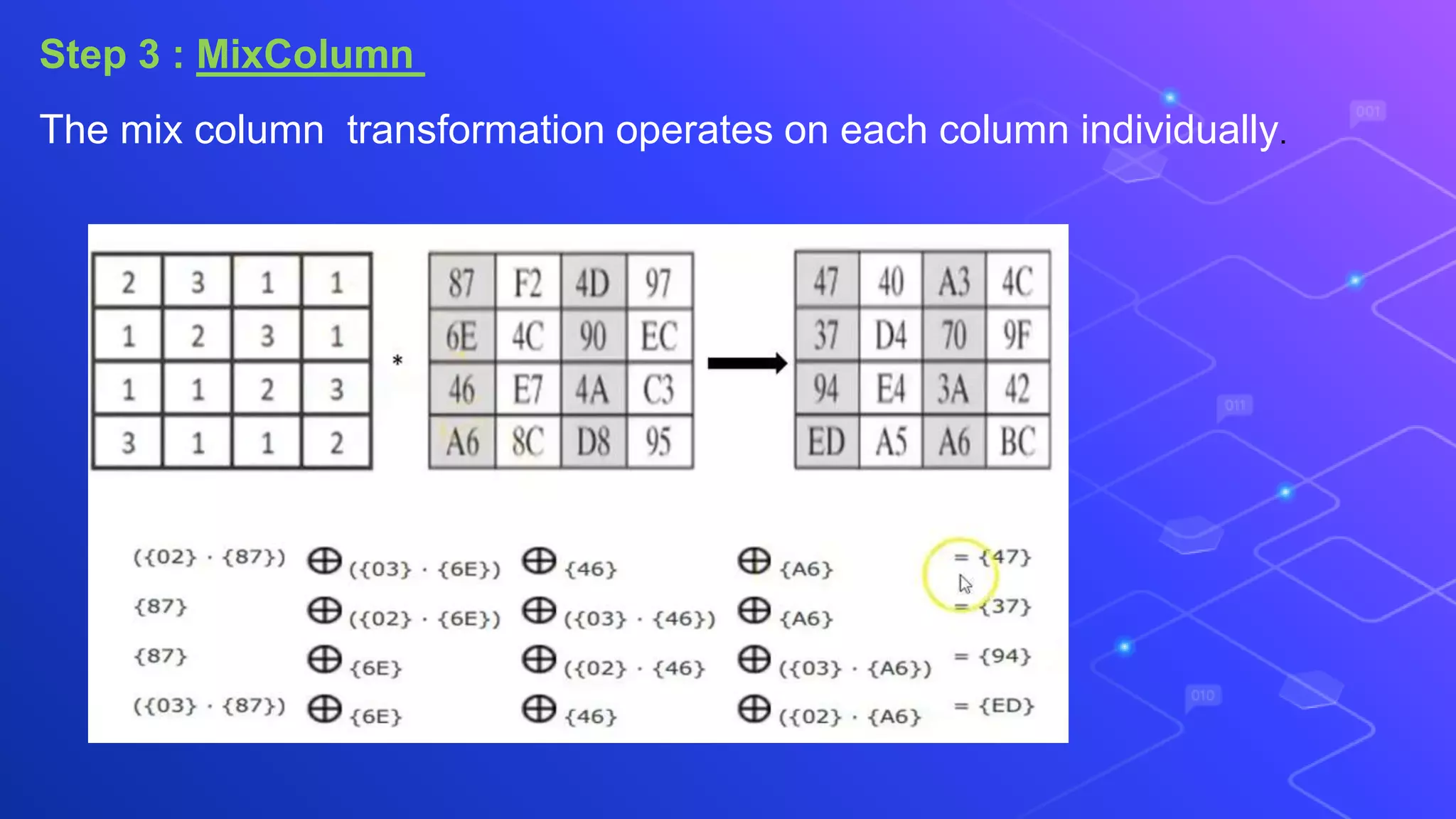
Step 3 : MixColumn
The mix column transformation operates on each column individually.
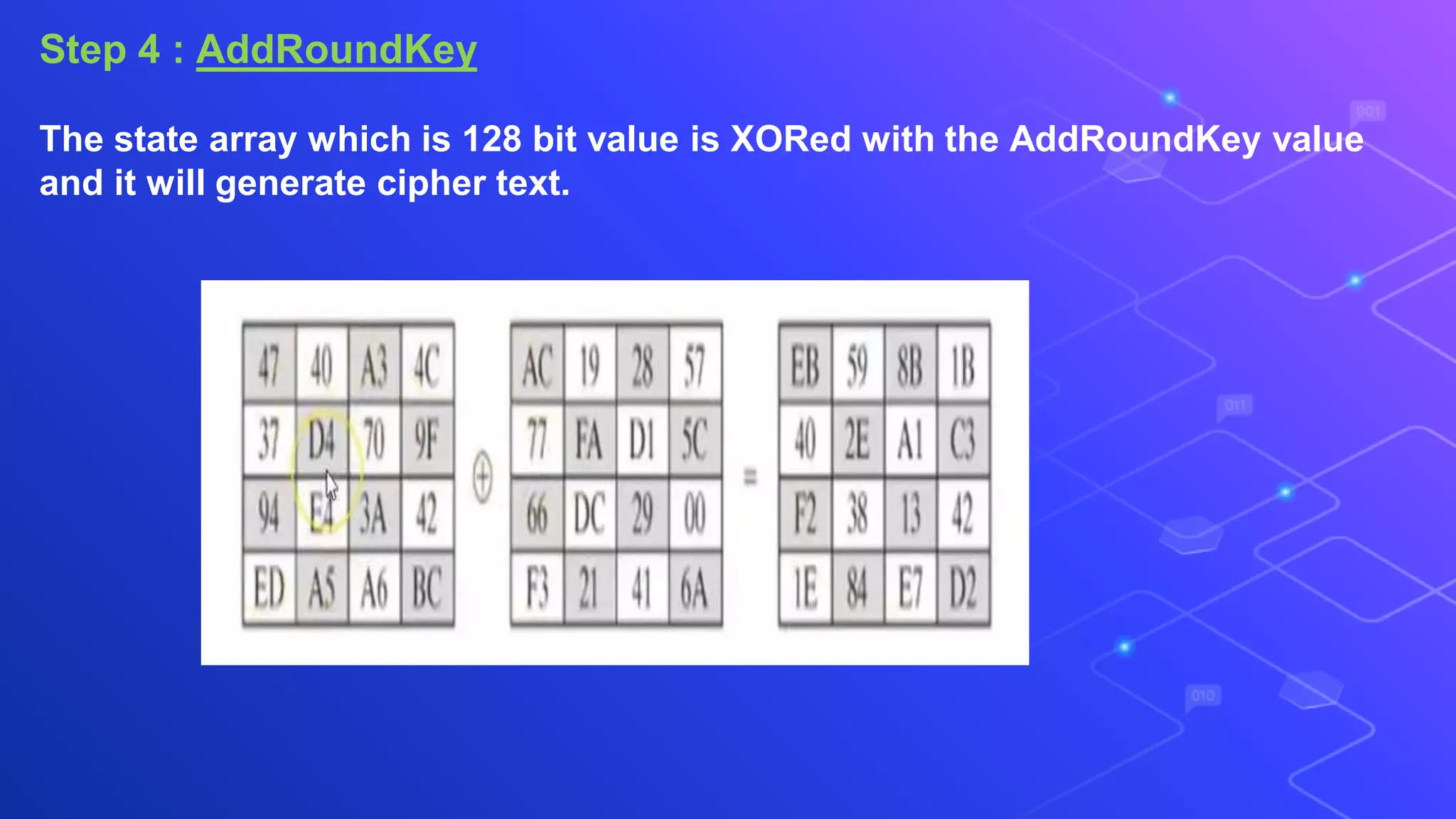
Step 4 : AddRoundKey
The state array which is 128 bit value is XORed with the AddRoundKey value
and it will generate cipher text.
 Triple DES is used to increase the
complexity and reduce the weakness of
DES.
 3DES is based on the DES algorithm.
 It works by taking three 64-bit keys.
 It has two-key and three-key versions.
 In the two-key version, the same
algorithm runs three times , but uses k1
for the first and last step.
Triple Data Encryption Standard (3DES)
3DES with three keys(Encryption and Decryption)
Mathematical equation
i. C1=E(K1,P)
ii. C2=E(K2,C1) => C2=E(K2,E(K1,P)
iii. C3=E(K3,C2)
C3=E(K3,E(K2,C1))
C3=E(K3,E(K2,E(K1,P)))
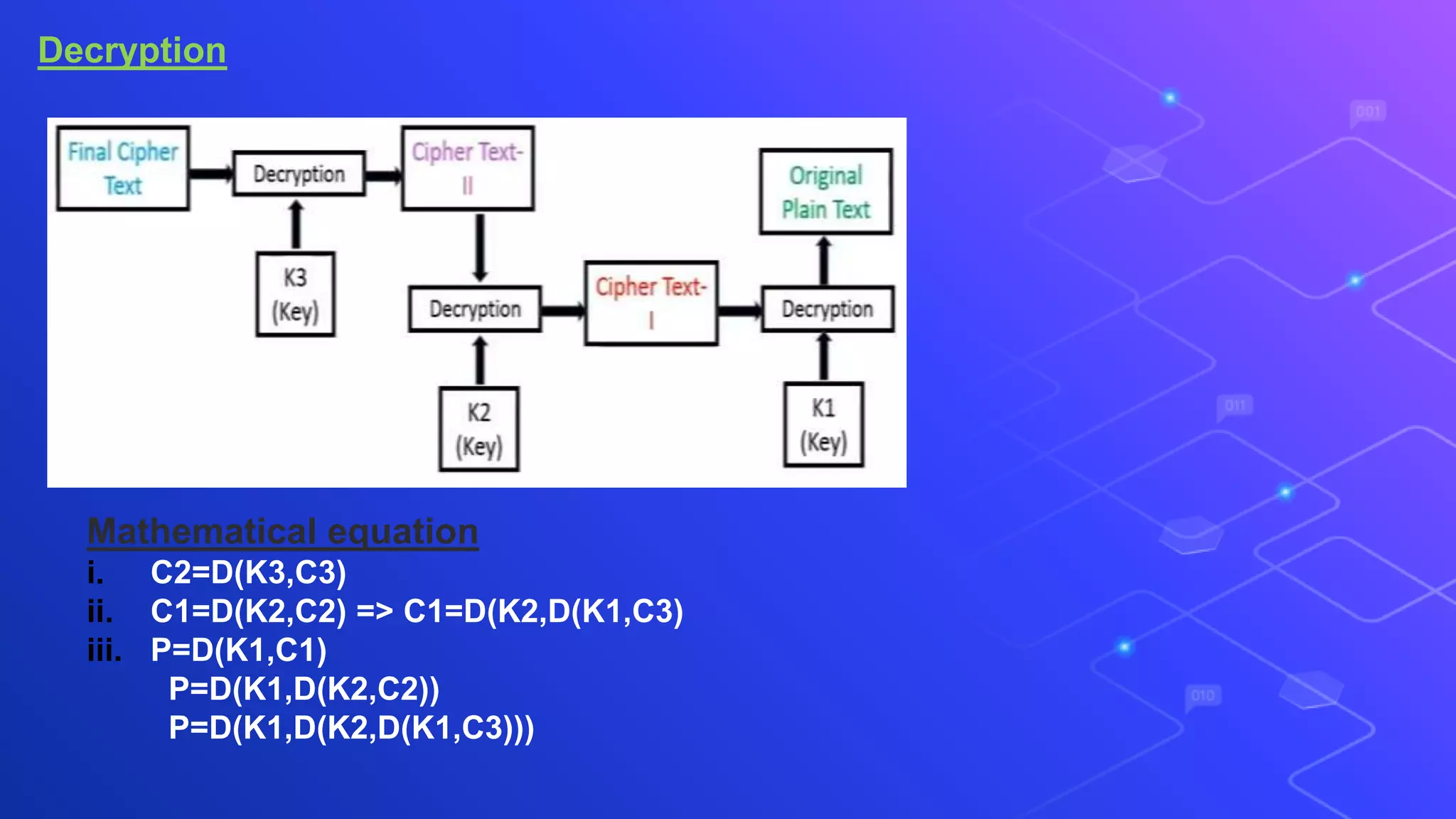
Decryption
Mathematical equation
i. C2=D(K3,C3)
ii. C1=D(K2,C2) => C1=D(K2,D(K1,C3)
iii. P=D(K1,C1)
P=D(K1,D(K2,C2))
P=D(K1,D(K2,D(K1,C3)))
Rivest Cipher 6 (RC6)
 It was developed based on RC5 and does its
job quicker than RC5.
 RC6 uses four working block size registers in
its algorithmic computations.
 It has a block size of 128 bits
 It supports key sizes of 128,192, and 256bits
up to 2040 bits.
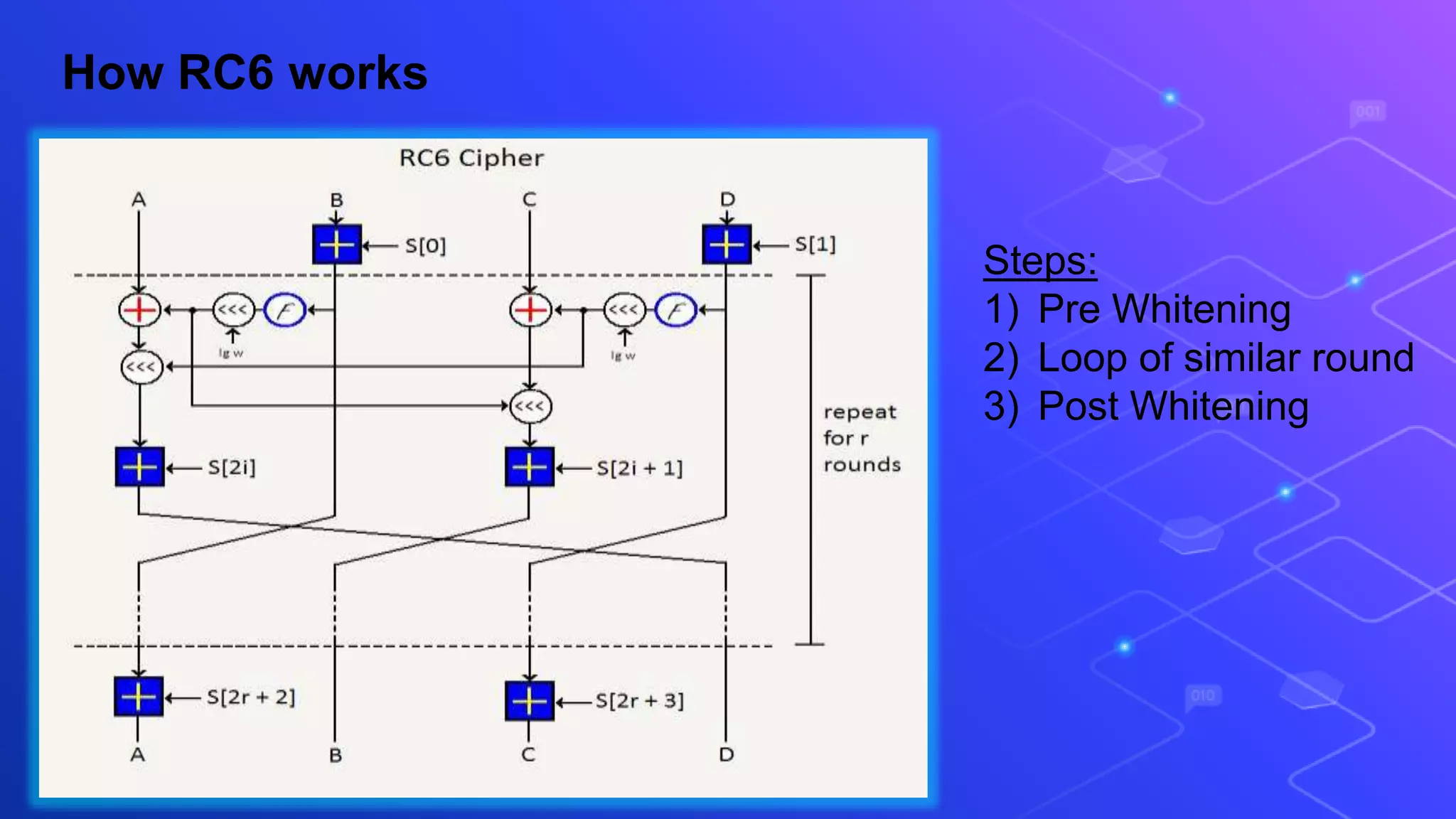
How RC6 works
Steps:
1) Pre Whitening
2) Loop of similar round
3) Post Whitening
ADVANTAGES AND DISADVANTAGES
Advantages
 Less time is used for encryption
and decryption process.
 It provides safe backup.
 Data is kept secured on cloud
which avoids unauthorized
access.
Disadvantage
 Needs active internet
connection to connect with
cloud server.
FUTURE SCOPE
 We can also improve the system by supporting more file formats.
 In Future we can use different algorithms for encryption and decryption.
CONCLUSION
 In today’s world data security and privacy protection are the primary
problems.
 We exploit the technique of cryptography encryption to protect data files
in the cloud
 Cryptography techniques convert original data into Cipher text. So only
legitimate users can access data from the cloud storage server.
THANK YOU

secure file storage on cloud using hybrid Cryptography ppt.pptx

  • 1.
    SECURE FILE STORAGE ONCLOUD USING HYBRID CRYPTOGRAPHY
  • 2.
    INTRODUCTION  Cloud storageis a convenient and reliable option to store and retrieve data.  The information over internet is becoming a critical issue.  Cryptography concept is used for securing storage system of cloud.
  • 3.
    LITERATUR SURVEY  PunamV Maitri, Aruna Verma ”Data security and cloud computing issues”  Joseph Selvanayagam, Akash Singh, Joans Michael, and Jaya Jeswani “Secure File Storage on Cloud using cryptography”
  • 4.
    EXISTING SYSTEM  Userselects the file from the local storage.  The file will be uploaded to the cloud after getting encrypted.  It uses AES algorithms.  It needs some more time for encryption and decryption process.
  • 5.
    PROPOSED SYSTEM  TheProposed system is designed to provide high security to the data.  It converts the plain text into a cipher text and store it into the cloud.  It uses AES, 3DES and RC6 algorithms for data encryption and decryption.  It uses multithreading technique.
  • 6.
    MODULE DESCRIPTION Register User canregister themselves by giving username, password, address, email-id and phone number. Login User can login using credentials. Data encryption Data will be encrypted using AES,3DES and RC6 algorithms.
  • 7.
     File upload Encryptedfile will be uploaded to the cloud.  Request for file If user wants to download a file then user needs to request for a file to the cloud.  Data decryption Data will be decrypted by using AES, 3DES and RC6 algorithm.
  • 8.
  • 9.
    SYSTEM REQUIREMENTS Hardware requirements System : Intel Core i3  Hard Disk : 250 GB  RAM : 4 GB  Processor : i3 7th Generation Software requirements  Operating system : Windows 7 and above  Front End :HTML,CSS, JavaScript  Back End :SQLite Server
  • 10.
    CONTEXT FLOW DIAGRAM(CFD) Admin User Securefile storage system Cloud Login Login Encrypt Decrypt
  • 11.
    DATA FLOW DIAGRAM(DFD) PlaintextEncryption Cipher text User Decryption Plaintext Decrypted file Cloud Login Request for file File Mail ID and Password Level-1 DFD for System
  • 12.
    DFD LEVEL-2 forADMIN Admin Login View user details Database Mail ID and Password Check for mail ID And Password Login Successful If mail ID and Password mismatch
  • 13.
    DFD LEVEL-2 forUSER User Encryption Decryption session started Register Login Database Mail ID and Password Check for Mail ID And Password Login successful If Mail ID and Password mismatch Error if user already exists
  • 14.
  • 15.
    ALGORITHMS USED Advanced EncryptionStandard (AES)  In present day cryptography, AES is widely adopted and supported in both hardware and software.  AES uses symmetric key encryption.  It takes plaintext in blocks of 128,192, and 256 bits.  Stronger and faster than Triple-DES.
  • 17.
    step1: Substitute Bytes/Sub Bytes  AES defines a 16*16 matrix of byte values, called an S-box, That contains a permutation of all possible 256 8-bit values.
  • 18.
    Below table isthe inverse S-box. It will be used during decryption process.
  • 19.
    step2: Shift rowtransformation Rules of shifting rows, 1) Row 1 = No shifting 2) Row 2 =1 byte left shift 3) Row 3 = 2 byte left shift 4) Row 4 = 3 byte left shift
  • 20.
    Step 3 :MixColumn The mix column transformation operates on each column individually.
  • 21.
    Step 4 :AddRoundKey The state array which is 128 bit value is XORed with the AddRoundKey value and it will generate cipher text.
  • 22.
     Triple DESis used to increase the complexity and reduce the weakness of DES.  3DES is based on the DES algorithm.  It works by taking three 64-bit keys.  It has two-key and three-key versions.  In the two-key version, the same algorithm runs three times , but uses k1 for the first and last step. Triple Data Encryption Standard (3DES)
  • 23.
    3DES with threekeys(Encryption and Decryption) Mathematical equation i. C1=E(K1,P) ii. C2=E(K2,C1) => C2=E(K2,E(K1,P) iii. C3=E(K3,C2) C3=E(K3,E(K2,C1)) C3=E(K3,E(K2,E(K1,P)))
  • 24.
    Decryption Mathematical equation i. C2=D(K3,C3) ii.C1=D(K2,C2) => C1=D(K2,D(K1,C3) iii. P=D(K1,C1) P=D(K1,D(K2,C2)) P=D(K1,D(K2,D(K1,C3)))
  • 25.
    Rivest Cipher 6(RC6)  It was developed based on RC5 and does its job quicker than RC5.  RC6 uses four working block size registers in its algorithmic computations.  It has a block size of 128 bits  It supports key sizes of 128,192, and 256bits up to 2040 bits.
  • 26.
    How RC6 works Steps: 1)Pre Whitening 2) Loop of similar round 3) Post Whitening
  • 27.
    ADVANTAGES AND DISADVANTAGES Advantages Less time is used for encryption and decryption process.  It provides safe backup.  Data is kept secured on cloud which avoids unauthorized access. Disadvantage  Needs active internet connection to connect with cloud server.
  • 28.
    FUTURE SCOPE  Wecan also improve the system by supporting more file formats.  In Future we can use different algorithms for encryption and decryption.
  • 29.
    CONCLUSION  In today’sworld data security and privacy protection are the primary problems.  We exploit the technique of cryptography encryption to protect data files in the cloud  Cryptography techniques convert original data into Cipher text. So only legitimate users can access data from the cloud storage server.
  • 30.