The document provides an overview of operating systems with three main points:
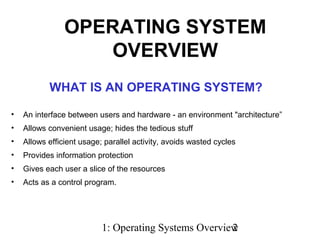
1) An operating system acts as an interface between hardware and users, allowing for convenient and efficient usage of resources through multitasking, memory protection, and allocating resources to each user.
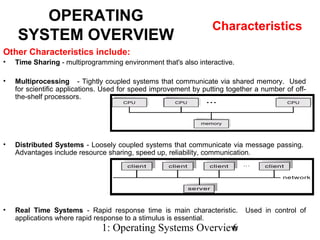
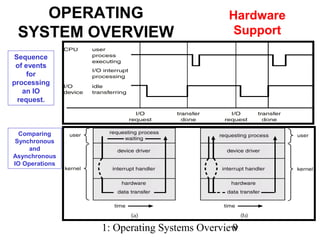
2) Operating systems include components like scheduling, handling concurrent CPU execution and I/O, memory management, and deadlock protection. They also have characteristics like time-sharing, multiprocessing, and supporting real-time systems.
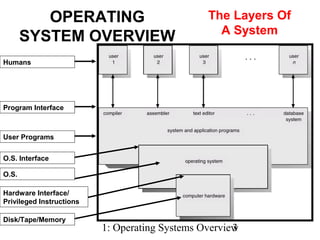
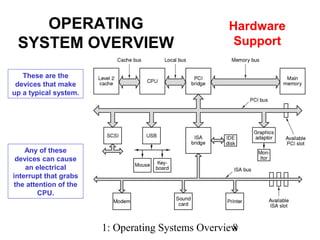
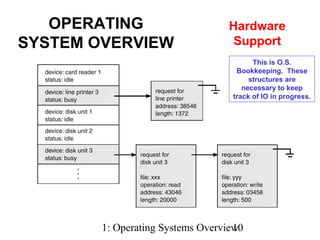
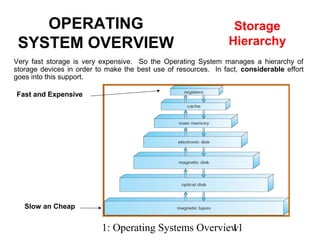
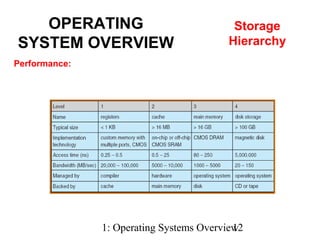
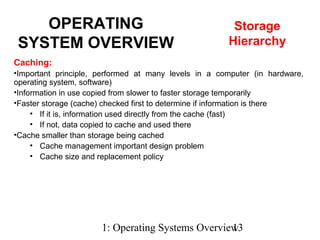
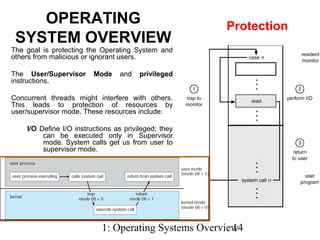
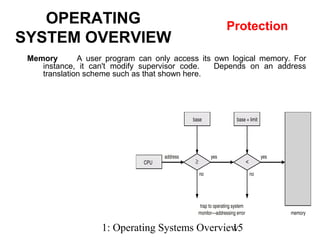
3) Operating systems manage hardware resources and a storage hierarchy with caching. They provide protection between users and the system through privileged modes, controlled access to I/O, memory, and CPU time allocation.