Real-Time Operating
Systems
DEVANSHI JAIN
15STUJPCS0003
BY
Overview
 Introduction
 Classification
 System Characteristics
 Implementing Real-Time
Operating Systems
Introduction
 Real-time systems are those systems in which
the correctness of the system depends not
only on the logical result of computation, but
also on the time at which the results are
produced.
 Supports real-time applications by providing
logically correct result within the deadline
required.
 RTOS is key to many embedded systems and
provides a platform to build applications.
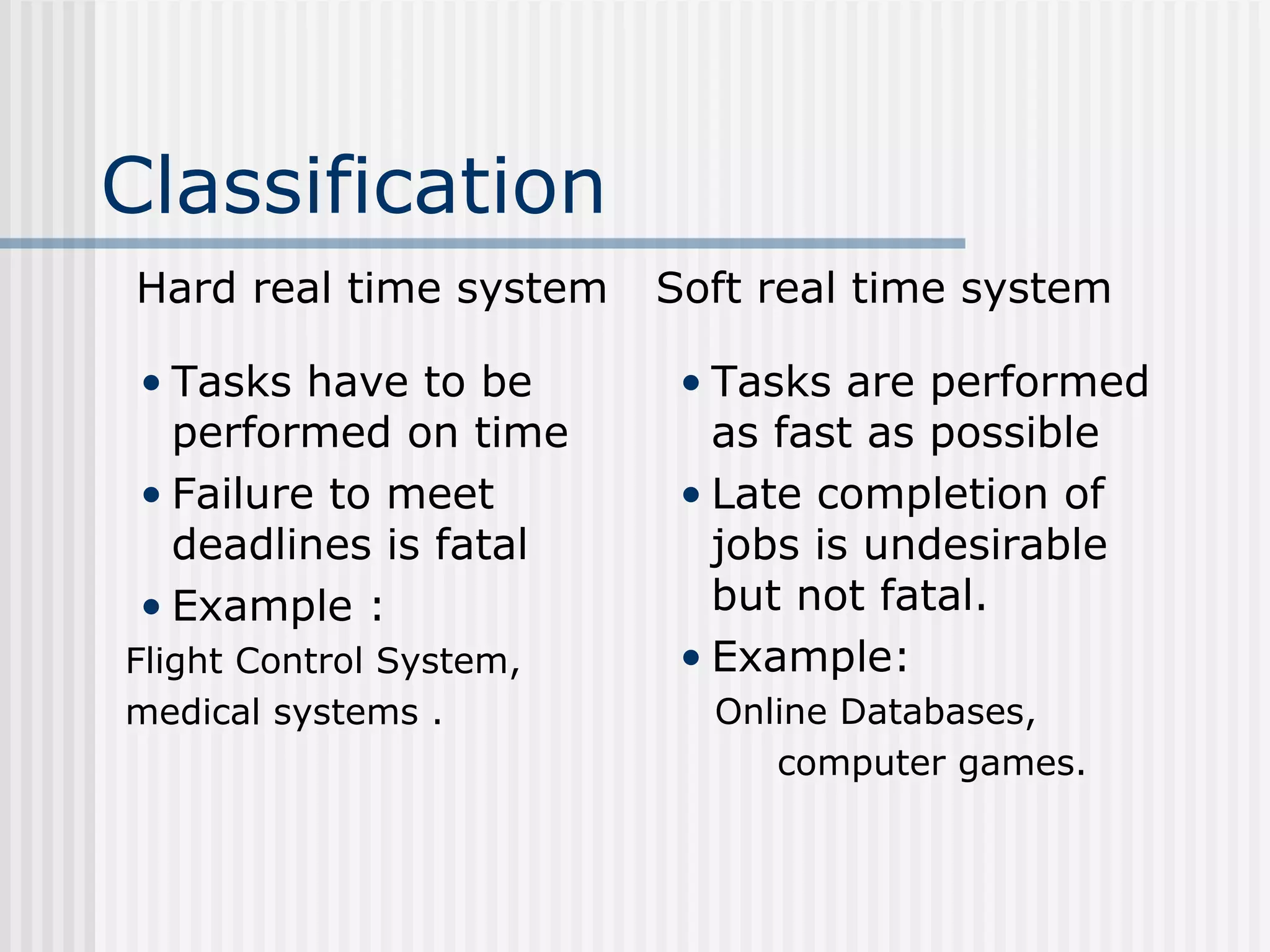
Classification
Hard real time system
• Tasks have to be
performed on time
• Failure to meet
deadlines is fatal
• Example :
Flight Control System,
medical systems .
Soft real time system
• Tasks are performed
as fast as possible
• Late completion of
jobs is undesirable
but not fatal.
• Example:
Online Databases,
computer games.
 Single purpose
 Small size
 Inexpensively mass-produced
 Specific timing requirements
 Do not require interfacing with a
user
System Characteristics
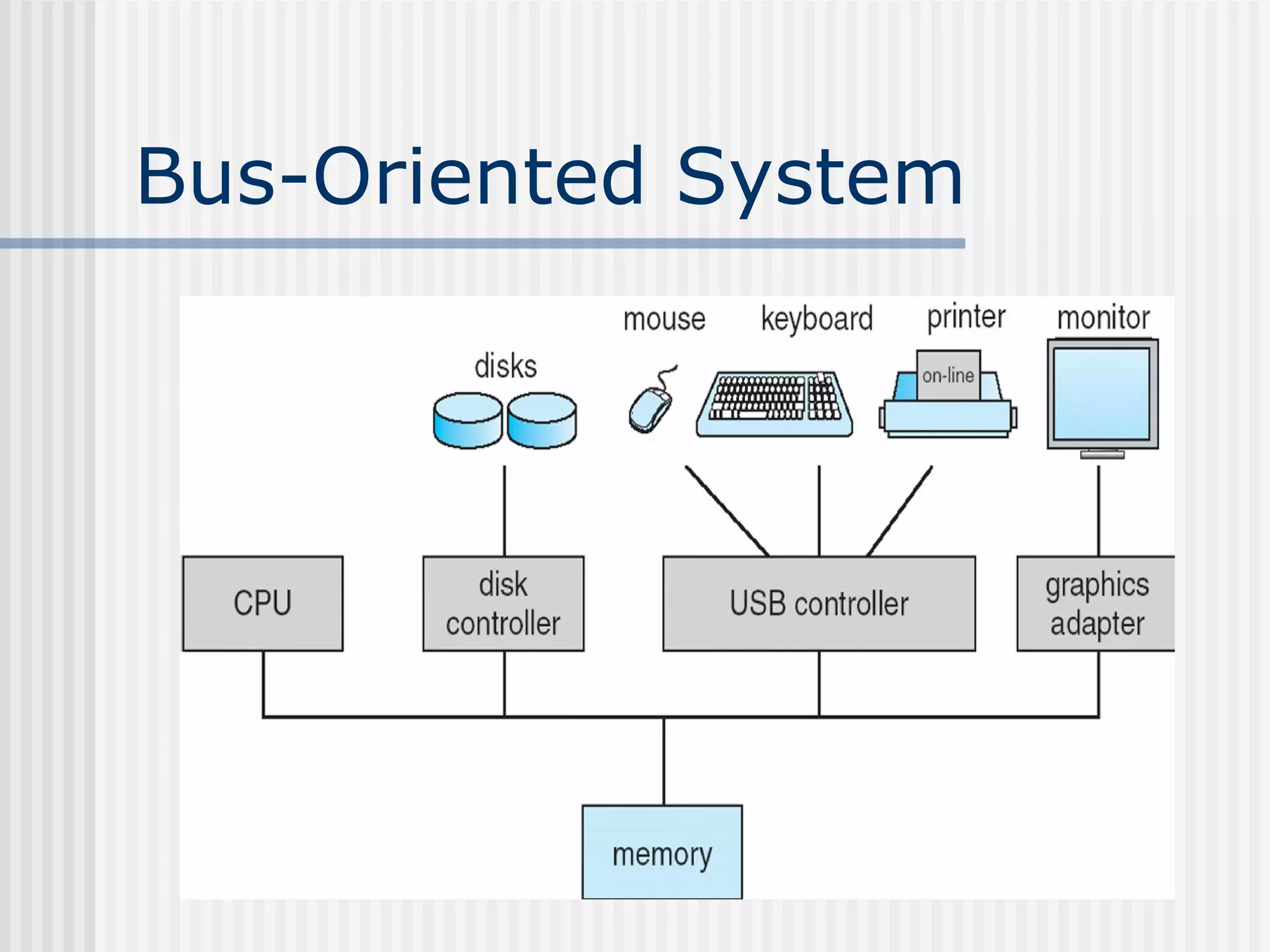
Bus-Oriented System
System-on-a-Chip
 Many real-time systems are
designed using system-on-a-chip
strategy
 SOC allows the CPU, memory,
memory-management unit, and
attached peripheral ports (i.e., USB)
to be contained in a single
integrated circuit
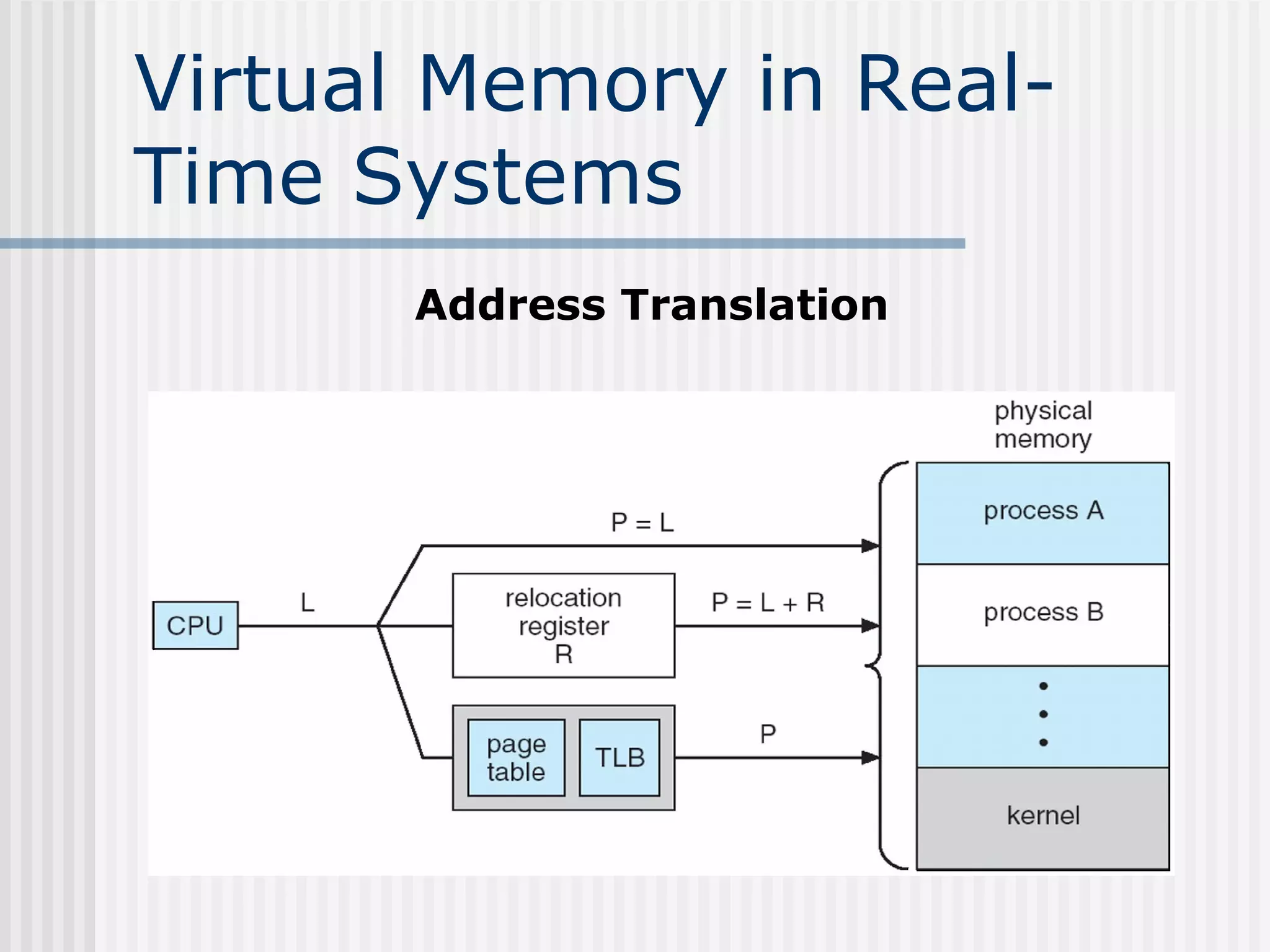
Virtual Memory in Real-
Time Systems
Address Translation
Implementing Real-Time
Operating Systems
1. Preemptive, priority-based
scheduling
2. Preemptive kernels
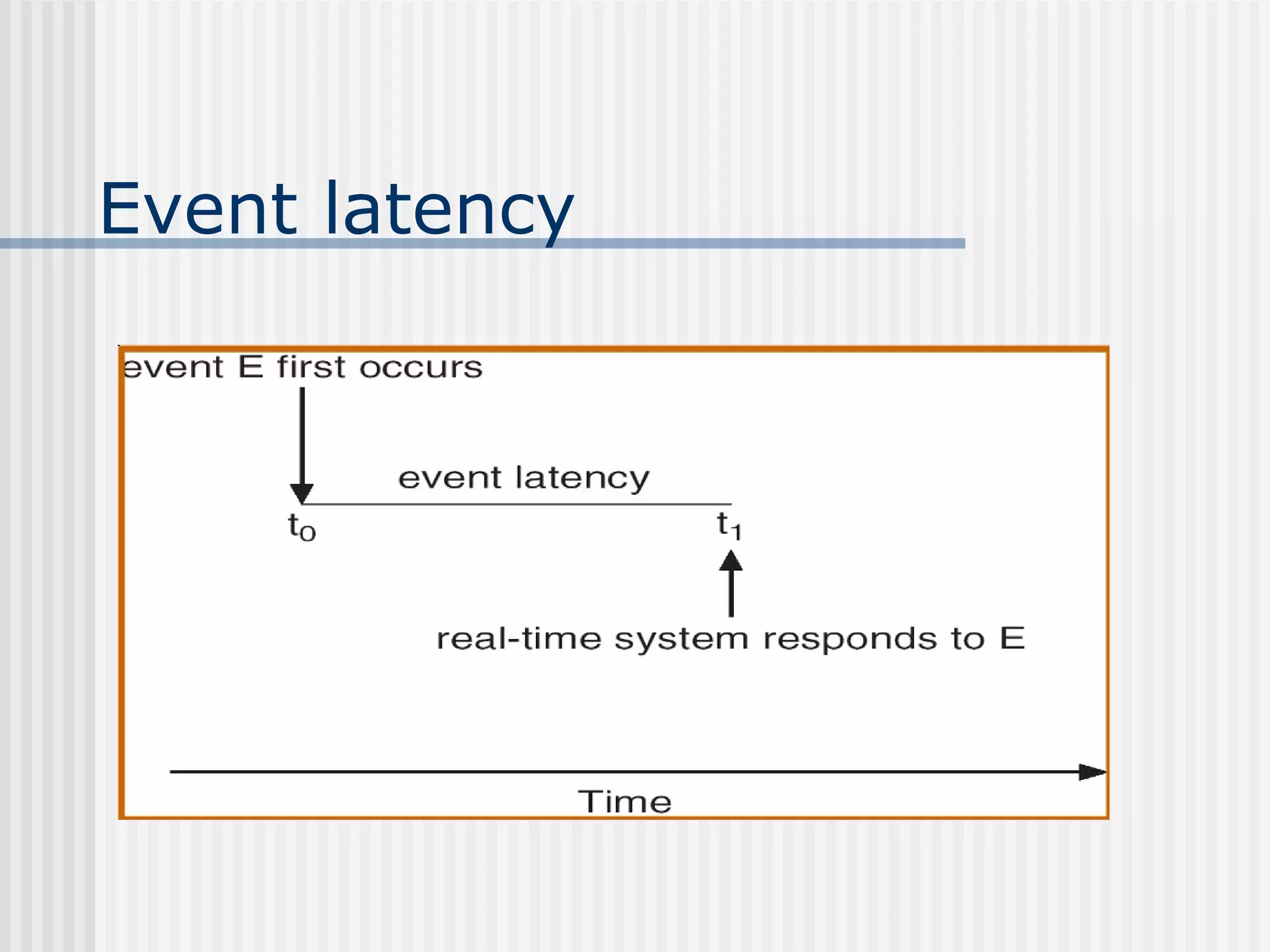
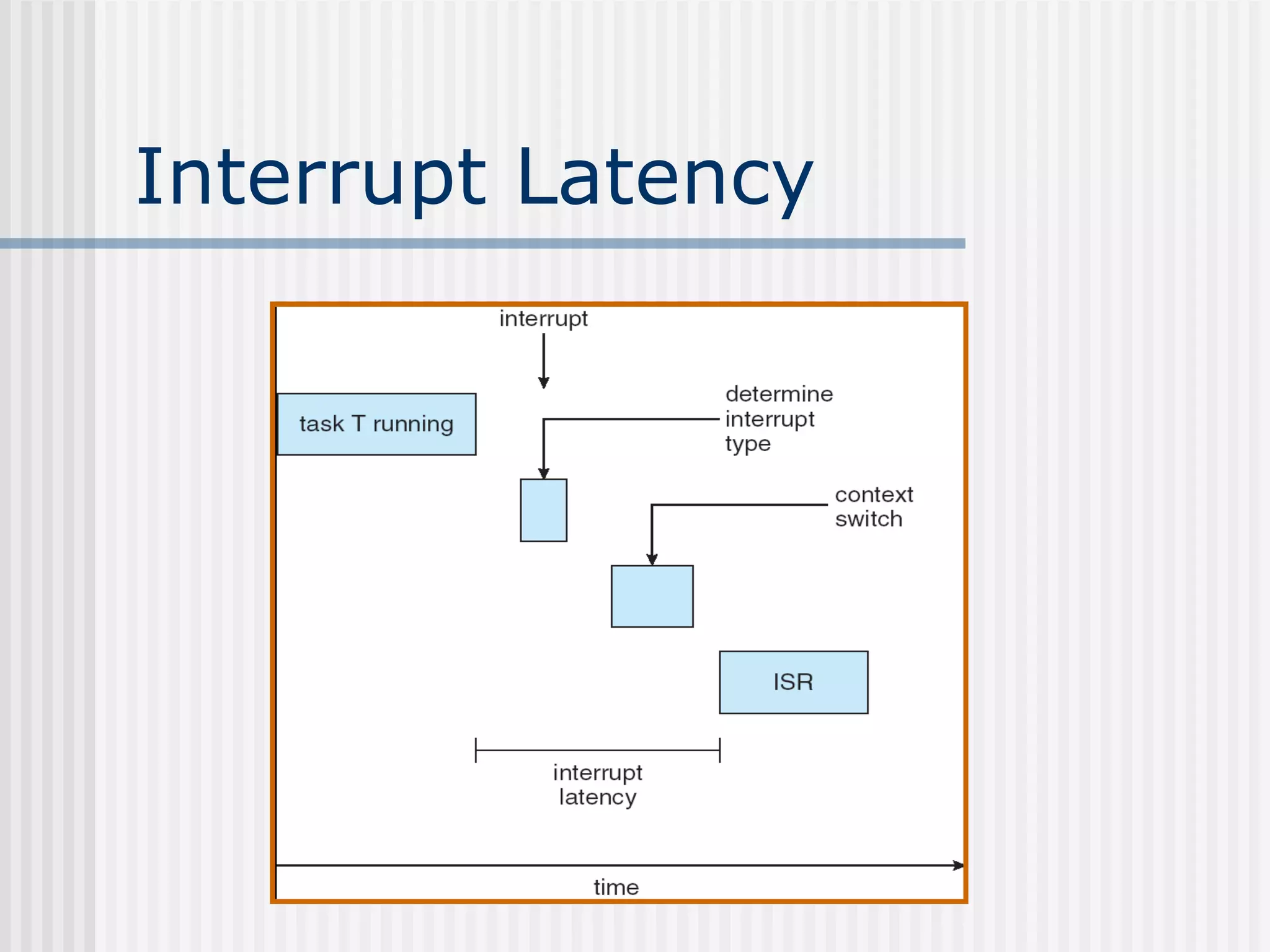
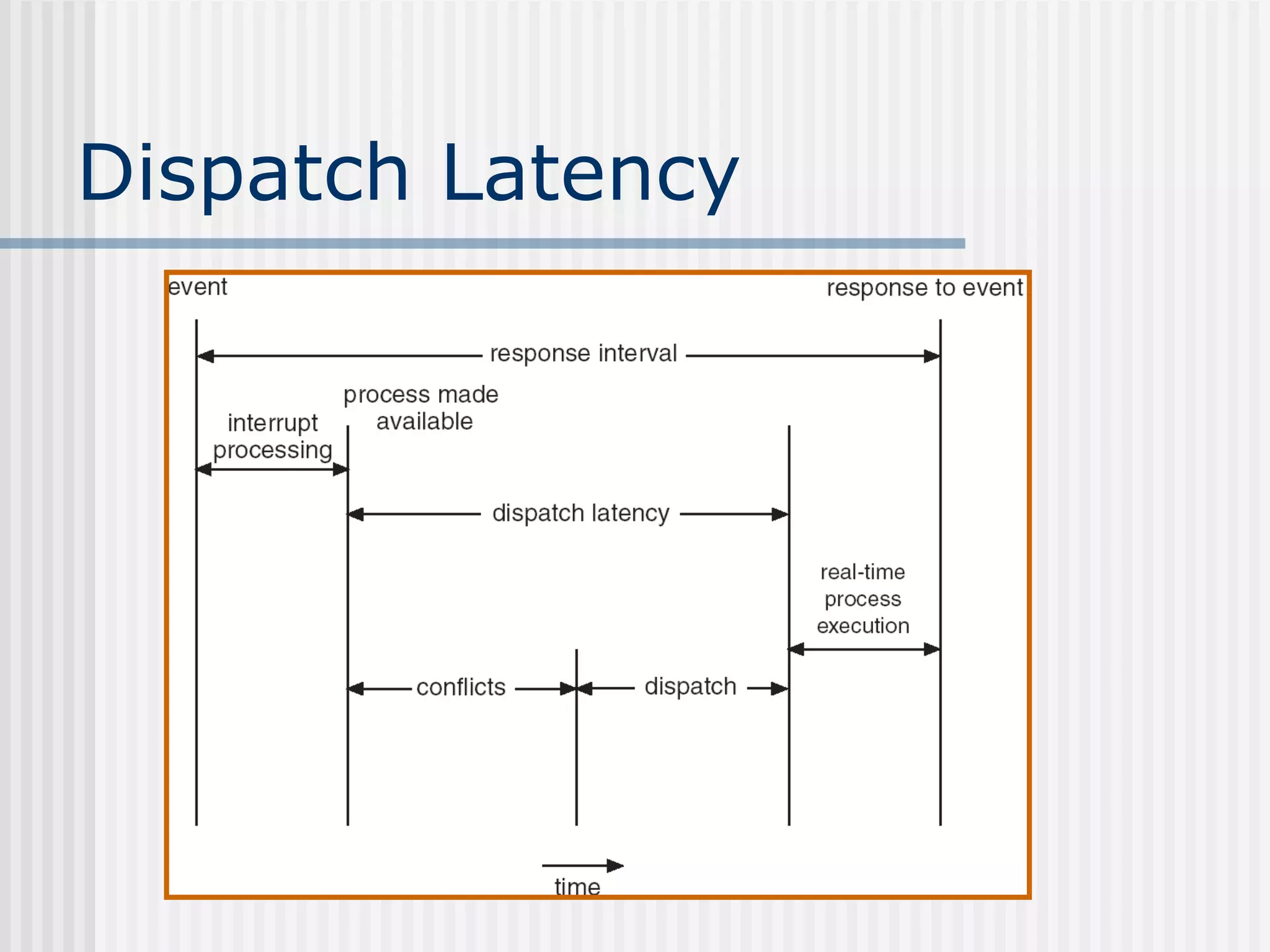
3. Latency must be minimized
Event latency
Interrupt Latency
Dispatch Latency
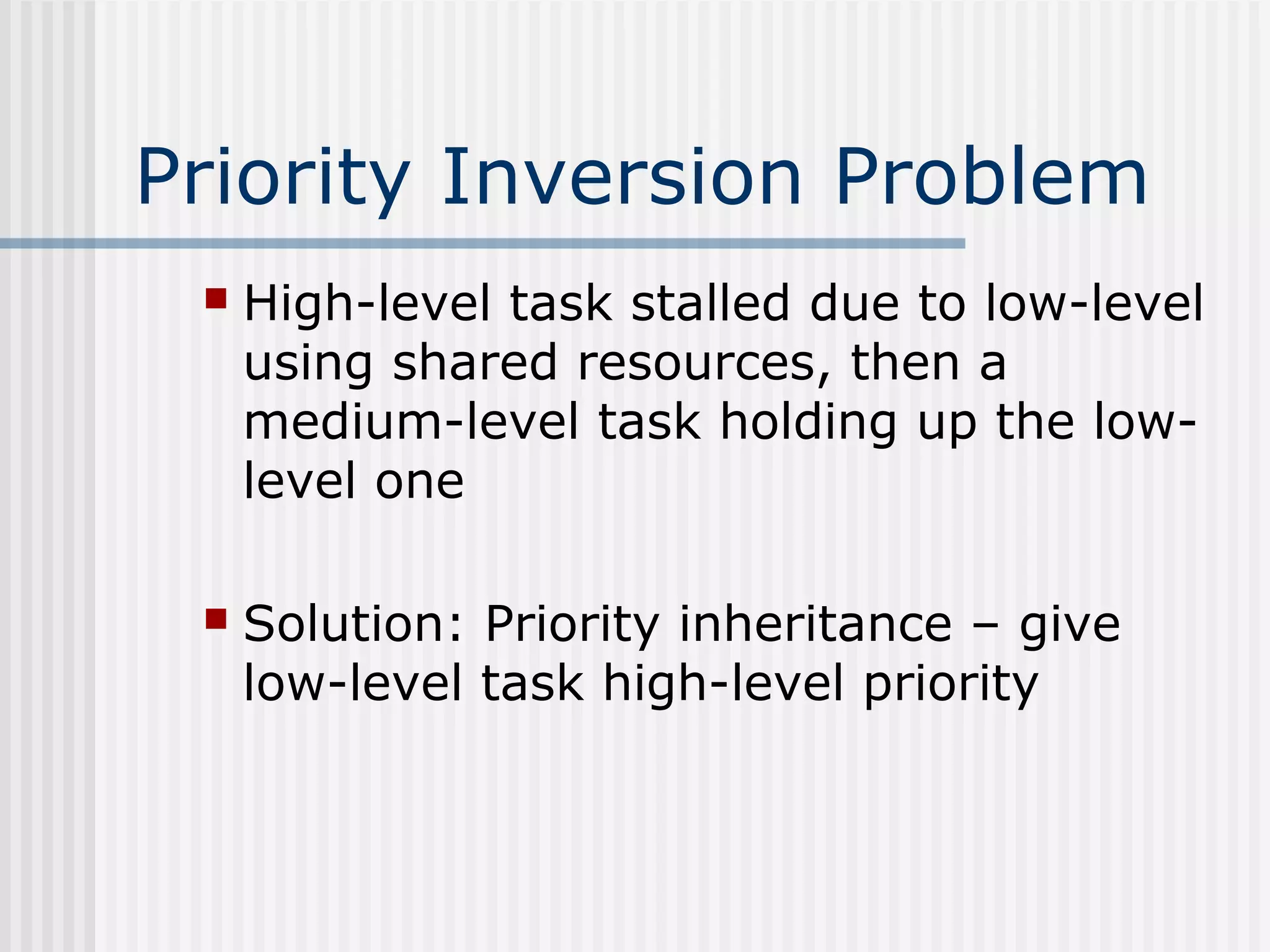
Priority Inversion Problem
 High-level task stalled due to low-level
using shared resources, then a
medium-level task holding up the low-
level one
 Solution: Priority inheritance – give
low-level task high-level priority
Scheduling Algorithms in RTOS
 Priority Scheduling
 Processor never left idle when there are
ready tasks
 Processor allocated to processes
according to priorities
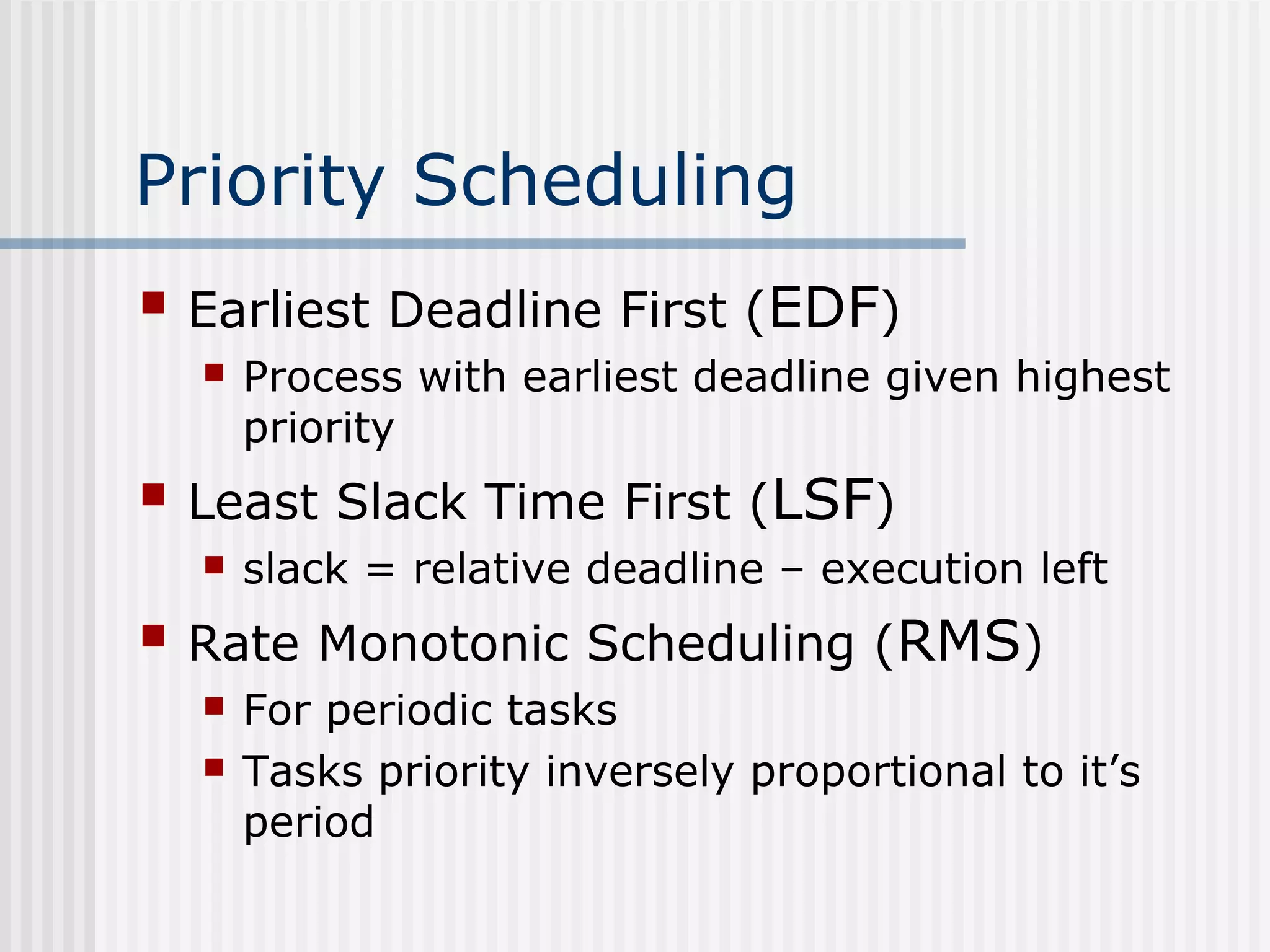
Priority Scheduling
 Earliest Deadline First (EDF)
 Process with earliest deadline given highest
priority
 Least Slack Time First (LSF)
 slack = relative deadline – execution left
 Rate Monotonic Scheduling (RMS)
 For periodic tasks
 Tasks priority inversely proportional to it’s
period
Examples of RTOS
 LynxOS
 OSE
 QNX
 VxWorks
 Windows CE
 RT Linux
APPLICATIONS OF RTOS
 Almost all the modern telecommunication
systems make use of RTOS .
 Radar systems, network switching control
systems, satellite monitoring systems, satellite
launch-control and global positioning systems all
have their roots in RTOS.
 Now a days RTOS are increasingly finding use in
strategic and military operations. These are used
in guided missile launching units,track-and-trace
spy satellites, etc.
Real Time Operating System

Real Time Operating System

  • 1.
  • 2.
    Overview  Introduction  Classification System Characteristics  Implementing Real-Time Operating Systems
  • 3.
    Introduction  Real-time systemsare those systems in which the correctness of the system depends not only on the logical result of computation, but also on the time at which the results are produced.  Supports real-time applications by providing logically correct result within the deadline required.  RTOS is key to many embedded systems and provides a platform to build applications.
  • 4.
    Classification Hard real timesystem • Tasks have to be performed on time • Failure to meet deadlines is fatal • Example : Flight Control System, medical systems . Soft real time system • Tasks are performed as fast as possible • Late completion of jobs is undesirable but not fatal. • Example: Online Databases, computer games.
  • 5.
     Single purpose Small size  Inexpensively mass-produced  Specific timing requirements  Do not require interfacing with a user System Characteristics
  • 6.
  • 7.
    System-on-a-Chip  Many real-timesystems are designed using system-on-a-chip strategy  SOC allows the CPU, memory, memory-management unit, and attached peripheral ports (i.e., USB) to be contained in a single integrated circuit
  • 8.
    Virtual Memory inReal- Time Systems Address Translation
  • 9.
    Implementing Real-Time Operating Systems 1.Preemptive, priority-based scheduling 2. Preemptive kernels 3. Latency must be minimized
  • 10.
  • 11.
  • 12.
  • 13.
    Priority Inversion Problem High-level task stalled due to low-level using shared resources, then a medium-level task holding up the low- level one  Solution: Priority inheritance – give low-level task high-level priority
  • 14.
    Scheduling Algorithms inRTOS  Priority Scheduling  Processor never left idle when there are ready tasks  Processor allocated to processes according to priorities
  • 15.
    Priority Scheduling  EarliestDeadline First (EDF)  Process with earliest deadline given highest priority  Least Slack Time First (LSF)  slack = relative deadline – execution left  Rate Monotonic Scheduling (RMS)  For periodic tasks  Tasks priority inversely proportional to it’s period
  • 16.
    Examples of RTOS LynxOS  OSE  QNX  VxWorks  Windows CE  RT Linux
  • 17.
    APPLICATIONS OF RTOS Almost all the modern telecommunication systems make use of RTOS .  Radar systems, network switching control systems, satellite monitoring systems, satellite launch-control and global positioning systems all have their roots in RTOS.  Now a days RTOS are increasingly finding use in strategic and military operations. These are used in guided missile launching units,track-and-trace spy satellites, etc.