P A G E 1 8
Allergic reactions
Keloid and hypertrophic (enlarged) scars
Physical injuries
Contraindications (specific situation in which a procedure should not be undertaken because it
may be harmful to the client)
Examples of non-infectious hazards
Non-infectious hazards cannot be spread from one person to another
and are caused by genetics, lifestyle and environmental exposures
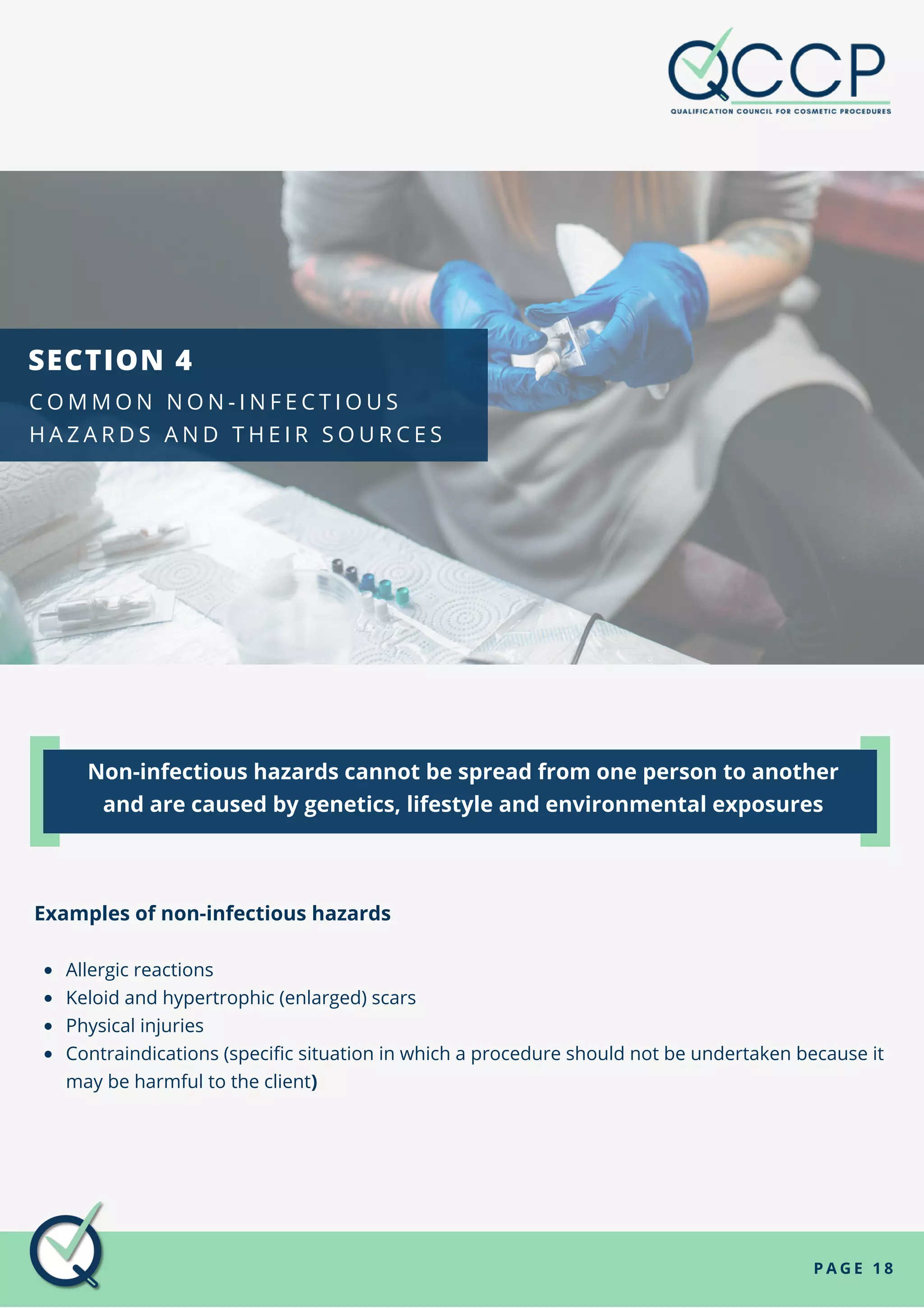
SECTION 4
C O M M O N N O N - I N F E C T I O U S
H A Z A R D S A N D T H E I R S O U R C E S
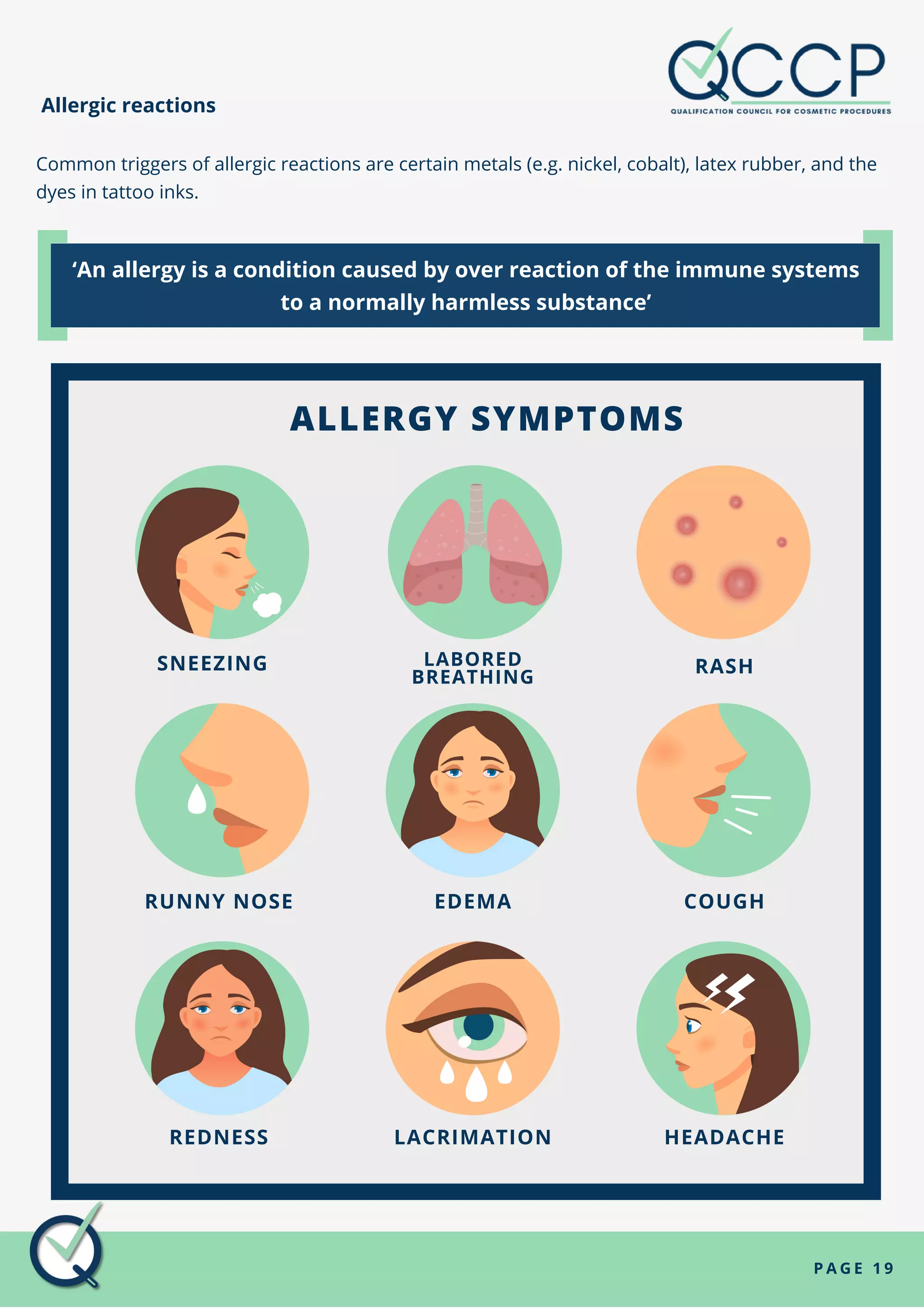
SNEEZING LABORED
BREATHING
RASH
RUNNY NOSE EDEMA COUGH
REDNESS LACRIMATION HEADACHE
P A G E 1 9
Allergic reactions
Common triggers of allergic reactions are certain metals (e.g. nickel, cobalt), latex rubber, and the
dyes in tattoo inks.
‘An allergy is a condition caused by over reaction of the immune systems
to a normally harmless substance’
ALLERGY SYMPTOMS
P A G E 2 0
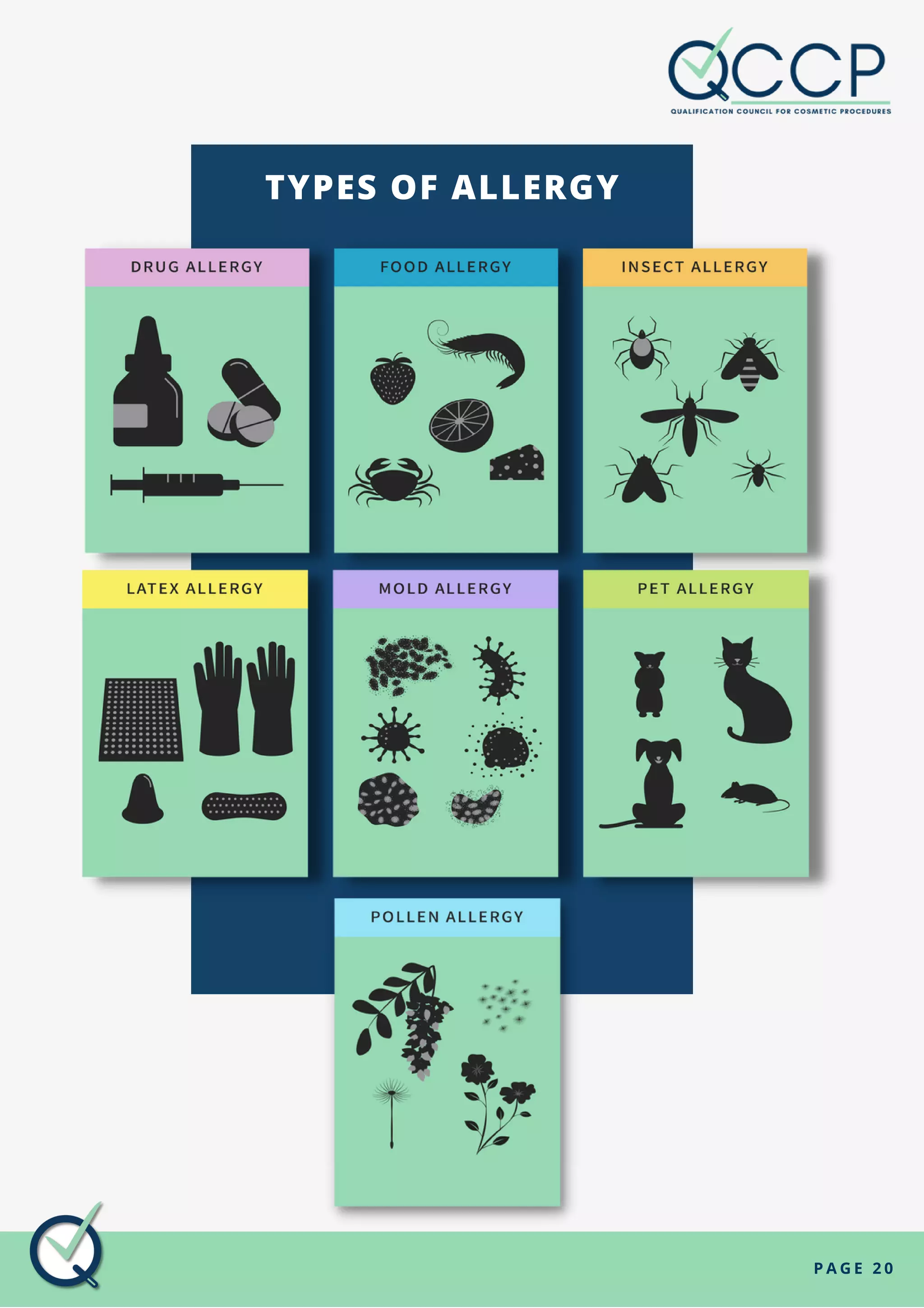
TYPES OF ALLERGY
Anaphylactic shock
This is a severe allergic response triggered in some people by certain substances. It usually
develops very suddenly, worsens very quickly, and can be life-threatening.
More information can be found here
P A G E 2 1
Irritant – caused by a single heavy dose or prolonged exposure, e.g. cleaning products
Allergic - Repeated exposure, sensitisation, e.g. metals such as nickel
Dermatitis
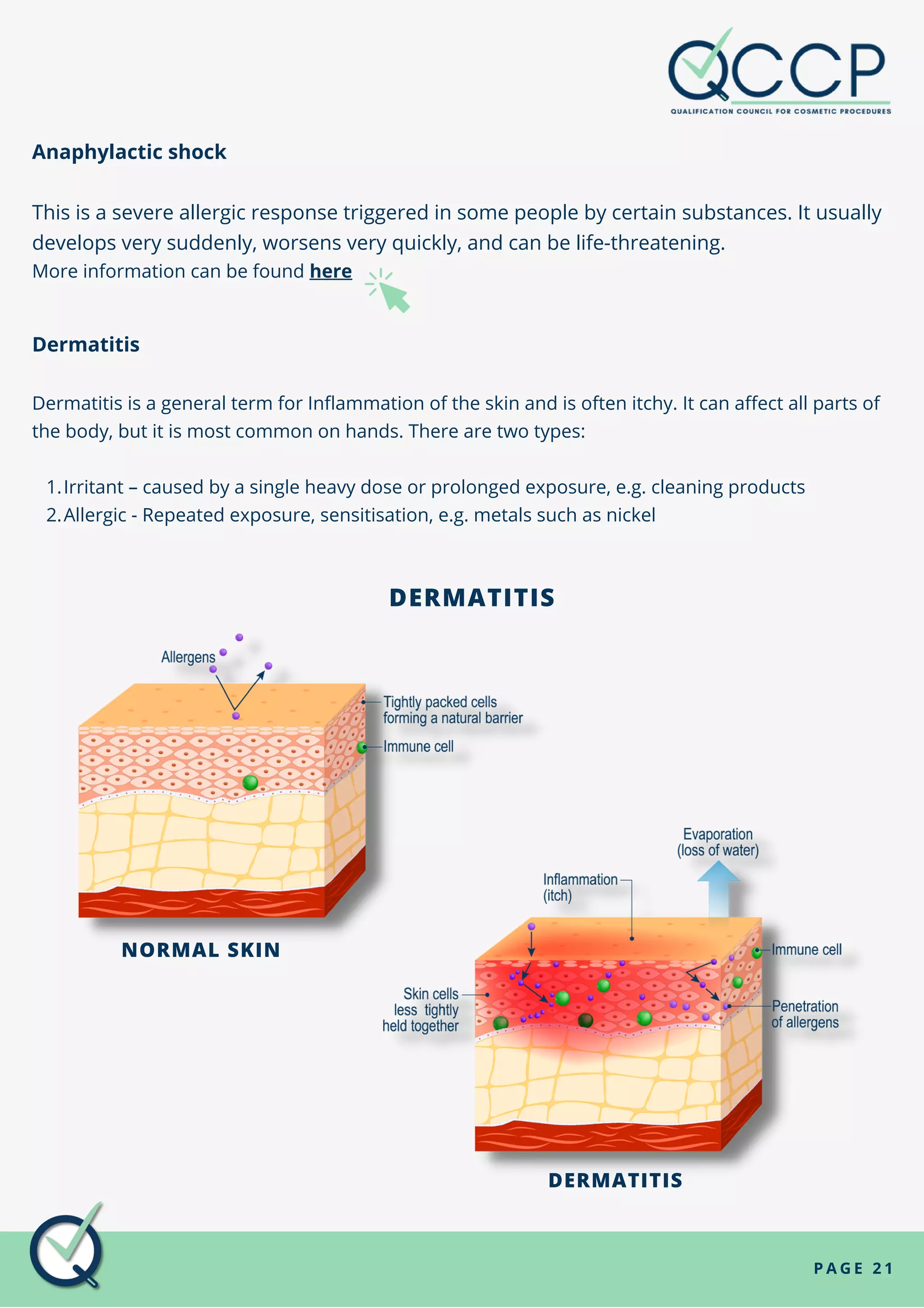
Dermatitis is a general term for Inflammation of the skin and is often itchy. It can affect all parts of
the body, but it is most common on hands. There are two types:
1.
2.
DERMATITIS
NORMAL SKIN
DERMATITIS
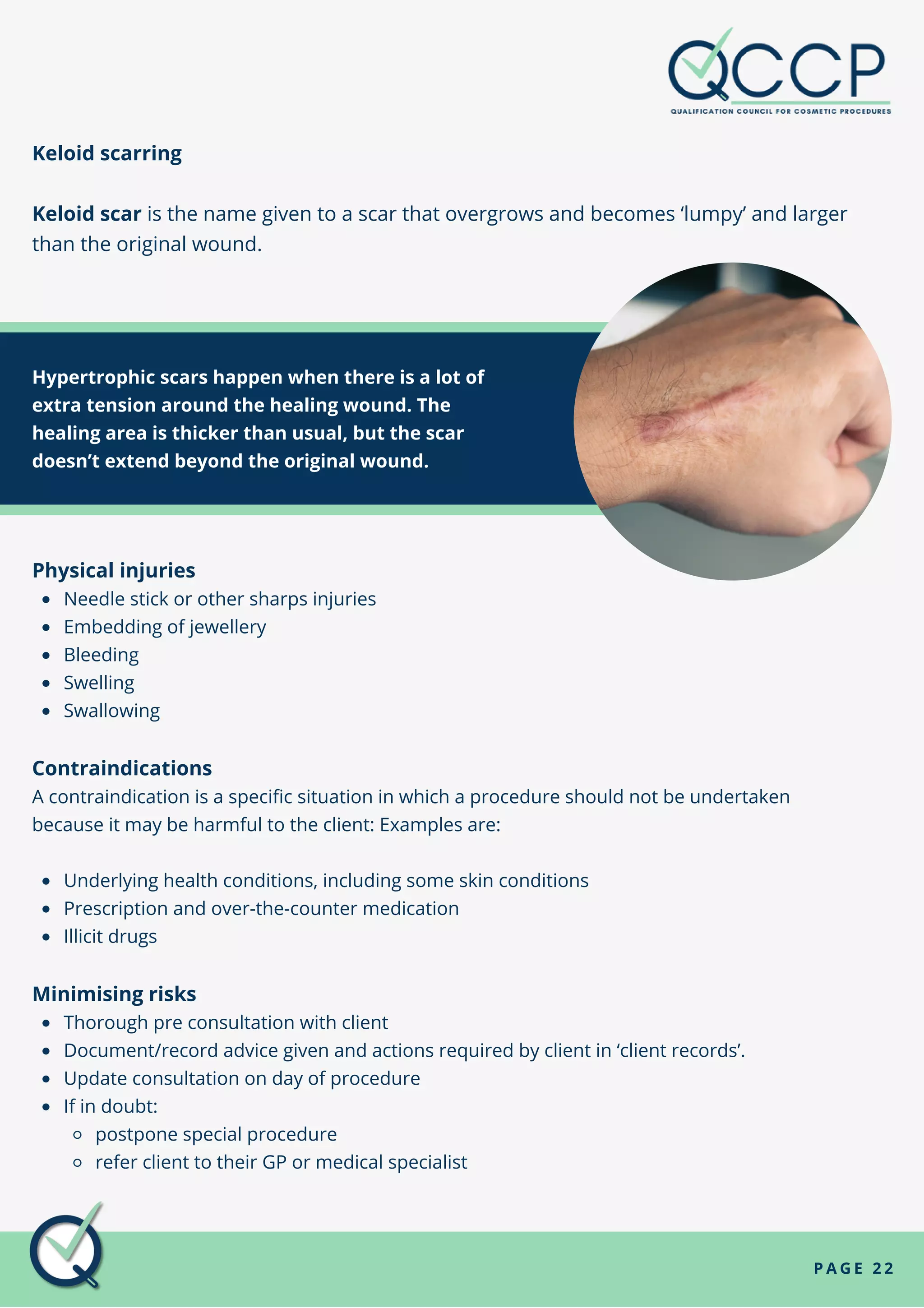
Keloid scarring
Keloid scar is the name given to a scar that overgrows and becomes ‘lumpy’ and larger
than the original wound.
P A G E 2 2
Hypertrophic scars happen when there is a lot of
extra tension around the healing wound. The
healing area is thicker than usual, but the scar
doesn’t extend beyond the original wound.
Needle stick or other sharps injuries
Embedding of jewellery
Bleeding
Swelling
Swallowing
Underlying health conditions, including some skin conditions
Prescription and over-the-counter medication
Illicit drugs
Thorough pre consultation with client
Document/record advice given and actions required by client in ‘client records’.
Update consultation on day of procedure
If in doubt:
postpone special procedure
refer client to their GP or medical specialist
Physical injuries
Contraindications
A contraindication is a specific situation in which a procedure should not be undertaken
because it may be harmful to the client: Examples are:
Minimising risks
P A G E 2 3
NOTES
P A G E 2 4
NOTES

Section 4 Common non-infectious hazards and their sources.pdf

  • 1.
    P A GE 1 8 Allergic reactions Keloid and hypertrophic (enlarged) scars Physical injuries Contraindications (specific situation in which a procedure should not be undertaken because it may be harmful to the client) Examples of non-infectious hazards Non-infectious hazards cannot be spread from one person to another and are caused by genetics, lifestyle and environmental exposures SECTION 4 C O M M O N N O N - I N F E C T I O U S H A Z A R D S A N D T H E I R S O U R C E S
  • 2.
    SNEEZING LABORED BREATHING RASH RUNNY NOSEEDEMA COUGH REDNESS LACRIMATION HEADACHE P A G E 1 9 Allergic reactions Common triggers of allergic reactions are certain metals (e.g. nickel, cobalt), latex rubber, and the dyes in tattoo inks. ‘An allergy is a condition caused by over reaction of the immune systems to a normally harmless substance’ ALLERGY SYMPTOMS
  • 3.
    P A GE 2 0 TYPES OF ALLERGY
  • 4.
    Anaphylactic shock This isa severe allergic response triggered in some people by certain substances. It usually develops very suddenly, worsens very quickly, and can be life-threatening. More information can be found here P A G E 2 1 Irritant – caused by a single heavy dose or prolonged exposure, e.g. cleaning products Allergic - Repeated exposure, sensitisation, e.g. metals such as nickel Dermatitis Dermatitis is a general term for Inflammation of the skin and is often itchy. It can affect all parts of the body, but it is most common on hands. There are two types: 1. 2. DERMATITIS NORMAL SKIN DERMATITIS
  • 5.
    Keloid scarring Keloid scaris the name given to a scar that overgrows and becomes ‘lumpy’ and larger than the original wound. P A G E 2 2 Hypertrophic scars happen when there is a lot of extra tension around the healing wound. The healing area is thicker than usual, but the scar doesn’t extend beyond the original wound. Needle stick or other sharps injuries Embedding of jewellery Bleeding Swelling Swallowing Underlying health conditions, including some skin conditions Prescription and over-the-counter medication Illicit drugs Thorough pre consultation with client Document/record advice given and actions required by client in ‘client records’. Update consultation on day of procedure If in doubt: postpone special procedure refer client to their GP or medical specialist Physical injuries Contraindications A contraindication is a specific situation in which a procedure should not be undertaken because it may be harmful to the client: Examples are: Minimising risks
  • 6.
    P A GE 2 3 NOTES
  • 7.
    P A GE 2 4 NOTES